Get the Email Monkey Off Your Back Today

For many of us, our fiercest opponent in the battle to reclaim our attention span is email. It’s the first thing we check in the morning and the last at night. It sidetracks us throughout our day, thwarting our intentions to complete the task at hand–writing a blog post, for example.

Escaping the email trap can be hard. Many of us have trained our family, friends and co-workers to expect instantaneous responses. If we typically respond lightning quick to emails, not doing so is often grounds for them to call an ambulance.

Many of us will use the excuse that our jobs depend on email. For a very small percentage of people like customer service representatives and EMT’s, this may be true (though I would sooner call an EMT). For most of us though, this is an excuse. Realistically, lag of a few hours on our email response will is not a make-or-break thing. And the benefit of fully paying attention to our tasks will more than outweigh the delay.

Another possible reason we check is neurochemical. Psychology professor Christopher Chabris said this in a NY Times article about the affect of email on our brains:

What the Internet does is stimulate our reward systems over and over with tiny bursts of information (tweets, status updates, e-mails) that act like primary rewards but can be delivered in more varied and less predictable sequences. These are experiences our brains did not evolve to prefer, but like drugs of abuse, they happen to be even better suited than the primary reinforcers to activating the reward system. So if you find yourself stopping every 30 seconds to check your Twitter feed, your brain has no more been rewired than if you find yourself taking a break for ice cream rather than celery. Picking the more rewarding stimulus is something our brains can do perfectly well with the wiring they start out with.

In other words, checking email usually excites our reward systems more than the task at hand. So our environments and our brains push us to be slaves to our inbox.

There are ways out.

Author and LifeEdited judge Tim Ferriss gives some valuable advice for shaking the email monkey. He promotes using an autoresponder to train yourself and others to not constantly check email and rather “batch” it, which means  handling email at an appointed time rather that having it as something peppered throughout the day, pulling at our attention.

Here is a sample transcript he posted on his blog 5 years ago. His message is as, or more, relevant today when smartphone saturation is nearing 100%:

Hi all…

In an effort to increase productivity and efficiency I am beginning a new personal email policy. I’ve recently realized I spend more time shuffling through my inbox and less time focused on the task at hand. It has become an unnecessary distraction that ultimately creates longer lead times on my ever-growing ‘to do’ list.

Going forward I will only be checking/responding to email at 11a and 4p on weekdays. I will try and respond to email in a timely manner without neglecting the needs of our clients and brand identity.

If you need an immediate time-sensitive response… please don’t hesitate to call me. Phones are more fun anyways.

Hopefully this new approach to email management will result in shorter lead times with more focused & creative work on my part. Cheers & here’s to life outside of my inbox!

Tim claims the response from his clients was cheery. This may or may not be the case for many of us. Like anything, it might take some time to train ourselves and others to not constantly send and receive. Anecdotally, a friend of mine regularly uses an autoresponder and I definitely think hard before emailing him.

What is hopeful, as Chabris suggests, is that our need to constantly check email is no more fixed than picking “ice cream rather than celery.” It has been conditioned through practice. It can be unconditioned through practice.

How do you keep the email monkey off your back? Let us know your tips and tools in our comment section.

8 Tips for Editing Your Life that Work for Any Budget

Yesterday we featured a story about a $275 DIY murphy bed to show that an edited life is by no means for people rich enough to choose less (rather than having less imposed upon them).

Let’s be clear: excess is far from a rich man/woman’s dilemma. Watch an episode or 2 of Hoarders for proof. Cheap housing and consumer goods have made virtually every socioeconomic bracket victims of excess…and crippling debt. The average American household carries $16K of credit card debt!

And sure, we love great architecture and product design–much of which has a steep buy-in cost–but there are infinite things you can do for little or no money to start living an edited life. Here are 8:

  1. Edit your possessions. Go through your closets, drawers, file cabinets. A good rule of thumb is if you haven’t used something in the last year, you probably won’t use it in the next. Toss it, recycle it or, better yet, give it away, get a receipt and use it as a tax break. Is your stuff too expensive to give away? Sell it and make some money.
  2. When you do buy, buy high quality stuff you like and will use. Okay, so this might sound a bit contradictory, but sometimes the way to save money is to spend it. How many times have you skimped on a purchase, buying the inferior thing you don’t like because the high quality one you did was twice as expensive? Then the inferior things breaks, doesn’t get used or becomes the unwanted child of your possessions. If something is 2x as expensive and lasts 4x as long (or is used 4x as much), that’s half the price of the cheaper thing.
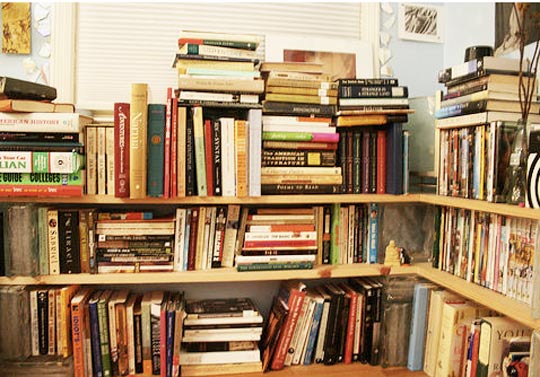
  3. Get rid of your books. Few things take up space like books, and eReaders have come a long way, and dropped way down in price; e.g. Kindles start at $79 and have thousands of free titles. Want something cheaper, download a free Kindle app that allows you to read on your phone or computer.
  4. Get rid of paper. Switch all of your bills and statements to online only (put them on autopay if possible). Scan receipts. Work on completely digitizing every form of receipt, bill, statement, etc. This save paper and clears clutter for no additional cost.
  5. Take a walk. We don’t think about cars taking space, but they do–a Honda Civic sedan takes up 85 sq ft. of it. Cars’ collective footprints increase the size of our homes and cities. This is not to mention the ongoing money and stress of things like gas, insurance, upkeep, etc. Few things simplify your life–and save money–like ditching your car. While we know it’s not feasible for many to do this, if you’re moving, consider a place where you can walk, bike or use public transport to the various activities in your life: work, groceries, etc. Your health, planet and pocketbook will thank you.
  6. Get some budget transforming furniture. Sure, it’d be great to have an unlimited budget for furniture, but few of us have that option. There are countless folding tables, sleeper sofas, folding chairs and affordable DIY options that can add tons of utility to a small footprint.
  7. Try a sharing system. Maybe you’re having a baby, try a toy-sharing system. Maybe you need to use a car once or twice a month, use a Zipcar. Maybe you have wedding to go to, rent your dress or tux. Why pay full-time salaries and overhead charges for the stuff you only need to perform part-time duty?
  8. Consider moving into a smaller home. When moving, think about what you really need and trim at least 20%. The amount of stuff we have is not a fixed thing–it expands and contracts depending on the amount of room it has to occupy. Smaller spaces are cheaper to buy and rent, easier to maintain and have built-in safeguards against accumulating too much stuff, and when laid out right, can have all the utility of a much larger space.

image from fopple.com

What to Do with Your LPOIP (Little Pieces of Important Paper)

With April 15th just come and gone, you might be burrowing away 2011 receipts in a folder (or, like me, jamming their crinkled remains into a Sharpied envelope). Once you’ve filed your receipts—feeling 80% confident you got all of them and 90% sure the IRS won’t bust you—you notice other little pieces of important paper: business cards. Manually entering them into your contacts is a pain, so you make a pile and keep the ones you’re going to act on toward the top; those important ones stay on top until newer, more important cards replace them. Eventually, there’s an unintelligible, begging-to-be-tossed pile of paper.

For many of us, LPOIP (little pieces of important paper) is a big problem (figuratively speaking). We are unable to organize them well and can’t throw them away.

Enter Shoeboxed.com. The online service allows you to make digital records for receipts, business cards and several other varieties of LPOIP’s like bills and bank statements.

Users can mail, scan or use one of their iPhone or Android apps to make a record of the LPOIP. A high accuracy, OCR, human-checked scan is made and recorded on the site. The receipts are high quality enough to be accepted by the IRS and business card data is entered into a CRM file for easy uploading (note cool design or nice paper stock unfortunately).

There’s a free plan which features 5 monthly OCR/human scans; you can also use their web uploader, which requires a little manual input. Paid plans range from $10-50/month depending on the amount of documents scanned.

It’s easy to argue for holding on to some types of paper like old photos and love letters, but receipts and business cards are just pains–ones that accumulate over the years, requiring file cabinets and elaborate organization. Services like Shoeboxed allow you to save space, organize and simplify an otherwise entropic scenario.

image via Planet Receipt 

15 Practical Tips for Creating a Simpler, Happier Life

Beyond great architecture and multi-functional product design, LifeEdited is about living simple, happy lives. The architecture, products and behaviors we promote are in service of that goal.

We think this list from the Health Realizations newsletter provides a nice starting point for simplifying and happy-ifying your life. Not surprisingly, much of the list involves editing out things that don’t support our happiness.

Check it out and let us know what you think. Anything missing? Agree/disagree?

  1. Decide what’s most important to you, then center your life around those items (this probably means cutting out other activities to make room for those that count the most).
  2. Turn off all communication devices at a set time each night. This includes your cell phone, computer, pager, and fax. Better yet, try to reduce your daily use of these communication tools.
  3. Learn to say no. This is not selfish, it’s about survival … and living your life the way YOU want to.
  4. Resign from any and all organizations and commitments that don’t make you happy.
  5. Set up as much of your life as possible on autopilot. For instance, set up your bills to be paid automatically online, have your paycheck direct deposited, and hire a pet sitter to come and walk your dog everyday at lunchtime.
  6. Delegate. If you can’t figure out how to do it on autopilot, think about who might be able to complete certain tasks that you do now. Then delegate everything and anything you can.
  7. Get rid of clutter. Clutter will make your life feel more complicated than it needs to, while a clutter-free space is one where you can truly feel at peace.
  8. Stop buying more stuff. Not only will you have to figure out how to pay for the “stuff,” but you’ll have to figure out a place to put it (in your now clutter-free home). You’re likely better off not buying it to begin with most of the time.
  9. Do your grocery shopping once a week only, or better yet join a food coop that delivers once a week. You’ll get healthy foods for your family in one stop.
  10. When you do your cooking, cook more than you need for one meal. Freeze the leftovers for a quick meal when you’re short on time, or use them later in the week.
  11. Redesign your day. What takes up the most time in your day? The least? Carefully evaluate how you spend your daily time, then reorganize it so you have time for what’s most important to you.
  12. Take your time when you eat. Eating slowly helps you appreciate your food and take a break from a busy day (not to mention it’s a good way to help you lose weight).
  13. Live in the moment. Help your mind to slow down by appreciating every moment as it comes, even if you’re doing something you’d rather not be. By living in the moment, you only think about what’s going on right now, not what you’ll be doing in 10 minutes or what needs to get done by 5:00.
  14. Spend time alone and with family. Many people feel cheated in life in that they don’t have time to just read a book, enjoy a hobby or simply contemplate life. Likewise, many would enjoy more time to spend together with their family. Make time for both in your life, even if it means saying no to something else.
  15. Do one thing at a time. When you try to do too many things at once, you’ll find nothing gets done very quickly or well. By focusing on just one thing — one goal, one dream, one task at work, one child’s question, one conversation — the task will get done with more thoroughness and less stress on your part.

via Health Realizations newsletter

eBooks and the Bibliophiles Dilemma

This is perhaps the most taboo topic in life editing. Even extreme editors, living in their ultra-organized cubbies, often find themselves unable to get rid of these. That’s right, we’re talking about books.

We love our books–the feel of paper, the dog-eared pages, the cover art, the smell. We display them like trophies. When people come over to my house, they will know I read “The Brothers Karamazov.”

But let’s face it: books are space hogs, and few inventions help the process of editing one’s life as much as the eBook. For example, consider the basic Kindle eReader stores up to 1400 eBooks and weighs 6 oz., which is about the same size as one paperback copy of “The Great Gatsby.”

We know there are many eBook converts out there already, but for the others, who can’t quite make the leap, who are dubious of electronic ink, who love their paper-cuts and dewy thumbs, we put out a challenge: try it. 

Today we present an easy, zero-risk way of seeing if eBooks are for you.

  1. Download the Kindle app. It’s a free application that allows you to read Kindle eBooks on a variety of platforms: Android, PC, iPhone, iPad and Mac. Install it on whatever device you find yourself using the most, preferably a portable one like your phone or tablet, which better replicate a book’s utility.
  2. Download an eBook you want to read. This could be one of the millions of paid Kindle titles on Amazon, or if you don’t want to pay, download one of their 1M+ free eBooks to make this a truly zero risk experiment.
  3. Read book and see if you like it.

Mind you, this is not a perfect experiment. EBook readers like the Kindle and Nook have eye-saving electronic ink, which for many (like the author) make it possible to read for long periods of time. But others, like Graham Hill, have read many books without issue on their back-lit phone screens.

Either way, the idea is to try. Give it a shot and let us know what you think.

image via Apartment Therapy

5 Shopping Tips for Buying Less Stuff

Bread Machine

The world seems determined to sell us more stuff. If buying were the end of the story, that would be OK. But it’s just the beginning. Besides buying stuff, you must store it, charge it, clean it and look at it before ultimately tossing it. We’ve come up with 5 simple actions for combating stuff-a-holism:

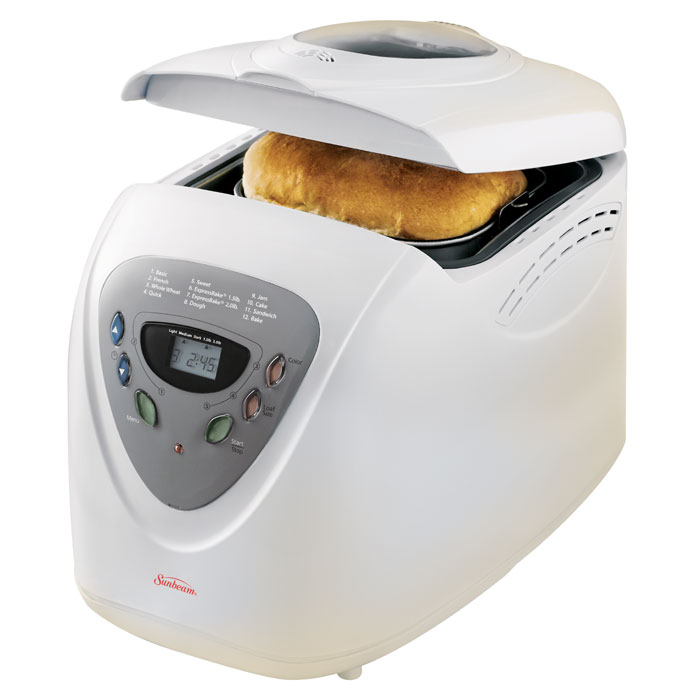
  1. Use what you got. Specialty items are the enemy of the edited life. Bread-makers, tie-racks, Snuggies–you probably can handle the task with something you already have.
  2. Take care of what you got. Most of us only get 1/3 of our stuff’s actual life-cycle because of neglect. Fix, mend, patch, oil, repair, clean and generally respect your stuff. The earth and your pocketbook will thank you.
  3. Don’t be lured by the latest model. Yes, the new version with the angular corners is much cooler than the older one with the rounded ones. But be honest: do you really need the utility of the new version? Probably not.
  4. THINK before you buy. Unless you are buying a tourniquet, it’s unlikely you need to buy stuff immediately. Waiting a day or two generally quells the urge to buy stuff you might not need.
  5. Buy better. If you must buy stuff, make your stuff great, well-designed and repairable. And don’t be penny wise and pound foolish. As LifeEdited founder Graham Hill put it, “Stuff that costs twice as much, but lasts 4 times longer, is half-priced.”