Micro Suite Accommodates Three Students, Lots of Chipboard

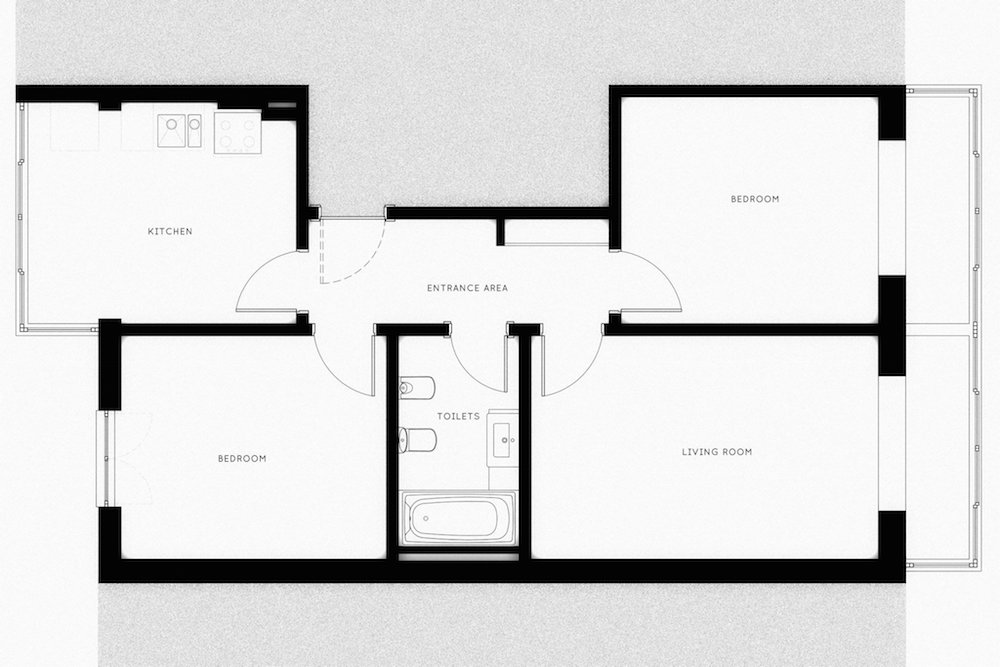
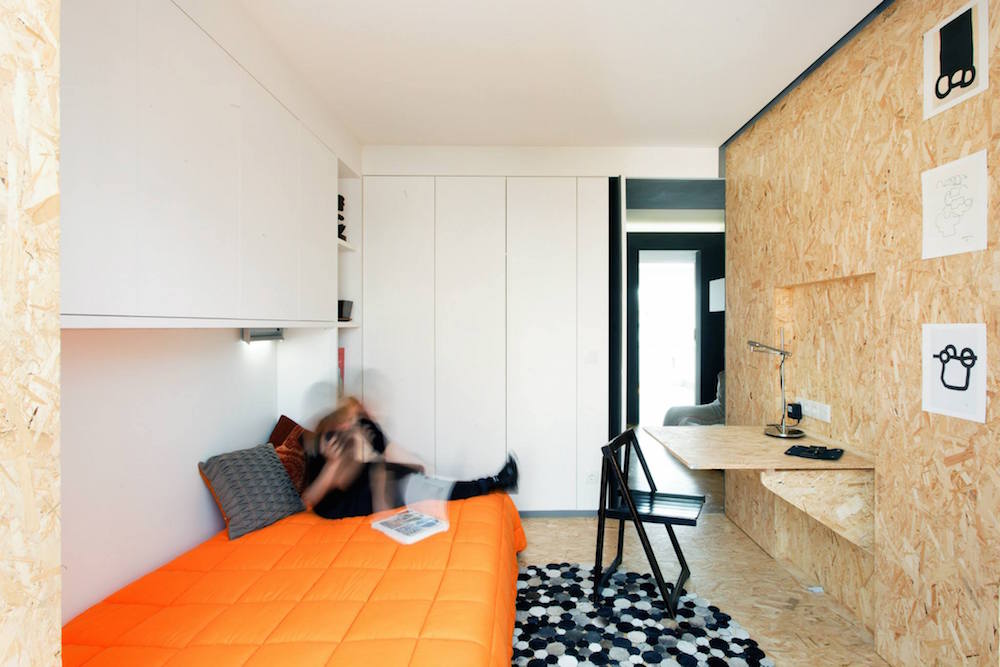
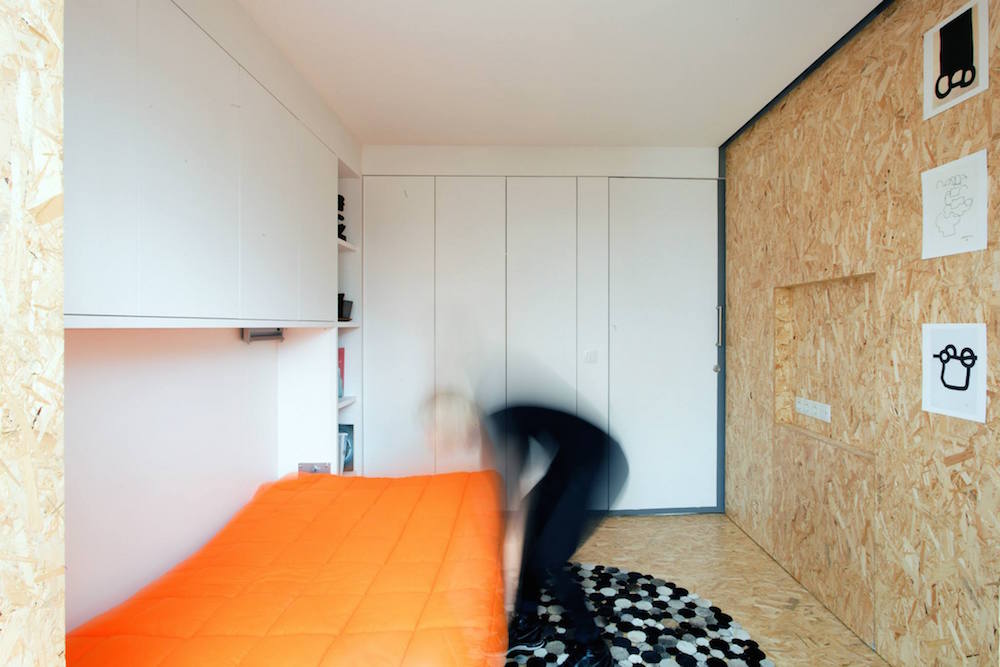
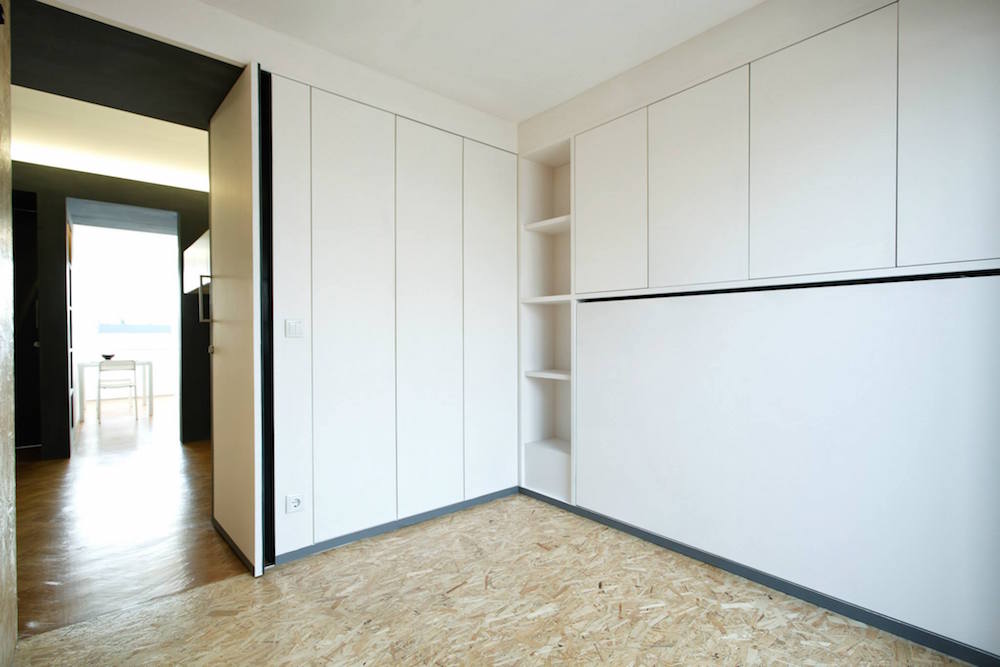
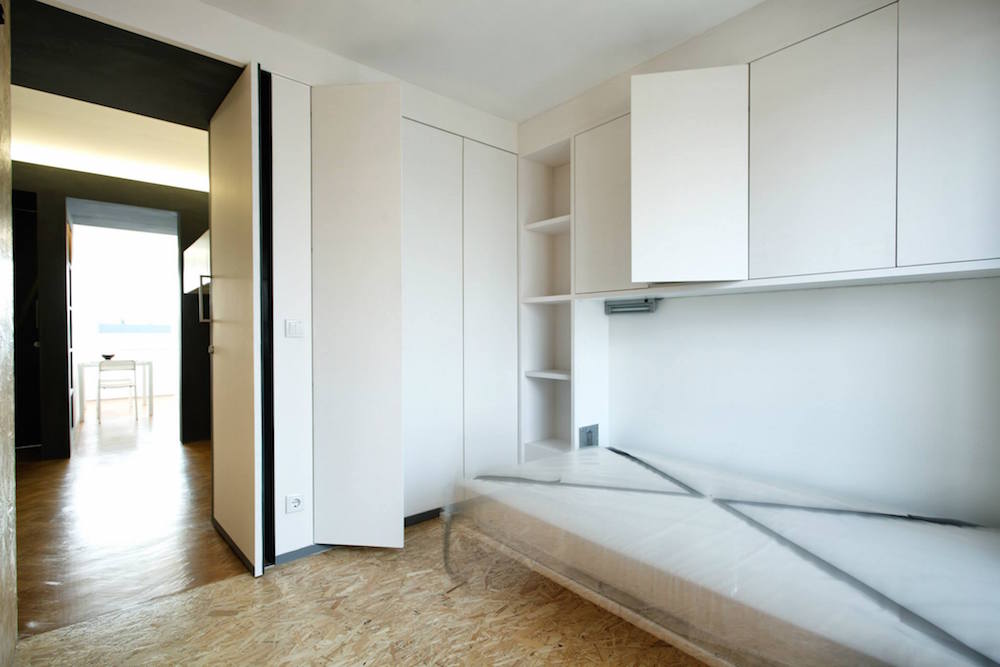
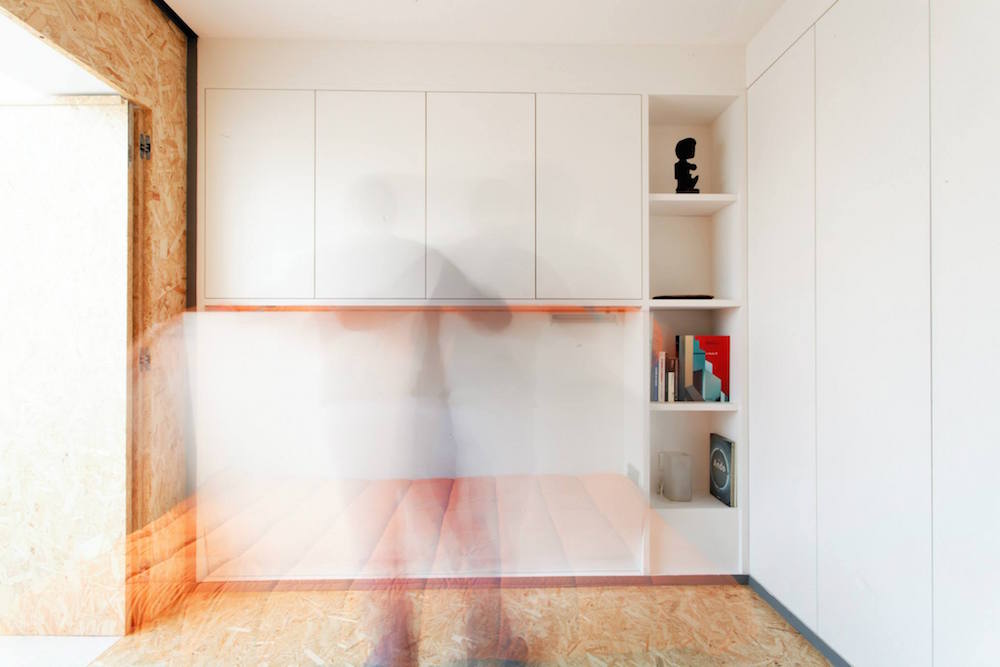
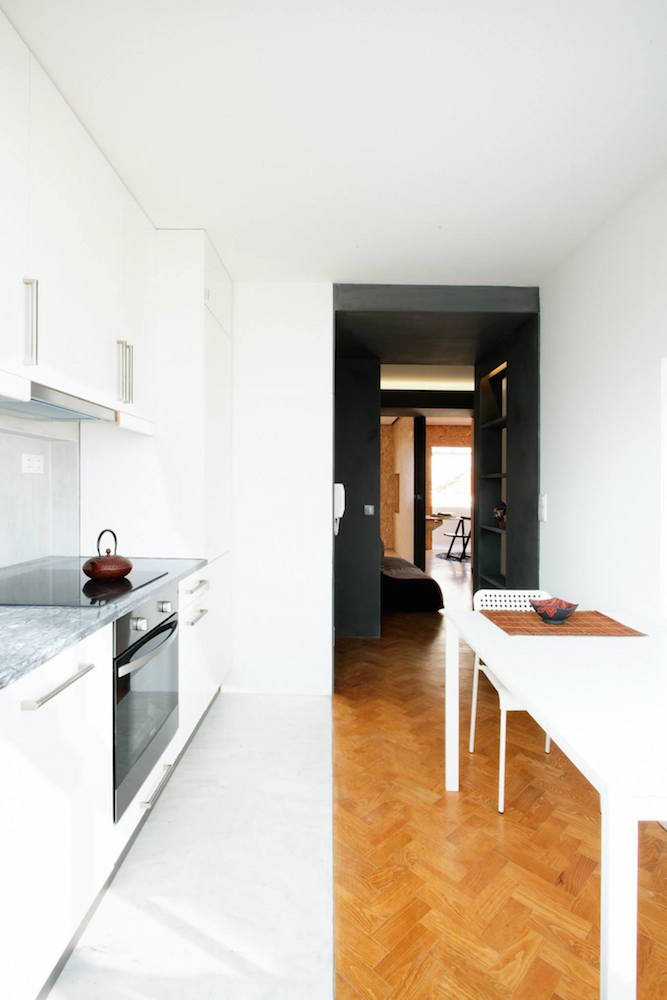
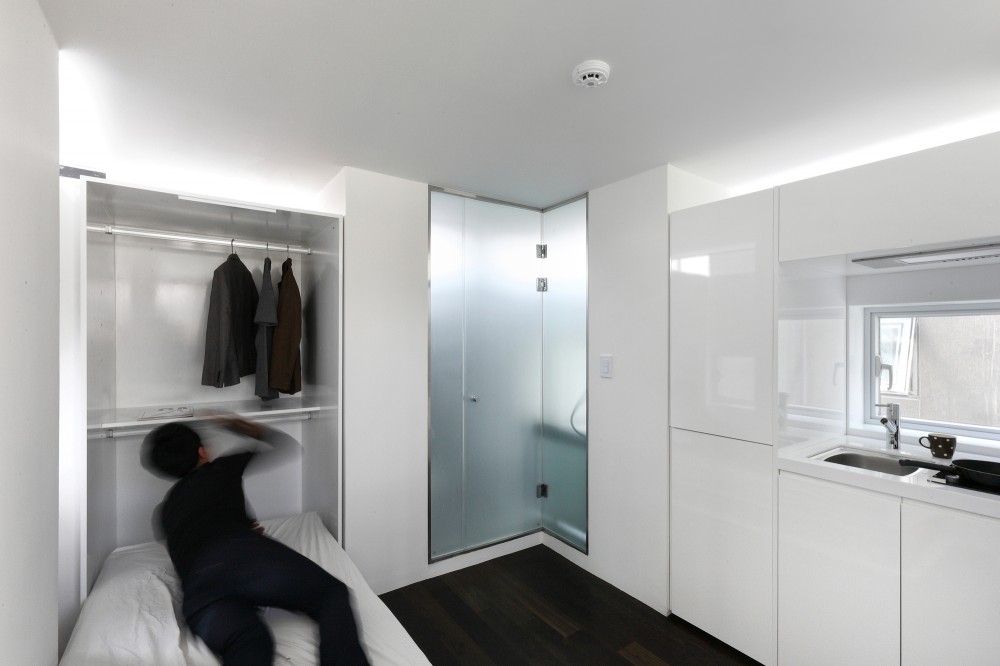
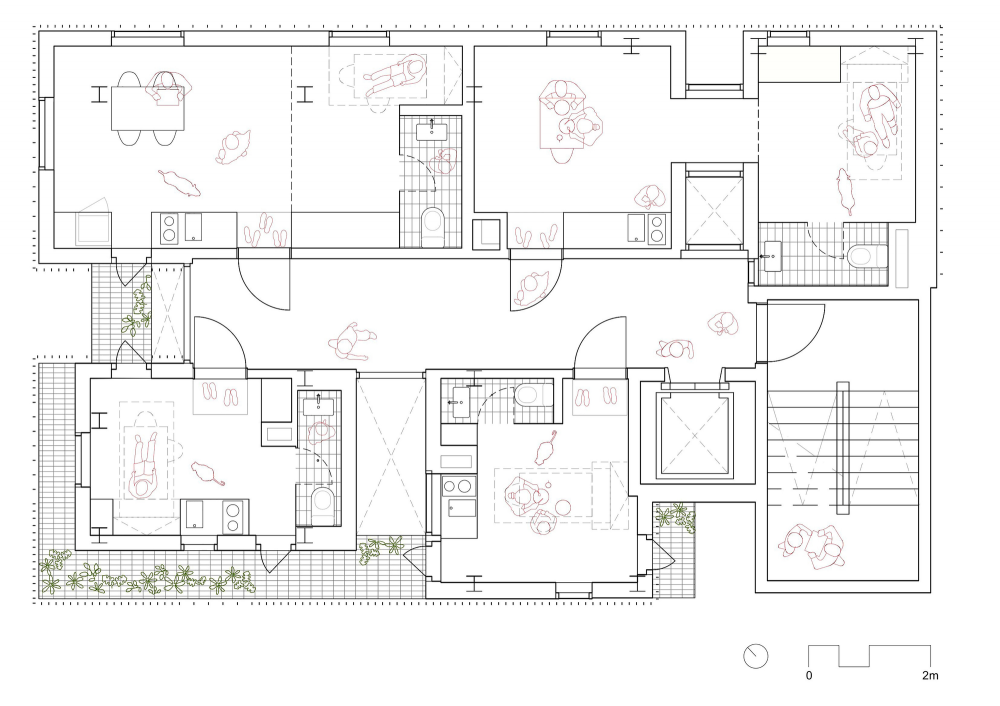
As has been mentioned on this site on several occasions, there are many ways to go micro beside individual micro-apartments. In most cases shared apartments will achieve lower per person footprints, as well as being more cost effective to build and maintain than studios. A particularly nice shared apartment is Lisbon’s Uma Collective’s Xadrez Apartment. The project began as a dilapidated 538 sq ft two bedroom apartment. With the use of wall beds, fold up desks and built in storage, they transformed the small space into a functional and flexible three bedroom student apartment.

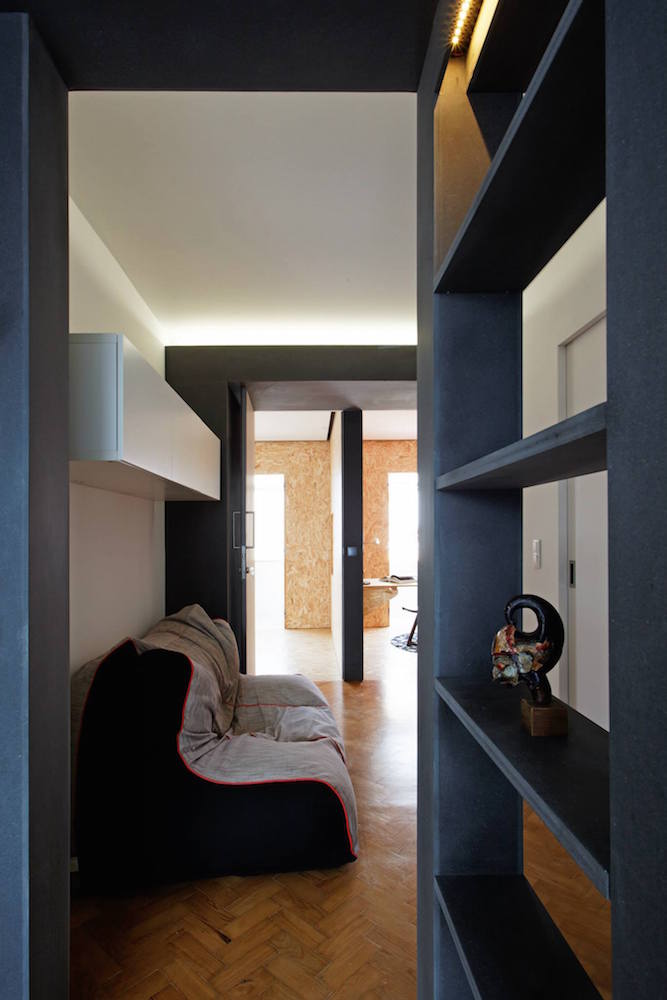
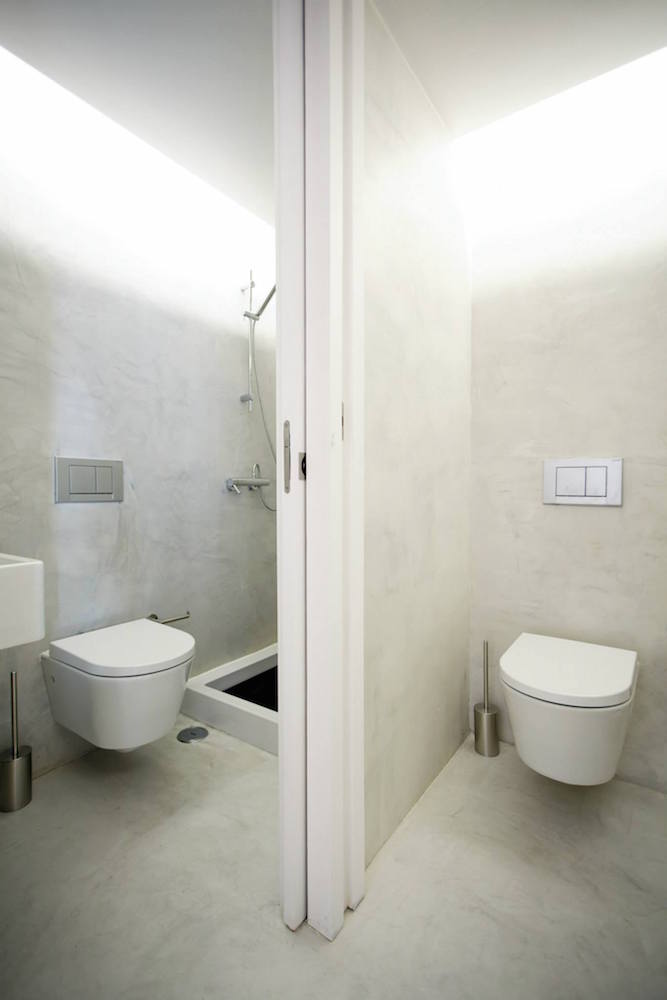
One of the smarter aspects of the project is how Uma reconfigured the rooms. By reorienting the bathroom, they were able to expand the entrance to be big enough for a small sitting area. The reorientation also made the bedrooms–one of which had been a living room–about the same size and dimension, which are just big enough for sleeping and study areas. Each of the bedrooms flows into the center living area and has access to the bathroom. The kitchen and the bathroom are in their original location, eliminating expensive plumbing alterations.

Because each bedroom is self-contained, the design would be well suited for students who want privacy a bit or privacy, but might not be able to afford to–or ultimately want to–live alone.

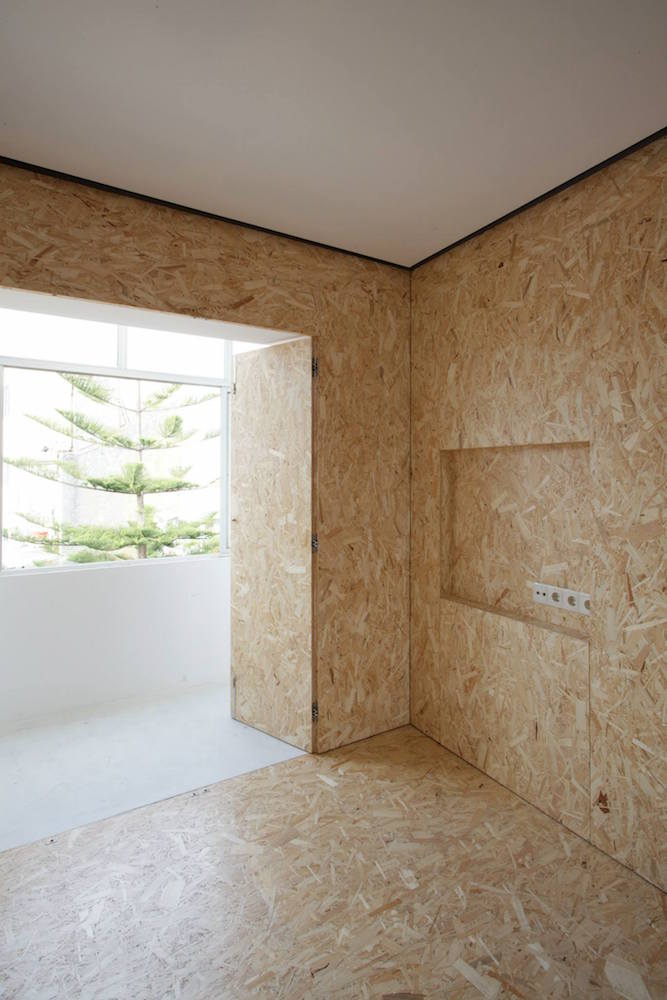
As to the look of the apartment, Uma says on their site that they wanted to create a “contemporary design based on unfurnished materials” such as Valchromat, a type of MDF, and chipboard. The latter material is quite prominent throughout. While I’m not wild about the abundance of the material overall, the fact that it’s student housing–i.e. residents will have a finite stay in the apartment–would makes the choice little less radical. And though Uma’s site doesn’t indicate it, we imagine its use was informed by budgetary constraints.

Co-Living for the 21st Century and Beyond

As we’ve seen recently with Stage 3 in NYC, The Collective in London and the expansion of the micro-apartment movement in general, there’s a growing market for minimal, all-inclusive, affordable, community-centric housing. For the most part, these developments are aimed squarely at the lighter-living, typically-single, experience-hungry urban Millennial (sorry for all the dashes). Today, we’re checking out another player in this genre called Campus, a movement/real estate startup with 30 houses, buildings (or portions of buildings) in the Bay Area and New York City.

Campus “communities,” as they like to call their houses, bear some resemblance to living in a dorm on a college campus. They have ample communal spaces and compact private ones. Most communities feature talks, shared meals and other programming to spur relationship building and philosophical waxing.

But the similarities stop there. Campus’ raison d’etre is both more mature and evolved than anything you’re likely to find at a University of Arizona dorm. For example, all houses are connected by a set of shared values that include being:

  • Open to having new experiences and forming new relationships.
  • Respectful of other’s differences, needs, and privacy.
  • Supportive of each other’s well-being and growth.
  • Respectful to the neighbors and existing culture of the area.
  • Valuing personal freedom.
  • Recognizing that everyone has the need for private space and alone time

In other words, the antithesis of most college campus living we know about (save Evergreen State or someplace like that).

In terms of nuts-and-bolts, each room is private and lockable. Rents are month-to-month and each member can opt out at his or her discretion–i.e. you are not tied to the other community members. Rent includes common space furniture, kitchen supplies, common space cleanup and several other amenities (utilities are additional so far as we can tell). Prices depend on community location, room size and a few other variables. For example, a ~70 sq ft room in Park Slope Brooklyn cost about $1200 whereas a space twice that size in the SoMa district of SF costs the same amount.

Campus hardly sees itself as mere purveyor of fun, convenient housing for Millennials. Their mission is to “build better living environments, and…build better housing and cities that are more attuned to people’s needs,” and they have an ambitious, two-phase master plan. Phase one consummates in the formation of 5000 communities in ten cities (they announced locations in LA, Boston and DC will be popping up in the near future). Phase two goes into utopia-production, with an eventual goal of making 100 cities, each with tens-of-thousands of people (see full vision here).

In many ways, Campus is a modern, formalized (but hardly stodgy) and ambitious take of co-living. Like most things, the latest and greatest is part of a continuum of thought. But originality isn’t a condition for doing something useful and cool.

The Future of Apartment Sharing

Often the best way of downsizing is not getting your own tiny house or apartment, but sharing a larger house or apartment. But finding a nice place to share, nice people to share with and enduring the myriad issues that house-sharing brings, often drives people to pay more than they want in order to live alone. Enter Stage 3 Properties, a real estate startup that seeks to alleviate the woe that often plagues the shared-housing experience.

I spoke to Chris and Andrew Bledsoe, the brothers behind the Stage 3. They explained to me how firsthand experience–verified by focus groups, surveys and other research–showed a gulf between how people live and what the market is offering.

They found that young people, particularly young professionals, are living very differently than they did 20 or 30 years ago. In fact, the name Stage 3 is taken from the third stage of life, which they define as “emerging adulthood”–the period right after college and before adulthood/parenthood. These third stagers are choosing to stay single longer. They are more mobile. They are choosing live experiences and cities over stuff and the burbs.

But these same people are facing new challenges like a stagnant economy and a severe shortage of attractive, affordable housing options in most major metropolises.

Even finding clean, basic housing–which is what many of them are looking for–can be out of reach. Christopher Bledsoe said, “Most landlords require an annual income of forty times monthly rent. Since the average rent for a studio is around $2500 in many parts of Manhattan, that works out to be $100K just to get your foot in the door.” This is a big number even for the relatively well-heeled first year analyst at Goldman Sachs, he says.

Faced with this situation, most turn to what he calls the “underground housing” market. Stage 3 did a deep analysis of Craigslist rental listings in thirty of the top US metropolitan areas and they found a significant percentage of listings were for people posting in the “rooms/shared” category–i.e. people looking to rent out a room in their apartment or even sometimes share a room.

worst-room

But Bledsoe believes that most of these situations are far from ideal. He points to the Tumblr blog “The Worst Room,” which showcases the dregs of Craigslist rental listings, as an example of what awaits many people looking for an apartment share (something I, a longtime New Yorker, can say is not so far off the mark). 

Then there are other inherent problems with roommate situations: Many apartments are not designed with the 20-something shared renter in mind, often resulting dining rooms and living rooms that double as makeshift bedrooms. Meanwhile, finding roommates you like is a crapshoot at best; you are often financially tethered to virtual strangers through a lease; most people have different ideas about what constitutes “clean”; and so forth.

Stage 3 has created a branded solution they call “Ollie” (a phonetic play on “all-inclusive”). Ollie is a system that addresses many of the problems facing people who are looking for a nice place to live in a good neighborhood, and might not be able to afford a studio (or qualify for one), and who want to avoid terrible roommate situations and ill-suited tenement style accommodations. Here’s what Ollie will offer:

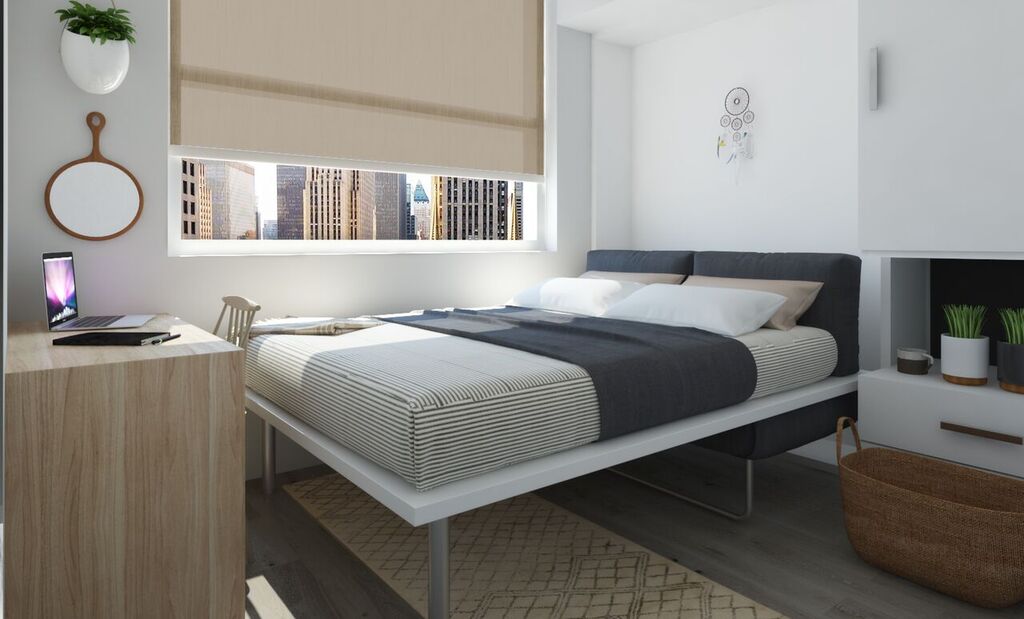
  • Purpose-built micro-suites, designed specifically for sharing, with large bedrooms and smaller common spaces (sample two-bedroom floorplan below).
  • Furnished rooms that include space efficient furniture. They are planning on using beds from Resource Furniture.
  • An online roommate matchmaking service, akin to an internet dating site.
  • Lease insurance, which protects you should one of your roommates bail from his/her lease.
  • Full-amenities like house cleaning and laundry will be included in rent.
  • Some of their buildings will feature hotel-style pools and gyms.
  • And, Bledsoe’s personal favorite, social programming designed to foster networking opportunities and a sense of community among neighbors. Think weekend white water rafting trips upstate during the summer months and ski trips in the winter months.

Bledsoe says Ollie will cost 30% less than renting a studio in the same neighborhood. In other words, if a studio were to cost $2500 in a newly renovated, full-service building, then Ollie would target per-tenant rents of about $1700, inclusive of furniture, housekeeping and other amenities. This might strike some (non-New Yorkers) as a large number, but Bledsoe points out that this is not too different than the price of renting a spare bedroom on Craigslist within a shared apartment, possibly even within a walk-up building without any of the added accoutrements that Ollie promises to deliver. Moreover, he believes the social component of living in an Ollie apartment will prove to be among its biggest selling points, providing benefits that cannot be obtained by living alone in a studio.

Screen Shot 2015-07-14 at 2.33.42 PM

Stage 3 does not want to limit Ollie to the most exclusive neighborhoods in Manhattan. Through a partnership with New York-based Simon Baron Development Group, they are aiming to offer 10K units in the next few years throughout New York as well as other east coast cities like Boston, Philly, Washington DC and Miami. They have three projects in the New York area in the works that will roll out in the next couple years, with the first units leasing in 2015.

As we noted the yesterday, many individuated micro-apartment developments are stalling because of regulations. Moreover, even when studio-style micro-apartments do hit the market, their rents will still be out of reach for many, leaving a huge need for clean, basic housing. The Bledsoes have received pre-consideration approvals from New York City’s Department of Buildings, which they say validates that Ollie is a solution that will work without any housing reform, improves upon the common practice of apartment sharing, and stands to represent a significant addition of clean, practical housing in today’s cities.

Tapioca-Inspired Micro-Housing

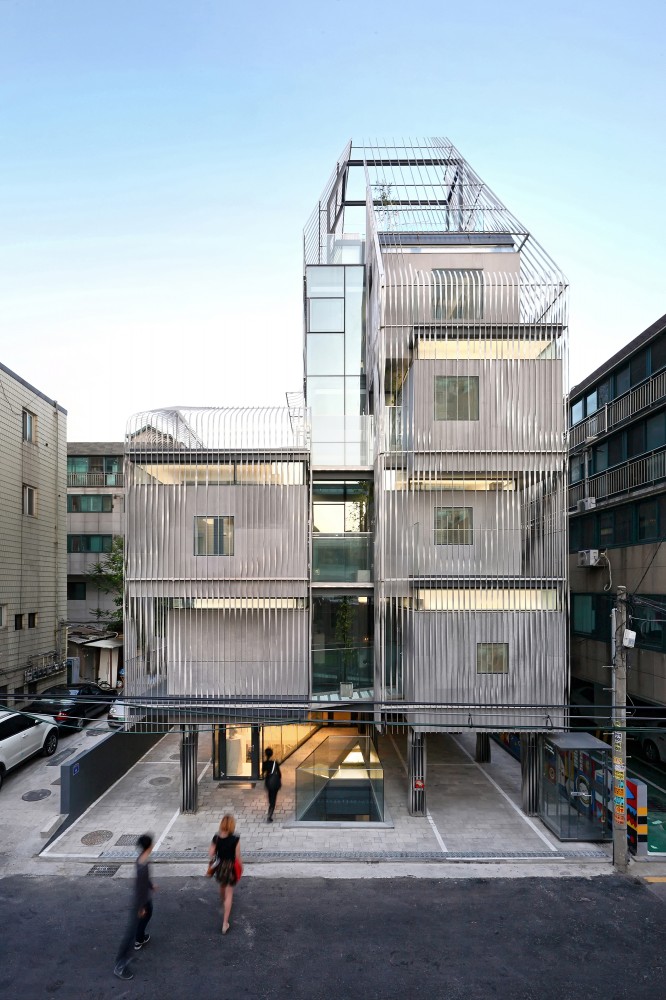
The micro-housing conversation tends to have an either/or note about it. Either we build basic housing that suits the peripatetic single or we build housing that’s suitable for larger households who want to lay roots and build community. Rarely is there talk about making housing that’s adaptable to multiple use-case scenarios, which is something the Songpa Micro House by SsD Architects in Seoul attempts to do.

According to the architects, the “fourteen ‘unit blocks’ allow residents to either claim a single unit, or in the case where a couple or friends require more space, recombine the blocks for larger configurations.” The architects liken the unit configuration to tapioca, saying the various gangplanks and courtyards act like “the ambiguous gel around a tapioca pearl” and create “a soft intersection between public/private and interior/exterior, creating social fabrics between neighbors.”

Whereas the permeable dwelling unit configuration creates a hazy intra-building division of private and shared spaces, the base of the building, which contains a “micro‐auditorium/cafe” accessed by a public stairway, creates a hazy division of public and private property.

The whole idea is to create a high-density living situation that is more than a flop-house to live in before people move onto bigger and better things. The architects warn that “micro-housing has the danger of becoming a provisional housing type with little social value.” By making social spaces part of its DNA, the Songpa Micro House is someplace that looks pretty fun to live in, and one you might want to live in for a while.

Via ArchDaily

Live with Other People, Better

Finding good roommates is hard enough, but then you have to live with them. There are a million things that can strain the best of roommate situations: remembering who cleaned the fridge last, keeping on top of shared bills and so forth. A new venture called Chored, seeks to reduce some of these tensions with mobile technology. Through a crowdunding campaign, Chored is looking to make an app that digitizes the more contentious aspects of inter-roommate relations. Through the app, bills can be set up on an online account, split and paid through Paypal. Chores can be setup, assigned and tracked via the app as well. You can allocate “ad hoc tasks” such as getting toilet paper and note who did it and paid for it. If used–and that’s a big if in our minds–Chored could mitigate or eliminate much of the random grievances that make roommates resent each other (or it could amplify them I guess).

As we’ve said before, house-shares are often as (or more) space and cost efficient as micro-housing. But many people will pay a hefty premium to live alone rather than deal with common roommate-induced headaches. Living with people–even ones you like–can take a lot of effort and require systems to keep things running smoothly. Some of the best roommate situations I ever had were also the most regimented and rule-intensive. But most of my roommate situations were in a time long, long ago when not everyone had a smartphone. I could see how having a digital log of who did what and when could help people live together better. Time will tell whether: A. Chored gets their funding, B. people will use it, C. it’ll help people live together better.
If you currently live with a roommate/housemate, or successfully lived with one in the past, what systems did you use to keep things running smooth? Let us know in our comments section.

Thanks for the tip Sam

Japanese Architects Build Multi-Generation Family a Tiny Village

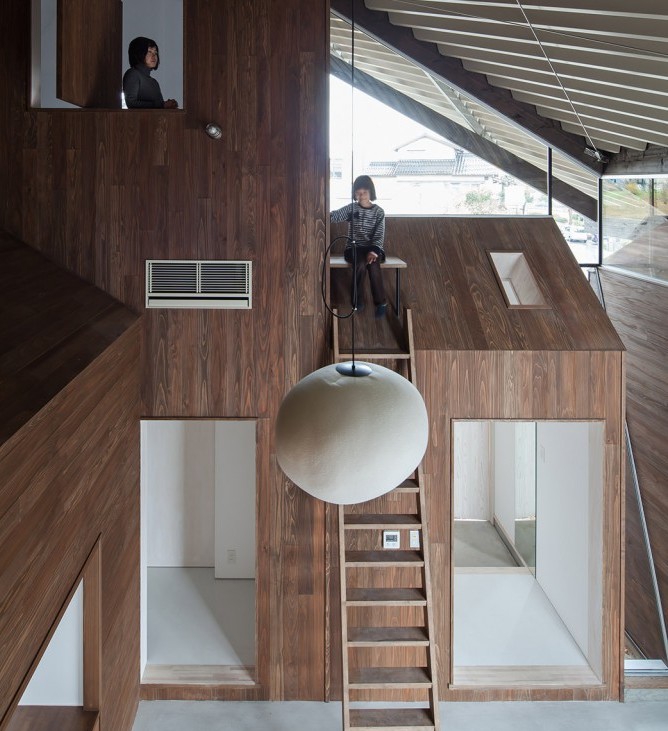
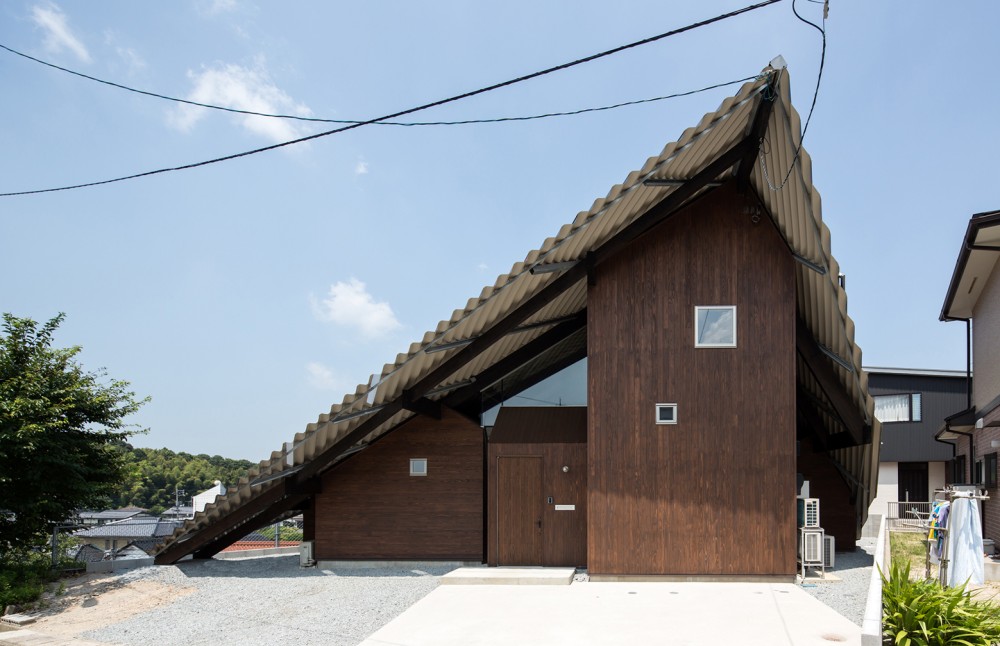
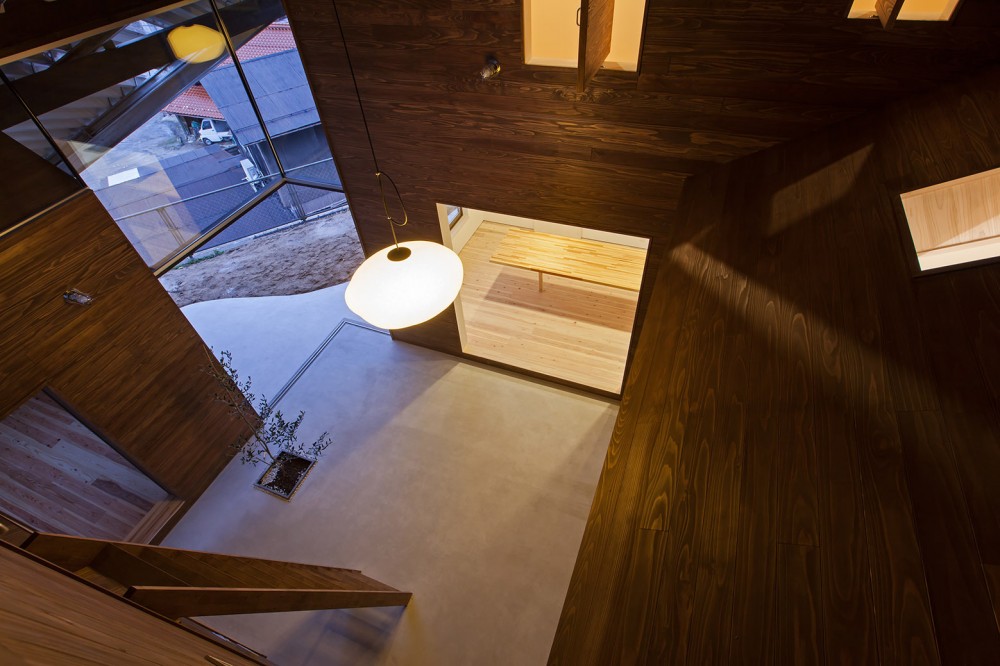
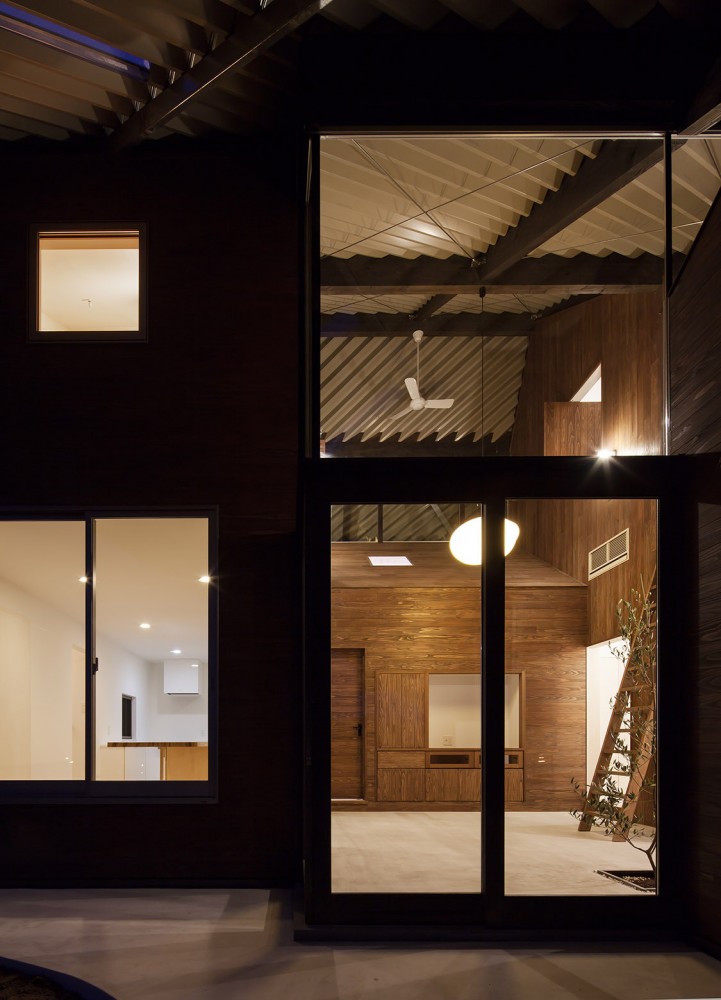
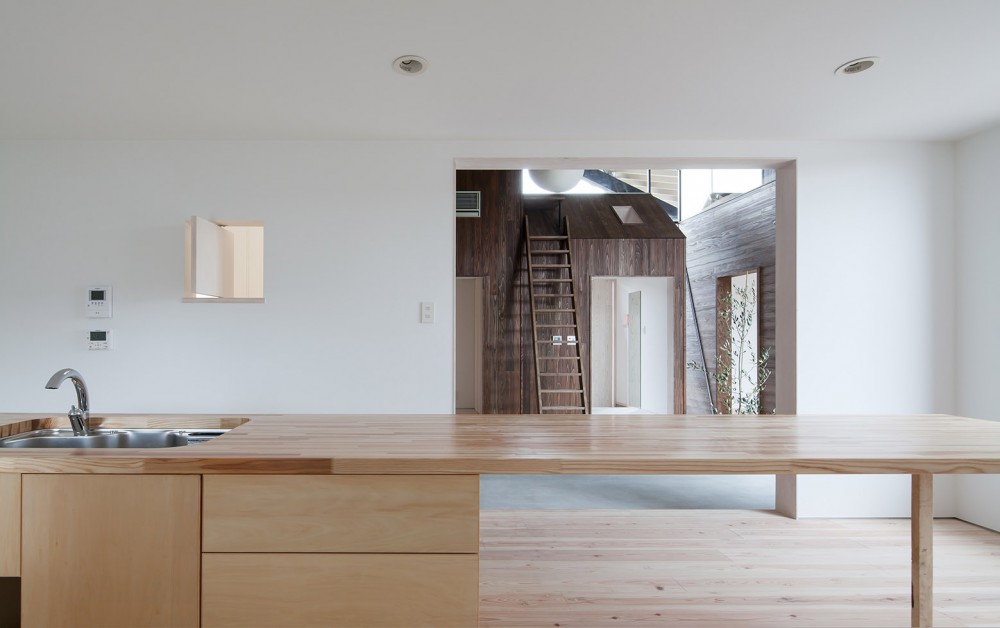
Fitting a large number of people under one roof comfortably and with privacy can be a tricky proposition. Japan’s y+M Architecture took an interesting approach in achieving this with their Rain Shelter House. The home places separate micro-buildings under one large canopied roof, creating several autonomous districts in one small footprint. The setup, which kinda resembles an extremely small village, houses a couple, their two children and a grandmother.

The space has four bedrooms, with the grandmother’s residing in a separate building. The second floor two kids rooms are accessible via stairs or a ladder off the inner courtyard.

The region where the house sits gets a lot of rainfall and snow, which the roof’s sharp slope is designed to shed; its main slope faces north, where most of the biting winds come from. Large glass panes further insulate the courtyard from winds and openings on the side of the structure let in oblique lighting. We’d imagine the courtyard makes a great outdoor play-space on inclement days.
What fascinates us most about the space is how it reimagines how the family home can function. We could imagine a similar structure working well for a space occupied by two or more families, striking just the right balance of connection, privacy, all inhabiting a small overall footprint.
via Archdaily

Spanish Apartment Expands the Notion of Micro

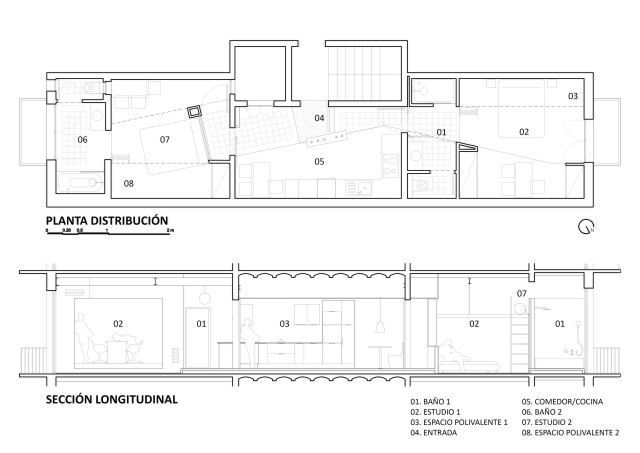
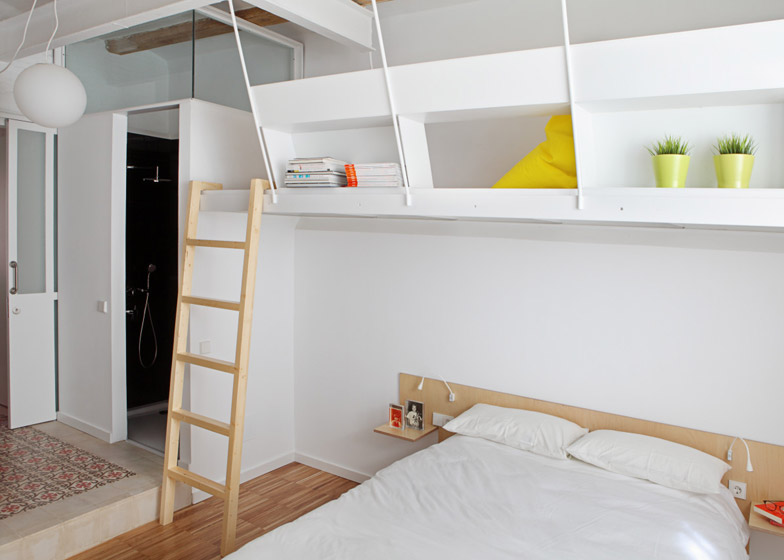
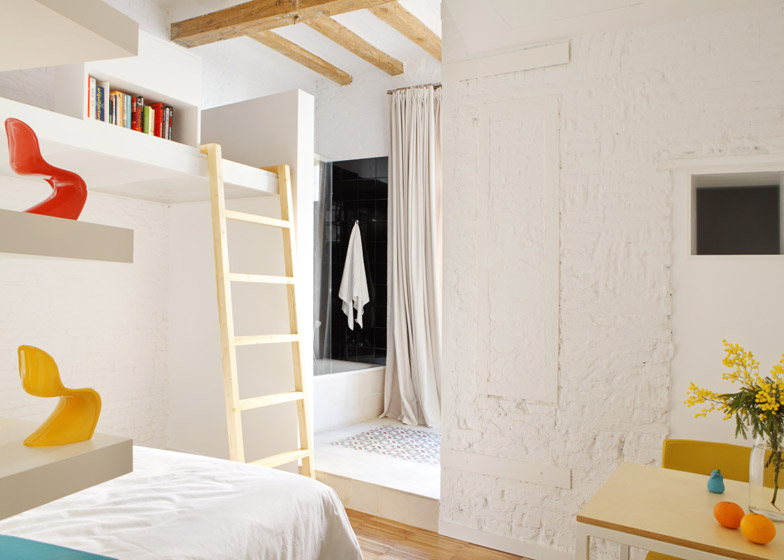
As we saw a couple weeks ago with Share House in Japan, shared housing can cut one’s spatial footprint as much or more than an single-occupant micro-apartment. And with the right design, shared living can provide a great, private living experience. We found another elegant example of how this can be achieved from Spain’s Miel Arquitectos and Studio P10. They were commissioned to divide this long and narrow 700 sq ft apartment in Barcelona into two live/work spaces with a shared kitchen and dining room. The apartment is actually designed as a “tourist apartment” according to Miel’s website, though we think it would be quite livable for more permanent residents.

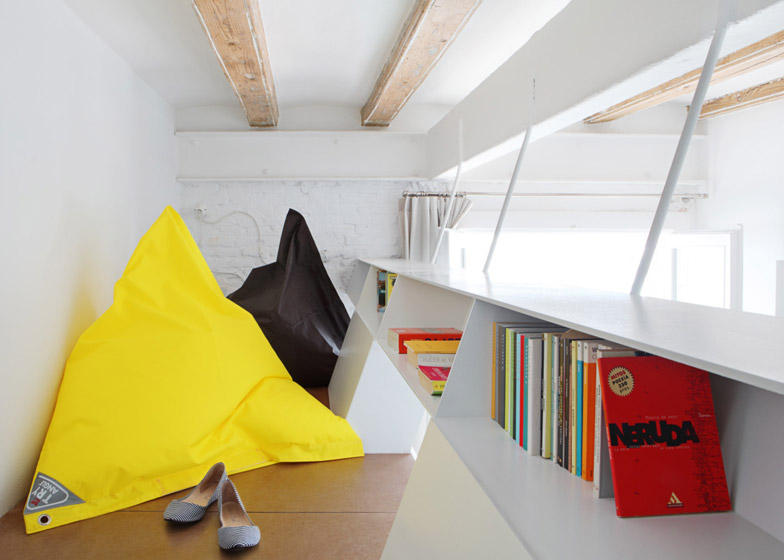
Each bedroom is more or less a self-contained apartment, with entrances off the central, kitchen/dining area. Since light in the middle of the space is nonexistent, the architects used tricks such as glass doors and open bathrooms to facilitate the passage of light through the space. Coupled with the light color palate of the walls and furniture, the space feels bright considering there are only two window banks on each end of the apartment. 11′ high ceilings allowed the architects to create mezzanine spaces in each apartment, which can be used as reading nooks, though we question who would actually use these spaces except for kids.

This apartment and others prove that there is no one-size-fits all formula for reducing your spatial–and, by extension, carbon–footprint. While tiny single apartments are one great way of achieving higher density, simplified living, so are shared living spaces. The latter have the advantage of being more social (depending on your view). More important, building shared housing is cheaper; by reducing the number of kitchens and bathrooms, the most expensive aspects of building, you can make a house that costs quite a bit less than if the same number of residents were using the same area, but had private apartments (i.e. two people living together in 700 sq ft or two people in two 350 sq ft apartments). Considerations like these, though not necessarily on the top of minds of John and Jane Q Public, are real hurdles for getting smart designs built.

Via Dezeen