This Science Fiction Dystopian Housing is So Cool

This author is not a science fiction enthusiast, so forgive my ignorance of Ernie Cline and his 2011 book “Ready Player One,” which apparently is a big deal in that world. The cover of the book shows a skyline of the not-so-far off dystopian future the book portrays. Dystopian as it’s supposed to be, the towers of stacked camper trailers look pretty awesome, like an uber low-tech version of Kasita prefab housing.

HT to Tim McCormick

This Thing Turns Spaces Into Homes

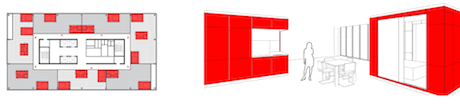
What differentiates a space from a home? We’re not referring to the smell of baked bread or the pencil marks on the door sill marking your child’s growth. We’re talking about the most basic constituents that push a space over the threshold into being a home. As far as we see it, there are three things. First, there must be a structure to protect you from the elements. But sheds and warehouses and myriad other spaces have structures, so that’s not all you need. It must have a bathroom. Yes, some dwellings have outhouses or bathrooms down the hall, but those are more likely to be considered dorms, boarding houses or yurts. Finally, houses need kitchens because, well, people need to eat. Rotterdam design studio Kraaijvanger recently created Hub, a modular unit that quickly and easily turns a space into a home. From Dezeen:

Each module contains a kitchen, bathroom and toilet, as well as facilities including heating, a sound system and a Wi-Fi connection – providing residents with almost everything they need to live comfortably.

The 15 sq m boxes are designed to transform any space with electricity, water and sewage, such as a vacant office, into a livable home (we suspect the first two requirements are far easier to handle than the last one).

hubbed

Kraaijvangerto also created BedHub, which is a modular bedroom. Both modules act as room partitions, chopping up open spaces into discrete rooms.

hublayoutOne of the most edited things you can do is use the stuff you already have. Hub is an innovative way of putting to use unused spaces that are not otherwise set up for habitation. Now just tell that to the building inspector.

Photo credit: Ronald Tilleman.

Tiny, Prefab, Plug-and-Play Housing Coming to a City Near You

When we last caught up with Professor Jeff Wilson he was living in dumpster. The reason he was holing up in such an unlikely structure wasn’t merely for shock value (though that was part of it). He was trying to see how minimal a home could be while still achieving a high level of comfort and function. What he found was that 33 sq ft (the size of the dumpster) was too damn small. “At the end of the day, I was still peeing in a bottle,” he told me. But he knew that with the right design, he could make something that was still very small, yet more capable than the his trash bin home. This conceit is informing his latest endeavor. Wilson and his partner Taylor Wilson (no relation) have founded Kasita, a prefabricated, modular housing system that is out to revolutionize compact urban architecture.

“The biggest problem is affordability in urban cores in cities across the world, and housing is at the nexus of this problem,” he told me. The lack of housing drives people to go the outskirts and suburbs of cities, where housing is larger and far more resource intensive. Wilson saw the need for something that could easily densify these urban cores, but nothing out there was cutting it from his perspective.
kasita_interior_from_hallwaykasita-hallway

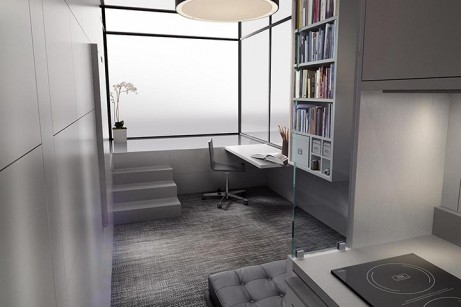
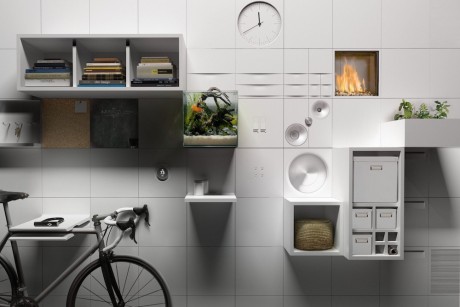
In devising a solution, Wilson bypassed the counsel of architects and sought out the “baddest ass product designer” he could find. Because space efficiency was of the utmost importance, he wanted someone more accustomed to dealing in millimeters than 2” x 4” studs. That person turned out to be noted industrial designer Remy Labesque. The design Labesque created is a sleek, fully-furnished 208 sq ft unit. There’s a small kitchen, seating area, storage and a bathroom. There’s a unique tile system along one wall that can support a variety of plugin accessories ranging from a bike hook to speakers.
kasita_interior_tiles

“The bed was the real challenge,” Wilson said. “Most of the tiny housing bed solutions just didn’t seem that great to me. For example, tiny houses usually have low-ceilinged loft beds, which aren’t ideal if you like to drink, make love or do both at the same time.” Because they made their ceilings ten feet high, they were able to use a volume underneath the kitchen for an easily-accessed trundle bed without compromising the overall spaciousness of the unit. 

kasita-frame

Perhaps the most innovative aspect of the Kasita is its frame that the units are plugged into. The frame is centrally connected to the municipal grid (sewers, water, gas and electric) and utilities are then distributed to the units through the frame’s infrastructure. This makes for quick and cheap set up and construction. This speed will make Kasita ideal for installation in empty or underutilized urban lots. Wilson told me that a nine unit frame can fit onto as little as 1K sq ft; even accounting for requisite setbacks, this is a small footprint. He also said they’re ideal for “flag properties”–odd shaped parcels of land that are tough to fill with conventional structures.

The prefabricated construction, small size and ease of setup result in lower costs. Wilson projects that once production is up to speed, Kasita units will rent at 50% of normal market rates for comparable studios, which in Austin is $600.

Oftentimes when I see awesome renderings such as Kasita’s, I think of the V word (“vaporware”–something that looks and seems cool but has almost no chance of being built). Wilson assured me that Kasita is not that. The first prototype unit is expected to be complete in three weeks and a 2 x 2 frame will be complete a week later. They have already purchased land in Austin to build the first 3 x 3 Kasita building. Most crucially, they have been working with Austin Planning and Zoning Department as well as the Texas Department of Licensing and Regulation to ensure that Kasita is code compliant. They have already received a round of seed funding and will be raising their Series A later this year. He expects to have the first Kasita building built by the end of 2016. We wish them godspeed and look forward to seeing these built.

Large Lego-Like Blocks Can Make Anyone a Builder

Along with thrift and above average height, my father passed down an aversion for building stuff. I’ve often pondered if my minimalist tendencies are just the offshoot of this aversion–i.e. doing without requires zero carpentry skills. But EverBlock is a building system so simple, even a DDIY (don’t do it yourself) person like me could build stuff like a champ. EverBlock “is a life-sized modular building block that allows you to build nearly anything”–a description that bypasses Lego® brand building blocks, because, well, EverBlock are just really big Lego blocks.

everblock-wall

Like Lego, EverBlock are plastic blocks that fit together, though EverBlock blocks are considerably more substantial. Details from their website:

The EverBlock™ System consists of four universal parts–a full sized 12″ block, a 6″ half-sized block, a 3″ one-quarter sized block, and a 12″ finishing cap that all interlock. Connector clips, hanging clips, and reinforcement rods are available for more structurally demanding applications and metal baseplates and feet can be used for additional stability.

This scale allows you to make some practical stuff: furniture, walls, various dividers, etc. Besides their obvious ease of construction, what’s best about them is that you can adjust them to changing spaces and needs. Need to chop your 1000 sq ft friendly sofa in half to fit into your new tiny house? Need to divide a room in your rental apartment without 2×4’s, sheetrock and paint? Need to convert your kid’s bed frame into an adult sized one? EverBlock has you covered for all of this.

everblock-tableeverblock-building

You might even be able to make a basic house using the blocks. EverBlock founder Arnon Rosan wrote me saying that the blocks are reinforceable via a channel that runs inside the blocks, accommodating a plastic or wooden dowel or rebar and making them suitable for permanent or semi-permanent structures. There are also plans to make reinforcement pins that slot inside the blocks for much more rigidly. Windows and doors can be framed out similarly to traditional construction and replacement windows can be installed by screwing the window right into the blocks using nailing strips around the perimeter. While he estimates the R-value of the stacked blocks to be around 1.5–about the same as a one inch thick plywood–this figure could be greatly improved with caulking and, of course, insulation. If you have CAD drawings, EverBlock will help you realize your design. Getting a building inspector to sign off on this structure is a conversation for another day.

The blocks come in a few different colors and can be purchased individually and in bulk. An 18 pack of the large blocks runs around $125. Rosan said that a 7.5 ft tall, 400 sq ft structure with an opening for a door and two windows requires about 1,000 blocks, or about $6,500.00 in blocks. Raw materials for a conventional building might still be cheaper, but EverBlock’s ease of use and reusability–for both furniture and construction–might create a compelling alternative for many.

Yesterday’s Future of Modular Interior Design

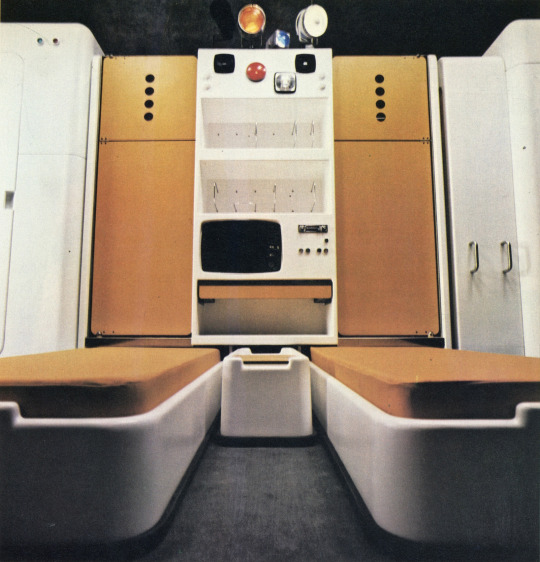
This site has featured a number of modular, everything-included interior units–from MIT’s CityHome to Urban Capital’s Cubitat to Clei’s Elastic Living. The concept makes a ton of sense: plug one of these units into a clear space and have all the furnishings, kitchen and plumbing fixtures, storage–everything basically–ready to roll for habitation. The ability to mass produce them would make them doubly attractive to a developer looking to streamline construction. Though aforementioned examples make it seem like this idea is a recent one, such is not the case. Way-ahead-of-his-time industrial designer Joe Colombo made his Total Furnishing Unit almost 45 years ago.

The unit includes a kitchen, bathroom, two beds, storage, a television and more. It was designed to adapt to multiple room layouts and also to its user’s changing habits–moving the modules around would shift the function of the space. In many ways, Colombo’s design bests the contemporary examples as it was designed to  be configurable to a variety of different room shapes.

The unit, so far as we know, never went beyond exhibition purposes. But add a new coat of paint and an LCD monitor and the unit would look completely modern.

Via Rudy/Godinez Tumblr and Lloyd Alter/Treehugger

Make it Simple, Add Magnets

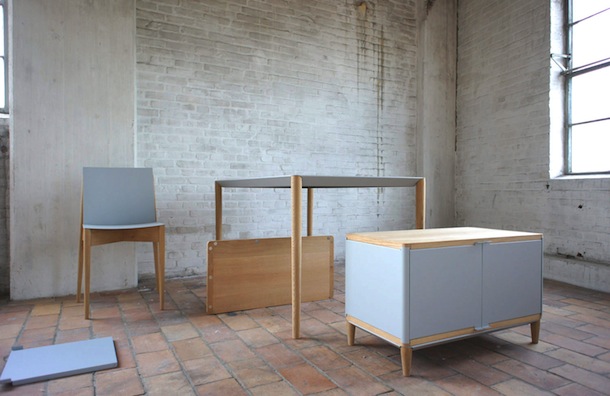
Perhaps it’s because this author recently had to put all of his furniture in storage while his future home is being renovated–whatever the reason, I’ve become very fond of furniture that’s easy to disassemble and store. First it was the IN A BOX collection by TRUE. Today, it’s Benjamin Vermeulen’s MAG (Magnetic Assisted Geometry) collection. Rather than relying on screws or traditional joinery, the MAG’s flat-packing furniture comes together via (you guessed it) high power magnets.

Vermeulen correctly asserts that flat-packing furniture is more economical and eco-friendly than traditional furniture, but most of it is tough to assemble and suffers from crappy materials and construction (not naming any names of who he might be referring to). MAG, on the other hand, is made entirely of solid wood and steel. Almost all of the furniture’s parts are held in place by magnets (we imagine they’re the extremely powerful, rare earth variety); additional support is added with stanchion fittings at critical stress points. MAG requires no tools and assembles in minutes. This type of construction is not only convenient, but it makes all of the furniture customizable and easily repaired.

MAG_cabinet_2

The furniture’s convenience would be far less appealing if it was ugly. But it is not. Vermeulen’s simple and light designs match the unfussy nature of its construction. Vermeulen is working on getting the chair produced for Q1 2014 with the rest of the collection following shortly thereafter. Shipping worldwide will be a breeze because of its flat-packing design, he reports. No pricing information just yet. We’ll keep you posted.

Via Dezeen

Milk Crate Furniture for Grownups

Chances are milk crates somehow made their way into many of our first forays into home decoration. The ubiquitous plastic crates stack great, provide lots of usable storage, and can be used as a stool or end table in a pinch. But they tend to warp, break down quickly and, frankly, look pretty rough. A company called Yube now provides an adult replacement to the milk crate. Their YubeCube is a 13″ cube that does all the duty (and a lot more) of the milk crate, without the fresh-out-of-high-school aesthetic.

yubecube-cube

The YubeCube is infinitely customizable and configurable to whatever situation you need it for. Unlike milk crates, they lock together and can be stacked up to 6′ 5″ high. They can handle 110 lbs internal weight and 55 lbs external load. You can leave them open or close them off with myriad door styles including polished aluminum, frosted glass, bamboo, white or several different patterns and colors. You can add feet, wheels, shelves and LED lights to the cubes. The YubeCubes also feature a very solid eco-cred, with panels made entirely made of sugarcane fiber, bamboo and recycled plastic.

yubecube-coffee

Yube offers the cubes individually or in various different sets such as a bathroom set, media storage, coffee table or desk. Individual cubes sell for $34.50 without accessories. Sets range from a $100 nightstand to a $1250 extra wide wall shelving unit.

If they asked us, we might suggest the YouCubes have a higher weigh load, as it’d enable them to be seating. And while they are certainly more polished than milk-crates, they still have a somewhat utilitarian look about them.

Our little gripes notwithstanding, we think the YouCube is a great idea. It’s a piece of storage that can be used as furniture and can be modified to meet a million different purposes, styles and room sizes.

Man Thinks Outside Box, but Lives Inside One

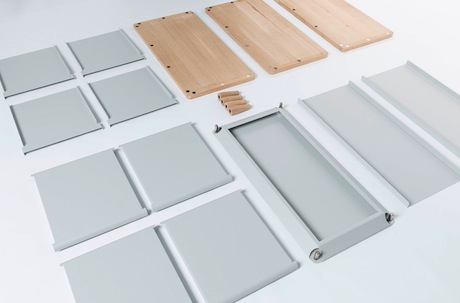
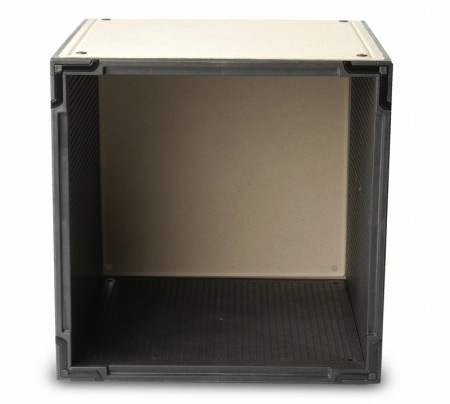
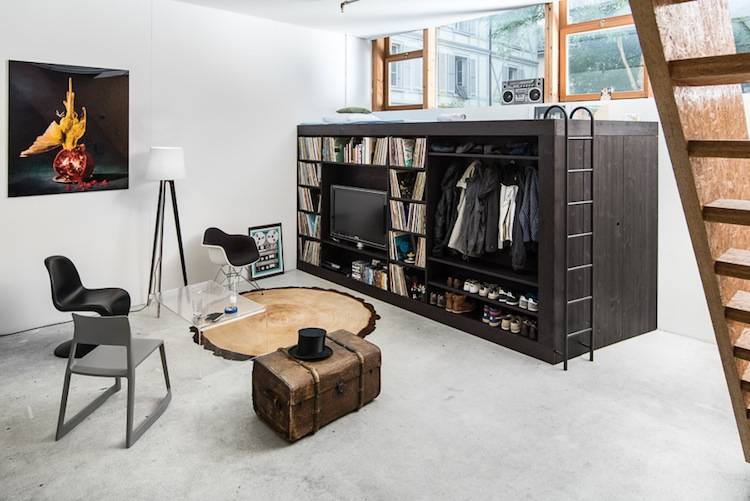
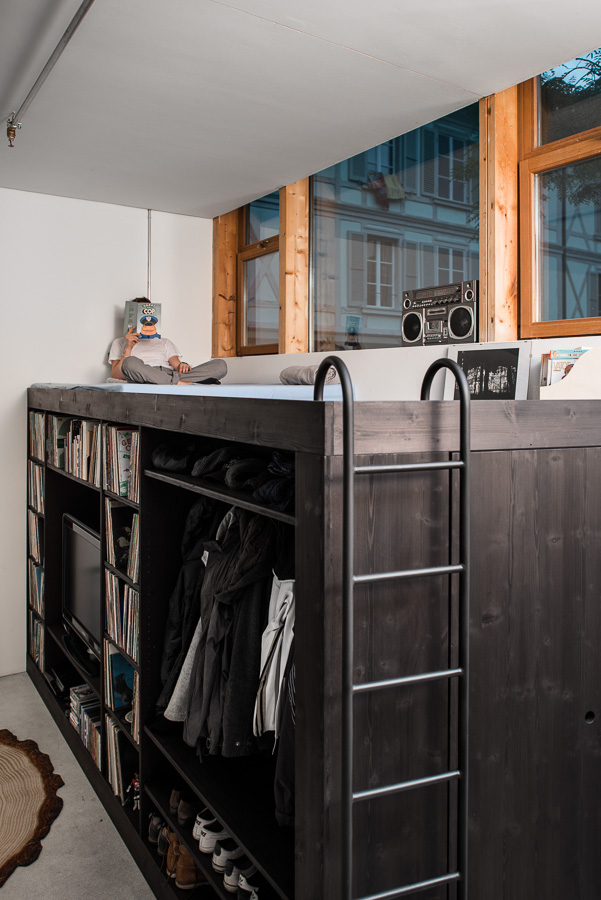
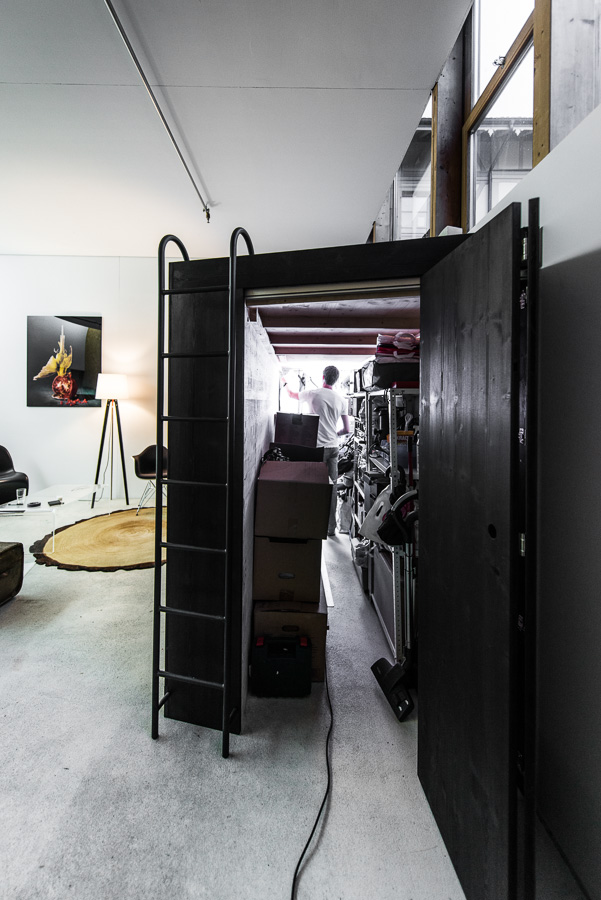
We really dig the “living cube” by Swiss designer Till Könneker. It handles two fairly common problems in one tidy package. One, it creates storage in an open loft space without adding closets. Two, it consolidates a great deal of worldly possessions in one place while serving a number of secondary functions like a sleeping and lounging area.

While the cube is pretty big, the fact that it houses so much stuff justifies its girth. And while Könneker’s place has high ceilings (a luxury many people don’t have), he is now making and selling custom units that would work with any variety of space. More information available on the Living Cube website.

Photos by Rob Lewis

Thanks for the tip Mark!

Shipping Containers Deliver Innovative, Elegant Homes

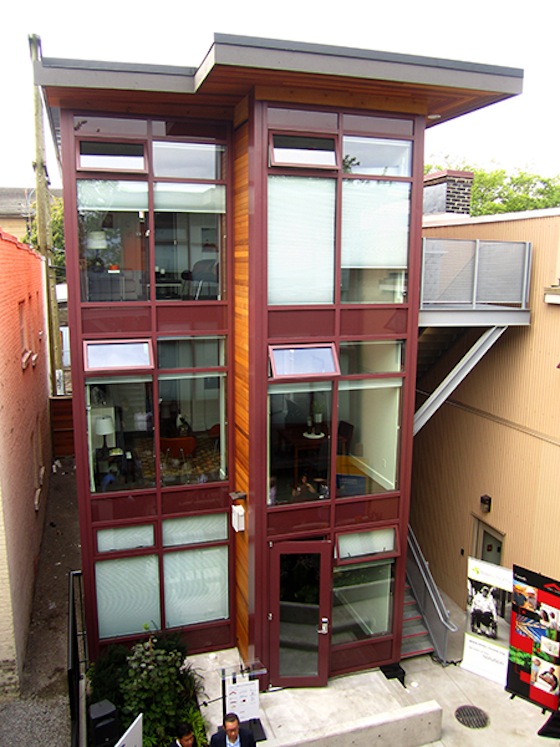
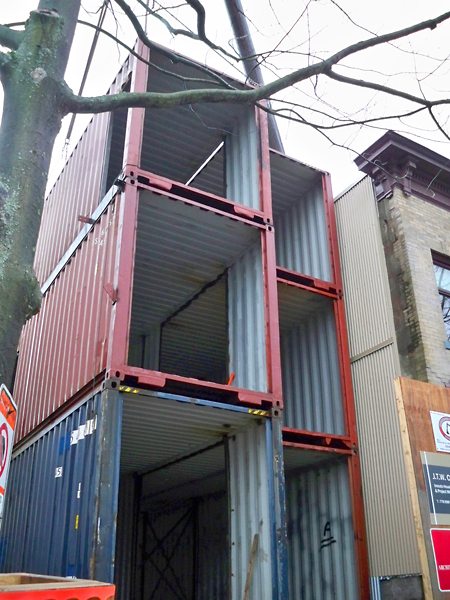
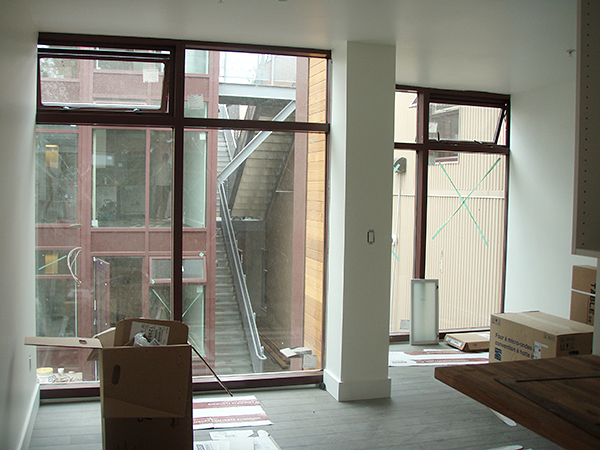
There have been many variations on the theme of converting shipping containers into homes, but few are as elegant or practical as this one by Vancouver’s Atira Women’s Resource Society. The just completed building contains 12 studio units, sized from 280-290 sq ft, each with its own kitchen, bathroom and laundry facility.

Atira, a not-for-profit organization focused on ending abuse to women, will use six of the units for older women interested in mentoring women in the organization’s Imouto Housing Development for Young Women, which is next door. The other six units will be rented at income-restricted rates.

Beyond its altruistic roots, the development boasts some impressive design and construction elements:

  • Constructed completely out of recycled 40′ shipping containers.
  • All 12 units fit on a standard 25′ x 119′ lot along with internal courtyard.
  • Hard construction costs for each unit were only $82,500.
  • Construction phase was only about eight months.
  • Units meet all building code and exceed insulation and noise transference codes.

Atira’s development, as we’ve seen before with SRO’s, shows that often the most innovative and practical designs don’t come about through unlimited resources, but rather creatively working with limited resources.

Images via Atira Women’s Resource Society

Furniture that Moves and Adapts with Your Life

According to the US Census, the average American moves almost 12 times in his or her lifetime; 1 in 6 will move each year. For the dweller on the move, large pieces of furniture that can’t adapt to different spaces often don’t make sense. Ideal furniture design should adapt and scale depending on the living situation.

One firm that is doing this is Ecosystems, whose “Snug-it” system creates highly adaptable furniture design (pictured above). The machined aluminum Snug-it pieces act as instant, tool-free joinery; should you want to scale up or down the size of your furniture, you can easily do so by replacing the piece in the middle. You can also transform a desk into a bench or any other piece of furniture should you choose. They offer an array of pre-designed and custom furniture.

Another idea comes from a new venture called TETRAN. They are launching a line of 100% recycled, modular furniture building blocks. The hollowed out boxes create tons of storage space and infinite changeability. Skins are replaceable to adjust the look; options range from glass to leather.

Tetran hasn’t started production, but will be taking pre-orders through Kickstarter beginning in June. Check out their amazing promotional video below to see its many possible incarnations.

[vimeo http://vimeo.com/39655208]

For people who do not move often, high-quality, stationary furniture makes sense. But for a growing part of the population, moving has become a frequent ritual. Companies like Ecosystems and TETRAN are responding to this reality, providing high quality, durable designs that move and grow with you.

images via Ecosytems and TETRAN

TETRAN story via Treehugger