We Wish All Suburban Developments Looked Like This

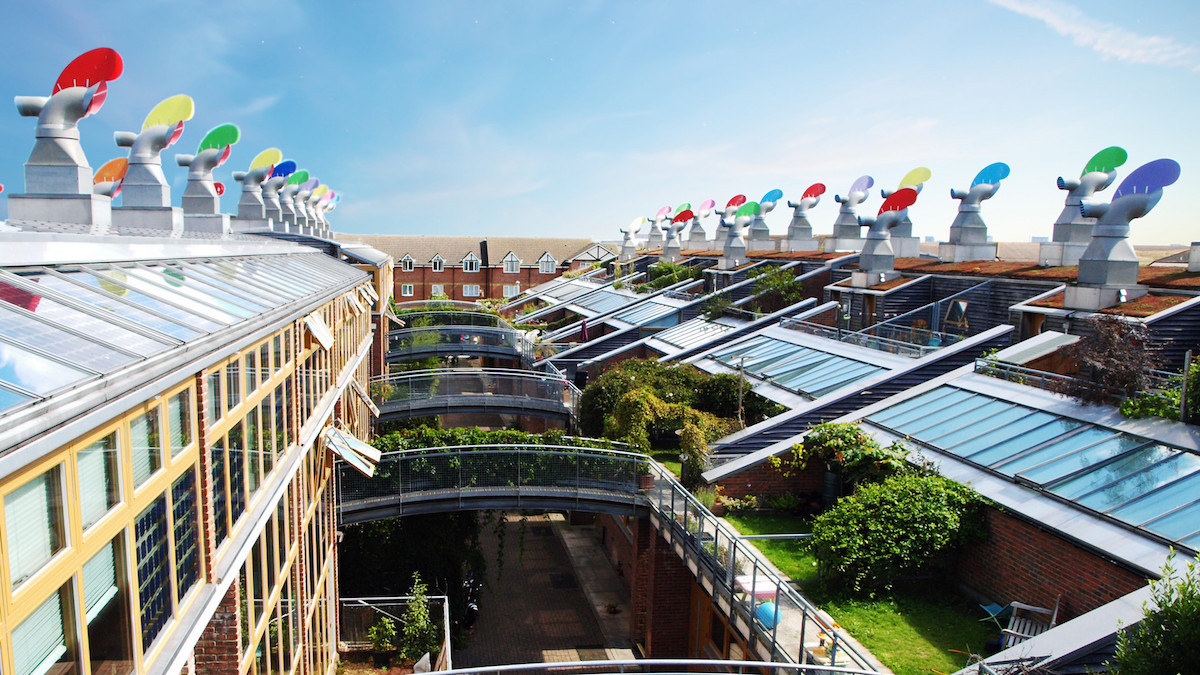
We’ve long extolled the virtues of high density, urban living. By keeping things close, you can walk or bike most places, which is better for both physical and planetary health. Density leads to more social interaction, easier distribution of goods and foods. And so on. But we also understand why people are drawn to the suburbs. It’s nice to have a little more personal space and maybe even a yard. In 2002, architectural and development firm ZED Factory completed their BedZED, a unique housing development that fuses the best of urban living with suburban comfort.

The word zed, for those unfamiliar with anglo-numerical nomenclature, means zero. In this case, BedZED, located in Wallington, a commuter suburb located 10 miles outside central London, is the “UK’s largest mixed use, carbon-neutral development.” It achieves this zero-ness through solar power and a “biomass combined heat and power plant, an onsite sewage treatment and rainwater recycling system,” according to ZED Factory’s website. Many of the building materials were reclaimed or sourced within 50 miles of the site to keep embodied energy low.

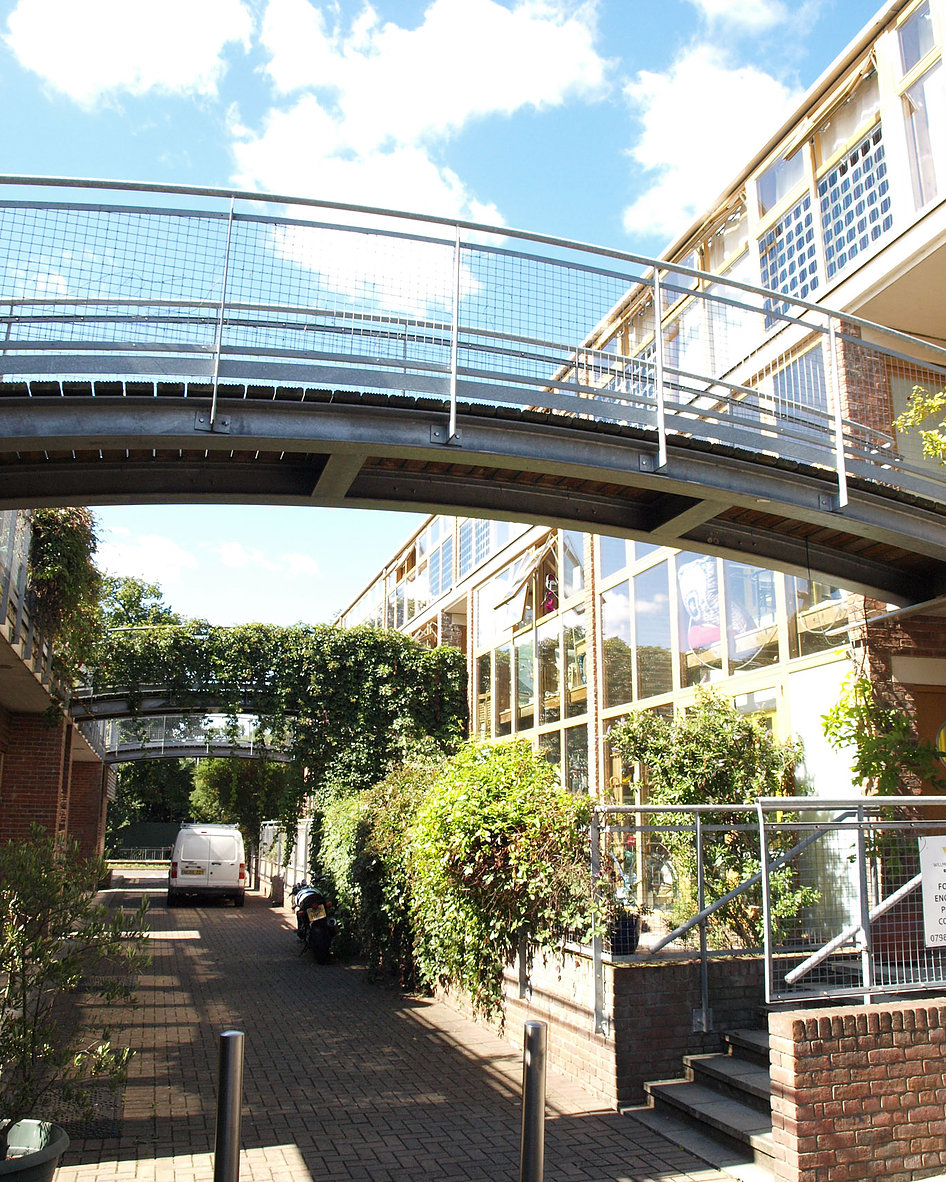
One of the more remarkable aspects of the development is its diversity housing types and uses. According to ZED’s website, “BedZED comprises 82 affordable dwellings in a mixture of flats, maisonettes and townhouses, and approximately 2500 m2 of workspace/office, and is built on a brownfield site [repurposed industrial site].” In addition to housing diversity, there is demographic diversity, with one third “social rent [subsidized low income], one third shared ownership [coop] and one third private for sale”–a structure that promotes a variety of people at different stages in their lives. Residents share the complex with ground floor businesses, whose spaces can be easily configured to accommodate large or small businesses.

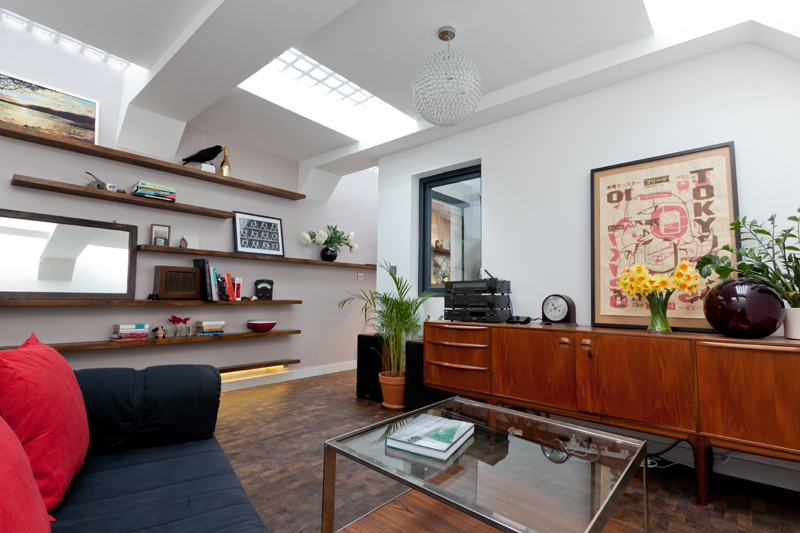
Putting aside its considerable eco and urban planning cred, the place looks great. Units are bathed in light (as much as they can be in the UK) and the interiors enjoy an industrial chic look carried over from the building’s previous life. Small, verdant walkways and wend their way through the complex and almost every unit having its own terrace or garden. If this is the suburbs, we want in! 

Image via ZED Factory

Posh and Compact Flat in London

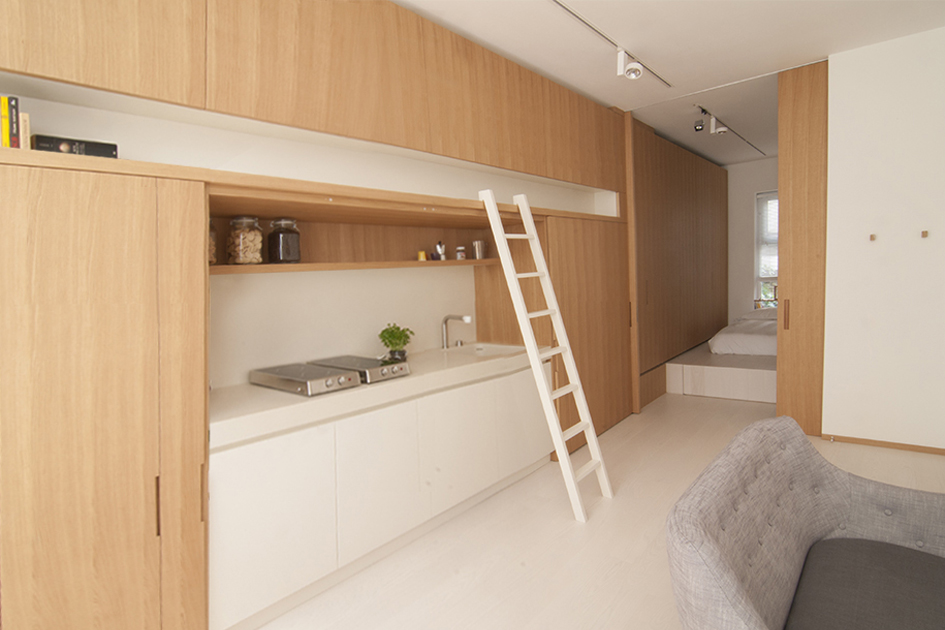
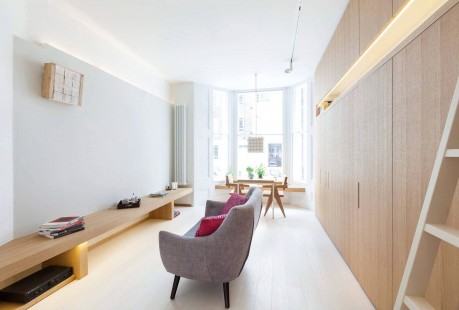
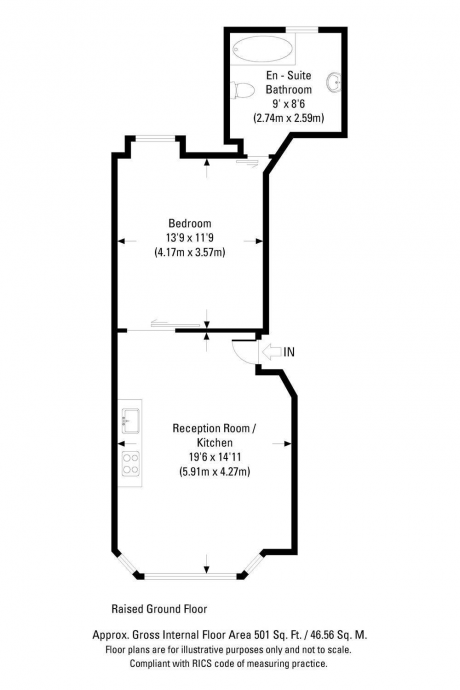
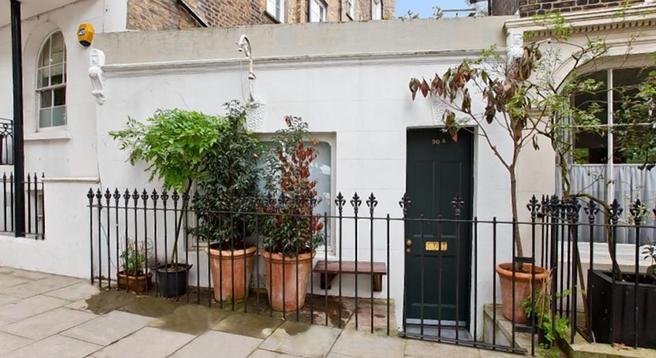
Got a million bucks (£695K) burning a hole in your pocket and looking for some awesome compact digs in London? No, neither do I, but if I did, I would totally consider buying this 501 sq ft apartment by Italian architects Archiplan Studios currently up for sale (well, it might be in contract, but maybe another couple hundred grand would sway things in your favor).

property-image-14026 archiplan

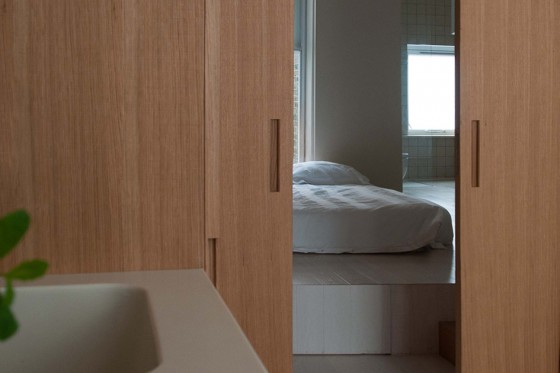
One whole side of the long and narrow space is fitted out with a continuous bank of uber-high quality looking (cherry?) floor-to-ceiling millwork. This bank houses a small, closable kitchen in the main room and lots of storage in both the main and bed rooms.

archiplan-studio-bedroom-door

The bedroom has the bed sitting on a box, which appears to have more storage.

archiplan-bathroom

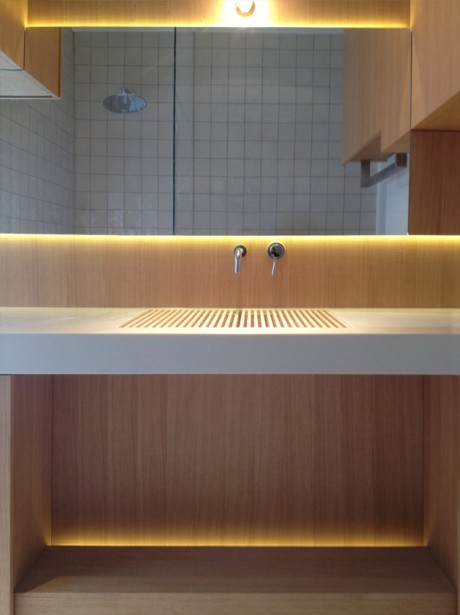
The cherry continues into the bathroom, which has several cabinets made of that wood. By far the most interesting aspect of the bathroom, is its, um, sink, which is a wood grate (over a drain presumably). It looks nifty and has a very sleek, shallow profile, though I’m not sure if it’s an improvement on the porcelain bowl..I’m actually pretty sure it’s not an improvement.

Untitled 2Funny enough, even though the $2100/£1387 per sq ft seems outrageously high, a quick search reveals that it’s far from abnormal in the Hatherley neighborhood where the apartment is located. Considering its location, the amount of built-in furnishings and its top notch design and construction, this little apartment might just be a bargain (for some).

HT to Karina D

Images Credit Archiplan Studio

UK’s The Collective Offers Whole System Design Living

London is one of the most expensive cities in the world, and like many such cities, incomes have not kept pace with the cost of living in general and housing costs in particular. As we saw when we checked out NYC’s Stage 3 Properties, the situation is squeezing many young people out of town or into marginal housing situations. Yet these same young people are less interested in the big places that cost so much; they are less interested in accumulating stuff; they are less likely to be (or get) married and/or have kids; and they are more open to a shared living experience. As we wrote the other day, many of them just “want a clean home near all the action with a good wifi connection”–a type of housing that wouldn’t cost so much if developers deigned to make them. London’s The Collective is one developer who deigns.

The Collective is probably easier to understand as a whole system design for living rather than mere real estate developer. Yes, they have four built buildings and one underway, all featuring minimal, furnished, design-savvy micro-housing with shared social spaces and included amenities. But they also have a startup incubator and coworking space called The Elevator that closes the social-professional loop. Both arms of the company embrace and support a new breed of highly mobile, tech-savvy, entrepreneurial, experience-thirsty urban living for Millennials.

We emailed The Collective’s founder Reza Merchant a few questions about the company’s past, present and future, which includes Old Oak, their first purpose-built housing complex that is opening this November:

David Friedlander: What inspired you to start The Collective?

Reza Merchant: I was inspired by my own experiences living as a student in London, faced with the struggle of trying to find decent accommodation at an affordable price. I set up London Student Rent, a student lettings agency, during my last year at the LSE and the company then evolved into The Collective as I became more attuned to what young professionals want and need from their housing. This is basically a high quality, hassle free way of life, which also allows you to meet like-minded people around you–all at an affordable price.

DF: How do you see what you’re doing–both in terms of housing and the Elevator–as meeting and perhaps predicting the needs of Millennials in the coming decades?

RM: Millennials represent ‘Generation Rent’. Whereas our parents’ goal was to own a property, and renting (in London) had a stigma attached to it, this is no longer the case. Renting is becoming a lifestyle trend and we cater to this increasing trend by providing purpose built rental accommodations. Young professionals work long hours and use their rooms as crash pads, which is why we don’t need excessive amounts of space–as long as it’s well designed. Millennials prefer to invest in experiences versus material possessions and are much more willing to share, which is why we focus on providing a high level of social amenity space with our Shared Living product. Also, we are ‘tech junkies’ and have grown to expect everything as a service. Netflix, Uber, the list goes on, and The Collective offers living as a service. We don’t have time to, nor want to, worry about life admin. So paying one monthly bill which includes everything from room cleaning and linen change, to concierge services and all utility bills and council tax, makes life a lot easier, giving people time to focus on more important things.

The-elevator

The same goes for our Elevator workspace product, which also focuses on enhancing the end-user experience. Entrepreneurs are passionate about building their business and their work environment is vital to helping them deliver it. We focus on proving a unique workspace, which focuses not only on providing services offices but also includes all the ancillaries a start-up needs to succeed, from an engaging events programme to access to a network of mentors and investors. The so-called boundaries between work and life are becoming ever more blurred–when you do something you love then it becomes your life. Entrepreneurs are happy to spend long hours in the office, but they also need the creative buzz and inspiration from their surroundings, so we aim to accommodate this.

DF: Your focus is squarely on Millennials. Do you see your model working with other demographics?

RM: Our model has been created specifically with 21-35 year old young professionals in mind, so it is tailored to suit their needs. There are definitely elements which would suit an older demographic, but essentially once you start settling down and thinking of a family your needs change.

[divider]

We are ‘tech junkies’ and have grown to expect everything as a service. Netflix, Uber, the list goes on, and The Collective offers living as a service.

[divider]

DF: What would you say to people who accuse micro-housing as exploitive, shoving people into overpriced shoeboxes?

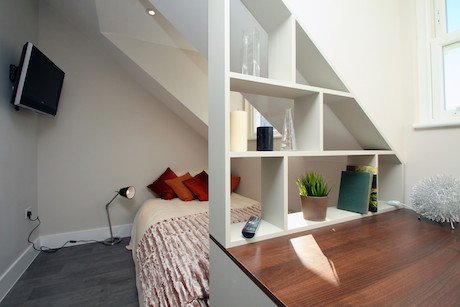
RM: I would say that an increasing shortage of space, coupled with an increasing population means we are forced to come up with solutions to the housing crisis. Micro-housing is not exploitive if well designed. With the right, innovative design, use of space can be maximized efficiently–it’s little things, like clever shelves to partition the kitchenette from the bed that can also be used as storage space and are also a cool piece of furniture.
Collective-room

Also, if you can offer an all-inclusive service offering in the rent, plus a high level of social amenities, like our model does, then it’s not overpriced.

DF: How does Old Oak [pictured at top] expand on your previous endeavors?

RM: Old Oak is our first new build and the first true embodiment of our Shared Living product. Whereas our existing developments are refurbished building, this is the first time we’ve had a clean slate on which to deliver exactly what we want to. Our rent has always encompassed services including weekly room clean, weekly linen change, concierge services, 24/7 security, free Wi-Fi, plus all utility bills and council tax. However, although we also provided communal areas throughout our existing properties with Old Oak we’re taking it to the next level. The 11-storey building will have 1,000 sq ft of social amenity space on each floor: a gym, spa, rooftop terrace, cinema room, secret garden, themed private dining rooms. All are designed to facilitate interaction amongst our members, to create a real community feel within the building.

DF: What do you see as the future of both The Collective and housing in general?

RM: I see the future of The Collective as a leading lifestyle brand, which has redefined the way people live, work and play. Not just in London, but in global cities across the world. The shortage in space means that inevitably housing will become more dense, but hopefully this will just encourage more architects and developers to think outside the box and come up with innovative designs and solutions which mean that quality is not compromised. The use of technology will also shake up the housing market, both maximising space and creating the ultimate customer experience.

Tiny House, Big City

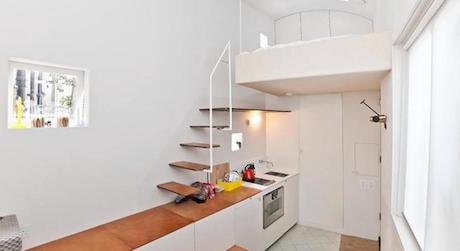
Tiny Houses, as popularized in the news, are typically trailer-mounted and set up either in someone’s backyard as an ADU or are plopped out in the middle of the country. For obvious reasons, throwing them in the middle of an already-dense cityscape is an unlikely scenario. This tiny house in London is funky little exception. While not trailer mounted, its 188 sq ft dimensions and lofted layout are reminiscent of many tiny houses we’ve seen on this site.

london-tiny-livinglondon-tiny-lofted

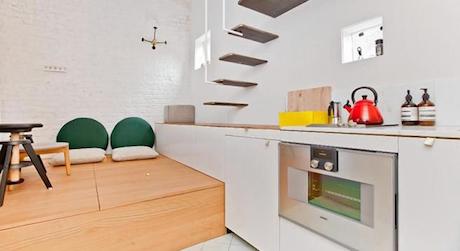
The house has a pretty clever configuration with a stairway that descends onto the kitchen counter, a seating area perfect for lilliputians and the loose-jointed, under which are storage areas. There’s a loft bed up top with some built-in storage. There’s a wet bathroom that would look about right in an RV. The windows and light-colored walls make the space feel pretty inviting.

london-tiny-house-bedroomlondon-tiny-bathroom

The space is located in London’s desirable Islington neighborhood, which explains the house’s £275K price tag (US$448K). This price translates to $2300 sq ft, which is about $1K more per sq ft than the neighborhood’s average. But in terms of total costs, you’re unlikely to find anything cheaper in the area.

What do you think? Great little deal in awesome neighborhood or big ripoff for tiny digs?

Tour the iPhone of Homes

The gadget is probably the most important product design concept of the 21st Century. Whether applied to a phone, tablet, watch or whatever, the descriptor denotes a product that serves many roles and is packed with as much technology as possible. While the gadget is usually associated with personal tech, in this video clip, UK’s Channel 4 TV show “Gadget Man” applies the philosophy to home design. Plopped in the middle of downtown London, the show constructed a 12 sq meter home that displays a level of versatility usually reserved for smartphones.

Much of the tiny house’s interior slides on rails that are moved by a hand crank. Since the house has a finite amount of space, cranking out one room displaces another–for example, opening the kitchen cuts in on the living room and so on. Even going to the bathroom requires cranking and reducing the main space’s area–not particularly convenient for urgent evacuations.

In addition to interior features, the house is packed with several space saving products. There’s a pillow remote control, a rubber ducky speaker, “plates” that you hold like a ring and a Thermomix, a 12-in-1 appliance that does everything from steaming to blending to cooking and more.

Style: "Neutral"

The house idea is very cool, though we wonder if the gadgety ambitions might have exceeded its design. Unlike like a smartphone, which, thanks to Moore’s Law, can fit millions of processors in a tiny package, architectural design will always have the constraint of having a human move through the space. As such, the Gadget house requires that human to do a lot of reconfiguring just to do some pretty basic stuff. We imagine this would get tiresome really quick.

Then again, the place is clearly a concept, not intended for longterm living. And in that sense, it’s a clear success, filled with cool ideas and spreading the good word that a house is whatever you want it to be–not what it has historically been.

[thanks for the tip Graeme]

Who Gives a Poop What Was Here Before?

This week we have seen some creative adaptations of unused space. First was Fakro’s “Live Between Buildings,” which proposes to use the unlit spaces between buildings to make a separate building. Today we look at a subterranean home made in a former public toilet in the Crystal Palace area of London.

The toilet house, built in 1929 fell into disrepair after closing in the late 70s. Laura Jane Clark of Lamp Architects and her husband Kevin Smith spent seven years converting the abandoned pit into this modern home. We’re not sure how an underground space like this works regarding smart urban planning, though we imagine they work quite well for thermal and sound insulation. Like the Fakro, um, crack house, it does show that the unlikeliest locations can be made feasible areas to build with the right design.

Photography by Fiona Murray

Park Your Life in These Repurposed Garages

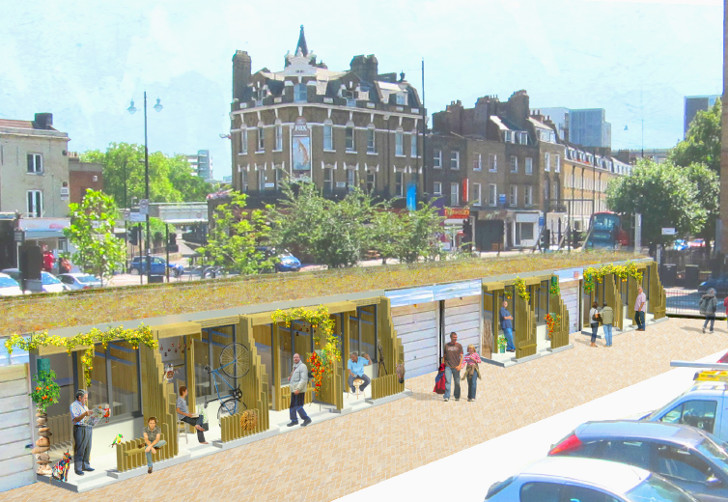
A design by architectural firm Levitt Bernstein that converts unused garages on London housing developments into popup homes was the winner of the Building Trust International’s HOME competition, which sought to provide “residents most at risk in developed cities with a safe place to live.”

The Levitt Bernstein units are part of a larger project they call HAWSE (Homes through Apprenticeships With Skills for Employment). The homes provide shelter for their occupants as well as trade skills as they are involved with the assembly of the unit. The house provides low cost housing (£11/week) for a year or two before the occupant moves on to other developments and the structure is demolished. We’re not sure why they wouldn’t remain as ongoing housing, though it likely has to do the fact they’re using someone else’s property.

The units are a mere 118 sq ft and feature their own bedroom, bathroom and living/dining area. We particularly like the wall-through sink between the bathroom and kitchenette. Each fifth garage will have a communal laundry, additional kitchen equipment and a dining area.

HAWSE is meant to use under-used spaces in expensive, high density areas, in this case East London. We’ve seen other garage-cum-homes with the same mission intended for New York City, but this one seems much more thought out. The other designs, particularly the upLIFT design (below), proposed using highly used, revenue-generating parking spaces as housing for the homeless, which seems like a tough sell. Focusing on using under-used spaces like HAWSE makes a lot more sense.

Uplift-concept

There was some controversy (possibly manufactured) reported in the London Evening Standard. An architect called pop-up housing “morally bankrupt” and not addressing the causes of homelessness. We think it’s a pretty great idea and a creative way to make increasingly expensive cities accessible to diverse populations.

What do you think? Is this smart design or a bandaid on larger social and economic woes?

Man Goes Into Deep End in Quest to Edit Life

Each week we are profiling real people who are editing their lives for more freedom and happiness. This week we hear from Mike, who is giving up his spacious Bath, England flat to live out his dream, living aboard a 42 ft “Gentleman Cruiser” motorboat, while creating a simpler, more financially sane life.

Tell us about yourself.

My name is Mike. I’m 52. I work as an IT consultant, part time film extra (you can see me briefly in Harry Potter and The Order of the Phoenix) and occasional performance artist (Captain Teapot, I took part in a project on the empty plinth in Trafalgar Square in 2009). I’m single and currently living in the UK in the Georgian city of Bath.

What makes your life an ‘edited’ one?

My life is becoming an edited one due to my imminent move from a large apartment in Bath, ceiling heights nearly 12 ft, living room and bedrooms are both 18 ft x 14 ft, built in the late 1700’s. I’m moving to London and I’ll be living on a motorboat that is only 42 ft x 12 ft with a ceiling height of 6 ft. There is no room for freestanding furniture, but there is some built in furniture, a table and 3 bunks and of course a shower and galley kitchen.

living rooms now and later

How long have you been living this way, and do see yourself continuing to live this way?

I’ve been living in houses and apartments all of my life. I’ve never lived on a boat before, but have sailed a little. I see my move to the boat as a long term one, perhaps a permanent one. It was motivated by a long held dream of a life afloat and by the fact that property prices in the UK are too high.

What are the biggest advantages of living this way?

Advantages are more money and time, as most of my work in the past has been in central London I’ll be able commute using public transport and on good days I’ll be able to walk to work.

What are the biggest challenges?

The biggest challenges are the reduced space, plumbing aboard a boat is not as straightforward as it is in an apartment, water has to be pumped aboard. Also I’ll probably have to move the boat on a regular basis, residential moorings in London are difficult to find so I’ll have to relocate every few months for a while until I can find one..

Do you think you could maintain this lifestyle with a family?

It could be done with a family, but I’d need a bigger boat.

What is the number one suggestion you’d give to someone looking edit their lives?

Look carefully at what you think you need. If its been sitting in a box out of sight for years, you don’t need it. I had many items that belonged to my youngest brother who died several years ago, a castle and soldiers I bought him for Christmas when he was 8 years old, and some of his personal items. I was keeping them for sentimental reasons but realised that he wasn’t in them. He’s in my heart, in me and always will be. The things are ultimately not important and now someone else can enjoy them. Items that belonged to him I gave to local charity shops and I had a home sale that enabled me to sell most of the furniture and other items I’ve accumulated over the years and a poster for the film ‘Charade’ has gone to an auction in London.

What item(s) have made your lifestyle easier?

A computer has made a big difference, CD’s, DVD’s and even books are no longer neccessary now that they can be stored on a laptop that fits into a small bag. Also the fact that I’m currently single has helped. I’m the only one that I have to consider, it wouldn’t be quite so easy with a partner or family.

Do you have any design or architectural suggestions derived from your lifestyle?

A boat is made for a purpose, size is limited and there’s a purity to it that I like, also there is a little romance about life on a boat. I intend to do a little work to her and will have good quality fabrics etc on board and I can do that because the boat is small. I’ve lived in many different places over the years but could never afford to decorate them properly, corners were cut and the sheer size of the places meant that decorating was almost a never ending task. With the boat I can decorate easily and afford to do it well.

Anything else?

If your looking for boats for sale in the UK www.apolloduck.com. For information about moorings www.bwml.co.uk.

10 Tips for Creating a Small Apartment You’ll Love to Live In

Today’s guest post is from Karen Krizanovich, a small-space dweller living in London. She recently shared her experience and philosophy in the The Times UK. Today, she gives pointers for how to create a no-fuss, reasonably-priced small apartment (aka apartment) you’ll love to live in. 

Yes, I would love to live in the Hong Kong apartment designed by Gary Chang, the architect who transformed 344 sq ft into 24 different living spaces. Unfortunately, my flat doesn’t have that kind of scope and neither do I. Still, I can adopt similar principles learned from my friend architect Professor Miriam Neet, LifeEdited and other resources to live in a streamlined, no-fuss, no-muss and non-neurotic fashion. I’ve found the following tips to be indispensable for making a small home you truly want to live in.

  1. Live in your place a few months before making complicated or permanent non-essential changes. Think you know everything already how you live–what’s important, what’s not? You’ll be wrong at least 25% of the time. Be patient. You won’t regret it.
  2. Be a simpleton. We all love innovative, automated designs. But what happens when they break? Who’ll fix it? What if the electricity goes off? What about the batteries? As much as I’d love to own, say, electric curtain rails, I know I’m asking for trouble. Remember that guy with the cool thing that didn’t work? Don’t be him.
  3. Follow your gut. I never liked the way my kitchen cupboard doors shut (stupid spring devices). I said I’d give them a try but, deep in my soul, I knew they’d irk me. And they still do. Little annoying things like this are accentuated in a small space and erode the comfort of your home. Fix things immediately that don’t feel right.
  4. With things you love, buy to last. Plan to repair them when needed. Like a great pair of shoes, your home should be serviceable, look great and fit perfectly.
  5. When the space is small, bad design really grates. Everything has to be just right. Settling for ugly solutions will do temporarily, but always keep on the lookout for the right one.
  6. Buy a cheaper version to roadtest. I’ve bought five different chairs and none of them really worked in the space. Now I’m testing an inexpensive version of another design. If it works, I’ll buy the expensive one eventually.
  7. Ask yourself what you really need. I don’t need a coffee grinder. I barely need a blender and I sure as heck don’t need a blender that is also a soup maker. Keep gadgetry to a basic level–and keep them off the kitchen counter. Clutter is your small flat’s supreme enemy.
  8. Make your home user-friendly. Like training a horse, you don’t want someone to get on and have to learn new techniques. You want anyone to be able to ride your horse right away. Same with your apartment. Keep things basic and obvious. I don’t care for murphy beds or complicated heating systems. Toilets should flush, not do tricks. You don’t want a flat that makes you or other occupants feel stupid.
  9. Love your neighbourhood. One of the big advantages of living in a small flat is that you can afford to live in a neighbourhood that would otherwise be out of reach. Know why you’re there and what’s great about it. That way, even if your apartment transformation is taking a long long time, you’ll remember the bigger picture.
  10. Decide a good want. When you’re considering buying something, imagine your day-to-day life with it. If something really makes you happy–if it is a delight to use, to look at, to own, then it’s probably worth it. If you can live without it, try to do that.

2 Housing Concepts Take Different Tacks for Concealing Cars in the City

According to Wikipedia, parallel-parking spaces, the kind that predominate in cities, use a whopping 182 sq ft. If you regularly park in cities, you know where this huge footprint comes from: There’s the length of the car, the space needed to pull out of the space and the irregular gaps that form when various-sized cars come and go. This latter factor often leaves spaces that are one foot too short for your car, rendering large swaths of prime real estate useless.

Considering that the micro-units we’ve been talking about measure 160-300 sq ft, the amount of urban area devoted to parking is a huge issue. A couple decidedly experimental housing concepts are taking different tacts in dealing with parking and living in the city.

The first is Aaron Cheng’s Parking + Housing, which is an entry in the James Dyson Award. The idea is that urban workers are typically not at home during the day, leaving behind tons of unused real estate. Commuters, on the other hand, come into the city and need space for their cars. P + H reconciles these needs by having a pneumatic structure that compresses during the day to provide parking for commuter (above). During the days, the structure extends to reveal a single-unit apartment (below). Furniture moves with space in its transformation (see video below).

Parking + Housing at night. Credit: Aaron Cheng

The idea, while interesting, has some big gaps in logic like late nights at the office. Do the apartment dwellers have to wait til the project is done? Or sick days. Do commuters need to park elsewhere?

The other concept is called upLIFT, which inserts prefab housing units in existing parking structures, such as the parking elevators common in New York City (below). The project was part of the HOME competition run by Building Trust International, which sought to find single occupancy housing solutions for under $30K.

The panels of the structures are made of recycled material and designed to incorporate rainwater collection, solar panels and vine-walls.

What is interesting about upLIFT versus Parking + Housing is that it chooses to design around a less car-dependent future rather than accommodating commuters. Then again, it does little for the present, with it’s full lots and clogged streets.

Both of these concepts seem to dwell in possible futures more than suggest real solutions. In terms of real solutions, congestion pricing is a low-tech, yet effective way of keeping cities free of cars. What the often-unpopular-policy does is charge cars for entering certain zones of a city at certain times. London, a city who has instituted the policy since 2003, charges £10 ($16) for entering its congestion zone. One 2007 study found that traffic within the zone was reduced by 30%. While we couldn’t find parking statistics, it’s fair to say that there was a commensurate effect on parking as commuters who would otherwise park in the city leave their cars at home.

Of course, there are smaller cars and any form of two wheel transportation, both of which take up a fraction of the space that conventional car parking does.

What do you think? Should we design our cities with cars in mind or is that like laying new telegraph lines across the Atlantic?