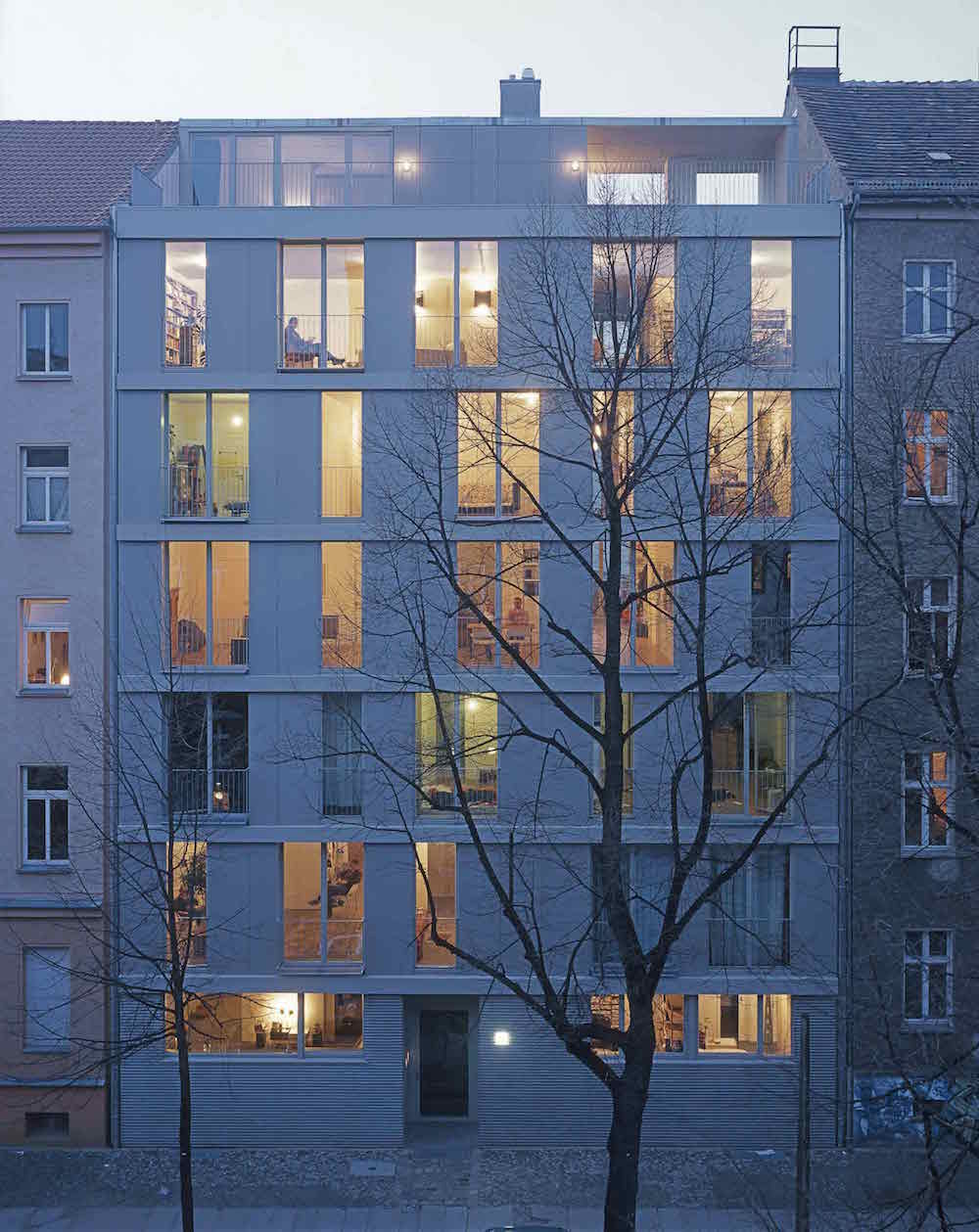
Baugruppen: Urban Housing for the People, by the People

Real estate is a big and often lucrative business. The reason is fairly simple. Because they build at scale, developers enjoy financing, purchasing and construction discounts individual homebuyers do not. For example, a developer can get favorable financing on a loan for a ten story building because banks like the large sums of money involved. A developer can purchase the building for 10-30% less than if the units were purchased individually. And the developer can renovate or build the units for 10-30% less than one-offs. Once the building is ready, the developer sells the units with that 10-30% (or more) tagged on. Thus a fortune is made (or, on occasion, lost). But what if individual homebuyers could pool their money together to finance, purchase and construct a building they were going to inhabit? What if you and I could be real estate developers? This is the idea behind Baugruppens.

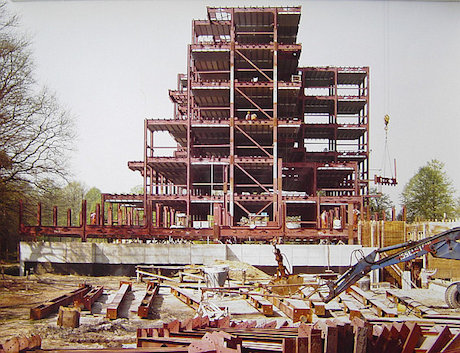
Baugruppen means “building groups” in German. Folks–often friends–get together to finance, purchase, design and construct the buildings they will eventually live in. They are the developers. The advantages over traditional development are many. Beside the obvious and significant savings, units can be designed around individual owner needs. And because the groups are often formed by friends and family, there’s an instant community formation, abetted by the building designs which often include common spaces.

Baugruppen-rooftop

Baugruppen, unlike cohousing, which tends to be a grouping of single family houses often in the burbs, are multi-story, multi-family buildings, located in cities (Eliason likens them to condos).

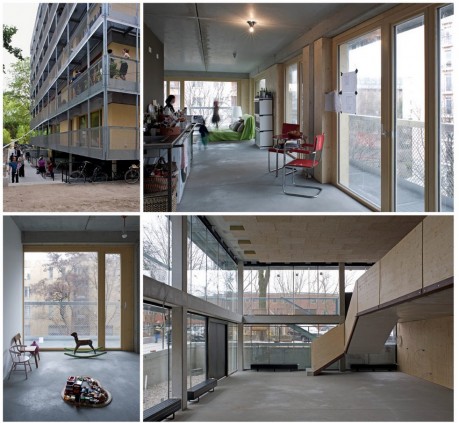
If you’re interested in the typology, you should definitely check out The Urbanist’s Mike Eliason’s seven part series on Baugruppens. What the series shows–and this is not to rag on American cohousing–is the premium Germans place on design. Many of the buildings have incredible interior and exterior spaces–designs that are both modern and timeless. Many are built to rigorous efficiency standards such as net zero and Passive House.
baugruppen-r50

Baugruppen surely experience the same unsavory aspects of real estate development that normal developers do: cost overruns, design disputes, depreciation, etc. But at the end of the day, a Baugruppen member, even if he or she has lost money or taken more time than expected, will have a house to live in.

Unfortunately, Baugruppen-type development is a non-starter in the US, where FTC regulations limits large scale real estate investment to accredited (see wealthy) real estate investors. But if this were to change, this type of development could provide homeownership opportunities for people being priced out of their cities. Take Manhattan for example, where the current median selling price of a home is $980,000 (NB: almost half of home sales are all cash). Compare that to the 2013 median household income in Manhattan of $72,190. If people could leverage their collective purchasing power and cut home prices by 10-30%, it’d still be ridiculously expensive, but perhaps attainable to far more people than the present situation. Let’s hope. 

Blast From the Past Architecture that Grows with Your City

Our problems today, more often than not, are the same ones we had yesterday, albeit a day later. As such, designing the optimal urban housing–one that is easy to construct, achieves high density, that can change and adapt with its environment and residential makeup–is far from a novel pursuit. Perhaps it was the music–or the drugs–but the late sixties and early seventies presented a number of pretty daring answers to aforementioned design challenges. While lacking the Bladerunner-esque futurism of the Nakagin Capsule Tower and Habitat 67 buildings, the Metastadt-Baussystem (or Metacity Building System) is an interesting example utopian urban building construction and planning.

Digital StillCamera

The building was completed in 1974 by Metastadt-Planungsgesellschaft mbH architects in Wulfen, Germany. Metastadt worked a little like tinker toys in that the steel, load-bearing frame was bolted together in small, uniform sections allowing virtually limitless vertical and horizontal expansion.

metastadt-configurer

The was frame designed around a standardized module which measured 14′ L x 14′ W x 12′ H. All the walls between the modules were customizable, allowing infinite configurations; there could be windows, walls or moveable partitions (directly above are the various panel options. Unfortunately, we couldn’t locate interior shots, and overall web documentation is thin). According to the The University of Sheffield’s “Flexible Housing Project” website other features included:

Facade panels…based on a small set of interchangeable parts with a vertical and horizontal module of 0.3 metres held in position by ‘push buttons’…[and a] servicing system, which is accommodated in raised floors with a clearance of 0.45 metres.

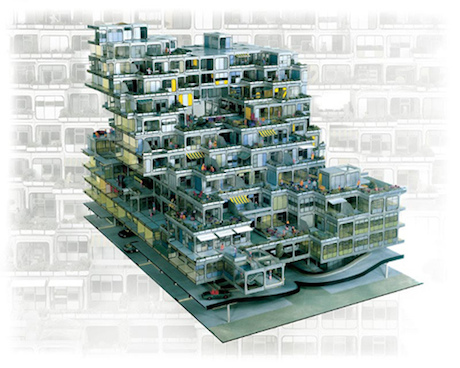
The Metastadt concept was meant as a solution for the gradual addition of density to urban centers. The building was actually part of the Neue Stadt Wulfen, a planned community dotted with experimental architecture. The Metastadt building represented a utopian socio-architectural ideal, incorporating live, work, commercial and art spaces for residents. It was to be an example for larger buildings elsewhere in the future. Below is a model demonstrating what one of these building could have looked like with its improvised growth pattern.

metastadt_smallIf our use of the past-tense made you predict an unhappy ending for the Metastadt, you’d be right. The coal shaft the city’s economy centered around closed and populations vanished (like many utopias). The building developed major leaks, supposedly due to cost-cutting measures, and it was demolished in 1987. There was another experimental Metastadt building outside Stuttgart, but otherwise there does not appear to be other examples of the species, which is a shame as the idea and execution is pretty cool.

Get Your Unreal Estate License

Many cities across the world are experiencing spikes in real estate prices. More people, competing for finite amounts of space lead to ungodly sums changing hands for small bits of urban square footage. German architect-cum-activist Van Bo Le-Mentzel has no shortage innovative solutions to this vexing issue. A while ago, he presented us with the one-square meter home. More recently, he created the Unreal Estate House, a popup housing project that supposes housing should be more right than privilege.

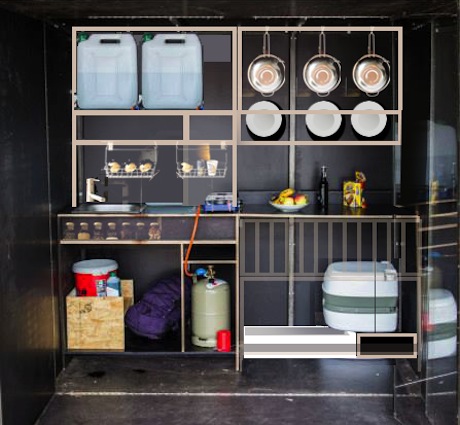
The Unreal Estate House is a tinier, more teutonic take on the tiny house movement raging in the United States (perhaps “simmering” is a more apt verb). Like American tiny houses, UEH is mounted to a trailer, sidestepping nasty and costly building codes, taxes and reliance on the man…and the power, water and sewage grid. It has all of a home’s amenities: bed, kitchen, bathroom and shower. More important than its spartan amenities is its cheap construction costs and availability to inhabit rent-free.

unreal-estate-house-interior

The home had its roots as a crowdfunding campaign. Le-Mentzel asked for the €3000 (~US $4100) he projected the house to cost. After funding, he put the blueprints online for anyone to construct the house themselves and set up an online registration page where anyone could rent the prototype house out for free. Le-Mentzel explains his motivation (via a solid Google translation):

The Unreal Estate House is an attempt to give people a little, but inspiring living environment without paying rent. I want to build a prototype in August 2013 and then make it available to people who want to put their time and effort in the common good rather than in a meaningless employment. Rent pressure is often the reason why we do not pursue our true passions. I want to change that. I believe that the world will be better if we can do things in our lives that we want. And that starts with the free choice of residence. We must free ourselves from the artificially generated pressure of existential angst. I am not a communist. I’m a Karma economist and am committed to a world that is worth living for everyone, not for the few.

Le-Mentzel sees the house as perfect for “immigrants from Europe, human rights activists, start-ups, adventurers, writers, digital nomads, FSJ [?] people, curators, art and cultural workers” and other “Karma workers.”

Not surprisingly, the unheated home doesn’t seem to be teeming with tenants at the moment (this deduction is based on our reading of the UEH’s archaic signup page and Google translation). In fact, the UEH is just as much (or more) activist art than viable housing. Like American tiny houses, UEH is beset with practical issues such as “where the hell do we put this?” (it seems to be floating around Berlin at the moment) and where do we put the waste water?

Even if it doesn’t offer a clear-cut solution, Le-Mentzel’s project asks a bold question: should our political battles be dealt with by changing the existing system or creatively working within it? In terms of the availability of precious urban real estate, the former strategy entails lobbying policy makers to create more affordable housing. This is great for providing certain populations nice, comfy pads, but it also leaves many unaccounted for and others subject to the vagaries of our policymakers’ whims. The latter strategy entails finding cracks in the status quo where we can live happy, financially sound lives; these cracks include, but are not limited to micro-apartments, tiny houses and co-housing. This strategy yields some unorthodox (usually small) solutions–ones many don’t believe they can live with–but might also lead to more resilient, sustainable living conditions for anyone who wants to use them.

What do you think? In the battle for valuable real estate, is the most effective strategy to fight the good fight and seek policy change and government subsidized housing, or do we surrender ourselves and find ways to live happily within the existing system?

Image credit: Benjamin Heck

Bellbottoms and a Top Hat. What More Could You Need?

For some, a journeyman is a slightly elevated type of handyman. But the term denotes much more. It’s a designation with a storied history, albeit one that has become increasingly rare in the last few hundred years. To be a journeyman in the traditional sense of the word is to embark on a right-of-passage period for a tradesperson such as carpenter, roofer or woodworker. Journeyman is the stage that comes after being apprenticed but before being deemed a master.

The “journey” in journeyman is derived from the French word journée, meaning day, which is historically the journeyman’s billing cycle. In other words, they are a rarefied day laborer.

While the etymological connection with journeying isn’t there, traveling is a staple of the journeyman’s life. He or she must complete a requisite Tippelei or Walzmust–a three year-plus journey without money where a journeyman perfects his or her craft. Journeymen often wander the world, usually living and working for a few months at a construction site before moving on. During this period, they are not allowed to pass within 50km of their hometown.

They are not allowed to carry much cash, use public transport or have a cellphone. Progress is made by hitchhiking or walking. Journeymen only carry a small bundle called a Charlottenburger with the barest trade and personal items.

As to their unique outfits, a Worldcrunch article that followed Robert, a modern-day German roofer journeyman, says these garbs are highly symbolic:

Black is for woodworkers, the eight buttons on the jacket stand for the eight hours of the workday, three buttons on each sleeve represent three years in apprenticeship and three years as a journeyman….In contrast to the black and white of Robert’s clothing is his red tie. Besides being a symbol of the particular brotherhood to which he belongs, it’s a symbol of honesty. When they start out, journeymen don’t wear the tie: they must earn it by first passing the initiation rites and then with their behavior.

Needless to say, these light-treaders carry big sticks.

The practice is in decline for somewhat obvious reasons–self-sacrifice and living without a cellphone are unthinkable for most people nowadays. Robert says there are only about 600 traditional journeyman left, most of whom hail from Germany and France.

journeyman-standingWhile the outfits are somewhat overwrought in our opinion, we think the idea of spending years perfecting a trade a good one. If our homes and stuff were made with the care and expertise a traditional journeyman possesses, perhaps we’d appreciate and hold onto things a longer than we currently do.

We also find it interesting that the basis of traditional training a craftsperson–someone who basically makes our stuff–is living without stuff. Roofers without roofs. Carpenters without homes. Craftspeople without personal possessions. Perhaps it is only through living without that we can truly appreciate the value of living with.

Image credit: Sigismund von Dobschutz

Via Worldcrunch

Fit Your Next Car into Your Phone

DriveNow is a car-sharing program launched by BMW and European car rental company Sixt that allows you to locate and rent the nearest car within a given city’s limits via its website or mobile app. What sets DriveNow apart from other car-share services is you don’t need a reservation and you can park and leave the car anywhere you want rather than returning it to a home garage. You could rent a car for 20 mins to drive to work, end your rental, stay at work for eight hours, and rent another DriveNow car to go home.

This flexibility contrasts to services like ZipCar, which require you to make a reservation for a set amount of time and return your car to a specific garage (penalties fees are applied if you don’t return the car by the end of your period).

The service is BMW’s attempt to future-proof itself from the changing nature of car usage and ownership. With car ownership decreasing and urban-living on the increase, having a car that does 150 mph on the autobahn and is parked in your suburban garage will become increasingly irrelevant. Tomorrow’s driver will need a car that can handle 25 mph around town and be easily parked.

bmw-i3

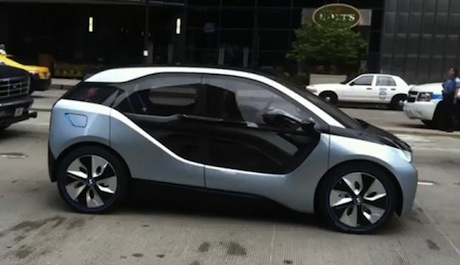
DriveNow is also connected with BMW’s upcoming i3 electric vehicle (pictured above), which is the company’s first EV geared specifically to city living. In the future, DriveNow will be connected to charging stations around a city for low-emission temporary urban transit.

Here’s the rub: DriveNow is almost exclusively in Germany, with locations in Munich, Berlin, Dusseldorf and Cologne. Currently, their fleets are internal combustion engines, which enables the flexibility of returns (i.e. you can park on the street rather than finding a charging station). Rates are €29 cents/minute for driving and €10 cents/min for parking. These rates include parking and gas; fuel levels are visible when you book your car. DriveNow also includes on their maps proximity to bike share stations.

They have one US location in the Bay Area, whose fleet is made up of BMW’s ActiveE, an all electric version of their 1 Series car. Because of the need to charge, you need to return the cars to one of the designated garages, though not necessarily the one where you picked the car up. All stations are located near BART stations. Rates are $12 for the first half hour then $.32 each additional minute and $90 for the day. There is a one time $39 registration fee.

Ideally, a service like DriveNow would be brand-agnostic–i.e. not attached to a particular carmaker. But we find the idea of on-demand, restriction-free car sharing pretty exciting. Imagine being able to rent any car parked on the street whenever you want. While the per drive expense is surely much greater than car ownership, the lack of overhead and flexibility seems well worth it. And with bigger fleets and costs spread out over more members, the per drive cost would likely go down while available cars increase.

via Metropolis Magazine