4 Easy Ways to Edit Your Diet

I think there’s a certain ideal in the minimalist’s mind of reducing her or his consumer behavior to only the most essential things. And let’s face it, there’s a bunch of chaff that can easily be removed without too much justification in our quest of this ideal. We can cut out the clothes, the electronics, the new cars and maybe even the extra 500 square feet from our homes. But there’s one thing that seems to defy editing, and that thing is food. Even the most hardcore, tiny-house-dwelling, uniform-wearing minimalist has to eat. But needless to say that just because we all have dietary needs doesn’t mean that all diets are the same. How and what we eat can greatly influence the amount of food we consume. Even if you are a “live to eat” sorta person like me (versus eat to live), buying, preparing and eating food can be an expensive and time consuming affair. And let’s face it, eating a little less is not a bad idea for most of us.

Here are a few tips to consume less food, all without compromising your health, and, in some cases, improving it.

  1. Skip breakfast if you want. Yes, I know what your mom said. The Surgeon General may have said it too: “Breakfast is the most important meal of the day.” Well, turns out this maxim is not rooted in fact. One of big misconceptions fueling this myth is that stoking our metabolism early in the day keeps us from binging later. But a recent Columbia University study found that “In overweight individuals, skipping breakfast daily for 4 weeks leads to a reduction in body weight,” as reported by the Washington Post. Across the board in that study and others, the findings are clear: people who skipped breakfast either lost or maintained their weight, but never gained. Now listen, if you eat breakfast and it works for you–giving you energy and helping you maintain a healthy weight and disposition–rock on. But if you’re eating breakfast because your mom said you should, not because it makes you feel healthier, it’s now okay to put down the cereal bowl.
  2. You can skip other meals too and skip eating for a while on occasion. A growing body of research supports the idea that the human body not only survives, but even thrives with regular vacations from eating. From an evolutionary standpoint, this makes sense. For millions of years, we couldn’t simply reach into our cupboards or fridges to munch or prepare eight small meals a day (we might have foraged, the primal version of snacking, but we couldn’t necessarily do this all year round). Numerous studies bear the power of taking regular–though not necessarily total–breaks from eating. One such study had people alternating between fast and feast days; a fast day would entail them eating 25% of their normal caloric needs and the feasting allowed them to eat what they wanted. Researchers found that following the fast days, people only ate 115% of their normal caloric intake–more than 100%, but lower than the 175% that would logically follow from the previous day’s 75% caloric shortfall. This pattern led to consistent weight loss. Moreover, following a 3.5 day adjustment period to the fast/feast diet, a period when people reported feeling deprived, 80-90% of people were able to stick with a new, calorie restricted diet. Even if you’re not looking to lose weight, restricted calorie diets are one of the few things consistently shown to increase human lifespans and fend off a host of ailments such as cancer, diabetes and other chronic illnesses. Another big bonus of fasting is its simplicity. There are no scales, no charts, few do’s and don’ts. Simply eat less for certain stretches of time, or as nutritionist John Bernardi told The Atlantic about the practice, “Relax. So you missed a meal. Who cares? Might even be good for you. Just keep going.”
  3. Focus on foods that have a high nutrient/weight ratio. If you must eat (it happens to the best of us) try the less but better approach. The fact is many of the constituents of the Standard American Diet (SAD) are like the McMansions of food world–tons of volume and little practical (i.e. nutritional) value. On the other hand, things like seaweed, collard greens and watercress are like the transforming micro apartments of the food world, doing a whole lot without much volume or mass. Take a look at the ANDI Guide (Aggregate Nutrient Density Index) to see how various foods stack up in terms of their nutrient density relative to their weights. Kale for example scores a perfect 1000 on the scale. Soda scores a 1. The inventor of the scale, Dr Joel Fuhrman, says we don’t need to excise all foods that are 900 and above to ensure “proper functioning of the immune system and enable the detoxification and cellular repair mechanisms that protect us from chronic diseases”–the ostensible benefits of eating a nutrient–and more specifically “micronutrient”–packed diet. He does say we should have “micronutrient diversity, and eat an adequate assortment of lower ranked plant foods to obtain the full range of human requirements…mostly foods that have an ANDI score greater than 100.” Virtually all of these +100 foods are fiber rich, leading to greater satiation and therefore smaller overall dietary needs.
  4. Reduce your portion size. This is a topic we explored a while back with the “Small Plate Movement,” which promotes using smaller plates to help us eat less. One study the movement cites says that people will eat 70% of their plate’s portion, regardless of the plate’s size–and 70% of a 10” plate is less food than 70% of a 14” plate, right? I’ve read some of the research and it’s not quite as compelling as the other suggestions on this list, and it doesn’t necessarily jibe with my experience (I have little shame about getting seconds). That said, it might save room in our cupboards and it certainly can’t hurt.

[Disclaimer: The information contained in this article is not meant to be prescriptive or authoritative. If you are considering implementing any of these tips, consult with an expert first.]

Heap of fresh fruits and vegetables in basket image via Shutterstock

Eat, Strain and Store in One Bowl

Are you a big consumer of ramen noodles? Are you frequently miffed that there isn’t a simpler way of making this simplest-of-preparation foods easier to prepare? Yeah, me neither…but I still think a new product called the OneBowl is pretty genius.

The OneBowl is the brainchild of recent college grad Justin Herd, a frequent v of ramens and budding inventor. He was frustrated that it took so many components to prep a bowl of ramen: bowl, strainer, storage container (where applicabl vce). He wondered if there might be a simpler, more streamlined solution, one that combined those three components in one elegant (well “practical” might be a more apt term) solution. The OneBowl is his answer to that question.

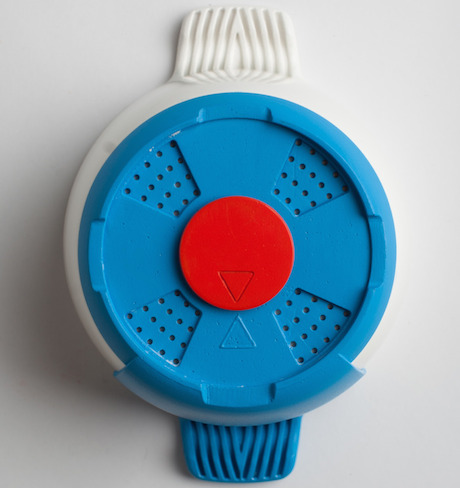
The OneBowl has three components. There’s a base that, when twisted, allows for the passage of water through the bottom acting as a strainer; alternately, the base can be locked out making it a water-tight bowl. There’s a BPA-free, dishwasher and microwave-safe bowl, also perforated to match the holes of the base, which is used for both food prep and eating. Lastly, there’s a lid that makes the whole thing into food storage.

OneBowl-base

The OneBowl is designed for ramens, but I’d imagine it would work great for other types of pasta, vegetables or even things like grapes, which often need to be rinsed in a strainer then transferred to a bowl. Besides dorm rooms (its most logical application) we think it’d be brilliant on camping trips.

Like many products worth having nowadays, the OneBowl is launching through Kickstarter. Herd is looking to raise $50K to start up production. They still have a $16 early bird special that’ll fetch you a OneBowl. $75 will get you a bowl and OneBowl cookbook.

We love stuff that doubles and triple duties, especially when that stuff is as simply executed as the OneBowl. Should it take off, we hope Herd considers making metal or ceramic versions that’d work on cooktops and ovens for the non-ramen set.

Maybe We Should Eat Less

We often write about the merits of living in smaller spaces with less stuff, but when pressed we admit these things have never been clinically proven to extend life. Eating less food, on the other hand, may. The life-extending benefits of a calorie restricted diet have been known for years; laboratory mice lifespans have been increased by as much as 40% as a result of a calorie restricted diet. Now another study suggests that humans too might benefit from taking one less trip up to the buffet.

A University of Wisconsin study that spanned 25 years took 76 Rhesus monkeys and observed their wellbeing as it related to the amount they ate. One group, the control, ate a diet designed to mimic the standard American diet (sometimes called SAD), which meant unlimited portions of food with lots of sugar. The other group had a similar diet, but consumed 30% fewer calories. The results were dramatic: the control monkeys had a 2.9 times higher risk of disease and a three-fold increased risk of death over the course of the study as compared to the calorie restricted group.

It should be noted that there is some controversy about how conclusive the UW study is. The National Institute of Aging conducted a similar study spanning three decades. They observed 120 Rhesus monkeys, split between a control standard diet and a calorie restricted one. But unlike UW, they found little difference between the two groups in terms of mortality rates.

The difference, many are speculating, has to do with the respective diets. UW fed their control monkeys an unlimited supply of laboratory-grade junk food from the time they were young adults (seven to 14 years old). NIA’s control monkeys were adult when the study started; they fed them whole foods in portions based on how they ate before the study. The UW monkeys were like teenagers, whose habits were not yet formed, and then were given an unlimited supply of McDonalds for 25 years. The NIA control monkeys were like adults accustomed to a lifetime of wholesome, home-cooked meals.

The two research groups are now collaborating to come to some definitive conclusions about the benefits of calorie restricted diets.

We must say that the UW study seems to correlate with the way most Americans eat, with our virtually endless supply of sugary, far-from-whole foods. Coupled with the robust evidence supporting life extension in lab mice, we suspect cutting back on the calories (i.e. eating less) is a good, if not guaranteed, way of improving our health and possibly living longer.

Of course this is easier said than done. With tasty, sugar-and-salt-rich convenience foods lurking in every aisle and cupboard, the temptation to eat more than necessary is often too great to withstand. Here are a few tactics for keeping the calorie count low:

  1. Eat less, but better. The calorie-restricted mice had the same micro-nutrients levels as their overeating, fast-dying counterparts. Nutrition matters, and just because you eat a lot, does not mean you get a lot of nutrition. Focus on eating high-quality, nutritious, whole foods. Chips, sweets and highly refined wheat products have virtually no nutritional value, yet they can take up an inordinate percentage of our daily caloric intake if consumed. Find nutritional replacements for junky food or cut it out. Sometimes the reason we overeat is not hunger, but malnourishment.
  2. Try smaller plates and portions. Sensible eating has no greater foe than the buffet. Portions keep us in check, allow us to slow down and give a sense of completion for a meal.
  3. Will power. No one likes to struggle–especially fighting the very biological urge to eat–but sometimes a little discomfort is what it takes to make a habit. Try setting a goal of eliminating nighttime snacking or some other non-nutritious, calorie-rich, “recreational” eating. You might find after a few times of stopping yourself from indulging, your capacity to do so in the future increases and you have yourself a habit.

Via NY Times and Medical News Today

Group Catering image via Shutterstock

Apocalypse-Proof Your Small Home

I know what you’re thinking: this small space living is cool and all, but how will I eat in the event of a societal collapse? Sprawling McMansions with two-acre lots might be an environmental nightmare in times of plenty, but we might be appreciative for all the farming land when SHTF. Fear not, the good folks at Survivopedia have us covered. They have some great suggestions for growing your own food when the grocery store down the block is overrun by zombies.

Here’s what you do:

    1. Get non-GMO, non-hybrid seeds. GMOs, author Theresa Crouse contends, have been linked to disease, which is probably something you want to avoid when trying to survive. Hybrid seeds aren’t stable, and are not predictable for later batches–an important consideration if you want to live longer than one or two growing seasons.
    2. Save your containers. We know you get a thrill out of recycling that empty yogurt jug, but you might need it to plant some sprouts.
    3. Practice container gardening. Probably not a good idea to wait until things fall apart to get that post-apocalyptic thumb green. Crouse says “carrots, radishes, lettuce, onions, and even tomatoes and peppers” are examples of veggies that need very little room to grow.
    4. Plant a small garden. She says you can build a garden as small as 4′ x 4′–plenty small for most small homes. If you’re in apartment, you might be able to create an overhang on your fire escape (assuming the fuzz don’t see you) or, better yet, on the building’s roof.
    5. Preserve Your Food and Your Food Sources. Start growing now, and save what got. Unlike today, the post apocalyptic foodie scene will have its ups and downs, best to preserve and conserve when you can (pun intended).
    6. Get some edible pets. Keeping livestock in your apartment ain’t too kosher nowadays, but when SHTF, pesky animal control officers will have more important things to do than see if that’s a dog or chicken making the stink in your apartment. Crouse suggests having a local farmer act as daycare worker for your livestock, until the (end) time comes.

For a more detailed explanation, visit Crouse’s post at Survivopedia.

Meteor Shower over City image via Shutterstock

Do Big Plates Make Big Appetites?

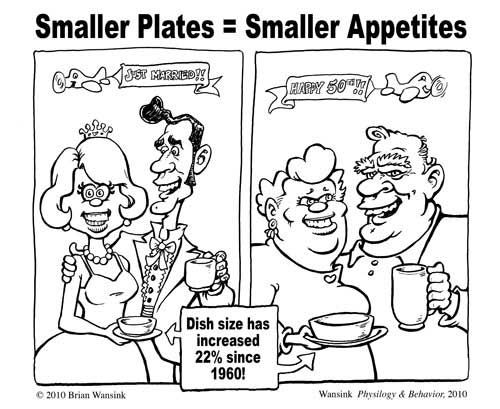
We talk a lot about the ballooning size of the American home, which has more than doubled in the last 60 years. But there is another, rounder item that has experienced a similar bump in size: our dishes. They have grown 36% in the last 50 years, and a growing body of evidence  (pun intended) suggests that big plates are leading to more waste…and waist.

One study suggests that people like to have their plate 70% full, regardless of how big it is. So we fill up these bigger plates with more food, regardless of our appetites. Another study found that people who used bigger plates at an all-you-can-eat buffet wasted 14% of the food they took, versus 8% for smaller plate eaters.

Not only do we waste more, but we eat more than we need to with larger plates. 54% of American adults aim to finish all of the food on their plates. If you’re filling up 70% of your larger plate and licking it clean, the likelihood of overeating and gaining weight is much greater. A 200 household trial attests to this. People in the trial were randomly assigned to eat off of large and small plates. The people in the small plate cohort lost three pounds more than the big plated one.

Cornell’s Brian Wansink is a crusader of the right-sized dish. He’s written books with titles like “Mindless Eating: Why We Eat More than We Think,” and has even deigned to start a movement called, you guessed it, The Small Plate Movement.

You might think that a certain amount of self knowledge would go a long way here. Maybe knowing these figures, you would now fill 50% of your bigger plate. Wansink is not so confident, saying:

Most people are unwilling to acknowledge that they could be influenced by something as seemingly harmless as the size of a package or plate. Even when shown that larger packages and plates lead them to serve an average of 31% more food than matched control groups, 98% of the diners in four independent field studies resolutely maintained that how much food they served and ate was not influenced the size of package or plate they had been given.

As they say, nature abhors a vacuum. And just as large homes tend to be filled up with more stuff than we need, so too do large dishes. Wansink’s findings suggest we can’t just intellectualize corrective behavior. He said, “It is easier to change your food environment [dishes] than to change your mind.”

If you’re looking to eat less, try a smaller plate. Take the small plate challenge and eat your largest meal from a 9-10″ plate for a month (today’s standard plate is 11-14″). Don’t want to buy new plates? Eat off your bread and butter plate or buy a couple smaller plates from the thrift store and let us know how it goes.

Via Fast Company Design

6 Tips for Creating an Edited Kitchen

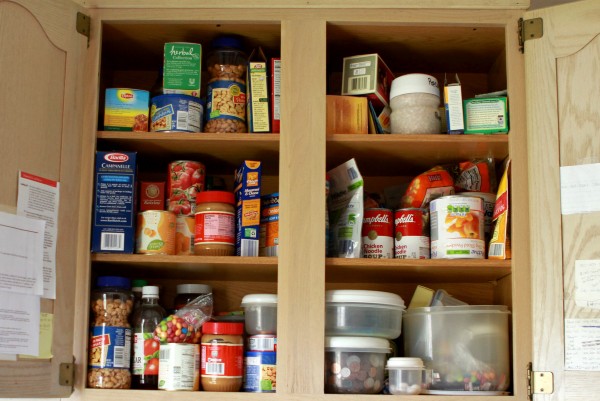
When we think about clearing out excess stuff, we tend to think about durable goods like clothes, electronics, furniture and so on. A cassette tape player we haven’t used in 15 years is an easy target for excision and reducing clutter. But there is another, more edible source of residential overcrowding: food. We might be far less likely to get rid of those 15 year old canned peaches crowding our pantries than we are the cassette player. We say to ourselves, “I might eat that someday.” But do we?

Many modern fridges, cupboards and pantries buckle under the strain of excess food stocks–food that takes up valuable household space; food that uses resources and money to produce and purchase; food that often gets tossed after a long, uneventful stay in our kitchens. Consider these food facts:

  • It’s estimated that 40% of America’s food supply ends up in the trash.
  • 10% of greenhouse emissions from developed countries is generated by the production of food that is never eaten.
  • According to the USDA, “In 2008, the amount of uneaten food in homes and restaurants was valued at roughly $390 per U.S. consumer–more than an average month’s worth of food expenditures.”
  • According to ABC news, between the years 1974 and 2004 the average American home’s kitchen doubled in size from 150 to 300 sq ft.

Cutting down on food waste can make it easier to live in a smaller space, reduce clutter in any kitchen, save money and reduce our carbon footprints. It may even improve our health. If you’re interested in editing your food stock, here are a few tips.

  1. Buy only what you need. This is a pretty obvious one, but try to buy the food and the quantities you know you’ll consume from one shopping trip to another. It’s okay to have an empty fridge before you go shopping. If feasible in your area, make more frequent, smaller shopping trips.
  2. Avoid “precious” food. How many times have you bought special cheese, meat, heirloom tomatoes–whatever–and waited to use it for a special occasion, only for that food to end up rotting? Have a plan for your food–either eat it at an appointed time or immediately. Food spoils. Make every day a special occasion.
  3. As a rule, try to purchase most food from the perimeter of the grocery store. Grocers put all of their perishables–fruits, veggies, fresh meat, dairy–on the outside of the store. Aside from their greater nutritional value, perishables have a finite amount of time you need to consume them, creating an urgency for consumption. On the other hand, food from the store’s interior can sit on their (and our) shelves for millennia–food that is often bereft of nutritional value or filled with preservatives. Real food goes bad. Eat more real food.
  4. If you’re trying to get rid of food you already have, create recipes using existing food and schedule meals. If you need to buy extra ingredients, go ahead, as long as it doesn’t add another wave of new, unused food. Not sure what to make? Try the Su Chef app. If there is food you’re sure you’ll never eat, drop it off at a local shelter.
  5. Compost wherever possible. Many local green markets and community gardens have drop off compost bins. Put food scraps in your freezer between drop offs to avoid bugs. Consider your own composter such as the NatureMill automatic composter used in the LifeEdited apartment.
  6. Don’t be afraid to toss. If something is not fit for eating, giving away or even composting, don’t be afraid to toss it. This is especially true of junk food. Some food is healthier in the trash bin. Just resolve to not buy the same stuff again.

image credit My Cooking Magazine

5 Ways to Think Less in 2014

Michelangelo is famously quoted as saying about his David statue that he made it by removing all the stone that didn’t look like David. Implicit in this remark is that underneath extraneous layers, a thing has an essential, irreducible quality. 17th Century scientist/philosopher Blaise Pascal said, “I would have written a shorter letter, but I did not have the time.” Pascal understood that editing, i.e. getting to that essential, irreducible quality (in his case, the essential message) is something that takes time and great effort.

This is a bit counterintuitive. Humans tend to be impressed with “more”–more space, money, bling, etc. But addition is the easiest math (at least in the short term); it involves throwing more distractions and stuff in our lives to avoid confronting life’s toughest questions. What would my life look like in its most essential form? What kind of company would I keep? What kind of work would I do? Where and how would I live? What would I focus on?

For 2014 we suggest continuing to ask those tough questions–to continue removing all that is not David (insert your own name to make the metaphor work). Here are five areas where we might direct our figurative chisels in the coming year.

  1. Attention. It’s been shown that the more we attempt to multitask, the less we are able to pay attention to anything. Multitasking might even make us dumber insofar as our intelligence is applied to those multiple tasks. In 2014, become a master monotasker. Practice doing one thing at a time–whether it’s work, driving, reading or talking with a friend. Keep asking ourselves, “Am I doing and paying attention to my essential task?”
  2. Space. We suspect that our readers are better than most in terms of editing their spaces, but there is almost always room to reduce. We’ve seen before that many Americans use a small percentage of their floorspace. If we’re considering a move, we might consider how much space we truly need, not just what we can afford or what other people have decided is the right amount of space for them. If we’re staying put, ask ourselves how we can make the most of the existing space and how we can remove any elements that don’t support how we live.
  3. Clothing. It’s been estimated that most people only wear 20% of the clothes in their wardrobes. An essential wardrobe would be one where 100% of our clothes are regularly worn (seasonal and specialty clothing notwithstanding). In 2014, let’s get rid of the clothes we don’t wear and don’t bring in ones that won’t be worn. Create a wardrobe where every item is our favorite.
  4. Food. For many, eating is a recreational activity more akin to zoning out in front of the TV than reading a great book. Rather than jumping on the latest fad diet, for 2014 let’s eat less, but better–healthy, fresh food that supports longterm health, not immediate gratification.
  5. Stuff. With the holidays over, it is a good time to take stock of our stuff. For 2014, we might continually ask whether we need the stuff we have. Do we use it? Does our frequency and quality of use justify its residency in our lives? If not, can we be willing to let go of it? Can we let go of the things that prevent us from living an essential life?

Image via Asier Villafranca / Shutterstock.com

Recipes That Use Food You Already Have

When I go grocery shopping, I tend to buy a number of staples: broccoli, spinach, chicken, etc. Not a planner at heart, I know through experience that I will be able to configure these ingredients in some palatable manner. This strategy, while nourishing and convenient, can sometimes lack creativity–ingredients often get tossed together in ways that are more reliable than delectable. To overcome this food rut, a new app called Su Chef allows non-planner types like me to buy our same old staples, but configure them in tasty new ways.

The app works by creating filters for recipes based on various ingredients; you can put in navy beans as your main ingredient, for example. Su Chef has other filters like type of cuisine, cook-time, which meal, dietary preferences, etc. LifeHacker says it’s like an “advanced search” for recipes.

We don’t imagine Su Chef will always find a perfect match for the contents of your fridge and your cuisine and meal of choice–e.g. using tilapia to create a German breakfast–but what it will likely do is give new ways to creatively configure your staple ingredients, or show you how to make an all new standard dishes with the addition of an ingredient or two. And Su Chef will surely provide some clever uses for your Thanksgiving leftovers. Get Su Chef for $2 on iTunes.

Via LifeHacker

Dine and Dash Around the World

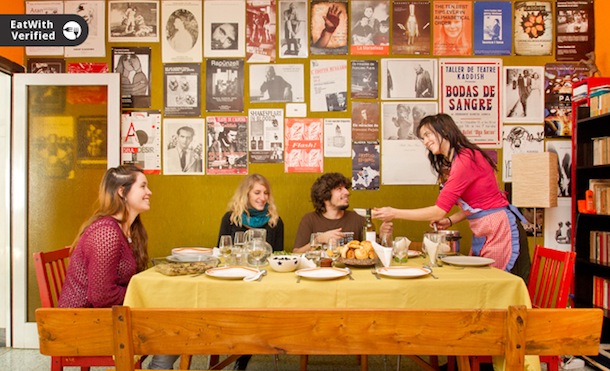
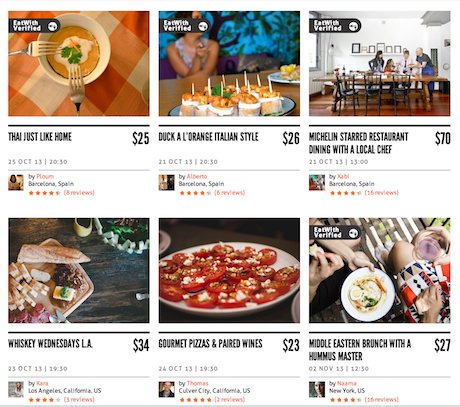
Forget museums and tourist sites, when trying to get local flavor while traveling, few things beat eating local cuisine. While restaurants are fine, they can be expensive, hit-or-miss in terms of quality and can lack the intimacy and authenticity of how people really eat in your host country. Ideally, you want to eat with the locals in their homes, but unless you know someone in the country you’re visiting, finding an open invitation can be difficult. A new service called EatWith has made that difficult task easy. They connect travelers with chef/citizens who open their homes to make impromptu restaurants.

eatwith

How it works: You visit EatWith’s website, choose from one of their 17 cities; you peruse available chef offerings and either choose an existing reservation (e.g. Middle-Eastern Extravaganza on Nov 17) or book a date with a chef yourself (note: many have minimum party numbers). You then book your reservation. Chefs have 24 hours to verify that they’ll take you, similar to Airbnb reservations. After confirmation, you just show up. You can also cancel if you give the host 48 hours notice.

Offerings include dining with Michelin starred chefs in Barcelona and a Thai-Brazilian Feast in São Paulo. Like any good peer-to-peer commerce network, chefs are rated by people who’ve eaten at their homes. EatWith handles payment through PayPal. Prices are pretty reasonable, starting around $25 per person.

If you’re a little nervous about eating in someone’s home, EatWith carries a $1M third person insurance policy. The bad news is this coverage is currently available only in Spain and Israel–two countries where there is a high number of EatWith events. We don’t know about you, but we’ve eaten in some dodgy restaurants whilst traveling, so the lack of coverage, coupled with a rating system by diners, seems like an acceptable risk.

Of course, you don’t need to be a traveler to enjoy EatWith. Assuming it’s in your area, it can be an adventurous alternative to eating at a restaurant. Also, you can open your own home and register as a chef, sharing your cooking chops and making some money.

A while back, we looked at Feastly, a great peer-to-peer dining service we’ve used a number of times. Feastly works much the same way EatWith does, but is focused on major US cities. What we wonder is, assuming these services are as easy to visit and economical (or perhaps cheaper) as going to a restaurant, would people opt to dine in a strangers home on a broad scale? Could these micro-restaurants turn into another mainstay of dining out? Or are people too geared to eat at restaurants, even if their food and safety is no better, or often inferior?

Drier Hair, Fresher Food

These plastic doohickies might look like shower caps, but they are actually designed to protect food. Just slip them over plates, platters or any other container, and you have a food-preserving cover. Many of the companies that make them use breathable plastic to maintain moisture without spoilage.

We like these simple and reusable covers for a number of reasons. First, the safety of most plastic leftover containers is suspect; these allow you to use your chemically stable ceramic and glass dishes and containers. Next, using plastic wrap is often as cumbersome as it is wasteful; how many times have you wrapped and re-wrapped a dish only to have a pretty crummy seal? Last, these covers turn the containers we already have into food storage. (As a bonus, they’d probably make adequate shower caps).

There are a number of manufactures offering these covers on Amazon. Most are under $15 and include several sizes for various containers.