Sell Stuff Now, Easily

We’ve given tons of tips for selling your stuff. You can get an eBay valet to do it for you, you can sell your stuff on CraigslistKrrb or Yerdle. And of course, you can just give stuff away. With the exception of using an eBay valet and donating stuff, most strategies generally leave the seller (you) to be your stuff’s shipping and inventory manager. For those looking to make rapid life edits, this can be an agonizing process, both waiting for your stuff to sell and dealing with it when it does sell, all serving as a protracted reminder of all your poor life purchase decisions. A new service called Stuffhopper does something different, relieving you of pretty much all responsibility aside from waiting for someone to pick up your stuff and making money.

Unlike an eBay valet, Stuffhopper accepts a huge range of stuff–from furniture to appliances to handheld electronics. You describe your stuff to give them a sense of what you’re selling (they understandably don’t want your broken junk). You then schedule a pickup (if the value exceeds $100) via their site or app. Stuffhopper then goes about creating listings for your stuff, photographing it, creating descriptions and then selling it on whatever channel(s) are most appropriate. Because they are expert sellers, they know how to price and market your products better than you ever would. When they sell the stuff, they take a 50% cut of the net sale and give you the rest. If stuff doesn’t sell in 60 days, they send it back free of charge or donate it with your blessing.

Stuffhopper claims that the average house contains $7K worth of unused stuff. But for many of us, the value proposition of accessing that money–the time and effort involved with selling–isn’t sufficiently compelling to motivate us to do anything about it. Stuffhopper could change that.

Unfortunately for most of us, Stuffhopper is only available in Seattle, but we think it’s an idea that has legs and hope it expands to other cities.

Via Geekwire

The Hamper Test

Most of us live under the assumption that a decent percentage of our wardrobes are comprised of clothes that aren’t worn often. One closet expert (someone who knows closets, not someone hiding the fact she’s an expert) told the Wall Street Journal that most people only wear 20% of their wardrobes. This need not be the case. We can have wardrobes where every item is loved and worn on a regular basis, where we could reach into our closets blindly and be happy wearing whatever we pulled out.

If you want to reduce the volume of clothes you have while simultaneously increasing the overall quality of your wardrobe, consider doing the Hamper Test. Here’s how it works:

  1. Determine the normal interval between laundry loads. For some that’s five days, for others a week, for some two. For people who do laundry often, err on the side of making your interval long. It’s okay if your laundry interval is tethered to someone else’s, like a spouse; just determine your combined laundry interval.
  2. When you do laundry, look at the clothes not in the hamper (or laundry bag)–the clothes that are not in active rotation.
  3. Get rid of at least one item that didn’t make it into the hamper per laundry interval.
  4. Repeat until most of your clothes are in the hamper at the end of a laundry interval (some prudent reserve of unused, but wearable clothes can be forgiven).

There are a few notes to the Hamper Test:

  1. Don’t subject seasonal clothing to test when out-of-season. In other words, don’t ditch your shorts because they didn’t make it into the hamper in December. But do subject shorts to test in August (make appropriate hemispheric/seasonal adjustments). The test should be done for every season, i.e. conduct test in summer, then do separate test in winter.
  2. Clothes that are either infrequently or dry-cleaned won’t exactly fit into the Hamper Test. Just be honest about how often these things are worn.
  3. You can make some special clothes exempt: Formal wear and specialty clothes (ski pants, cycling shorts when not in season), for example. But do not abuse this exemption. If you haven’t worn that tux in the last twenty years, there’s a chance you won’t wear it in the next twenty.

Even people who think they have pretty pared down wardrobes (like this author) find dozens of things to give away: t-shirts at the bottom of the t-shirt stack, those “funky” neon green socks that are worn once a year (at most), cycling clothes that haven’t been worn for 12 years and so on.

Give it a shot and let us know how it works.

Washing fabric in Basket image via Shutterstock

Evernote Scannable and Finally Ditching the File Cabinet

Evernote is a centralized, searchable, web-based place to store all of your notes, web articles, PDF’s–kinda everything. I’ve been using it for a few years, primarily for its web-clipper feature, storing the miscellaneous stuff I find online that I might not immediately have a use for, but want to keep a record of somehow. Evernote grabs the text and image for the webpages and I can write notes and tag so it’s easy to find for future reference. For example, searching the “micro-apartment” tag in my Evernote will bring up every article related to the topic.

But web-clipping is just the tip of the Evernote iceberg. You can store all types of files, documents and photos, making Evernote the equivalent of a jacked-up, cloud-based, searchable file cabinet.

Their new iOS app Scannable goes even further, virtually abolishing any need to hold onto any physical files. By granting Scannable permission to access your photos, it will detect any document you shoot–receipts, documents, biz cards, etc–and make them into scans which are easily exported to your Evernote account (there is a manual mode if you want to select what gets scanned).

In order to use Scannable, you need iOS 8 (I had to make the upgrade). All you do is open the app and the camera’s viewfinder hunts for a document in its field of vision. I tested it on a bank statement and business card. It made clear scans, which were easily sent to Evernote, where I could make notes should I need to find the s in the future. But you can also send the scans to your camera roll, Twitter, Facebook, Airdrop, printer or a host of other options. With business cards, Scannable extracts all of the contact info and makes a contact note; you can create a new contact in your phone from the scan or associate it to an existing contact. You can even connect Scannable to your LinkedIn account and it’ll connect the contacts it generates through that platform.

Historically, I have used the TinyScan app that uses a phone’s snapshots to make PDF scans like Scannable. I then send the scan in an email or upload to Google Drive, Evernote or Dropbox. It’s super handy, but not “smart” in the way that Scannable is. With TinyScan, a scan is a scan, whereas Scannable sees a scan as data.

While many of us might still cling to the feel of paper books and notepads, it’s tough to be romantic about document storage. It creates a lot of clutter for something we “might” need some far off day in the future–a day that almost never comes. Apps like Scannable provide a profoundly easy way of covering our posteriors for posterity, creating an organized, searchable, clutter-free storage system, driving one last nail in the coffin of paper document storage.

Thanks for the tip Steve

Tossing X Is Easy If You Know Why

It’s hard to imagine 90 square feet reaching across the globe, but that’s what happened after I moved into that now infamous tiny Manhattan apartment. Prior to deciding whether to move into what some have called “one of the smallest apartments in the world,” I went through my list of living priorities:

  • Is the apartment located in the Upper West Side?
  • Is the rent reasonable?
  • Is it near places I frequent?
  • Will living there allow me to quit my demanding job and finish writing a book?
  • Will it satisfy my itch of wanting to experience living in NYC?

When the answers to all of the above came back a resounding “Yes!” the decision to move into that place was a no brainer. But then came the hard part: culling my possessions. These were items I’d lugged around for years never able to part with. However, now that I had found my “why”–to experience life more, write a book and not work my tail off to pay rent –I could get rid of “X” without a second glance. This included clothes, books and all my kitchen supplies except for a hot pot and toaster oven since the studio was kitchen-free.

I set my sights on living in New York City for just a year. After that I planned to move into a normal-sized apartment in the burbs.

Yet something happened inside those 90 square feet. My life got better. And bigger. And fuller. Did I really want to give that up for more closet space? With my overhead lower (no pun intended), I now had more time to write, ride my bicycle, read books, see theater, visit friends and travel. I was still working hard, but on my own schedule, and the stress was less. I also finished my book, something that had been on my To Do list for over a decade. I might have been living with less, but I had gained so much more. All because I had figured out my “why.”

After the video went viral and the landlord discovered I was subletting illegally, I was handed my walking papers. At first I was frightened. Apartments in my neighborhood, while larger, were more expensive. Would I have to get another 9-5 or move out of Manhattan? Granted it wasn’t the end of the world, but I had created a lifestyle I wasn’t so ready to give up.

felice-cohen-kitchen

My grandfather suggested I buy an apartment. Having been saving for years, I looked around. And I found. The one-bedroom was just two avenues away from the tiny residence, was in my price range, and happened to be five times larger (my kitchen pictured above). Not that I was looking for more space. People joke and ask what I do with all the extra space and the answer is simple. I fill it with family and friends.

It’s been almost three years since I moved out of that apartment, but I often think back on those years and smile. For such a minuscule space, it left an enormous impression.

Today’s post was written by Felice Cohen, a professional organizer, author, public speaker and blogger who currently lives in more than 90 square feet in New York City. Follow on Facebook and @FeliceCohen

Eliminate Stuff by Eliminating Surfaces

In addition to abhorring vacuums, nature seems to abhor clear surfaces. If you don’t believe us, make a clear surface–table, desk, countertop, or even inside a drawer or closet–and see how long it takes for it to get cluttered up with all varieties of stuff: unopened mail, brochures, dog leashes, pencil sharpeners, etc. Clear surfaces provide unstructured, hook-free, often-vertically-unlimited storage. Don’t know where to put something, cram or stack it on that table.

But because they’re so flexible and convenient, clear surfaces tend to be magnets for stuff we don’t need, use or even want. They are especially useful for holding stuff we don’t want to deal with. Why do you think people “table” issues?

RAM or Hard Drive Surface?

If you want to live in an uncluttered home, it’s best to treat your surfaces in one of two ways. One is RAM (random access memory) for your stuff. These are the open surfaces like desks, dining, kitchen and coffee tables. Like a computer’s RAM, these surfaces should store the stuff that needs to be accessed or dealt with immediately–the bill we’re about to pay, the phone we’re about to use, the cup we’re drinking from. When done with use, they will be removed.

The other type of surface is our stuff’s hard drive. Closet and desk interiors, drawers, some desk surfaces, etc. These are surfaces that are assigned specific stuff that will be accessed in an ongoing basis.

If you are looking to de-clutter and simplify your home, try removing a surface or two–one less end table, even one less dresser. Without easy places to deposit and indefinitely store stuff, we often find ourselves compelled to deal with it (or toss it on the floor).

6 Tips for Creating an Edited Kitchen

When we think about clearing out excess stuff, we tend to think about durable goods like clothes, electronics, furniture and so on. A cassette tape player we haven’t used in 15 years is an easy target for excision and reducing clutter. But there is another, more edible source of residential overcrowding: food. We might be far less likely to get rid of those 15 year old canned peaches crowding our pantries than we are the cassette player. We say to ourselves, “I might eat that someday.” But do we?

Many modern fridges, cupboards and pantries buckle under the strain of excess food stocks–food that takes up valuable household space; food that uses resources and money to produce and purchase; food that often gets tossed after a long, uneventful stay in our kitchens. Consider these food facts:

  • It’s estimated that 40% of America’s food supply ends up in the trash.
  • 10% of greenhouse emissions from developed countries is generated by the production of food that is never eaten.
  • According to the USDA, “In 2008, the amount of uneaten food in homes and restaurants was valued at roughly $390 per U.S. consumer–more than an average month’s worth of food expenditures.”
  • According to ABC news, between the years 1974 and 2004 the average American home’s kitchen doubled in size from 150 to 300 sq ft.

Cutting down on food waste can make it easier to live in a smaller space, reduce clutter in any kitchen, save money and reduce our carbon footprints. It may even improve our health. If you’re interested in editing your food stock, here are a few tips.

  1. Buy only what you need. This is a pretty obvious one, but try to buy the food and the quantities you know you’ll consume from one shopping trip to another. It’s okay to have an empty fridge before you go shopping. If feasible in your area, make more frequent, smaller shopping trips.
  2. Avoid “precious” food. How many times have you bought special cheese, meat, heirloom tomatoes–whatever–and waited to use it for a special occasion, only for that food to end up rotting? Have a plan for your food–either eat it at an appointed time or immediately. Food spoils. Make every day a special occasion.
  3. As a rule, try to purchase most food from the perimeter of the grocery store. Grocers put all of their perishables–fruits, veggies, fresh meat, dairy–on the outside of the store. Aside from their greater nutritional value, perishables have a finite amount of time you need to consume them, creating an urgency for consumption. On the other hand, food from the store’s interior can sit on their (and our) shelves for millennia–food that is often bereft of nutritional value or filled with preservatives. Real food goes bad. Eat more real food.
  4. If you’re trying to get rid of food you already have, create recipes using existing food and schedule meals. If you need to buy extra ingredients, go ahead, as long as it doesn’t add another wave of new, unused food. Not sure what to make? Try the Su Chef app. If there is food you’re sure you’ll never eat, drop it off at a local shelter.
  5. Compost wherever possible. Many local green markets and community gardens have drop off compost bins. Put food scraps in your freezer between drop offs to avoid bugs. Consider your own composter such as the NatureMill automatic composter used in the LifeEdited apartment.
  6. Don’t be afraid to toss. If something is not fit for eating, giving away or even composting, don’t be afraid to toss it. This is especially true of junk food. Some food is healthier in the trash bin. Just resolve to not buy the same stuff again.

image credit My Cooking Magazine

Sell Stuff Easier with Sold.

We’ve said it once and we’ll say it again: Selling stuff can be a real pain in the butt. The relief of unloading is often more than offset by the grief of haggling, scamming and parting with your stuff at bargain basement prices. More often than not, giving stuff away is the most economic, least heartbreaking solution. But we know you might have some stuff that’s too nice and too new to give away. For that stuff, there is a new service and app called Sold. (the period is part of the name FYI).

With Sold.’s iOS app, you take a picture of the stuff you want to sell, answer a few questions and wait for Sold. to verigy that the pictures align with the questions you answered; they then give you a price they agree to pay you. They do the heavy lifting of selling. They find a place to sell the item (mostly eBay it would seem), determine a price, handle billing and even send you shipping materials.

They take a small fee and we would assume that if they fetch more than their quoted price, they take that money as well. Sure, you might be able to keep more money by selling yourself, or, just as likely, you’re apt to get less because you don’t know how to sell your items. In that light, a reasonable fee is probably well worth it.

Here’s the rub for all of you folks looking to unload aunt Six Flags shot glass collection: Sold. doesn’t want your junk. They’re looking for “things of value” like newer smartphones, computers, designer sunglasses, handbags and such. As many of us have those items, Sold. can be quite useful.

via Netted by the Webby’s

Give It Away, Give It Away, Give It Away Now

Following Graham Hill’s recent NY Times Op Ed, a far-reaching conversation has opened up about stuff–namely living with less of it. And to the best of our ability, we’ve tried to dole out sound advise for getting rid of your stuff. We’ve tried to help you navigate the perilous waters of eBay. We’ve looked at the online yard sale that is Krrb’d. Even though we haven’t written much about it, who doesn’t know about Craigslist? All of these services offer great ways to make money when offloading your stuff–the perfect present for your new edited existence.

But you know what? Selling stuff is a pain in the butt. Unless, you have very desirable, coveted items with clear market values or you are offering things at rock-bottom prices, your selling process is likely to be fraught with haggling, answering questions, shipping and dealing with scammers. Sure, pros can handle these situations with aplomb, but for many of us, selling can be more stressful than keeping.

We know it’s tough to do, but sometimes the best thing to do with our great, valuable stuff is give it away. When considered carefully, most of us will find selling is not worth the effort. While “time is money” might sound a bit facile, the fact is our time is worth money; you don’t work at your job for free do you?

To illustrate: Someone who makes $50k a year gets paid about $25/hour for his or her time (see how we got that number here). Let’s assume that’s your salary and your free time is of comparable value. Looked at this way, the cost/benefit analysis of spending an hour or two selling the Cuisinart you bought for $200 for $50 on eBay isn’t quite there.

There is no shortage of ways of giving your stuff away. Friends and family are an obvious choice. Craigslist has a free section, where things get quickly snagged. There’s Freecyle, a national grassroots network of people reusing and keeping “good stuff out of landfills.” There are tons of worthy charities such as Goodwill, many of whom will pick up your stuff and provide tax deductible receipts (you still have a couple weeks!).

We were recently turned onto a website called WebThriftStore, which allows charities to set up virtual storefronts. Through the site people can donate stuff as well as buy other people’s stuff. Donors actually send their stuff to buyers, cutting out the store. Proceeds go straight to one of the site’s partner charities and you get a tax receipt. WebThriftStore provides free mailing labels and shipping supplies for the donor.

While donating your stuff to a good cause might not have the dopamine spike of a wad of cash, it might have more influence on your long term happiness.

How about you? What’s your favorite way to give? Or do you know a secret way of selling that’s not so much of a drag?

Sign PDF’s, Ditch the Fax

Has anyone recently asked you to telegram a message because they want to make sure it gets to you safely? Perhaps a carrier pigeon or pony express? Of course not. But has someone asked you to send a signed document via fax machine? Probably so.

Different people have different tactics for getting around the Dodo-in-waiting that is the fax. For some, sending a fax involves printing the document, signing it, scanning that document, then sending that scanned version via email (you probably save the signed paper document “just in case,” creating more paper clutter). Or some of us keep an eFax number, so we can trick people into thinking the scanned PDF is coming from a real live fax machine…suckas! Except these numbers often cost us $10/month. Any way you spin it, this process is a pain that uses way too much time, paper, money and equipment–all to achieve a questionable level of security.

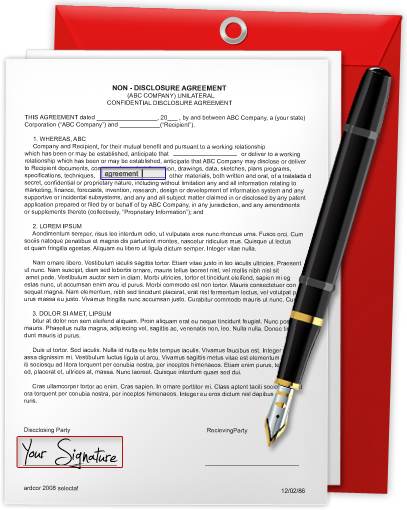
There are now many ways to sign PDF’s, Word Docs and any other signable document without scanning, paper, expense or hassle.

There are a number of fancy signers that create digitally encrypted signatures, many of which cost upwards of $15/month.  While these might be great for lawyers and mobsters who have some serious security issues, the LifeEdited team has been using the pretty budget PDF Signer app for a while now with great success. For $10, it allows your Mac to open any document and overlay your digital signature, which can either be made by scanning your signature or even taking a photograph. It also allows you to fill in boxes with standard text.

Options for other devices/operating systems:

  • LifeHacker recommends DocuSign Ink for iOS. This free app allows you to sign documents with your finger as well as fill in text.
  • For Android, there’s a highly rated app called Fill and Sign PDF Forms, which allows you to, um, fill and sign PDF forms ;-).
  • PD Fill works for PC’s and comes highly recommended by CNET. $19.99.

5 Products That Make Our Lives Better

We are always on the lookout for products that do more, last longer and take up less space than their conventional counterparts. We’re not talking about things like a good laptop or phone, which might be indispensable, but will be outdated in six months. We’re talking about the products that won’t go out of date, whose utility proves itself through the years.

We’ve put together a short roundup of products we find ourselves unable to live without (not literally of course). It’s also a nice excuse to ask you what your list includes. What are the things that make your life or home work better–things that make life simpler and more streamlined? Let us know in our comments section below.

  1. Waffle-weave towels. We’ve talked about them before, but too much cannot be said about their merits. The longer we use them, the more they prove their superiority to terry cloth. We’ve been using Aquis microfiber towels and Gilden Tree cotton waffle towels. Both take up less storage and washing machine space, dry faster and avoid mold. If we were to choose one however, it’d be the Aquis; the synthetic material seems to grab moisture from your skin. It’s also softer than cotton. If you’re not into synthetic stuff, the Gilden Tree towels still work great and are available in more sizes and colors.
  2. Outlier pants. These things rock. They look like dress pants, feel like sweat pants, wick and repel moisture like mountaineering pants and wear like iron. Starting at $188, they are not cheap, but they will literally replace three pairs of conventional pants and outlast them as well. I have had several pairs for the last few years. My favorites are the 4 Season OG’s and Climbers, both of which have four-way stretch material (not all Outlier pants are as stretchy). Their shorts rule as well. Right now, they make one women’s variety.
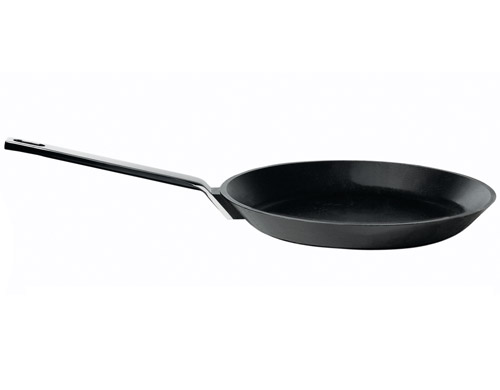
  3. A cast iron skillet. Nonstick skillets are great, but they wear horribly and have a dubious safety record. Copper and stainless steel wear great, but are temperamental, scorching and staining easily. Cast iron, on the other hand, wears like, well…iron. It distributes high and low heat great. With a little bit of use–i.e. ‘seasoning’–it can be almost as nonstick as a Teflon pan, without all the plastic bits in your food. You can clean them without water. And while enameled iron pans are nice, the bare cast iron versions are less fussy and prone to marring. I use a beautifully designed 12″ iittala Hackman Dahlström Tools for almost everything (pictured at very top. Discontinued, but available at various stores), but most any cast iron skillet work equally great. Get a size that’s big enough for the amount of cooking you do, but not so big that it takes ages to heat.
  4. A comfy couch that you can sleep on. I was at IKEA a few weeks ago and they had a 375 sq ft mock-up apartment featuring a huge, overstuffed sectional couch. I thought it a waste of space until I sat it in. Few things demarcate home like a comfy couch. In the LifeEdited apartment, the Resource Furniture Swing couch is the most used piece of furniture. A great couch can be your guest room in a pinch, and while convertible sofa-beds are great, sometimes it’s better to get a longer couch than invest in a substandard sofa-bed, which are often pretty uncomfortable.
  5. A scanner. We thought scanner technology was stable enough that it could be included on this list. Scanners are simple, can last ages, don’t require stupid, overpriced toners and, most importantly, allow you to dump tons of paper by scanning receipts and important documents. Scanners eliminate the need for a fax. You can also scan old photographs for posterity and digital display.

What would you include on this list? What items streamline your home and your life more than most? Let us know in our comments section.