This is What It’s All About

A reader recently sent us this letter and we think it pretty special:

Thanks LifeEdited! You are helping fuel our resolve to continue on our journey simplicity.

Our story began the summer of 2014.  My husband and I found ourselves empty nesters, in a huge house, with a huge yard, and a huge to-do list of chores and have-to’s. Our bank account non-existent, our paychecks going out the window faster than we could deposit the paychecks.  All the stuff in the world hadn’t made us happy, only miserably in-debt.

So we decided to break out of the box we’d climbed into and regain financial freedom and our joy. We spent five months purging and preparing our home to put on the market to sell.  We must have done a great job because we put our house on the market on December 31st, 2014 and on January 20th, of 2015 we were sitting at the closing table!  Our heads spinning, three-Fourths lighter in possessions, we helped a wealthy friend care take his 14,500 square foot, multi-building, 65 acre estate in Cincinnati, Ohio for eight months, which helped us eliminate almost completely all of our credit card and vehicle debt!  Ashamed to admit it, but when we sold the house we were $37,280.00 deep in debt!

We now rent a very cool 1000 square foot apartment in Historic Covington, KY. While 1000 square feet, probably sounds huge to you over at LifeEdited…for us it’s 1/4th of the space we used to have. Gone are all the dusty collections, over 35,000 books, and 500 pieces of white pottery. Gone are the days of spending nights and weekends tending to the maintenance, repair and upkeep of a huge home. Gone are all the things I felt compelled to hold onto for ridiculously sentimental reasons, just because I felt guilty about letting them go. (Trust me when I say this, Aunt Millie…who’s been dead for three decades, really doesn’t give a shit if I still have her casserole dish!). Gone are the endless headaches attached to caring for all that stuff!  Gone are the dozens of bills flooding the mailbox each day. In exchange, we’re finding freedom, peace of mind, tranquility, time for random timelessness with friends and loved ones.

Our example is helping our sons relearn and reset priorities. It feels great. We’re still working on streamlining our current possessions, because let’s face it, the world keeps screaming “you need this!” all the time, and people around us still haven’t figured out that what we want is to just share our lives with them, not get stuff from them….so we’re working on what to do with those gifts from loved ones, that you just don’t need or love.

The biggest shift for us has been becoming “appreciators” instead of “consumers.” Appreciators see beautiful things and think, “Oh, how beautiful that is and take time to delight in it.”  While Consumers are people who see beautiful things and think….”I must possess that!”

I just wanted to stop and take the time to say thank you for helping inspire me today to stay the course and not take two steps back into that old life that I so do not want to ever repeat!

Less, truly is the key to opening the door to a life filled with more abundance.

LTS & GGS

A Guide to Buying a Refrigerator for Small Apartments

For the most part, American appliances, including refrigerators, fall into two categories: Big and nice or small and cheap. In other words, it’s tough to get small and nice if that’s what you’re after. But doing nice and small can be done, even in America. After a few years of research, we thought we’d create a general guide that might help you select the right fridge for your small space.

The Basics

Stating the obvious, what makes small space appliances suitable for small spaces are their size. We’re going to limit our discussion to 18” and 24” wide refrigerators, which are the two most common widths available. 24″ is far more common than 18″. 27” and 30” models, while suitable for some small spaces, are not your most compact option.

There are far more variations in height. Broadly speaking, there are counter height and standard height fridges. The former tend to run around 32-34” so they can fit under a standard 36” countertop. The latter usually range from around 60” to 80”.

Most fridges are counter depth, meaning their overall depth is around 24”, give or take, so they don’t protrude too much beyond the counter,.

Fridges can be Energy Star rated, which means they are 9-10% percent more energy efficient than models that meet the federal minimum energy efficiency standard. Most middle to high end fridges will have this certification, but low ends will not necessarily.

integrated

Perhaps the most important consideration is how the fridge will fit the layout and aesthetic of your kitchen. Most people buy a new fridge because theirs died or they are doing a larger renovation. If you’re in the former category, you might consider finding a model that roughly fits the dimensions of your previous model. If you’re redoing your kitchen, you’ll want to think about how the fridge fits in with your cabinetry (more on sizing in a minute). Especially important is what, if anything, you’re doing above the fridge (keeping it open, more cabinets, etc).

If you have the money, we’d suggest a panel ready fridge, which means it’ll accept custom panels matching the rest of your kitchen’s cabinetry. This is generally only found on premium fridges and the panels aren’t necessarily cheap either. But it creates very streamlined looking kitchen.

Down from panel ready are stainless steel clad appliances, which tend to look and clean up better than painted models, which are how the least expensive fridges are clad. 

Counter Height Fridges

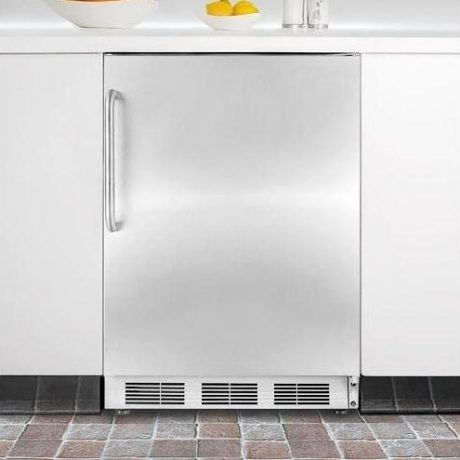
Counter height fridges are great if you want to save space. They take up minimal volume and permit more counter space as the surface isn’t interrupted by a fridge. But they have some notable drawbacks. The first is storage volume. A normal counter height fridge has around 5-6 cubic feet of storage. A fairly standard 60” high model will have two times that. This amount of volume might be fine for a single person who doesn’t cook often or shops every couple days, but for many people this amount of space quickly becomes limiting. 18″ models are available as well, but are mostly suitable for keeping last night’s leftovers cool.
summit-undercounter

The next issue is that most counter height fridges have manual defrost (all fridge models are available if you don’t need a freezer). This means every month or two you must let your freezer compartment thaw out. And up until that point, the compartment get smaller and smaller as layers of ice form around the interior of the compartment. It’s a pain. The Avanti RA3136SST is one counter height fridge with auto-defrost, but because of its size (3 cubic ft), it’s mostly suitable for people with Smurf-like appetites. The U-Line 1000 series will also do the trick…for $2K.

summit-interior

If you’re looking for other non-manual defrost fridge/freezer combo options, you can choose a drawer style fridge. We used the 27” wide Sub Zero 700 BCI in the first LifeEdited Apartment (pictured at top, since discontinued). It looked really nice as it accommodated custom panels. But its limited storage volume and height (you couldn’t stand a bottle of wine upright) limited its functionality. At around $2500, it was also very expensive. In fact, most drawer fridges are more expensive than their standard size equivalents, starting around $1500.

Our overall recommendation is to only go for a counter height if space is really limited and/or you are not a serious cook or you only like dealing with very fresh food. In terms of manufacturers, Summit probably makes the most number of models, though most manufacturers have counter height options.

Standard Height Fridges

If you have a bit more room to play with and you like keeping things on hand that you don’t cycle through very fast (condiments, wine, etc), we recommend going with a standard height fridge. With 10+ cubic feet of storage, they are far more practical for most people. And unlike counter height fridges, almost all have automatic defrost. Finding a model that works for you is mostly a matter of budget and aesthetics.
danby

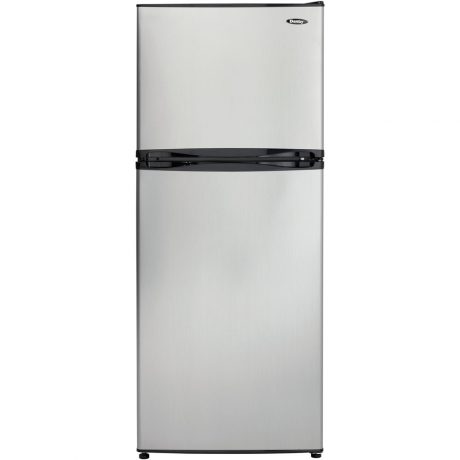
If you’re looking for an affordable 24” compact fridge, there are a number of options. You could pick up the Danby DFF100C1BSLDB for around $500. At 24” x 60”. These and others like it are the kind of fridges most landlords buy. They’re not sexy, but this level of fridge tends to have a reasonable 10 cubic ft of storage and it’ll keep your stuff cold. What more do you need?

Up from there you could get into some nicer stainless steel fridges like the LG LBN10551PS. It’s 24” x 68” and has 10 cubic feet of storage volume. At around $800-900, it’s a little more expensive, but it looks nicer than the Danby-level fridges.

Up from the LG are the more premium European style 24” models. These tend to be between 70-80” high and have more storage. They can be purchased panel-ready, allowing you to seamlessly integrate them into your kitchen.
fagor

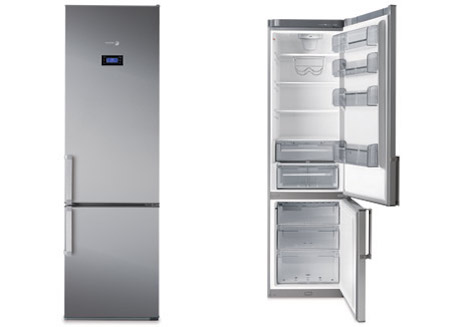
For one of our projects, we used a Fagor model and it’s worked out great. It measures 24” x 80” and has about 13 cubic feet of storage. Like most other tall skinny fridges, the freezer has pull out drawer which take a little getting used. For example, you can’t toss a big turkey in there and putting ice trays in there is can be trickier than one models with one open volume.

In this tier, there are a variety of nice options, though most will run quite a bit of money. On the bottom end is Blomberg BRFB1042WHN for around $800 (also available as panel ready for $1500) and on the high end is Liebherr BF1061, which is built in to custom cabinetry and will set you back $5700. For our next project, we chose the panel ready Smeg CB300U which retails for about $1900.


The State of Small in New York City

As has been said of the largest city in the United States, if you can make it there…well, you know. And regarding micro housing, they did make it here. Once. The soon to open “My Micro” (we’re loathe to call it by its new suburban subdivision sounding name “Carmel Place”) is a comely building with smartly designed units ranging in size from 265-323 sq ft. The building is the product of former Mayor Mike Bloomberg’s adAPT NYC pilot program that gave a one-time pass on the minimum size a developer could build an apartment. But it could be that My Micro is as far as New York micro housing will go for the foreseeable future.

A pillar of current Mayor Bill de Blasio’s election campaign was bringing more affordable housing to the city. In keeping with that commitment, his administration introduced its “Housing New York” plan with a sweeping set of zoning changes that included reducing the minimum allowable square footage of an apartment from 400 to 275 sq ft. Parking lots were also part of the plan; according to Capital New York, a proposal would “eliminate the requirement for parking lots in any new senior or affordable housing developments within a half-mile of public transit and replacing existing senior housing lots—which they say are virtually empty—with more housing.”

The other day, an affordable housing advocacy group called Real Affordability for All threatened de Blasio with imminent protest if he didn’t capitulate on a number of issues including the housing size and parking lots. At present, details are still being hammered as to what the final plan will look like, but aforementioned issues are still very much up in the air. 

Unfortunately, this is not a topic that lends itself to oversimplification. 55% of New Yorkers are rent burdened, spending 30% or more of their income on housing, and 30% of those people are spending 50% or more. Those opposing the changes fear that developers will hit de Blasio’s affordability targets by making housing that is both smaller and less accessible.

It should also be noted that those opposing the changes are not young professionals or well heeled empty nesters looking to simplify their lives by getting some tricked out micro apartment in Manhattan. They are working class folks, most of whom live in Queens and the Bronx, places where transit options are far fewer than they are for someone who lives a couple blocks from Union Square. The struggles that face these New Yorkers, and concerns that developers will exploit the new zoning to build substandard housing, are legitimate. If a financially strapped family of four can save 20% on a 300 sq ft apartment versus a 600 sq ft one, they might just do that.

But we hope de Blasio and all parties involved don’t conflate the micro housing conversation with providing affordable housing for New Yorkers who need it most. The topics might be related, but they are not the same. 

The big issue is creating more housing that matches how people live. Across the boroughs, 33% of New Yorkers live alone and it’s 50% in Manhattan. There is a dire need for more housing, ideally market based, designed specifically for these populations. Building small and smart is a logical way of doing that. It has been opined that this could even free up unnecessarily large housing, now occupied by singles, for larger households.

And maybe we’re a bit too immersed in the micro mentality, but 400 sq ft, at least for singles and some couples, is huge! Many major cities like Washington DC, San Francisco and Seattle have much lower minimum building requirements (225 sq ft for the latter two). Seattle’s micro apartments, as we’ve long reported, have been wildly successful for providing affordable, market rate, transit friendly housing for (mostly) singles–albeit success met with a hefty dollop of protest.

The possible amendments in the plan might be an issue of advocacy as much as anything. Few people outside our friends at CHPC are advocating for micro housing with the passion of the affordable housing folks. While there are many charges that micro housing will benefit developers, the dearth of lobbying efforts calls this assumption into question. The New York real estate development community is a financial behemoth, yet they don’t seem to be offering a countervailing voice pushing for micro housing.

The fact is building micro housing is often more expensive than conventional development, as there are more walls, kitchens and bathrooms per square foot. And in a city where you can fetch a per square foot premium for large apartments, many developers might be a bit indifferent to the micro housing topic. If there were more advocacy, there might have been more conversation about a compromise–protecting the welfare of strapped New Yorkers and loosening restrictions on building small.  

Of course, whether the zoning laws pass or not, small living will continue in NYC, either illegally or in the form of micro-suites, which work within the constraints of existing code while achieving high housing density. But we fervently hope the measures pass. While New York has many faults, it still holds great sway in affecting national and global trends. Legalizing micro in New York would likely help advance the movement of small footprint, urban living everywhere.

GuilhermeMesquita / Shutterstock.com

Free Your Life of Useless Baggage

We have written a few times here about luggage. If you travel even somewhat frequently, it’s nice to have a solid travel bag, but the standard issue rolling bags most travelers prefer are bulky as hell when stored. They are big, empty volumes that take up considerable storage space in their downtime, which, even if you travel a lot, can be the vast majority of their lives. A new Kickstarter project called Néit is creating a pretty simple, solid rolling travel bag that collapses when not in use, freeing up tons of storage space in homes large and small.

neit

The bag comes in two sizes: cabin and checked sizes; the former shrinks 50% from its fully formed shape when collapsed and the latter 70%. There are other collapsible rolling bags out there, but few have Neit’s rigidity. The bags’ distinctive polycarbonate hard shells are designed to mimic the look and structural properties of an armadillo shell. An aircraft aluminum frame also ensures your stuff is safe from the unloving hands of baggage handlers.

The checked version weighs a reasonable 10 lbs and has a cavernous 90 liters/5500 cubic inches cavity; the cabin version weighs 6.5 lbs and holds 38 liters/3200 cubic inches. The bags have four wheels, making them easier to maneuver, and their handles allow them to be hung on a hook or hanging rack for easy storage both on and off the road.

neitapp

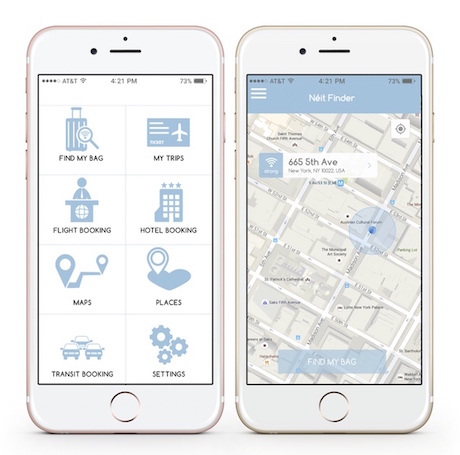
The bags are GPS enabled, working with an iOS or Android app to show where your bag is should it get lost. This is a funny feature in our opinion. Should the airline lose your bag, you can see where it is, but whether this feature helps your ability to retrieve the bag remains to be seen. The app also enables you “to store your boarding pass, book additional flights and hotels, check the status of your flight, map your route from airport to hotel and find out location specific tips on things-to-do at your destination” according to Néit.

You can still get an early bird specials on the cabin and checked bags for $212 and $269, respectively. Shipment is expected to be at the end of 2016. Visit Néit’s Kickstarter page to order or for more info.

LifeEdited Is Hiring

NOTE: THIS POSITION HAS BEEN FILLED. THANKS FOR ALL OF THE INTEREST. 

You know us, read about us, (hopefully) love us. Now work with us. We are hiring a project manager for design, construction and development projects. We consult on small space design in a number of cities in the United States and abroad. And with partners, we are doing more and more development of our own in the New York City area and beyond.

We are looking for a natural organizer to join our small team. We want someone who loves jumping into a project full of unknowns and quickly whipping it into shape by defining the key questions, gating factors, roles, schedules, timelines etc. We want someone who likes working with creatives and with changing parameters, who enjoys their critical role in designing and building amazing projects. An eye for design and design skills are a plus but we want someone who loves being a project manager.

We want an obsessive list-maker, a manic note-taker. We want someone with really strong communication skills who constantly pushes for clarity. We want someone enthusiastic but realistic. We want a double-checker. We want someone with a healthy sense of skepticism and drive to control gating factors. We want someone who makes Plan B and Plan C. 

We also want a researcher–someone who can work the Internet and the phone, quickly coming up with answers to FF&E, zoning and whatever questions need to be answered to move the project forward. Someone who knows the answer is out there and will hunt it down.

And we want someone who loves building, who has a great understanding of how buildings are constructed, who ideally has spent a lot of time on construction sites and who loves creatively working out the real life problems that inevitably arise on site.

We’re on a mission to build the buildings of the future, and we want someone who will get stuff done on time, on budget and on point to help us in that mission.

Qualifications:

  • Candidates must have 3+ years of experience in managing interior design projects, construction projects, small to medium real estate development projects or similar.
  • More experience is a definite plus.
  • The ideal candidate will live in New York City or near enough to travel in as needed.
  • Experience with the entire project lifecycle, from proposal to post-occupancy.
  • Reasonable knowledge of building codes and standards.
  • Knows their way around a pro-forma and enjoys it.
  • Has managed at least small to medium sized construction projects. 

Key responsibilities:

  • Help scope opportunities and help prepare proposals/contracts.
  • Create clear objectives for the project.
  • Create the overall plan for the project.
  • Manage project scheduling, budgets, and the team.
  • Manage consulting projects ranging in budget from $50,000 to $300,000.
  • Manage portions of development projects up to $20,000,000.
  • Manage construction projects, initially in the $1,00,000-5,000,000 range.
  • Research new products and technologies for green development (this is quite important to us).

Key desired characteristics:

  • A strong desire to create very green solutions.
  • A natural organizer.
  • A desire to innovate.
  • Adaptable to and interested in new technology.
  • Strong research skills.
  • Strong written and verbal communication skills.
  • A self-starter who can easily work remotely if need be.
  • An understanding of design principles.
  • Design skills are a plus (but comfortable not being the designer).
  • Drive and knowledge to build in a smart, cost-effective manner.
  • Prior startup experience is a plus, but not required.
  • NCIDQ certification a plus, but not required.

LifeEdited was founded in 2009, by the founder of TreeHugger.com for the express purpose of showing that people can live big in small spaces. Environmental thinking underlies everything we do. Our first showcase apartment struck a resonant chord in the media with two features in the NY Times, who called it “The apartment of the future.” It is one of the few apartments with its own TED talk and has also been featured in Dwell, Wired UK, Gizmodo, Daily Mail UK, the Today Show, and has generated tens of millions of views. Since then, we have consulted on high-rise apartment buildings and done a bunch of our own development. Our intent is nothing less than to give people a new way to live–a greener, less expensive, more socially progressive, happier way of life. A key goal for us is to create the apartment building of the future. 

LifeEdited is not traditional. We are creative entrepreneurs. We do not easily fit into real estate categories like ‘’interior designer’ and ‘developer’. We’re a hybrid. If you talk with us, you’ll understand.

If you are interested and meet the qualifications above, please apply and follow our directions exactly. As part of the application process, we will ask you for samples (links) of projects that you have worked on.

A Small Look at the Architizer A+ Awards

Architizer is one of the web’s leading repositories for the latest in contemporary architectural design. And every year they hold their A+ Awards to salute the best of the best. Public voting for the awards opened the other day and we decided to peruse the two categories focusing specifically on small spaces: the sub 1000 sq ft residential and “Living Small” categories (the LifeEdited Apartment was the 2012 winner of the latter category).

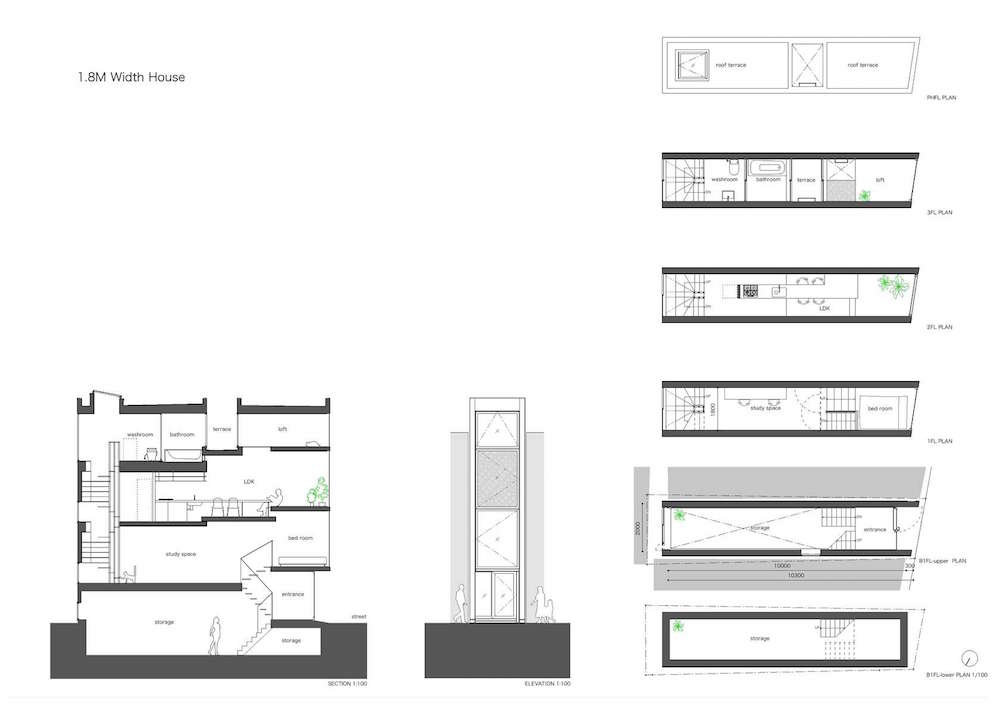
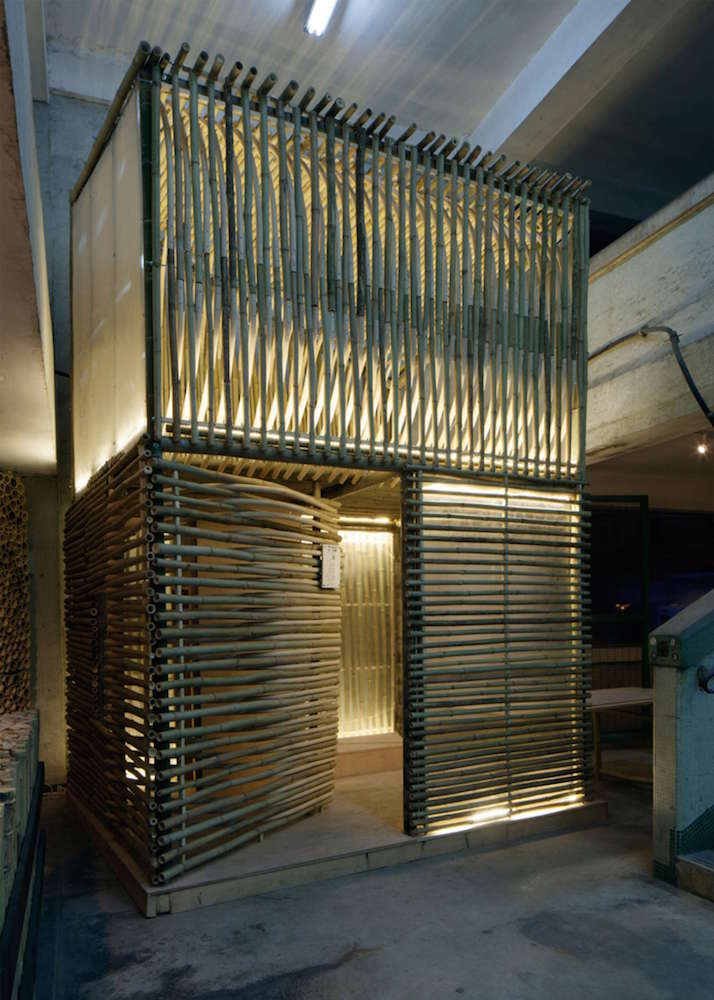
We found a number of pretty cool entrants. We were particularly impressed by the 1.8 M House and the Courtyard Plugin House. The former, a super-slim dwelling in Japan wedged into the space that would otherwise be a large walkway, and the latter an elegant way of revitalizing historic, but crumbling architecture. There was also lots of bamboo. Go to Architizer to see all categories and place your votes.

What is the Experience Economy?

If we are to believe a recent study by the company Eventbrite, there may be an emerging paradigm shift in terms of our relationship to stuff. Eventbrite, a ticket selling and event promotion site and service, is pretty invested in knowing how people prioritize experiences. Their study, conducted by Harris, looked squarely at Millennials, a population that make up a quarter of the US population and have $1.3 trillion of annual purchasing power. What they found was that Millennials place great importance on experiences. Here’s specifically what the study had to say about the Millennial’s relation to experiences:

  • 78% would choose to spend money on a desirable experience or event over buying a desirable thing, and 55% of millennials say they’re spending more on events and live experiences than ever before.
  • 82% attended or participated in a variety of live experiences in the past year, ranging from parties, concerts, festivals, performing arts and races and themed sports—and more so than other older generations (70%).
  • 72% say they would like to increase their spending on experiences rather than physical things in the next year, pointing to a move away from materialism and a growing demand for real-life experiences.
  • 77% of millennials say some of their best memories are from an event or live experience they attended or participated in. 69% believe attending live events and experiences make them more connected to other people, the community, and the world.
  • 69% of Millennials experience FOMO [fear of missing out]. In a world where life experiences are broadcasted across social media, the fear of missing out drives millennials to show up, share and engage.
  • Americans are dedicating more income to experiences: Millennials don’t hold the exclusive: the demand for live experiences is happening across the generational board. Since 1987, the share of consumer spending on live experiences and events relative to total U.S. consumer spending increased 70%. People want to experience more, and businesses are evolving and entering the market to meet that demand.

These findings support contentions made James Wallman, author of the book “Stuffocation” (who tipped me off to the Eventbrite survey). He sees a growing weariness of stuff as well as an emergent “experientialist” economy (as opposed to our current materialist one)–all of which supported by social media and mobile tech. Perhaps the parents of Millennials wanted to be seen driving down the drag in a GTO, their children want pics of themselves seen at the Taylor Swift show on Facebook or Instagram.

Of course, Eventbrite can’t be considered a neutral source of information. Experience is their chief product and they want to people to buy–the survey supports that end.

But anecdotally, the survey checks out. As more and more of our realities get outsourced to online repositories, the social capital of yore–cars, clothes, etc–loses some of its value. There’s also a stagnant economy, growing consciousness about the impact of stuff on the planet, a newfound definition of ownership, where the ability to use something is more important than possessing it, as well as a general weariness about the merits of having a ton of stuff. All of these factors could tip our collective consciousness toward an experience economy.

What do you think? Could the experience economy make appreciable inroads into the materialist one? Or is the survey market speak–a way for one company to make a buck off their core competency? Let us know what you think in our comments section.

Silhouettes of concert crowd image via Shutterstock

Italian Apartment Makes Micro Seem Huge

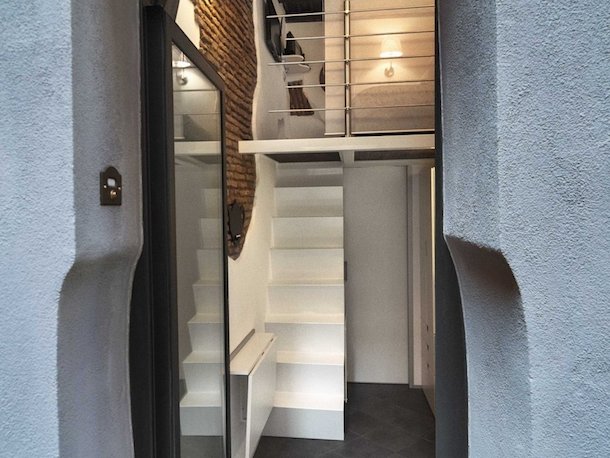
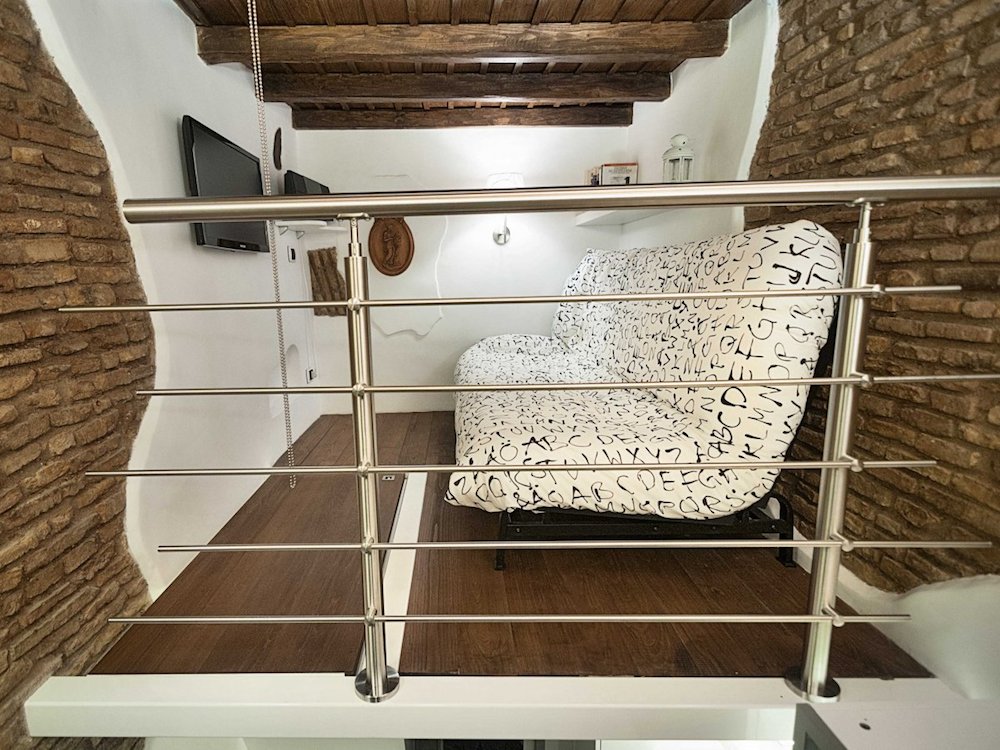
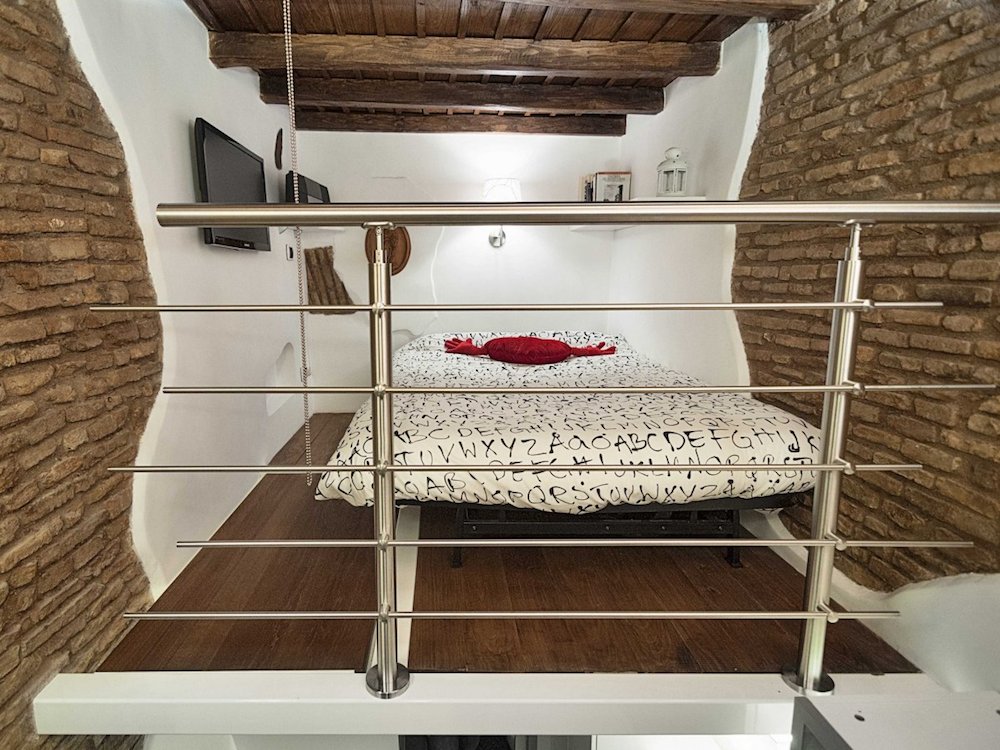
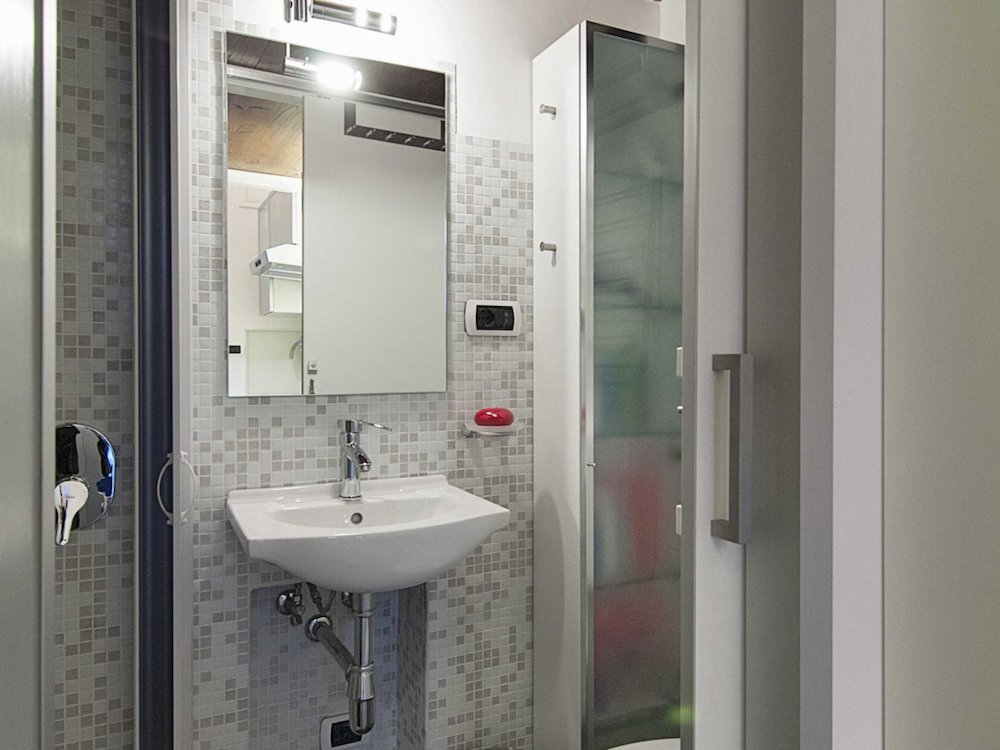
We’ve seen some pretty damn small apartments on this site. There was Felice Cohen’s 90 sq ft studio, Steve Sauer’s 183 sq ft triplex and countless tiny houses, the latter of which rarely break the 200 sq ft mark. But this 75 sq ft apartment in Rome might just take the prize for smallest home we’ve ever seen. The tiny space houses an actual kitchen, bathroom, dining area, a decent amount of storage and a loft for sleeping and lounging loft.

The space, which is minutes from the Pantheon and Saint Peter’s Square, dates from the 1700s. It was sitting fallow for years before architect Marco Pierazzi decided to buy and renovate it. He and his wife lived there before the birth of their child.

The space actually looks fairly livable. The kitchen is surprisingly functional looking. The stair/seat is very clever. The upstairs lounge looks quite cozy. The bed…well the bed might be a nightmare. Given that the opened bed covers the trap door that provides access to the rest of the space (see: bathroom), we wouldn’t want any late-night or early morning trips to the loo. Perhaps this is not an issue for those more gymnastically inclined and can hop over the railing.

While not a someplace I’d want to live in for a sustained period of time, the dinky space is a testament to the power of design, turning a space that most would consider only worthy of housing a dumpster into a pretty functional dwelling.

Via Business Insider

The Manhattan of the Desert

Energy-intensive, gargantuan and sprawled-out houses are a very recent phenomenon. People have known for centuries, if not millennia, that living close together and conserving resources is the best way to survive and live. Yemen city Shibam serves as a nice example of how the past often contains the simple wisdom necessary to right recent architectural and urban planning wrongs–ones that have thrown the world into an unsustainable tailspin.

shibam02

The city dates back to the 3rd Century AD, however most of its distinctive “skyscrapers” are from the 16th Century–predating many of the West’s vertical cities by a few hundred years. Rising as high as 100 ft, and having as many as 11 stories, the buildings are still some of the world’s highest mud brick structures. With 500 buildings inside the walled city, the dense cityscape has led some to call Shibam “the Manhattan of the desert.”  The building height not only increased land-use efficiency, fitting more people onto less land, it also conveyed the wealth of the city and provided defense from marauders.

shibam-plan

Shibam is now a UNESCO World Heritage site. The organization says this about the city:

The rigorous city planning based on the principle of vertical construction is exceptional and an example of a traditional but vulnerable culture….The old city of Shibam presents to historians and urbanists one of the earliest and most perfect examples of rigorous planning based on the principle of vertical construction.

Shibam has had some recent misfortune, with major flooding in 2008 and an Al Qaeda attack in 2009. All that notwithstanding, the city still has 7000 residents and presents itself as a historical guide to a resource-sipping city–one that could inform how the rest of us might organize our cities in the future.

10 Ways to Save Money When Furnishing Your Small Apartment

Finding the right furnishings and housewares for your small apartment can be a fun experience. Yet even in a small space this can get expensive fast if you don’t know how to save money on all the basics you’ll need. While apartments generally cost less to buy stuff for than larger homes, based on the limited space you are working with, you can still shop smart and frugally, allowing you to save as much money as possible. You can direct your savings to other needs like throwing your apartment-warming party.

Here are ten simple tips to save money on all your apartment furnishings, décor and other apartment needs:

  1. Buy adaptable pieces. One of the best ways to get more out of your apartment and your lifestyle is to stick to furniture and housewares that serve more than one purpose. This will allow you to adapt and move things around as your needs change, without having to buy more. Choose a high-end futon with a generous cushion to serve as a bed for guests, or benches that double as storage chests. Try adding an armoire for storing either clothes or entertainment items in cramped spaces.
  2. Choose quality over quantity. You are better off spending a few extra dollars on a high quality used piece of furniture for your apartment than buying a cheaply made newer piece. Look for sturdy hardwoods and metals, which offer flexible décor options. A well-made table with simple lines can serve as a desk, a dinette, or a place to tuck a television.
  3. Buy multiples. This might seem counterintuitive with a small apartment, but if you find a good deal on items you like such as dinnerware, bedding, or other apartment needs, it often makes sense to stock up. You’ll very often be able to buy box lots of items or come away with some great bargains buying several pieces from a container store or wholesaler. This will save money and keep you stocked for years to come.
  4. Shop locally. Chances are your neighborhood has several thrift stores or antique stores where you can pick up some amazing deals for pennies on the dollar. Visit these places with an open mind, and don’t be afraid to ask for what you need or for a break on a price if something catches your eye. Local retailers will work with you in ways big chain stores will not–plus it supports your community.
  5. Swap or trade. Have something you are looking to replace? Try putting an advertisement on a free community swap of website like Yerdle and ask for something in trade. You may be surprised to find that other people are trying to get rid of something that would be perfect for your place.
  6. Go for impact with art. When it comes down to buying for your apartment, there’s no better investment than a great piece of artwork. Shop your local community stores, head for auctions, and visit the local art colleges for unique artwork to adorn your walls. It will look like you spent a fortune.
  7. Avoid fads. When buying for your apartment, stay away from the latest styles in furnishings and instead opt for the classics in furniture and fabrics. You’ll usually end up with things that last longer and don’t cost as much.
  8. Buy post season. Sales occur after every major holiday, and this can be an opportune time to buy things for less than half of retail. Good things come to those who wait, for clearance sales!
  9. Shop with friends. Your friends are likely to have an eye for style, so be open to going in on deals with them. For example you may need a new living room set, but you don’t need all the pieces. Go with a friend who needs some new tables or a loveseat, and split the cost of a marked down set. You’ll both come out ahead.
  10. Be eclectic. Shopping for an apartment on a budget means that you may need to develop a décor style that mixes and matches pieces. Try adding a few modern things in with classic glamour, for a unique apartment that’s all you.

Decorating and buying for your apartment takes careful planning and strategic shopping. Think about all the ways you can save money and only bring in items that look good for your space, and are made well. Over time, you will want to repurpose these items in other ways, so think ahead as you furnish your place.

Mark Russell writes about apartment living and frugal apartment living tips at Apartment Guys.

Image credit: Shutterstock.com