Living Well in the Margins

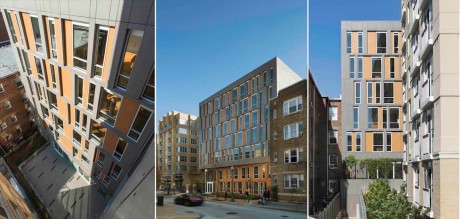
In most any area, it’s generally best to look to the margins, not the center, for innovative thinking. Small space architecture is no different. Conventional architecture is too often big and boring, victim of zoning restrictions and/or design driven by the interests of developers rather than residents. One place to find consistently interesting “marginal” architecture is supportive housing–a type of government-funded housing for populations that need, ahem, extra support. Supportive housing usually enjoys less restrictive building code restrictions than conventional housing and because it’s not for sale, it is not necessarily bound to imitate what everyone else is doing in the market, often resulting in innovative, community-centric, compact architecture. La Casa Permanent Supportive Housing in Washington DC is a great example of such a beast. It’s an attractive, smartly-designed apartment building that happens to be supportive housing serving homeless men.
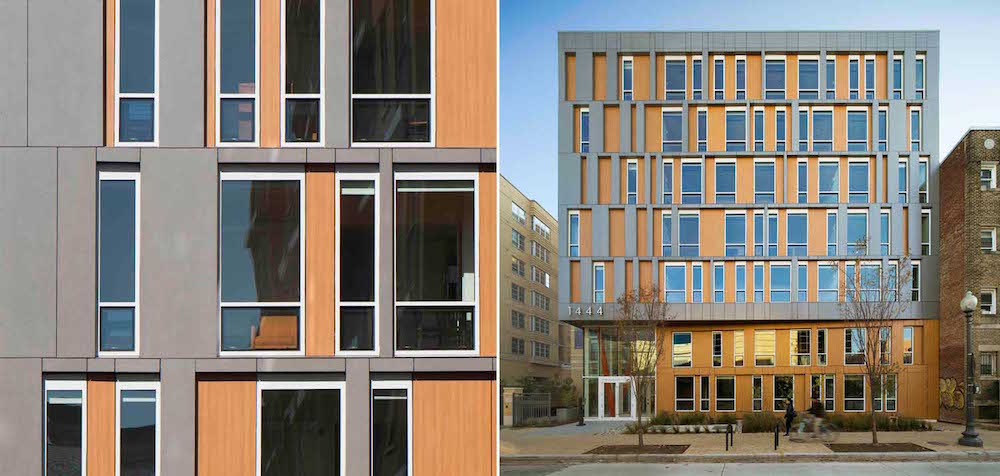
The seven story La Casa was jointly designed by LEO A DALY and Studio Twenty Seven Architecture for the DC Department of Human Services. According to LAD’s website, they were challenged “to create a ‘home’ rather than an institution, and to ‘meet or exceed’ the quality of the adjacent market-rate apartments.” With bright, clean and smart interiors, their challenge appears to have been met.

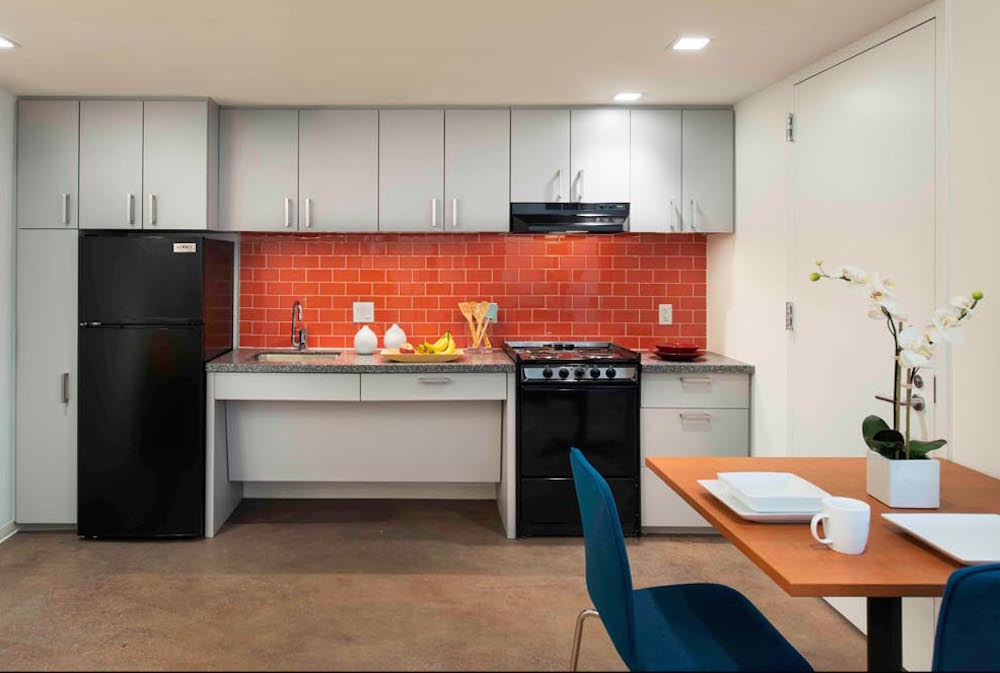
The building will house 40 chronically homeless men, all of whom will have their own furnished efficiency apartments with kitchens and bathrooms. The units are designed to create a sense of home and permanency, rather than serving as a stopover in some institution in a never ending cycle of homelessness. It will employ the “housing first” service model. Whereas many supportive housing communities require sobriety or other conditions for eligibility, housing first has no such conditions, acting under the belief that when housing and counseling services are in place, it can provide the security and dignity that will act as gateways for an improved life.
La-Casa-4-Desktop

Even the design was meant to be rehabilitative. Jim Spearman, La Casa’s project architect at Studio Twenty Seven Architecture, said “From the exterior, large and individualized windows on the façade identify particular spaces to which occupants can point and exclaim, ‘That is where I live!’”
La-Casa-12-Desktop

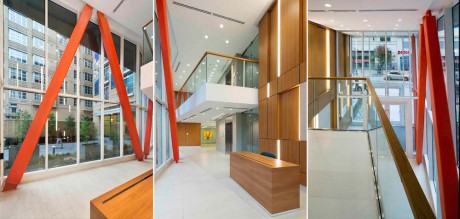
Beside the efficiency apartments, there is a welcoming lobby on the ground floor, support offices and a mail area. There is also a community room on the second floor that opens onto an outdoor terrace. “A green roof contributes to the design’s LEED-Gold certification,” according to LAD, and “Security is provided by a combination of security officers, remotely monitored cameras, and secured door access.”

La Casa recently won the American Institute of Architects (AIA) 2015 Housing Award in the Specialized Housing category. The project is great because it’s not just a nice place for someone accustomed to living on the streets–it’s a great place for anyone to live.

Images via Studio Twentyseven Architecture

WeLive Marries Micro-Apartments, Coworking, Magic

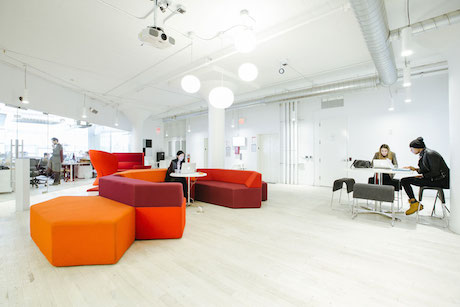
In case you didn’t know, WeWork is one of the largest coworking organizations in the US, if not the world. They have 19 buildings in three countries. When this author visited their Soho West location, I was amazed (pictured below). There were seven floors, each thoughtfully designed and decorated and booming with activity. With its mix of large, medium and small size firms as well as freelancers, all sharing one space, all feeding off one another’s energy, it truly felt like a futuristic office.

wework-soho

WeWork is now going a step beyond coworking. They have plans for WeLive, which will convert a 12 story office building into a residential building featuring 252 apartments, many of which will be smaller than 360 sq ft.

WeLive will be located in Crystal City, a neighborhood in Arlington County, VA, just south of Washington DC. WeLive would seem to be a decent fit for the area as Crystal City is already configured as a self-contained city. According to Wikipedia “Its residents can live, shop, and work without going outside, due to its extensive integration of office buildings and residential high-rise buildings using underground corridors.”

The building, built in 1965, had a couple Defense Department agency tenants up until this last spring. Prior to WeLive, it was sitting vacant, its interior considered obsolete by modern office standards. The project will gut the building, leaving the exterior mostly intact, “although it will have an experiential exterior color application that changes as one moves around the building,” according to a press release (please don’t ask us what that means).

Taking a distinctly office-y looking building and making it residential is a bold move in and of itself, but the county government seems supportive of this adaptive reuse. Arlington County Board Chair Jay Fisette said “This temporary conversion of an aging, vacant office building into an innovative live-work space is an example of how we continue to reinvent Crystal City as a more attractive, vibrant place that will attract more entrepreneurs and tech workers.” Fisette says “temporary” because WeWork, along with the real estate giant Vornado, is leasing the building for the next 20 years.

The other interesting aspect of the building is the creation of a mini universe (or maybe campus?) where work and live spaces are so close to one another. While this sort of setup is not unprecedented, it usually revolves around one company, not a variety of them. We imagine this heterogeneity will help make it a fertile place for innovative thinking.

WeWork and Vornado plan to make the WeLive building’s spaces conducive to vibrant community formation. There will be several shared two-story “neighborhoods” with expansive common areas connected by staircases. There will also commercial-grade kitchens, dining areas and shared community spaces. The building will be close to a metro stop and bike-sharing terminal, least it seem like they’re trying to have people live and work in a tiny geographic radius.

Many people talk about how their college days living in dorm rooms were some of their happiest. WeLive seems to be taking many of the elements of that life–tight geography, small rooms that push you into large social areas–and bring it to adult populations. Whether this will result in world class innovation or world class beer pong (or both) remains to be seen, but we think it’s a great experiment nonetheless and look forward to seeing how it turns out.

Luxury Micro-Apartments Come to DC, Transportation Included

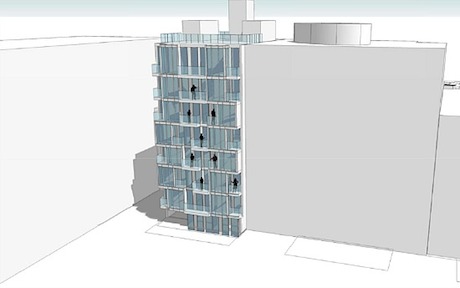
A new micro-apartment building will be going up on the 1400 block of Church St NW in Washington DC. It will have 37 units ranging from 265 to 490 sq ft, according to Brook Rose who, along with Gregg Busch is developing the project. Rose’s specialty is luxury development and he sees the Church St apartments as consistent with that. “We are going to try to make these luxury micro apartments,” Rose told us. The rental apartments will feature floor to ceiling windows and high end finishes. The smallest units, where there is an imperative to have all the furniture work perfectly with the space, will be semi or fully furnished, using transforming furniture by the company Inova. Rents will likely start around $2K.

church_back

The building is a testament to the fact that Washington DC, a city that up until recently had been pretty ambivalent about micro-housing, is changing its tune, as evidenced by the likely micro-apartment development of the Patterson Mansion as well as this one.  But the city’s approval of the Church St building was far from a slam-dunk, having been held up by the Board of Zoning Adjustment (BZA) for a year because of issues around parking.

As we’ve seen here before, one of the primary sticking points for adding density to an area–something that micro-apartments tend to do–is parking. Most residential building requires a certain number parking spots per unit; these can be satisfied by on or off-street parking. Areas that have robust public transportation and walkable streets like San Francisco can often sidestep those requirements or provide minimal parking. But for most parts of the country, it can be a real barrier for development as it was for the Church St building.

Certain members of the BZA were not receptive to the idea of a building without parking, even though Rose was sure there were many “carless urban dwellers” who were “willing to trade space [and their cars] for lifestyle,” particularly in the building’s neighborhood which is along the 14th street corridor, a walkable area with tons of amenities. Rose calls the area “DC’s Soho.” One gesture Rose and Busch made to prove they were serious about creating a carless building was offer car and bike sharing memberships to residents for the duration of their leases (nb: residents would still pay for their use of the car).

The building eventually received the BZA’s narrow approval last month. The developers agreed to provide four parking spaces: two for residents to use for move in/move out and for guests and the other two will be for dedicated for car sharing cars.

But the city made a stipulation that residents could not apply for parkings permit that would allow them to park legally on neighborhood streets. This prohibition will be written into the leases and the developers will periodically check with the DMV to see if any tenants are violating the agreement. In other words, if you live here you cannot have a car.

Of course residents can elect to park in a private garage, but the arrangement seems like a prescient one. For most of the last 60 years, architecture has been bound to parking. Perhaps the Church St development augers a future where architecture and urban planning are designed as much around people as they are cars.

DC Mansion Might Go Micro

Every year, the Economist publishes something called the Liveability [sic] Ranking Report. Its rankings are based on their “Liveability Index” as well as a “Spatially Adjusted Livability Index” which takes into account seven characteristics: Sprawl, green space, natural assets, cultural assets, connectivity (ease of air travel), isolation (proximity to other cities) and pollution. Unfortunately, the States didn’t break the top 10 for 2013. But the US’s top showing wasn’t the city this author expected. It wasn’t Portland, Seattle or San Diego. Coming in at #14 of the 140 global cities ranked was Washington DC; it scored 91.2 on a scale where 100 constituted an ideal city.

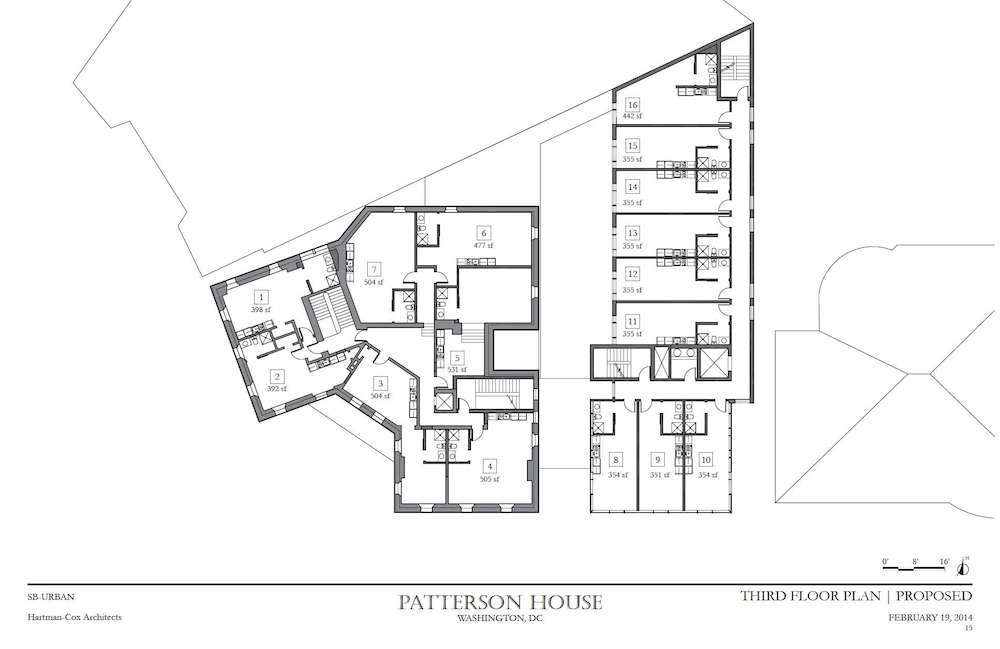
While DC might be the country’s most livable city (an assessment not everyone might agree with), its medium density and fairly decentralized layout have not made it a quick taker to the micro-apartment concept, particularly in terms of zoning new buildings. But a new proposal by developer SB-Urban and architectural firm Hartman-Cox seeks to bring a micro-apartment development to the nation’s capital, using an existing–and unlikely–host.

The Patterson Mansion at 15 DuPont Circle is a 13K sq ft Neo-Classical mansion built by Chicago Tribune editor Robert Wilson Patterson in 1903. For the last 63 years, the mansion has been occupied a private women’s club called the Washington Club. In December 2013, a sale and renovation proposal to convert the mansion into a boutique fell through due to landmark considerations. The proposed addition to the mansion was deemed out of keeping with the overall structure’s aesthetic.

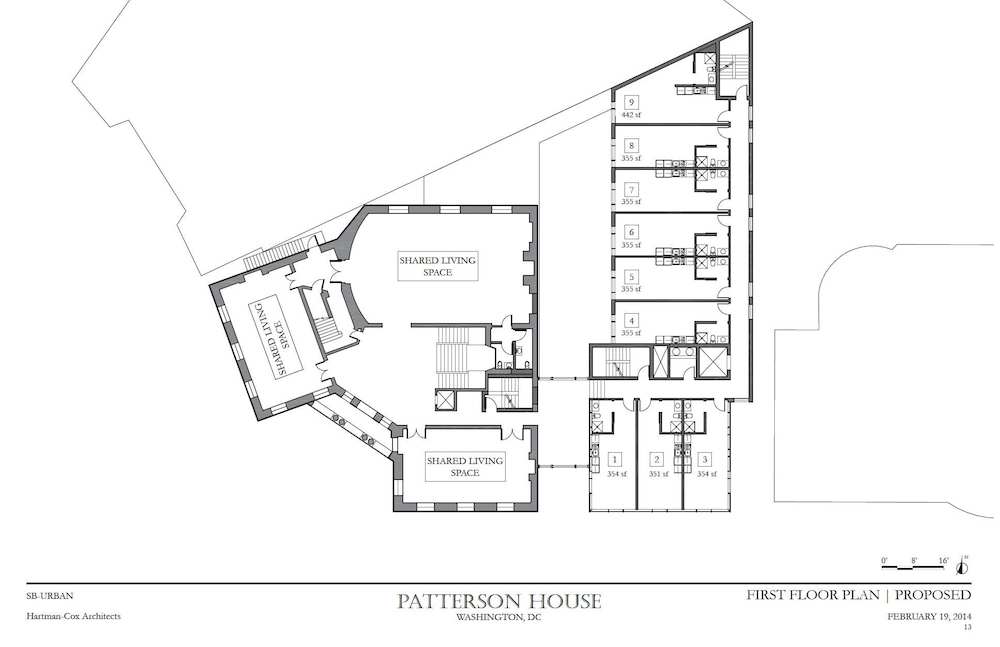
The SB-Urban/HC plans to succeed where the previous developer failed. Like the previous bidder, their plan calls for the destruction of the mansion’s non-landmarked 1955 addition. Rather than a hotel, their addition would be a visually-discreet, seven-story structure housing sub-400 sq ft micro apartments. The four-story mansion itself would contain several small apartments along with generous shared living spaces. The building would also feature a landscaped courtyard, big bike room and green roofs. All in all, it looks like a good design, particularly appropriate for DC’s countless government employees who might be living in town for a congressional term or two.

Though the Patterson Mansion project calls for a new structure, it reminds us of the Arcade Providence, which took America’s oldest shopping mall and turned its top two floors into micro-apartments. To us, these buildings are just as exciting as any new development. Creating higher density cities with smart, small interiors through new building is important. But converting existing, lower-density housing into innovative, high-density, city-friendly housing is the greater, and more interesting, challenge.

Many of the buildings that will house us throughout the 21st Century and beyond are already built. Some of those buildings, like the landmarked Patterson Mansion and Arcade Providence, won’t be torn down anytime soon. So the question becomes, “how do we best use what we got to support the creation of sustainable, vibrant cities?” Sometimes that means taking existing structures and using them in ways that are very different from their original purpose. We wish the Patterson Mansion project the best of luck.

A Simply Complex Urban Housing Solution

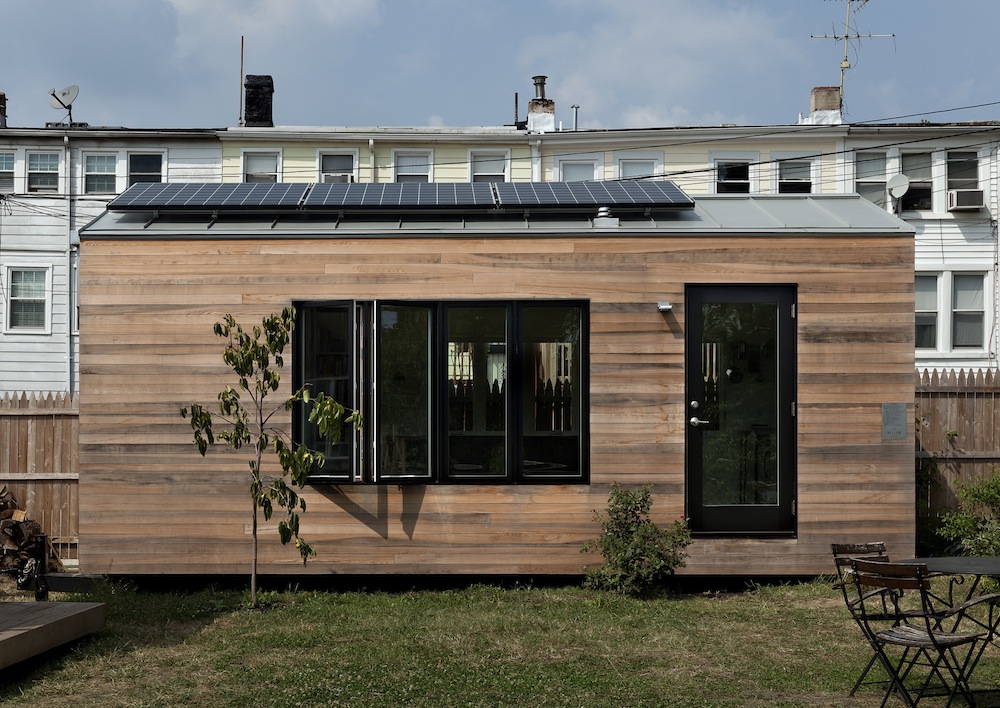
In Washington DC, a group calling itself Boneyard Studios is looking to provide an affordable, pared down solution to high cost, urban living. Similar to the Napoleon Complex by Jay Shafer’s company Four Lights, Boneyard Studios brings together several tiny houses to create ad hoc communal living that maintains a high degree of autonomy.

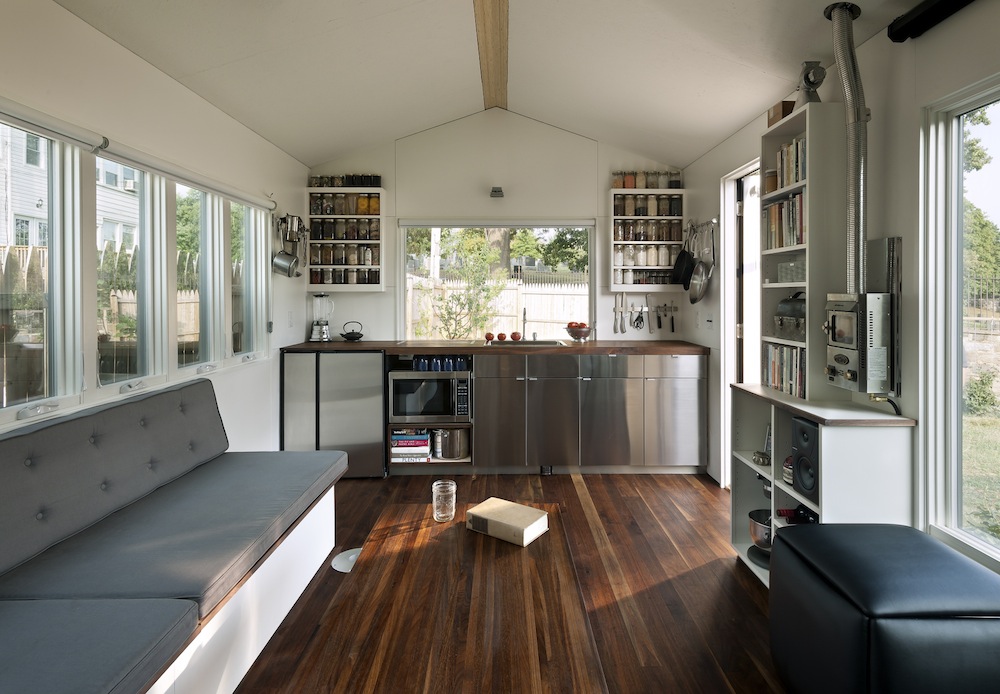
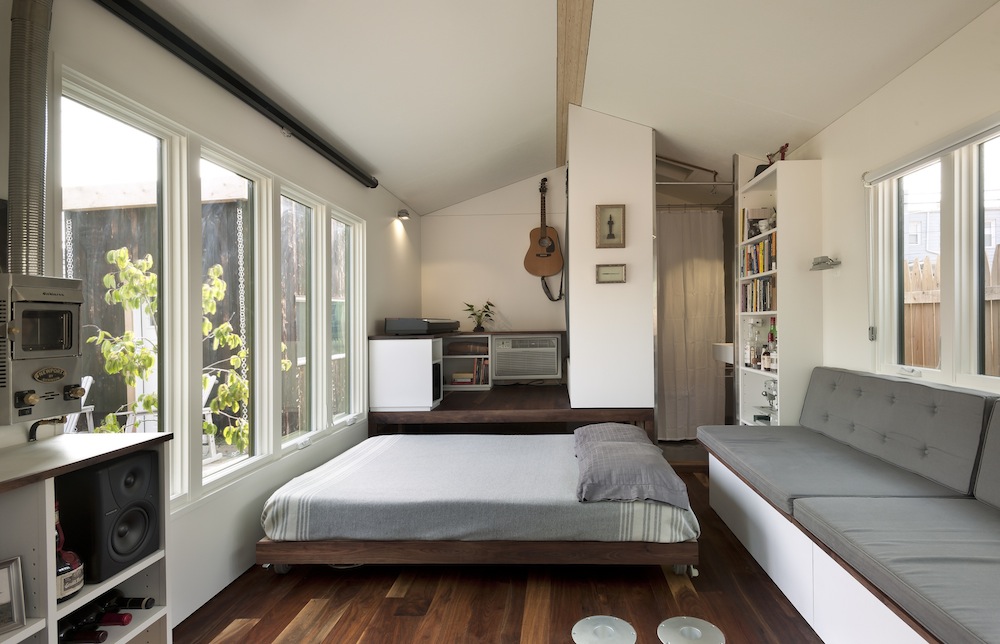
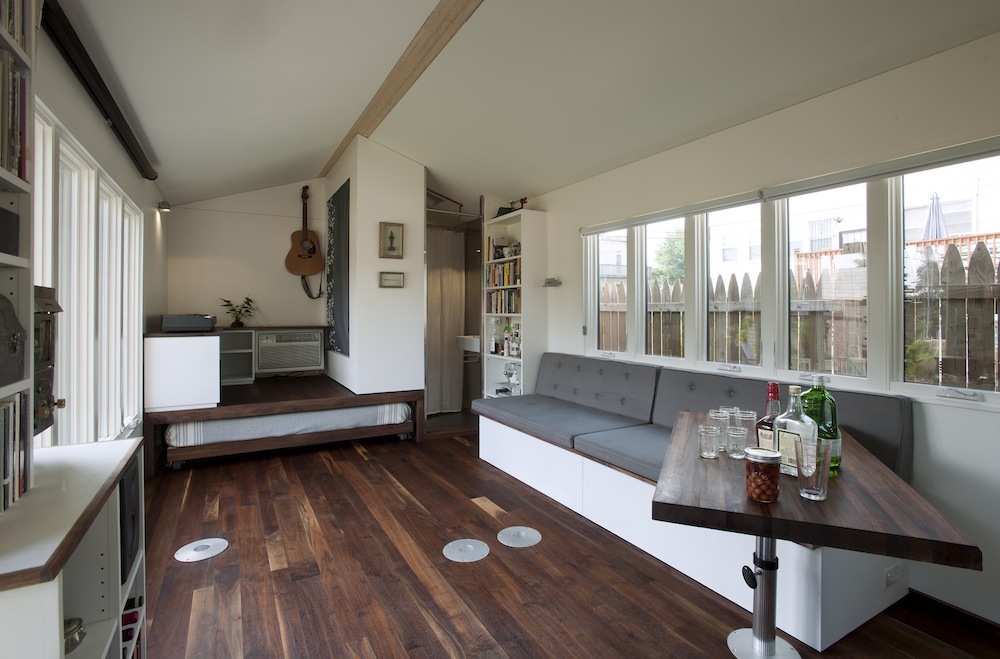
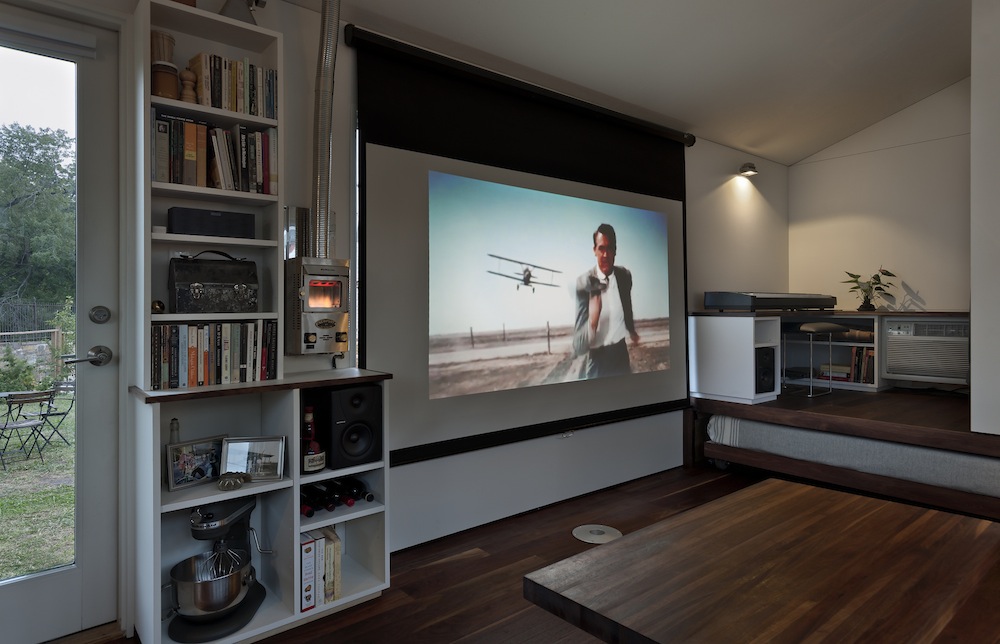
So far, BS has four tiny homes named Matchbox, Pera House, Minim House and Tumbleweed Lusby. They range from super stripped down Matchbox to the totally tricked out Minim, which won an AIA Merit Award (below). None exceed 210 square feet.

Like all great small housing ideas, it’s totally illegal. The four founders installed BS in a vacant lot hoping to attract the support of policy makers. From their site:

DC alleys could be great places to site tiny houses and this may be a possibility in the future if DC removes a code restriction that only allows habitable structures to be built on alleys with widths greater than 30 feet. Adding small units to empty alley spaces also draws on a rich DC tradition of alley dwellings and alley culture that began during the Civil War era and continued during the Great Migration, as chronicled in an excellent book, Alley Life in Washington by Jame Borchert.

While the DC alley dwelling tradition seems like a bit of scholarly gymnastics, we think the idea a good one overall. BS also represents a boon for tiny houses on the east coast, which has lagged way behind the other coast’s growth.

Ever Want Your Own Restaurant? Here’s Your Chance

We’re loathe to call things the “Airbnb of…” dog-biscuits, chessboards, whatever. We are sure peer-to-peer marketplaces have a prelapsarian past, but few enterprises have made purchasing services from your friends and neighbors as easy as Airbnb. So unfortunately, we have to designate a great new venture called Feastly the, ahem, Airbnb of restaurants.

Feastly allows chefs and gourmands to transform their homes into their own restaurants without all that overhead and investment of a traditional restaurant. Conversely, it allows diners an alternative to the traditional restaurant.

It’s pretty simple: As a chef, you register on Feastly’s site. You determine the menu, the price, the date, how many feasters you can handle, etc. Feastly fills the seats, handles money and takes a modest administrative 12% cut.

As a diner, you browse and sign up for dinners in your area (right now, their main markets are Washington DC, NYC and San Francisco). More than just a restaurant, the Feastly experience awards diners with home-cooked meals and a unique social experience, or as Feastly cofounder Noah Karesh put it, “The dining table is the optimal social network.”

We’ve been using Feastly chefs to cater the LifeEdited dinner parties and are very impressed with the quality of food and service.

We asked Mr Karesh some other questions about how Feastly started and how it works.

Why did you start Feastly?

Feastly came from my travels to Lake Atitlan,Guatemala. I was struck by my inability to find authentic, local food there and convinced a local to invite me over for dinner. Sitting around his family’s table, I had my “a-ha” moment realizing that it shouldn’t be so hard to eat local food and meet people when traveling. Feastly was born over Start-Up Weekend DC in November 2012 and a year later, we’ve hosted hundreds of meals for thousands of Feasters. One of my many goals with the platform is to bring Feastly to Lake Atitlan.

Do you know ahead of time what will be served? Can you make requests?

Yes, our chefs post menus online ahead of time so that Feasters can search for their favorite dishes or chefs. For those with food restrictions, our chefs do their best to cater to any food issues. Thanks to our feedback forms, chefs can receive immediate feedback on their meals and get ideas from Feasters for future meals and how to improve the overall user experience.

How much do dinners typically cost?

Our meals range from ice cream tastings to brunch to seven course dinners and may range from $5-200 with the average meal costing $38.50 [booze is sometimes, but not always, included in price.]

Do you think your approach could replace going out to a standard restaurant?

Yes, but even more than just replacing people’s reliance on restaurants to “eat out,” we are increasingly serving as a social network for our Feasters. Our users come for the food, but increasingly stay due to the positive relationships they are building around the dinner table. We’ve helped to introduce couples, business partners, friends and activity partners over meals.

What about markets you don’t serve yet? How can people get involved?

We’ve been excited to see so much positive feedback in NY and DC and soon SF, and we get emails daily from people around the world encouraging us to open in their cities. Like our peers at Airbnb, we are eager and working to expand globally, so that we can bring the best of Feastly everywhere. We are also eager to bring on more chefs, and like to work with local partners eager to bring Feastly to their communities. We’re always open to new ideas and partnerships and it’s best to reach out at info@eatfeastly.com.