Talking to Jay Shafer About Making the Universal House

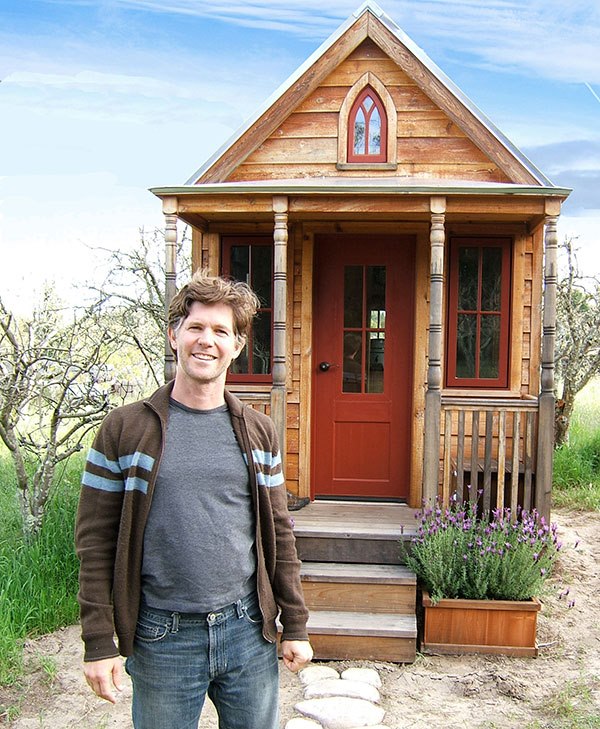
Few names are as closely associated with small living as Jay Shafer, the man who practically invented what is now known as the tiny house. Tiny houses have become a minimalist design and lifestyle ideal. Their tiny size permits no extraneous stuff. They occupy a fraction of the spatial and carbon footprint of a normal home. They are usually owned outright, sidestepping expensive mortgages and financial institutions. And by virtue of their trailer mounting, they can often avoid traditional building regulations.

Jay invented the species back in the late nineties after he wanted something more suitable for year-round habitation than the 100 sq ft Airstream he’d been living in for a couple years. After his tiny house was awarded “Most Innovative Design” in Natural Home Magazine’s 1999 House of the Year Contest, the idea that he could make a living designing and building little homes was born. He founded Tumbleweed Tiny House Company and the rest is history.

Though there may be public indications to the contrary, Jay has not been with Tumbleweed for a couple years. We spoke to Jay about what happened with Tumbleweed, where the tiny house concept started and his new company’s Universal House (U-House), which might point to where it’s all going.

David Friedlander: What happened with Tumbleweed?

Jay Shafer: I took on a business partner a few years back. He was a money guy, I was the design guy. It seemed like a match made in heaven. As our relationship progressed, it became clear that this wasn’t the case, at all. It turns out that his means of growing the company’s bottom line and my own goals to grow a movement and improve on my designs were at odds. Our interests collided, so we split.

DF: Let’s step back a second. How did you get into building tiny houses?

JS: I never set out to design tiny houses. I set out to build an efficient house. When I took out all of the unnecessary parts of the house, it turned out to be a very small house.

I am also high on the Asperger’s scale. I am the kind of person who goes into public restrooms and tries to improve their design. I wanted a home I could control. I wanted a house where everything was useful and meant something. And if it didn’t mean something, I could give it meaning.

The house was mounted on a trailer, so it was technically an RV, but I wanted to make something with universal appeal. Something that would be house-like in proportions and not perceived as a trailer.


I never set out to design tiny houses. I set out to build an efficient house. When I took out all of the unnecessary parts of the house, it turned out to be a very small house.

[divider]

Also, I always wanted to be architect, but couldn’t afford the education, so I went to art school instead. After the house got some attention, I thought ‘wouldn’t it be great to do this all the time?’ And that’s how Tumbleweed was born.

DF: Why do you think they’ve become such a sensation?

JS: There are so many reasons, but I think it comes back to nature. In every area of nature, efficiency is the law of the land. Efficiency just makes sense. The only thing I know of that doesn’t abide by efficiency is the human ego.

jay-shafer-small-house-book-small

I have never been a fan of taking care of a lot stuff I don’t use. I think tiny houses have that appeal, where it’s very easy to take care of and everything is used. In art, they call something where everything is used “strong composition.” I think tiny houses have “strong composition” in the architectural sense of the word.

DF: We tend to be urban in our sensibilities at LifeEdited. There’s a certain efficiency living in high density areas. While there are some urban exceptions, most tiny houses are set in the country, which usually means cars, highways, sprawl . Even though a tiny house might be very eco-friendly, their setting might not be. Any thoughts on this matter?

JS: I have never subscribed to the arbitrary distinction between tiny houses and apartments. Apartments definitely have greater efficiency due to their multiple floors and shared walls. When I first started, I used to photoshop tiny houses onto city rooftops.

But I think small houses work best in concert with other small houses. When I lived in my Airstream, I was six miles outside Iowa City. Even though I’m a total introvert, this was too far away from civilization for me. And the driving wasn’t sustainable.

I think the best setting for a small house is near center of town and amenities. My place is three minutes from Whole Foods, for example.

DF: What type of house do you live in, now?

JS: It’s a, relatively palatial, 500 square foot house shared by four people: me, my wife and our two small children. I call it the “bunk house.” I’ve never defined small houses in terms of square footage, it seems like efficient use of space would be a more useful way to measure this stuff. 20 people could share a 4000 square foot house and you could call it a small house.

I also have a 120 square foot house in the back where I spend most of my waking hours working on upcoming projects.

DF: What are you working on?

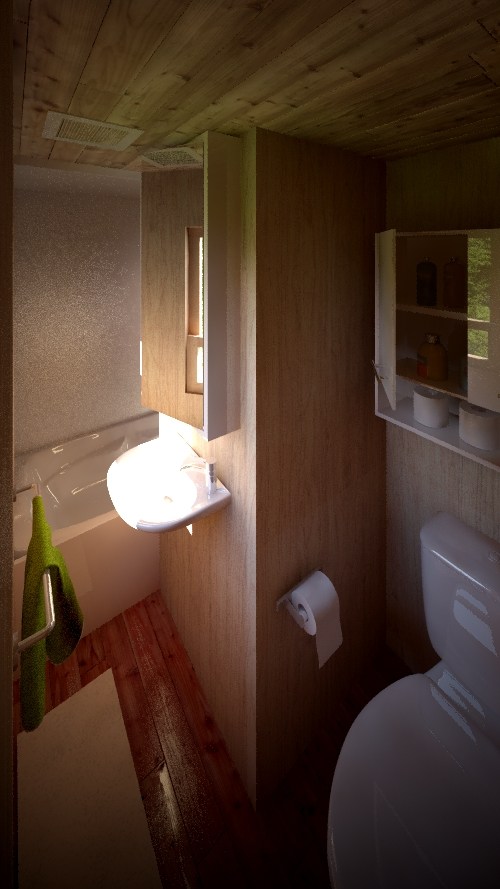
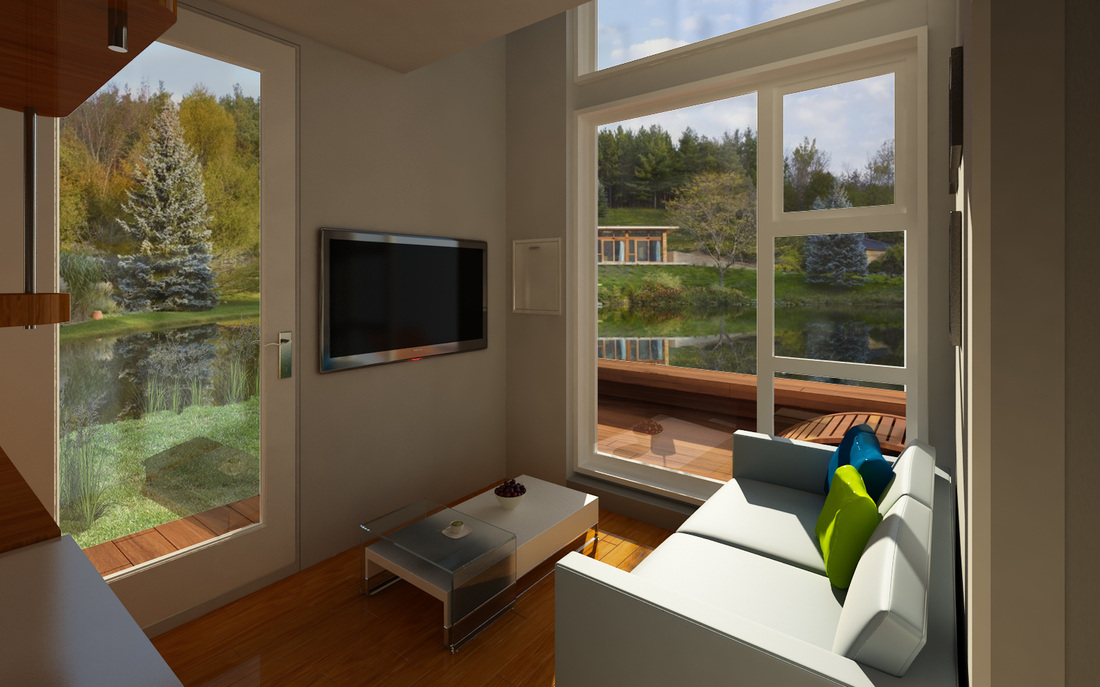
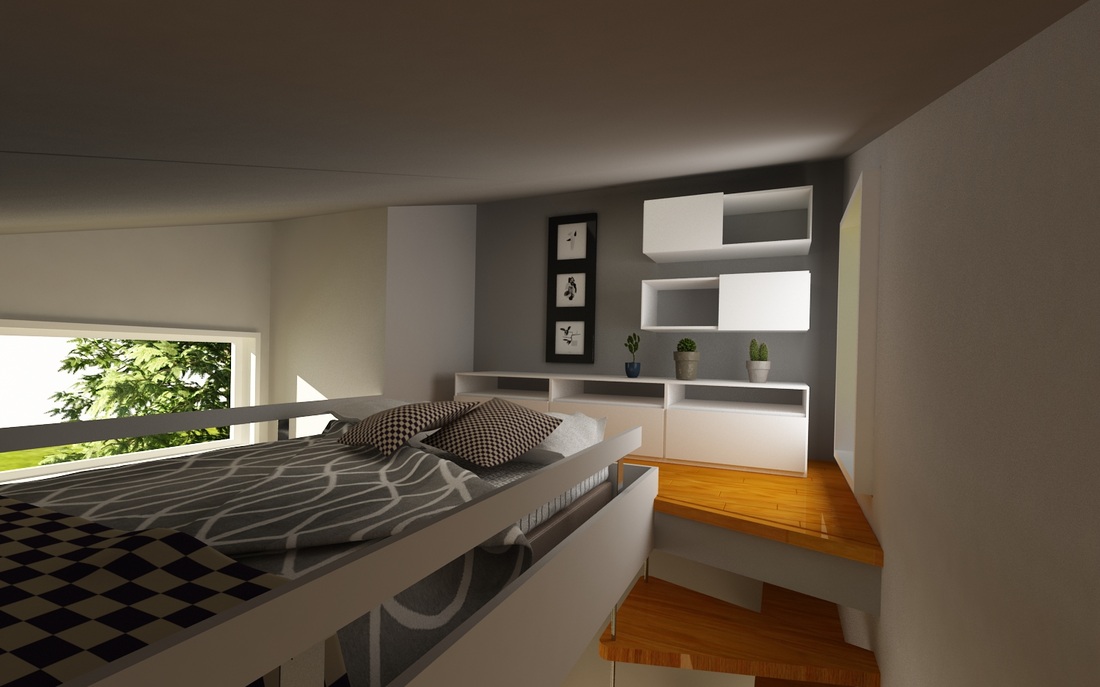
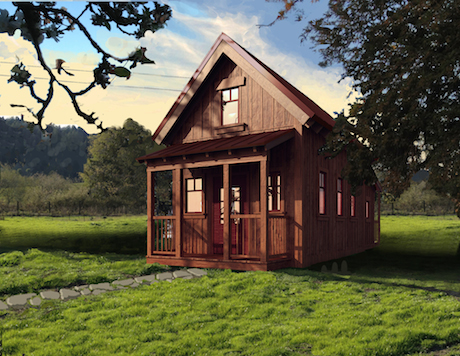
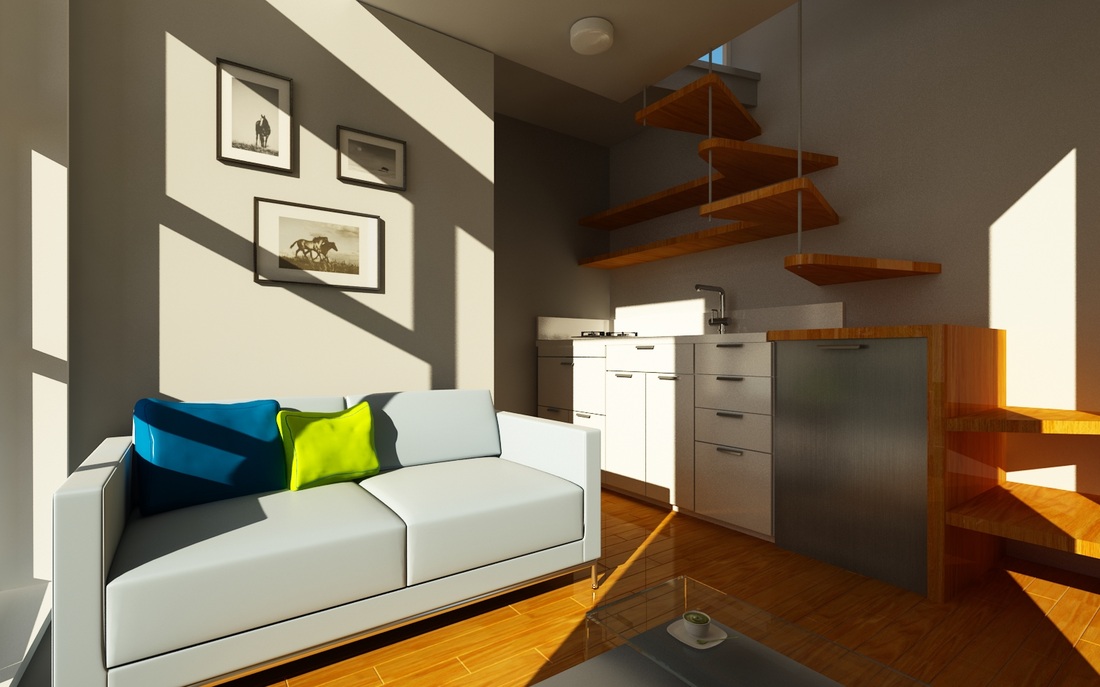
JS: We [Four Lights Tiny House Company] are working on something we call the U-House [working title], which stands for Universal House. It’s a house that can be built and zoned as a modular, a park model RV, manufactured housing or as site built housing.
U-House Exterior

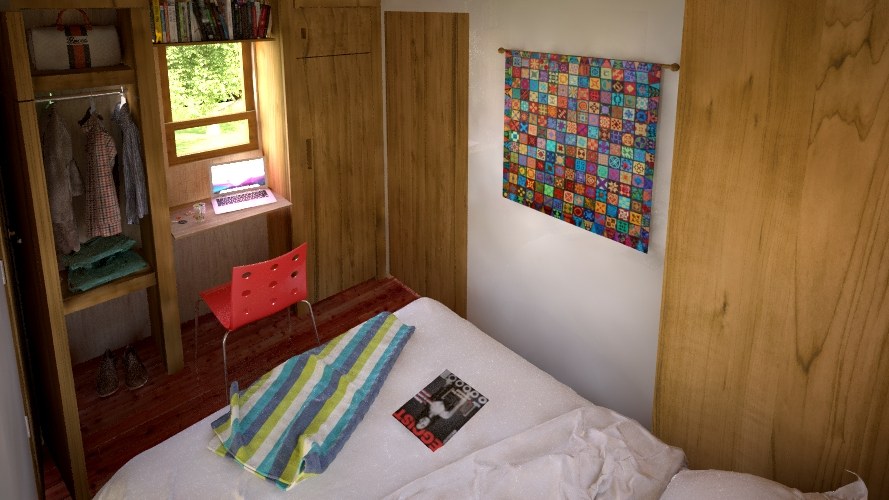
I’m always asking myself, “What would nature do?” if it were designing this house. I wanted to design something that didn’t adhere to tradition for tradition’s sake or innovation for innovation’s sake but addresses the most universal human needs as efficiently as possible. What I came up with was something both traditional and innovative. For example, I realized I really like plywood, so I use a lot of it where you might, otherwise, expect to find drywall or wood paneling.

It’s completely prefab, and in that sense innovative. It starts with a 200 square foot core that’ll fit into a 13′ x 23′ lot. We’ve made an easy-to-attach accessory bedroom. The two buildings together amount to 481 square feet, which includes a sleeping loft and porch space [lot size increases to 13′ x 30′ with accessory building].

It’s designed to work in virtually any climate, but if you live in the Arctic, you’d probably want to get a bigger heater. There’s also a special coupler that will allow you to attach it to existing houses, other U-houses or whatever.

Four Lights will be unveiling the U-House sometime in the next couple weeks. We’re working with a manufacturing partner who’ll be making it possible for us to sell and distribute it more widely and affordably.

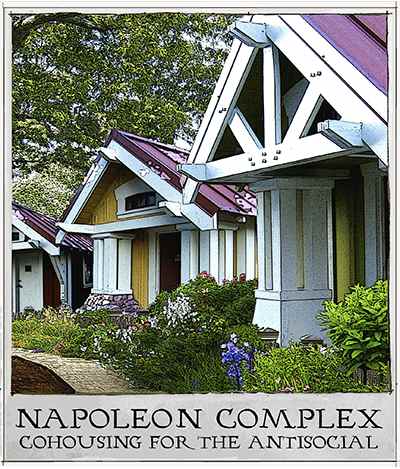
DF: And what happened to Napoleon Complex, the tiny house community you planned to build in Sonoma County?

JS: Unfortunately, not much at my end. I’ve spent way more of these past couple years addressing all the S.L.A.P. threats I get from my former company’s lawyer than I’ve been able to spend on my real work. I feel lucky that, after I proposed the village idea to my local zoning officials a year ago, they’ve taken up the cause by writing up about 20 proposals that’ll make building Napoleon Complex easy. One site in particular is really great; it can fit ten units and is right in the middle of town–three minutes from a Whole Foods.

The World Changing Ten Foot Cube

A new venture called NOMAD Micro Homes has designed a house that features all necessary living functions in a sleek, 10′ x 10′ package. The tiny house can be adapted for PV cells, rainwater collection and grey water treatment, giving it the capacity to go off-grid. The base model will be a mere $25K, and throwing down $3K extra will get you kitchen appliances. Vancouver-based NOMAD has a crowdfunding campaign on Indiegogo to help raise money to bring it to production.

NOMAD has big ambitions for the tiny house according to their website:

NOMAD’s goal is to reduce consumerism and focus on an affordable and sustainable housing option for the largest portion of our society: hard-working individuals who can’t make ends meet due to the high cost of living.

In the video below NOMAD founder Ian Kent describes how he sees the little home as more than a place to live. He sees it as redefining the idea of home, free from materialistic/consumer cultural constraints.

He also thinks the home’s design will inspire changes in its owner, as he told the Global News Canada:

Your consumerism would drop, because you wouldn’t be able to fit in things that people usually buy. You would become very efficient and that’s going to be a forced savings in your bank account. Plus, you are going to become a fantastic recycler and you are going to come up with new methods of recycling, because you can’t fit garbage in your unit.

Whereas the tiny houses popularized by Tumbleweed Tiny House Company are quite DIY, NOMAD will be prefabricated and flat-packing for easy shipping anywhere in the world. Its simple assembly and low price would make the tiny house format available to people who might not want to build their own homes, of which there are many.

Kirk sees this as a possible solution for many overpriced housing markets–e.g. Vancouver, which boasts some of North America’s highest property values. There might be a snag with that plan however: Vancouver has bylaws that restrict building homes under 320 sq ft according to Global News.

Therein lies the eternal question with tiny houses: where do you put them? A tiny, off grid house is very eco friendly if you source food and make your living off grid; if not, we suspect a nice studio in a city center with its minimal transportation needs will be far more efficient. And as we saw with the Occupy Madison Build and Boneyard Studios tiny houses, putting homes that are not on the grid in many cities is illegal.

That said, our hats are off to the NOMADs. Should they get their project funded, they stand to make tiny houses accessible to larger populations. NOMAD’s pre-made homes might take the movement one step further from its current place at the fringe of society. Perhaps with a growing tiny house movement, legislation and society can become more hospitable to these innovative little homes.

A Simply Complex Urban Housing Solution

In Washington DC, a group calling itself Boneyard Studios is looking to provide an affordable, pared down solution to high cost, urban living. Similar to the Napoleon Complex by Jay Shafer’s company Four Lights, Boneyard Studios brings together several tiny houses to create ad hoc communal living that maintains a high degree of autonomy.

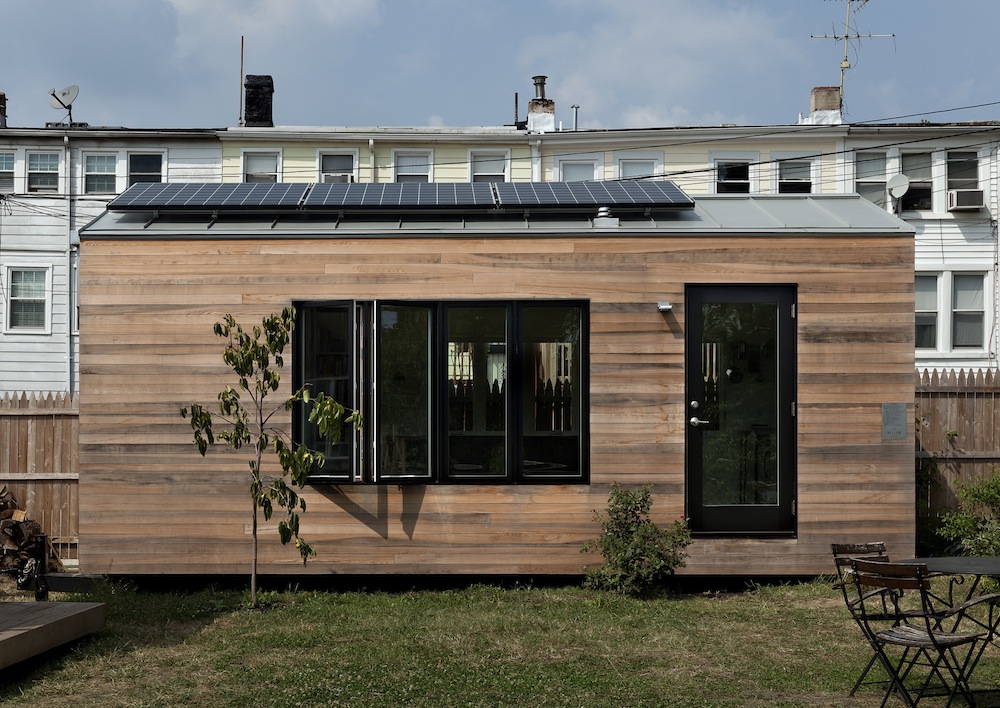
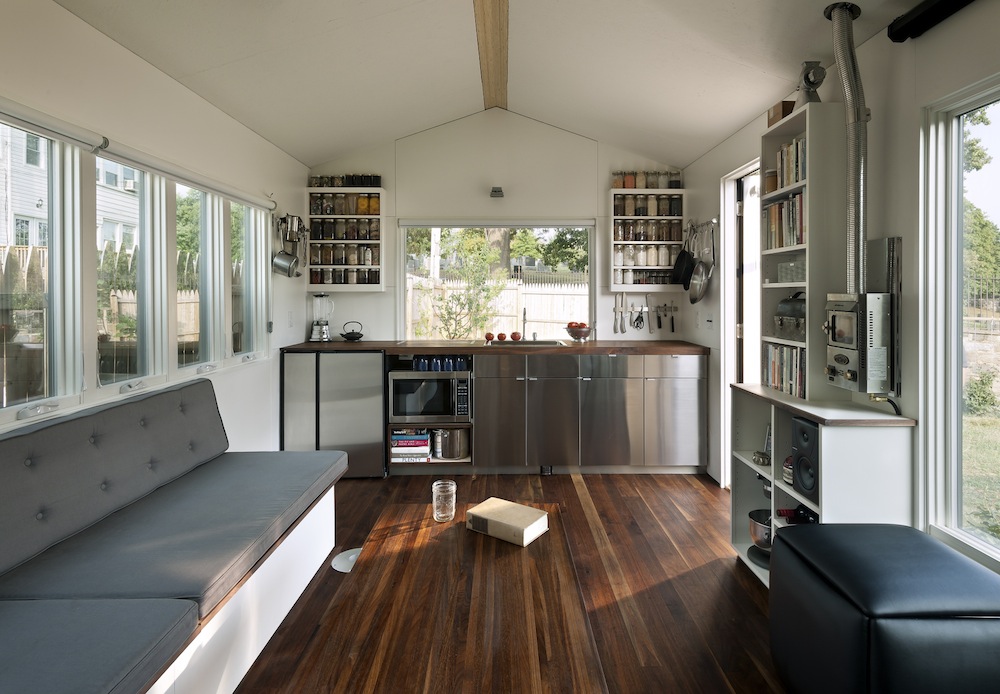
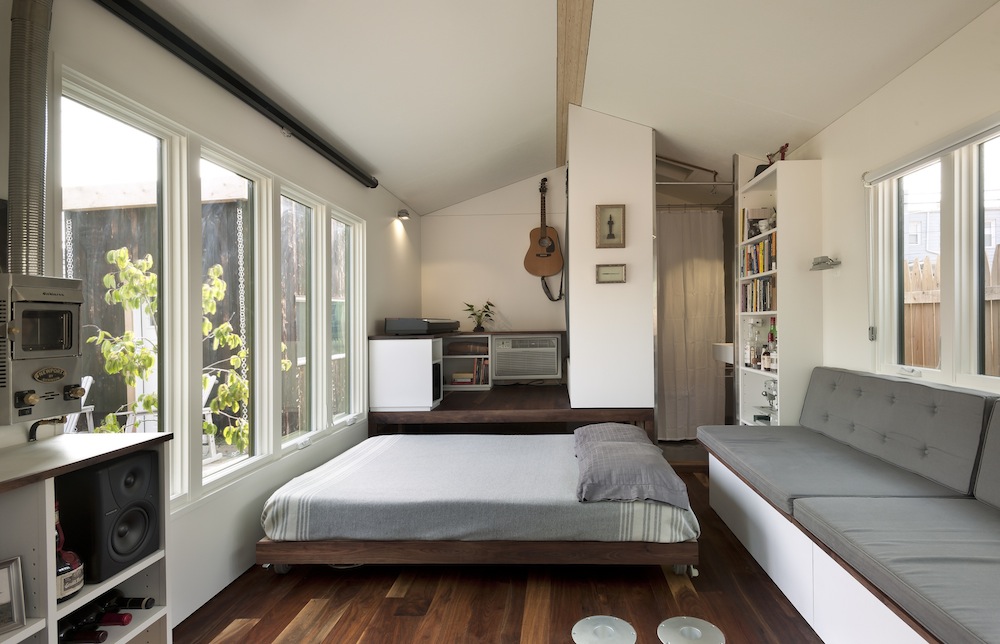
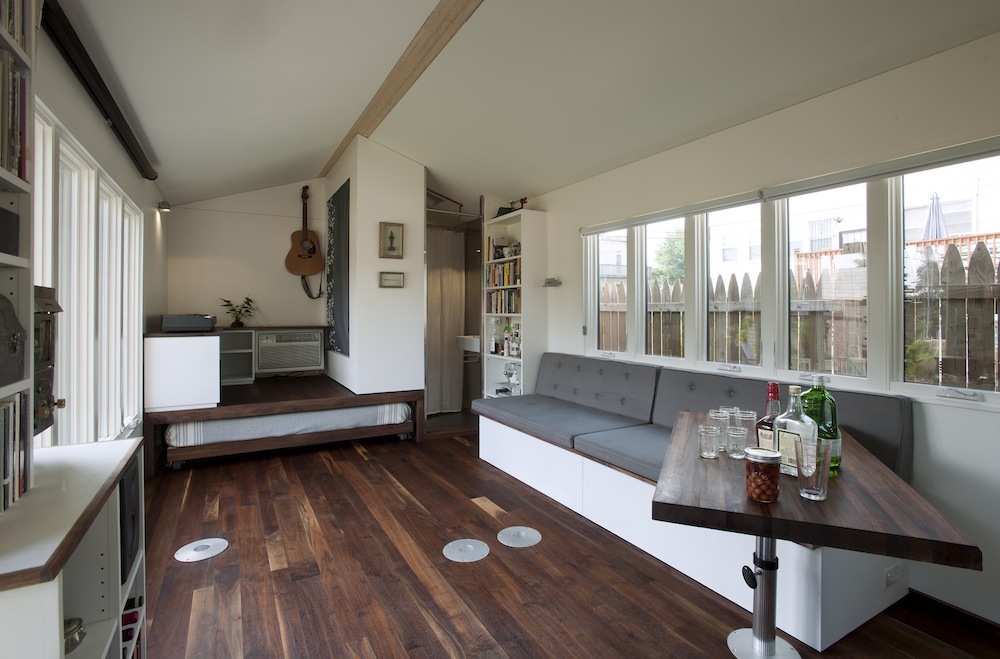
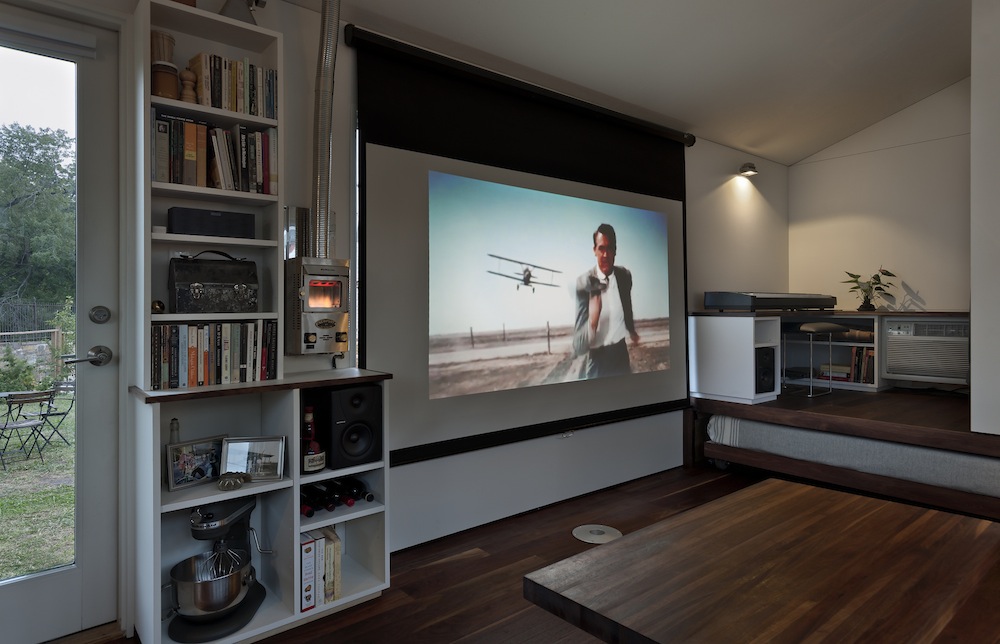
So far, BS has four tiny homes named Matchbox, Pera House, Minim House and Tumbleweed Lusby. They range from super stripped down Matchbox to the totally tricked out Minim, which won an AIA Merit Award (below). None exceed 210 square feet.

Like all great small housing ideas, it’s totally illegal. The four founders installed BS in a vacant lot hoping to attract the support of policy makers. From their site:

DC alleys could be great places to site tiny houses and this may be a possibility in the future if DC removes a code restriction that only allows habitable structures to be built on alleys with widths greater than 30 feet. Adding small units to empty alley spaces also draws on a rich DC tradition of alley dwellings and alley culture that began during the Civil War era and continued during the Great Migration, as chronicled in an excellent book, Alley Life in Washington by Jame Borchert.

While the DC alley dwelling tradition seems like a bit of scholarly gymnastics, we think the idea a good one overall. BS also represents a boon for tiny houses on the east coast, which has lagged way behind the other coast’s growth.

Renzo Piano Makes Micro Modern

More often than not, tiny houses like the ones made famous by Tumbleweed Tiny House Company have a decidedly rustic vibe. If you want to live in one of these basic homes and you’re not into the shack-in-the-woods aesthetic, you might be out of luck. All that might be changing soon. Renzo Piano, one of the world’s leading architects, recently introduced a design that is the modern minimalist’s dream home.

The Diogene house, set up on the Vitra campus in Basel, Switzerland, is named after ancient Greek philosopher Diogenes, who, according to Designboom, “lived in a barrel to exalt simplicity through action, the home is a voluntary refuge that relishes a life outside of an existing infrastructure.” The home measures a mere 215 sq ft (20 sqm). In keeping with its namesake, the Diogene home is meant to provide the most essential elements of life–a sofa bed, small kitchen, shower and toilet. The rest of life takes place outside the home in “civic places” as Piano refers to them.

The aluminum-clad prototype home is intended to be completely off grid with solar water heaters, solar panels, rainwater collectors, a composting toilet, natural ventilation and triple glazed windows for great insulation. Ultimately, Piano sees Diogene being mass produced. Though it’s not trailer-based like US tiny houses, it’s compact dimension and off grid setup would lend itself to regulation-free living in much the same way tiny houses do.

We dig the philosophy of many tiny houses, but at times they can seem a bit monotonous in terms of design. Beyond its inovative features, Diogene proves that small can look any way you choose.

All images © designboom

One Man Gathers What Another One Spills

Building a home creates an enormous amount of waste. According to the EPA, home construction, remodeling and demolition projects are responsible for 25 to 30 percent of the nation’s annual municipal solid waste. Much of that waste, if one were so inclined, could be used to make other homes. Well there is one who is so inclined–and his name is Brad Kittel.

Kittel runs a company called Tiny Texas Houses, whose tagline is “Building the future with the past.” For the last six years, they’ve been making tiny houses made almost completely out of salvaged and scrap materials. Windows, framing, floorboards, sinks, tubs–everything less nails and electric equipment–has been used somewhere before.

For the moment, Tiny Texas Houses is mostly a Texas phenomenon. They have a 200K sq ft warehouse where they store materials. You can purchase a complete Texas Tiny House starting at $35K (they deliver to Texas and its neighboring states Oklahoma, Louisiana and New Mexico). As a service, they offer “salvage mining” whereby they either remove your old structure for free, or for a fee they will consult you about what’s usable from your old building (available in person and online). Unlike Tumbleweed Tiny Houses, they do not sell plans as available salvaged materials affect the layout of the homes. They run occasional workshops however.

Beyond a mere money and energy saving ploy, Kittel and Tiny Texas Houses are trying to start a movement they call Pure Salvage Living. It is about living off the grid–using a barter economy, avoiding taxes and living a simpler, smaller, more efficient, highly local life.

As he explains in the above video, all the stuff we need is already in existence. We don’t need to extract more natural resources or buy anything new or import anything from China to build our future. We can use existing (or salvaged) resources. Whether we do or not is our choice, he contends.

What do you think about Kittel’s contention? Can we–or is it realistic–to create a future made of salvaged material? Why or why not?

Will Napoleon Complex Usher in the Era of the Microburb

We love tiny houses, with their tiny, efficient layouts. They truly exemplify the idea of doing more with less. But just because you have a tiny house, doesn’t mean you have a tiny footprint. If you have a 140 sq ft house on a 10 acre lot in the middle of nowhere, your environmental footprint might rival a McMansion’s. Moreover, you might not be enjoying the social and material benefits of neighbors.

Jay Shafer, who recently left Tumbleweed Tiny Houses–the preeminent tiny house company–has an answer for this contradiction. His new company, Four Lights, has developed the Napoleon Complex, which fuses tiny houses with city-rivaling levels of density, efficiency and community potential. In fact, they expect 16-22 homes per acre. To compare, HUD states that median lot size across the US for single-family homes, including mobile homes, is 0.27 acres.

Napoleon-complex-housesThe complex, which will be located in Northern California, is a collection of 40 -70 houses ranging from 270-700 sq ft. Each house will have an individual plot and pay a fee similar to a coop common charge. The homes’ individuation gives them an intentional level of autonomy, explaining the project’s tagline of “Co-housing for the anti-social.” Other amenities include:

  • 800-1600 sq ft common house
  • Private gardens
  • 1.5 parking spaces per house (importantly, separated from the homes).
  • Shared outdoor space
  • Private storage units
  • Prominent pedestrian walkways.

Four Light’s website explains the rationale behind the complex:

In many ways, tiny houses work best in concert with other tiny houses and shared amenities. This is a dream long-shared by many including myself. The place will be zoned as an R.V. park, but will look and feel more like the concept drawings I’m presenting to the left [pictured above]. I’ve used the same design principles that go into each of my tiny house designs to create an environment that feels contained but not confining—vibrant but not at all crowded.

In other words, they’re giving people the best of the suburbs–privacy, quiet, greenery–without the downsides–inefficient homes, sprawl, isolation. Shafer is a master of bypassing building regulation and the complex’s RV designation will likely expedite the expected 2015 completion date. We can’t wait to see it.

Via Treehugger

Images credit: Four Lights

What Happens When Beer and Transforming Apartments Mix

A couple weeks ago, we had Derek “Deek” Diedricksen and Paul Farr from Tumbleweed Tiny House Company stay at the LifeEdited apartment. The pair were in New York City leading a tiny house workshop showing people how to make their own tiny houses. We wanted to know what they thought of the place. They videoed this self-guided tour that gives their thoughts on the apartment (their enthusiasm might have been helped out by a beer or two).

Check out Deek’s blog Relaxshacks.com and Youtube channel for cool pics, videos and news about tiny house construction and living.

Thanks guys!