Sweden’s Nature Pill for City Dwellers

Last summer we looked at kolonistuga, the garden and vacation colonies that dot Sweden and are occupied with tiny cottages. Like most great ideas in compact living, you know that Kirsten Dirksen‘s camera is not too far behind to take a more intimate look. The particular kolonistuga in this Faircompanies video is located between a bunch of freeways in Gothenburg, Sweden’s second largest city. Rather than being littered with vacation homes, most of the tiny structures are more like garden sheds (though one of the interviewees confesses her family has crashed out there on numerous occasions). The colony is intended as a supplement to urban living, which sometimes has an alienating effect on one’s connection to nature. This colony also has an intent close to its roots (pun intended) of growing food.

The kolonistuga idea is so great because accepts the ills of urban living–cramped quarters, noise, harried living, too little access to greenery and fresh air, etc–and creates a right sized, no frills pill to remedy the condition.

A Case for Building More Small, Inexpensive Vacation Homes

Who knew that Sweden has had tiny house colonies for that last 100 years? Apparently many Swedes knew, but this unimformed American did not. These aren’t “tiny houses” in the modern sense of the term. There are no trailers or composting toilets. But “kolonistuga” houses are indeed tiny, often measuring no more than 215 sq ft and having a porch no bigger than 64 sq ft.

Kolonistugor

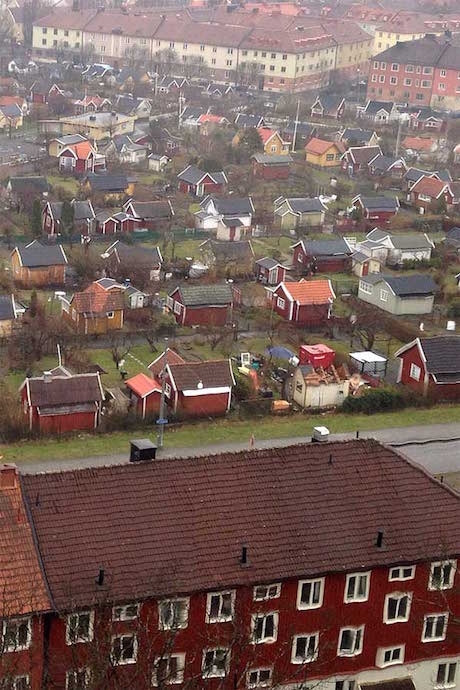
Kolonistuga are located in what are called koloniområde, which is a type of vacation colony for working class Swedes that became popular in the early 20th Century. Each property contains the kolonistuga and a small garden, or koloniträdgård. The gardens are actually the reasonkoloniområde exist–following WWI, the colonies were set up for city-dwellers to grow and supplement their food stocks as well as get out of their cramped homes.
slottisburg

To this day, the kolonistuga must adhere to certain building standards, maintaining their diminutive proportions as well as traditional appearance. They are located throughout Sweden, in both the countryside and others, like Slottsskogskolonin in Gothenburg, smack dab in the middle of a city. Each house is individually owned, but the land is rented by owners. Houses are typically vacated during the winter.

Once upon a time, Americans had something like the koloniområde. Bungalow colonies once flourished in the mid-20th century, mostly around the Catskills and Poconos as well as the shores of New York and New Jersey. Primarily used by Jewish Americans, they provided basic, affordable, community-centric vacation living, largely for city-dwellers looking to beat the heat and enjoy some sustained reprieve.
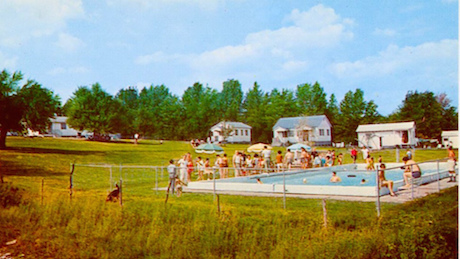
bungalow colony

Unlike the koloniområde, which are still quite active, the popularity of bungalow colonies waned in the 70s and 80s, killed by cheap airline tickets and destination travel (some still exist though their numbers are few and most are used only by Hassidic Jews).

This diminished popularity is a damn shame for several reasons. First, going to Disney World for a week doesn’t have the same potential for forging lifelong relationships as going to the same place year in, year out. And one off vacations are a little like dabbling with respite, whereas having a bungalow is a commitment to it. Lastly, visiting various locations usually requires expenses like hotels and restaurant meals, all of which can be cost-prohibitive to people living on more modest incomes.

While there is a good deal of focus placed on compact housing as primary residences, it’s worth pointing out that it makes wonderful supplemental housing such as the kolonistuga or bungalows. The time to start building small, efficient and inexpensive holiday homes once again is now.

Genius Reno or Architectural Lipstick on a Pig?

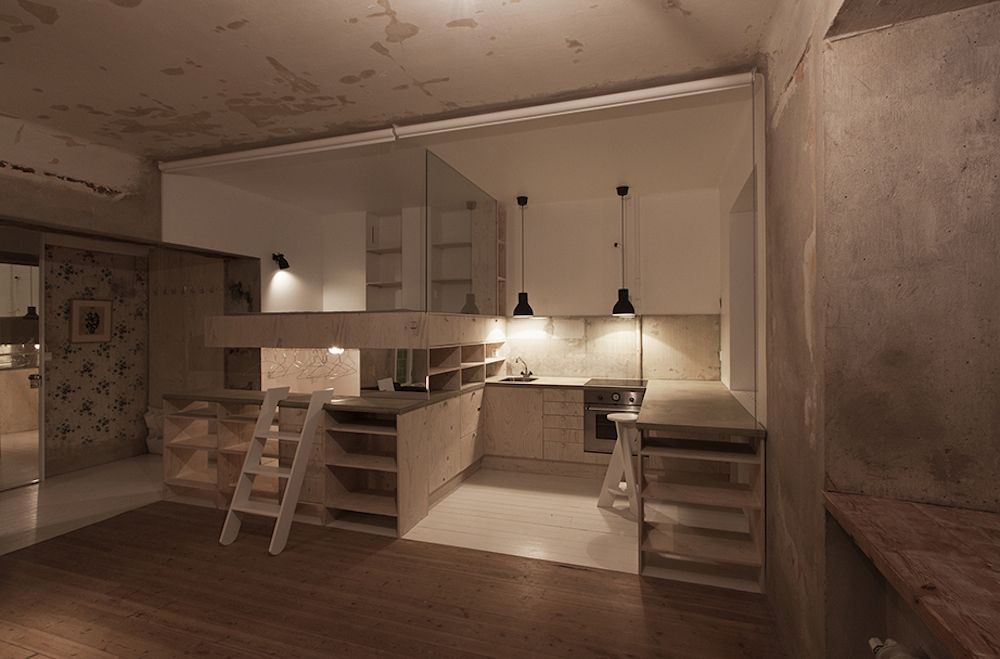
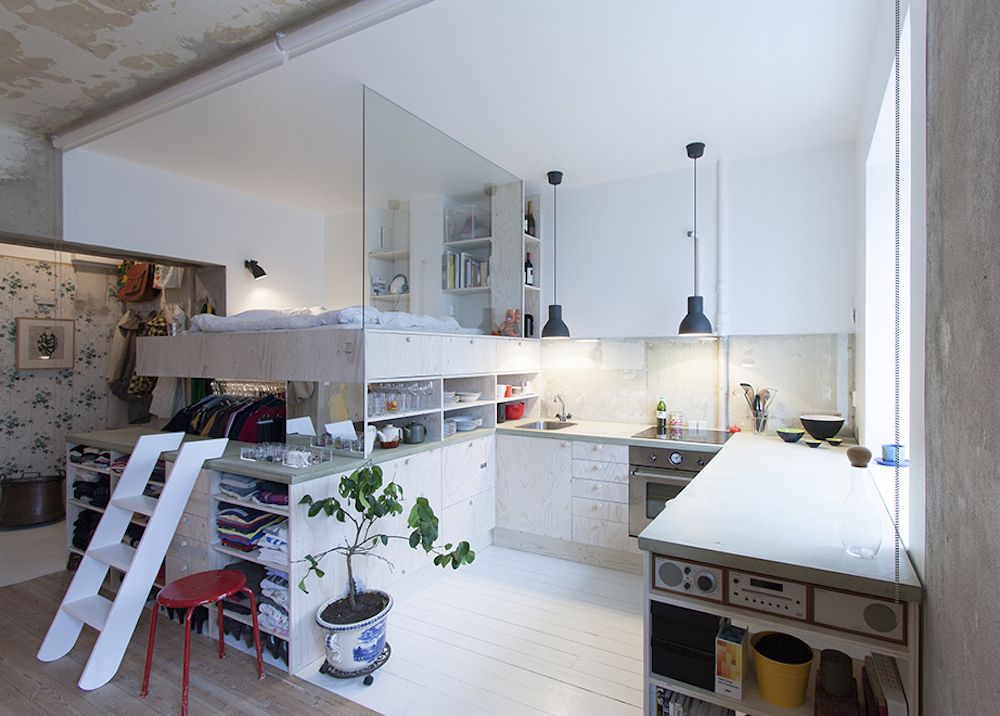
Cities like New York, Hong Kong and London tend to get all the attention when it comes to astronomical property values. But there are smaller, quieter cities that might lack the flash, but are still insanely expensive. One such city is Stockholm. Sweden has seen its property values triple in the last ten years and an apartment in its capital city will set you back around $9700/sq meter (66,866 kr). These sky-high prices are one reason why architect Karin Matz did this cost-conscious renovation of a space that had been used as furniture storage for 30 years. Dubbed HB6B, the 387 sq ft studio is an interesting alloy of old and new.

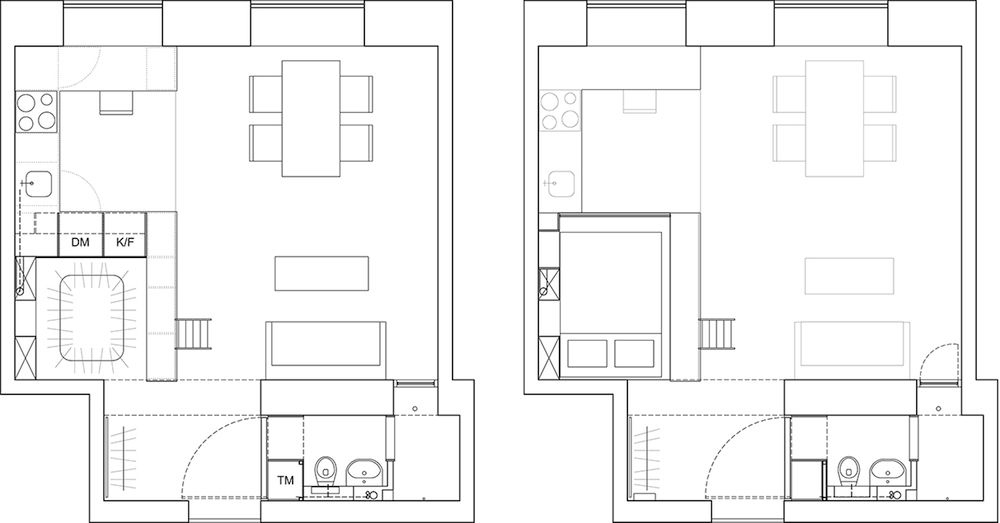
Rather than doing a costly full renovation, Matz split the space into two zones: one polished and new the other rough and old.

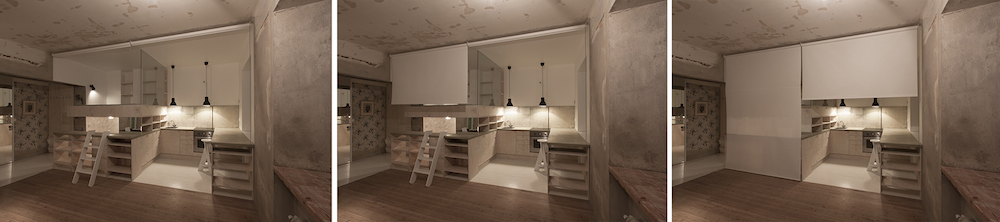
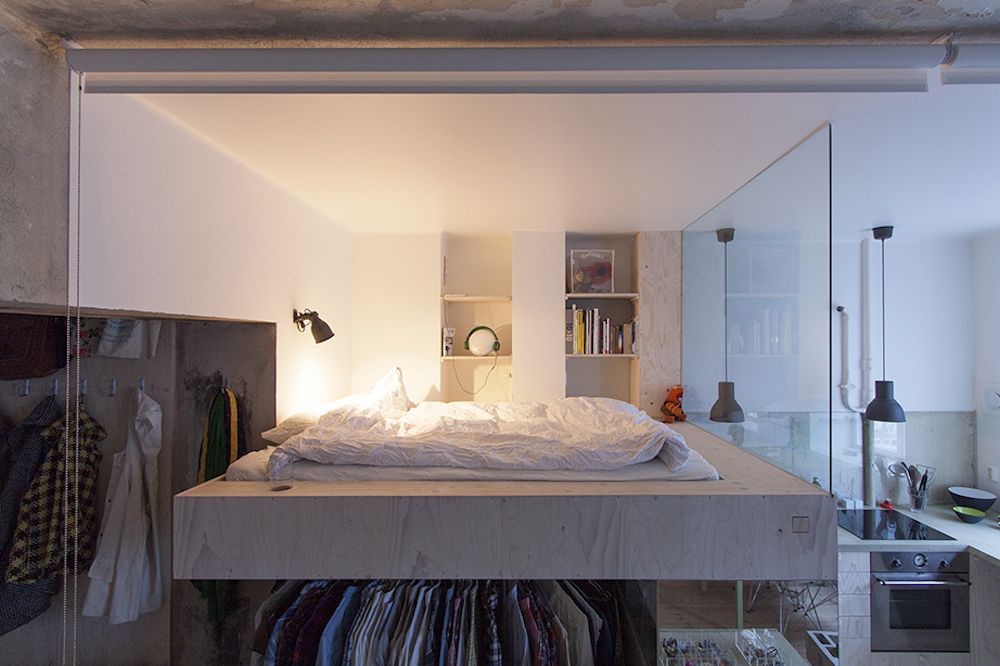
Since a big objective was keeping costs low, the polished space was constructed around IKEA kitchen shelving units. Floors and walls were painted white to reflect white. There is a loft bed separated from the kitchen by a large glass pane. There is ample built in storage and shades that pull down to enclose the space. Everything appears to be made of plywood, which we imagine kept prices in check.

The rough side had very little done to it: peeling wallpaper and chipping paint was removed, some electric outlets were added to the outside of the wall. All furniture is freestanding.

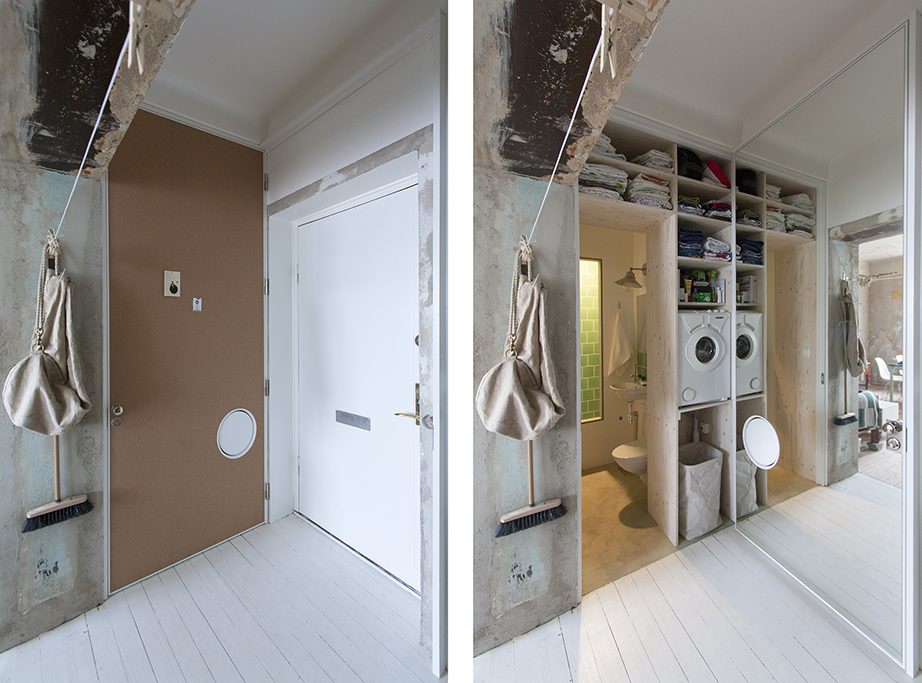
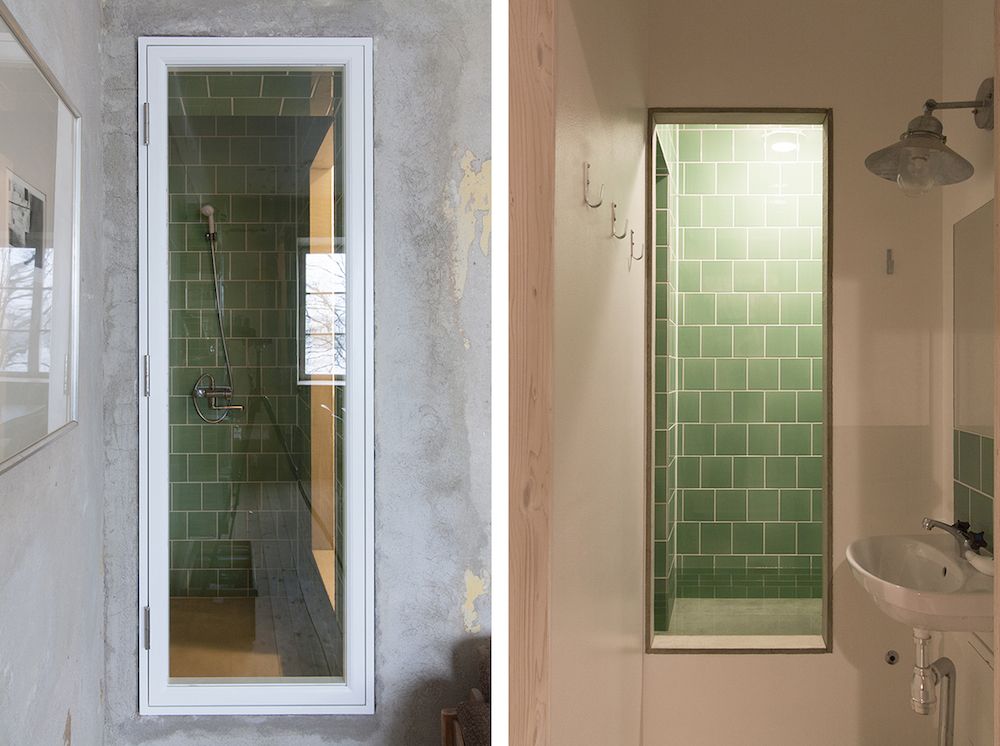
The bathroom, which is by the entrance, “becomes the connection between the two parts,” according to Matz. The bathroom door conceals storage and a mini washing machine. There’s a voyeuristic window between the shower area and living room.

The space looks like something that would be featured in Dwell Magazine following some sort of apocalyptic event (meant in the best possible way). The artful retention and incorporation of the space’s previous decrepitude is an interesting way of saving money and adding character. We do wonder how the space will fare over time, though we imagine the rough space could be smoothed whenever the owner is ready.

What do you think? Let us know in our comment section.

via Gizmodo

Swedish Students Show You All Their Stuff

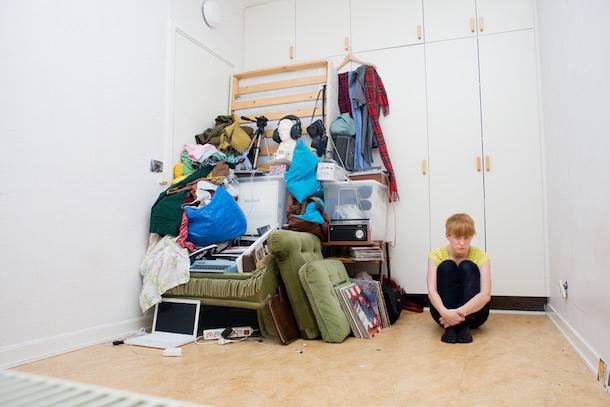
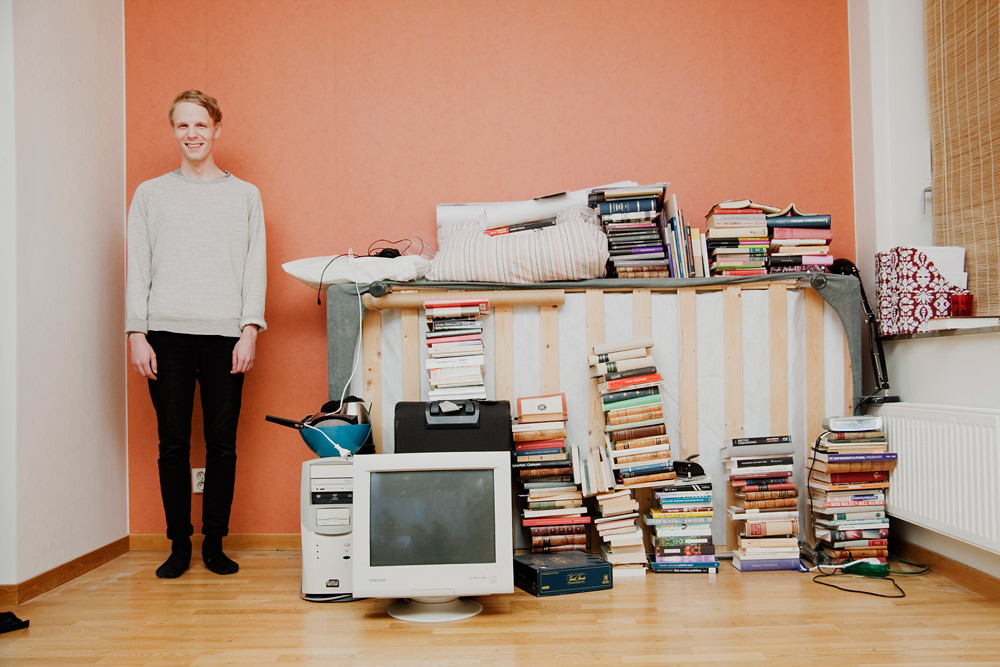
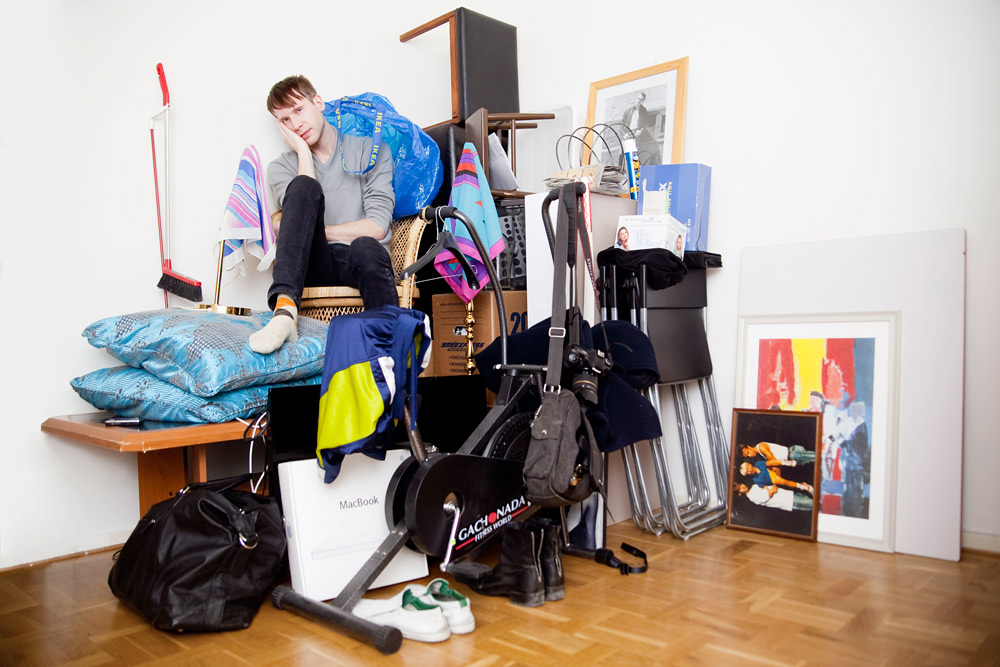
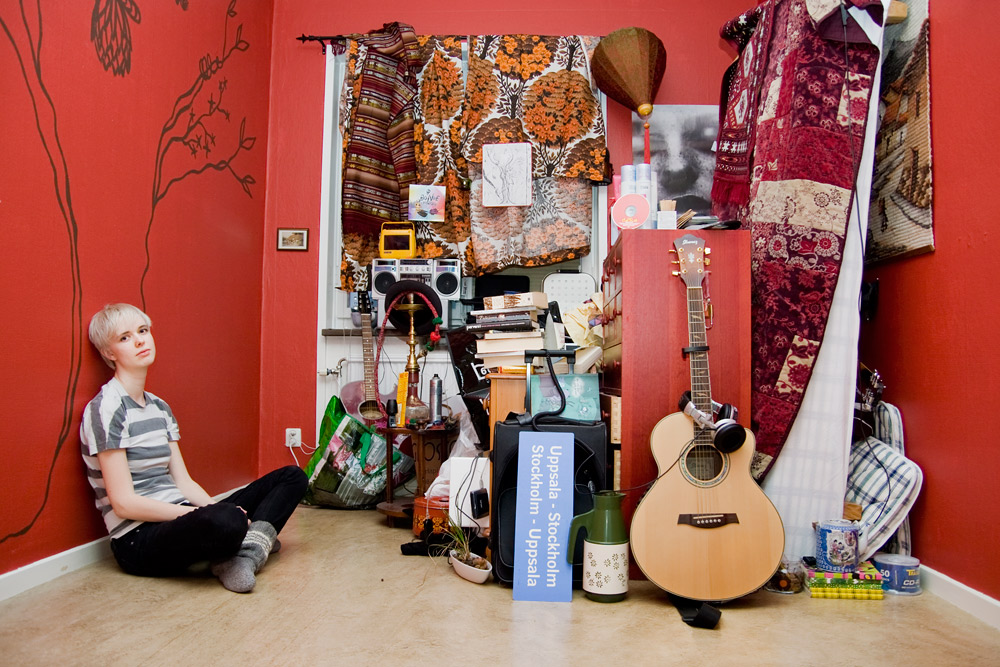
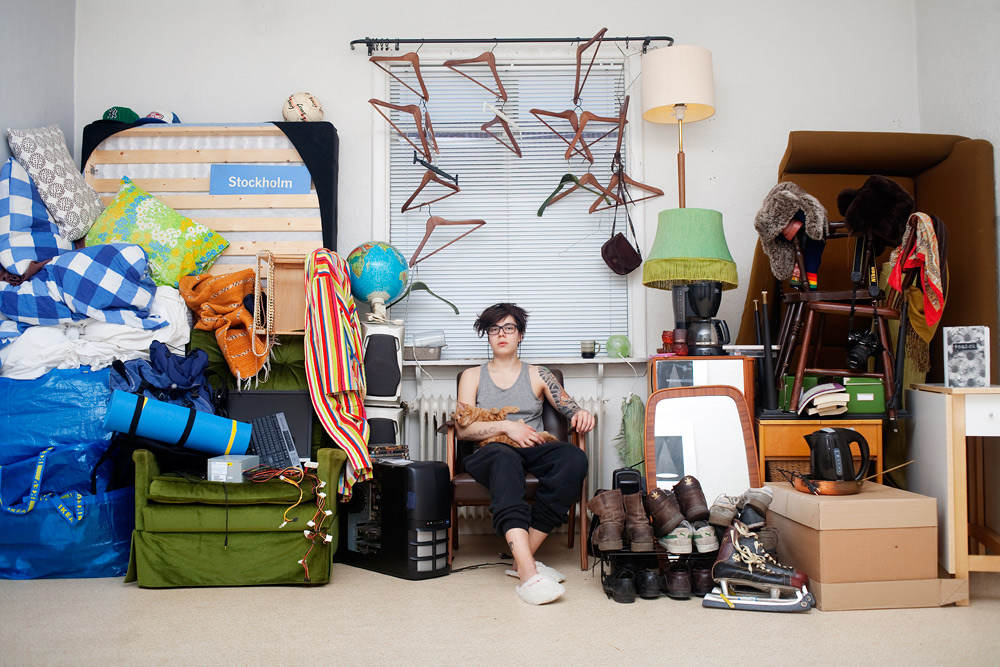
Except if you live in the smallest of homes, most our stuff gets dispersed and concealed by space. We don’t get the full scope of how much stuff we have until it’s all together in a small area, e.g. in a moving truck. Rather than waiting for a move, Swedish photographer Sannah Kvist decided to snap some shots of students with all of their worldly possessions.

The 2009 photo essay is called “All I Own.” Like the photo essays “Child’s Play” or “Family Stuff” we looked at a while back, each subject has his or her own priorities, reflected in their various possessions. Some are bibliophiles, others musicians, others photographers. All in all, none of the piles strikes us as that big.

Because all the subjects were born in the 80s and are students, it might be easy to distance ourselves from their modest collections of stuff. But upon further examination, their piles are collections of practical, mostly essential items, giving a testament to how little most of us really need to live.

via Inhabitat

Insulate Yourself with Art

Building materials seldom get a lot of love outside of trade rags. For example, the LifeEdited apartment’s insulation allowed us to go from four to one radiators, providing huge energy savings. But we’ve never posted about it because pictures of cellulose batt and air barriers are about as sexy as a head of lettuce.

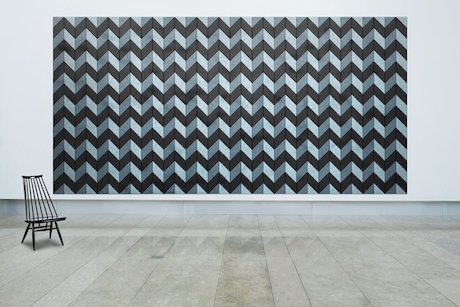
So when there’s sexy building materials, we get quite aroused (probably carrying this metaphor a bit far). Swedish firm Baux has invented one ingenious, super hot wall panel that adds three things that are often-missing from our homes. Their Träullit panels add acoustic and thermal insulation as well as gorgeous looks, all in an easy-to-install, eco-friendly package. Additional benefits include fire resistance and moisture retention.

baux-chevron

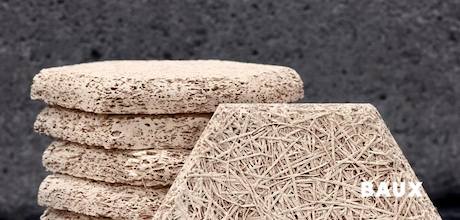
The panels are made of a recyclable material composed of wood wool, cement and water. They come in six shapes and 20 different colors. Along with a downloadable design tool, you (or your architect) can make the panels into a custom wall hanging. We think they look great.

baux-panel

Compact living can be a bit wanting in the auditory isolation department. We imagine these panels would help muffle unwanted sounds from nearby family, roommates, neighbors, etc. The fact you can achieve all of this without tearing up the walls and adding acoustic batt or sound board is a huge plus, especially for renters who might not want to invest in their space. Lastly, they look good enough to be wall art–not a common charge for acoustic and thermal insulation.

If you love or just appreciate building materials, be sure to ‘like’ this post 🙂

Via Design Milk

Swedish University Sticks Students in Wood Box

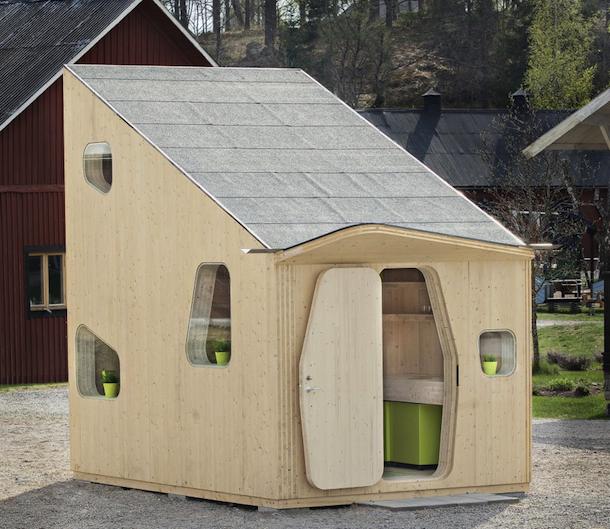
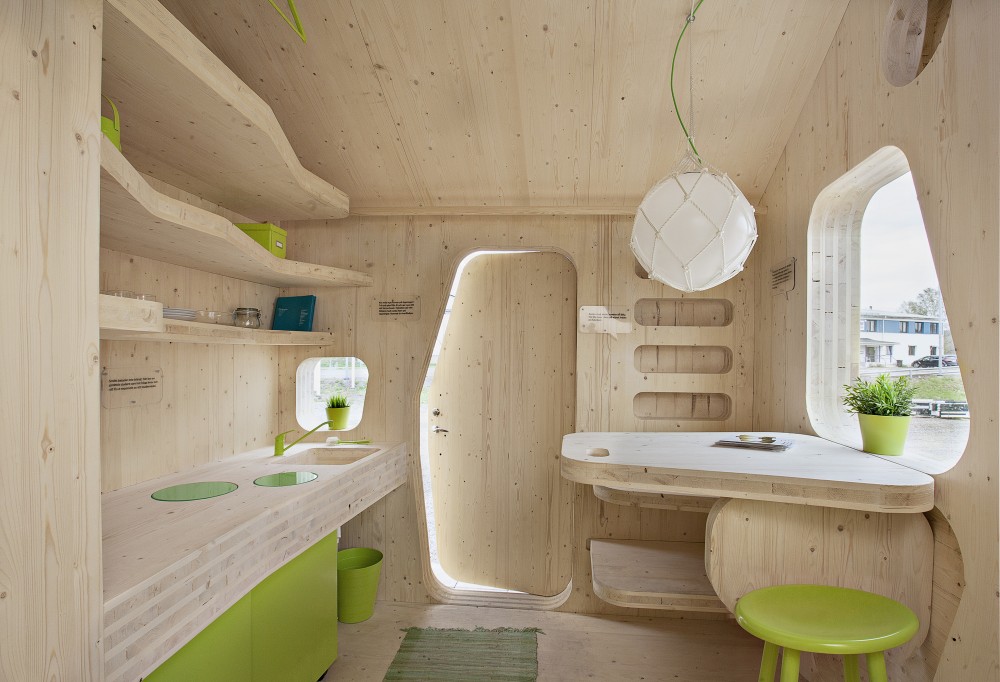
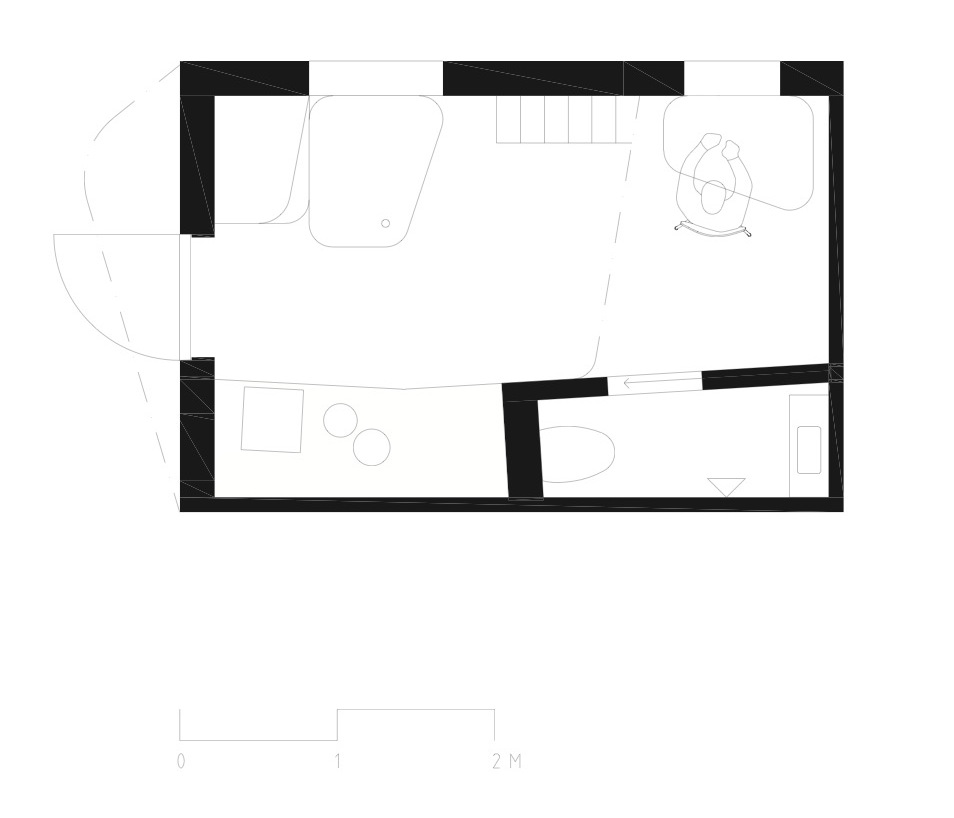
Next year at Lund University in Småland, Sweden, 22 students will get their own 10 sq meter micro-houses. The project,  whose prototype is currently on display at Virserum Art Museum, was designed by  Architects in collaboration with wood manufacturer Martinsons and real estate company AF Bostäder.

The intention of the project was to build something affordable, energy efficient and adaptable to the student body needs. Archdaily reports of its construction:

Through an efficient layout and the use of cross laminated wood as a construction material the rent is reduced by 50% and the ecological impact and carbon footprints is also significantly reduced.

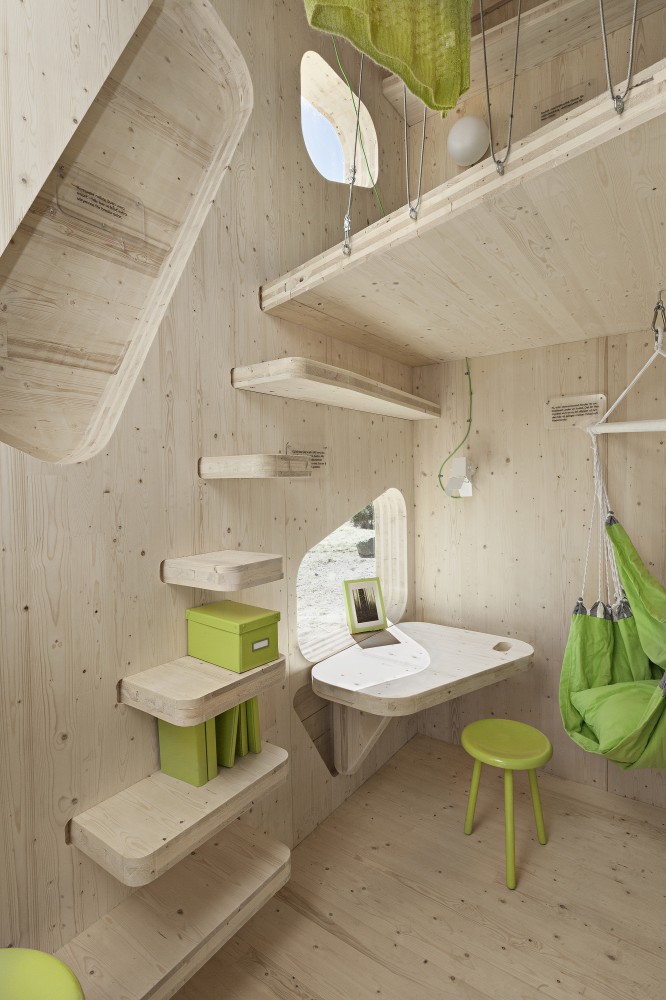
The tiny units features sleeping lofts, kitchens, desks and bathrooms. We think the design looks phenomenal (no word as to whether the green accents will be part of the final product).

This is not the first time we looked at micro-housing at Lund University. Last year, we checked out their experimental 12 sq meter micro-student house. Like micro-houses in the US, the project sought to make housing without restrictive and expensive building regulations. This is a fair reason to conceive new housing structures.

But we will ask the same questions today as we did then. For many, college is one of the most important periods of socialization. Crucial to that is the shared, porous living experience. While undoubtably stylish, we wonder how these micro-houses will affect that? Will it lead to students isolating more? Of course, they could–and probably will–be located near each other, creating a sort of micro-commons, but knocking on a closed off house next door is very different than stepping through an open dorm room down the hall. With Sweden’s balmy climate, perhaps the designers thought the micro-house’s door might remain open most of the time.

Via Archdaily

Swedish University Re-Thinks the Dorm

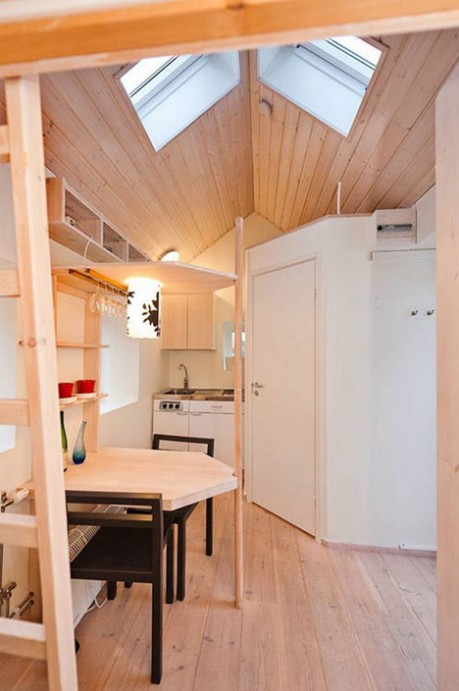
Lund, Sweden is experimenting with replacing its traditional student apartments with self-contained 12 sq meter (129 sq ft) micro-houses. AF Bostäder (AFB), who is behind the project, told The Local that the dwellings would have a distinct economic edge, renting “for 2500 kronor ($370) a month, compared to the average newly built student apartment in Lund which is rented for 4167” ($628).

The tiny houses have everything a student could need: A kitchenette, sleeping loft, bathroom and desk; and somehow it has that swank Swedish sheen that masks any motivations to achieve greater thrift.

The project is still an experiment though. In fact, the house doesn’t adhere to strict Swedish building regulation–the same regulation that AFB claims makes traditional student housing so expensive. The house received a three year permit to see how it works out.

AFB is taking applications for a student who is willing to live and blog about living in the apartment, and prove (or disprove) that this is a viable alternative to the status quo.

The house looks great and seems to have all the amenities a student requires. We do wonder about the social aspect of individuated housing. At least in America, the most important location for campus socialization is the dorm; it’s where many relationships are forged and ideas exchanged. We wonder how being separate from other students would affect that? That said, burdensome housing expenses can make people antisocial as well. What do you think?  Would you give up your dorm experience to save a few hundred bucks a month?

Photos by Jan Nordén

Via Dornob