Shocking Exposé on Where Our Stuff Comes From and Goes

We were going to do a post focusing on the “The Story of Change”–the latest video from the “The Story of Stuff” folks about building a movement around less stuff and responsible industrial practices. But then we realized that many people have not seen “The Story of Stuff.”

Directed by Annie Leonard in 2007, “The Story of Stuff” takes a deep and sobering look into the black hole that is our stuff. We talk a lot about the personal tax stuff takes on our lives, but Leonard goes much deeper into the global environmental and social tax our stuff takes. It’s not pretty or easy to watch, though Leonard’s jaunty tone and cartoon illustrations makes it somewhat palatable.

“The Story of Change” attempts to turn SOS’s message into a movement. SOC is not as hard-hitting as SOS, but it nonetheless shows possible pathways out of the consumer quagmire we find ourselves in, likening the call to action with the US Civil Rights Movement and Gandhi’s movement for Indian independence.

SOS.org features other stories about things like bottled water, cosmetics and electronics–all worth watching.

In creating new values and a new society–one that does not blindly adhere to the idea that more, newer and bigger is better–we need to cultivate awareness. Few people in the last decade have done more for bringing awareness to our Stuff-aholic tendencies than Leonard. If you haven’t watched “The Story of Stuff”, take some time to do so.

4 Things You Can Do to Save the American Home from Dystopian Future

In 1950 the average size for new homes was 983 sq ft; the average household had 3.37 occupants. In 2010 the average size of new homes was 2,392 sq ft with 2.59 occupants. 317% more space.

According to Nielsen, in Q4 of 2010, the average American watched 34:39 hrs of TV per week. Put another way, that’s 1.5 months per year of continuous TV watching annually.

The outstanding domestic debt of the Household and Home Mortgage Sector in 1950 was $411B (adjusted for inflation). Currently, that same figure is $9.7 trillion. While the population has doubled and home ownership and college attendance have increased, this is still an increase of over 23-times.

Something’s wrong in America.

A new report by UCLA-affiliated social scientists called “Life at Home in the Twenty-first Century: 32 Families Open their Doors” takes a deep look at the lives behind the statistics, entering 32 Los Angeles homes to see how Americans really live. Here are some of their findings:

  • 3 out of 4 of the families garages cannot fit cars because of excessive stockpiling from stores like Costco.
  • 50 of the 64 parents reported not stepping outside in the course of a week.
  • Managing possessions has lead to increased stress hormones in mothers.
  • Most families rely primarily on “convenience foods” even though they only save 11 mins over homemade meals.
  • The majority of leisure time, as the Nielsen statistic suggests, is spent in front of the TV or computer.

A complimentary piece in the Boston Globe that followed Boston families and their consumption patterns suggests that  some of the most pleasurable moments today’s Americans experience is when they are getting rid of the stuff. “I felt so light,” a woman remarked about filling a dumpster with her old stuff following a move.

So what do we do?

Just as we didn’t get into this mess quickly, we might not get out of it so quickly, but there are a few things all of us can do, right now:

  • Challenge the status quo. Many of us have a sense of resignation about over-consumption–as if it’s inevitable that everyone has the latest Macbook or every little girl has a Dora the Explorer Adventure Hut. It’s not true. I use a first generation iPhone that was handed down from my mom. Sure, people snicker, but the phone works fine. We have choices, and though it might mean enduring some screaming, parents can make smart choices for their children. Nothing is inevitable.
  • Think before you buy. From the biggest to the smallest purchase, we should constantly ask ourselves if our purchases are contributing or detracting from our enjoyment of life.
  • Change you behavior. Get rid of clutter, rent stuff instead of buying it, digitize, downsize.
  • Take time to appreciate life every day. Share your meals, get outside, spend time with family and friends, read a book, pay attention to things not coming from a glowing box.

Image credit: Rick Bowmer/AP

Via Boston Globe

ecoATM Buys Your Unused Electronics, Clears Drawers

Few things are sadder than staring at obsolete gadgets. These once-cherished, once-state-of-the-art, once-quite-expensive tech relics usually die slow deaths in drawers and closets across the nation.

ecoATM might have a solution. While it doesn’t solve the problem of planned obsolescence and designs that preclude upgrading perfectly usable gadgets, it does send your neglected gadgets to loving homes or to a proper burial.

ecoATM accepts phones, iPods and MP3 players. You hook them up to their ATM-like kiosk, where several diagnostic tests are performed to assess their value. Cash or credit is given on the spot (there are security features to prevent the sale of stolen or fraudulent goods). The company either sells your gadget on secondary markets or “responsibly recycles” them depending on their condition.

There are only 50 kiosks in the US right now, the bulk of which are in California, with some outliers in Seattle, Kansas and Nebraska. There is a corporate recycling program as well. But the company has attracted a number of powerful investors who surely recognize the value and vastness of used gadgets.

According to its site, making 1 phone results in more than 3 tons of mining waste, and the disposal of phones puts 75K tons of toxic materials like arsenic, cadmium and mercury into landfills annually. Accordingly, the company seems to recognize that reselling and properly disposing gadgets is just a beginning, saying on their site:

Solving the eWaste problem on a broad scale requires the collaboration of the OEM’s [original equipment manufacturers] that make the devices, the retailers that sell them, and the consumers that buy and retire them.

In other words, systemic change is what’s really needed: where manufacturers design products that have longer life-cycles; where retailers have business models that don’t thrive on constant upgrading; where consumers demand products that are well-designed and can be upgraded.

But until that time, ecoATM is a great option, clearing our drawers and closets, reducing the size and toxicity of our landfills, providing a return on our initial purchase and giving second lives for neglected gadgets.

via Geekwire

Prêt-à-Louer: How to Get Your Couture by the Hour

Do you have a big occasion you want to look awesome for? Do you have limited closet space and/or budget? Are you incapable of wearing tacky, store-bought clothes? If your answer is yes to one or more of those questions, Rent the Runway might be for you.

RTR offers women the chance to rent from a rotating stock of top designer collections and accessories for a fraction of sales price. For example, a $1600 Missoni dress rents for $175 and a Kate Spade clutch rents for $40. Other designers include Elie Tahari, Vera Wang and countless labels that are so prestigious we don’t recognize their names (there are also many lower price point options too).

Because you only have a RTR dress for 4-8 days, the site helps reduce clutter that would come from clothes that are often only used once.

As there are some inherent limitations to “trying” a dress online, RTR sends a backup size with every order. If those don’t work, they’ll overnight you something else. If you need some help choosing, you can chat with one of their stylists.

The site also allows past renters to review dresses, saying whether they ran small, big or true to size, as well as commenting on how they fit their bodies (they state their body size for comparison sake).  Some renters even post pics of the dress in action.

RTR might be doing the impossible: i.e. making $1000+ wear-once dresses compatible with an edited life. What do you think? Are those things mutually exclusive or can ultra-lux items work with an edited life?

5 Shopping Tips for Buying Less Stuff

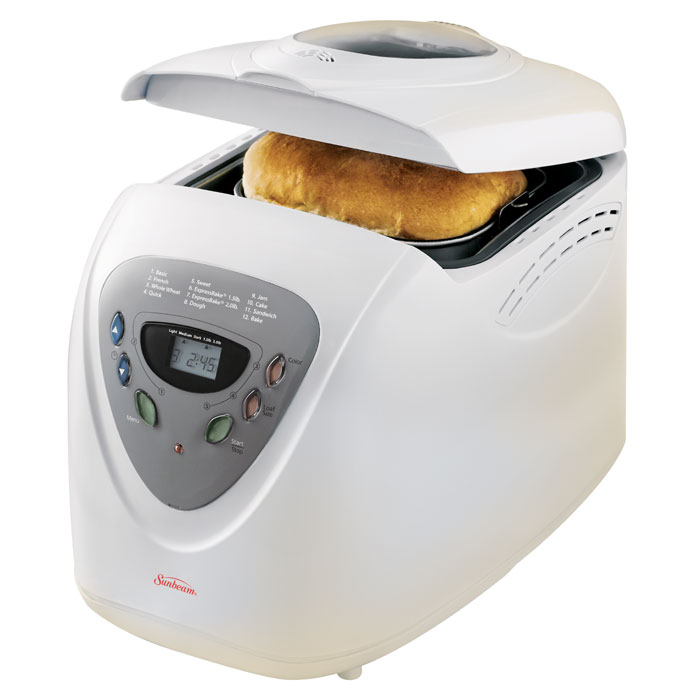
Bread Machine

The world seems determined to sell us more stuff. If buying were the end of the story, that would be OK. But it’s just the beginning. Besides buying stuff, you must store it, charge it, clean it and look at it before ultimately tossing it. We’ve come up with 5 simple actions for combating stuff-a-holism:

  1. Use what you got. Specialty items are the enemy of the edited life. Bread-makers, tie-racks, Snuggies–you probably can handle the task with something you already have.
  2. Take care of what you got. Most of us only get 1/3 of our stuff’s actual life-cycle because of neglect. Fix, mend, patch, oil, repair, clean and generally respect your stuff. The earth and your pocketbook will thank you.
  3. Don’t be lured by the latest model. Yes, the new version with the angular corners is much cooler than the older one with the rounded ones. But be honest: do you really need the utility of the new version? Probably not.
  4. THINK before you buy. Unless you are buying a tourniquet, it’s unlikely you need to buy stuff immediately. Waiting a day or two generally quells the urge to buy stuff you might not need.
  5. Buy better. If you must buy stuff, make your stuff great, well-designed and repairable. And don’t be penny wise and pound foolish. As LifeEdited founder Graham Hill put it, “Stuff that costs twice as much, but lasts 4 times longer, is half-priced.”