To Fix or to Replace?

If most of us are ashamed of shabby clothes and shoddy furniture let us be more ashamed of shabby ideas and shoddy philosophies….It would be a sad situation if the wrapper were better than the meat wrapped inside it.

–Albert Einstein

For the last several months, I have had a small crack on my two year old iPhone 5’s glass. Following an unexpected trip to the floor (glass side down) a few weeks ago, the small crack became a full on shatter. A couple days ago, the shattered pieces started falling out, leaving me with small glass shards swimming around my pocket. I went to the local mobile store to get it fixed. The clerk told me that a screen replacement would cost $75. I asked how much a new phone would cost. He said given that I was eligible for an upgrade, a 5S would cost $99 and a 6 would be $199. He also said he’d give $30 trade in value for the old phone. In other words, the 5S, which represents an upgrade from my first gen 5 would cost $5 less than getting my old phone’s screen replaced.

Now let me back up: aside from my screen and some issues with its battery life (issues that could always be handled with a modicum of foresight), I have no problems with my phone. It still occurs to me as a technological marvel. Even though it’s only 16 GB, I haven’t had any particular issues with storage. It has some superficial scuff marks on its aluminum, but these do not impact the performance whatsoever.

I weighed the pros and cons of replacement and fixing:

  • Pro replacement: cheaper by a few bucks; better battery according to sales dude; shinier, newer, thus inflating self esteem and esteem from people who care about having shinier, newer stuff.
  • Con replacement: I’d have to re-up my two year contract and use my once-every-two-year upgrade upgrading a perfectly good phone; I would be sending another perfectly usable phone to an early death, adding to the already-monumental amount of e-waste created we as a society produce.
  • Pro fix: not having to commit to two year contract; not using upgrade; not sending phone to premature death and creating unnecessary e-waste; not feeding into a culture of incessant upgrading and idealization of the new and unused.  
  • Con fix: not having latest and greatest (though the 5S, which is probably what I’d get, is no longer the latest or greatest).

Given these considerations, I am fixing the screen. The money is negligible. A better battery would be nice, but not nice enough to outweigh the other reasons not to upgrade. More than anything, doing a premature upgrade, to me, means submitting to the spurious logic of planned obsolescence and throwaway culture.

One of the concepts I have helped promote on this site is that we fill our lives with only the stuff we love and cherish. Sometimes this concept is misconstrued as living in some Dieter Ramsian ideal, where the few things that are left in our possession are immaculate. All furniture is clean and modern, all clothes fit perfectly and are plain and stain-free, all electronics are up-to-date. But this is an unrealistic, and often harmful, ideal. It’s one that can result in a “minimalist” sending as much stuff to the landfill as anyone else–not to mention depleting his or her bank account unnecessarily.

Rivendell Bicycle Works Grant Petersen coined the term “beausage”–a mashup of the words beautiful and useage. While he applies it to cool, often custom bikes, the term can apply to everything we possess. These are items we care for and maintain the best we can, but that also undergo the inevitable effects of age and use. If we can see things this way, we can see how an edited life can include the used, beat up and even outdated.

This Truck Is Cruising the Country Honoring the Stuff We Got

There was a time in the not so distant past when people held on to and cared for their stuff. They fixed toasters, darned socks, patched holes and did a variety of things that didn’t involve one-click-shopping for replacements. While those times seem to be a distant memory, Patagonia is trying to bring them back one garment at a time. As part of their Well Worn program, the company is sending out the Worn Wagon, a vehicle whose mission is to spread love to our slightly tattered, but totally useable garments.

The Worn Wagon departed this month from Ventura, CA. The wagon itself, an old Dodge truck that runs on biodiesel is the handiwork of surfer and artist Jay Nelson. The truck’s trailer is made of salvaged wood from wine barrels; solar panels power an industrial sewing machine housed inside. The wagon will be cruising the country looking for garments in need of repair. A repair person manning the wagon will sew your hole or replace your zipper or do whatever needs to be done to your old garment for free–whether it’s Patagonia or not. The wagon will be stopping in stores, trailheads, coffee shops and more (see tour stops here).

worn-wagon-interiorFor someone who is frequently dubious of corporate claims about commitments to consuming less and giving a poop about the environment, I am consistently impressed by Patagonia. They really seem to get it. The realize the way to live with less is buy great stuff from the outset and make it last as long as possible.

A Movement Masquerading as a Phone

A few months ago, I dropped my hand-me-down iPhone 4–a replacement for my hand-me-down first generation iPhone. Rather than forking over $80 to get my cracked screen replaced by a professional, I took the questionable suggestion from some dude at a party of fixing it myself–a procedure that took a surgeon’s hands and robotics engineering degree (my fingers don’t handle things much smaller than keyboard keys and I have a BA in English). During my “repair” I screwed something up, and when I put it back together, I had an unusable iPhone.

After a few unsuccessful attempts to get a new hand-me-down, I decided I’d get a new phone. I got on a family plan with my wife, which subsidized a new phone, forked over an additional $200 and got an iPhone 5, taking tech guru Brian Lam’s advice that if you’re going to replace your tech, might as well replace it with the latest tech.

Last week, Apple released their new iPhone 5C and 5S: phones that, if you’re to pay attention to the tech cognoscenti, are far superior to my phone. I realize in the race to stay current with tech, you can only pull ahead of the pack. You can never, ever win. But still, I thought my phone might be current for a year or so.

Of course my crappy old iPhone 5 works needlessly well for my purposes and I will not replace it until I have to, but my personal tech experience–where repair and upgrade is made virtually impossible–is the one that a project called Phonebloks is trying to address. Phonebloks is a fully customizable, upgradable, repairable, open-platform/source cell phone. The phone is designed around a grid where blocks are installed and configured depending on your needs: put a larger camera lens block if you’re a shutterbug; install a larger storage block if you like your data local; shrink it if you like your stuff in the cloud; and so on.

Unfortunately the phone is just a concept right now, but Phonebloks creator Dave Hakkens is asking for our support. Working off the crowdsource activism site Thunderclap, he’s asking that we all simultaneously express our interest in a product like Phonebloks to the mobile tech industry on October 29th. Find more info here.

While you could argue that your activism hours are better spent elsewhere, the would-be Phoneblok movement makes a statement that transcends introducing cool gadgets. It’s about a culture moving away from disposability and planned obsolescence. It’s about respect for natural resources. It’s about designing products–any product–to be usable for as long as it possibly can be. We think that’s a big deal.

via 9gag

Modular Shoes Make Repair a Breeze

How many times have you bought cool and comfortable shoes that are great until their soles wear out? Most shoes today have molded soles that are very comfortable but nearly impossible to fix, leaving us with closets filled with shoes with pristine uppers, but shot soles. And yes, you can buy traditionally-soled shoes that are repairable, but they are not nearly as comfortable as most modern footwear.

A couple shoe companies are doing something about this conundrum–making modular shoes that are easily customizable and whose soles are easily and cheaply replaced.

First is a brand called Urshuz, the brainchild of a Grant Delgatty, a former Vans and K-Swiss designer. Uppers and soles are sold separately (pun unintended). The uppers have multiple rings that loop over channels in the molded sole to bind the two parts (see above). There are multiple upper styles ranging from flip-flops to leather medium-tops. The soles are a uniform shape regardless of upper style; multiple colors are available.

Uppers range from $20-50 and all soles are $25. Considering you can keep the uppers for a much longer time than a standard shoe, and even a modest sole repair is $20, we think that’s a good deal. They look pretty good to boot.

Zipz does a similar thing but with soles that are zipped to the upper. The Zipz styles are similar to popular canvas shoes like Converse, Keds and Vans.

Uppers are around $25-30 and soles are $28. Upper/sole combos are available for $45-50 and there are kids and toddler versions that are a little bit less expensive. As a new pair of Converse is around $30, and often the canvas wears out simultaneously with the soles, we’re not so sure on the value proposition on Zipz, but the idea is nice.

In a world of planned obsolescence and designs that preclude repair, it’s nice to see some companies are making practical products whose life-cycle does not hinge on one of its parts wearing out.

What is Heirloom Design?

A few years ago, inventor Saul Griffith gave his newborn son a Rolex and a Montblanc pen. Why? Because he wanted these items to be the first and last watch and pen his son needed.

The gifts were a demonstration of what he calls “heirloom design”–the principle that we should design, produce and consume timelessly designed stuff that lasts and can be repaired rather than faddy, disposable stuff with built-in expiration dates.

Heirloom design can sometimes seem counter-intuitive. For example, it’s nice to think that the recycled/refurbished/upcycled product is always the right choice, but often this is not the case. Oftentimes it’s better to use things with higher embedded energy (the collective amount of energy it takes to produce a product) that lasts 5-10 times longer than the “eco” product that’ll wear out in a year or two. In this way, a luxury product like a Rolex can be the smartest, most eco watch you buy.

We think the above Le Creuset pot/pan combo is a perfect demonstration of Griffith’s principle: its cast iron construction surely has a high embedded energy, but its durability and function make it worthy of passing from multiple generations.

Some other products he cited to Good Magazine a couple years ago as heirloom quality are:

Bialetti or Bodum coffee makers, Iittala glassware, Vespa motor scooters, the Citroën 2CV, the Volkswagen Beetle, Lego toys, Zippo cigarette lighters, Montblanc pens, the Land Rover (the old aluminum ones before the queen bought one), the older KitchenAid products

The vast majority of stuff Griffith believes shouldn’t be made at all. He says:

The principal and only way to make an heirloom product is to design something that people will need not just this year, but for the next 50 or 100 years. Choose good materials that will last that long; but in essence, don’t even bother making fad products. If you have to design something, choose things that we need as opposed to frivolous things that we might just want for a month or two for bragging rights. In many respects, designing heirloom products means saying no to designing consumer crap that you know will not last very long.

Griffith was also trying to address the issue of electronics, which have notoriously short-lives. For example, he believes things like upgradable firmware can extend the life of our electronics considerably.

Of mechanical items, an heirloom product should be durable and repairable. This iron by designer Samuel Davies–part of a concept he calls “RepairWare”–is a perfect demonstration of that.

Every piece of it is replaceable and repairable. It can be disassembled with a quarter. Bad news is it’s only a prototype.

[divider]

Consider keeping the heirloom design ethic in mind with all you purchases. Ask yourself, “Is this something I would/could hand down to the next generation? Is this timelessly designed or something that will seem old in 6 months? Can I fix or repair this? Etc.”

If the answer is no to any or all of these questions, consider getting something worthy of handing down even if it costs more. If you can’t afford that expensive thing, look into used products–if something is old and still in working condition, it’s likely heirloom quality.

What are your favorite heirloom products?

Via Good

Image Credit: sjdavies.eu

Fix Your Stuff, Make Friends at Repair Cafe and Fixers Collective

Yesterday we talked about Maui Jim, an eyewear company that provides cheap and swift repairs for their products. While corporate fixery is great–and hopefully, one day, will be expected–many people are taking repair into their own hands.

The other day, the NY Times profiled some of those people–Dutch people to be precise–who hold informal gatherings a couple times a month to fix their broken stuff. According to the article, the “Repair Cafe” started  2 1/2 year ago as a way to reduce waste. In that time, it has grown considerably, having raised $525,000 from a state grant and other contributions; they bought a Repair Cafe bus and have started cafes across the country–sorta like Fight Club, but fixing stuff instead of fighting and not secret and…not similar at all.

All repairs are done by volunteers for free.

On this side of the pond, the Fixers Collective in Brooklyn, NY has been fixing stuff for a few years. They don’t have a foundation or a bus, but they do meet and fix stuff. What’s cool about FC is that they have a hierarchy of fixers, beginning with Master Fixers (your MacGyver types), apprentices and drop-in visitors–each teaching the other the fixing ropes.

Their site descibes their philosophy this way:

The Fixers’ Collective seeks to displace cultural patterns that alienate us from our things, by collectively learning the skills and patience necessary to care for them. Intentionally aligning itself with forces generated in reaction to the current economic crisis, the Fixers’ Collective promotes a counter-ethos that values functionality, simplicity, and ingenuity and that respects age, persistence and adequacy.

And you just wanted to sew a patch in your jeans.

Beyond fixing, waste reduction and connecting with the means-of-production, both groups emphasize the social aspect that comes about while learning how to fix stuff. People hang out, have a coffee or a beer and get to know one another while they repair. Conversely, throwing stuff away does little for one’s interpersonal skills.

While we know you like new stuff for making the ideal edited life, 9 times out of 10, your existing stuff is perfectly good. But that stuff will eventually break, and when it does, before you go out and buy a cheap replacement, consider fixing. Check to see if there’s a fixer group in your area or consider starting one. Your wallet, planet and emotional well-being will thank you.

Via NY Times. Image credit: Krrb Blog

Thanks for tip Karen

Could These Be A Pair of Sunglasses for Life?

Sunglasses seem to some people (like this author) like a real scam. You have to plop down at least $150 for a decent  looking/quality pair. For that considerable amount of money, you get a couple ounces of molded plastic, some screws and 2 polycarbonate or glass lenses (I’m sure I’m missing some rare-earth additive that accounts for their expense). You wear them for a couple years at best until you sit on them or mangle them some other way, at which point you buy a new pair.

While they’re still well north of $100, Maui Jim sunglasses offer something for your money. For $10, you can send them in to be fixed. Perhaps because the company is located in Illinois (not Maui) and the glasses are US-made, they reportedly offer generous and quick turnarounds with those repairs. Note that this does not include scratched lenses, though the website indicates they will repair those for an additional cost.

I looked at the websites of a couple other high-end sunglass manufacturers for their repair policy. Unlike Maui Jim, who has a link to their repair policy on their main navigation bar, the other companies had theirs several clicks deep on their sites. Though I can’t say this for sure, this burying of information probably shows that replacement is a higher priority than repair for these guys.

One question that we think about a lot at LifeEdited is “if I were to choose one ______ [pair of sunglasses, computer, pair of socks], which one would I choose?” Companies like Maui Jim, who make repair and servicing easy, make that choice a lot easier.

Do you know of high quality products that offer easy and quick repairs? If so, please let us know.

Via Reactual and Maui Jim

5 Shopping Tips for Buying Less Stuff

Bread Machine

The world seems determined to sell us more stuff. If buying were the end of the story, that would be OK. But it’s just the beginning. Besides buying stuff, you must store it, charge it, clean it and look at it before ultimately tossing it. We’ve come up with 5 simple actions for combating stuff-a-holism:

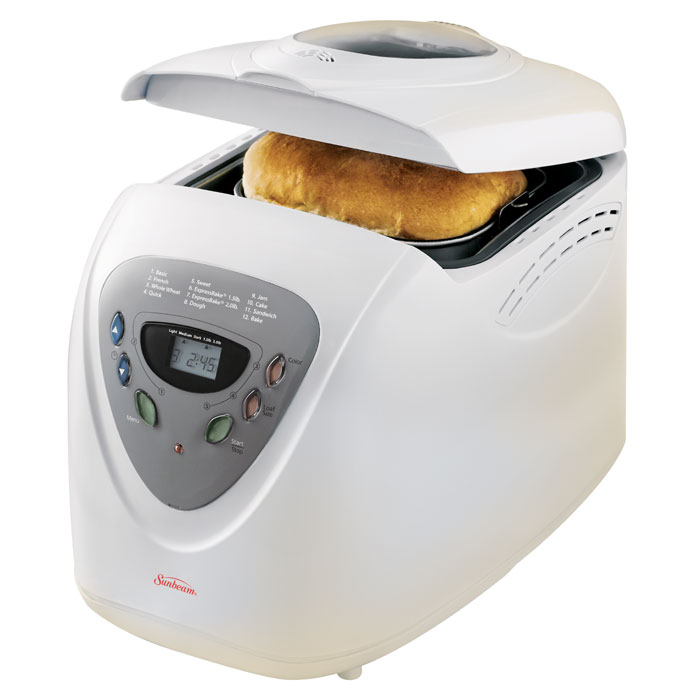
  1. Use what you got. Specialty items are the enemy of the edited life. Bread-makers, tie-racks, Snuggies–you probably can handle the task with something you already have.
  2. Take care of what you got. Most of us only get 1/3 of our stuff’s actual life-cycle because of neglect. Fix, mend, patch, oil, repair, clean and generally respect your stuff. The earth and your pocketbook will thank you.
  3. Don’t be lured by the latest model. Yes, the new version with the angular corners is much cooler than the older one with the rounded ones. But be honest: do you really need the utility of the new version? Probably not.
  4. THINK before you buy. Unless you are buying a tourniquet, it’s unlikely you need to buy stuff immediately. Waiting a day or two generally quells the urge to buy stuff you might not need.
  5. Buy better. If you must buy stuff, make your stuff great, well-designed and repairable. And don’t be penny wise and pound foolish. As LifeEdited founder Graham Hill put it, “Stuff that costs twice as much, but lasts 4 times longer, is half-priced.”