Transforming Space Must Be Seen to be Believed

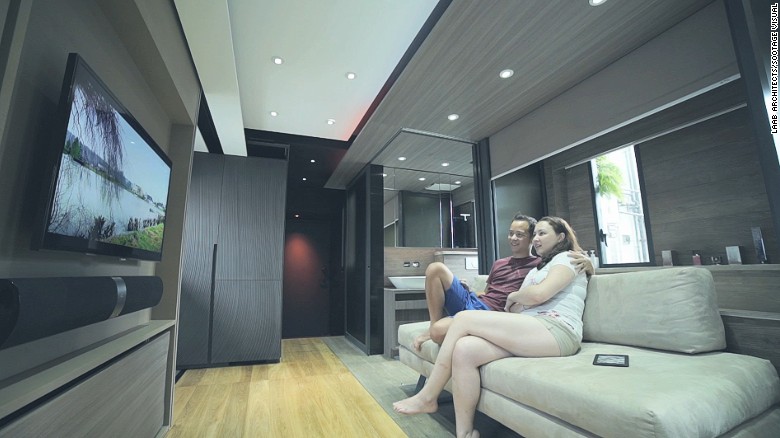
With an average purchasing price around $23K per square meter, it’s no wonder that some of the world’s most amazing transforming spaces come from Hong Kong. And this apartment by HK’s LAAB Architecture might be the most most versatile transforming space we’ve ever seen. The owners, Michelle and Andy, were dead set on living in HK’s extremely expensive Central District. Rather than cashing blowing all of their money on a larger place, they decided to go small and employ smart design to fulfill on their desires. And their desires were many: They wanted a full kitchen, large bathtub, home cinema, gym, cat friendly spaces (there are three) and plenty of storage. All in 309 sq ft.

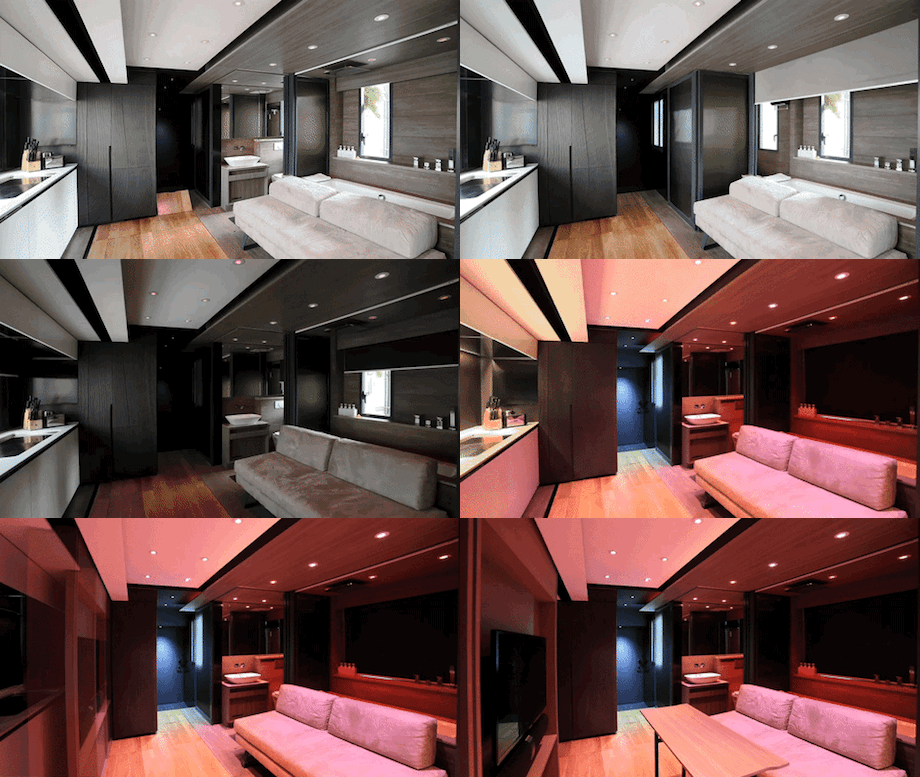
How LAAB fulfilled on the brief must be seen to be believed. Some of the highlights are a tub that doubles as a seating area, an entertainment center that slides out of the wall, sleeping for 4-6 and, perhaps most impressive, a network of “catwalks”–tiny corridors for the cats to play in. The architects said the build necessitated 3mm tolerances to make everything work. Needless to say, most everything is app controllable.
laab

Laab-floorplan

Central to making the apartment work was the “Form Follows Time” philosophy, where the space morphs according to the time of day and its attendant use. It’s a concept we’ve long espoused here and on we hope gains traction in architectural thought. LAAB’s fusion of high tech, high design, amazing craftsmanship and lofty thinking has truly set a high watermark for what’s possible in space small and large.

Images via LAAB
City Where Architects Dare Not Tread

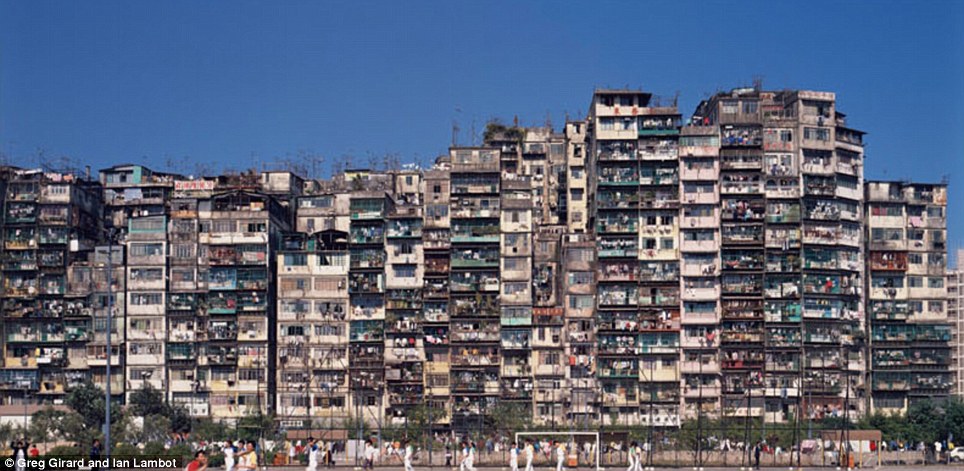
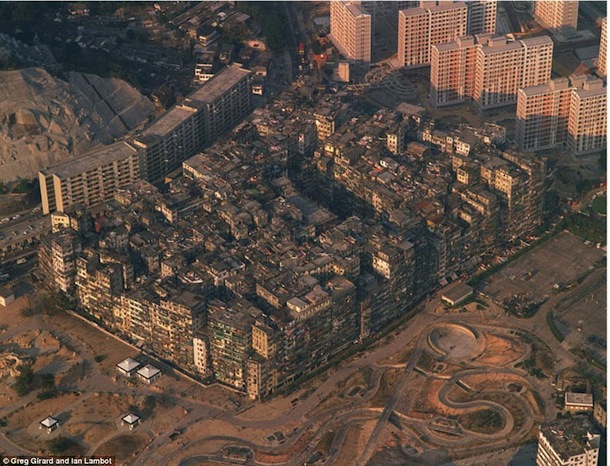
At LifeEdited, our preference for urban planning leans toward density. As a general rule, greater density is more energy efficient, promotes walking and some even say happiness. But like anything, there can be too much of a good thing. And few places in the annals of history have a greater excess of density goodness than Hong Kong’s Kowloon Walled City. At one point, the city held 33K residents on an area of 0.0102 sq mile–that would be 3.2M people per sq mile! For comparisons sake, mainland Hong Kong has about 17K people per sq mile and NYC has 27K.

The city had its beginnings as a Chinese fort, erected as early as the 10th Century. The labyrinth of buildings that most people associate with Kowloon started in 1933, when the HK government demolished all but a few structures, displacing the then 436 residents. In 1940, Japan, occupiers of HK, destroyed the eponymous city wall creating a sort of tabula rasa of urban planning chaos. After Japan’s surrender, 2K Chinese refugees moved into the city. British colonial powers adopted a “hands-off” policy toward the city. This laissez-faire governance led to several decades of extreme crime, with Chinese Triad gangs running the city from the 50s through the 70s.

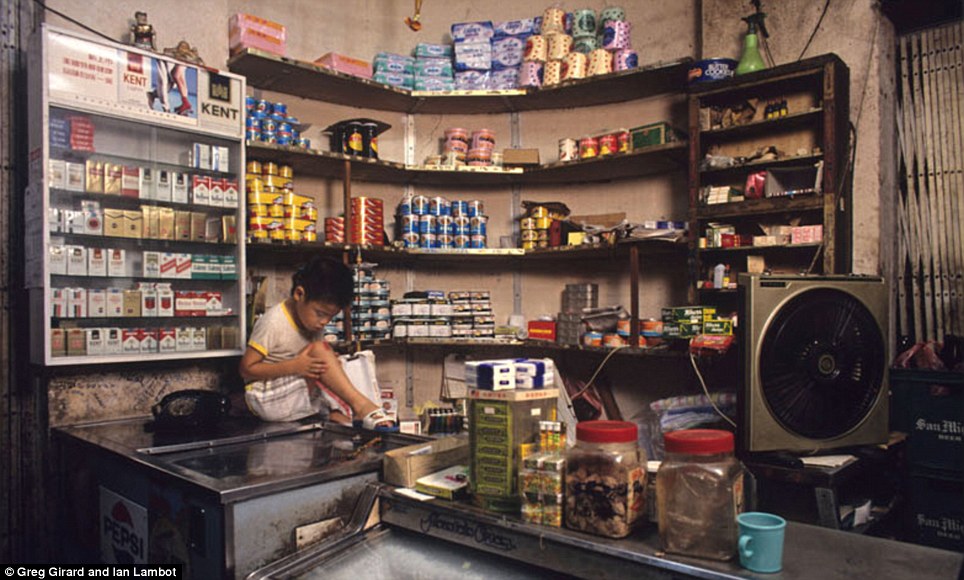
The hands off approach also led to the improvisational architectural scheme. There were over 300 hundred 10-14 story buildings built mostly in the 60s and 70s. All these building went up without pesky architects, urban planners or governmental oversight. 60% of homes were only 250 sq ft and many lacked utilities.

Photographers Greg Girard in collaboration with Ian Lamboth spent five years in Kowloon before it was demolished in 1992. The pictures are great as they capture more than the dizzying maze of Kowloon’s exterior; they also peer inside the city, looking at the homes, businesses and alleys where tens-of-thousands of people lived.

Images via Daily Mail UK

Hong Kong’s Micro Madness

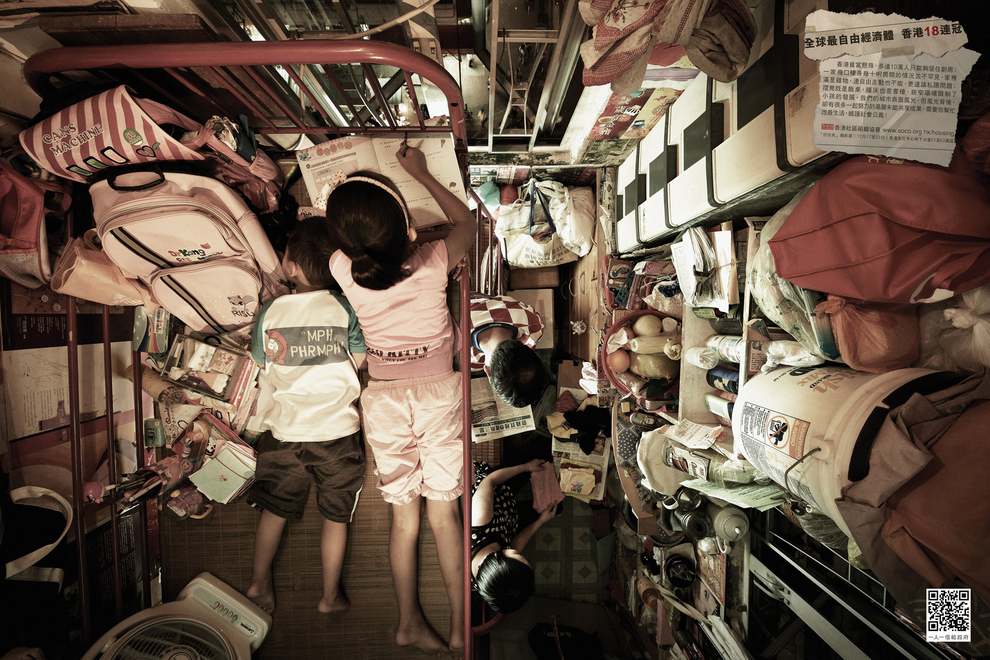
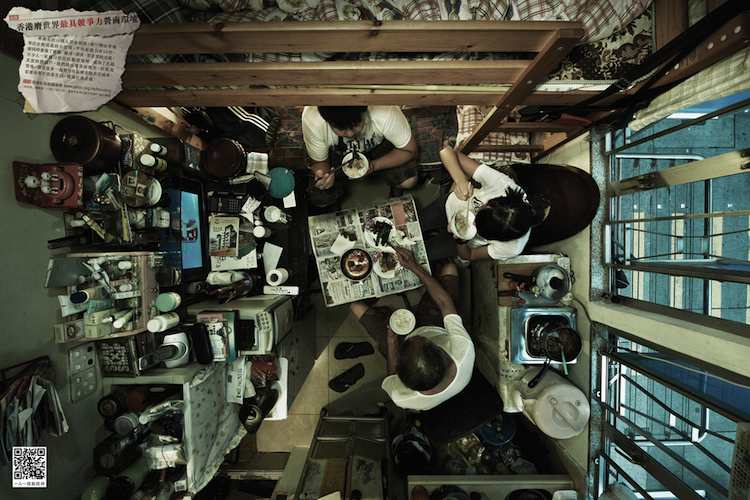
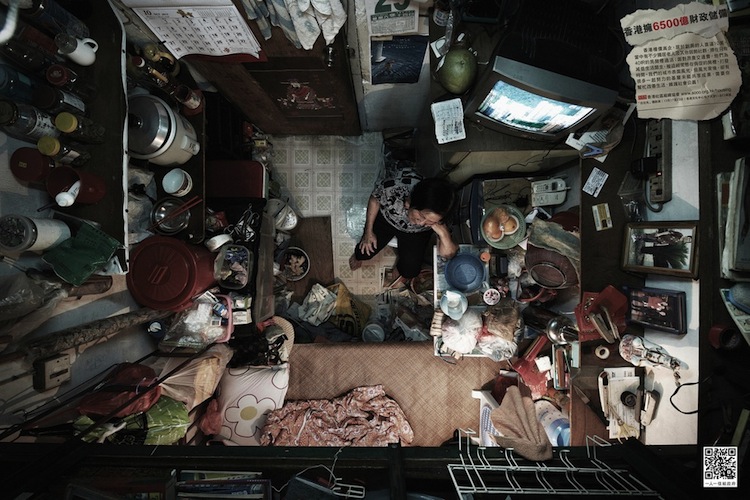
We’re big proponents of high-density urban living but there comes a point where small-footprint, efficient housing starts looking a whole lot like storage units for humans. Few places fit that bill like Hong Kong, which boasts the second highest density of any sub 1M person nation in the world.

Some pictures by photographer Benny Lam taken for the Society for Community Organization show the more unseemly side Hong Kong’s high density. The shots are part of a campaign meant to bring awareness to the shockingly cramped conditions many Hong Kong residents live in.

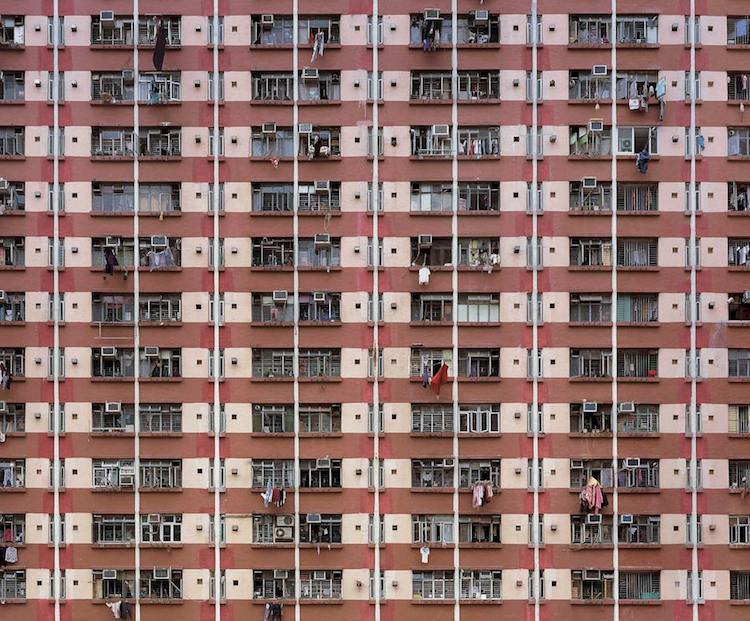
The shots bring to mind a series of photos from photographer Michael Wolf, who looked at many different facets of Hong Kong density–from squeezed interiors to seemingly unending high-rising apartment exteriors. Check out his website to see the full series.

We recently read an NRDC interview with our good friend and Treehugger managing editor Lloyd Alter, where he shared some of his thoughts on the limits of density. While there has been a recent battle-cry of “denser-is-better” that axiom can be a bit facile, as he explains:

Environmental writers and thinkers are piling on, all of them claiming that we need to fill our cities with 40 story buildings. A renowned architect can design a building that is essentially a pile of radiator fins but call it green because it packs 750 apartments on a third of an acre, saying that the most important thing we can do for the environment is live in compact cities with mass transit.

I am convinced that they are wrong, that there is a “goldilocks density” that is high enough to support a vibrant, walkable community, but not so high that you can’t walk up to your apartment when the power goes out, that needs expensive infrastructure like subways and huge underground parking garages. Dense enough to build a sense of community, but not so dense as to have everyone slip into anonymity.

We’re not intimate enough with Hong Kong to say whether their density is problematic (though a video we posted a while back seems to indicate that people in Hong Kong seem to think it’s a problem), but we can’t help think that these Hong Kong homes bear out Alter’s contention that greater density ain’t always so great.

Incidentally, Singapore is the both the densest and unhappiest nation in the world. While that’s far from proof that hyper-dense living causes unhappiness, anecdotally it might bolster the contention that maximizing density doesn’t maximize greater living.

Okay, It Is Possible to Have Too Little Space

We’ve looked at some pretty small spaces like Felice Cohen’s 90 sq ft NYC apartment or Japan’s wan rūmu manshons. But these places feel palatial compared to the 16 sq ft “King’s Cube”.

“King’s Cube” is a “luxury” Hong Kong apartment that features “western-style, wood-like flooring” and “space utilization [that] is as high as 100%.” Incredible!

The video is actually a parody made by MFA student Joe Yiu to bring light to Hong Kong’s criminally small living spaces. Hong Kong is one of the densest and most expensive cities in the world. In order to house its population cheaply, apartment buildings like the one shown in the video are divided and divided again until an apartment is nothing but a bed. And as bad as the “reference” apartment is, when the host reveals the real King’s Cube apartment–which is the same size but lacking a window or any decor aside from a few wire hangers–you realize it could get indescribably worse.

While we’re obviously advocates for small-space living, putting candles in a roach motel does not equal luxury. And while it’s possible to live in what is effectively a human cubby hole, it doesn’t mean it’s a good idea. Obviously, there are many political and economic considerations in places like Hong Kong that go beyond the scope of this post, but it raises the question how small is too small?

Via MNN