If You’re Going to Covet, Covet This

The term “keeping up with the Joneses” is rarely framed in a positive manner. It refers to a nasty form of one upmanship, where someone is always trying to have the bigger car, bigger house, newer clothes, etc, than someone else (i.e. the Joneses). But as we saw last year, the Australian ‘edutainment’ project “The New Joneses” flips this formula on its head. Their logic is that if you’re going to compare yourself to people, you should compare it to the right people–those who are living in forward-thinking, intelligent, responsible ways. Starting today and through the month, TNJ is doing just that with an exhibition set up in downtown Melbourne, Australia.

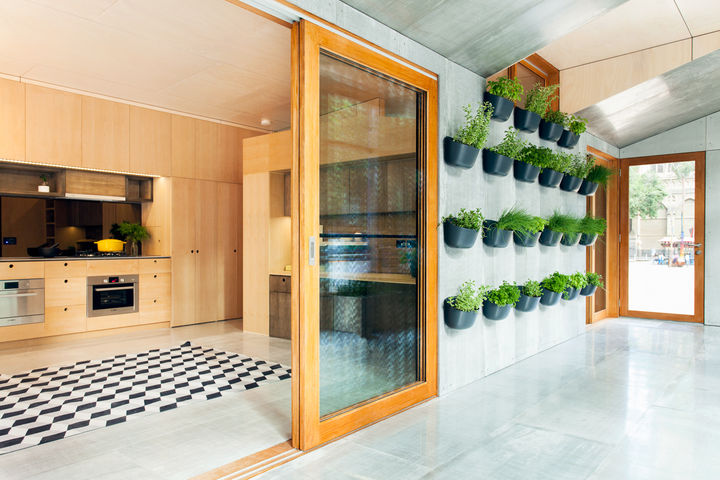
The centerpiece of TNJ exhibition is a 720 sq ft home by Ecoliv Buildings, a company that specializes in producing high efficiency, prefabricated, modular homes. The house is fully off-grid capable, with a solar array by Q Cells and solar microinverter battery storage by Enphase, providing power when the sun’s not shining. There are a host of other green features to the home inlcuding a solar hot water, rainwater tanks, LED downlights, electricity use metering, a greywater recycling system, ceiling fans, double glazed windows and low VOC materials.
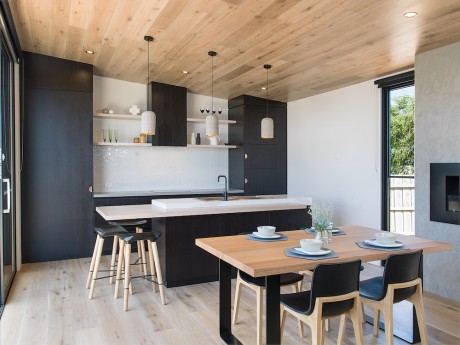
ecoliovf

Since living sustainably means more than having a tricked out house, TNJ exhibition covers various aspects of daily living, both hi and low tech: from an electric BMW i3 and smart home tech to free roaming chickens and composting bins.

Throughout February, various people will be staying at the home as a proof of concept and way to spread the word. There will also be parties, movies and workshops as well (visit their website for more information).

Several years ago, Harvard released a study on obesity that was conducted on 12k people over the span of 32 years. They found that people were 57% more likely to become obese when a friend became obese. Was obesity “passed on” like a cold? Not exactly. It got passed along culturally. The study’s lead Dr. Christakis told the NY Times, how it highlights “the importance of a spreading process, a kind of social contagion, that spreads through the [social] network.” In other words, our environmental influences–the people we interact with, the messages we receive–have a huge impact on our behavior for better or worse. If our friends exercise regularly or buy a McMansion, the odds increase that we will do these things as well. TNJ seems to get this, showing that if we are to create new paradigms for living, ones that ‘live it up, with less’ as they say, we need to saturate our environment with good examples of how to do it. Check it out yourself online or if you’re in Melbourne in person

Future and Past Experience Small Architectural Collision

I’ve long expressed my enthusiasm for clever renovations of old spaces. The fact is that even though new buildings might seem like the future, most of the architectural future was built in the last 150 years. In other words, many of the buildings we see today will be there tomorrow. So it makes sense to devote intellectual, material and financial resources toward incorporating future-based thinking into old spaces. The Darlinghurst Apartment in NSW Australia by Architect Brad Swartz is a nice example of such an allocation of resources. It takes a tiny, old space and injects it with a cutting edge design, making it ready for infinity and beyond.

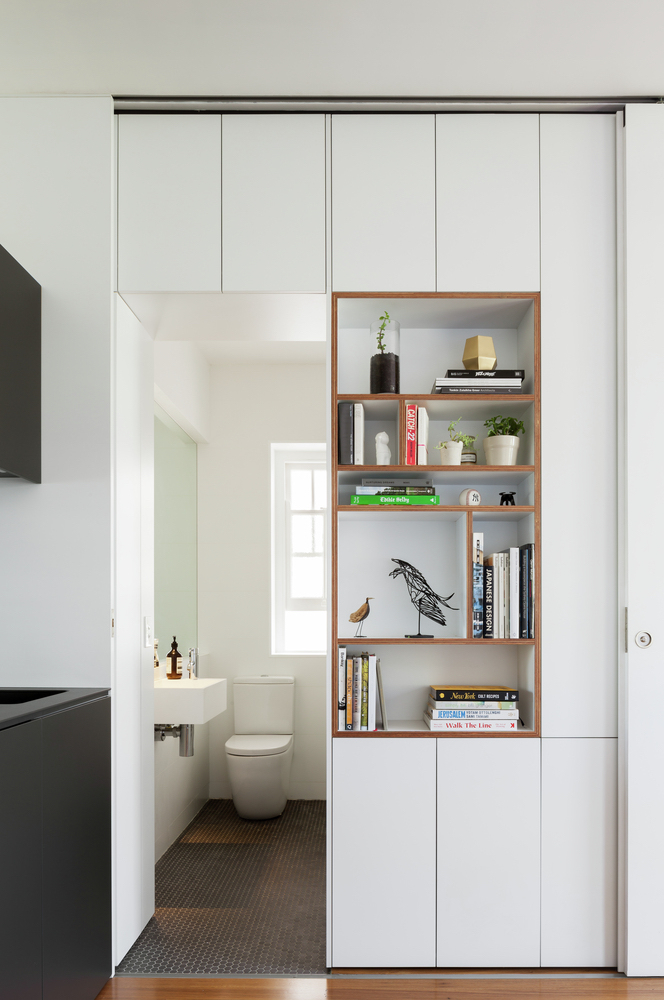
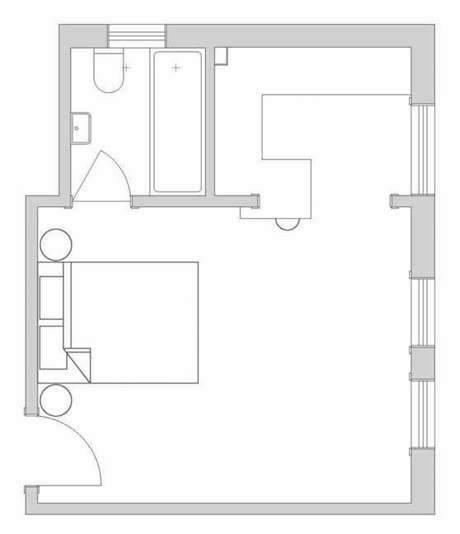
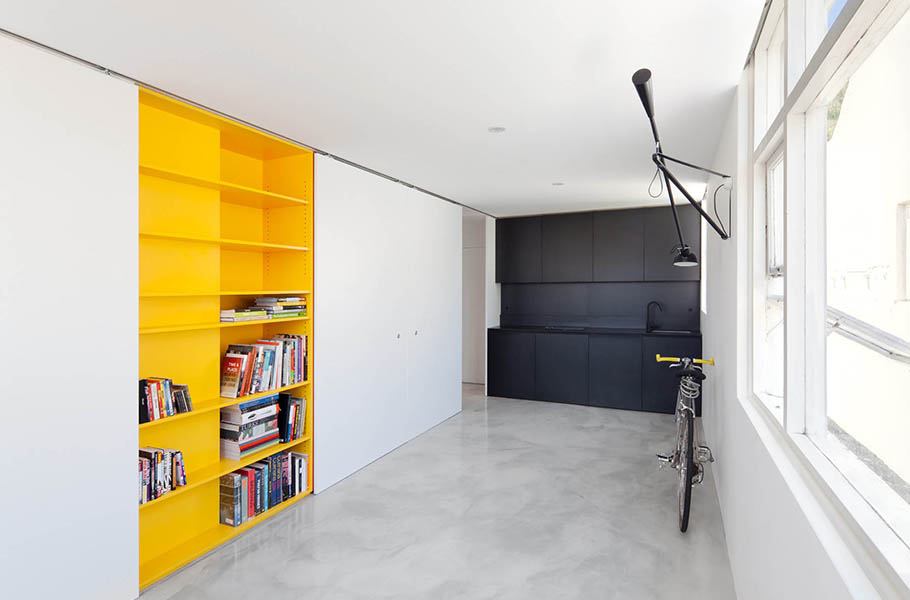
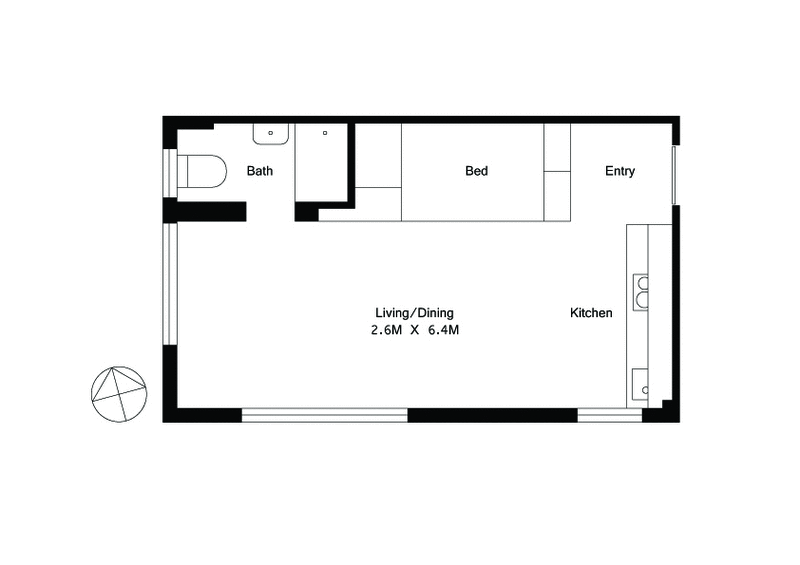
The 290 sq ft space was intended to be suitable for a single person or couple. The original layout had a bed in the main room and the kitchen in an adjoining nook. Swartz reversed these positions, placing the bed in the nook and leaving the main room open for a sofa, dining table and kitchenette. 

 darlinghurst-apartment-original-floorplan

darlinghurst-apartment-new-floorplan

Dividing the sleeping nook and main area is a bank of cabinets with sliding doors that either conceal the cabinetry or close up the bed and bath rooms. A door opens on the cabinets to reveal a small desk. 

The decor is a minimalist’s dream, with a sofa, table and a few stools being the only non-built in elements of the space. Though there are additional cabinets in the bedroom, the sum total storage is not hoarder-friendly. There is a wine cabinet, making it strangely oenophile-friendly.

See and read more on Archdaily

HT to Steve S.

Keeping Up with the New, Improved Joneses

Many, if not most, of our habits are influenced–if not outright dictated–by a desire to keep up with our peers. We choose the homes we do, we consume the stuff we do, we have the careers we do and make many other choices in response to how others in our worlds are living. This is the underlying notion behind the expression “keeping up with the Joneses.” If Mr Jones gets a new luxury sedan, we are far more likely to try and keep up–or one-up–his purchase with our own sedan. But what if the Joneses were folks who used a meager amounts of energy? What if they lived in modest, super-efficient homes and used few newly-made products? What if the Joneses were exemplars of responsible, sensible and sustainable living? That’s exactly what The New Joneses project is about.

TNJ is essentially a showcase of ideas of how people can reduce their consumption and live more sustainably. The centerpieces of the project are mockup homes set up in public spaces in Melbourne, Australia. There have been three demo homes in the last few years, used for press ops, promoting various non and for profit companies to showcase their services and stuff.

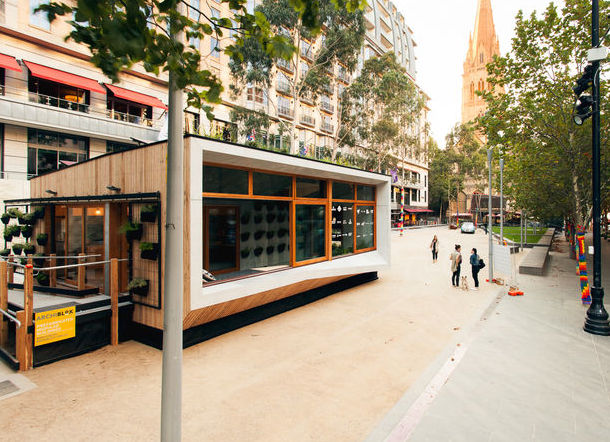
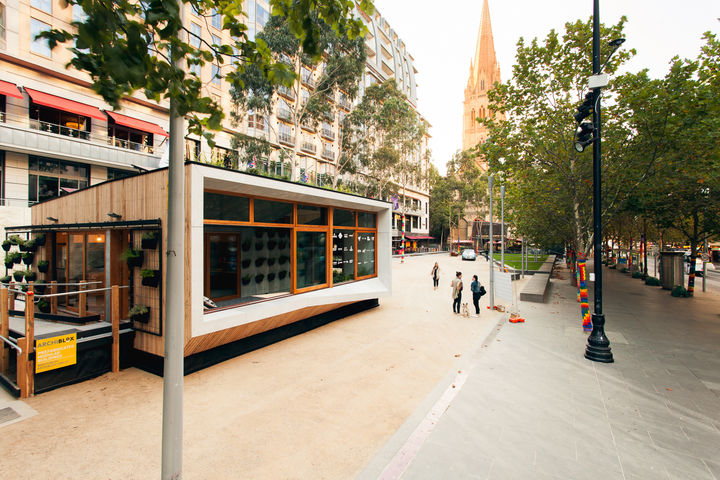
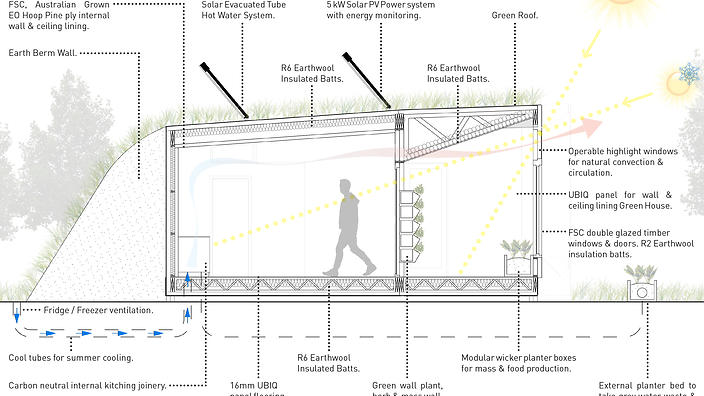
Their latest demo house is quite badass. It was designed by Archiblox Architecture. It has prefab construction and is “carbon positive,” meaning it produces more energy than it needs to run. Through the use of passive solar design, grey water and water catchment systems, PV power, green walls and roof and many other energy-saving features, the house is extremely energy efficient. According to Archiblox, over its lifespan, the building will emit 1,016 (tCO2e) tons less greenhouse gases than a standard home of similar size and function–the equivalent to taking 267 cars off the road, or planting more than 6,095 native trees.

At 828 sq ft, it’s not all that compact, particularly considering it’s a one-bedroom, but it’s not crazy large either, considering Australia boasts the largest average-sized home in the world. The layout is probably also designed to help large groups of people move through the space.

I think the best part of the project is its name. It’s a perfectly natural human tendency to want the things our peers have. But that tendency can be easily co-opted by the interests of entities–be they the interests of real estate developers peddling McMansions or some retailer selling a bunch of crap you don’t need–in ways that neither promote health nor happiness. In other words, if keeping up with the Joneses is a fairly intrinsic human behavior, we might as well choose Joneses that have our, and the planet’s, best interests in mind.

If you’re in Australia, the demo house will be on display in Melbourne’s City Square through Feb 15. Check the TNJ website for more info.

How to Make a One Bedroom Apartment Work for a Family

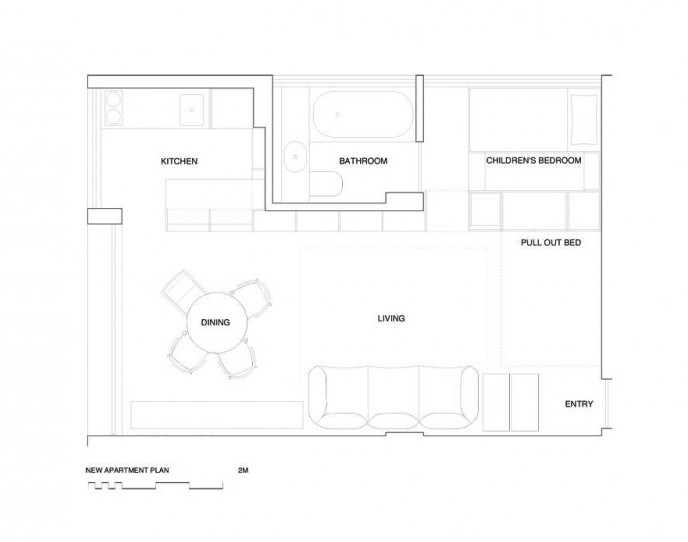
Most parents rise before their kids and go to sleep after them (on good days, that is). When this is the case and size is at a premium, making a living room that doubles as a parent’s bedroom can make a ton of sense, eliminating the need for an extra bedroom without much sacrifice in privacy. Such was the choice Australian architect Anthony Gill made when renovating his 410 sq ft (38 sq m) one bedroom apartment in order to make it more accommodating for his young daughter.

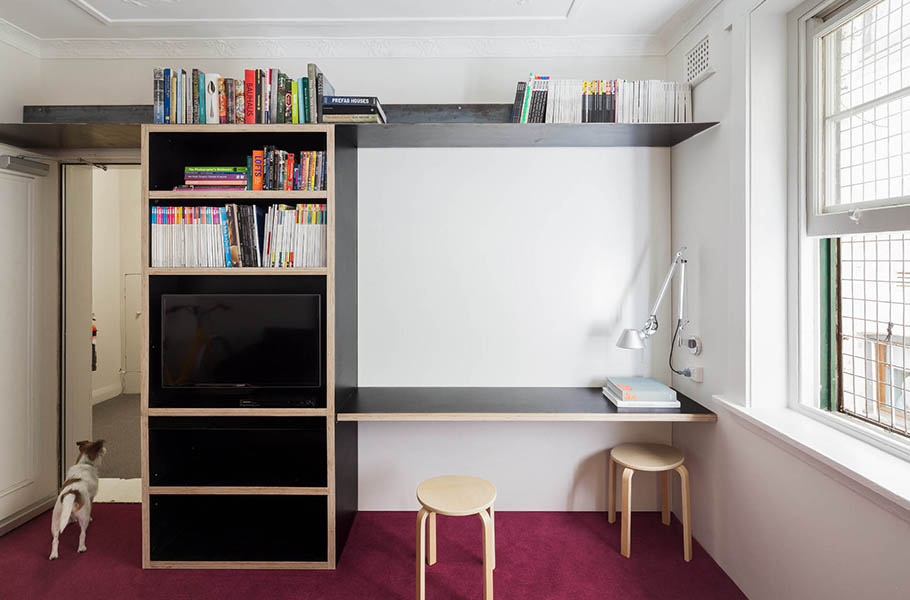
The apartment’s previous layout included a normal sized bedroom. In his renovation, Gill significantly shrunk that bedroom, which would be given to his daughter, and enlarged the living room, which would double as the parent’s room.

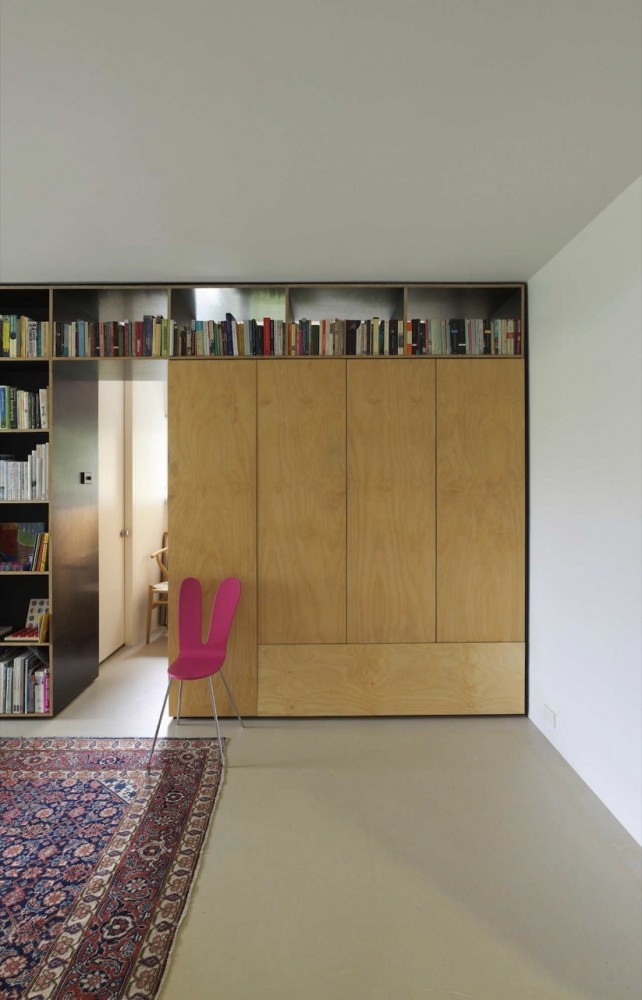
The parents use a trundle bed nestled in plywood cabinetry. Trundle beds are somewhat rare–excepting the occasional daybed–because they require a large recess where the bed stows away; this is opposed to a wall (Murphy) bed, which fits against most any wall. We think Gill’s choice of sacrificing a couple feet of his daughter’s overall floor-to-ceiling height a good one. After all, kids are small. What might seems like a short-ceiling to an adult, might be cavernous to a kid.

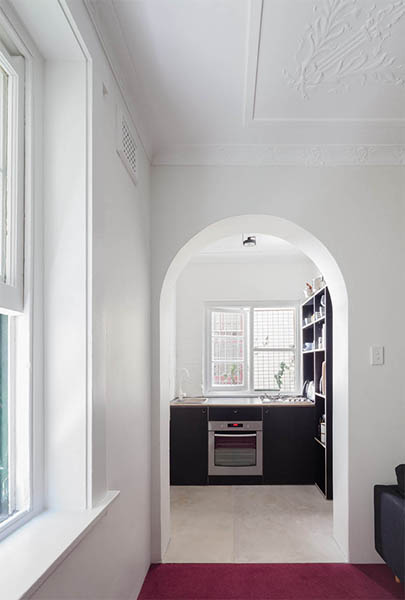
Budget was of great importance in the renovation. The kitchen and bathroom remained in their original locations, obviating the need for expensive plumbing reorientation. And materials were selected for their thrift as well. Gill wrote in ArchDaily that “The shelves and kitchen are constructed from form-ply (low grade pre-finished plywood used for concrete formwork) and the wardrobe/bed block is hoop pine plywood with a beeswax finish.” The open shelves provide a ton of storage and a nice, lived-in quality to the otherwise sparse space.

We’re not exactly sure how Gill’s daughter will fare in her little sleeping area as she gets older, but the needs of a family with a young, small child are very different than those of one with an adolescent. In other words, I’m sure Gill and his wife will cross that size bridge when they get there in five or so years. In the meantime, their apartment looks highly functional, clean and affordable–things that make families work just as much (or more) than tons of room for everyone.

Via Remodelista and ArchDaily

Small Space Wizard of Oz

Australia isn’t exactly a haven of small space living. In fact, they’re the only country with homes larger than the US. But with increasingly high property values and a population consolidating in the cities, that might be changing. And when it does, Australian designer Nicholas Gurney will be ready. Gurney has made a couple apartments designed specifically for small, single living in the city.

Gurney’s website is as minimal as his Sydney apartments, so we don’t have a ton of information about his design philosophy. His multicolored unit, called “The Studio,” got a high commendation for the Australian Interior Design Awards. A description of the 27 sq m (290 sq ft) apartment says it “offers a proposal for future high-density urban living for one person families; the fastest growing demographic.” As of 2006, Australia has an average household size of 2.3–lower than the US and Europe–so building small will be a big deal in the coming years if they don’t want to experience massive sprawl.

We would also deduce from the pictures that he is interested in doing retrofits of older spaces, using fairly inexpensive materials (though “The Studio” sold for AUS$406K or US$366K, which seems like a hefty sum). He’s all about hiding stuff when not in use and built-in storage. He’s not that fond of freestanding furniture.

The designs might strike some as overly austere, though we’d argue that the main way to keep small spaces feeling open and spacious is to remove as much visual noise as possible from the space–something Gurney seems expert at. We think he did a great job.

Via Shoeboxliving