Amazing Single-Serving Dishwasher

It’s bad enough that your parents keep urging you to meet a nice girl/guy. You shouldn’t have to take grief from your appliances as well–that huge, perpetually under-filled dishwasher reminding you of your parents’ petitions. No longer.

The Instant Dishwasher by Robert Lange and Bosch honor your singleness. The experimental, space-saving design provides enough room to clean a couple place-settings, which for most bachelors/bachelorettes (or couples who don’t cook a lot) is all that’s needed on a daily basis.
Via Yanko Design.

Fat Pad!!! How Much Does it Weigh?

The American citizen is not the only victim of an obesity epidemic. Since 1950, the American home has more than doubled in size, even though the number of people living in them has shrunk! And we’re packing these houses to the rafters, a fact made clear a $22B personal storage industry that stores all we can’t fit at home.

In 1927, visionary Buckminster Fuller asked the question, “How much does your house weigh?” He was defending his prefab Dymaxion House against his critics–probably the same folks who would one day bring us the McMansion. His house weighed an amazing 3.75 lbs/sq ft, which made the 1600 sq ft home only 3 tons; compare that to the approximately 60 lbs/sq ft for most homes. At ~2K sq ft, the average American home weighs around 60 tons–20 times heavier than the Dymaxion!

Even though it incorporated airplane manufacturing techniques, Bucky’s super-efficient, super-light home never took flight. But we might think about Bucky’s question again. What if we put our existence–homes, possessions, vehicles–on a scale? Would we be bathing beauties or porkers?

Do you want a better life, more money and a cleaner environment? If so, imagine your life in terms of its weight. In general, compact, lightweight homes use less energy to maintain and heat; lighter cars use less fuel; fewer possessions weigh less, cost less and use up less physical and mental space.

Take Your Neighbor’s Stuff Without Getting Arrested

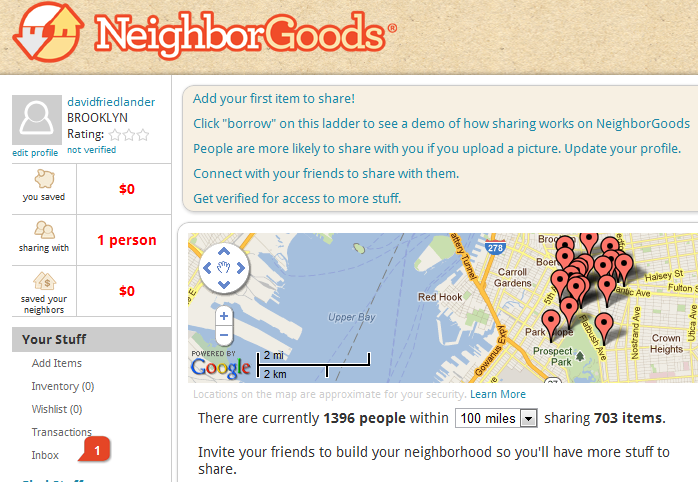
screenshot via neighborgoods

Long ago people didn’t have a lot of personal possessions. Not everyone had their own power-drill, cookie pans or tripod. And because the nearest Target was 30 years away, rather than not assembling that desk, eating raw cookie dough or shooting blurry shots, people used the only store around: their neighbors.

Well those days might be upon us again…but better. Rather than bugging your neighbors, services like NeighborgoodsSnapgoods and Share Some Sugarconnect you online with people in your area who have the stuff you need. Neighborgoods is free and has a pretty deep inventory of stuff (for our Brooklyn-based author at least); I found a Wii, a glue gun and a cat carrier–all things that might come in handy once in a while, but hardly necessary all the time. Share Some Sugar charges a nominal rental fee for household items, while Snapgoods focuses on high-tech gear; e.g. I found a CAD M179 Large Diaphragm Studio Condenser Microphone with Shockmount (Continuously variable pickup pattern!). I have no idea what that is or does, but am sure $9/day is a good deal.

We live in an age of abundant and cheap consumer goods. So much so that we end up buying stuff we don’t really need. But as Dave Bruno put it,”Stuff is not passive. Stuff wants your time, attention, allegiance. But you know it as well as I do, life is more important than the things we accumulate.” With aforementioned sharing systems, you can have the stuff you need, but only when you need it, allowing us to focus on other, more important stuff.

How Much Space Do We Really Need?

When my parents were kids, their parents slept in the dining room. These were not poor people. They just figured the dining room was so seldom used, why not put it to use?

Fast forward 60 years and for many Americans it’s unimaginable for parents to be without their own room (or in many cases, a child). Suburban sprawl and cheap construction has changed our view of what constitutes an acceptable amount of square footage. The above figure shows the average new home size in the US near its peak in 2006, as well as sizes for several other modernized countries. Keep in mind that these other countries aren’t slumming it; many (if not most) of them are believed to have higher standard of living standards than the US. It’s clear that the space we need is as much cultural as functional.

What if we started fresh and looked at what we actually need from our homes? We would probably end up with much smaller homes, which have the advantage of being less expensive, consuming less energy and being easier to upkeep. Also, by incorporating smart architectural and product design, we can pack amazing utility in small footprints. See this gorgeous 620 sq ft apartment that houses a family of 4 for a perfect example of this new/old way of living (via Dwell).

5 Shopping Tips for Buying Less Stuff

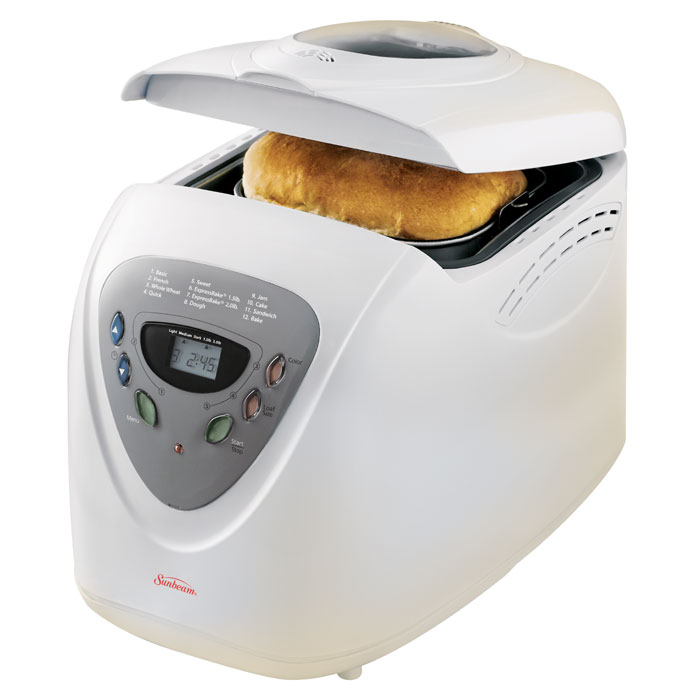
Bread Machine

The world seems determined to sell us more stuff. If buying were the end of the story, that would be OK. But it’s just the beginning. Besides buying stuff, you must store it, charge it, clean it and look at it before ultimately tossing it. We’ve come up with 5 simple actions for combating stuff-a-holism:

  1. Use what you got. Specialty items are the enemy of the edited life. Bread-makers, tie-racks, Snuggies–you probably can handle the task with something you already have.
  2. Take care of what you got. Most of us only get 1/3 of our stuff’s actual life-cycle because of neglect. Fix, mend, patch, oil, repair, clean and generally respect your stuff. The earth and your pocketbook will thank you.
  3. Don’t be lured by the latest model. Yes, the new version with the angular corners is much cooler than the older one with the rounded ones. But be honest: do you really need the utility of the new version? Probably not.
  4. THINK before you buy. Unless you are buying a tourniquet, it’s unlikely you need to buy stuff immediately. Waiting a day or two generally quells the urge to buy stuff you might not need.
  5. Buy better. If you must buy stuff, make your stuff great, well-designed and repairable. And don’t be penny wise and pound foolish. As LifeEdited founder Graham Hill put it, “Stuff that costs twice as much, but lasts 4 times longer, is half-priced.”

Do-It-All Clothing Cuts Clutter

Is your closet teeming with single-purpose clothing? You got wool slacks for fancy, jeans for chilling and sweatpants for, um, sweating. Before you know it, you have a ton of barely-used clothes maxing out both closet and credit card.

What if there were clothes that looked and fit great and were ready for whatever you were up to? These pants from Outlier Tailored Performance are a great example of such a beast (available for boys and girls). Their tailored cut makes them suitable for formal affairs, while their technical fabric make them great for riding your bike, climbing and other activities that shouldn’t be done in pants this styling. They also feature a self-cleaning NanoSphere treatment, which makes them impervious to spilt coffee and slightly-too-long intervals between washings.

We’ve been wearing them for a couple years and they look like new despite their many travels through boardrooms and countless miles logged on our bikes. They show that a few sophisticated, well-made, multi-functional items can save money and replace piles of single-purpose, closet fodder.

Space and Energy Saving Kitchen Shelves

Dish Drying Closet Design

Design is a plan for arranging elements in such a way as best to accomplish a particular purpose. –Charles Eames

This cabinet with drying-rack shelves eliminates that awkward, space-hogging standalone rack that never quite fits in the sink or the counter. Clean dishes go directly from sink to storage versus sink to drying-rack to storage, reducing labor and arguments about whose turn it is to put away the dishes. It also proves that smart design is not rocket science. It’s a willingness to examine the way things are done and see if they can be done better (via Dornob).