Test Drive Tiny Living at this Tiny House Hotel

For all the hype around tiny houses, far more people talk and read about them than live in them. We suspect if people were given the opportunity to live in one for a while, they might take the tiny plunge…or put a down payment on a McMansion. WeeCasa is a hotel that gives you that opportunity, offering up one of 10 tiny house “hotel rooms” that let you experience tiny house living firsthand.

Weecasa is located in Lyons, Colorado, a small town an hour north of Denver in the foothills of the Front Range. Unlike Caravan Tiny House Hotel in downtown Portland, which has been around for a few years, Weecasa has a more pastoral vibe. The tiny houses are nestled into the trees and sit next to the St Vrain River. Lyons has a ton of things to do such as festivals, outdoor activities and is a quick, albeit uphill, drive to Rocky Mountain National Park.

weecasa-interior

The houses are built by a number of different tiny house manufacturers, and only one exceeds 200 sq ft. They are quite handsome and outfitted like tiny houses you could live in, replete with kitchenettes and bathrooms. In fact, WeeCasa is as much showroom as hotel. If you like the one you stay in–or perhaps a neighbor’s model–WeeCasa will help you buy one, or one just like it. 

Rooms run start at $139/night. Visit their website for more information. 

Via 5280 Magazine

Startup Offers Apartments with Transcontinental Lease

As more people ditch their offices and fixed addresses in favor of a laptop and strong wifi signal, nomadic living is having a strong resurgence (from Paleolithic times we suppose). With this growing class, the creation of housing specifically for them makes a lot of sense. There are hotels like Zoku that appeal to the nomad set, but at around €125/night for one of their lofts, the prices, while not crazy might be steep for some. Also, if you fully embrace nomadicity, you’re going to want to have more than one address (right now there’s only one in Amsterdam). This relatively affordable, flexible, transcontinental living is what Roam is all about. For one monthly rent payment, you can get a room in one of their five locations around the world.

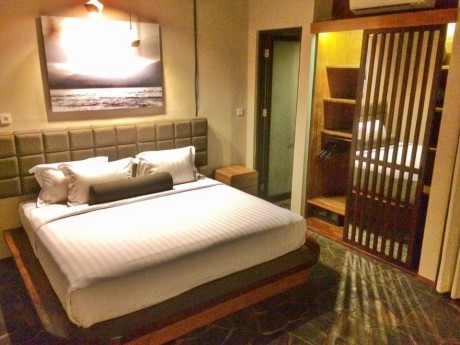
Roam charges $425 per week or $1,600 per month to access one of their co-living spaces. Right now, only location in Bali is up and running, but locations in Miami, Madrid, Buenos Aires and London are opening in the next three months. From what we can see, their furnished rooms are quite handsome and have slick communal spaces to meet fellow nomads. Of course super strong wifi signals are set up at each space.

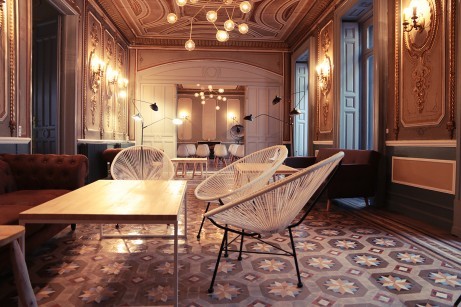
roam-communalroam-room

Roam might sound a little like a hostel, but the rooms they show are decidedly more upscale. We also imagine it’d create more continuity as you might run into your “roommates” across the various locations. Roam seems like the perfect complement to experience-hungry, globalized, remote-working nomadic living.

Zoku: The Home for Nomads

With the advent of high speed information technology, facilitating near-instantaneous communications and transfers of information from any spot on the globe, a new breed of global citizen has emerged. Often dubbed the technomad, this person travels light and often, living and working wherever there is a solid wifi signal. The new long-stay hotel Zoku is trying to provide a home for this population. Opening this fall in Amsterdam, Zoku is trying to be more than a temporary place to stay–it’s trying to be a home, an office, a complete living environment for the “location-independent” worker.

ZOKU Loft GIF

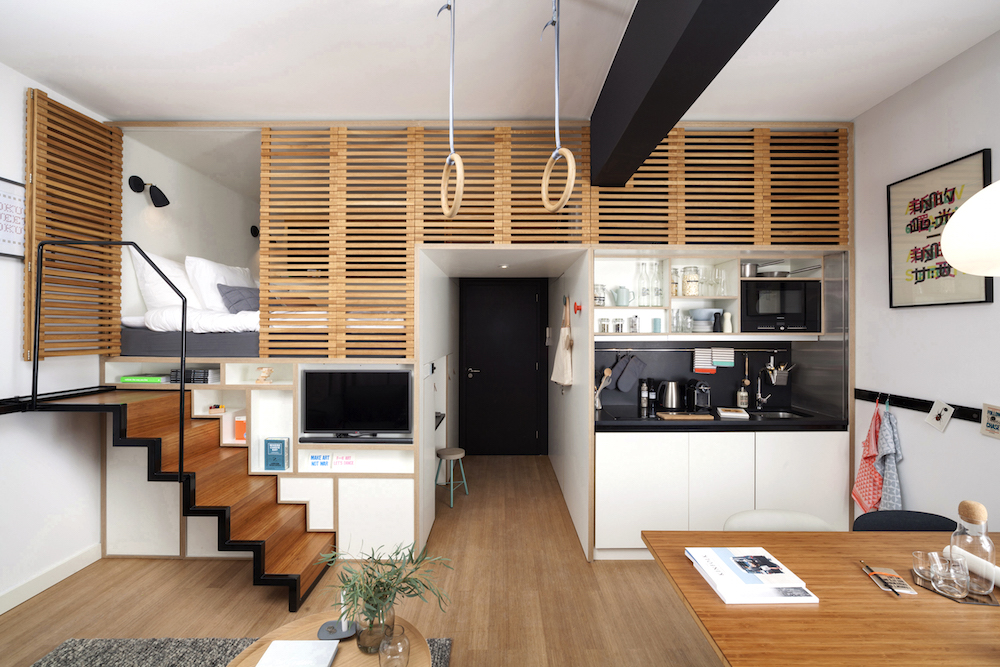
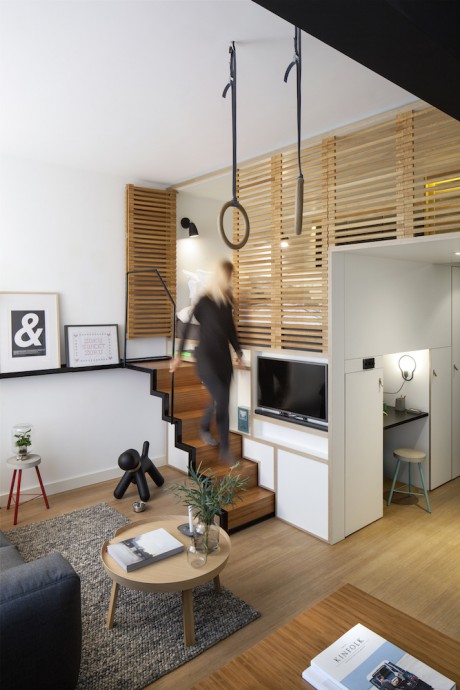
Zoku will have several levels of rooms starting with the basic Zoku bunk and Zoku room. However, their centerpiece is the Zoku loft (it’s also the only room they are offering pictures of at the moment). The loft is a full service apartment with elevated sleeping area, dining/conference table, kitchenette, lounge, enclave desk and a host of clever space saving features like retracting storage and stairs. With the loft, Zoku wants to shift the focus from the bed. Rather than mere place to sleep, the loft is a place to live. As such, the four-person table and sitting area–not the bed which is tucked out of the way–become the focal points of the room.

02 ZK1 overview03 ZK1 overview

Rooms have a la carte services like access to a guest pantry, an “office toolbox” with a printer and other office-y stuff, an “art swapping” service that allows you to change out art to customize your room for your stay, laundry and much more.

zoku-lounge

Amenity spaces include a co-working space, meeting rooms, a bar, a 24 hour (almost) everything shop, gym, decompression room, game room and more. In fact, the amenity spaces look so inviting, I would probably hang out there most of the time and choose a more basic room.

Exact pricing has not been announced just yet, but a representative said rooms will be in the three to four star range, with longer stays enjoying a volume discount. Zoku will start booking in July, and the company says they plan to expand into other cities in the near future. Check out more on livezoku.com.

Dutch Hotel Bares All

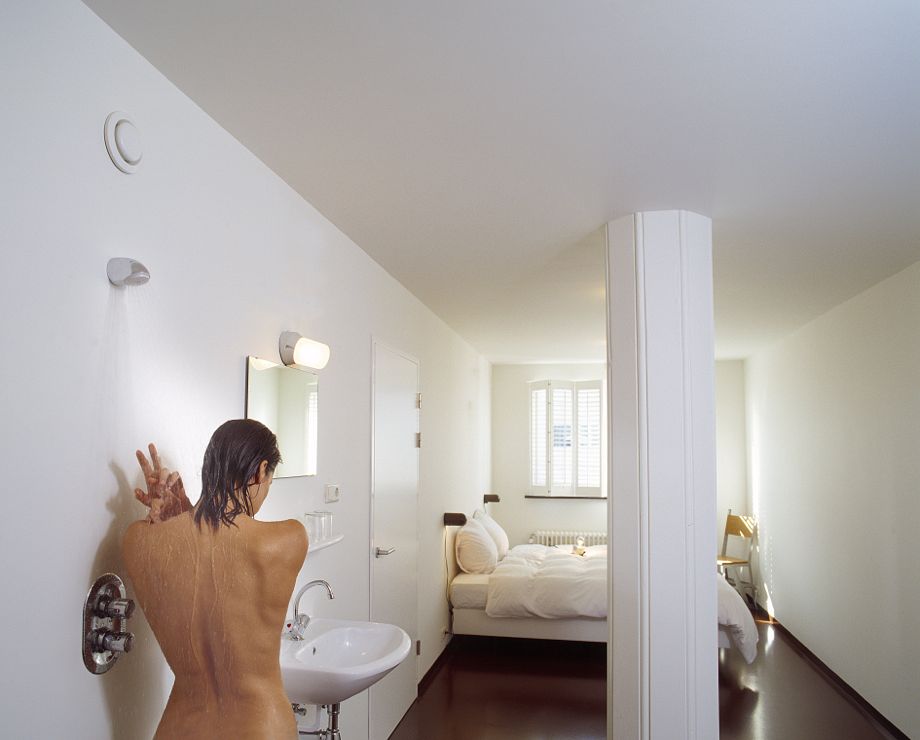
There are many rooms that are worthy of being on the cutting-room-floor of architectural orthodoxy: the formal dining room, the foyer and some might even argue the bedroom. But the bathroom? The Lloyd Hotel of Amsterdam seems to think so. Some of their room’s bath, um, “zones” break down those fascist, water-repellant borders separating sleep and suds.

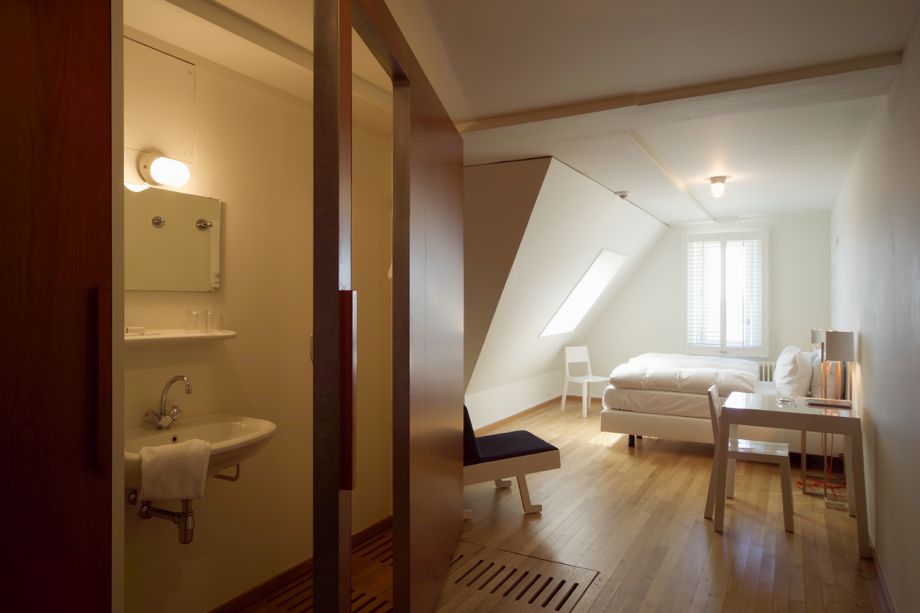
Granted, the Lloyd is a hotel, a place where the penalties of failed experiments in architecture are negligible (or easy to endure for a few days). Also, there is a modicum of privacy with some of the designs such as the pivoting bathroom divider, whose door separates the shower from the rest of the room. Others, like the open plan bathroom (pictured at top) leave nothing to the imagination, and it would seem to have the spray protection of a front row seat at a Gallagher show (squeegees are included with the room).

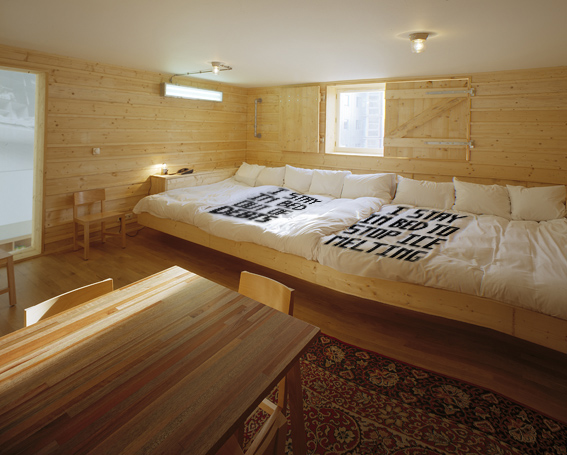
It also should be noted that the Lloyd is a haven of unconventional temporary accommodation. With some rooms featuring things like side-by-side queen beds (ready for your Eyes Wide Shut parties), it should be no surprise that your room might have a shower in the middle of the room.

Via Slate

Only One Pea to this Pod Hotel

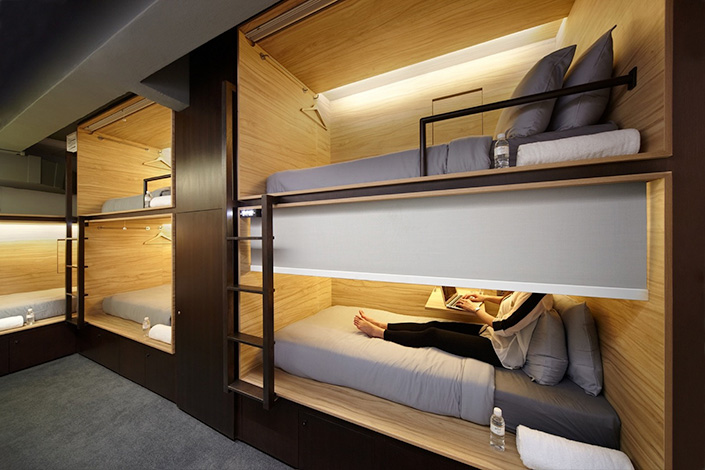
Nothing will hide the fact that the “rooms” at Singapore’s new The Pod hotel are not presidential suites at the Ritz Carlton, but they do demonstrate how design and amenities go a long way toward making tiny spaces feel inviting.

The hotel, designed by Formwerkz Architecture (the firm’s founder also started The Pod) has 83 beds, which occupy the top three floors of a five story building in central Singapore–the densest country in the world. The hotel’s website touts its proximity to great shopping, though we’re unsure where you’d store your wares.

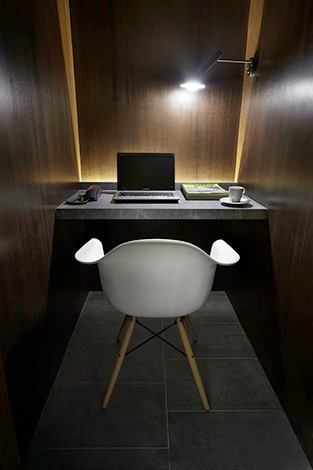
There are front and side access single pods as well as queen pods; the pods are also available as male and female only. Each pod has sateen bedding, towels, a hanging rack and its own storage cubby. Other features of the hotel include free laundry, breakfast, wifi, private bathrooms and a “business center” (which look like wood-clad toilet stalls with desks).

The idea behind The Pod was to combine the high design of a boutique hotel and the affordability of a hostel. Rates start at US $45 for a low season single to $85 for high season queen–prices that, upon quick inspection, are about twice as much as a hostel bed, but 30-50% less than a private hotel room.

The idea and the execution are quite nice. As a frequenter of many hostels in my youth, the biggest question I have is “what about the snorers?” With a rolling shade acting as the main barrier for each pod, we imagine there is little audio separation from other guests. Other than that, we applaud The Pod’s efforts at making stylish, affordable, minimal accommodations in a fairly expensive city.

Visit The Pod’s website for more info.

Take a Tiny House Vacation

You’re not a true minimalist if you don’t have a tiny house fantasy. You have it all mapped out: You’ll quit your job. Next, you’ll get rid of your current home and all your possessions except a spoon, pocket knife and a pair of convertible shorts. You’ll build your own tiny house out of scrap materials, except for that  top-of-the-line composting toilet you’ve been lusting after. You’ll set up on some kindly benefactor’s unused land. You’ll raise chickens and your own produce. You’ll make the paltry sum of money you need to survive by fishing out pennies at local fountains.

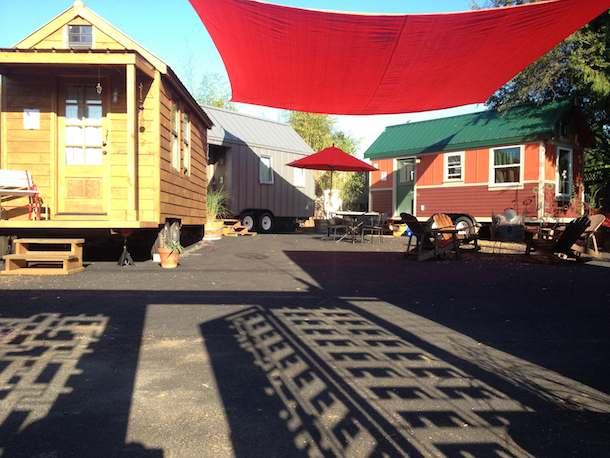
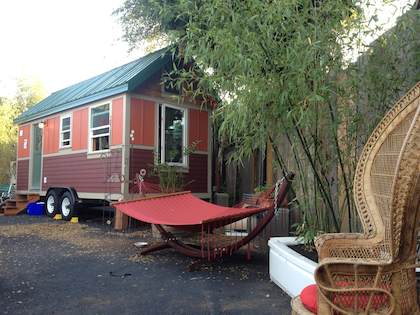
If this is your fantasy, a new hotel called Caravan in downtown Portland, OR (where else?) is giving you the opportunity to test-ride tiny house living before selling your home and kids. All of its three “rooms” are actually 100-200 sq ft tiny houses.

The rooms are not off-grid; they are outfitted with municipal electric and sewer service. And the short stay and concrete lot are not chicken-hatching or produce-raising friendly. And it’s a bit too steep to pay for with scavenged pennies: Nightly rates are $125/night, which includes your tiny house, cooking equipment, bedding and ear plugs (they warn that their central location can be noisy until 2am).

caravan-tiny-house-hammock

Two of the houses are big enough to fit 2-4 people and the other 1-2. There is a big courtyard at the center of the Caravan complex for chilling out and the occasional performance.

Like the rentable Airbnb tiny houses we looked at a while ago, Caravan gives you a low-commitment opportunity to affirm or squash your tiny house fantasy.

Find more info at Caravan’s website.

Airport Sleeping Pods Taking Over the World

You have long layover or delayed flight. You’re super spent and want to sleep. You:

  1. Knock your head back, causing drool to run down your face and irreparable neck damage.
  2. Take a nap on the floor–the same floor trodden by thousands of dirty soles, from thousands of lands.
  3. If there is no raised arm rest, you stretch out on some heavily canted airport seats, simultaneously getting marginal sleep and ensuring the growth of the chiropractic industry.

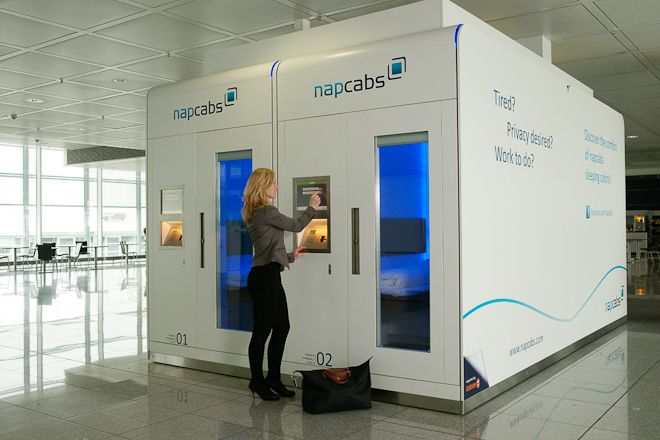
A few upstarts from around the world are tackling this issue of airport sleep deprivation with small sleeping cubes. While they haven’t exactly taken over the world (the 3 here are only in one airport each), they offer minimal sleeping quarters for the beleaguered traveler.

Napcabs (pictured above) is a German-based company with one outlet in the Munich airport (it had 2, but one is being serviced). It features a bed, soundproof walls, wifi, a multimedia screen with flight information and “anti-jetlag” lighting. Bedding is changed by an on-call cleaning staff.

At anywhere from 10-15€/hour, with a minimum 30€ charge, it’s not cheap, though consider if you’re flying overnight, this is a fraction of a hotel room’s cost.

Sleepbox is in the Moscow airport and has very similar features as Napcabs. The one edge Sleepbox has is that it features 2 beds, not 1. According to Wikipedia, they charge $15USD/hour.

Wikipedia also said there are concerns about bed-bugs. Unlike Napcabs, Sleepbox does not explicitly say how linens are dealt with. I am hardly a germophobe, but this seems like a major oversight. A post in Treehugger.com indicates that they originally wanted to use an automated linen changing system, but instead opted for traditional linen. We imagine/hope they have some sanitary setup.

Sleepbox is smartly trying to position itself as a space maximizer for hostels. While airports are a great application, I could imagine these units as replacements for real hotels and hostels, particularly for people who just need a place to sleep.

Snoozecube has 10 sleeping cubes set up in the Dubai airport. The company is from New Zealand, evidenced by the big fern leaf, similar to that of the All Black Rubgy team, emblazoned on their cubes and bedding. Like the others, they cost $16USD, are soundproof, offer wifi and connections to flight info. Their look is not quite as posh as the other 2, but the fact that they are clustered together in Dubai makes them like a makeshift hotel, which seems to make sense as you can have a standing staff and some isolation from the rest of the airport (something I think would be nice even if the cubes are soundproof).

High priced, hourly sleep cubes in airports might not be everyone’s bag. But similar to the Japanese sleeping pods we looked at a while back, these firms are showing an alternative to hotel rooms that feature more–and cost more–than most travelers would prefer.

Have you ever used any of these, or similar, sleeping boxes? What was your experience? We’d love to hear from you.

Kyoto Hotel Offers Travelers Posh Pods

Japan always seems to be one step ahead of the rest of the world in space-saving living. Case in point is a capsule hotel in Kyoto called 9 Hours. The name is based on the idea of 1 hr to shower, 7 hrs to sleep and 1 hr to rest.

While capsule hotels have been around for a while in Japan, they have been more focused on function than form. 9 Hours’ super sleek interior and ample amenities give a luxury feel to what is essentially sleeping in a cubby.

The developers express that they are not interested in replacing full-size hotels–merely providing an alternative for people who may literally need a place to sleep and nothing more.

The video asks if the US and Europe are ready for this style of hotel. We suspect it’ll come down to cost. If a space is 20% the size and 20-30% the cost of a standard hotel room, it will create a compelling argument for booking a pod. Ultra-sleek environs like 9 Hours will make the decision to go with a capsule easier as well.

What do you think? Have you stayed in a capsule hotel? What was your experience. Would you? If not, why not?

via Monocle