Connect with Neighbors On and Offline with Front Porch Forums

According to the US Census Bureau, the average American moves 11.7 times in his or her lifetime. As the average life expectancy of that same citizen is 78.2 years, most Americans will move every 6.68 years.

It is perhaps this peripatetic lifestyle and an ever-accelerating pace of life that leads many of us to live those 7 or so years without getting to know our neighbors. We don’t know their names and we don’t rely on them–i.e. the original collaborative consumption.

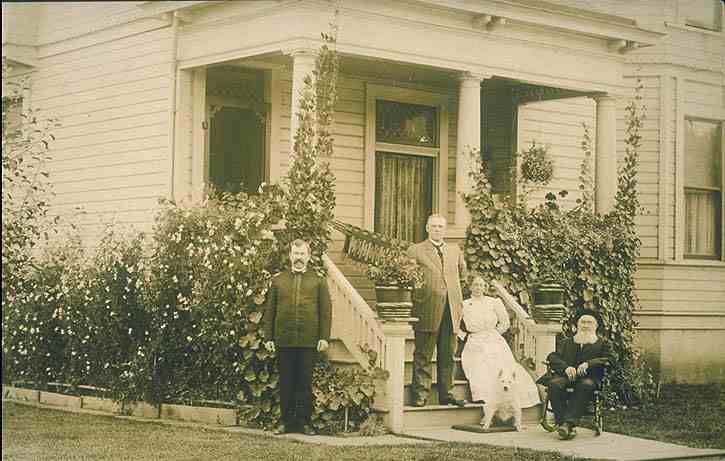
A website called Front Porch Forum is making getting to know your neighbors just a little easier. The site is like the front porch or town square where people voice their needs, opinions, services–pretty much anything. Your particular forum is determined by your street address and unlike a community site like Craigslist, it is not anonymous. There are real names of real people who live really near you. Unlike Yahoo or Google Groups, you don’t need any special interests–just an address.

One of the site’s FAQ’s is “Has it really come to this? Using computers to talk to people next door?” The answer, they believe, is yes. Here’s what they claim:

In one rural town, we found that half the community had subscribed to FPF after one year and, remarkably, 66 percent had posted….In another study in Burlington, Vt., where half of the city subscribes to FPF, 90 percent reported that their local civic engagement had increased due to this online service.

Their site includes a sample of posts–things like “Found watch – yours?” and “Audubon summer day camp scholarships available.” The kind of casual stuff you’d chat with a neighbor about. Though we cannot attest to it personally, we imagine this online interaction would serve as a catalyst for face-to-face communication.

The site’s newsletter are sponsored with ads. If you’re an idealist, this might strike you as a corrupting force. If you’re a capitalist, this might strike you as practical. The fact is sites like these take time and money; they can either be beholden to volunteers, donors or corporate sponsors.

There is one serious rub to FPF: it is almost exclusively in Vermont (there are couple communities in NY and NH). They are actively looking to expand, but right now that is not the case.

If you are interested in creating a FPF in your area, drop them a line. If you have used FPF, we’d love to hear your experience.

image credit: portlandoregon.gov
RelayRides: Like an Automotive Airbnb

We’re big fans of Zipcar and similar services. They allow people who don’t need a car full time to have on-demand access to cars when they need them, for as much or as little time as necessary.

A site called RelayRides is trying to get in on that action. Rather than dealing with a corporation however, RelayRides allows peer-to-peer car rentals–sorta like an Airbnb for the automotive world. RelayRides takes people’s slumbering cars and puts them to work as well as making some cash for the owners.

Car owners set their cars price and availability and renters book the cars online. Owners review the request before their car is booked. Protection comes in the form a $1M insurance policy for both owners and renters; 24 roadside assistance comes with the package. Riders are screened to make sure Thelma and Louise don’t rent your convertible.

In terms of money, owners get 60% of the reservation fee. Yep, that’s right–40% go to RelayRide (a hot topic on their comment board). Cars seem to rent for around $7-50/hr, with majority for around $15. Renters cover gas charges.

We wish RelayRides the best, but wonder about their value proposition. Their prices are higher than Zipcar whose prices start at $9/hr in NYC (lower in other regions); oh yeah, this includes gas. RelayRides reservations are not instantaneous and in some cases both parties have to arrange a key exchange (“select” cars can be opened with a cellphone). Zipcar members have a card that allows them to open the door for any reserved car. To be fair, there is a yearly registration fee for Zipcar ($60 in NYC).

I am quite familiar with using Zipcar. I’ve used it for several years, and excepting a few late returns and last-minute reservations switches, I’ve been quite happy with the service.

Have you used RelayRides? What was your experience? Would you recommend it? Are there other similar services we should be looking at? Let us know.

Via Netted by the Webbys

Airbnb: Changing How and Where People Stay When Away

Several of the LifeEdited team are based in large cities like New York and Seattle, and unfortunately we are cursed with those great city’s myopic worldviews. There are certain things we deal with that we assume everyone deals with, like $2K/month studio apartments, locating reliable public restrooms and knowing cheap places to stay for guests when your place is too small.

For that latter topic, the last few years have seen a revolution in guest accommodation with Airbnb. The company calls itself a “community marketplace for people to list, discover, and book unique accommodations around the world.”

The company, founded in 2008 in San Francisco, lets you book rooms in peoples’ homes in 26K cities and 192 countries, often paying a fraction of what you would in a hotel. Conversely, you can rent out your space to earn some extra money.

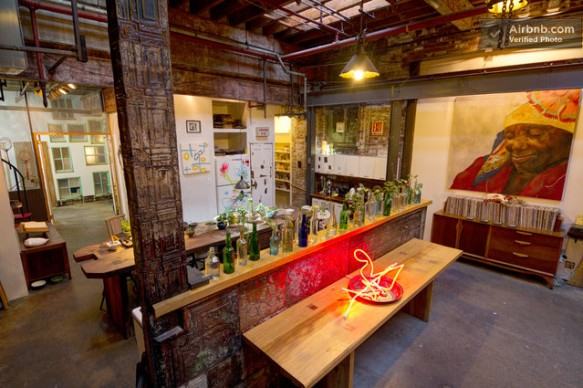
Beyond the savings, you can book spaces far more interesting that standard hotel fair–like a cave house in Granada Spain for $63/night (above) or a houseboat in Paris for $125/night. Funny enough, you can rent the 1 Sq Meter Home we covered the other day for $12/night in Berlin. On a more conventional note, you can rent rooms in places like New York City–where average hotel rooms are in excess of $300/night–for less than $100/night.

Airbnb makes money by charging hosts a 3% processing fee and guests a 6-12% service fee (more expensive stays have a lower fee)–nominal expenses compared to a hotel’s overhead charges. Their website provides reviews of hosts and their accommodations, as well as profiles of guests to protect hosts. There are numerous safety measures in place, such as $1M coverage for theft or vandalism for hosts. Their system also allows you to network with your friends, so you can exchange information about various stays from people you know.

Airbnb does require a couple extra hoops to jump through over a conventional hotel, like waiting 24 hours to confirm a reservation and you often have to coordinate a key exchange, so it might not put the hotel industry out of business just yet. That said, it creates a far more affordable, interesting and intimate way to house yourself when you’re away from home.

Skillshare Provides Education for the People, by the People

American higher education is an unwieldy institution. An undergraduate degree takes 4 years to obtain, costs tens or hundreds of thousands of dollars that leave many with piles of debt and includes countless classes with no evident practical application outside of cocktail party banter.

Skillshare is trying to change this and establish a different educational model. They describe themselves as “a community marketplace to learn anything from anyone.” They allow anyone to take or make classes they want.

If you’re taking a class, there are numerous, practical professional and recreational subjects–from iPhone app building to Photoshop tutorials to making great French Toast. Prices vary from $10 to a few hundred depending on subject matter and whether they are multi-course or one-offs. Teacher endorsements are featured so you can get an idea of a teacher’s reputation.

If you want to teach a course, you simply sign up on their site. You determine the subject, curriculum, classroom…basically everything. You also determine the price; you pocket all the money less a 15% cut for Skillshare (and no, teaching certificates are not required). Skillshare provides ample support for your class, including a list of possible spaces.

While Skillshare might not slay the traditional educational dragon just yet, they do offer a compelling and affordable alternative. Countless college grads are finding themselves buried in debt, jobless and lacking the specialized skills many employers are looking for. What if you could get the education you want, and only that?

Skillshare also offers an informal and inexpensive way to pick up an extra skill as well as providing an opportunity to leverage your skills to make extra money.

Video: LifeEdited on “This Could Be Big”

The other day Bill Weir from ABC/Yahoo News stopped by to tour the LifeEdited apartment as part of his “This Could Be Big” program. While we take gentle exception with the conditional “could”–and “big” for that matter–the video beautifully shows the apartment in its various iterations.

Weir called the apartment “A cutting edge template for anybody who wants to simplify their life without giving up style,” and said the apartment.” We agree.

He did a great job of creating context for LifeEdited in general–mentioning not only the apartment, but product design and larger developments that support this way of life.

Check out the video and let us know what you think in our comment section.

10K Public Bikes Coming to NYC in July

In July, New York City will add its name to the many cities that have public bicycle programs. The Citi Bike program will feature 10K bikes in 600 docking stations around the city, making it the largest such program in the US (the name comes from Citibank, who gave $41M in sponsorship money).

You can either rent bikes by the day, week or sign up for a yearly membership; prices are $10, $25 and $95 respectively. With the yearly, you receive unlimited sub-45 minute rides with nominal charges when that time is exceeded.

Programs like this have been going on for years across the US and the world. Paris has 20K public bikes, London 9K, Montreal 5K, Washington DC 1500 and Hangzhou, China has a whopping 60K+.

Public bikes are ideal for city-dwellers who need to get somewhere quick. The bikes’ upright position and grease-less configuration make them business-attire compatible. They also cover the spaces not covered by public transport. Most importantly, they make biking more accessible and acceptable to larger swaths of the population. They are, as Treehugger puts it, “cycling’s gateway drug”–once you start, you can’t stop.

Do you or have you used a public bike? What was your experience. Let us know.

Via Bloomberg and Treehugger

Prêt-à-Louer: How to Get Your Couture by the Hour

Do you have a big occasion you want to look awesome for? Do you have limited closet space and/or budget? Are you incapable of wearing tacky, store-bought clothes? If your answer is yes to one or more of those questions, Rent the Runway might be for you.

RTR offers women the chance to rent from a rotating stock of top designer collections and accessories for a fraction of sales price. For example, a $1600 Missoni dress rents for $175 and a Kate Spade clutch rents for $40. Other designers include Elie Tahari, Vera Wang and countless labels that are so prestigious we don’t recognize their names (there are also many lower price point options too).

Because you only have a RTR dress for 4-8 days, the site helps reduce clutter that would come from clothes that are often only used once.

As there are some inherent limitations to “trying” a dress online, RTR sends a backup size with every order. If those don’t work, they’ll overnight you something else. If you need some help choosing, you can chat with one of their stylists.

The site also allows past renters to review dresses, saying whether they ran small, big or true to size, as well as commenting on how they fit their bodies (they state their body size for comparison sake).  Some renters even post pics of the dress in action.

RTR might be doing the impossible: i.e. making $1000+ wear-once dresses compatible with an edited life. What do you think? Are those things mutually exclusive or can ultra-lux items work with an edited life?

How Coworking is Changing the 21st Century Workplace

Freelancers and small businesses are increasingly proving themselves 21st Century economic powerhouses. Their small sizes allow them to flow with the currents of technological and cultural change in a way their larger, corporate counterparts can’t. They are cost-effective because they can keep a small core staff, bringing on specialists depending on their needs.

But where do they work? Many find themselves too big or busy to work from home, or too small to afford their own office.

For these homeless freelancers, small businesses and entrepreneurs, co-working spaces provide a great option. Individuals and small organizations can rent a desk or small office in a space filled with like-minded industries. Tenants share things like boardrooms, printers and other resources. Rent depends on your use of the space, e.g. NYC-based Green Spaces charges anywhere from $20/day to $550/month for a dedicated desk.

Because most are formed based on industry–e.g. there might be a tech, non-profit or ethical business co-working space–the environments foster community formation and collaboration. Many host events with dedicated spaces like this one in Zurich.

One of the best known co-working spaces is The Hub, whose mission is, “To become a global network of connected communities that enable collaborative ventures for a better world.” Formed in 2005 in London, they now have 25+ locations, 4K+ members, 50+hubs in formation, spread across 5 continents.

Coworking is a great form of edited workplace for a number of reasons:

  • If you travel a lot, you can pay and use the space only when you need it, cutting overhead and overall space use.
  • Shared office equipment cuts clutter and saves money.
  • Human interaction promotes happiness.

If you’re interested in finding a coworking space in your area, visit the coworking wiki directory, which contains a list of spaces around the world.

images via Hub Westminster and Hub Zurich.

Edit Your Child’s Stuff with Toy Rental Services

Are you a parent who feels there just aren’t enough toys around your house? Does your child hate novelty, contenting his or herself with one or two simple toys? Do your child’s toys make your house into a model of order and harmony?

We didn’t think so.

Online toy rental companies like BabyPlays and Toyconomy have a solution. Here’s how they work:

  • Choose toys from their databases–kinda like adding movies to your Netflix queue.
  • Rent as you go. BabyPlays rents individual toys from $3 to $11/month. Toyconomy from $3 to $35/month–the latter price is for a LeapFrog LeapPad tablet computer (who knew?).
  • Or subscribe. Babyplays allows you to rent 4 toys for 60 days or longer for $25/month. Toyconomy’s $10/month subscription takes 50% off their toy rentals.
  • Hold onto toys for a month or for as long as you want.
  • Return toys and get a new shipment. Shipping costs are included.

Both companies take pains to let us know that their toys are rigorously cleaned and in good condition. Both offer a rent-to-own option; if your tyke doesn’t tire of a toy in a couple months, you can buy it at a discounted price.

Beside saving money, these services let kids enjoy their new toys without piling onto the mountain of old ones–a problem for almost every parent I know. What if your kid’s room could look like a haven of fun and order rather than a war-zone?

The one big challenge we see is getting grandparents and extended family on board. One Christmas-giving session can undermine months of editing.

Have you used these services? Would you? If not, why not? Let us know what you think.

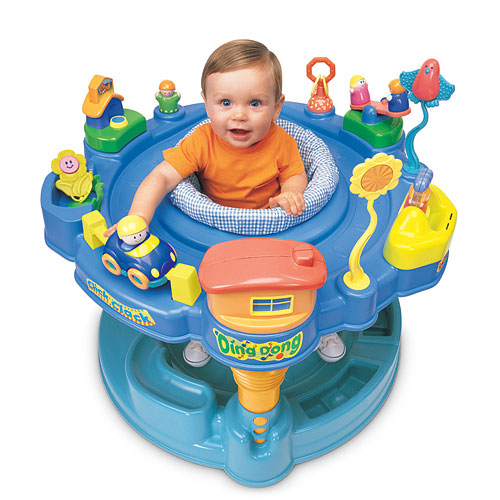
Image via productreview.com.au

Take Your Neighbor’s Stuff Without Getting Arrested

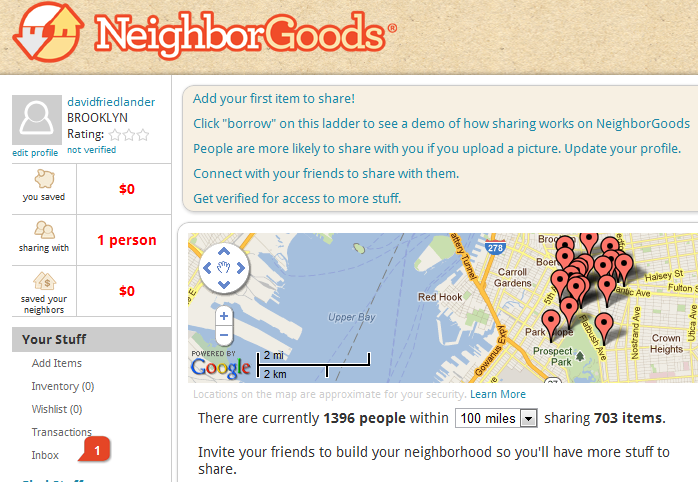
screenshot via neighborgoods

Long ago people didn’t have a lot of personal possessions. Not everyone had their own power-drill, cookie pans or tripod. And because the nearest Target was 30 years away, rather than not assembling that desk, eating raw cookie dough or shooting blurry shots, people used the only store around: their neighbors.

Well those days might be upon us again…but better. Rather than bugging your neighbors, services like NeighborgoodsSnapgoods and Share Some Sugarconnect you online with people in your area who have the stuff you need. Neighborgoods is free and has a pretty deep inventory of stuff (for our Brooklyn-based author at least); I found a Wii, a glue gun and a cat carrier–all things that might come in handy once in a while, but hardly necessary all the time. Share Some Sugar charges a nominal rental fee for household items, while Snapgoods focuses on high-tech gear; e.g. I found a CAD M179 Large Diaphragm Studio Condenser Microphone with Shockmount (Continuously variable pickup pattern!). I have no idea what that is or does, but am sure $9/day is a good deal.

We live in an age of abundant and cheap consumer goods. So much so that we end up buying stuff we don’t really need. But as Dave Bruno put it,”Stuff is not passive. Stuff wants your time, attention, allegiance. But you know it as well as I do, life is more important than the things we accumulate.” With aforementioned sharing systems, you can have the stuff you need, but only when you need it, allowing us to focus on other, more important stuff.