A Small Look at the ICFF

The International Contemporary Furniture Fair (ICFF) is going on in New York City this week. This is the third year in a row that I’ve attended, and while there has never been a shortage of beautifully crafted and designed furniture, the small space offerings have been pretty meager. ICFF exhibitors seem focused primarily on customers with unlimited budgets and square footage.

With the growing popularity of micro-apartments and small space living, I fared forth in high hopes this year. Unfortunately, the small-space offerings–with the few exceptions noted below–were few and far between. The fact is there is still big money in big spaces. There were, however, a few things that piqued my interest.

One of my favorite items was a modular piece of furniture by the company Cezign. It’s not small space designed per se, but the design could adapt to any space. The all-American made rectangles are covered in beautiful wool felt and can be configured in many different ways–from a bed to couch to…whatever. One small drawback (don’t laugh): They retail for $900…each. Considering you’d need three to six to make a functional piece of furniture, that’d add up quick.

Folditure–the exotic looking, super-thin-packing furniture company–has a new chair called the Tilt. When folded, it’s a mere .62″. The Tilt is slightly more conventional looking than the company’s other offerings. While the aesthetics might not be everyone’s cup of tea, the chair felt solid and its ability to hang in a closet is pretty nifty.

A company called Monstrans offered another flatpack chair made of bamboo ply. I was a bit suspicious of its sturdiness so I asked their representative about its weight load. He responded that it’s sold as an art piece, meaning it might not be the best seat in the house for your bigger friends. He did say that the chair has been subjected to a couple years of heavy use without problems, and it did feel solid.

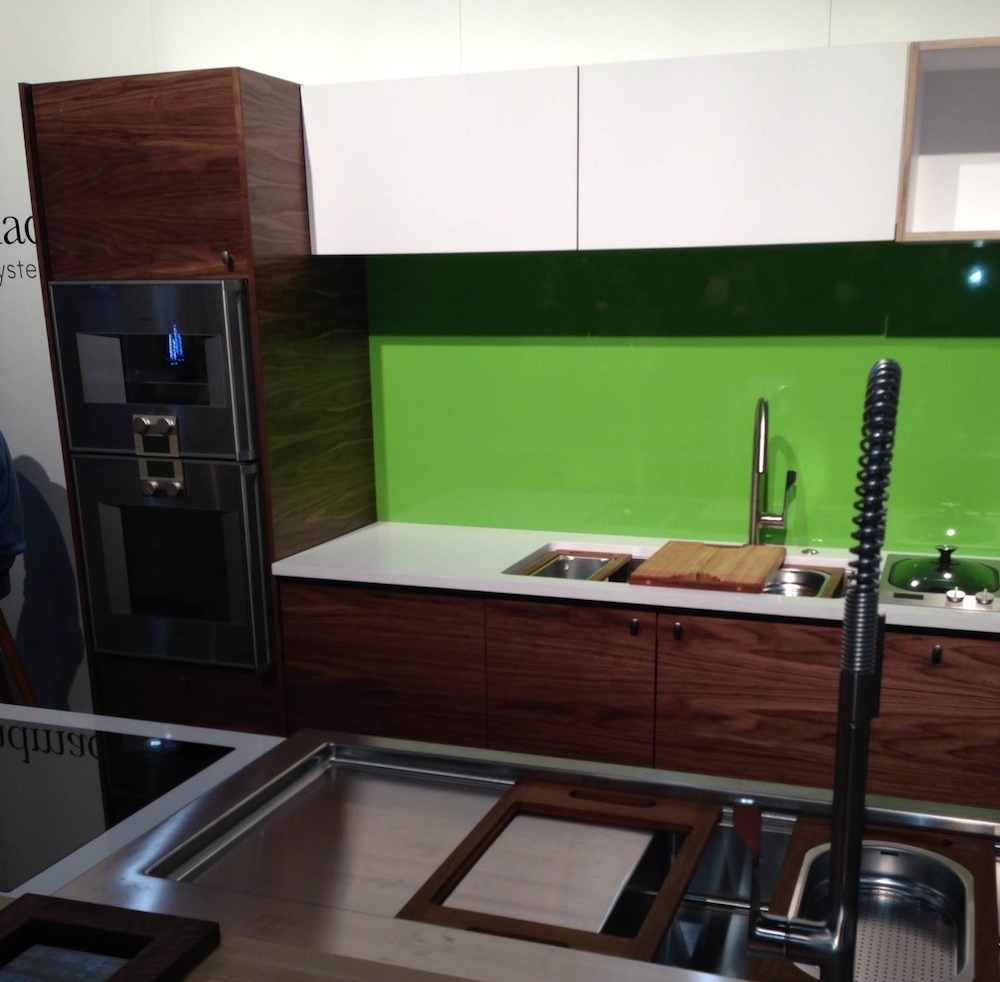
Semi-Handmade makes high quality replacement doors for IKEA cabinets, which is to spaces big or small. When building the LifeEdited apartment, by far the most expensive material cost was the custom cabinetry. We know IKEA stuff isn’t the world’s best, but their prices are so compelling that many of us end up using the big blue’s cabinets anyway. Semi-Handmade’s doors feature natural veneers like walnut and reclaimed barn wood on top of MDF. They look pretty decent and with prices starting around 30% more than IKEA’s top of the line stuff (which aren’t that expensive), it’s can save you a ton over custom, while achieving a custom-quality look. Obviously this would work well for kitchen cabinetry, but also built-in cabinets for a small space.

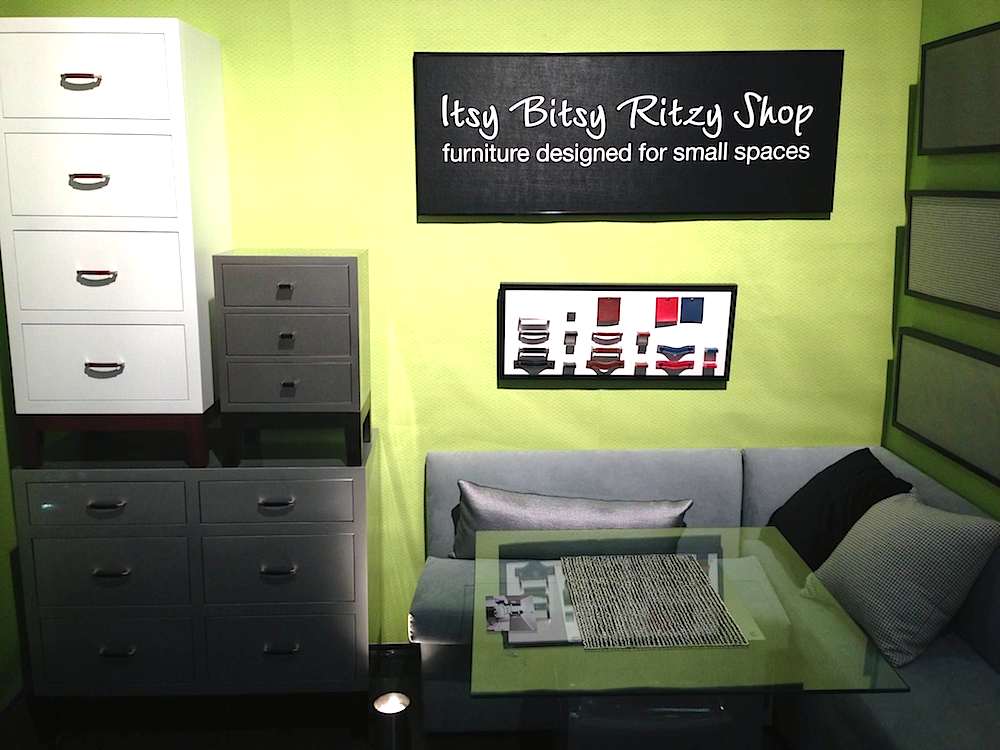
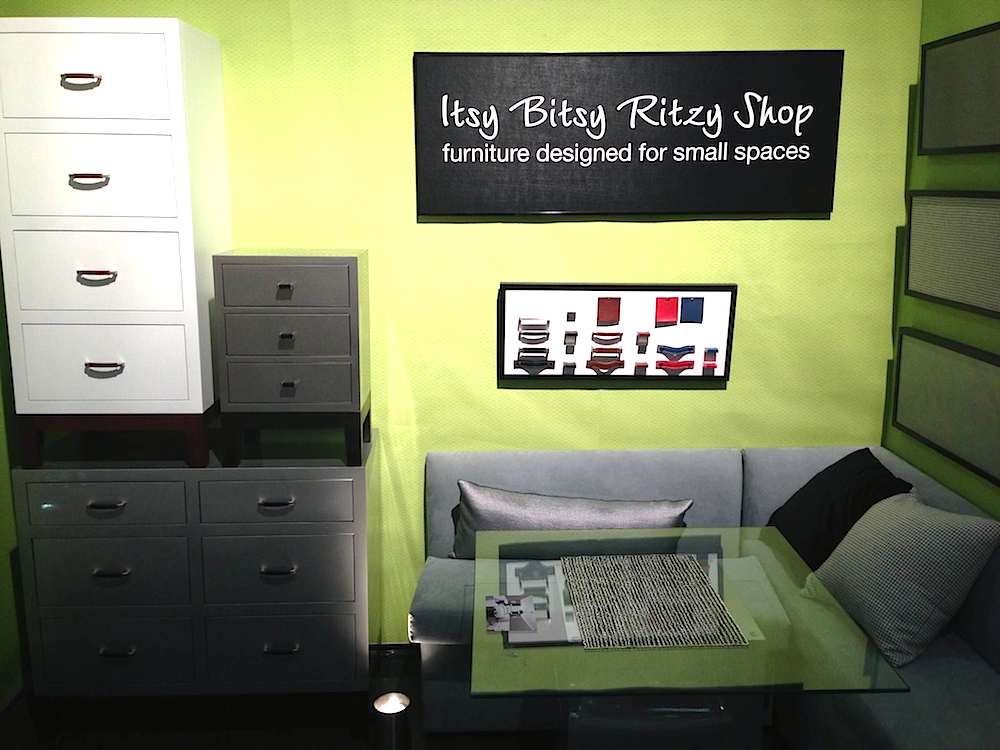
Finally, there was Itsy Bitsy Ritzy Shop. As you might be able to glean from their name, IBRS makes high end furniture proportionate to small spaces. They make shallow banquettes with storage, tiny sofa beds, modestly proportioned dressers, under-bed storage drawers and more. On their site, they feature a fully functional 216 sq ft room–a sign that they are serious about small. Their furniture is all made in Connecticut out of solid wood (I didn’t catch the prices, but imagine they’re steep). What’s cool about IBRS is they treat small spaces as a legitimate places to live–not simply places to jam hand-me-down, oversized crap. This seriousness, we hope, is a sign of things to come.

This is by no means a full report of all the great stuff at ICFF–just one with the small space in mind. Let’s hope next year brings even more interesting designs for the compact home.

Transforming Furniture on the Cheap

While we love high end transforming furniture, we know a good deal of it falls way outside of our average reader’s furniture allowance for the year…or decade. Fear not. For those of us on more modest budgets, there are options–options greatly expanded in proportion to our facility with power tools.

A while back we looked at the DIY $275 Murphy bed. While we’re big fans of the Murphy bed design in general, it does have one drawback: The frontside must be clear before lowering. This requires that you either keep the coast clear–i.e. don’t put anything in front–or you have furniture that can easily be slid out of the way; this drawback negates some of the space saving benefits. A bed like the Resource Furniture Swing used in the LifeEdited Apartment, whose couch works in concert with the bed mechanism, better optimizes space owing to its utilization of the frontside. But again, starting around $9K, we know it’s not for everyone.

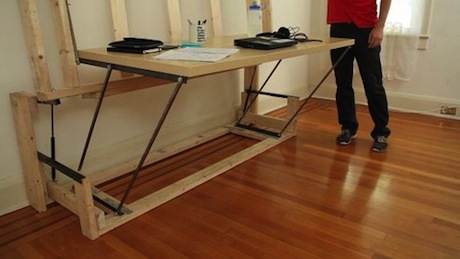
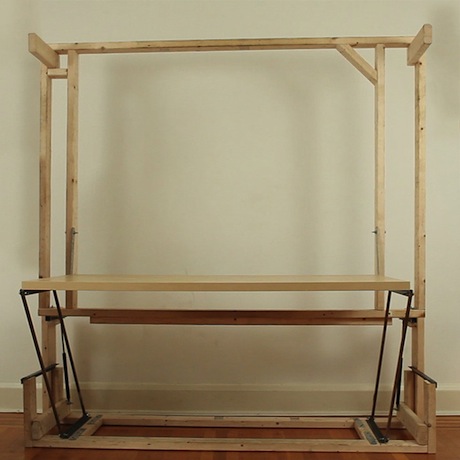
The good folks over at Treehugger turned us on to a DIY Murphy bed/desk called the UrbanDesk, ideal for people looking to save space and money. While it features a desk and some storage on its frontside rather than a couch, it still achieves the goal of milking as much space as possible in a very small footprint.

DIY-Murphy-Bed-Desk-2

DIY-Murphy-Bed-Desk

The project began as a Kickstarter project, but failed to meet its fundraising goal. Graham Phakos, the guy behind the project, said he’d post plans for anyone to build it. As yet, he has not, though we are going to petition him alongside Lloyd Alter at Treehugger to fulfill on his promise (we’ll keep you posted).

Convertible-table

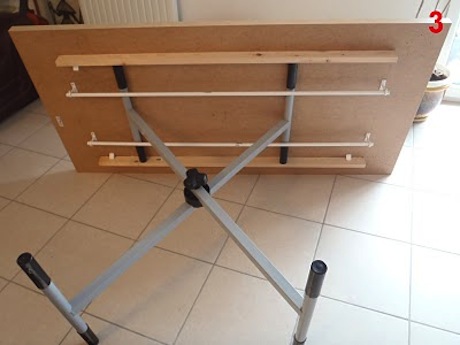
Beside a transforming bed, tables offer a great opportunity for space saving. We found this DIY convertible table on IKEA Hackers. Using an IKEA table top (they recommend a VIKA AMON, which appears to be discontinued, though there are several alternatives, from $10-100), a common trestle or keyboard stand (about $30 on Amazon) and a few other inexpensive items, you can create a table that converts from coffee to dining table in a pinch. Find full instructions on IKEA Hackers.

Whether you’re on a tight budget or a renter who doesn’t want to throw a ton of money into a temporary living situation or you just like making stuff, there are many options for making a transforming space that don’t break the bank.

Desk. Edited.

From pen and paper to standard typewriter to electric typewriter to large computers to tube monitors to LCD monitors–the loads our desks bear has changed a great deal in the last 100 years. But today many of us have done away with almost all paper and we can get by with a tablet or laptop for a good portion of our work duties. If that’s the case, why use a desk designed to carry reams of paper and a big CPU and monitor? We found a few desks that better accommodate this new lightweight office.

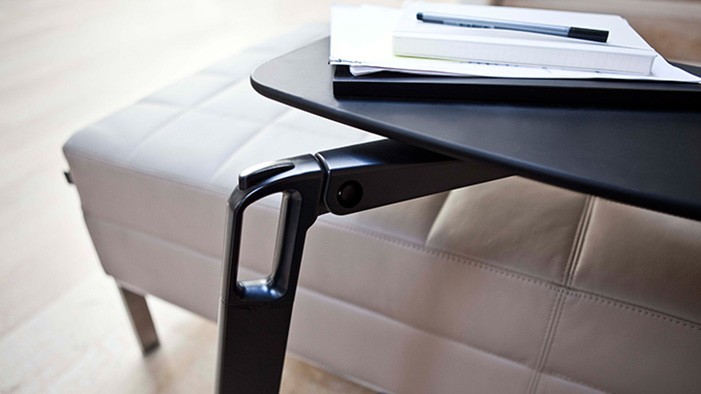
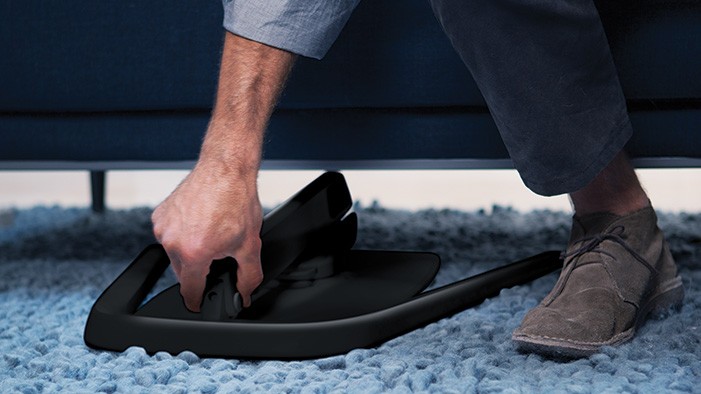
The Free Stand by Stephan Copeland is the ultimate expression of the lightweight desk. It’s a stand that is just big enough for a tablet or laptop. Its height is adjustable from 19.5-27″ and can be positioned to fit over a normal chair, sofa or lounge chair. It can be folded and stowed away when not in use. The unit is scheduled to be available later this spring through Coalesse; no pricing info available yet.

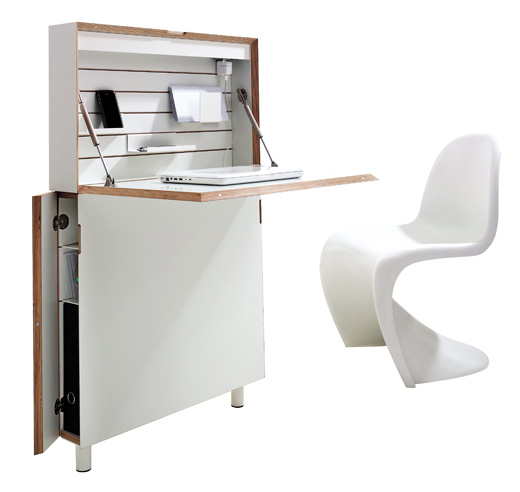
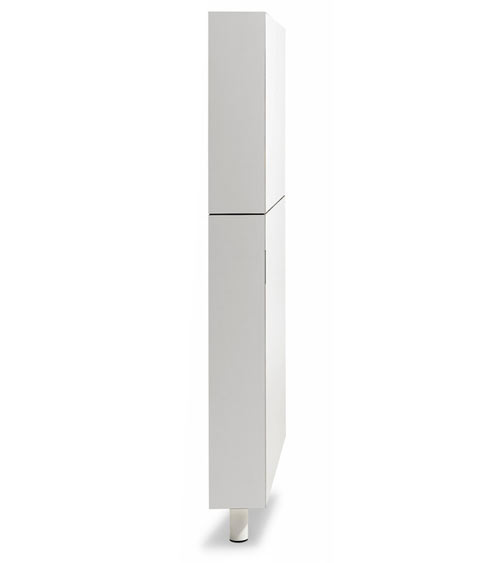
The Flatmate by Michael Hilgers is a bit more of a comprehensive unit–i.e. it has room for your elbows, some minimal storage and plugs for your devices. When closed, it’s a mere 5″ deep. The unit is attached to the wall to maintain stability. The Flatmate is available for $1850 from Resource Furniture.

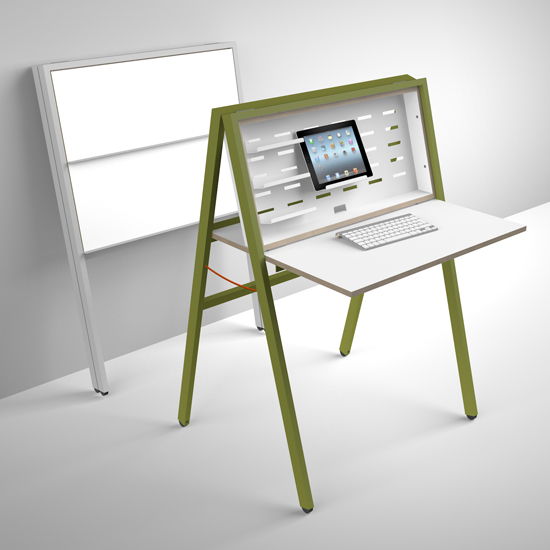
Michael Hilgers actually has several varieties of lightweight desk designs such as the HIDEsk, which is an easel-like desk, and the  balKonzept, a desk designed to fit over your balcony railing.

Of course, if you really want to stay lightweight, you can just use your dining room or kitchen table like this author does ;-).

image via coalesse and Michael Hilgers

Is it a Sleepy Living Room or Lively Bedroom?

In the coming months, we will be highlighting products and services we use in the LifeEdited apartment. Today, we’re looking at the Swing Sofa/Bed from Resource Furniture. 

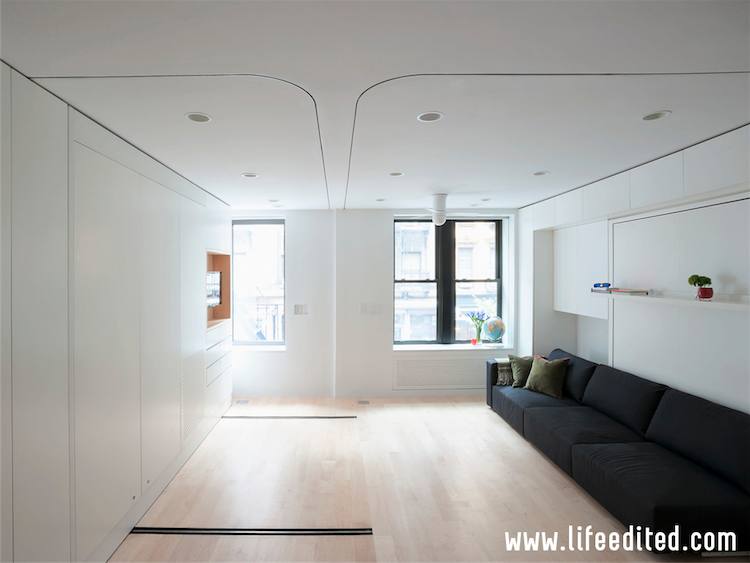
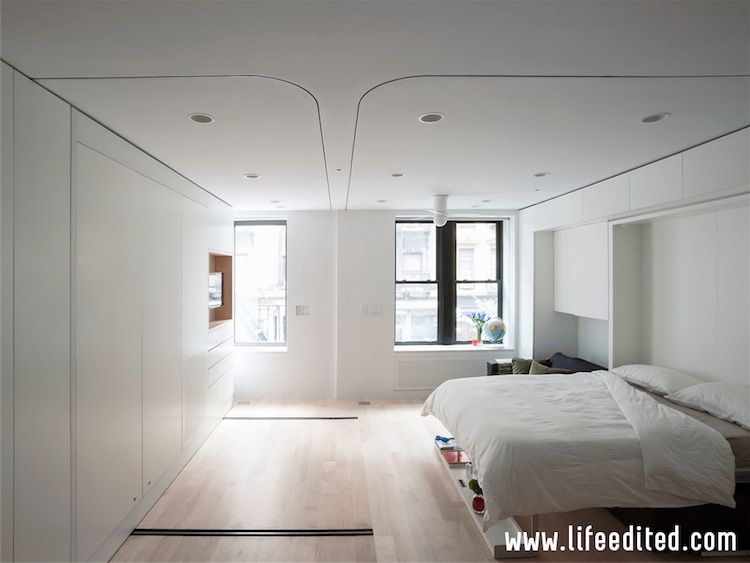
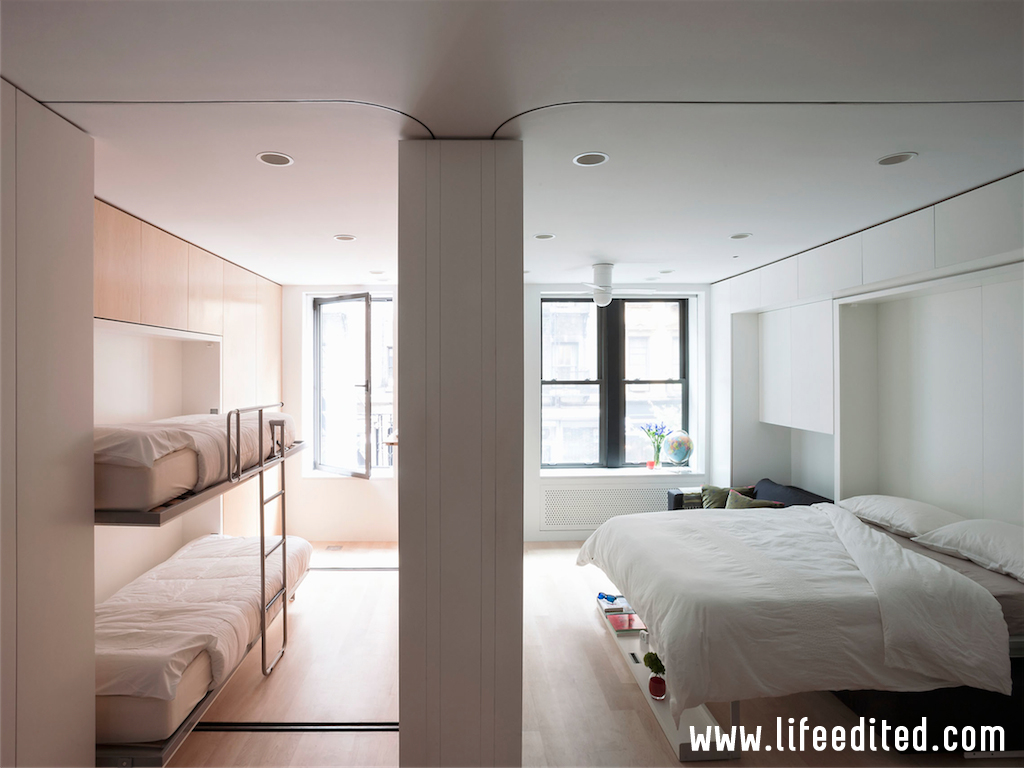
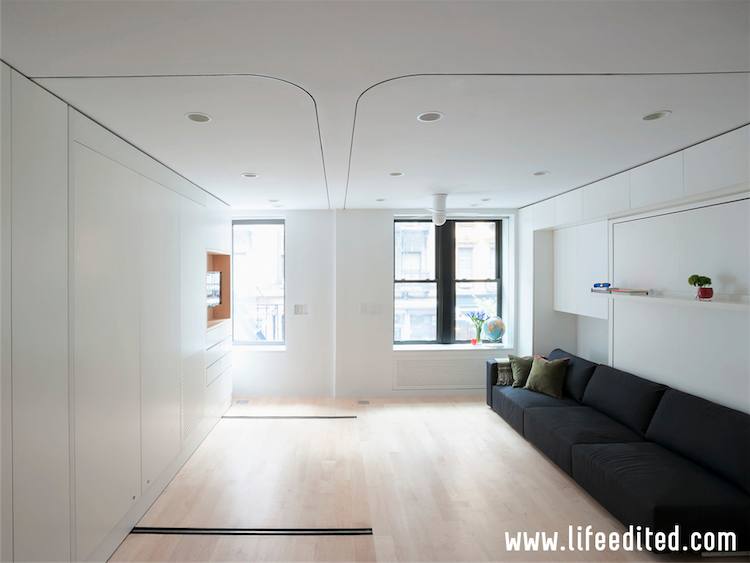
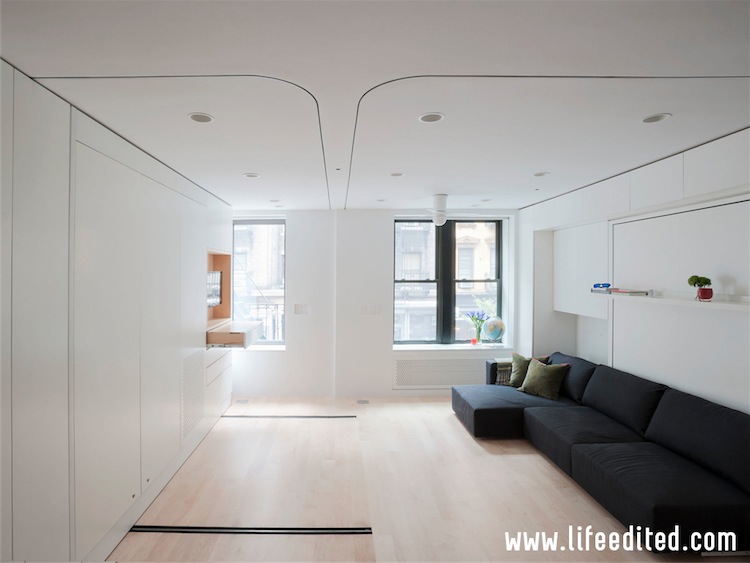
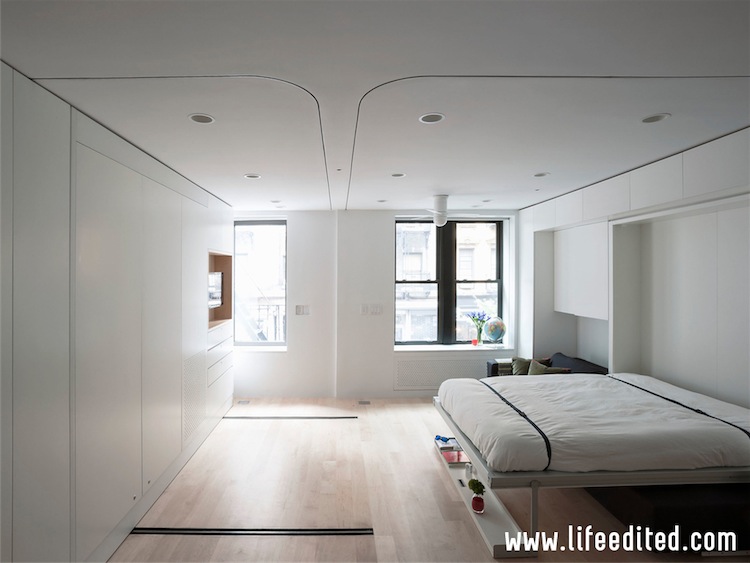
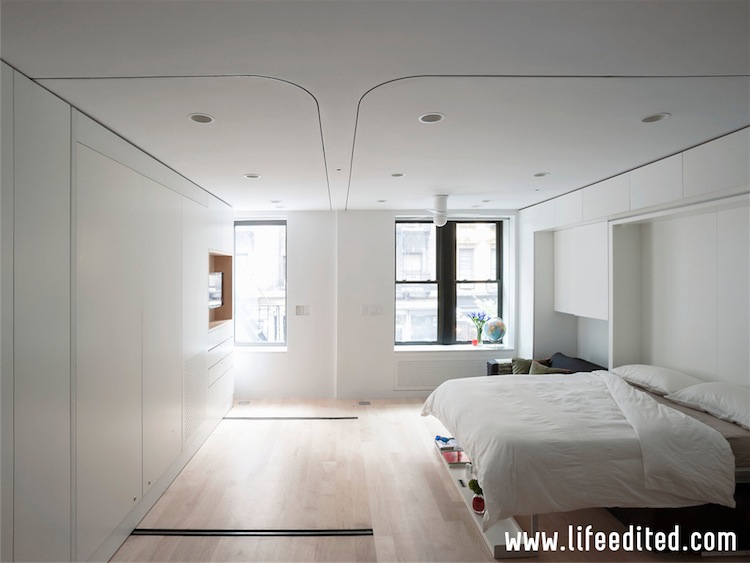
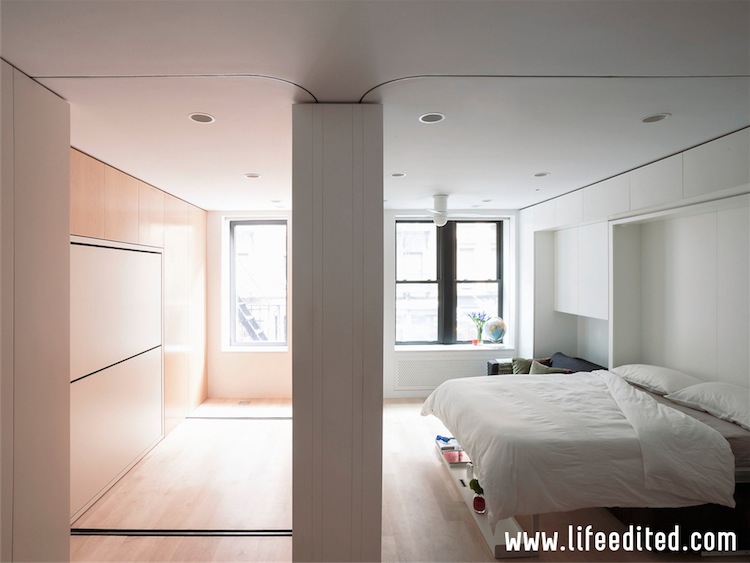
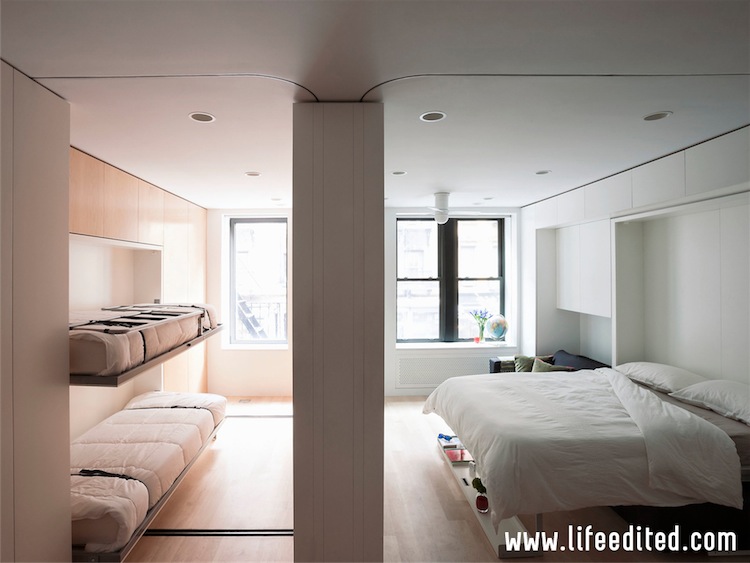
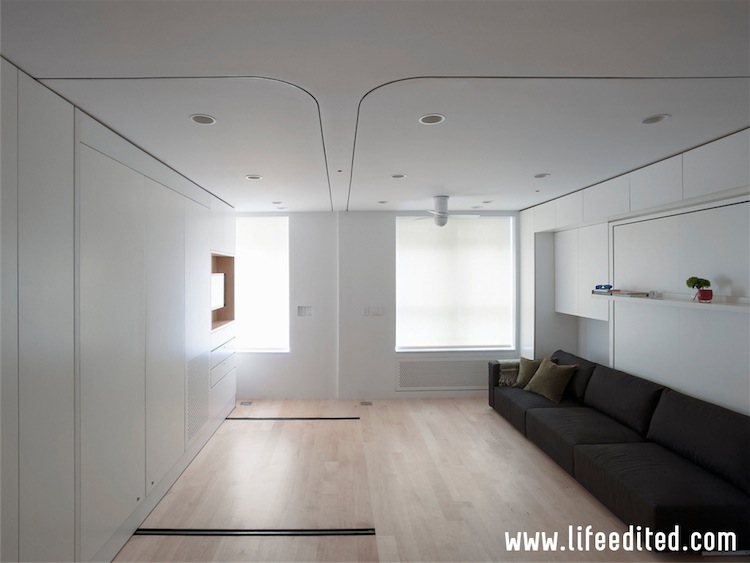
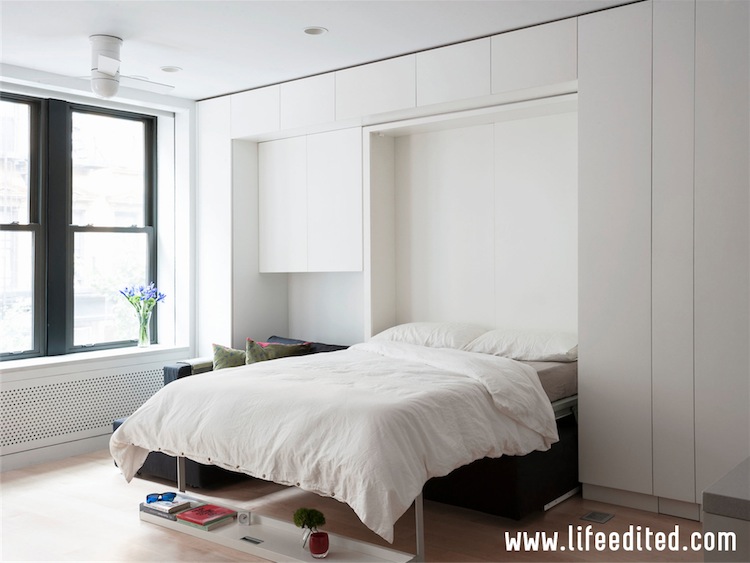
The Swing sofa/bed from Resource Furniture is probably the most important piece of furniture in the LifeEdited Apartment as the master bed and couch are arguably the two most important pieces of furniture in any home. It serves the vital function of easily converting our comfortable living room into a comfortable bedroom.

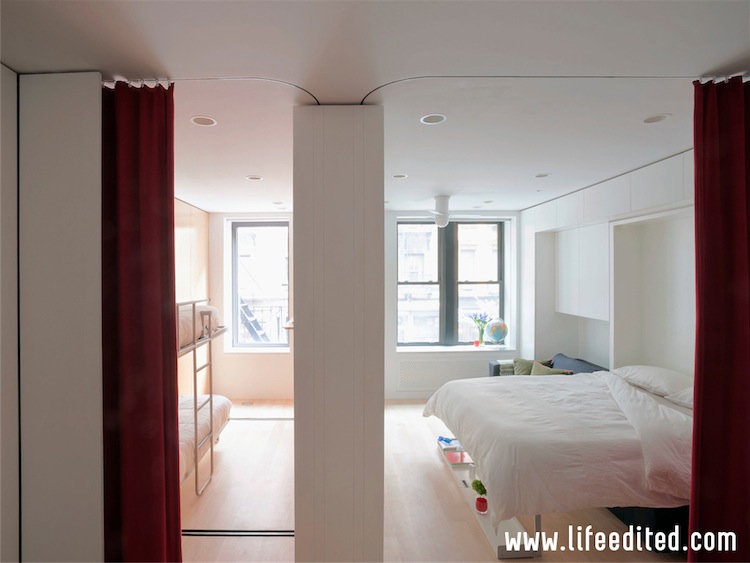
Standard Murphy beds require their front-sides to be clear before lowering their beds. The Swing utilizes this valuable frontal real estate because its bed, when lowered, is higher than the full-sized couch that sits flush with the frontside of the unit. This exploitation of all available space is crucial for small homes, where every unfilled gap cuts into valuable square footage.

The Swing is designed and manufactured by Clei in Italy. Here are some of its key features:

    • Easy, one-handed lowering of the bed.
    • An available chaise lounge, which can be attached to either side of the sofa. With the chaise, the sofa is 9′ 2″ wide.
    • The chaise version has an upper shelf that provides and additional 6′ of storage (note: The LifeEdited version does not include this feature).
    • An aluminum bedframe with steam-bent beech wood slat supports.
    • A bookshelf that holds up to 25 lbs and stays level when the bed is pulled down.
    • Storage under the sofa seat for bedding or other items.
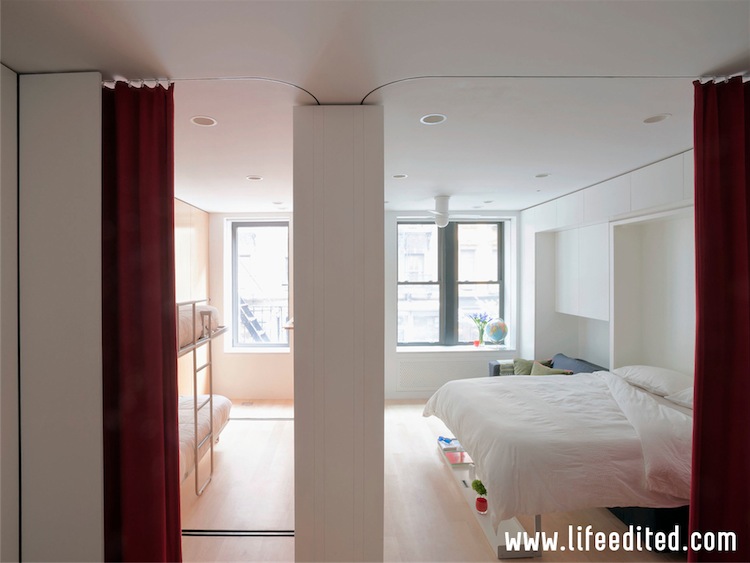
    • A self-standing/self-supporting structure that requires no attachment to the walls or floor. It is a ‘wall-bed’ that makes its own wall and can be used as a room divider.
    • Available in more than 40 finishes, melamine, lacquer and wood veneers. Available in 30 CARB 2 compliant (California Air Resources Board) finishes.
    • Available headboard cushions that provide cushioning and eliminate the gap between mattress and backboard, ideal for reading or watching TV in bed.
    • Available in 100 different fabrics options.
    • Available LED interior lighting.

Amazingly, the entire depth of the system when open for sleeping is only 6.5” longer than a standard mattress.

Prices for the non-chaise version start at $9100 and $12,850 with chaise. Bank on an extra $800 or so for a mattress. No this is not cheap, but this is a quality piece of furniture you will have for years. Furthermore, consider the Swing could eliminate the need for a dedicated bedroom. How much does an extra bedroom cost? In a city like New York City, real estate can easily fetch between $500-$1000/sq ft. Let’s say a very small bedroom is 70 sq ft–in other words, 35K-70K!

The difference between a studio rental and a one bedroom, or between a one bedroom and two bedroom can easily be $1K/month difference. The Swing could pay for itself in a year and you’d have a great piece of furniture to take with you to your next place.

Looked at in either of these lights, the math becomes quite different.

For more information, visit www.resourcefurniture.com or stop by their New York City showroom.

Chair Marries High Design with Space Efficient Design

In the coming months, we will be highlighting products and services we use in the LifeEdited apartment. Today, we’re looking at the Eco chair by Voxia.

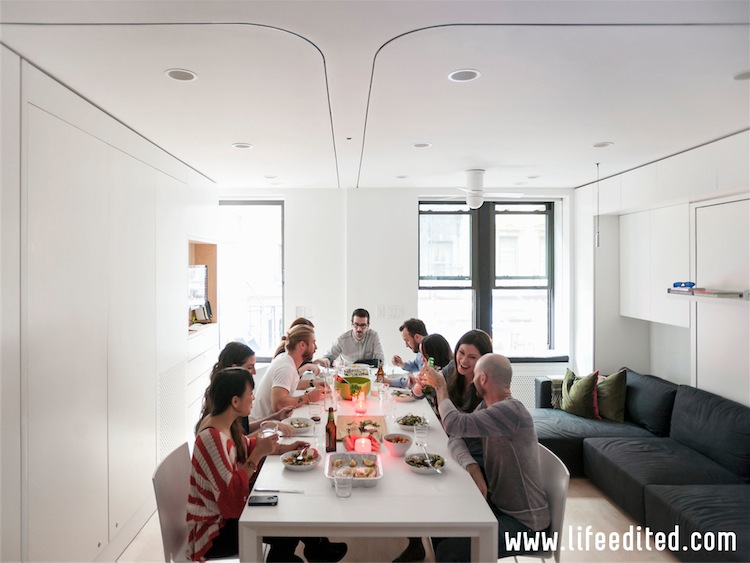
One of the main design criteria for the LifeEdited apartment was the capability to host dinner parties for ten. We chose the Resource Furniture Goliath Table as its ability to expand from 17″-115″ was hard to beat. Seating was more difficult. Though there are many great folding chair options, we wanted something that looked a bit more permanent, so we narrowed our search to stacking chairs. At the time, lifeedited.com wasn’t much to look at, so we had our friends at Treehugger do a roundup of stacking chairs.

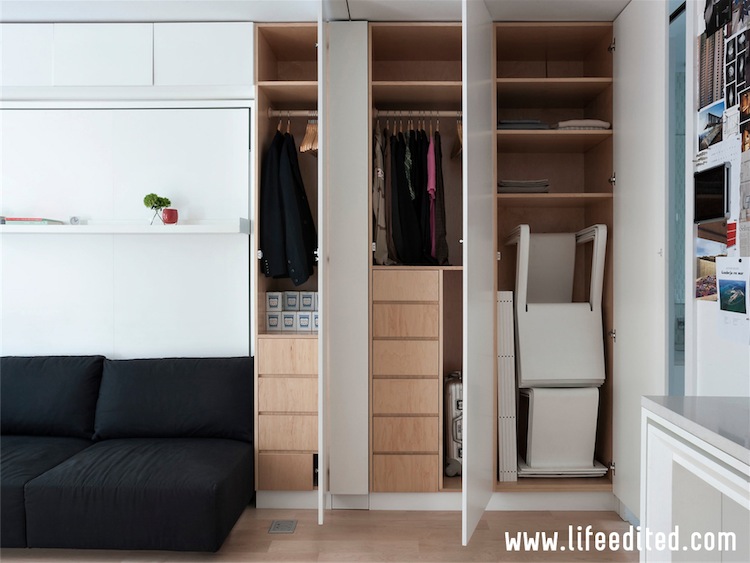
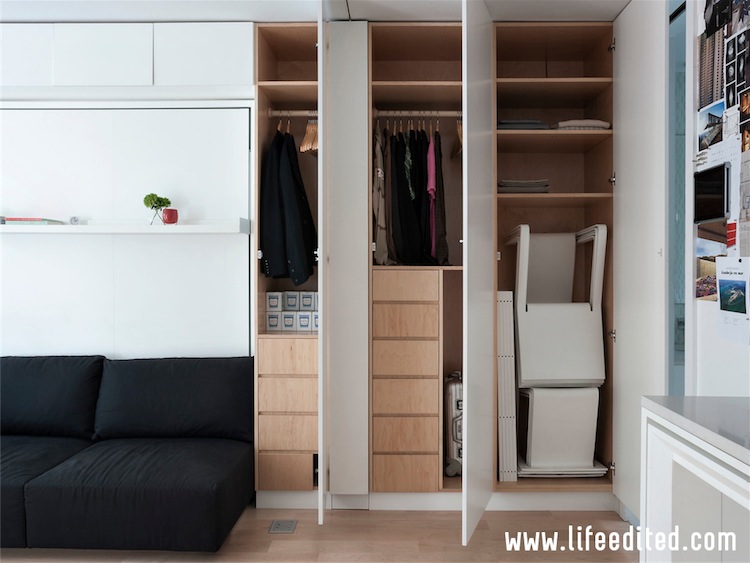
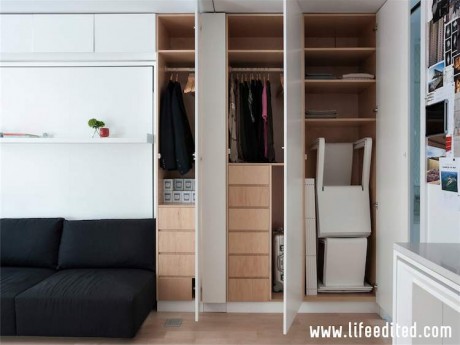
While there were a number of great options, none were as aesthetically or functionally appealing as the Eco by Voxia. It matched the look of the apartment perfectly. Most important, the chairs stacked extremely tight. The surface is a mere 9mm thick; with protective pads 13mm. There is a negligible gap between chairs when stacked. This tight fit allowed us to fit all ten chairs in one cabinet.

bild6

LifeEdited-South-Wall-Storage

The chair is one piece of compression molded beech plywood, which the company claims uses 1/8 the amount of wood of most conventional chairs.

The chairs are quite comfortable. Though we must say that the seat portion, which is about 15″ wide, favors the slimmer set.

Unfortunately, the Swedish chairs do not have a US distributor just yet. Pricing ranges from about $350 for the beech finish version to $426 for painted versions (pricing is approximate as there is no official US price list). While this was actually middle-of-the-pack pricing for a number of the designer chairs we looked at, it’s admittedly a good chunk of change.

What is unique about the Eco chair is that it marries high design with space-saving features. The current paradigm suggests that if you want high design, you probably have a big home and don’t need to worry about space efficiency. We’d love to see more exquisite furniture like this for a new breed of home where efficiency and high design go hand in hand.

8 Tips for Making Your Own Micro Apartment

With all the hoopla around the adAPT NYC competition and other micro-apartments around the country, it’s clear there’s a demand for smart, small apartments. In fact, people write us daily asking if we have apartments available to rent or buy.

While LifeEdited is working with development teams to get you your micro-apartments with the greatest haste (be sure to sign up for our list), many of the developments are years away. This leaves the question: What do I do now if I want a micro-apartment?

If you’re interested in living in a micro-apartment–either converting your existing place or starting fresh–here are some suggestions we think are critical to living a big life in a small apartment.

  1. Pick a good address. We think small spaces work best when you use your city or town as your living room. With amenities like restaurants, entertainment and parks at arm’s length, a good address will provide a living room you actually want to hang out in. Central locations are more walkable and have better public transport, allowing you to live car-free or get by with a car-share. Check out Walkscore.com to see how a neighborhood stacks up in terms of walkability and amenities. Yes, a good location will cost more, but you can save money by being car free and choosing a smaller apartment.
  2. Size matters. While there is no magic number for square footage, the micro-apartment designation is about 250-400 sq ft for singles; 300-600 for couples; 500 + for families (separate rooms are generally a good idea for a peaceable family). In most cities and towns, there are plenty of apartments these sizes.
  3. Get in good shape. In general, square and rectangular spaces are ideal. They feel bigger than odd-shaped spaces and are easier for fitting modular furniture.
  4. Get a Murphy Bed. It’s the single easiest way of creating space without sacrificing function. A queen size bed is about 35 sq ft.–i.e. 10% of a 350 sq ft space; a 10% used exclusively while unconscious. We use the Swing sofa/bed by Resource Furniture; the sofa on the frontside provides even more space-saving as most Murphy beds have unused front sides. Starting at over $10K, the Swing is not for everyone. Resource Furniture has many less expensive models and there are a number of decent Murphy beds that can be purchased for around $3K. We were recently turned onto Murphy Bed Center, who has models starting at $1699. If you’re a DIY type, build your own for $275.
  5. Get high…with storage. Almost all of the adAPT NYC submissions included floor-to-ceiling storage. Having high storage utilizes unused vertical space and frees up floor space, making an apartment seem larger. On the high end, Resource Furniture offers modular storage units to fit with their furniture. On the low-end, the IKEA Pax system can be had for less than $1K and is almost 8′ high.
  6. One table is enough. A while back we looked at tables that serve as both coffee and dining tables. While these table are a little on the pricey side, only needing one table frees up quite a bit of floor space and provides two important surfaces.
  7. Sit and stow. Having chairs available for guests is important, but when we’re home alone or with our partners, we only need one or two chairs out at a time. The rest of the time, extra chairs just take up space, which is not a luxury the micro-apartment dweller can afford. If you don’t know what chair to get, here are 10 folding chairs to fit almost any budget.
  8. Get a comfy couch. A micro-apartment requires that every object be highly useable. While that stiff, low profile couch might take up little space and look super cool, if it’s not comfy, you’re not going to want to sit in it. Get a comfortable couch you’ll want to sit in day-in-day-out. If it’s big enough to sleep guests, all the better.

Anything we missed? Let us know in our comments section.

This Furniture Fits Together Like Matroshka Dolls

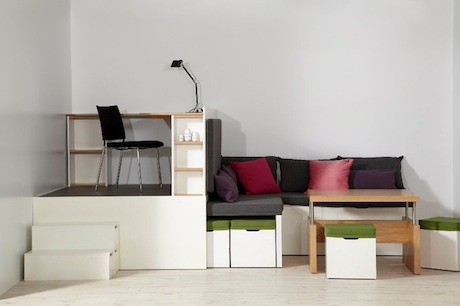
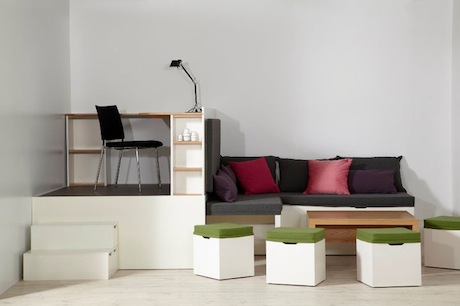
Matroshka are the stacking Russian dolls, where one doll fits inside the other. Swedish outfit Matroshka Furniture seeks to achieve a similar space-saving trick with its line of modular furniture. Like the dolls, every component of their furniture unit fits perfectly together.  The 161 sq ft (15 sq m) unit includes a desk, a lounge, a dining area, seating for 12, a bed and ample storage.

matroshka-1

We particularly like the table that appears to be on hydraulic lift, converting from coffee to dining height.

One of these units could be a one-stop-shop for optimizing your living space. We don’t have any pricing information right now. According to Matroshka, they are looking for a US partner; we’ll keep you posted.

matroshka-2

matroshka-3 matroshka-4

See the Evolution of the LifeEdited Apartment From Demo to Completion

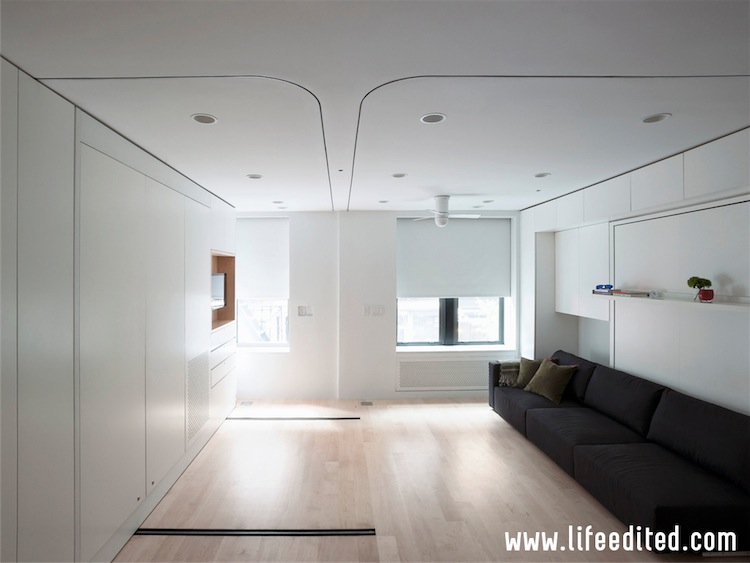
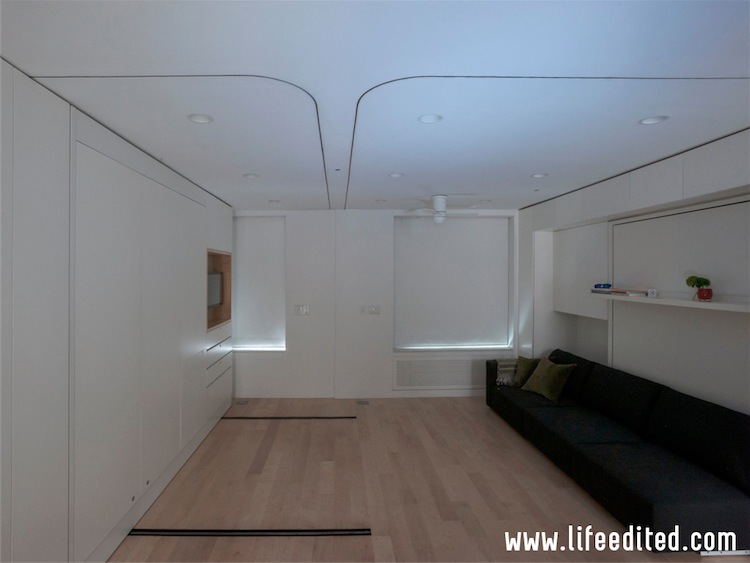
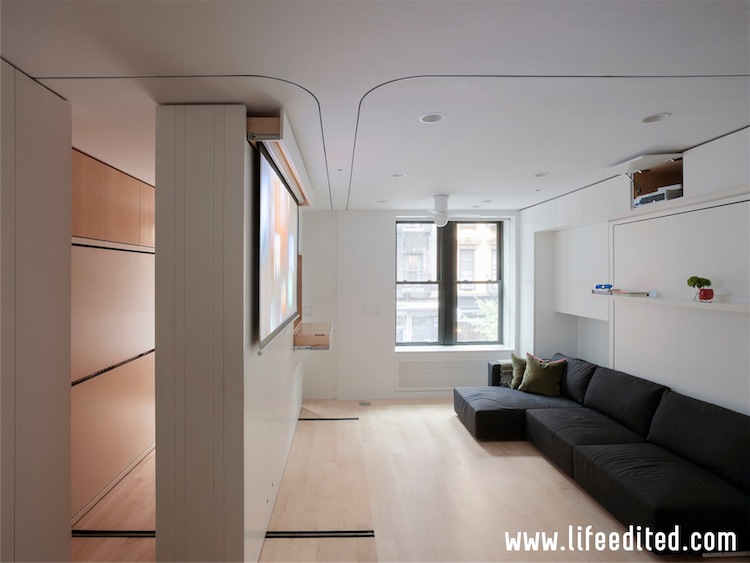
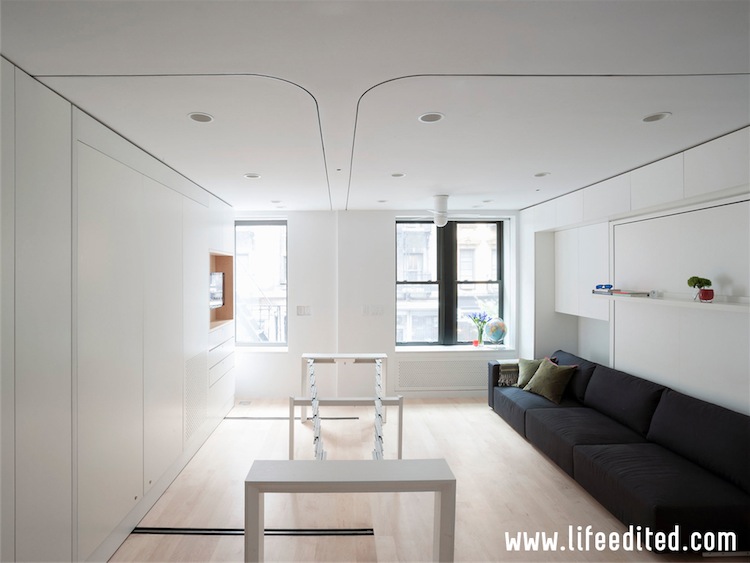
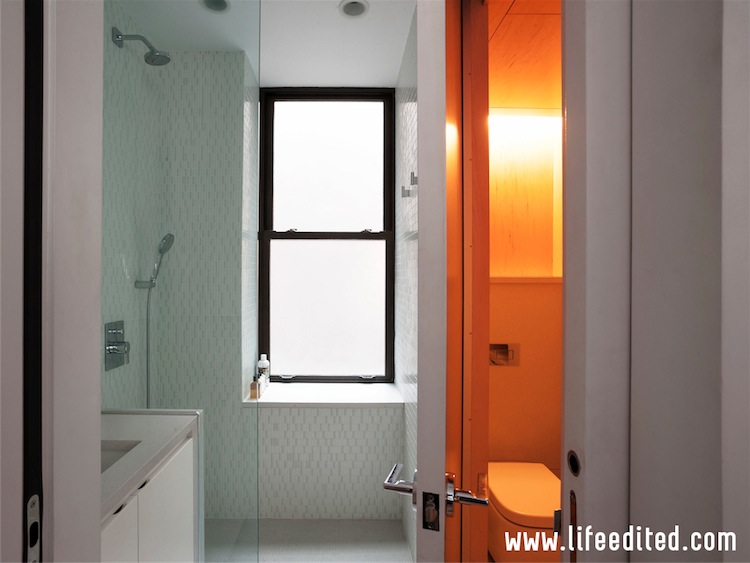
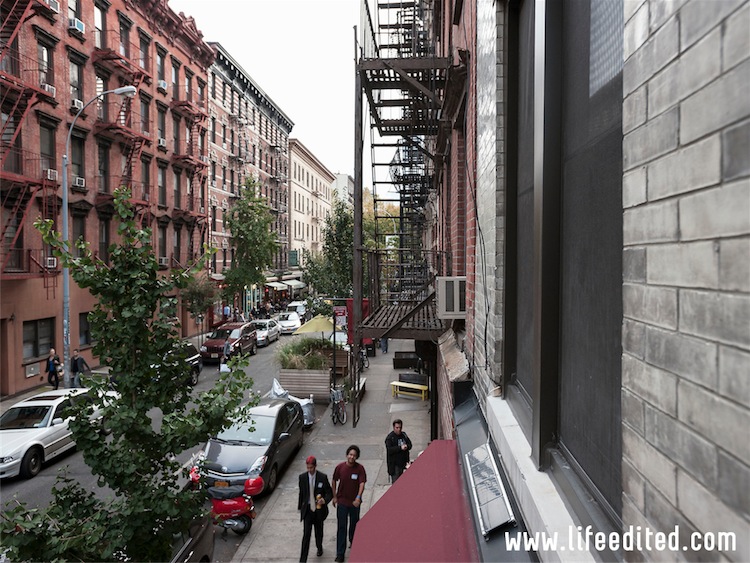
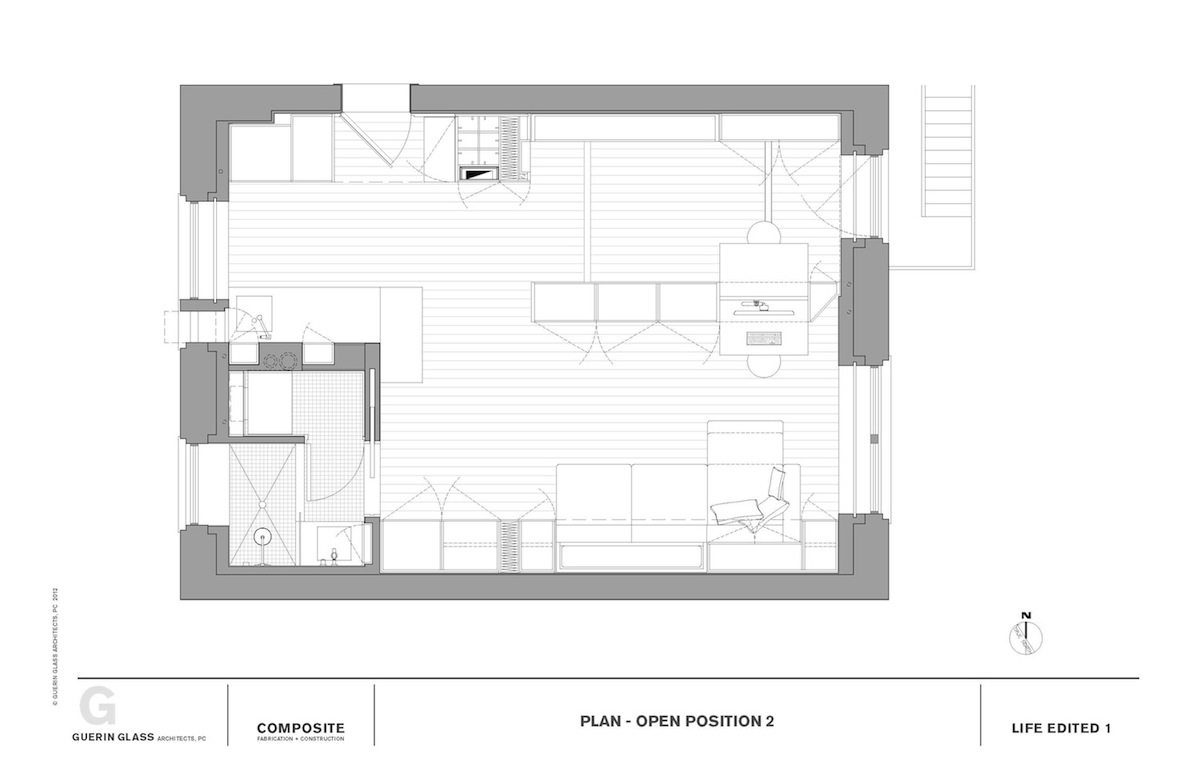
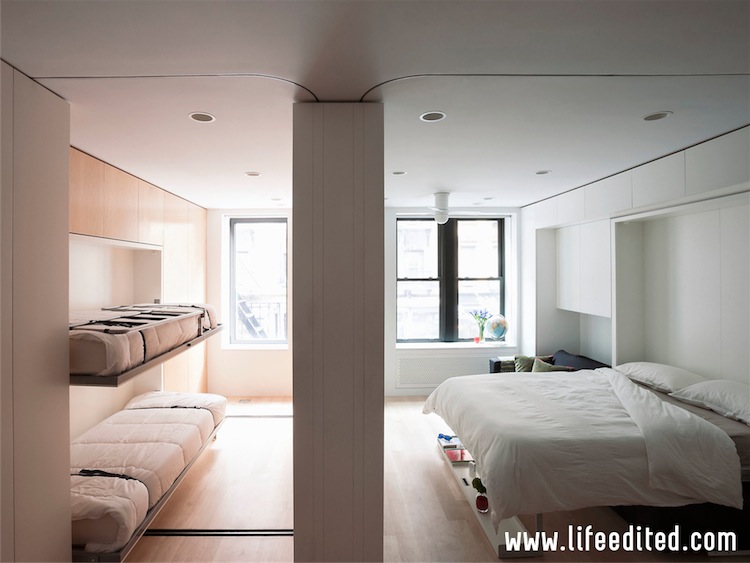
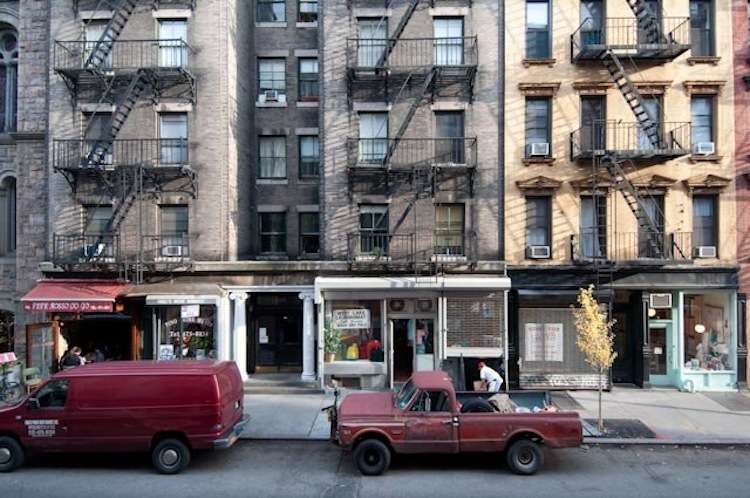
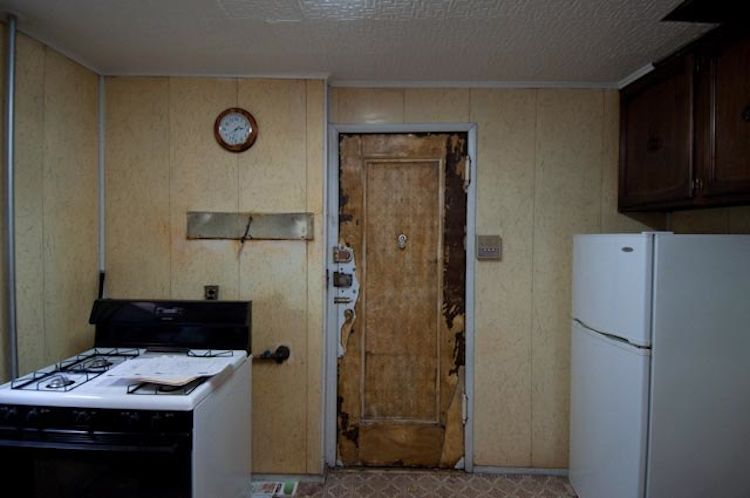
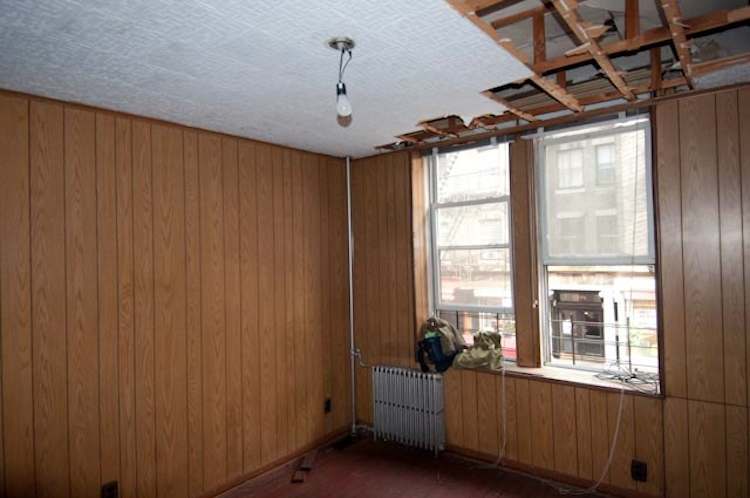
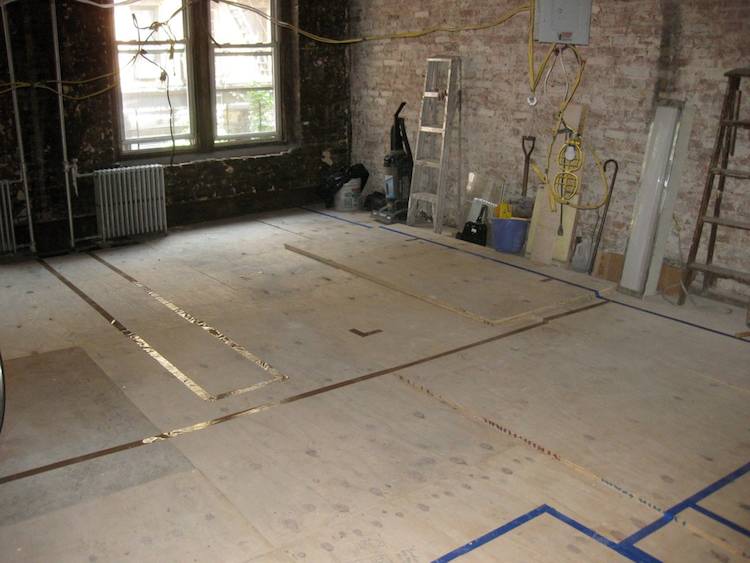
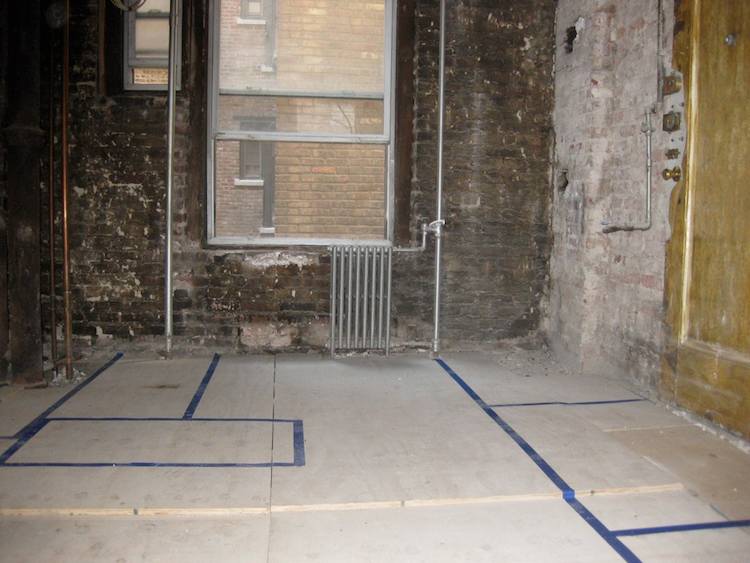
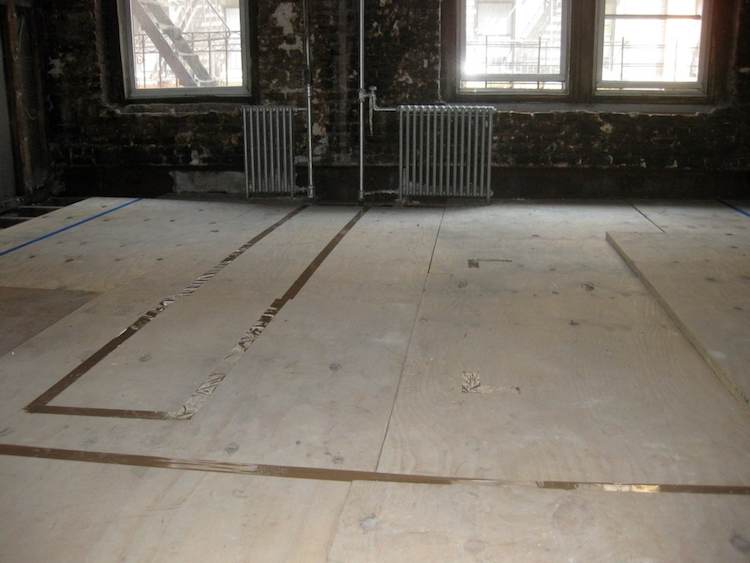
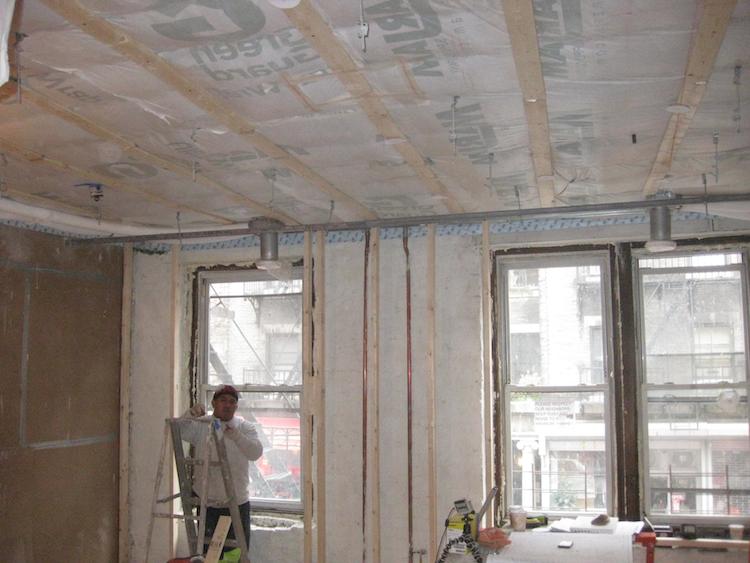
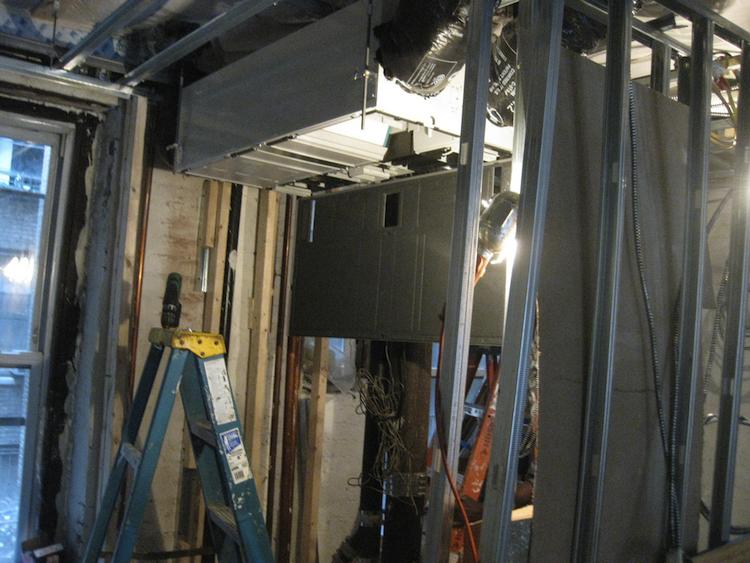
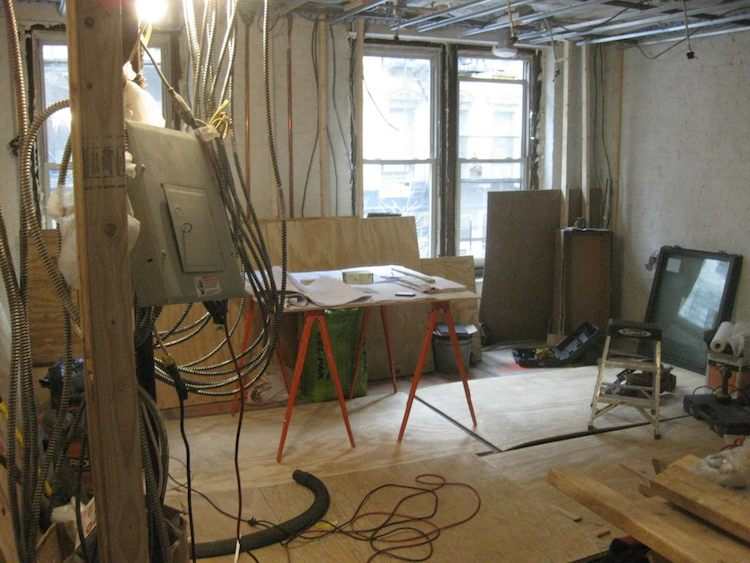
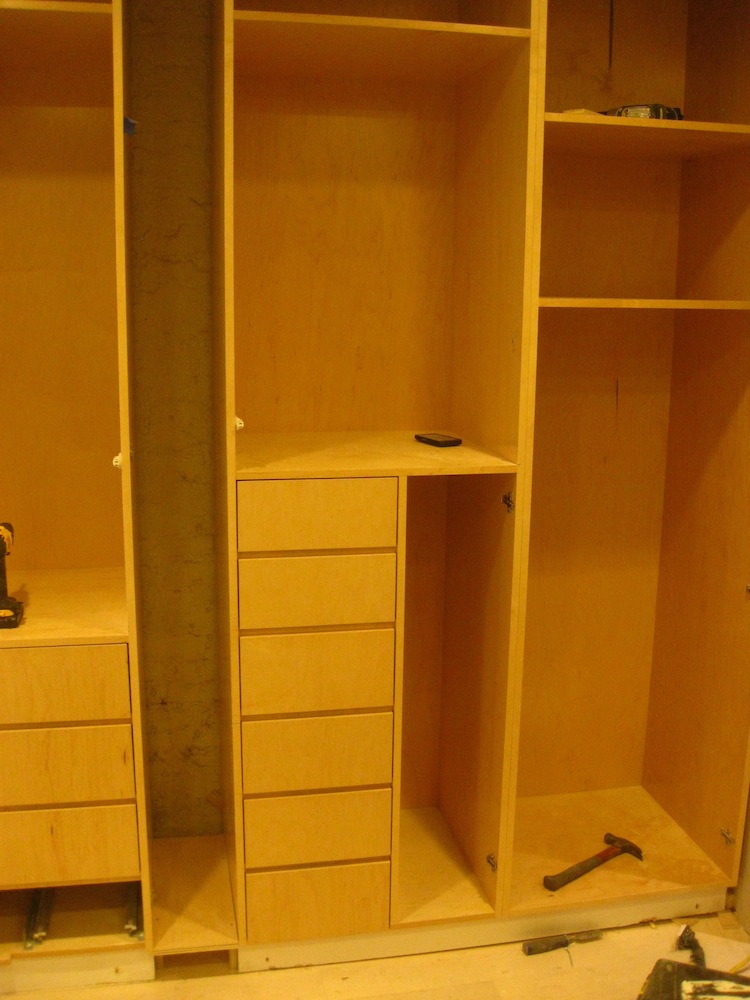
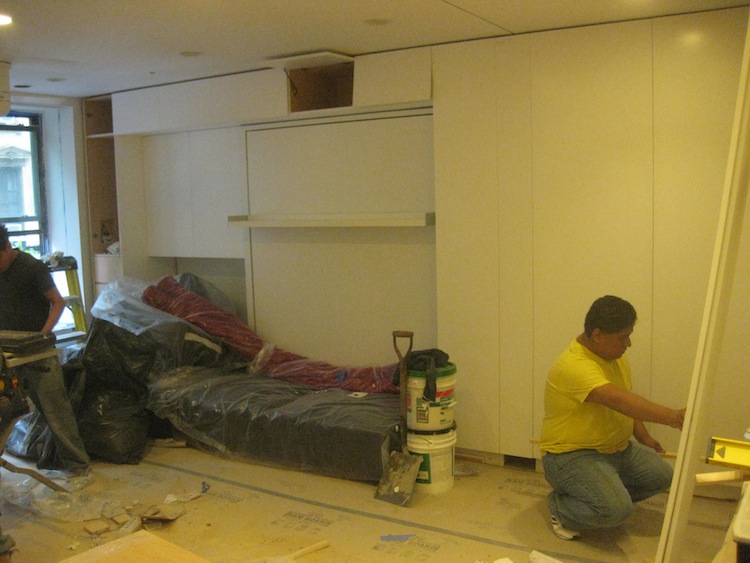
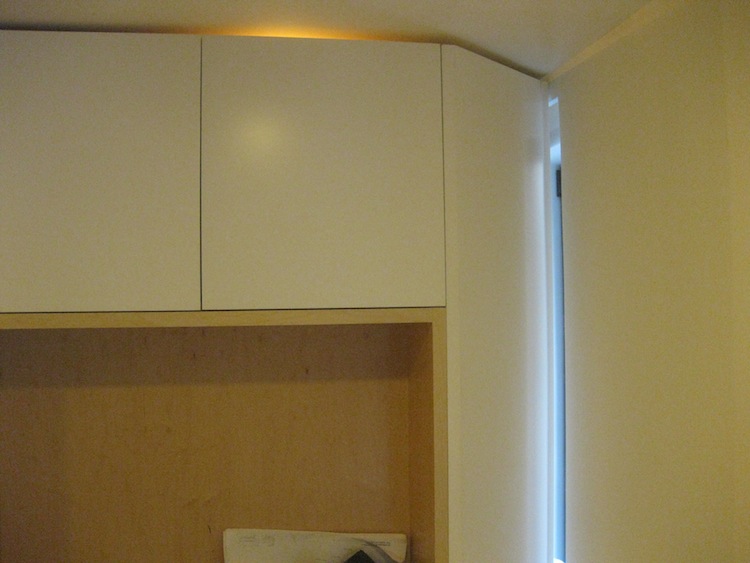
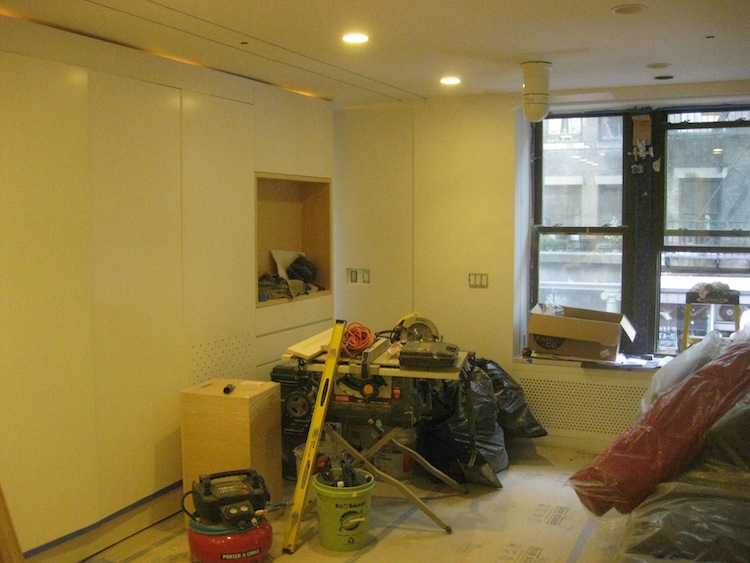
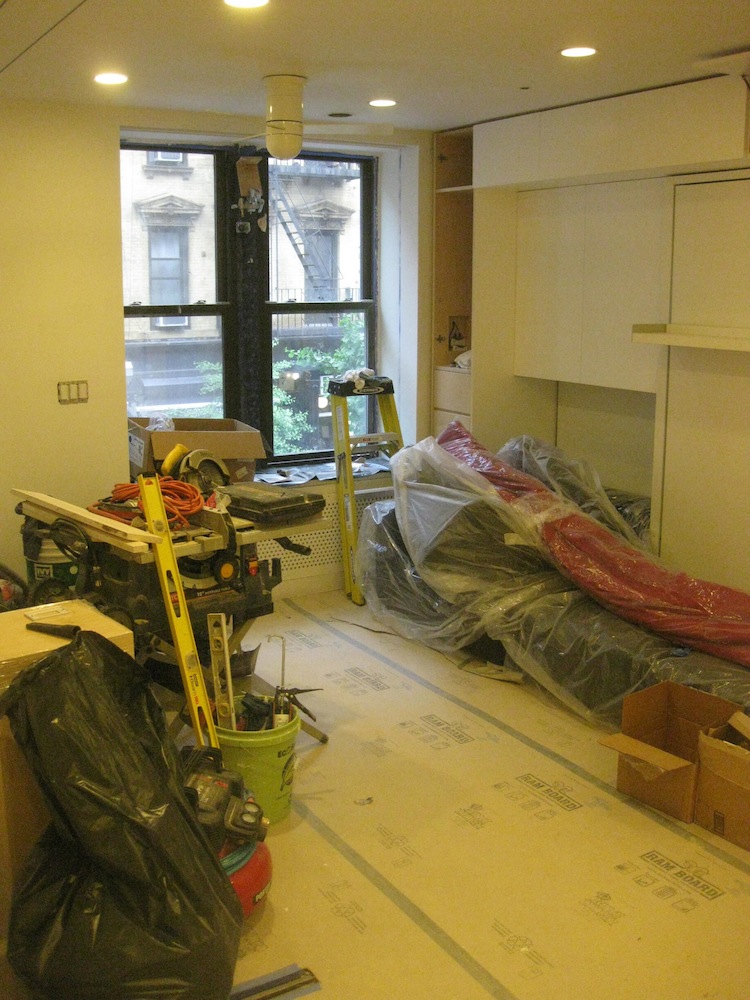
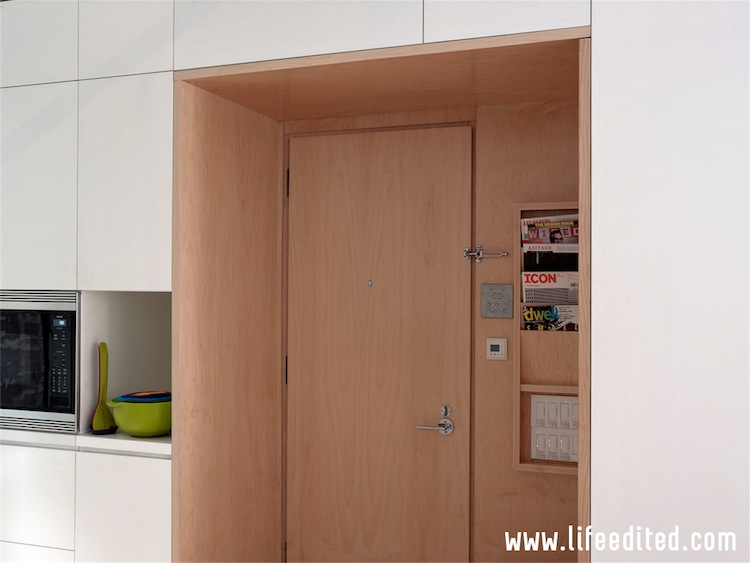
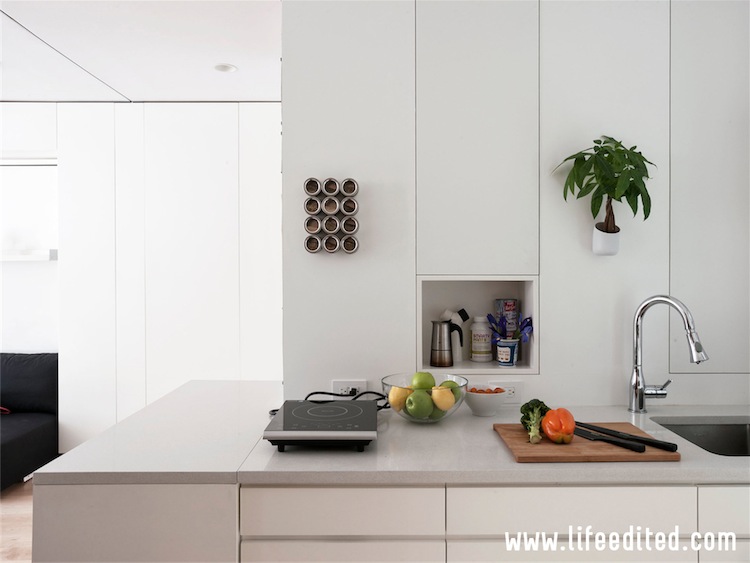
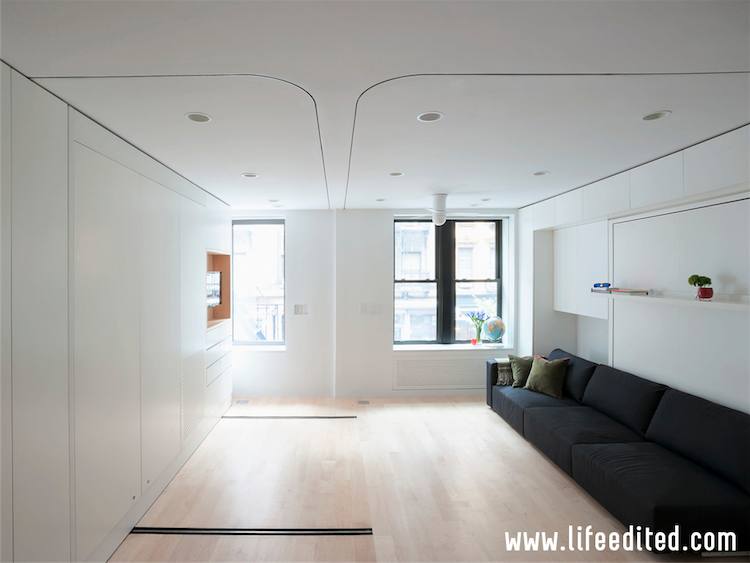
For the construction wonks amongst us, we wanted to show the evolution of LifeEdited apartment (Graham Hill’s personal apartment) from rundown Soho tenement to completed project. Most of the construction materials were sourced from Green Depot.

Special thanks to David Bucovy, AIA (architect of record), Catalin Sandu, Adrian Iancu, Scott Glass, Wing Deng, Lawrence Hudson, Matthew Williams and everyone else who brought the project to life.

Click on thumbnails to increase size of pics.

Photos of completed apartments by Matthew Williams

Comfortably Seat Ten in Your Micro Apartment

In the coming months, we will be highlighting products and services we use in the LifeEdited apartment. Today, we’re looking at the Resource Furniture Goliath Table.  

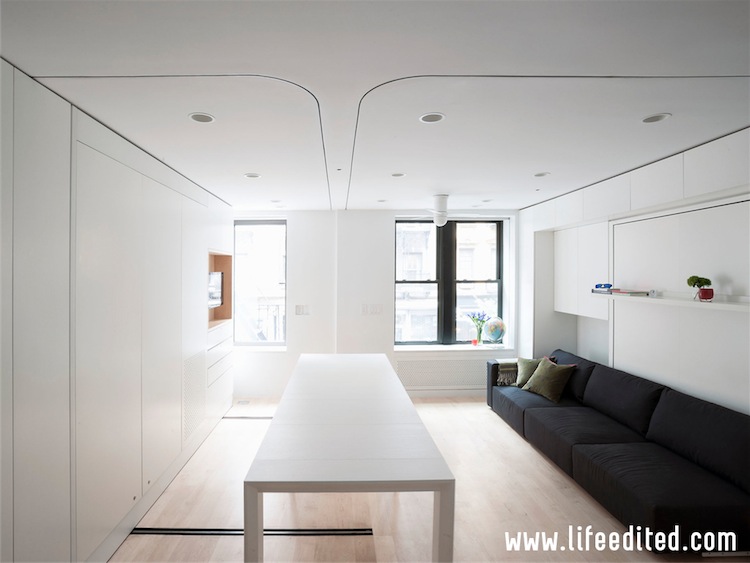
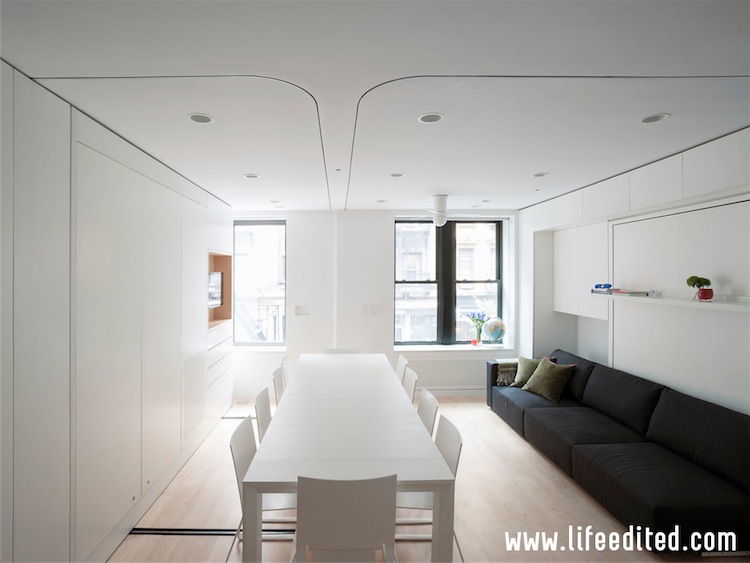
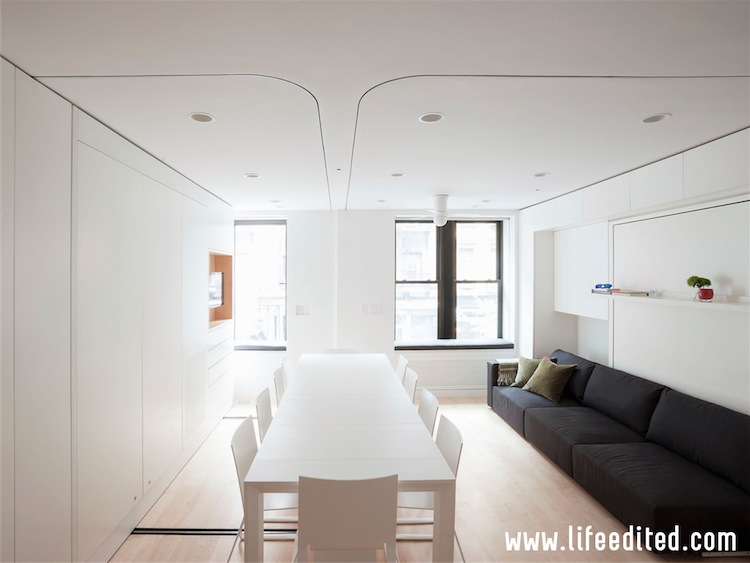
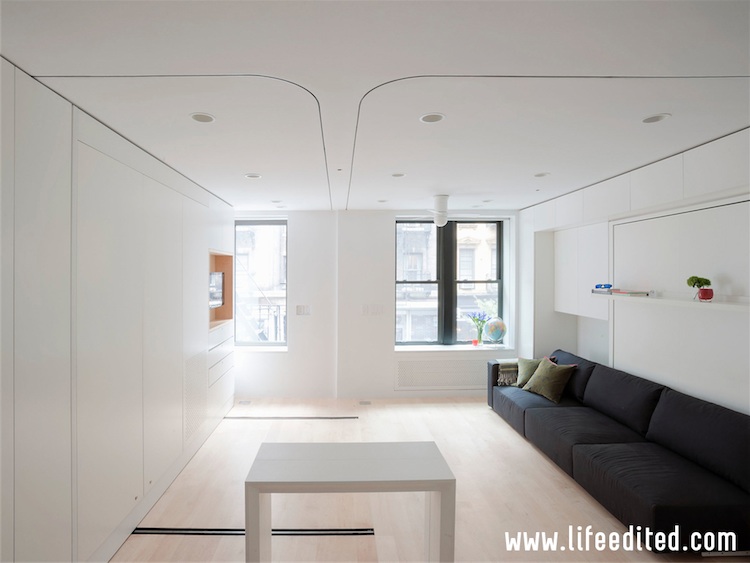
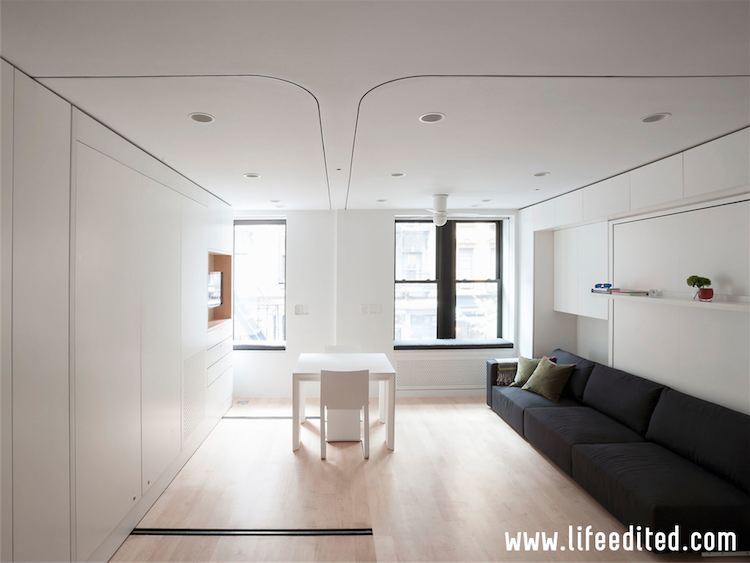
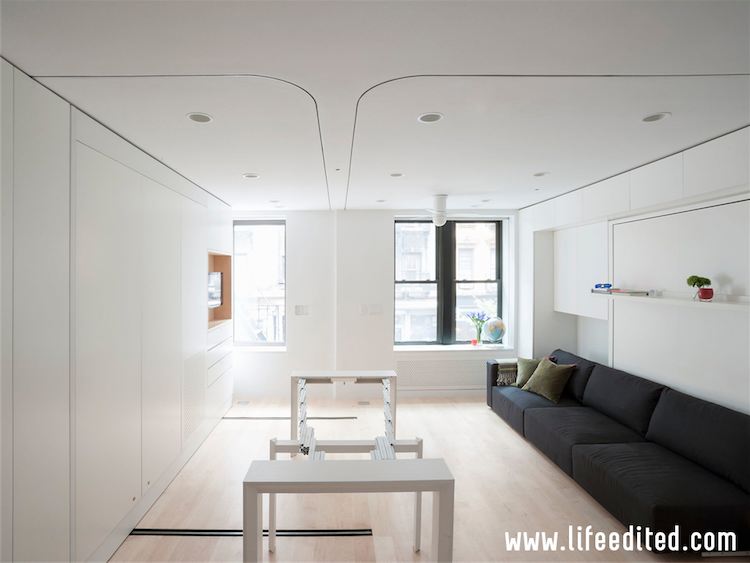
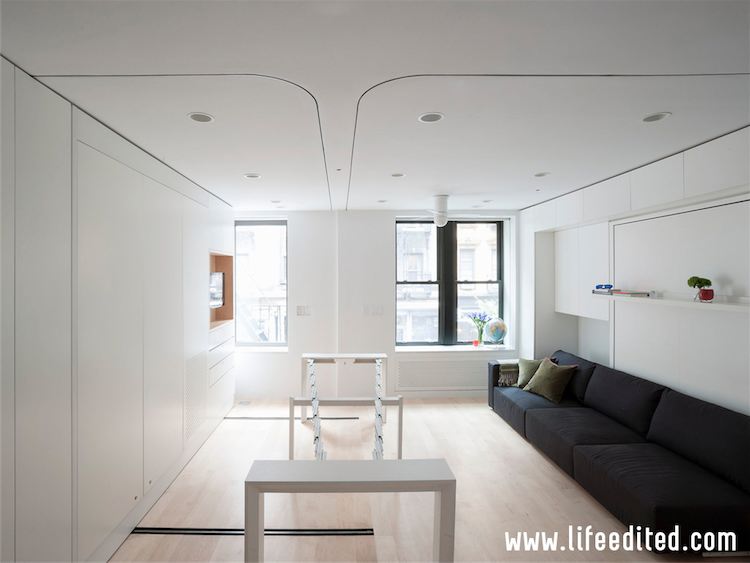
Of all the pieces of furniture in the LifeEdited apartment, none get more oohs and ahs than the Goliath Table. The table, made in Italy by Ozzio and distributed in the US by Resource Furniture, transforms from a 17″ deep console without leafs to 115″ dining room table with.

Depending on how many of the five leafs you add, you can make the table appropriate for seating two, four, etc. In the cozy 420 LifeEdited space, it’s a critical piece of furniture, allowing us to easily host dinner parties for ten plus people.

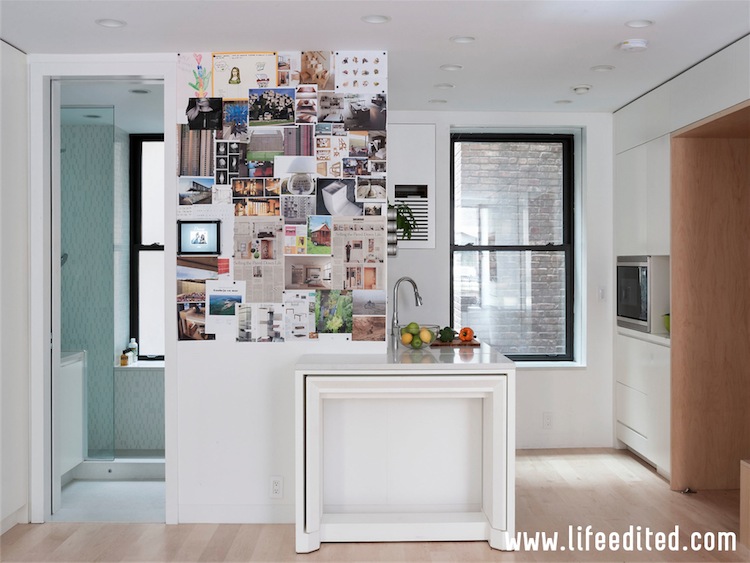
When not in use, we store the table under a breakfast bar made especially for the Goliath.

The table is available in a number of durable finishes. Visit Resource Furniture’s website for full details. While the starting price of $3950 might strike many as a lot of money, consider that this table can effectively turn any room into a real dining room. Think about the cost of eliminating 50-100 sq ft from your home. How much would that save?

Perhaps you’d use it to turn your dining room into something you might use more like a home office. Likewise, the table’s high quality construction make it something you can keep for many years. Looked at this way, we think the Goliath a great investment (it’s sure to impress your dinner guests too).