Do More Nesting in Your Nest

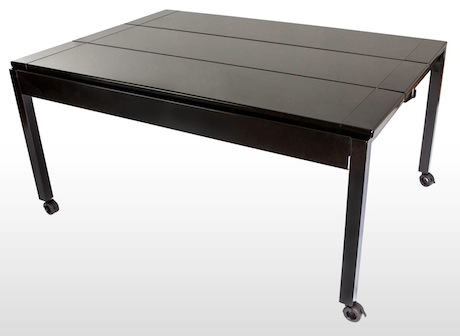
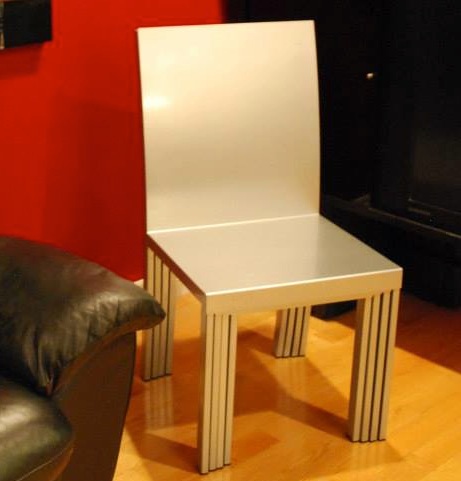
Nester is a Canadian company that makes adaptable, transformable furniture that would work well in small homes. The two pieces on offer are the Kameleon table and the Repeater chair. The former is a table that transforms from 15″ x 61″ console, and is expandable to a 61″ x 42″, 78″ x 42″ or 96″ x 42″ table, depending on the number of internally stored leaves that are inserted. The Repeater is a four-in-one nesting chair system. The chairs fit together like matryoshka dolls, with larger chairs concealing the smaller ones below.

The Kameleon reminds us of a more utilitarian version of the Goliath table by Resource Furniture, as it permits an expansive dining surface for the occasions you need such a thing. While a little smaller in its expanded length than the Goliath (96″ vs 115″), its internal leafs cut down on storage space.

nester-kameleon

The Repeater’s stealth concealment of four chairs is pretty nifty. With the smallest chair appearing to have more than adequate width for an adult (albeit a slim one), there seems little functional sacrifice to this setup.

nester-repeater-stacked

Perhaps the biggest check against Nester products is something Lloyd Alter brought up on Treehugger, which is the material choices. The Kameleon is made of powder coated aluminum and steel (a wood top will be available soon) and the Repeater is all powder-coated aluminum. These industrial-strength surfaces would make them quite durable, but tactilely cold and, in the case of the chair, possibly slippery (we look forward to checking them out at ICFF). We might also make the Kameleon a bit skinnier in its expanded form, as 42″ is pretty wide for a dining table (though this might not be feasible from an engineering standpoint).

Both the Kameleon and Repeater are available for sale direct from Nester, starting at C$1295 and $899, respectively. See more details on their website.

Via Treehugger

Make Any Surface a Table

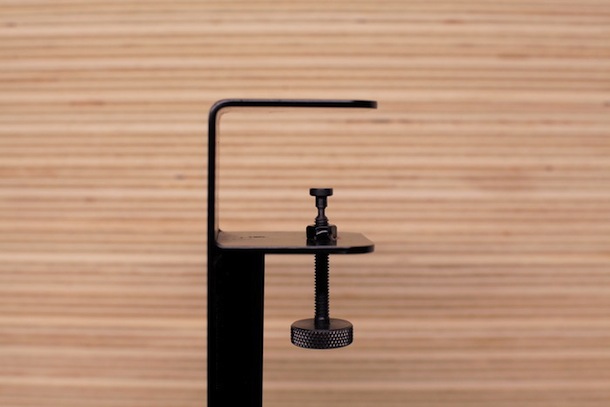
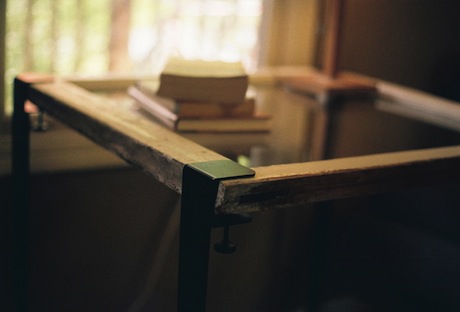
One of the marvels of Kickstarter is that successful products tend to be either: A. common products done well (backpacks, dress shirts, etc) or B. products whose usefulness is so profoundly obvious, you wonder why no one made it up until now. The Floyd Leg is an example of B. It’s a table leg that clamps onto any board to make an instant table.

floyd-leg-detail

There’s not a whole heck of a lot to say about the Floyd Legs. They will be available in both 29″ dining and 16″ coffee table heights. They feature a clean design and will be available in multiple powder-coated colors. They will have a machined F-clamp attached to an 11 gauge cold-rolled steel leg shaft. Kyle Hoff and Alex O’Dell, the guys behind the project, say they are ideal for light to medium use, such as a desk or planter table. Because of a lack of cross-bracing, they say that making them into a dining table is not ideal, though we suspect it’d work if the surface wasn’t too big.

We see the Floyd Leg as a perfect compliment to small space living. Because of their svelte size, you can hide them away if you don’t need a table most of the time. You could keep a couple easy-to-store boards around to suit whatever function you needed on a particular day. If you move to a larger space–or a smaller one for that matter–all you need to do is switch out the surface to make an appropriate sized table.

The project has has met an amazing $165K of its $18K funding goal. A $189 pledge will get you a set of 16″ or 29″ legs. Projected delivery is late April of this year. See more on their Kickstarter page.

Make it Simple, Add Magnets

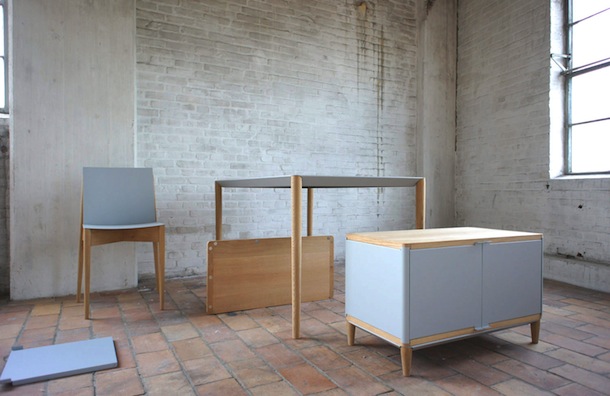
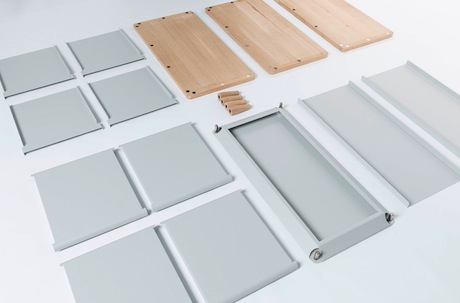
Perhaps it’s because this author recently had to put all of his furniture in storage while his future home is being renovated–whatever the reason, I’ve become very fond of furniture that’s easy to disassemble and store. First it was the IN A BOX collection by TRUE. Today, it’s Benjamin Vermeulen’s MAG (Magnetic Assisted Geometry) collection. Rather than relying on screws or traditional joinery, the MAG’s flat-packing furniture comes together via (you guessed it) high power magnets.

Vermeulen correctly asserts that flat-packing furniture is more economical and eco-friendly than traditional furniture, but most of it is tough to assemble and suffers from crappy materials and construction (not naming any names of who he might be referring to). MAG, on the other hand, is made entirely of solid wood and steel. Almost all of the furniture’s parts are held in place by magnets (we imagine they’re the extremely powerful, rare earth variety); additional support is added with stanchion fittings at critical stress points. MAG requires no tools and assembles in minutes. This type of construction is not only convenient, but it makes all of the furniture customizable and easily repaired.

MAG_cabinet_2

The furniture’s convenience would be far less appealing if it was ugly. But it is not. Vermeulen’s simple and light designs match the unfussy nature of its construction. Vermeulen is working on getting the chair produced for Q1 2014 with the rest of the collection following shortly thereafter. Shipping worldwide will be a breeze because of its flat-packing design, he reports. No pricing information just yet. We’ll keep you posted.

Via Dezeen

We Talk to Ron Barth of Resource Furniture

We throw the name Resource Furniture around this site with a high degree of frequency. The New York City-based retailer–who also has seven other outlets around the world–has one of, if not the largest collection of transforming furniture on the planet. More than purveyors of Murphy beds, RF has found its niche selling high end, quality transforming furniture, worthy of keeping for many years.

We took a moment to speak with RF’s president and co-founder, Ron Barth about how they came to be, what they do and why they do it.

David Friedlander: Tell us about how Resource Furniture came to be?

Ron Barth: Steve [Spett, co-founder] and I used to work at the Pace Collection on New York’s Upper East Side. We both left at the same time in 2000 and decided to start our own furniture company. Rather than having a physical collection, we wanted to start a catalog showroom. Our experience at Pace showed that people were often willing to buy furniture based on pictures. We wanted to offer European furniture with great quality, design and value. We scoured Europe, going to shops, testing furniture, turning cabinets upside down–making sure we were dealing with great manufacturers. After several trips over a yearlong period, we accumulated 460 catalogs, 98% of which were from Italy. We rented an office space with an 11’x16’ conference room where people could go through the catalogs and pick the furniture they wanted. In 2003, we got a showroom at our current location [969 3rd Ave] so we could have some floor samples.

[divider]

In a bigger space, there’s no imperative to edit your life. I recently went through some stuff in my home…There were beanie babies. What was I holding onto them for? Investment purposes? 

[divider]

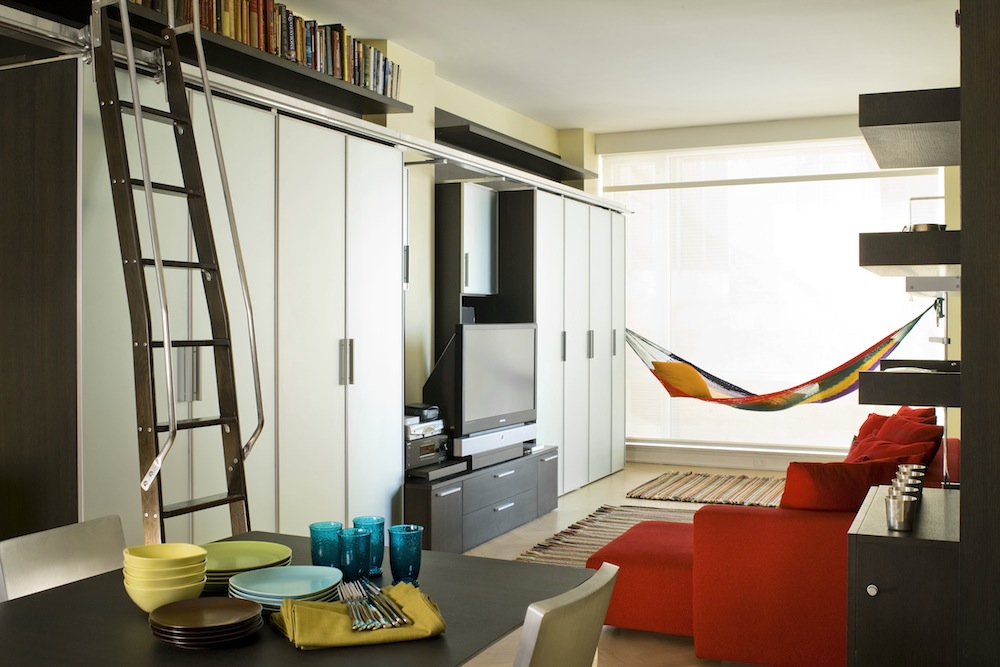
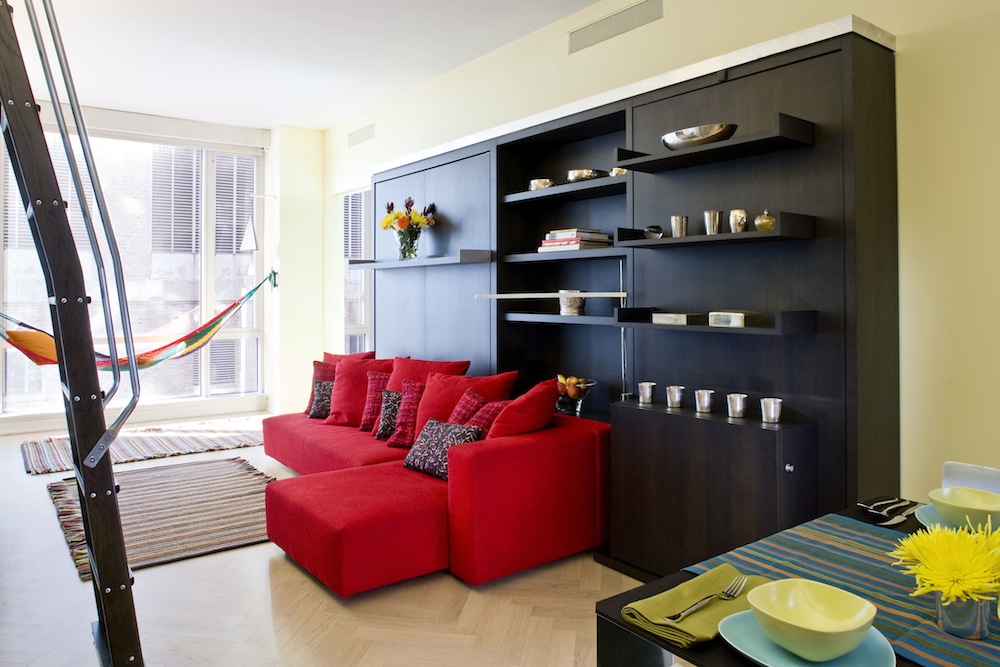
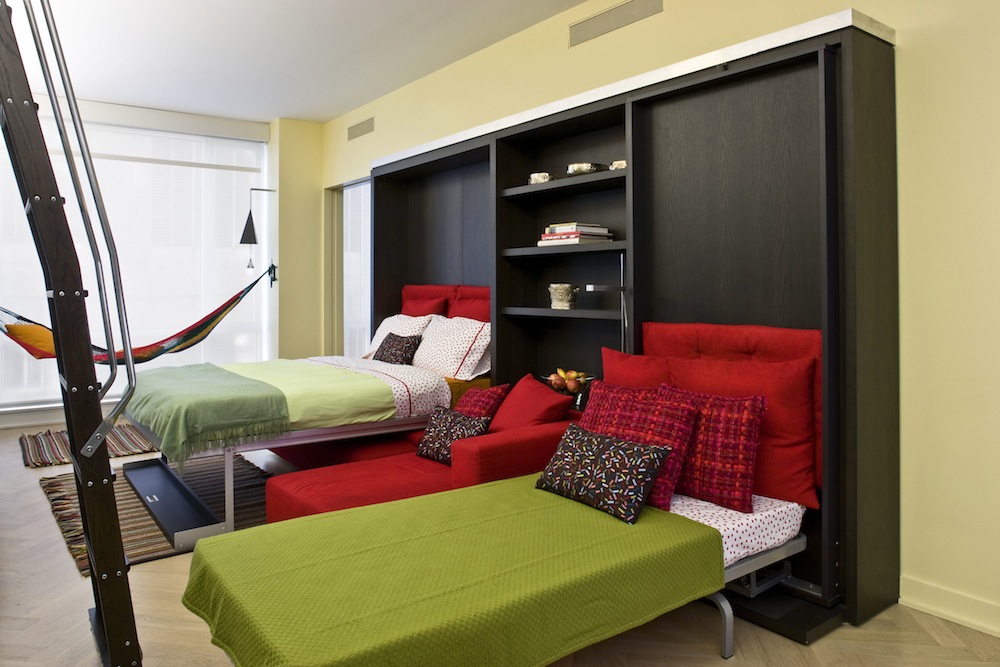
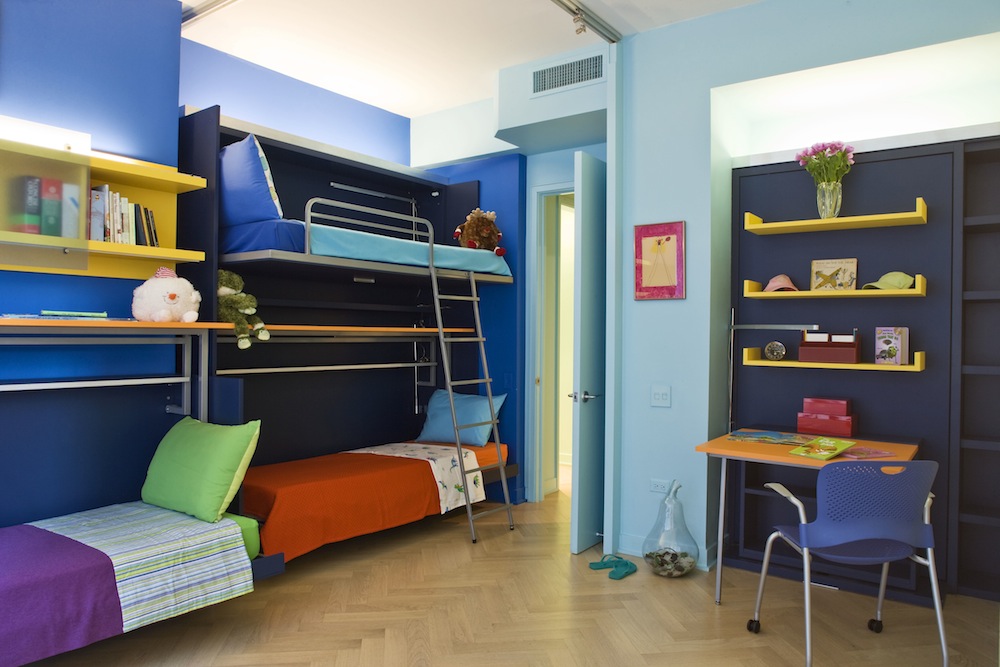
We really found our niche in transforming design in 2007. Timothy Nanni of Construct Architecture Studio commissioned us to make a two bedroom apartment in New York work for a single mother and her four children [pictured below]. We furnished the entire apartment with Clei furniture [the manufacturer of many RF’s furniture]. The project went off without a hitch. Steve and I realized we had a real business here. We ordered floor samples and installed them; bought some ad space in the NY Times and the rest is history.

Most high end furniture doesn’t take space efficiency into account because the people who can afford it usually have huge homes. We’ve been successful because we offer something unique: quality furniture with high design that optimizes any space it’s put in.

DF: Who buys your furniture?

RB: We have all types of clients. We do a lot of kids rooms. Many people, especially in New York City, don’t want to or can’t afford to move from their one or two bedroom apartments when they have a kid or two. Our furniture makes it possible for a smaller space to function like a larger one. For example, we can fit a bunk-bed, desk and sofa into a 10’ x 12’ room. There are people looking for second bedrooms that can be used as something else like an office. We get people looking to make their studio apartments into functional living spaces–not just big bedrooms. We get a lot of renters. Conservatively speaking, you can save $500/month by renting a studio versus a one bedroom. That’s $12K over two years and you have furniture that can come with you to your next place. We also get people decking out vacation homes. We have fit sleeping for eight in a 300 sq ft room. All types.

DF: What do you think are the most important aspects of designing a small space?

RB: The first thing I’d say is the smaller the space, the better the quality has to be. A small space really accentuates imperfections, so I think it’s important that tolerances and precision of craftsmanship be high. Our furniture is simple and high quality, so it doesn’t lend itself to sensory overload. When furniture is of poor quality, particularly in a small space, it’s tough to feel centered.

The next thing is to focus on the function you need the space to perform. If someone works 18 hours a day and just crashes out in their bed at night, they may just need a bed and a roof. But if you work from a one bedroom home, have a spouse and child, you’re going to need something more. We have 40 different bed products with all varieties of functionality: twin beds with desks, queen beds with sofas, full-sized beds with dining tables and so on. However you need your home to function, we can help achieve that in less space than most conventional furniture would permit.

DF: What do you see as the biggest advantages to living in small spaces?

RB: There are a number of advantages. In a bigger space, there’s no imperative to edit your life. I recently went through some stuff in my home and because we have a little extra space were holding on to things that we just don’t use. There were beanie babies. What was I holding onto them for? Investment purposes? Many people re-sign leases and stay at homes larger than they need in order to avoid confrontation with their stuff. All this stuff begins to own you, rather than you owning the stuff.

When you live in a small space you don’t accumate this kind of junk. You’re careful about what you buy, you get rid of stuff you don’t need, you don’t have that pair of shoes you don’t use.

The other thing is many people who live in small spaces often have more interesting lives. When you live in a small space with less stuff, your life becomes more about what you’re interested in rather than what you own. What are you working on, studying, who do you socialize with–these become the focal points of your life, not the things you collect or the size of your TV.

I also think it’s easier to feel centered in a smaller space. We all know what it’s like to find that perfect corner where we cozy up with a great book. Can you do that on a bench in a three story foyer of your McMansion? Of course not. There’s no center in a space like that.

Of course there’s the practical stuff: less stuff, cleaning, cheaper to rent, buy, heat, cool, pay taxes on, etc.

DF: What are the biggest disadvantages?

RB: Sometimes, people just run out of space and don’t know how to fit their lives into their existing spaces. Sometimes this is a legitimate thing. But I’ll say that people “outgrow” their spaces as the result of not having the furniture they need. If they really tried to make their spaces work efficiently, working with the kind of furniture Resource Furniture sells, more people would find their current spaces are more than sufficient–in fact, they might be downsizing more.

DF: Tell us about one of your favorite projects?

RB: A man from Kooskia ID [middle of nowhere] calls me up and says he needs to buy furniture for his house. He says he has five children and they’re running out of room in their four bedroom house. I tell him that furnishing an entire house will cost a lot of money. He said he figured it was–it was made in Italy and there are no prices on the website. These were not the hallmarks of discount furniture stores. I suggested he might be better off moving to a larger home. How much could a five bedroom house cost Kooskia, ID?

He replied that a five bedroom house would cost about $100K more. But that was the least of it. One of his children had a disability, so moving would likely mean that he’d have to change schools or increase the commute to his school. In fact, the entire family’s routine, which worked quite well, would be disrupted if they moved. Then there’s finding this new home. He and his wife worked. They’re “free time” was spent making sure the kids were fed and their homework was done. When were they going to look for a house? Two of his kids were 15 and 16. They’d no longer need the extra bedrooms in a few years. Moreover, a bigger house would have higher taxes, greater utilities costs and require more maintenance. I got the picture.

He bought an entire house’s worth of furniture–$44K total plus another $7K to ship to Kooskia. He said that was cheaper than real estate commissions, closing costs and moving would have been for buying a new house and selling his old house. He put all of the furniture in the garage and did a room a weekend. We never met in person and that was the last I heard of him.

I’m actually not a fan of pigeon-holing the idea of “small space design.” I think it’s about finding a space that’s appropriate for you, your budget and needs. For this guy, that was a four bedroom house. When you find that space, through smart design and use of furniture, make it work as efficiently as it can. That’s the business Resource Furniture is in.

The Wonderful World of Paul Menand

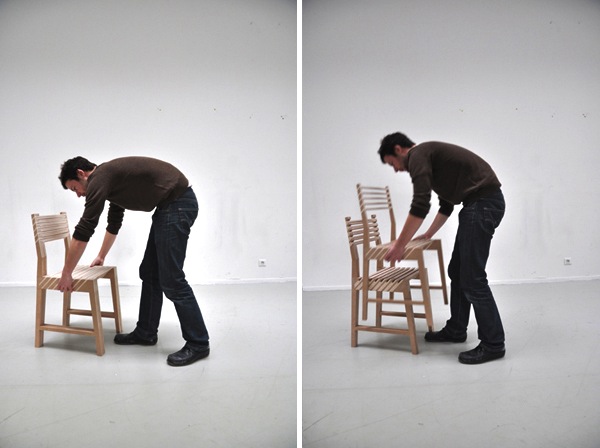
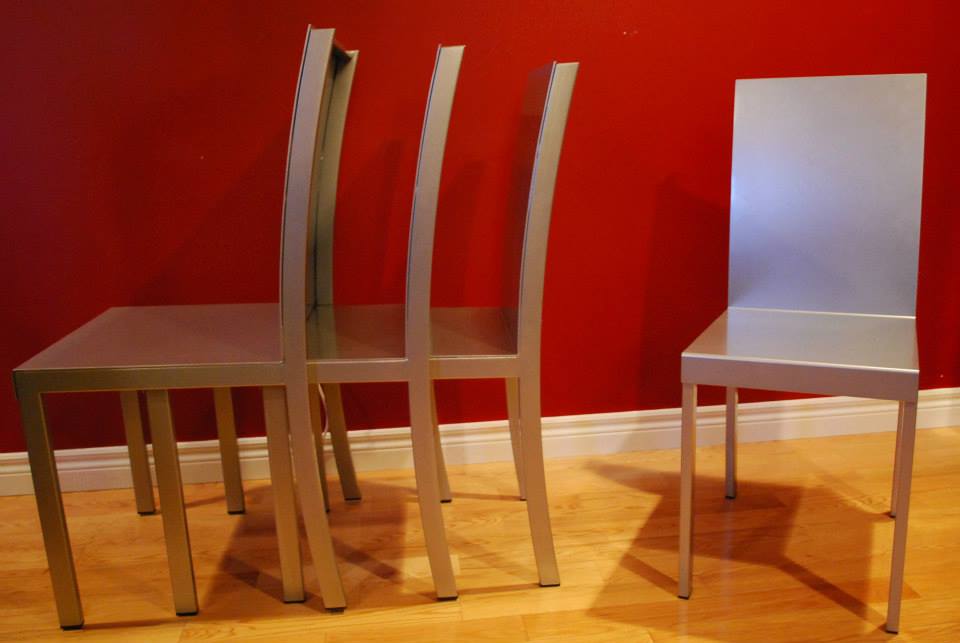
Paul Menand is a French industrial designer who works with common materials to make furniture that is anything but. Of particular note are his Triplette Chair and the Modest Stool (Chaise Triplette and Tabouret Modeste en française). Upon first glance, both appear to be a solitary pieces of furniture–a chair and stool, respectively. Through precise CNC machining of interlocking parts, the solitary piece comes apart becomes three chairs and three stools.

modest-stool

Static images don’t do the furniture justice, so check out these short videos showing the furniture in action.
As far as we know, Menand’s designs are still prototypes and not for sale. With their delicate structures, we wonder about their durability. Questions like “can you sit on it?” aside, we appreciate his ingenious and elegant designs and imagine they could be the basis for practical, space-saving furniture.

See more at www.paulmenand.fr

A Room’s Furniture In a Box

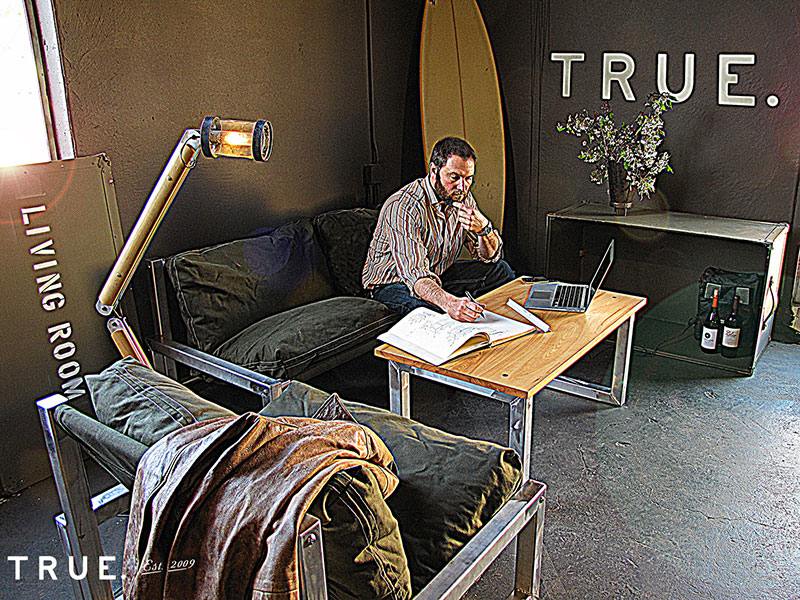
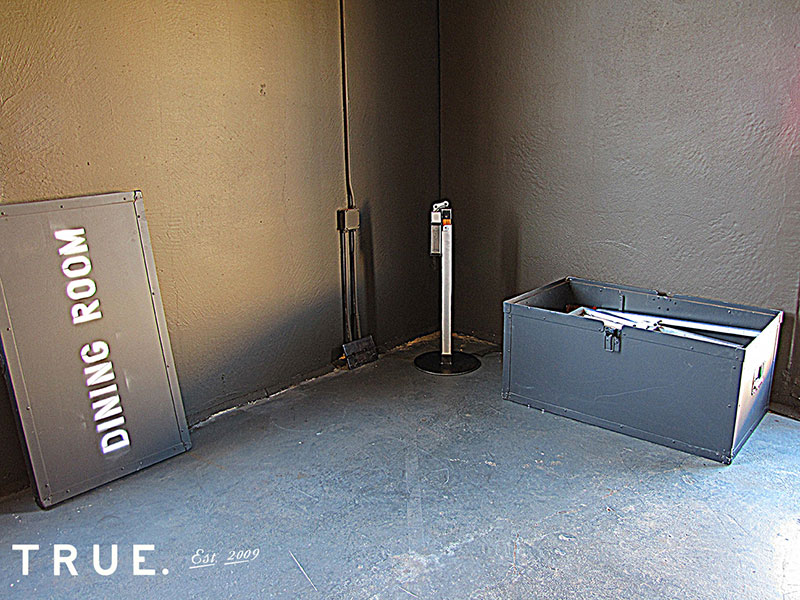
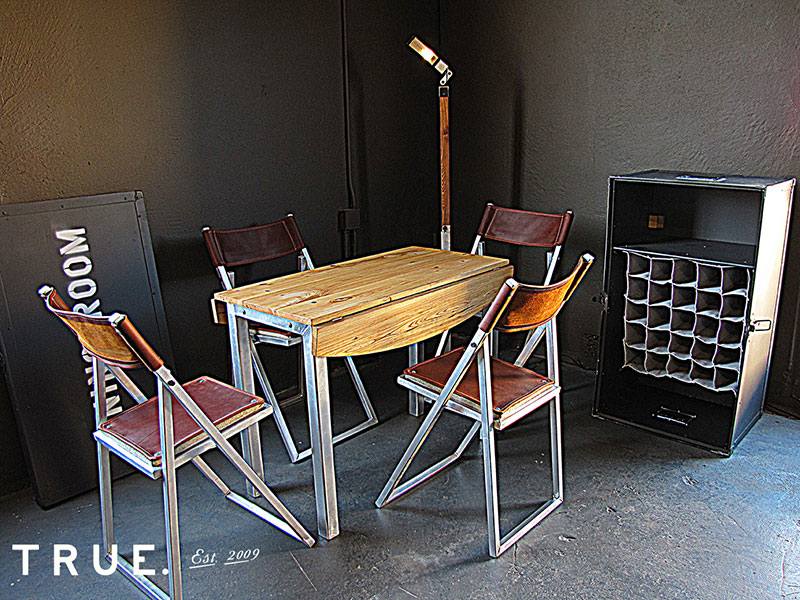
Few things are as prohibitive to living a lightweight lifestyle–one where you throw your stuff in small storage locker for a month or two while you travel–than furniture. Furniture tends to be awkward to move, it gets dirty easily and it’s hard to stack. Many times, throwing it to the curb seems just as practical as storing it. A company called TRUE makes this dilemma, well, false. Their IN A BOX furniture sets stash complete room furnishings into boxes that are easy to stash, store and move.

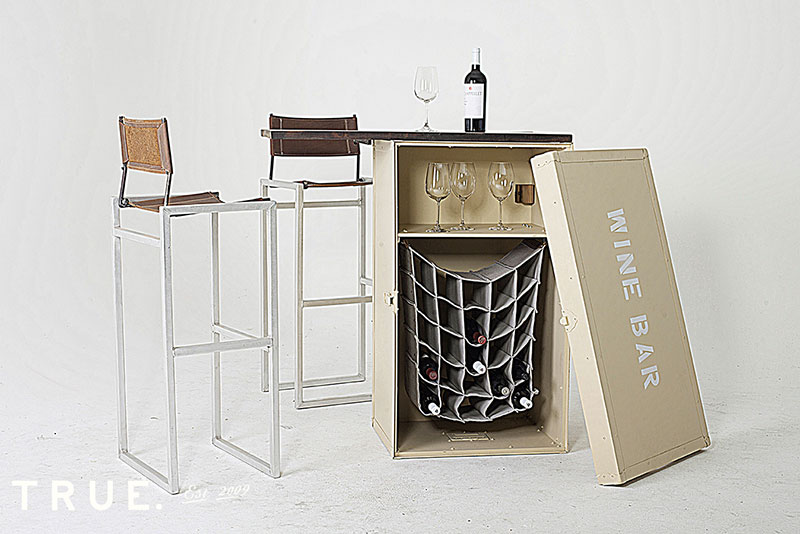
They have three different sets: the living room in a box, which fits a sofa, club chair, entertainment center, lamp and coffee table into a 42″L x 24″W x 21″H, 190 lb box; the dining room in a box, which fits a table, four chairs, a lamp and wine rack into a 35″H x 18″W x 20″D, 201 lb box; and, for the minimalist oenophile, the wine bar in a box, which fits two bar stools, a hightop table and wine rack into a 45″H x 19″W x 15″D, 141 lb box (no box wine included).

All of the furniture is made of welded aluminum, reclaimed wood, “reclaimed” steel (recycled?) and hand-sewn canvas; the wine bar top is made of vintage redwood from old merlot tanks. TRUE says that the furniture has “an aesthetic that’s neutral with an industrial appeal.” We think it looks like something out of Patton’s field camp…but in a really cool way.

Despite its military surplus looks, IN A BOX ain’t cheap. The living room set is $4200, the dining is $4600 and the wine bar is $1900. Considering: 1. the furniture is all handcrafted, 2. the two boxes could more or less furnish an apartment (the wine bar seems a bit extraneous), and 3. the furniture could give someone a level of unheard of mobility while still maintaining pretty jazzy style and comfort, the prices might not be that ridiculous.

Milk Crate Furniture for Grownups

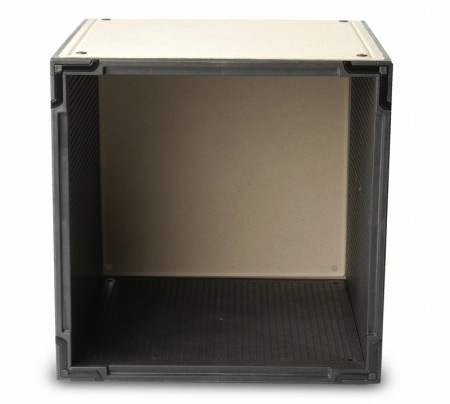
Chances are milk crates somehow made their way into many of our first forays into home decoration. The ubiquitous plastic crates stack great, provide lots of usable storage, and can be used as a stool or end table in a pinch. But they tend to warp, break down quickly and, frankly, look pretty rough. A company called Yube now provides an adult replacement to the milk crate. Their YubeCube is a 13″ cube that does all the duty (and a lot more) of the milk crate, without the fresh-out-of-high-school aesthetic.

yubecube-cube

The YubeCube is infinitely customizable and configurable to whatever situation you need it for. Unlike milk crates, they lock together and can be stacked up to 6′ 5″ high. They can handle 110 lbs internal weight and 55 lbs external load. You can leave them open or close them off with myriad door styles including polished aluminum, frosted glass, bamboo, white or several different patterns and colors. You can add feet, wheels, shelves and LED lights to the cubes. The YubeCubes also feature a very solid eco-cred, with panels made entirely made of sugarcane fiber, bamboo and recycled plastic.

yubecube-coffee

Yube offers the cubes individually or in various different sets such as a bathroom set, media storage, coffee table or desk. Individual cubes sell for $34.50 without accessories. Sets range from a $100 nightstand to a $1250 extra wide wall shelving unit.

If they asked us, we might suggest the YouCubes have a higher weigh load, as it’d enable them to be seating. And while they are certainly more polished than milk-crates, they still have a somewhat utilitarian look about them.

Our little gripes notwithstanding, we think the YouCube is a great idea. It’s a piece of storage that can be used as furniture and can be modified to meet a million different purposes, styles and room sizes.

Being a Lightweight is a Good Thing

Maybe it’s because I am in the process of moving, but the prospect of having a lighter existence is very appealing right now. I am not referring to a metaphoric lightening–fewer obligations, less stress, etc. I am referring to a reduction in mass. Wouldn’t it be cool if everything we had was light and easy to move, handle and ship? Bucky Fuller thought so.

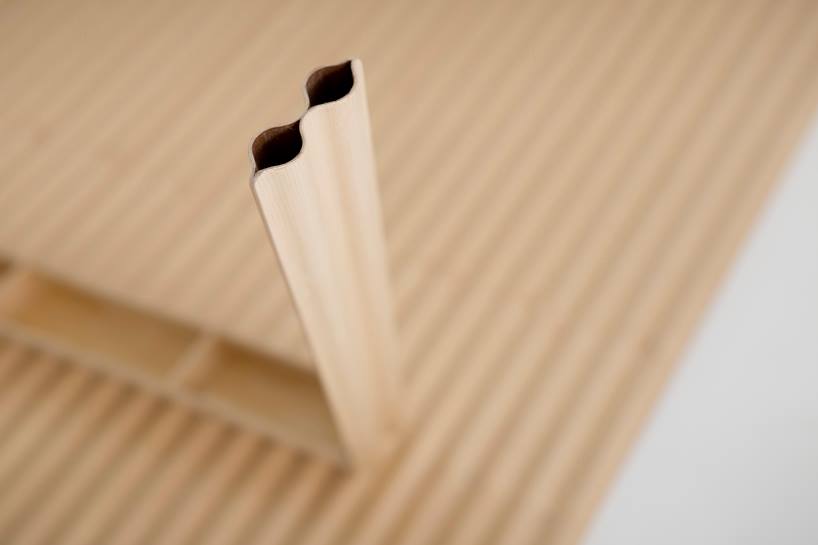
The problem is, unless you want to get that carbon fiber easy chair, is lightweight is synonymous with flimsy. British industrial designer Benjamin Hubert‘s Ripple table defies this notion that light and strong can’t coexist in furniture in design. The table 8′ x 3’ table is an astonishingly light 19 lbs thanks to a specially laminated, birch plywood made with Canadian wood manufacturer Corelam. The ply edge is only 3.5 mm. And because of its corrugated structure, the table is reported to have strength equal to solid wood.

Beyond industrial design marvel, the table is gorgeous. It will be available for sale soon. We’ll report to you when we have pricing info.

Via Architizer

Buying A Stairway to Storage

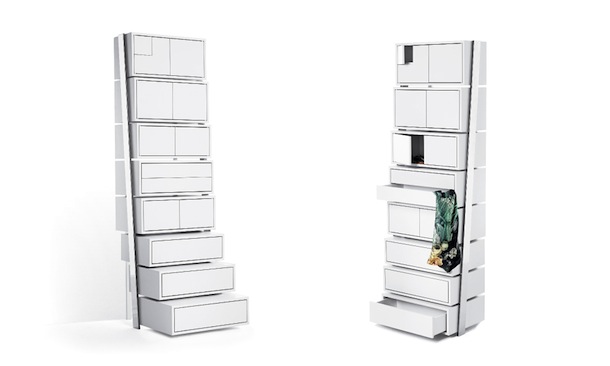
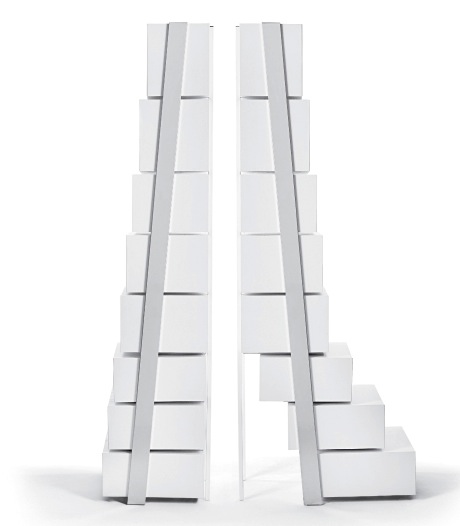
Building vertical storage makes buckets of sense in small spaces, but accessing it can be difficult. What’s the point of storing stuff if you can’t access it? Designer Danny Kuo has a brilliant solution for this conundrum: use the bottom storage to access the top. His “Staircase” storage unit’s lower three drawers pull out to act as steps to access the higher cabinets.

danny-kuo-side

The 7’2″ retail unit is made of MDF and stainless steel and is available for sale on Opinion Ciatti. No mention of price.

Update: White version above is $11,440.

Furniture Fit for an 81 Square Ft Home

One of the biggest mistakes you can make decorating a small space is shoehorning furniture designed for more conventional spaces into your compact space. If the space you’re working with is 81 sq ft, not only is there no space for conventional furniture or much stuff, there is no room for error–every square centimeter must be thought out and purposeful. This was the challenge Vancouver-based designer D Calen Knauf faced when he was commissioned to design furniture for some short-stay, single occupant dwellings.

Beyond the space constraint, Knauf had to design the furniture with sustainable materials and it had to cost less than $500CAD. His Nine by Nine collection is his response to these challenges.

Every aspect of the furniture was designed to reduce visual clutter. Knauf explains some of his methodology:

We used wireframe-style construction to open up the room wherever possible instead of closed in panels. When flat panels were needed, we used bent steel for its low visual profile. By orienting the hanger rack so that the clothes face the user instead of the conventional method, the wardrobe unit can be pared down to 12 inches deep, taking up less of a footprint into the room. One of the four beams has been removed so hanging clothes are more easily accessed. Even reducing visual clutter helps make a room seem bigger, so we included a cable well behind the desk so the user can keep important things on the desk and power cords out of sight.

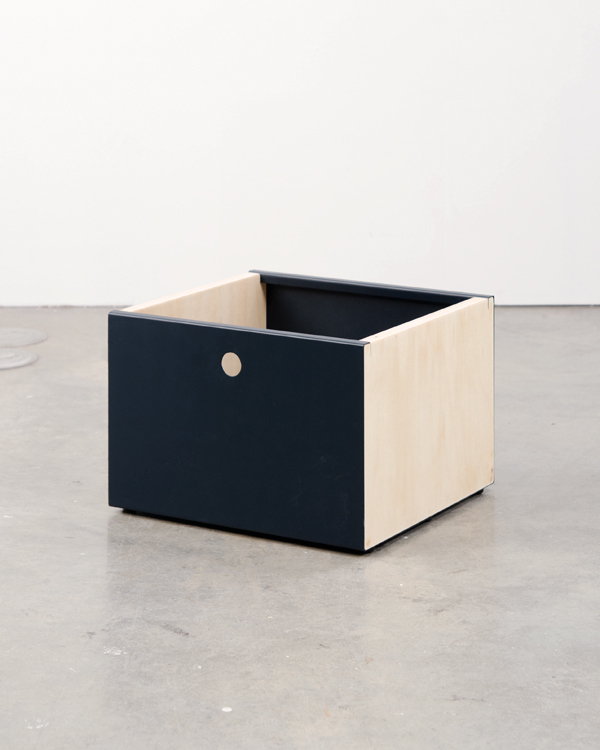
To keep with the sustainable theme, wood is locally sourced fir ply. In order to keep prices in check, the number of items were kept to the bare minimum and designed to be multifunctional, like the wardrobe drawers that can also be used as standalone storage units.

Knauf’s design definitely supposes a resident with virtually no possessions–and possessions he or she is willing to display. But we like the reasoning behind his design and its clean, modern and utilitarian aesthetic. If we had to live in 81 sq ft, this might be how we decorate it.

Image credit: D Calen Knauf