Video: The Year of Magical Furniture

When we cover interesting compact spaces on this site, we usually list their usable area, expressed in square feet or meters. We are pretty hardwired to draw a correlation between a space’s area and functionality. Even when we take pains to list the functionality first, it’s always couched in the “wow, you can do that in a small space?” But what if we decoupled space and functionality altogether? You see, listing area is a conventional approach to understanding space. It’s something easy to wrap our heads around and measure with a stick. But area often misrepresents the gestalt–i.e. the sum total of architecture, furniture, embedded technology and the other UX elements that can help a space transcend its physical dimensions. This talk by Hasier Larrea places special emphasis on the role of furniture to determine how a space performs.

His thesis is that architecture has barely changed in the last 2K years. We keep making static spaces, single function rooms filled with “space killers”–things like beds that lay waste to a space’s functionality the moment after they’re used. He proposes that we augment spaces with transforming elements–ones that are effortless and magical–to create spaces that are alive around the clock.

Larrea knows a thing or two about this subject. The MIT Media Lab alum was part of that school’s CityHome project, which created a high tech furniture module that endow small spaces with tons of functionality. He is now the CEO of MorphLab, a startup that is out to make robotic, open API furniture modules to kill the space killers that not only doom a space’s action potential, but also create a dearth of affordable housing in cities across the globe. He and his team are trying to create a future where our homes and other spaces magically change form to meet our needs.

Furniture for the Ultralight Set

A great deal of micro housing is filled with furniture from the Afterthought School of Design. Micro housing is great for folks whose existences are highly mobile and/or those who are committed to keeping their financial overhead low; as such, investing in high design, high cost and high mass furniture often takes a backseat to low cost, lightweight or easily moved/disposed furniture. Dutch designer Joey Dogge has created a minimalist furniture system that challenges this trend. Dogge’s Yatno line is compact, lightweight, multifunctional, easy-to-move, affordable and beautiful, creating a vision of what small space furniture can look like.

yatno-duaa

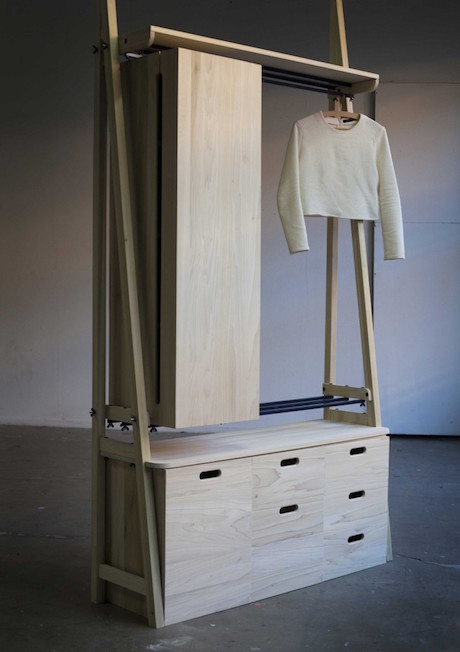
The Yatno collection centers around two main structures: the Yatno Satu and the Yatno Dua. The Satu has open shelving and can be configured to have a desk, a lounge chair or cot. The Dua has a clever stepped drawer system (called the “Laci” and can be ordered a la carte like all the pieces), which acts as stairs used to access upper storage. There is also a sliding cabinet on the Dua that shares a rail that acts as a hanging clothes rack. All of the furniture is freestanding and can be assembled by hand, relying only on wing nuts for fasteners.

yatnodua

The whole system is pretty gorgeous and was designed to fit in a space as small as 50 sq ft. While to overall design seems pretty well sorted out, our big question mark is the cot, which does not look particularly comfortable. Dogge, as model, gets the Oscar for man relaxing reading a book in his promo video. We imaging with a little beefier frame, larger mattress and small headboard, this could be easily improved. Dogge has a full catalog available online showing various customizations for the systems. A recent blast by the company says they are entering their final phase of product development. Visit the Yatno site for more info.

Check Out These High-Tech, Transforming, Carbon Fiber Shelves

Carbon fiber is the material of choice when engineers and designers need high strength without added volume and weight–perfect for things like bikes, wheelchairs, high performance cars, aerospace parts, etc. But aside from a few novelty items, carbon fiber hasn’t been a mainstay in furniture design. The reason is simple: carbon fiber is pretty expensive, difficult to manufacture and most furniture doesn’t need to be particularly lightweight, so metal and lumber derived materials are the go-tos for furniture construction. But Japanese design house Nendo’s new Nest shelving unit is presenting a compelling reason why carbon fiber might be incorporated into modern furniture design.

nest

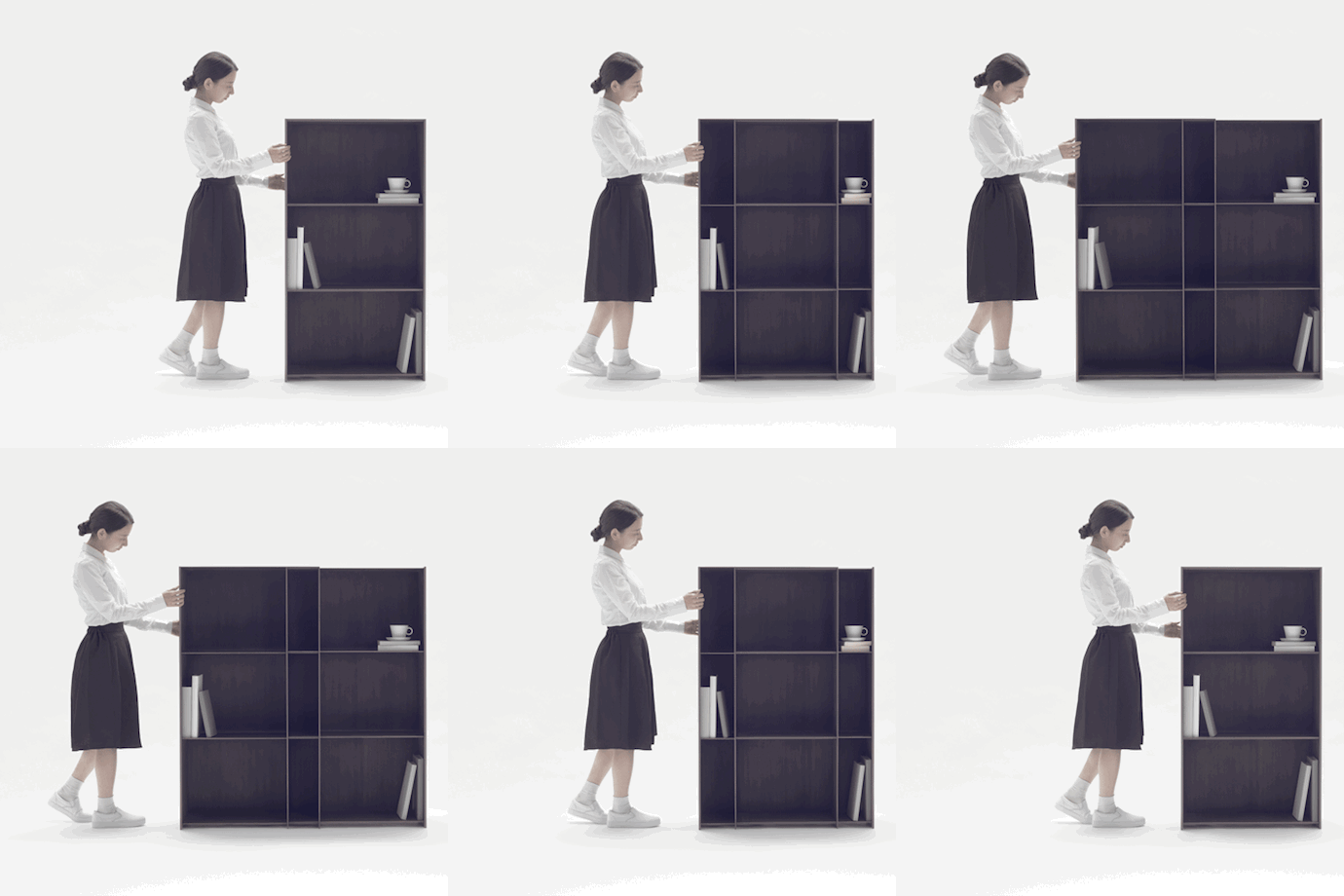
The Nest shelves expand from 25” to 51”. The vertical sheets are made of 3.7mm carbon fiber and the horizontal ones are made of a honeycomb material sandwiched by carbon fiber sheets. The whole assembly is clad with a thin larch veneer so it still has a somewhat traditional look. This construction allows Nendo to make their shelves super thin yet very strong. As such, when the shelves are nested on top of one another, it’s tough to tell there are additional panels under the top ones, thus maintaining a lithe, modern aesthetic. And because of carbon fiber’s rigidity, the shelves, when extended, make no compromise in strength.

While the combination of high strength and low weight and volume are not necessarily that important for things like sofas and built-in furniture–things that don’t move or do that much–items like the Nest shelves can benefit greatly from carbon fiber construction. You could make other items such as chairs that are super slim and strong and store compactly or an ultra thin large table that folds in on itself–furthering the argument for applying high technology to the sometimes technology-resistant world of furniture design. 

Via Dezeen

This is the Future of Furniture Design and Fabrication

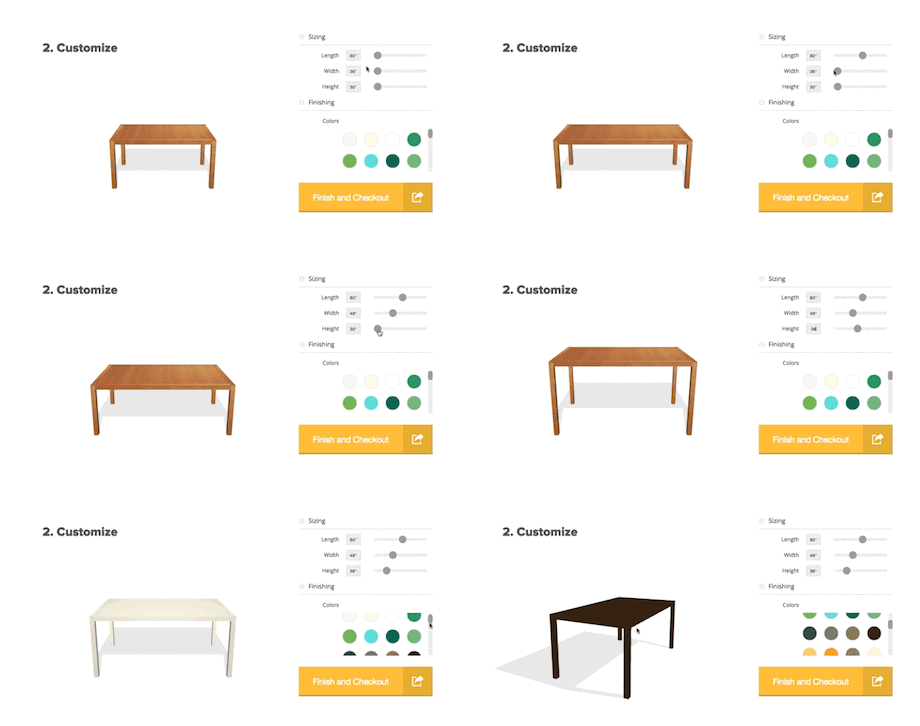
Designing small space furniture might not be rocket science, but it does require geometry. More specifically, it requires making furniture that’s proportional to a particular space’s dimensions. Now imagine you could easily design and adjust the dimensions of your furniture to be proportional to your small space (or large one I guess). And imagine this same furniture could be seen in your space through your mobile device via an augmented reality app. Imagine no more, because now there’s Tylko.

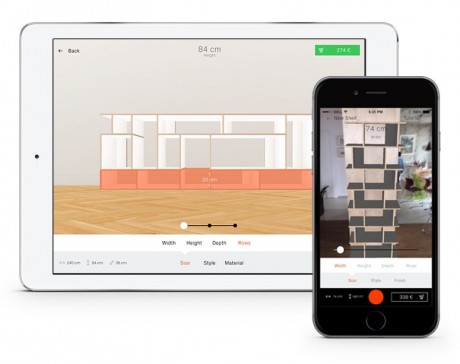
Through its very easy to use web interface, Tylko allows you to create custom furniture that’s just right for your space. But their app goes several steps further, using your iOS device’s camera to create an augmented reality view of what the furniture will look like in your space.

tylko-app

Right now, Tylko’s website features a number of smart looking plywood cabinets whose dimensions and finishes are incredibly easy to adjust. The app will be launching today at London’s Design Festival and will coincide their new Hub Table, a collaboration with celebrated industrial designer Yves Béhar. The table’s dimensions, legs and finishes will all be totally customizable. Tylko boasts that between their table and cabinets, there will be “billions” of different customization options available via the app.

tylko-tables

Unfortunately for most of us, the app will only be launching on the Apple app stores for Germany, Austria and Tylko’s native Poland. But we suspect that between its incredibly user-friendly user-interface and ability to make nice-looking and reasonably-priced custom furniture, their technology and idea will spread quickly.

Via Fuse Project

Bleeding Edge Furniture Technology

While there’s a certain novelty about space-saving, transforming furniture–dining rooms that tuck into floors, automated, disappearing bedrooms and so on–its impact on architecture can be real and profound. It might double or triple the utility of a given room, leading to diminished real estate needs, leading to less sprawl, leading to less driving, less waste, smaller carbon footprints and a shot of mitigating the profound damage humans have done to the planet (sorry, but it’s true). It’s an impact big enough to warrant big brains and focus, which is exactly what furniture upstart RockPaperRobot is all about. RPR was founded and is run by Jessica Banks, who holds a PhD in robotics from MIT, a pedigree that shows up in RPR’s new Ollie line of transforming furniture.

Previously, RPR had focused mostly on designing and producing high end furniture that, through creative engineering, appeared to defy the laws of physics–tables that seemed to levitate or rest on a pinhead. These pieces also defied most people’s furniture budgets. While they continue to produce these premium products, Banks wanted to make furniture that was more accessible functionally and financially to more people, which is how Ollie was born.

“We saw a number of trends such as urbanization and the desire to live life with less stuff and more experiences,” Banks told me about the Ollie line’s inspiration. She also saw how the phenomenon of FOMO [fear of missing out] could apply to the objects in our lives. “Most furniture is like, “If I buy this, I can’t do this,’” she said. For example, if I have this full-sized dining table, I can’t have open space to do yoga. “We asked ‘Why should furniture prevent us from doing what we want to do?’”

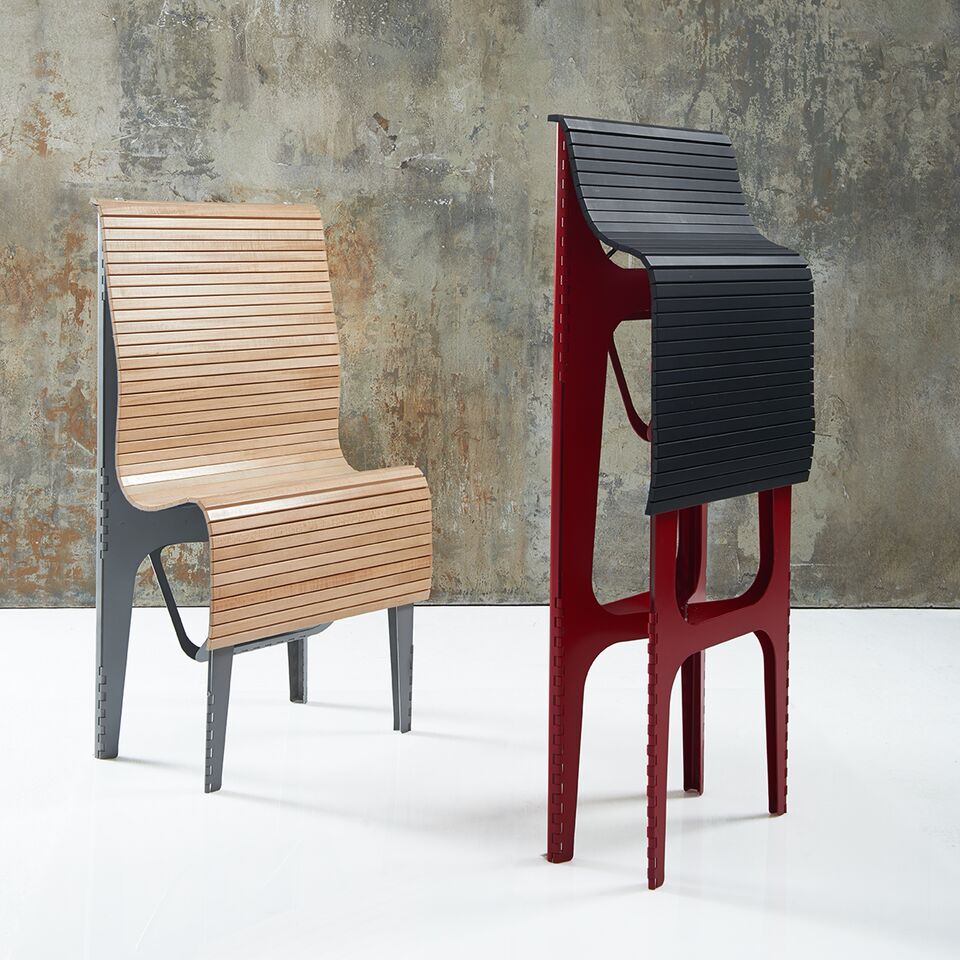
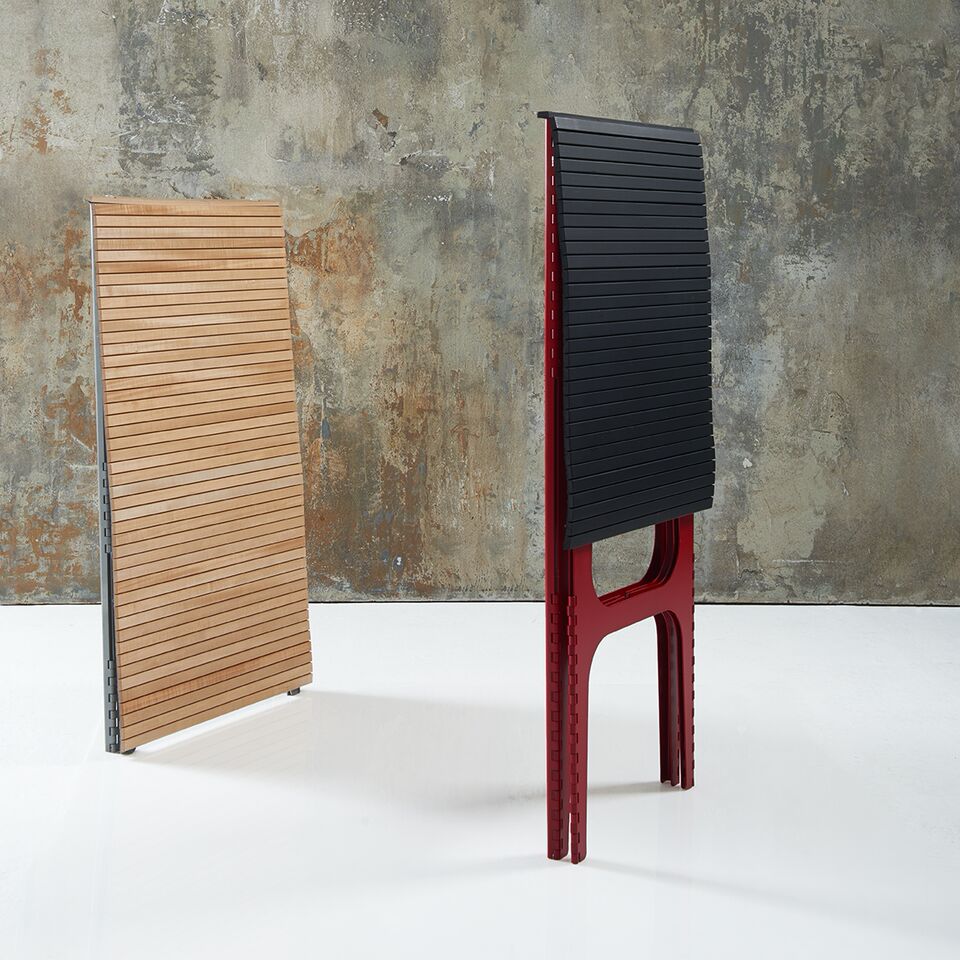
The Ollie line includes a table, stool and chair, all of which effortlessly transforms from full-sized furniture into super slim storing proportions, giving rooms double and triple functionality. The furniture is both lightweight and sturdy (a rare combination I’ve found). Aesthetically, I would call it industrial chic. The customizable slats are easily swapped to match a room’s decorative needs.

Beside the obvious residential applications, Banks told me that they have been discussing using the furniture in commercial spaces in order to optimize for traffic patterns. For example, a coffee shop with a ton of foot traffic in the morning could deploy Ollie tables in the middle of the day for loitering freelancers (the author knows of which he speaks).

I asked Banks if her robotics training helped in designing the collection. “Definitely,” she replied. “The tables are more like a transmission than tables. They’re highly engineered with 60 moving parts and 300 total parts. We had to make everything work together and calculate for forces.”

RPR is currently readying the tables and chairs ready for production and says they will be taking orders in three months for the chairs and six for the tables (they will also do custom manufactured pieces anytime you want).

Transforming Space You Might be Able to Make Yourself

Question: What would happen if you combined the LifeEdited apartment and Gary Chang’s transforming Hong Kong apartment and made the fusion out of plywood and common hardware store materials?

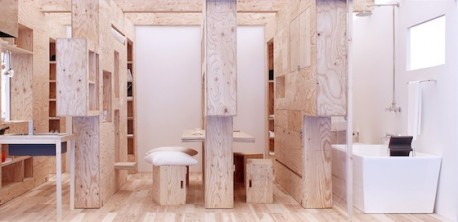
Answer: Studio_01‘s barcode room. The space was a winner of a design competition and was on display at Tokyo’s Designer Week 2012.

Studio_01 explains the concept:

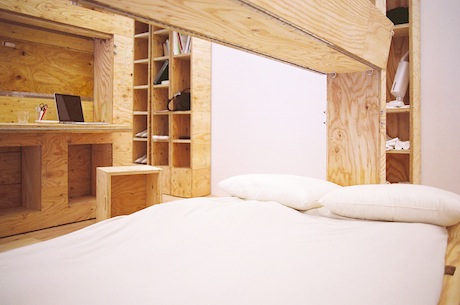
barcode room is a concept studio apartment composed of product furniture-walls which move freely from side to side, permitting the resident to customize the size of space to fit a variety of uses. Placing functional elements such as storage and furniture into these walls, only to be pulled out when in use, also allows for more of the floor area to be used by the inhabitant and guests, thus creating a space where one is able to both comfortably live and entertain a different number of guests easily.

We like how all of the furniture is incorporated into the walls and how there are different settings that furniture can be used; like the main table that doubles as a desk when one side is elevated.

The most important thing it demonstrates is the fact that space-saving, transforming furniture need not be complicated or costly.

via Treehugger

image credit studio_01

5 Pieces of Weird Transforming Furniture

Transforming furniture can be extremely useful in one’s quest to do more with less. It has the ability to make a room do double or triple duty, allowing you to live in a space much smaller than you might have suspected. But it’s not safe to assume that all transforming design is created equally. Some of it is downright weird, redundant or kinda useless. Here are a few examples of furniture that works overtime, doing jobs no one needs done:

The Sensei Chair by Claudio Sibille 

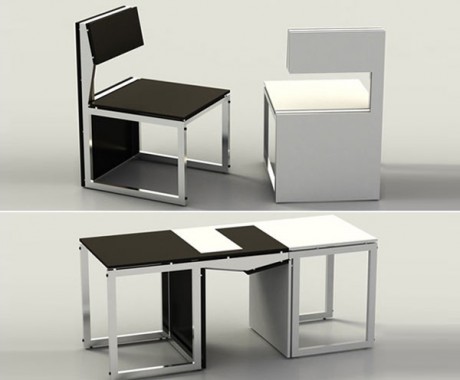
Sensei-transforming-chairs-that-become-a-table

What’s weird: When you face these chairs down, they make a low coffee table. But I would think the times you really need a low coffee table and extra surfaces is when you have guests over–a time when you also need extra chairs.

Clapperboard Series of Shelves from Elsa

folding-shelves

What’s weird: The shelves of these sleek cabinets conveniently stow away when not in use. But what happens to the stuff that they once held? It’s put on the floor? On another shelf? On the table? Me no understand.

Interchangeable Picnic Table and Garden Bench

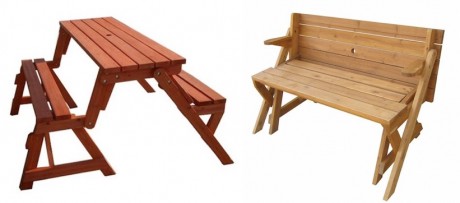
 picnic

What’s weird: Several readers have passed this clever design on to me and I’ve contemplated writing about it in a non-weird context. But something about it doesn’t quite add up. Yes, a bench and picnic table are sufficiently discrete pieces of furniture, but I don’t know if they’re that different as to justify the complexity this piece entails–adding hinges and movable parts has to make the thing more prone to breaking. A picnic table can be used as a bench. In fact, when you sit with your back to the table, it can even have back support. Oh, and the picnic table supports four people.

Sofa Pool Table

sofa6

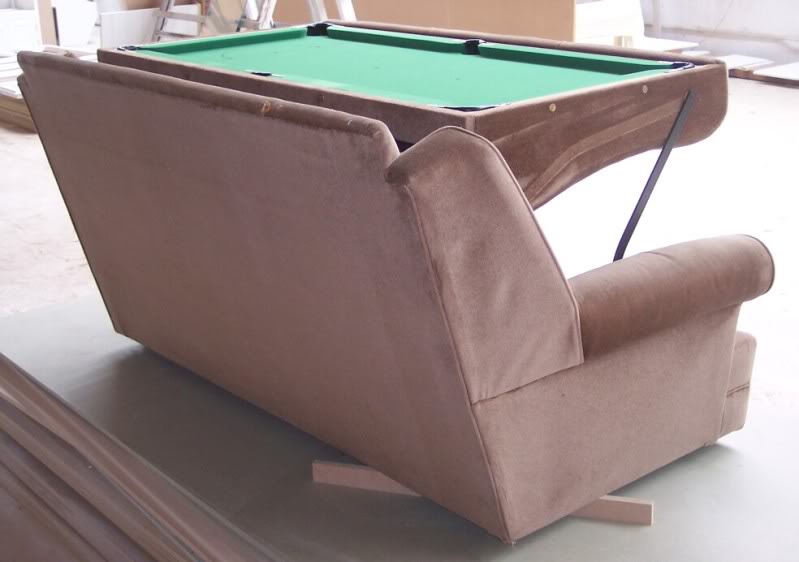
Back in college I used to play quite a bit of pool (or billiards is you prefer). I can say with reasonable confidence that this is probably the last table I would have wanted to play on. Besides its tiny size, there’s a huge lip at the sofa’s back, making some shots difficult. And the odds of the pool-table surface having a slate underneath (what gives most tables their solidity) is highly unlikely. Also, the sofa is pretty ugly.

Range/Sofa Thingy by Someone

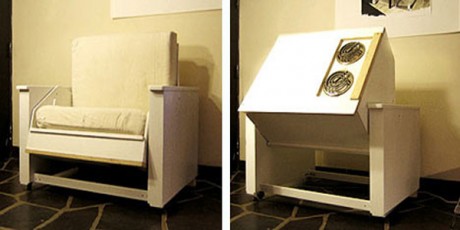
stovechair_new_sad8h

If you’ve ever been torn whether to have a cooktop or a boxy, uncomfortable-looking chair in your living room, you may no longer have to decide. This transforming range/lounge chair does it all with a simple roll of a chair. I suspect however few people are so torn, making this contraption the answer to a question never asked.

New Company Offers Custom, On-Demand Furniture

One of the more difficult aspects of furnishing a small house or apartment is finding properly proportioned furniture. A good deal of what’s out there is designed for girthsome American homes: big tables, deep desks, huge hutches and so on. For example, when my wife and I were furnishing our home, it was tough to find a very shallow, medium-width desk designed for a laptop and nothing else. We ended up ordering a custom desk, but the end-product was both expensive and because it was a handmade one-off, it ended up being not quite what we wanted/expected. A new Kickstarter project called PARSONAL by design studio Arrister is trying to sidestep the expenses and perils of one-off furniture manufacturing by creating on-demand, custom furniture.

It’s probably more apt to call PARSONAL “semi-custom” as you choose from one of their basic designs, which at this point includes tables, desks, shelves and various stands. But from the basic design you can use PARSONAL’s web-based “Configurator” software and customize the size of the piece, shelf configuration (when applicable) and the finish of the tops and trim.

parsonal

PARSONAL’s pieces are attractive in a nondescript, lots-of-right-angles sorta way (this is actually a compliment). Make Magazine says of PARSONAL’s aesthetic, “The simplicity of the design makes it ideal for their first offering as it simplifies both the software and fabrication considerations.” The designs would fit in easily to a variety of modern interiors. All the furniture is made of solid wood sourced near Arrister’s Tennessee homebase, so this is actually stuff you might consider holding on to. And prices are decent. Their big ticket item is a dining table that comes with a $650 pledge–pretty reasonable considering you can tweak to your specifications.

The company told us that they plan to expand their catalog into more complex furniture in the future and once production is ramped up, they expect turnaround to be about three weeks from ordering to the furniture’s flatpack delivery. Check out their Kickstarter campaign page for more info.

Furniture You Can Feel Good About Throwing Away

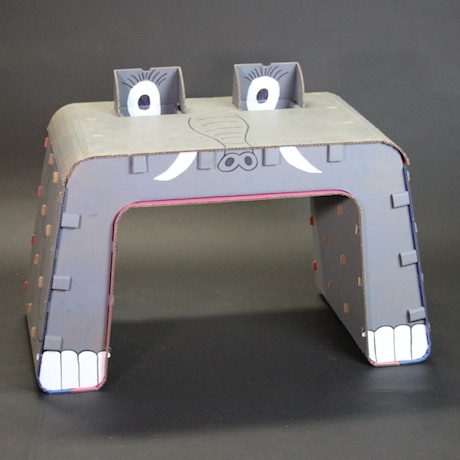
A new company dubbed The Cardboard Guys is making disposable, cardboard furniture. Disposable furniture, you ask? Really? As if our culture weren’t disposable enough. Well you should hear TCG out because their idea makes a lot of sense and, strange as it might sound, is a pretty earth-friendly choice for furnishings.

Elephant Desk

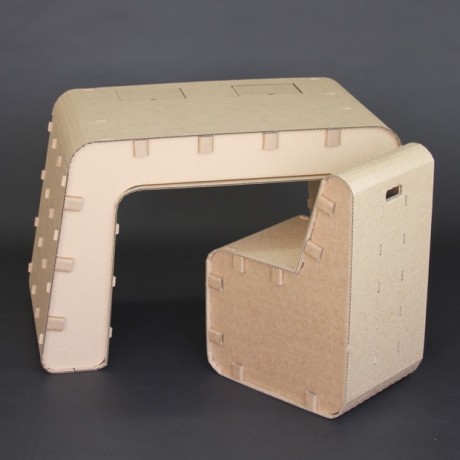
The first thing to know is that TCG are making furniture for children–a demographic known for their ability to destroy and decorate furniture in unintentional ways. By virtue of the TCG furniture’s ephemeral nature, improvised decorations are encouraged, not shunned. Kids can draw and paint on them any way they see fit. Should that artwork get tiresome, flip the panels over for a whole new canvas.

the-cardboard-guys

Though the furniture is made of cardboard, it’s tough. One of their chairs can hold an incredible 500 lbs–which, hopefully your child will never verify. And though it’s not waterproof, they are using a water resistant type of corrugate. “If you spill something on it and wipe it up immediately after, it shouldn’t damage the furniture,” says TCG Co-founder Jake Disraeli. He does say an untended spill might cause damage…it is cardboard.

Regarding the disposable nature of his furniture, Disraeli says, “Kids aren’t kids forever, and over time they will physically grow out of their furniture, making it temporary by nature.” Indeed, most people (at least the ones this author knows) end up buying “real” furniture at IKEA for their children–furniture that more often than not ends up in the trash or on the curb when its utility has expired–a process that is hardly earth friendly.  “Typical furniture is incredibly hard to recycle,” Disraeli says, “which is why 9.8 million tons of furniture ends up in our landfills each year.” On the other hand, TCG furniture is 100% recyclable.

TCG just launched a Kickstarter campaign to ramp up production. A $75 pledge will get you the desk, chair, an extra tabletop and an supply pack (shipping is included), with delivery expected this June.

Furniture Fit for the Modern Nomad

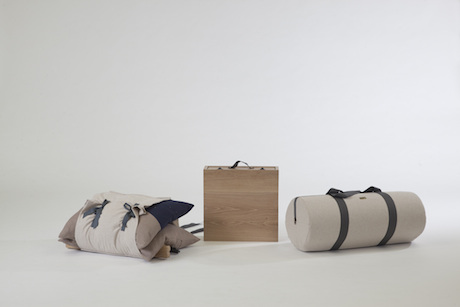
If you haven’t figured it out, we’re pretty enamored by nomadic living here at LifeEdited. It’s not that we want everyone to live a transient existence. It’s just that we think living light, possessing only necessary, cherished and used objects has its advantages whether you’re breaking camp every four days or ev ery four decades. This collection by London’s Tilly Blue Davies is a nice example of lightweight furniture that is portable enough for all but the most nomadic souls, yet elegant enough for full time use.

tilly-blue-backpack tilly-blue-travel-closedBlue Davies aptly named “Travel Collection” includes a lounge chair that becomes a backpack, side table that becomes a suitcase and a bed roll that becomes a duffel bag. It’s reminiscent of the IKEA PS 2014 collection and the TRUE ‘IN A BOX‘ collection we’ve seen before, albeit higher quality than the former and less militaristic than the latter.

Via Remodelista