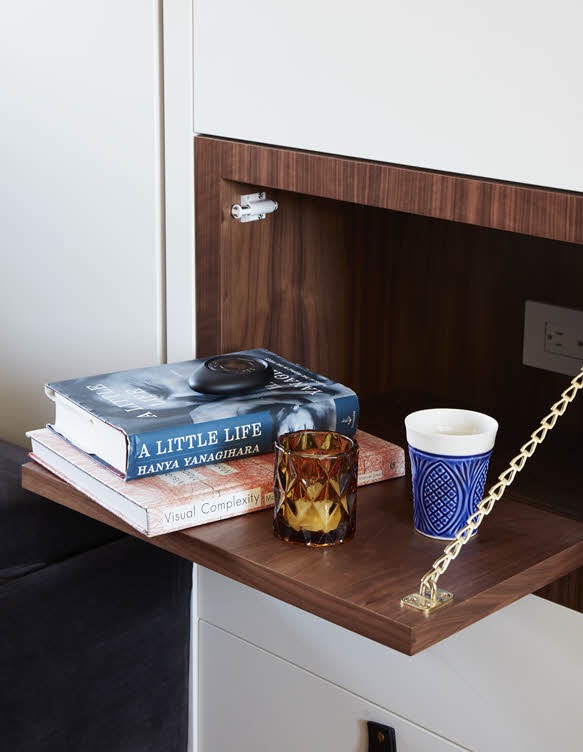
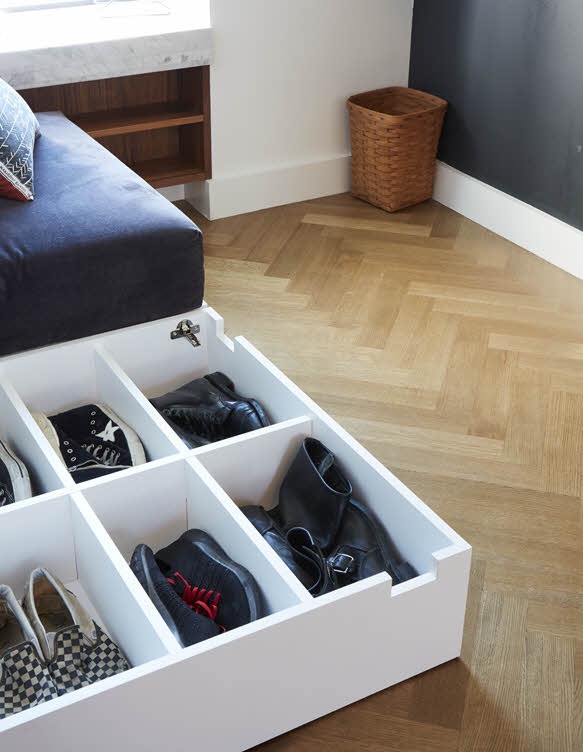
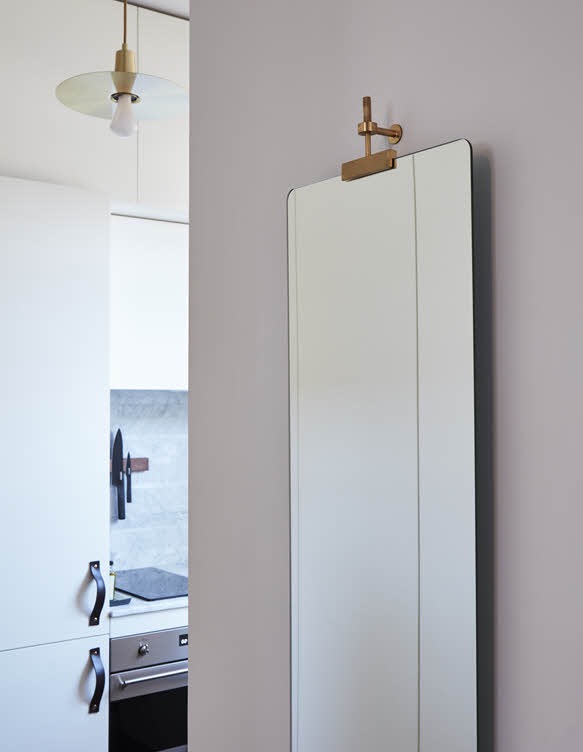
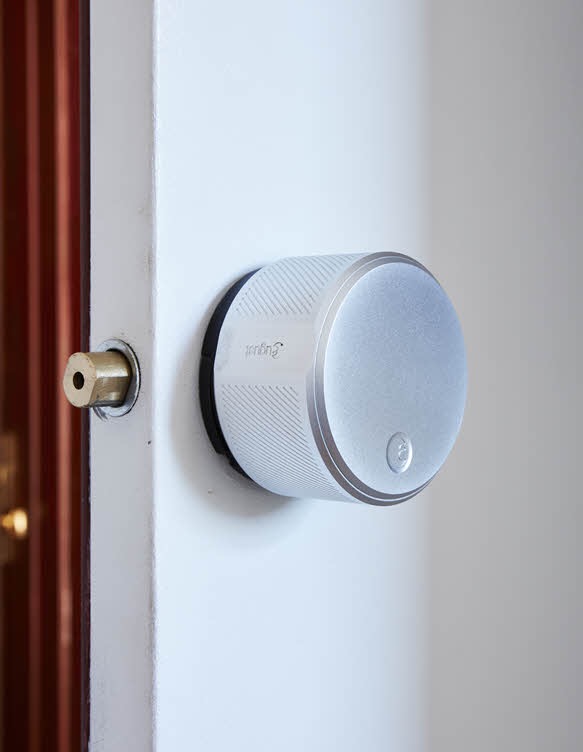
Keys? Who needs ’em when you have the August Smart Lock!

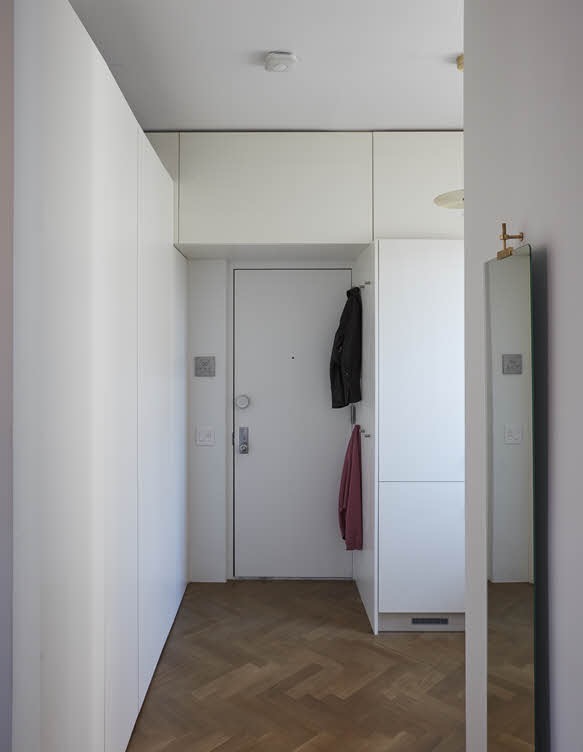
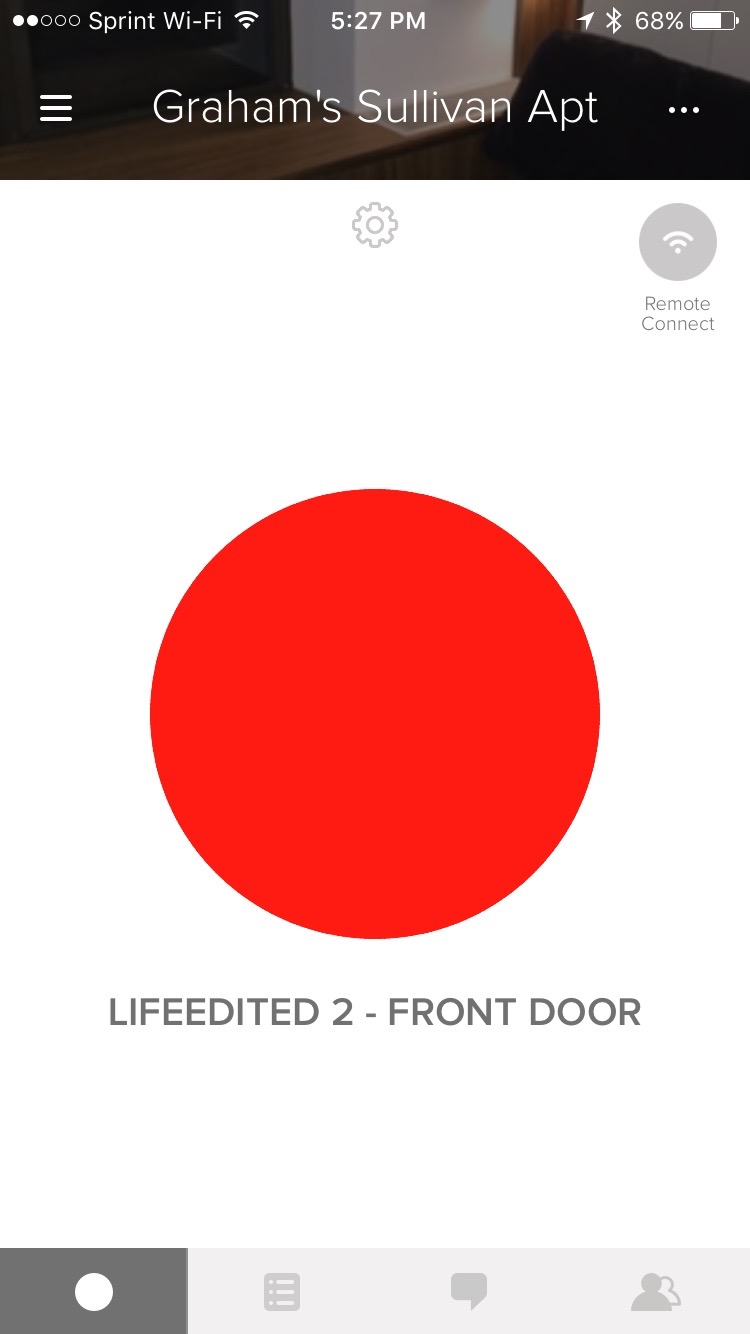
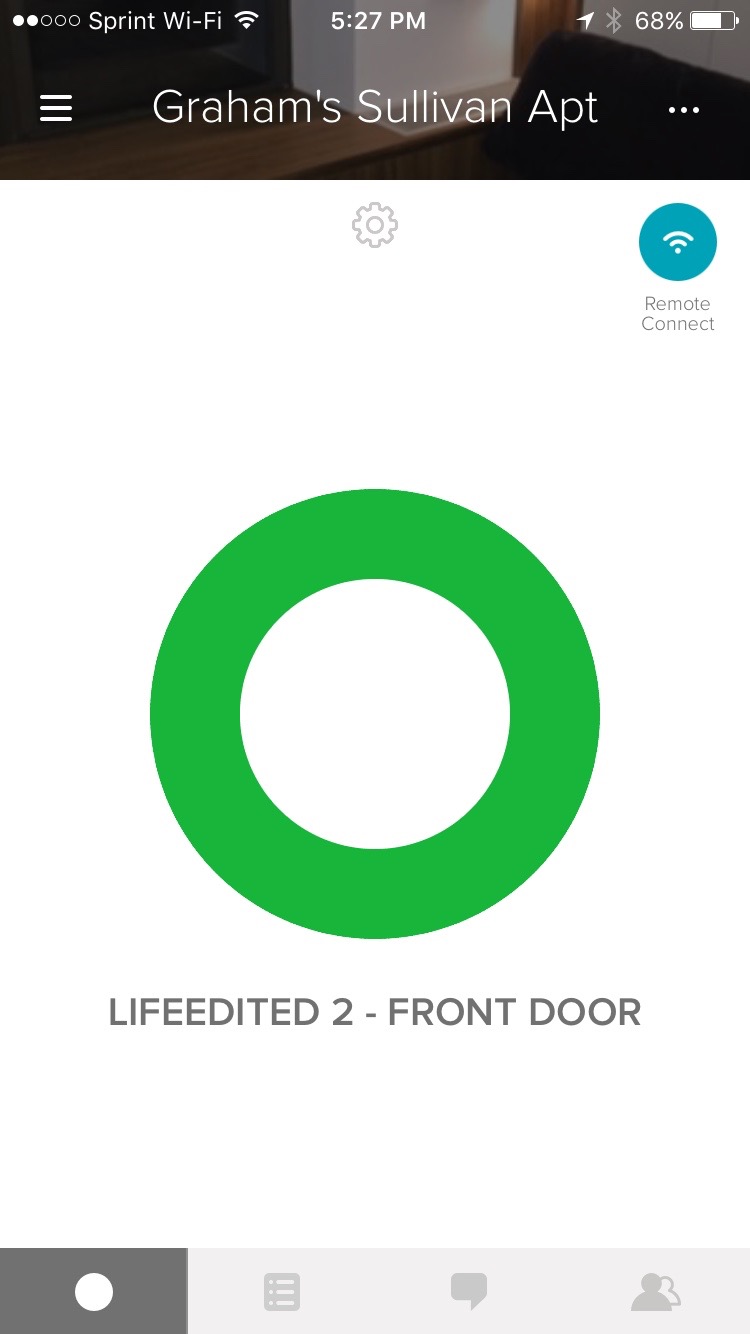
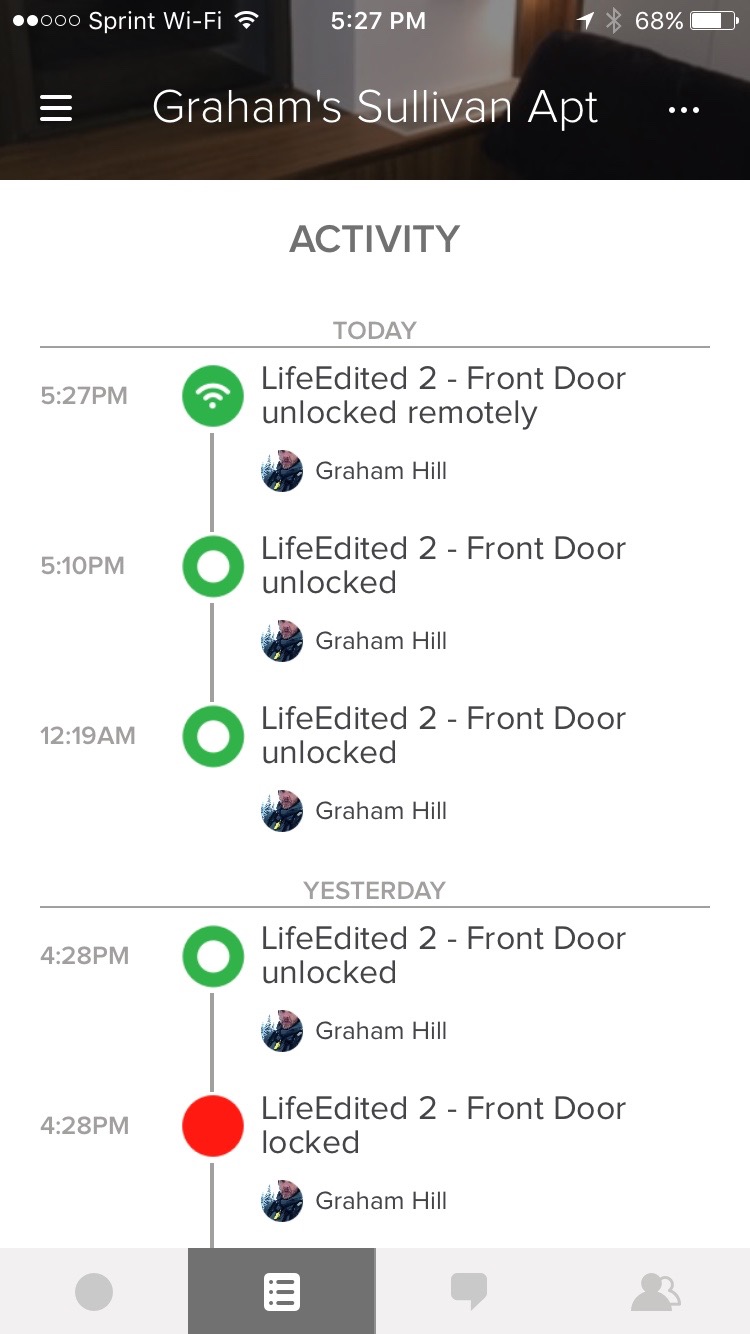
Another beautiful Yves Behar design, the August Smart Lock allows us to open and close our front door with our smartphone. With the ability to create virtual keys for guests, auto-lock and unlock, and keep the existing hardware of our door intact, the August Smart Lock is beautifully designed. It is also easy to install in 15 minutes over most common deadbolts. Graham loves the auto lock feature because it allows him to come and go with nothing but his phone in his pocket. It locks automatically after he leaves and opens up as he returns.

Learn about our Nest Cam security system here.

This post is one in a series that describes our LifeEdited 2 showcase apartment. LifeEdited 2 embodies our green, space efficient, and minimalist principles. We view LifeEdited 2 as a lab for experiencing things that are consistent with these principles. The product described in this post was given to us, which we appreciate, but we would not have accepted if we didn’t believe in it.

Nest Cam and Nest Protect

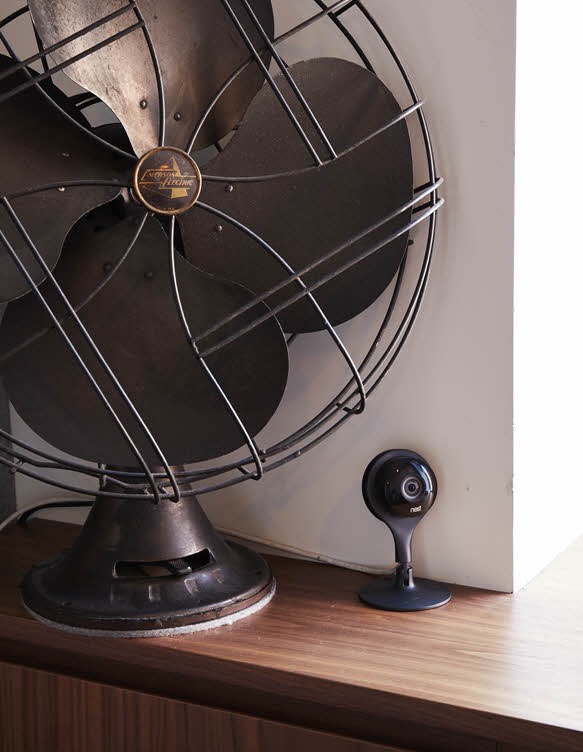
One of the key features of the LifeEdited 2 apartment’s high quality of life is Nest. Having previously used Nest Cam to monitor construction projects and ensure the general security of his homes, Graham wanted to make Nest Protect, a high functioning smoke and CO alarm, as well as Nest Cam, an indoor and outdoor safety camera and app, a central part of LifeEdited 2. Not only is Nest Protect far more beautifully designed than your average smoke detector, but it also functions as a motion sensor nightlight and sends alerts to your phone in emergency and emergency-like situations. In the case of a false alarm, the Nest Protect that easily be hushed from a smartphone- no stools or ear plugs necessary! 

Nest Cam has always allowed Graham to check in and record who is coming and going in the spaces he works on and lives in. Whether it is people working for him or resident doggies, the app allows for him to both see and talk to any people or animals from his smartphone.

This post is one in a series that describes our LifeEdited 2 showcase apartment. LifeEdited 2 embodies our green, space efficient, and minimalist principles. We view LifeEdited 2 as a lab for experiencing things that are consistent with these principles. The product described in this post was given to us, which we appreciate, but we would not have accepted if we didn’t believe in it.

Green and Sleek Edyn Garden Sensor

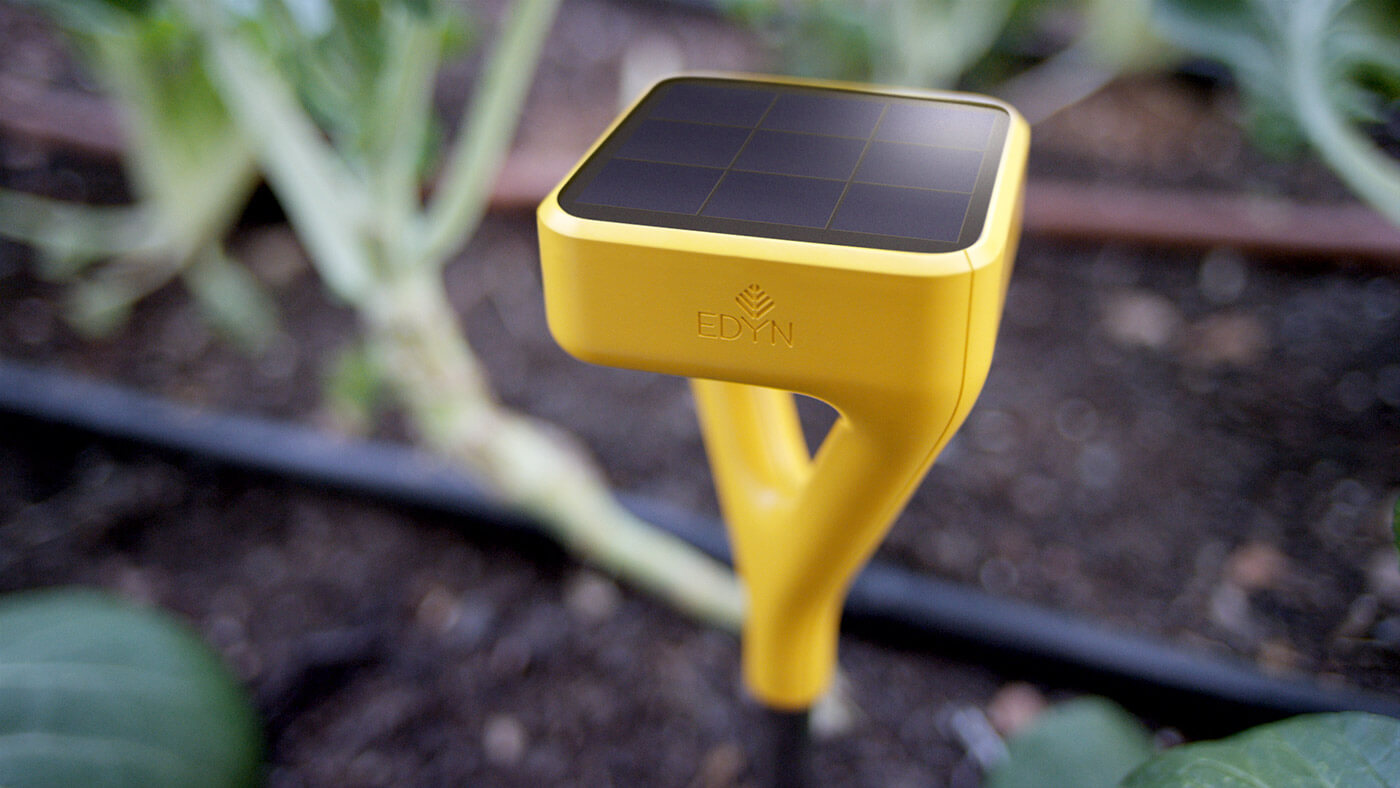
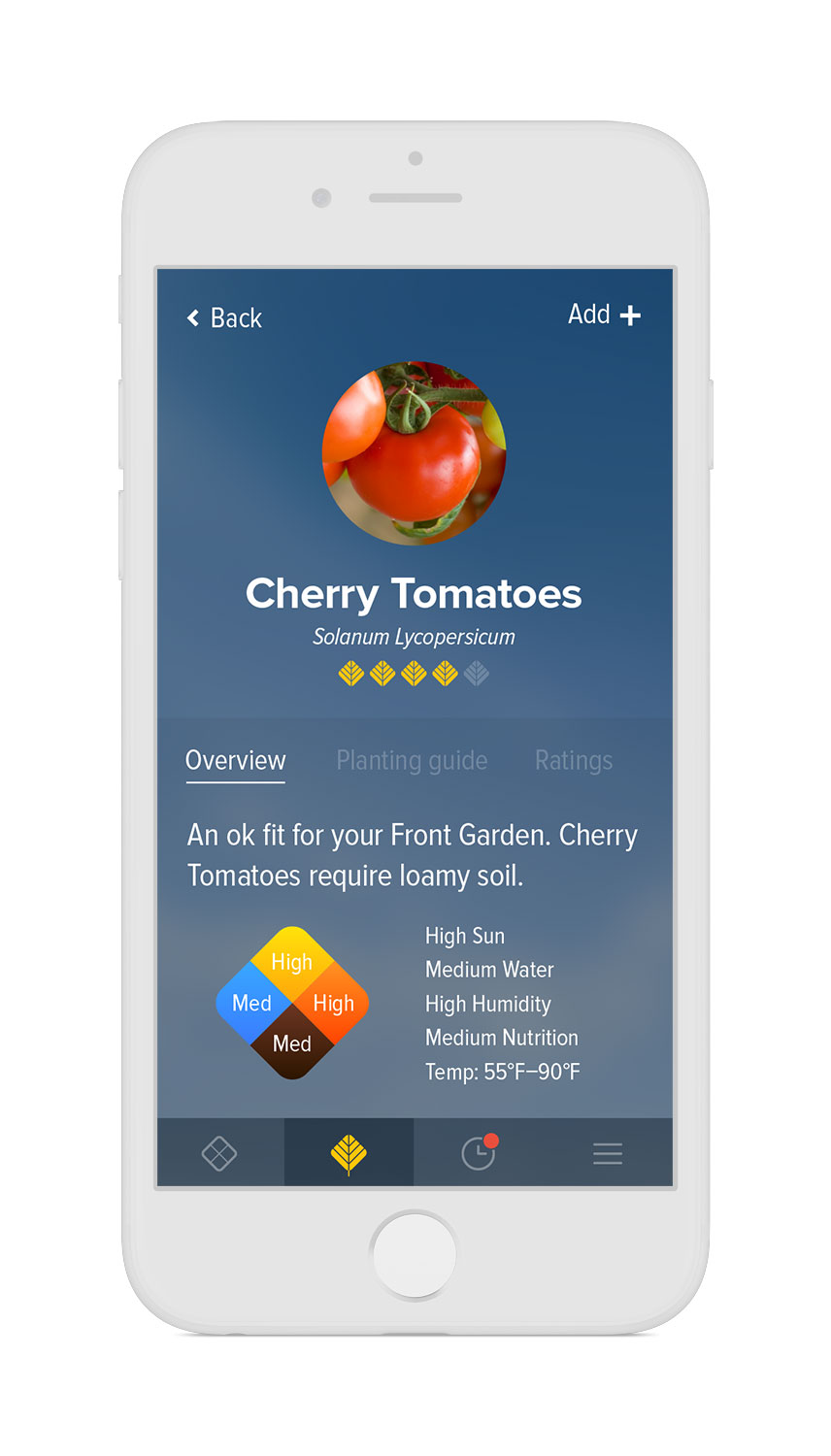
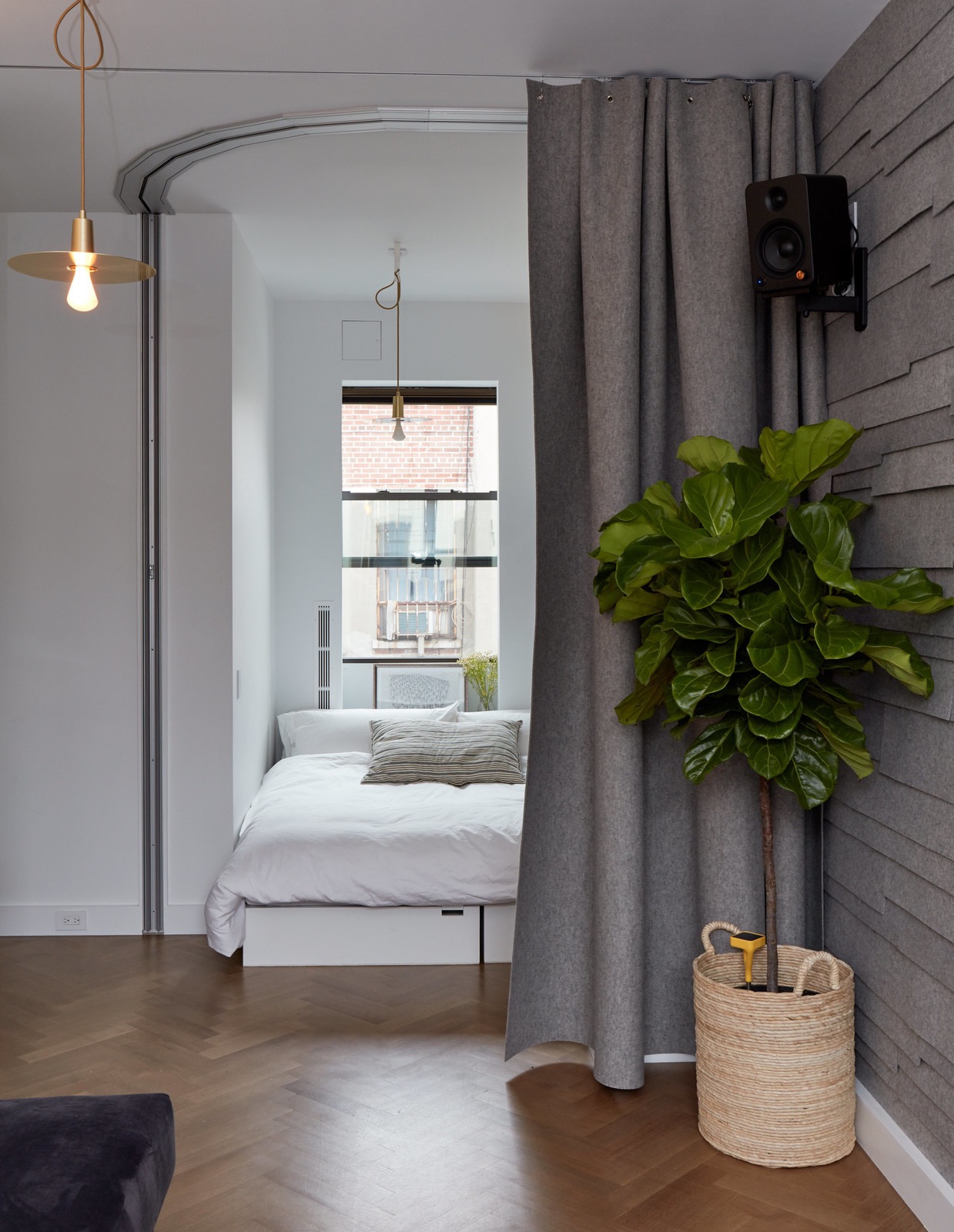
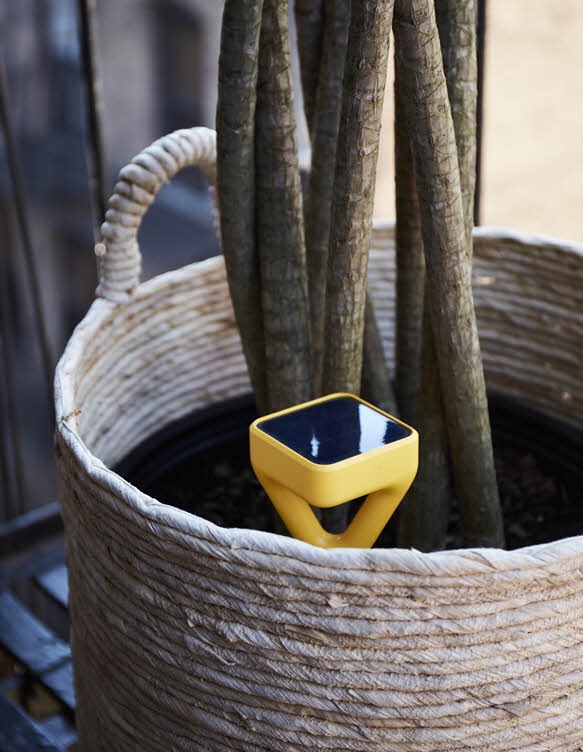
Graham’s proudest match making moment has come full circle with the addition of the Edyn Garden Sensor in the LifeEdited 2 apartment. In 2013, Yves Behar, founder and principal designer of Fuseproject, an award-winning industrial design and brand development firm, and Jason Aramburu, an ecologist and soil scientist, came together to create an exceptionally innovative gardening system. Edyn Garden Sensor monitors “minute changes in soil nutrition and moisture,” allowing the garden’s owner to “anticipate and resolve problems” before they even happen by receiving tips and notifications on their smartphones. Solar powered and Wi-Fi connected our Edyn also has a database of plants from which it can recommend flora to users based on their soil profile. The sleek design and incredibly intelligent technology work really well in the LifeEdited 2 apartment. 

To learn about the smart and water conserving Edyn Water Valve, which we don’t have but conceptually love, watch this video!

This post is one in a series that describes our LifeEdited 2 showcase apartment. LifeEdited 2 embodies our green, space efficient, and minimalist principles. We view LifeEdited 2 as a lab for experiencing things that are consistent with these principles. The product described in this post was given to us, which we appreciate, but we would not have accepted if we didn’t believe in it.

Insteon for a Smart Apartment

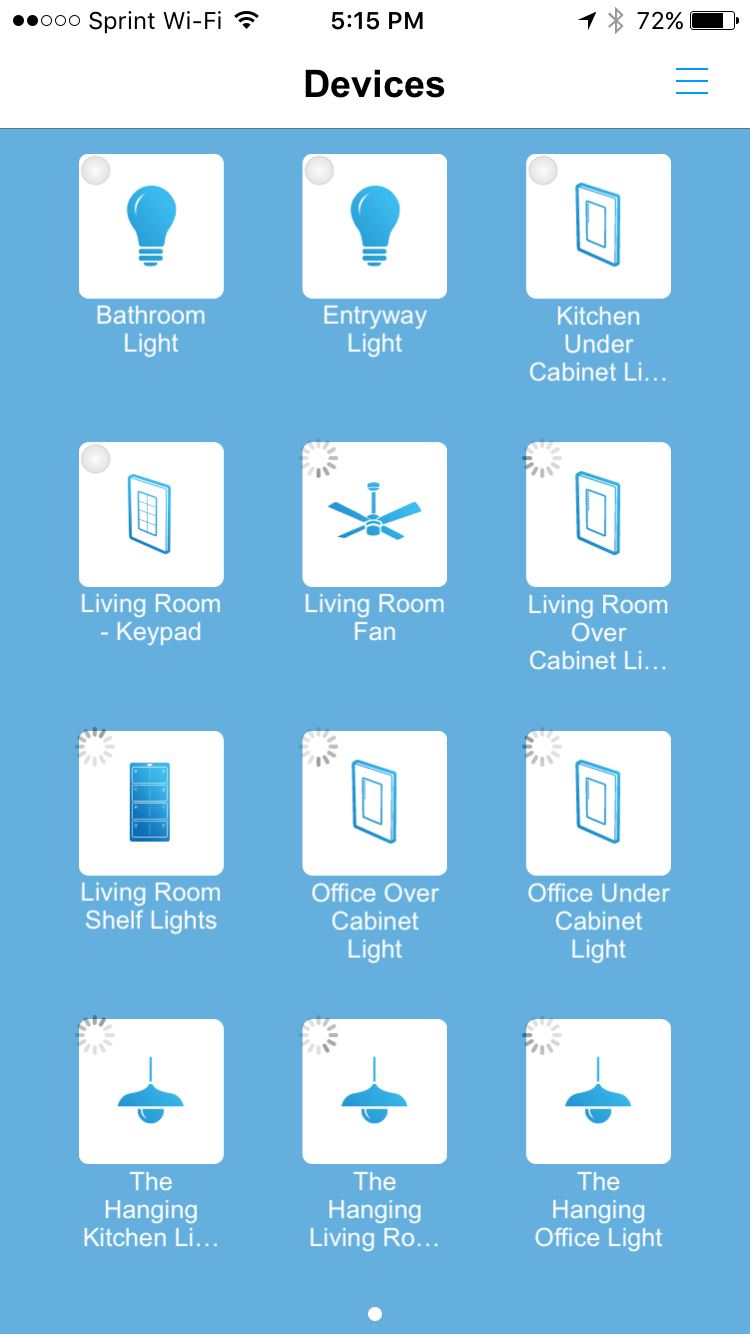
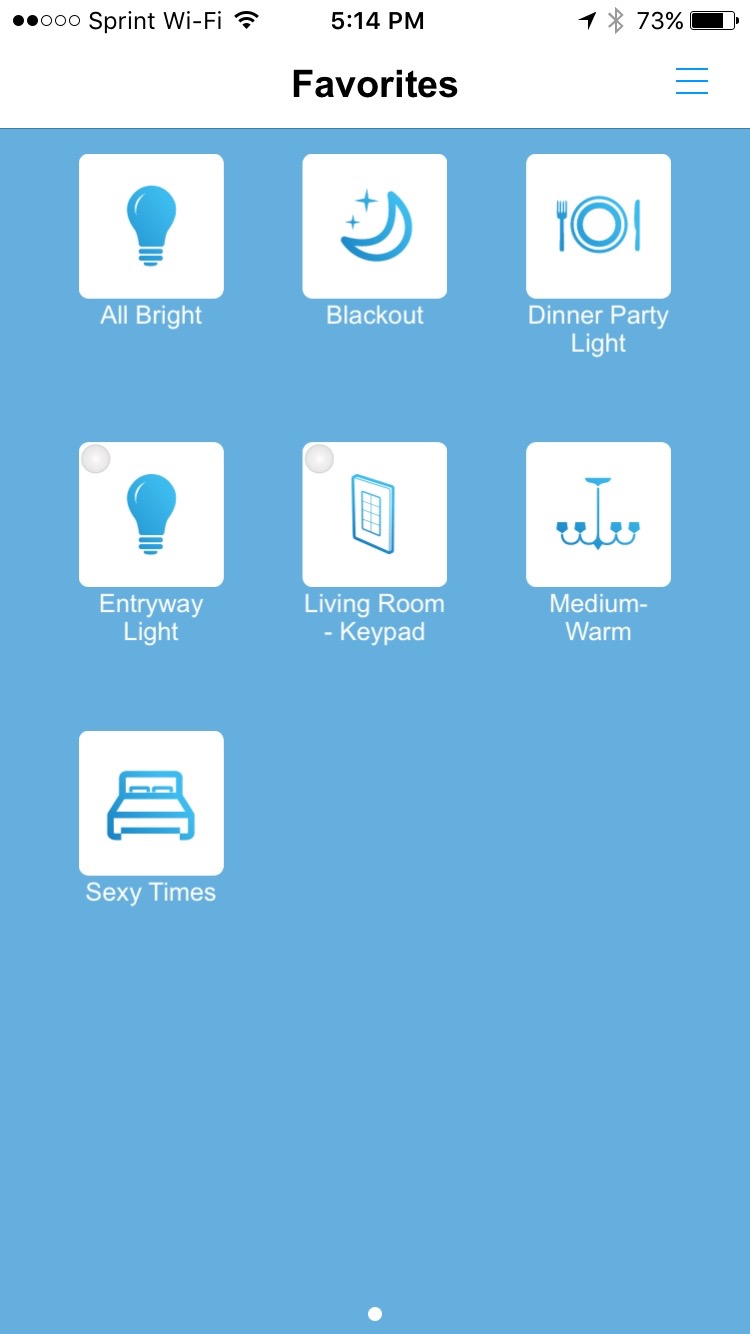
Insteon has made the LifeEdited 2 apartment truly efficient. With their Insteon Wall Switches and Keypad we can control, customize, and even schedule our Plumen hanging lights and Haiku Fan from a smartphone using Insteon Hub technology.

Plus, Insteon works in tandem with the Nest smoke detector and security camera and more, letting Graham follow through on his vision of a highly functioning, high tech, easy to use, energy saving apartment.

This post is one in a series that describes our LifeEdited 2 showcase apartment. LifeEdited 2 embodies our green, space efficient, and minimalist principles. We view LifeEdited 2 as a lab for experiencing things that are consistent with these principles. The product described in this post was given to us, which we appreciate, but we would not have accepted if we didn’t believe in it.

Home Automation

Photo by Deutsches Uhrenmuseum Furtwangen

Home automation is not just for nerds like me anymore. It promises energy efficiency, convenience, and a bit of fun. And it’s *much* easier to setup than it used to be.

I’m an engineer so I like to start from requirements, and I think you should too. Here are the requirements for our new showcase apartment LifeEdited 2:

  • Light control
  • Fan control
  • Door lock control
  • Smoke alarm
  • Air quality monitoring
  • Energy usage monitoring

Once you know what you want, I suggest looking at the ecosystems that support most of the above:

  • Nest / Google ecosystem
  • Insteon ecosystem
  • Amazon Echo ecosystem
  • Apple HomeKit ecosystem
  • Belkin ecosystem
  • Savant ecosystem
  • SmartThings ecosystem
  • Lowe’s Iris ecosystem
  • Wink ecosystem
  • And yes, there are more ecosystems

Since that is a rather daunting list, let me tell you a little about the systems that we chose for LifeEdited 2:

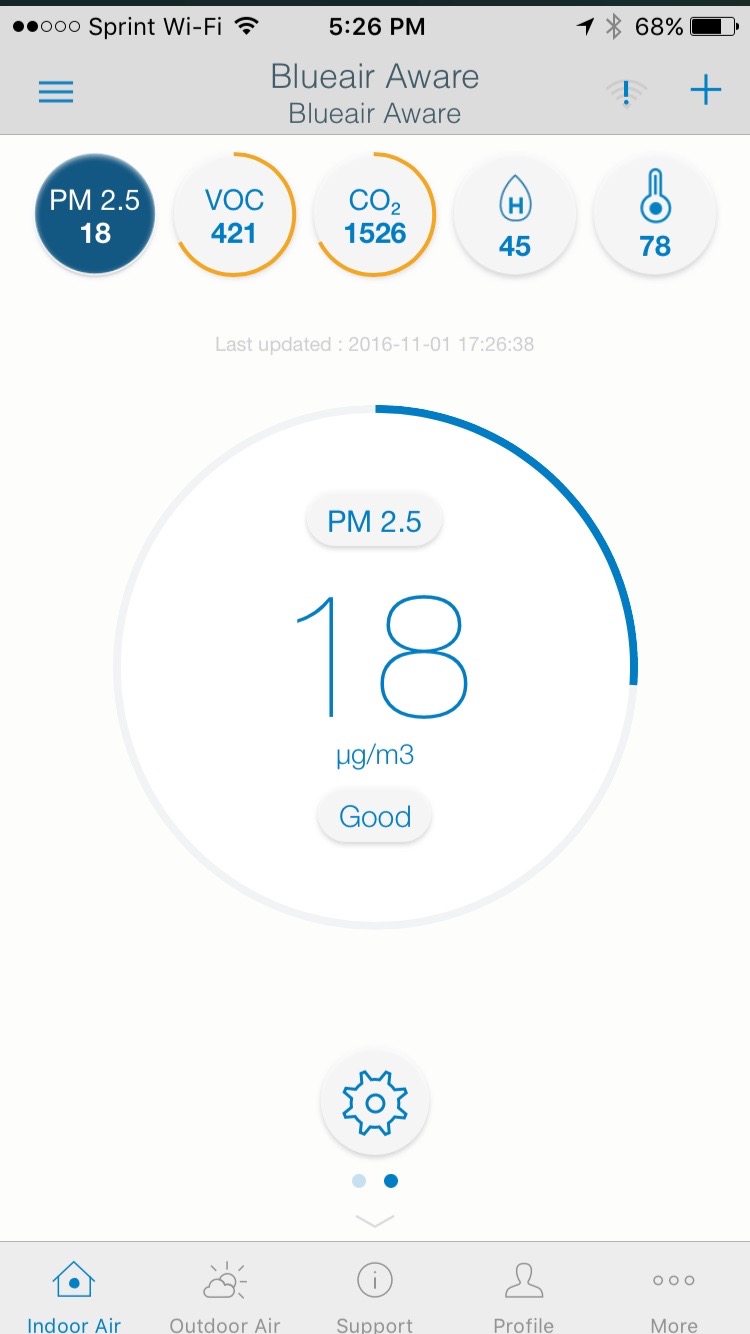
  • Nest. We have a Nest Protect (smoke & carbon monoxide detector) and a Nest Indoor Cam. We’ll write more about these in another post. But in short, they’re great.
  • Works with Nest. Nest also has a Works With Nest program for other manufacturers. We have a BigAss Haiku ceiling fan and Hunter Douglas motorized blinds. In other words, lots of automated ways to keep people comfortable without spending a lot on heating, cooling, and lighting.
  • Insteon. We are using Insteon in-wall switches, dimmers, keypads, and fan controllers. All of which can also be programmed and controlled from an app. It’s amazing how the feel of the apartment changes with the “relax” scene that dims all of the lights in the apartment.
  • Amazon Echo. Graham bought an Amazon Echo for the voice control. It works with a surprising number of home automation components. Graham also now has a Google Home device, and it will be interesting to see how it compares to the Amazon Echo.

Are you using Home Automation? We’d love to hear your experiences.

This post is one in a series that describes our LifeEdited 2 showcase apartment. LifeEdited 2 embodies our green, space efficient, and minimalist principles. We view LifeEdited 2 as a lab for experiencing things that are consistent with these principles. Some of the products above were given to us (Nest Protect, Nest Indoor Cam, BigAss ceiling fan, Hunter Douglas motorized blinds, Insteon equipment).

Minimalist Home Office Set Up

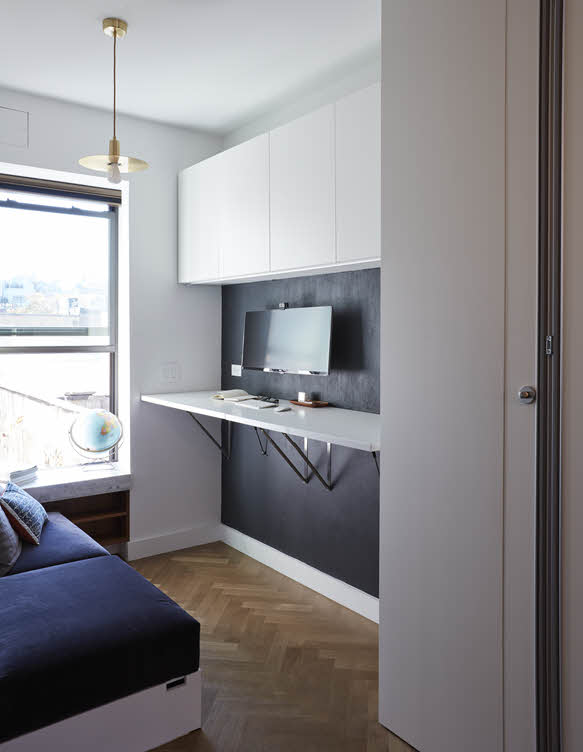
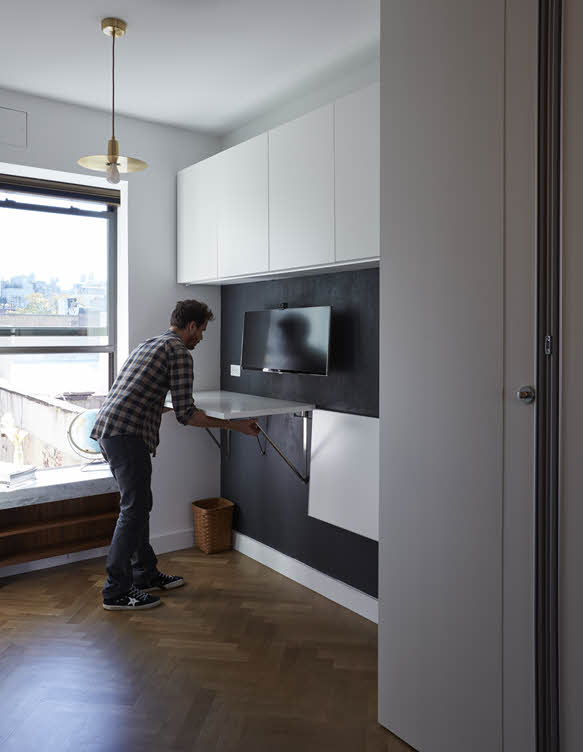
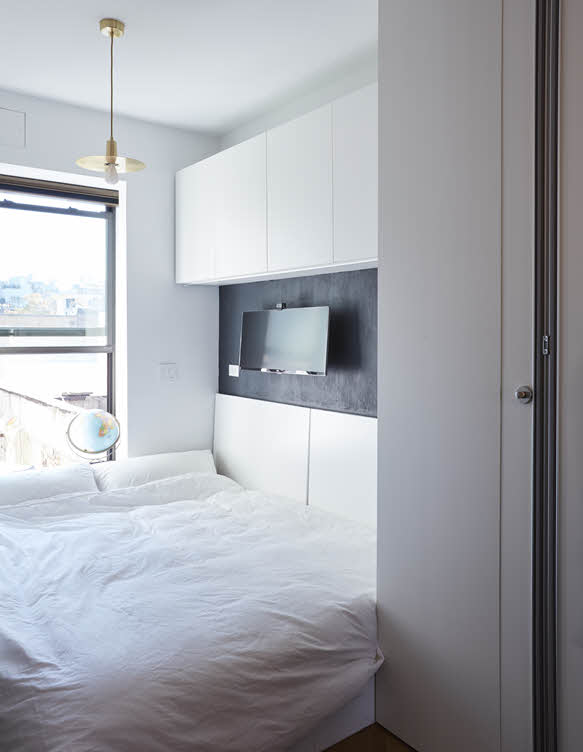
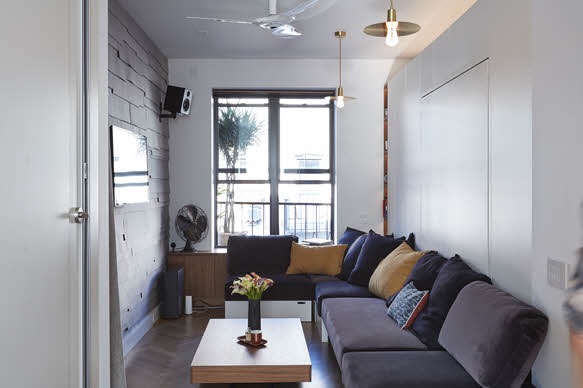
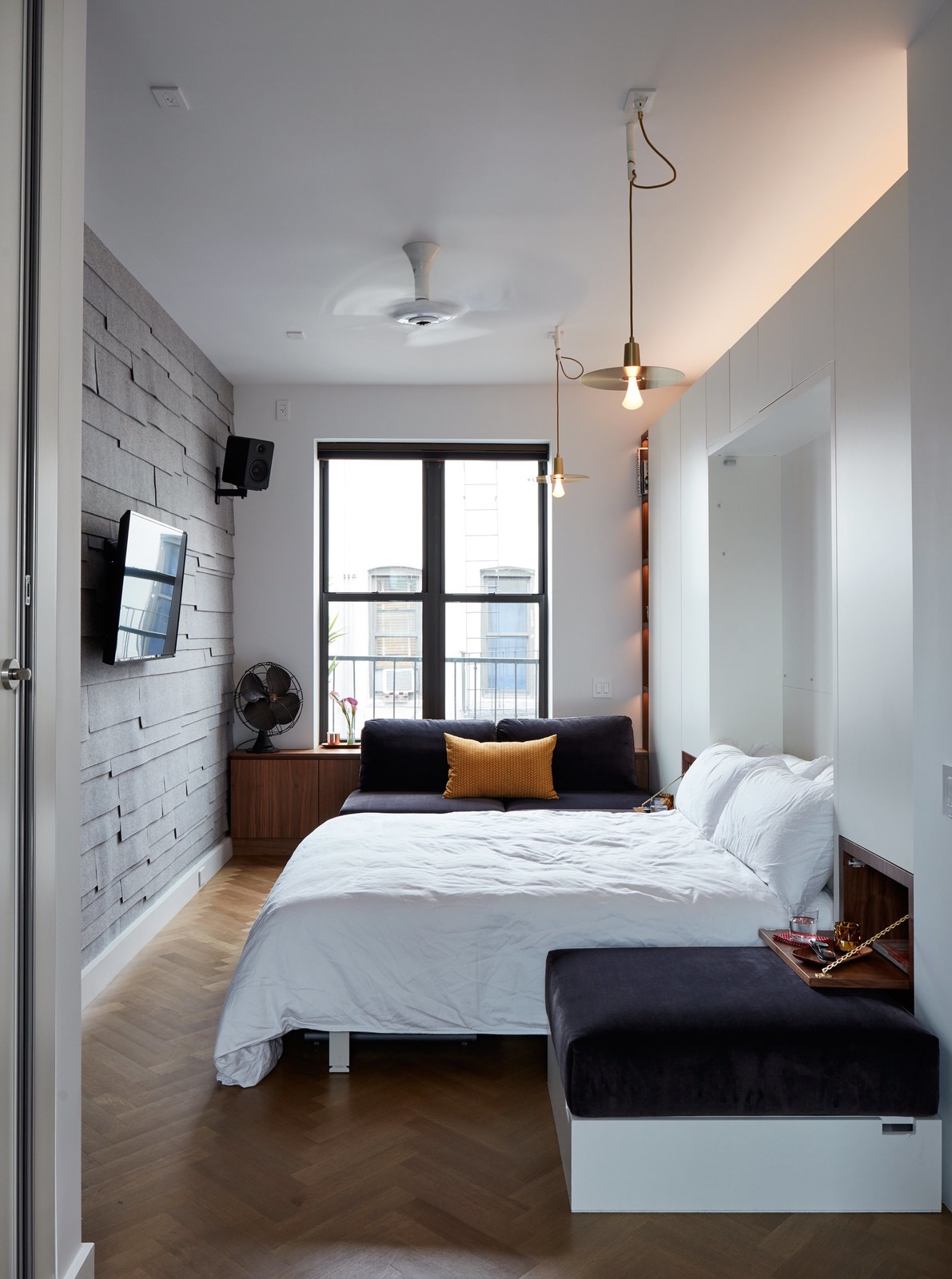
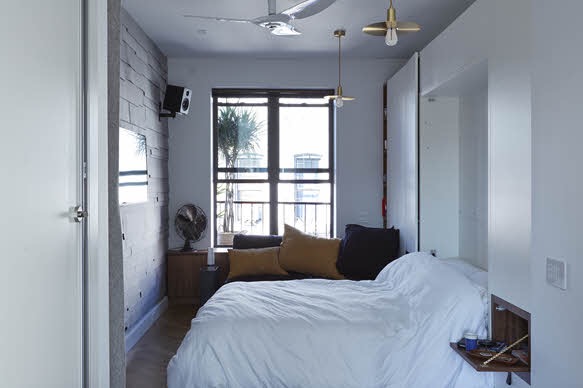
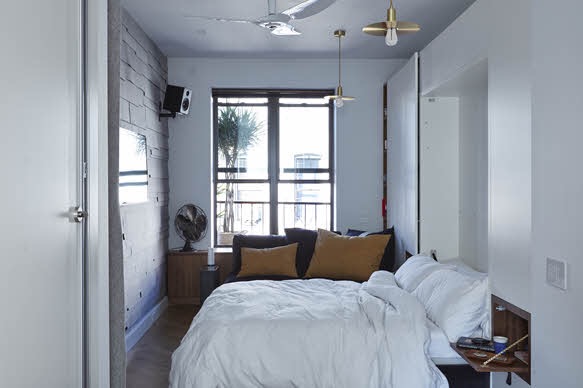
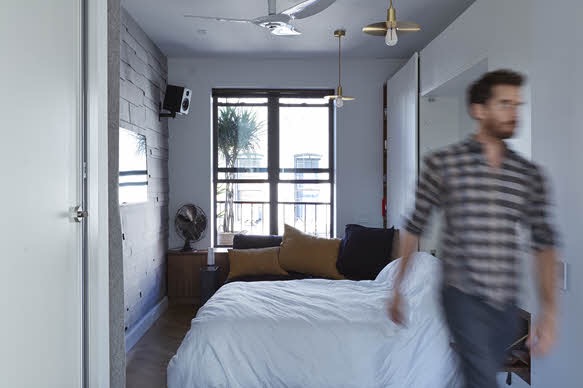
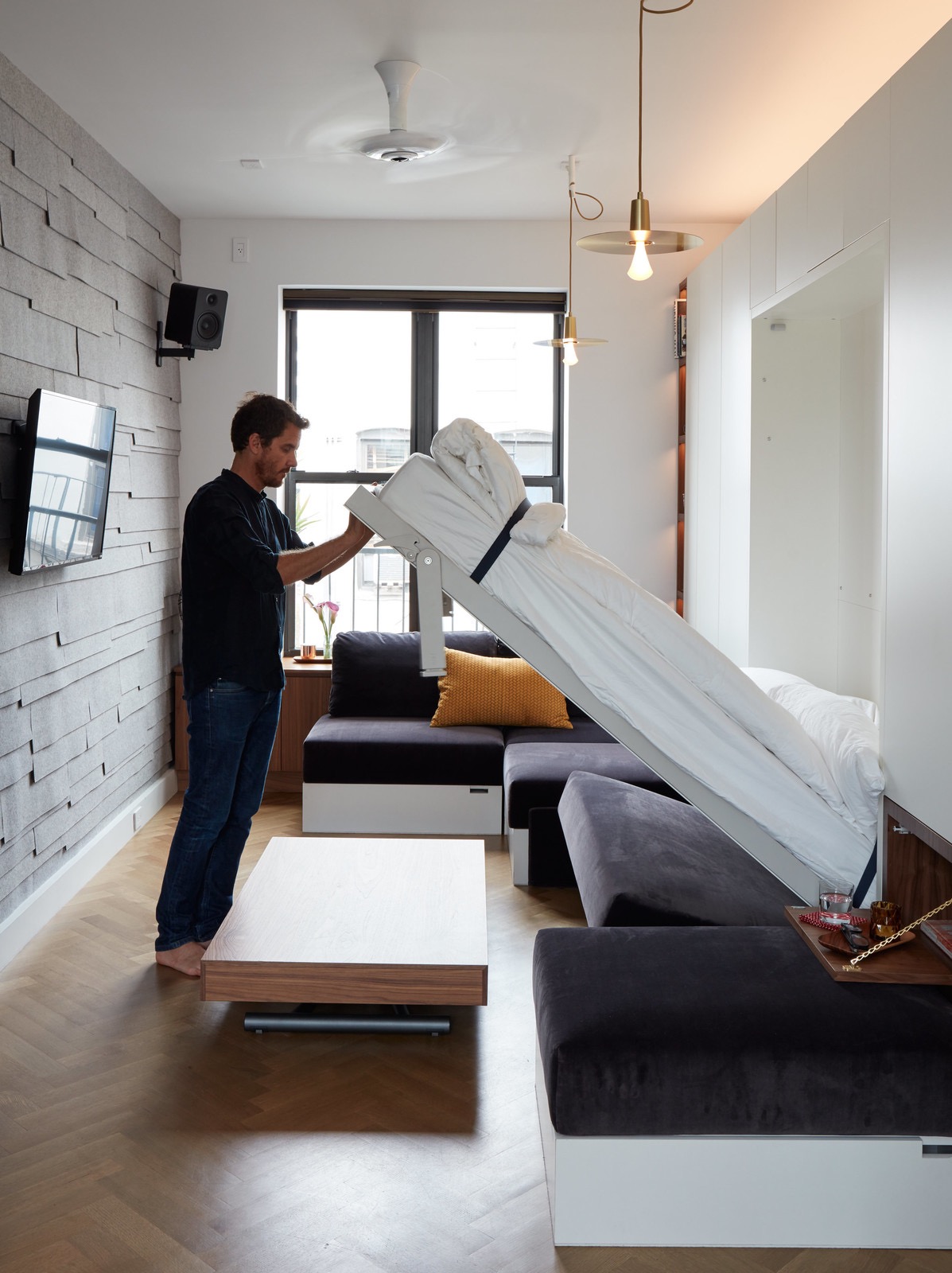
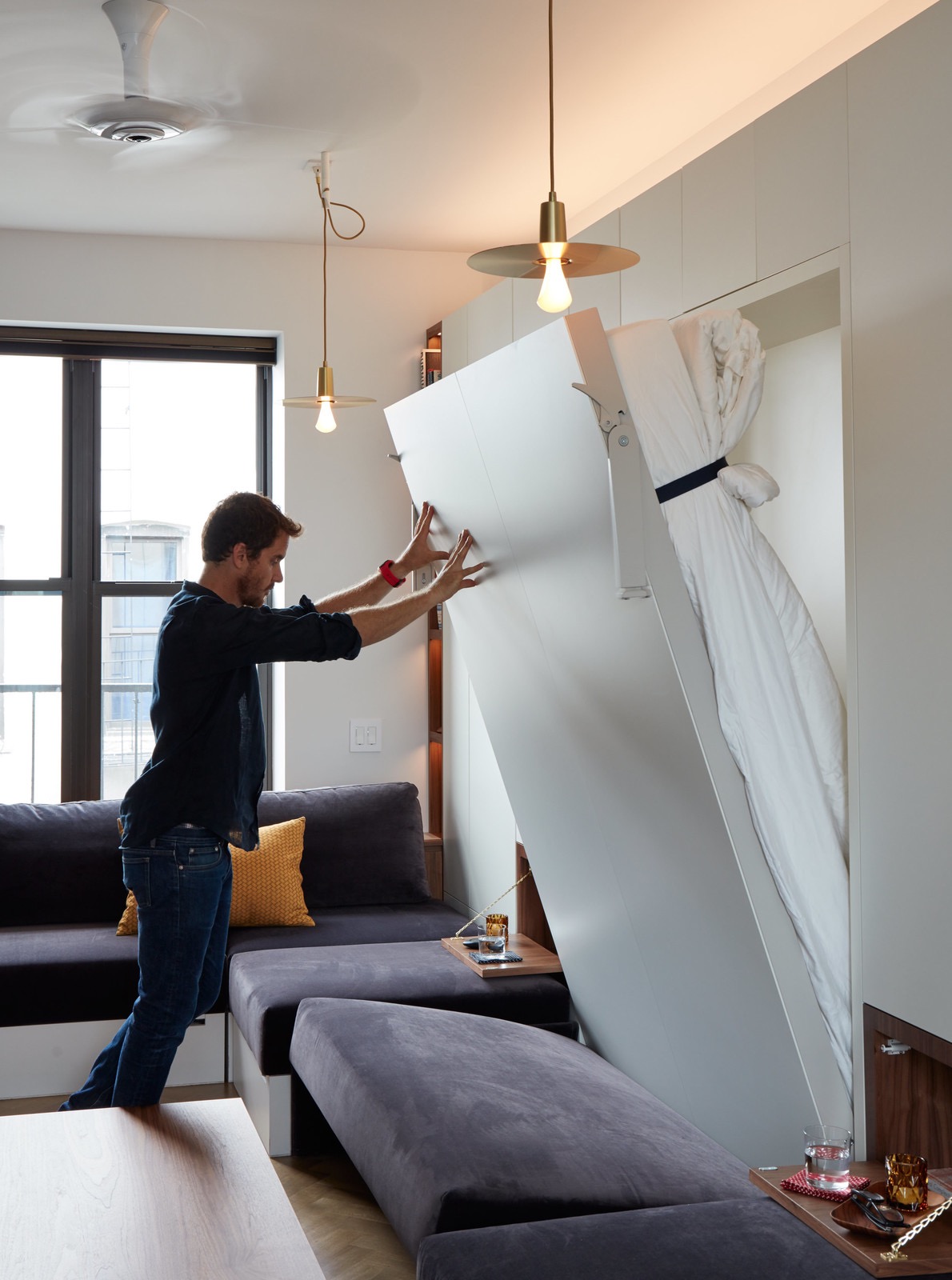
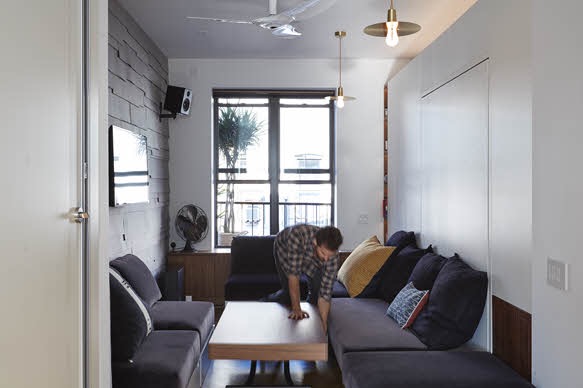
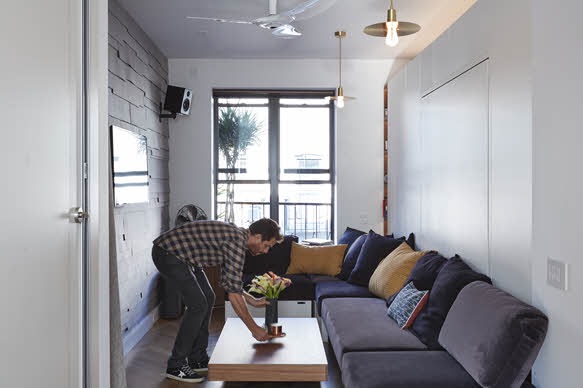
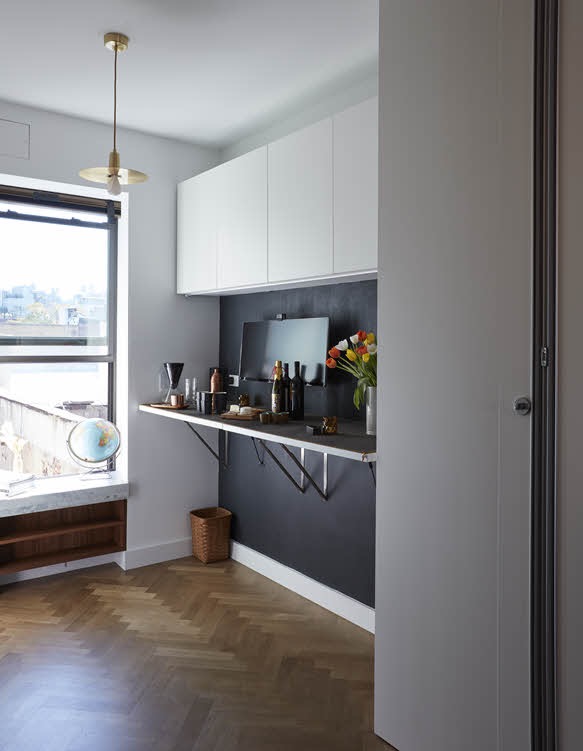
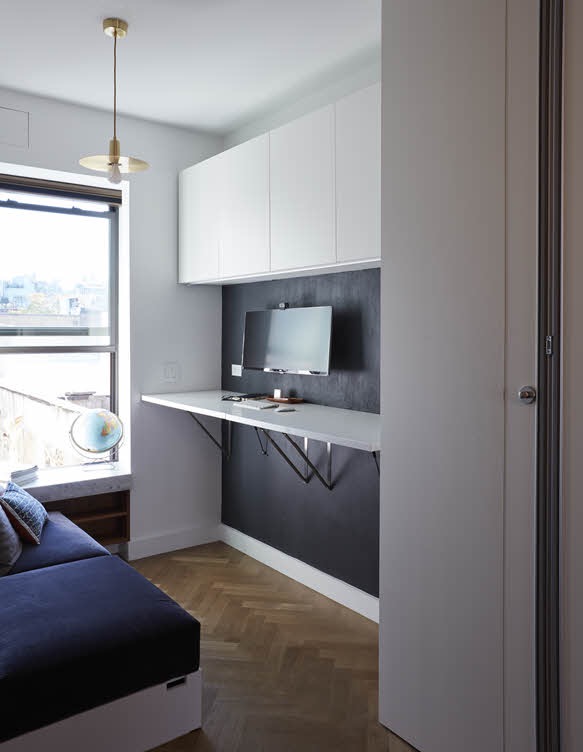
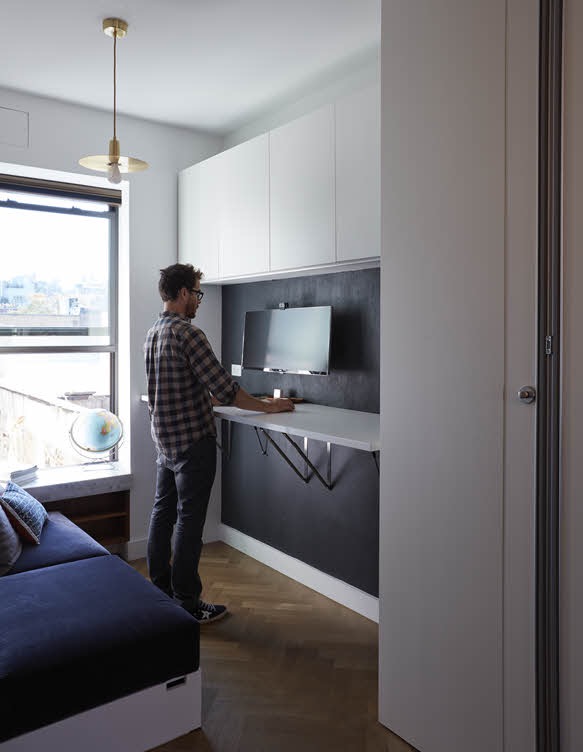
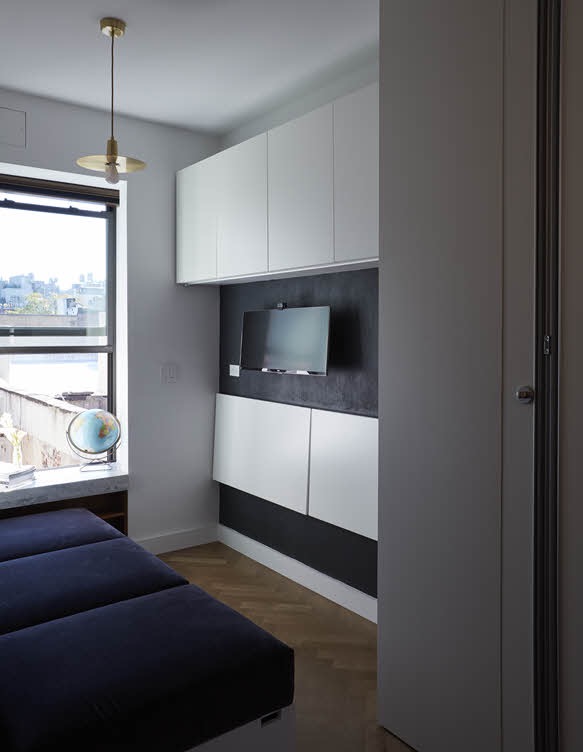
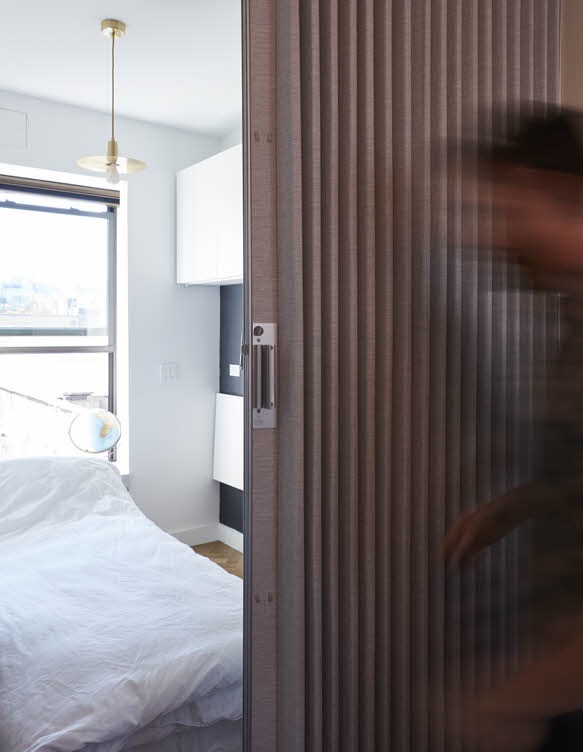
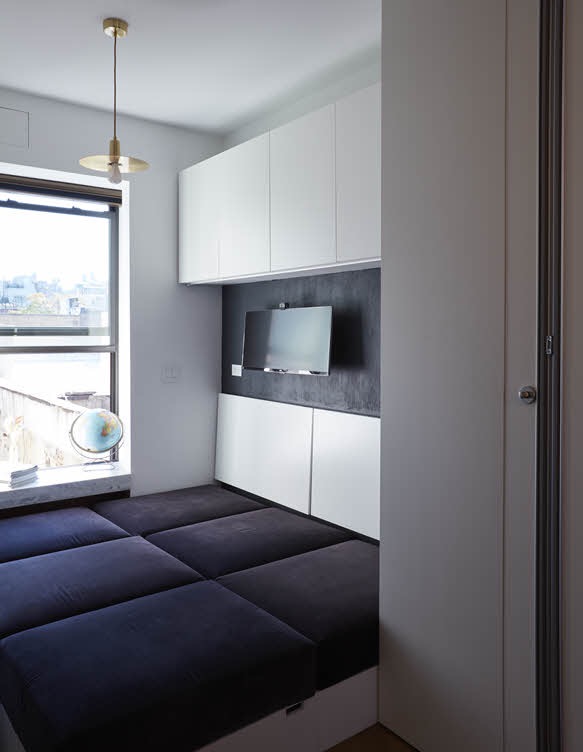
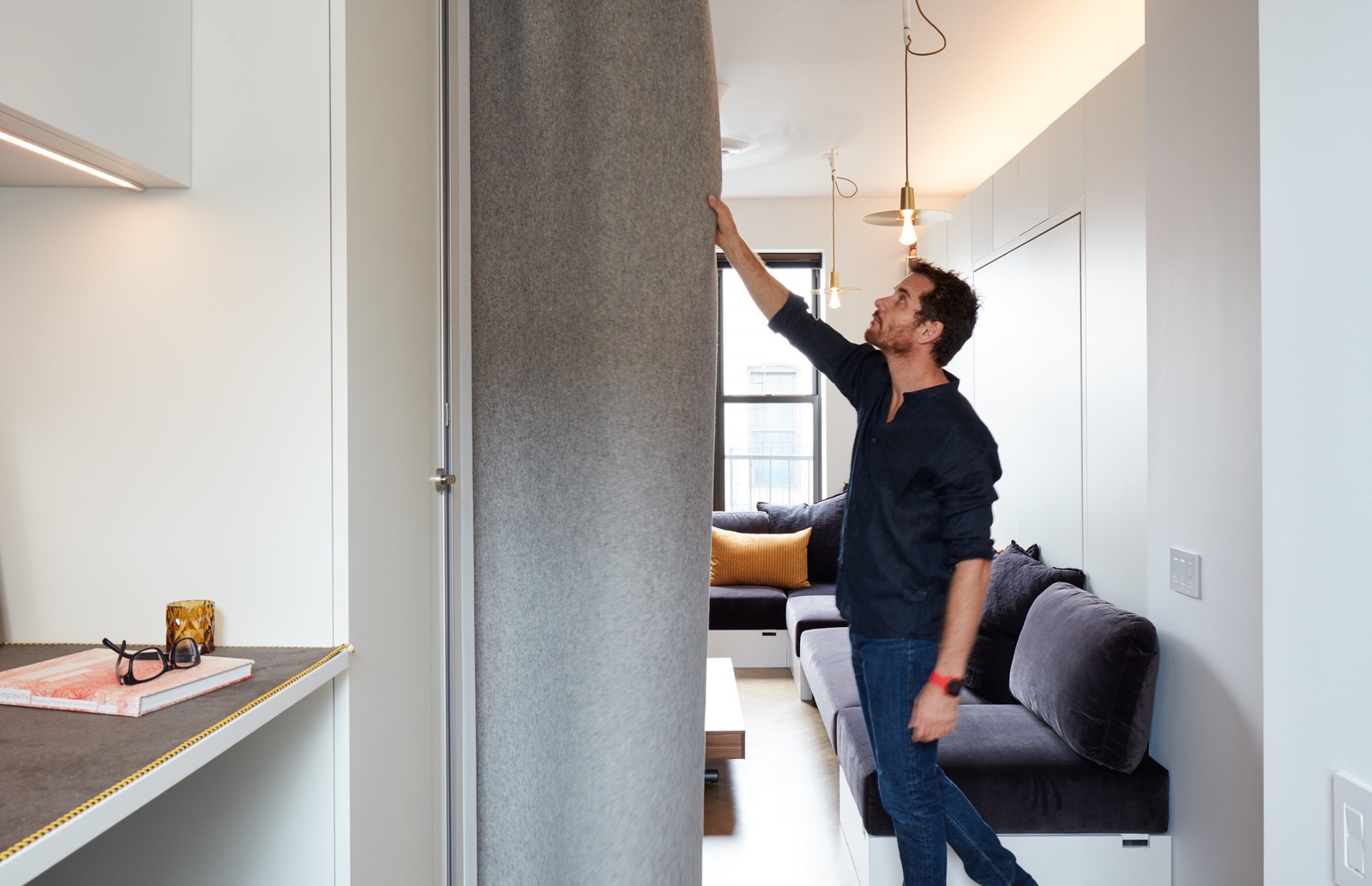
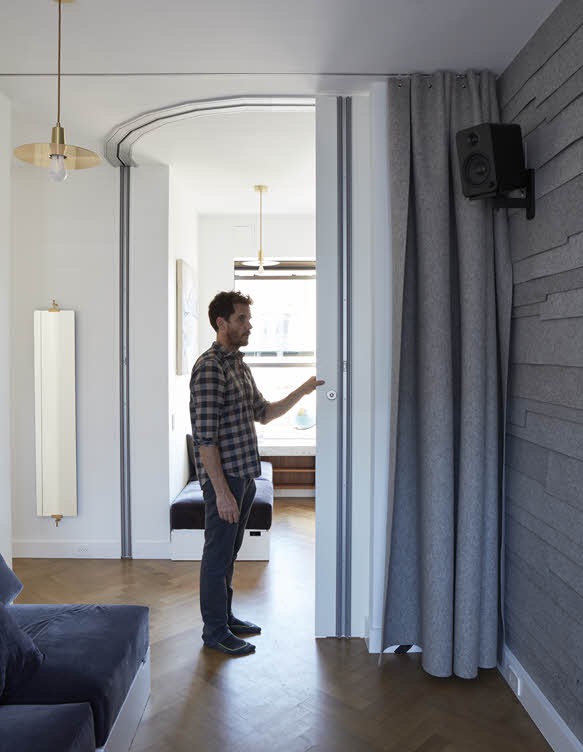
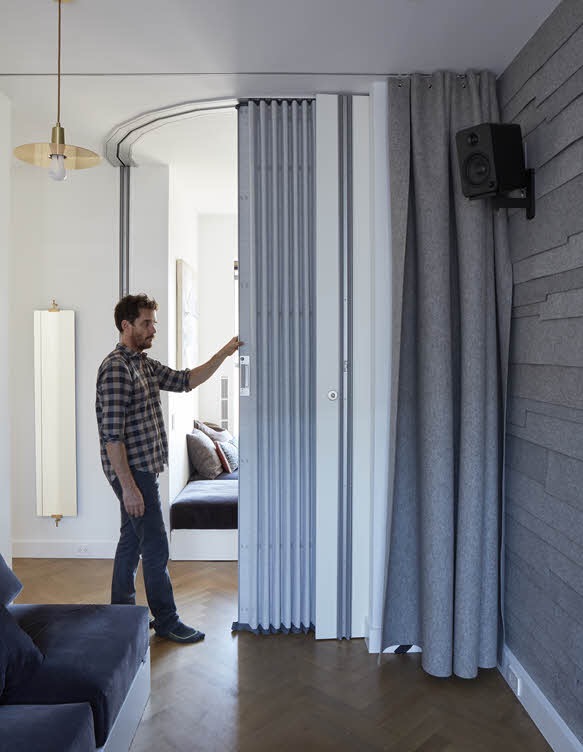
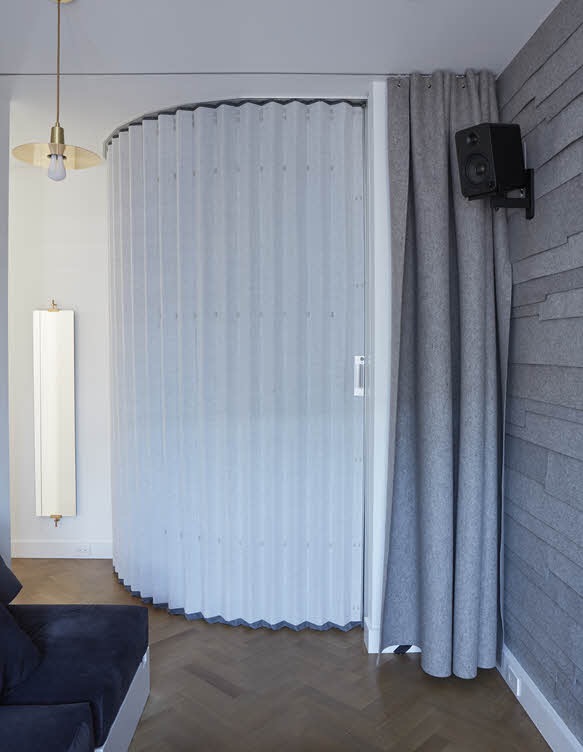
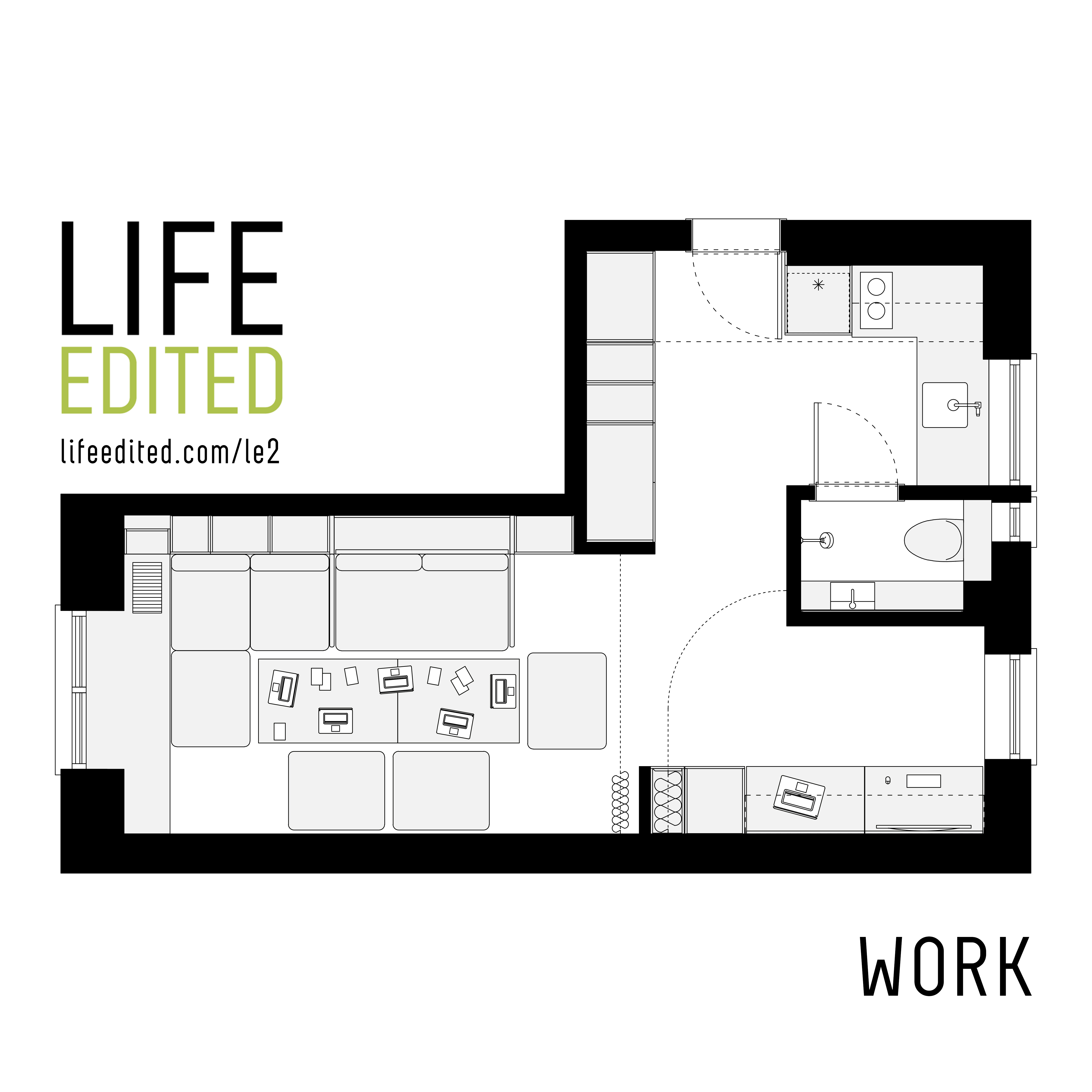
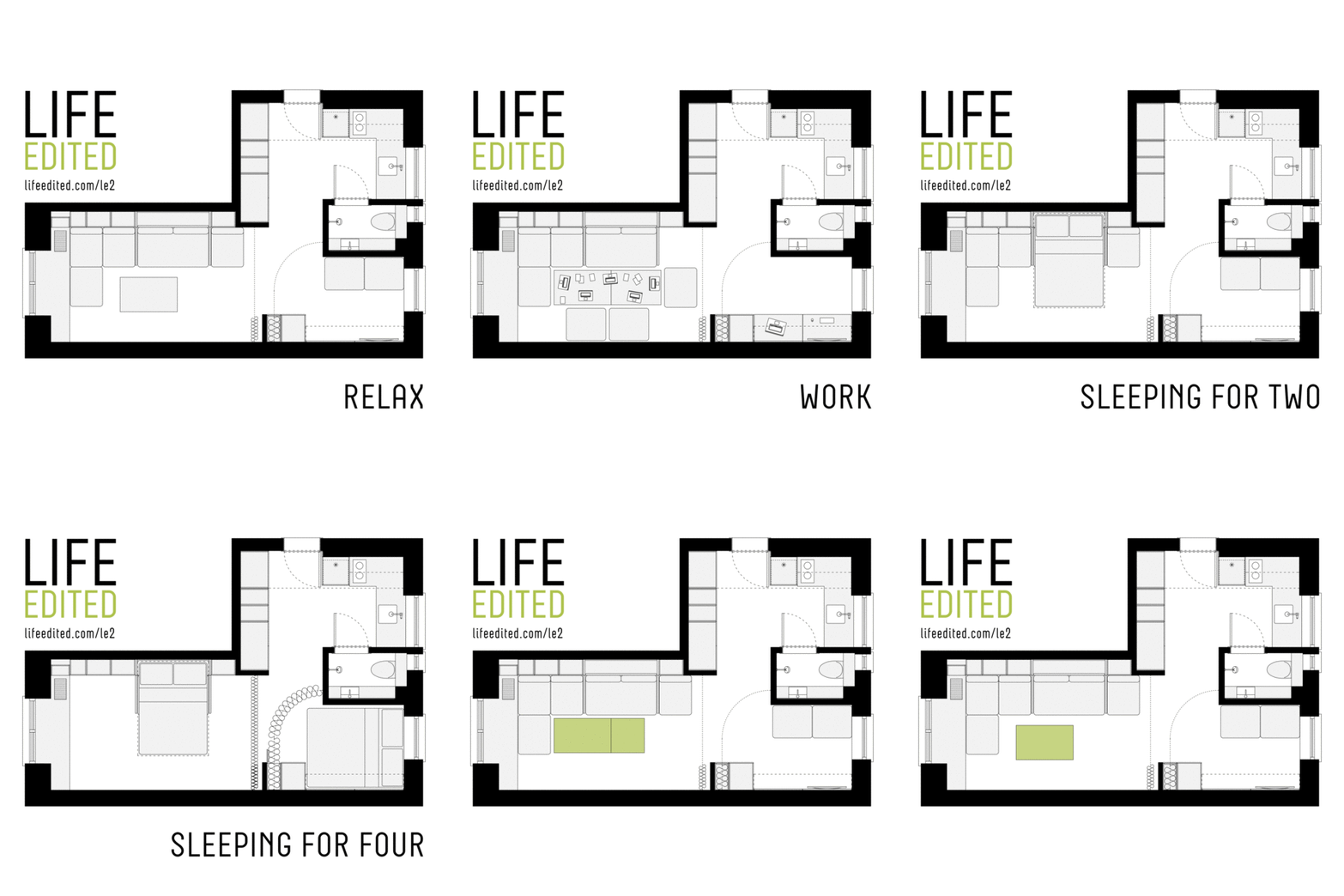
The LifeEdited 2 home office / guest bedroom is a classic in space efficiency. Apartment dwellers can work at a large stand-up desk with a 34-inch screen and two guests can sleep comfortably, all in one room that is just a bit bigger than a queen-sized bed.

What we used:

  • LG 34UM95 34” wall-mounted monitor
  • Wireless keyboard and mouse
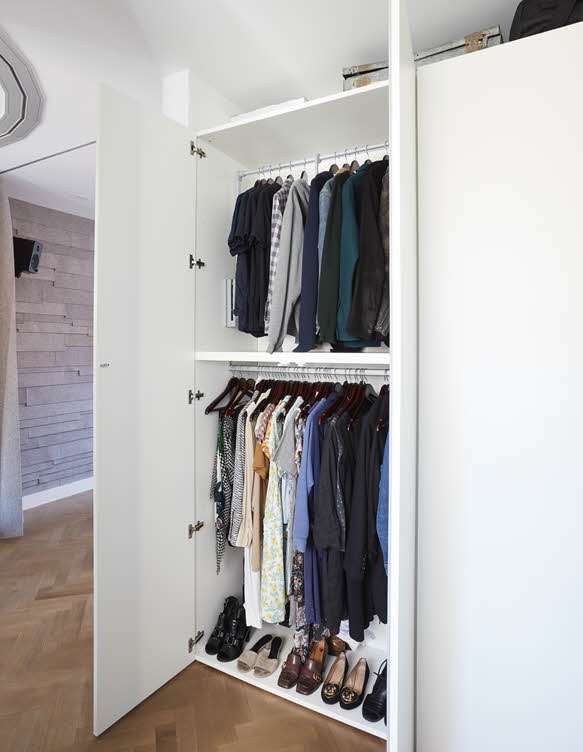
  • MacBook & printer in the closet, connected via hidden cables running through the wall
  • LifeEdited-designed moveable sofa segments that assemble into a guest bed
  • New Concept Table from Resource Furniture (two of these, they fold down)

What we like:

  • It’s a potent home office
  • It has a minimalist feel to it — the messy bits are in the closet
  • Transformation to guest mode is pretty quick

Alternatives:

  • That 34” screen is *really* nice, but a 24” could also work well
  • You could wall-mount an all-in-one computer e.g. an iMac or curved HP Envy

This post is one in a series that describes our LifeEdited 2 showcase apartment. LifeEdited 2 embodies our green, space efficient, and minimalist principles. We view LifeEdited 2 as a lab for experiencing things that are consistent with these principles. The fold-down table described in this post was given to us, which we appreciate, but we would not have accepted if we didn’t believe in it.

Hunter Douglas App Controlled Honeycomb Shades

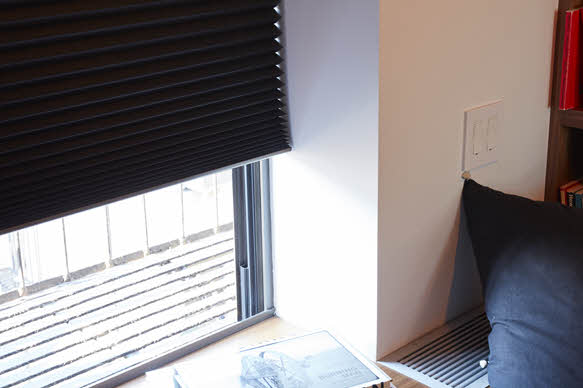
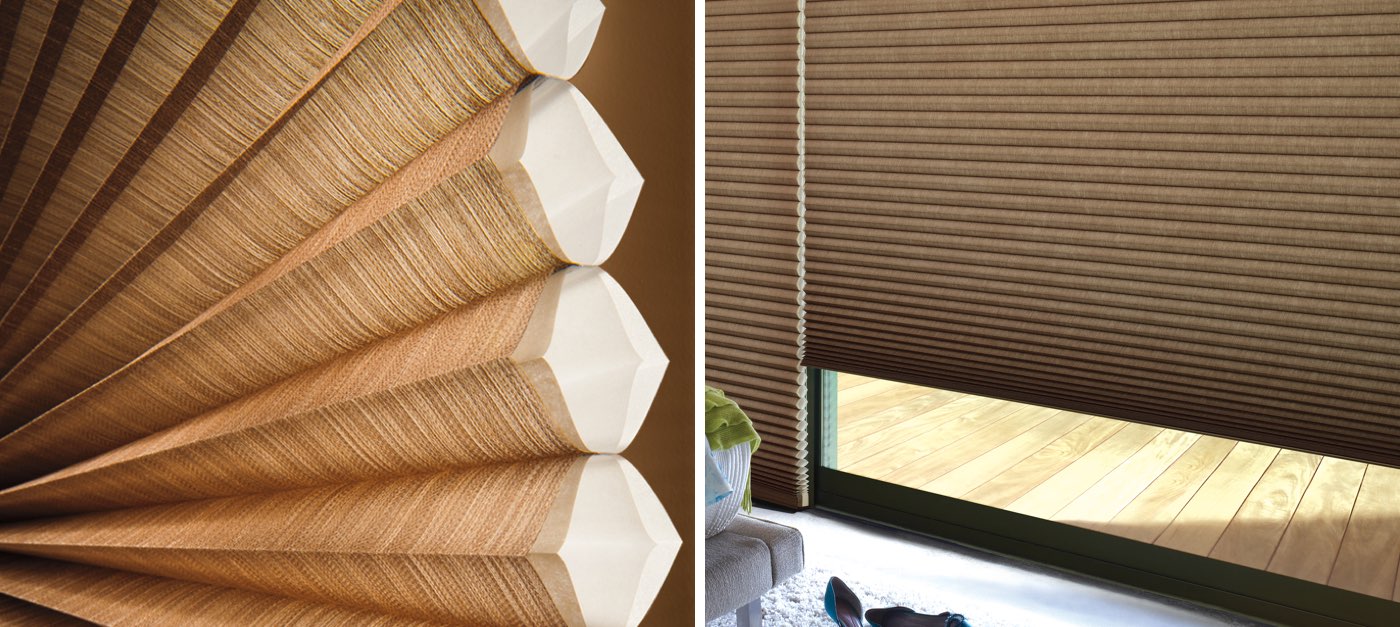
In building LifeEdited 2, we aimed to create a high quality of life within a small space. The cordless Hunter Douglas Honeycomb Shades helped us do this. With big windows on both sides of the apartment, it is important to have blinds that are easy to operate such that the apartment dweller can tune their space to the particular light, noise and temperature of the city. The cellular honeycomb shape of the shades effectively keeps out light and noise pollution while also looking elegant. The Honeycomb Shades are also constructed in such a way as to keep the apartment cool and shaded on hot summer days and warm and insulated on cold winter nights, helping to cut heating and cooling energy needs by a lot. For example, upon leaving one could put the apartment in blackout mode to prevent hot summer sun from baking the apartment while out for the day.

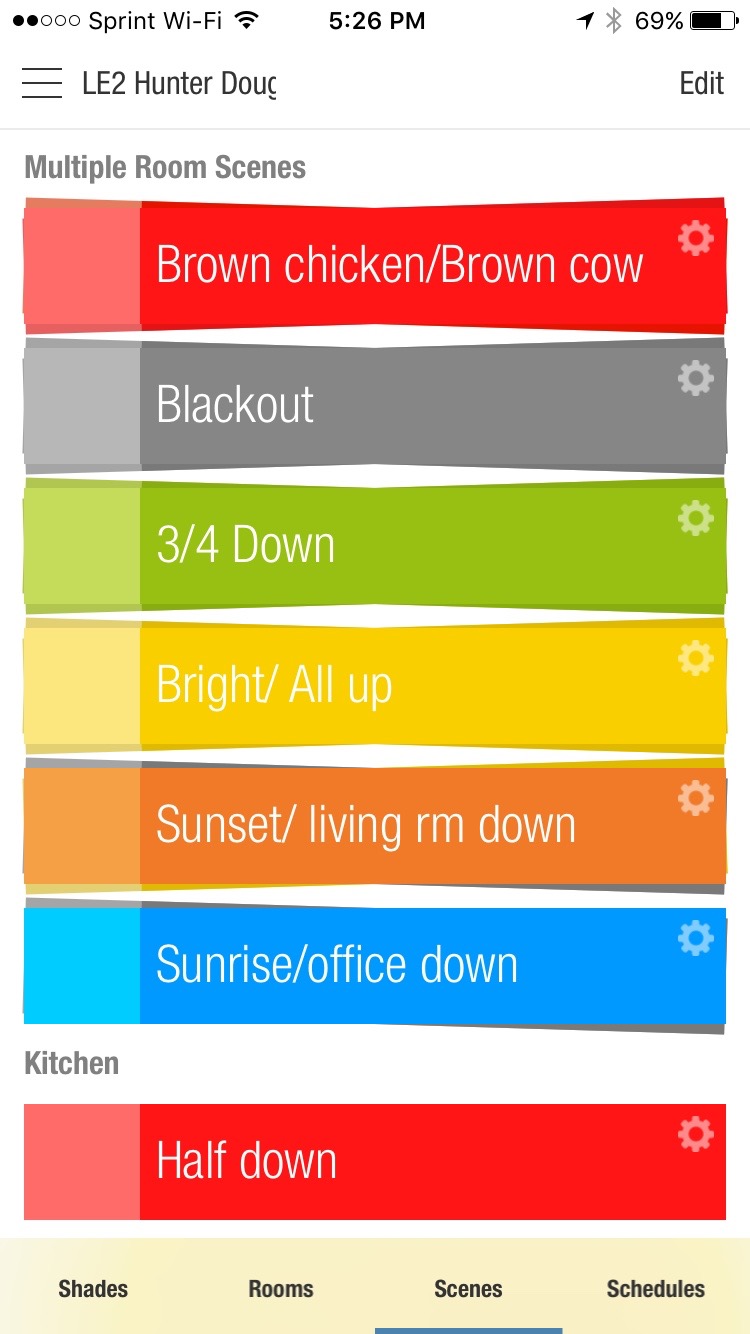
The Honeycomb Shades are intelligent too. They can be controlled with an app on your smartphone or via their attractive “pebble” remote. We love being able to adjust the blinds with the click of a single button. Their PowerView Motorization technology allows us to make settings that are specific to our apartment and our schedules. Late and early in the day the sun beams into the LifeEdited 2 office, so Graham has a partially shaded setting for those times of day in particular. Plus, because the blinds can be used from the bottom up or the top down, they are great for letting light into the apartment while also preserving privacy. Finally, being battery operated they are much easier (and cheaper!) to install than wired blinds.

BigAss Haiku Fan for a Clean Life

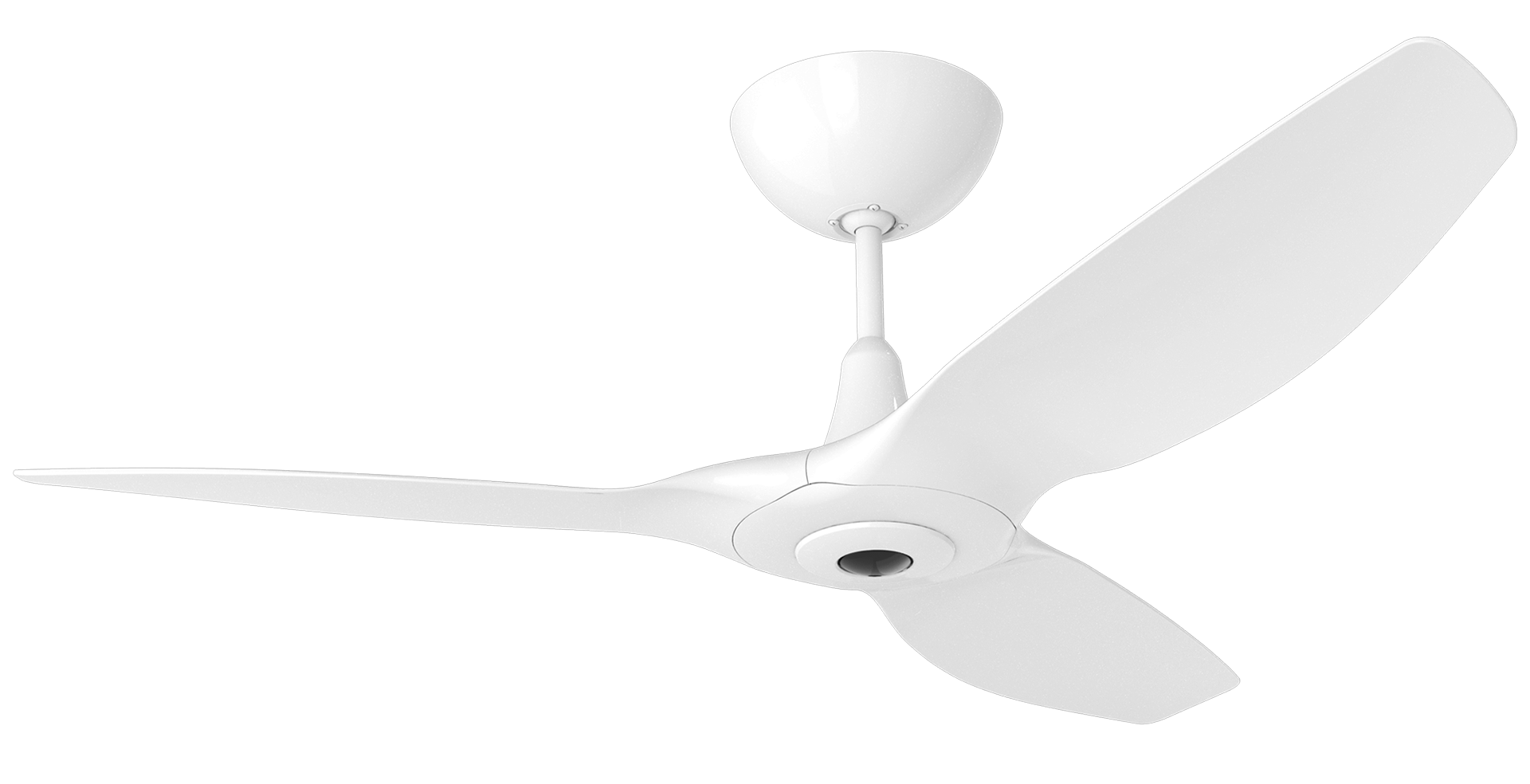
The SenseME Haiku ceiling fan by Big Ass Solutions is silent, aerodynamic, and beautiful. Made with automative-quality paint and hand-weighted blades, the white composite I Series fan is an omnipresent and dynamic factor in our LifeEdited 2 apartment.

161018_lifeedited_0408

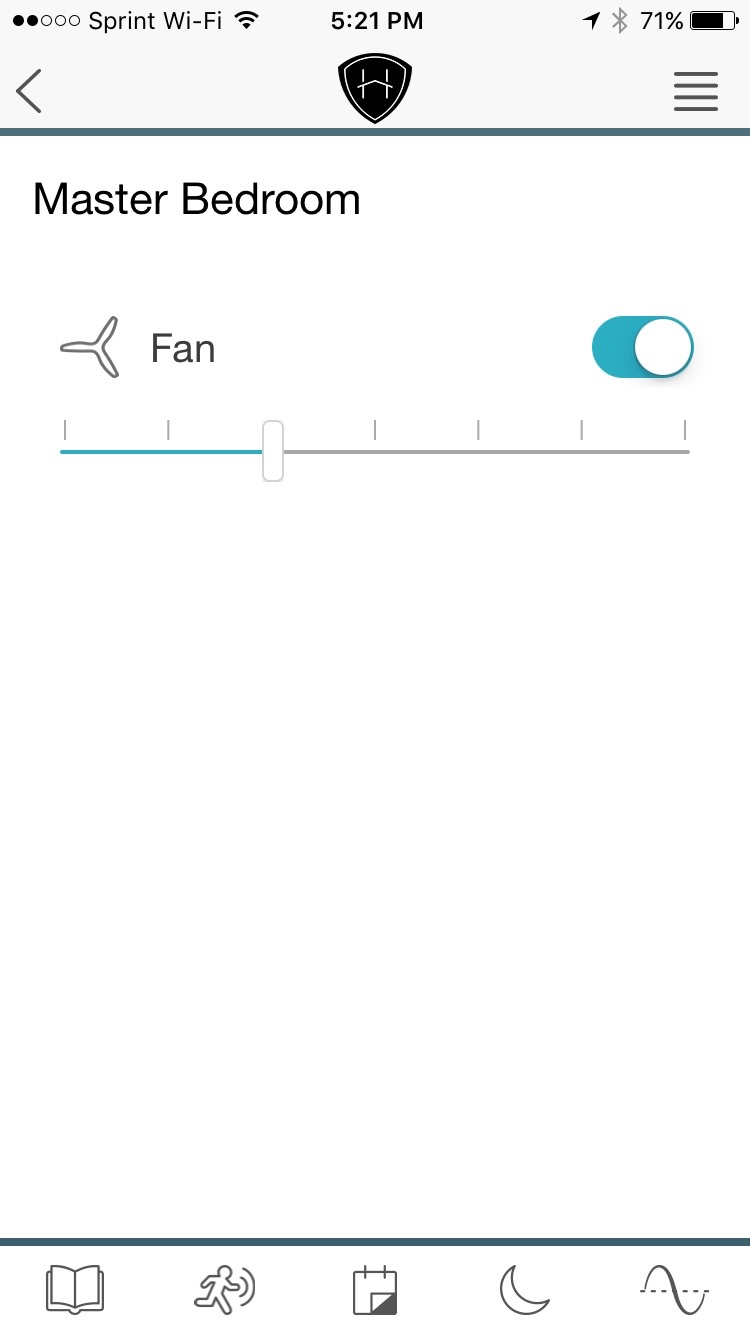
Using a third of the amount of energy a typical fan-motor would, the Haiku’s SenseME technology allows for cost-effective, comfortable, and high quality air by enabling “seven discrete speeds,” which can be chosen from an app on your smart-phone and even paired with your thermostat to maximize efficiency. With built in sensors, the beautifully and simply designed Haiku works silently and in tandem with its environment.

If you use air conditioning in your space, a ceiling fan like the Haiku will allow you to raise the thermostat setting about 4°F with no reduction in comfort. For extra info on the benefits of ceiling fans follow this link!

PS: If your ceiling fan doesn’t have a motion censor like the Haiku be sure to turn it off when you leave a room; fans cool people, not rooms, by creating a wind chill effect.

Will Virtual Rooms One Day Replace Real Ones?

Coming from a classical physics perspective, reality “exists” in a material sense. Our perception of a chair is a function of its materiality: we perceive the chair because it has mass and volume and form in time and space. But coming from a theoretical physics perspective, the chair has a relation with our perception of it, and some would argue that the chair may not even exist without our perception of it. Even if the chair does exist without our perception, it is not useful without that perception. If we cannot see and touch a chair, for all intents and purposes, it does not exist. Now, let’s say we could do away with materiality altogether. What if we could go straight to perception? More to the point, what if virtual reality technology could manufacture perceptions of objects and spaces–visually, auditorily, tactilely–without going through the nasty process of constructing them?

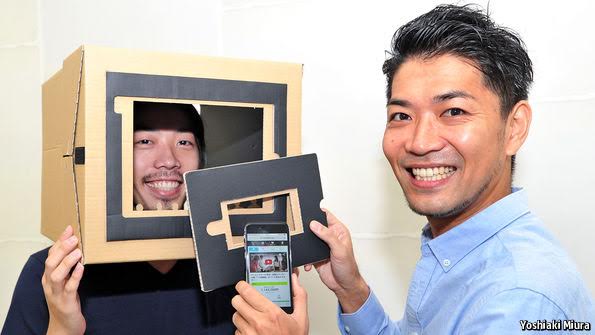
We have explored a couple different ideas in virtual spaces in the past. Bernardo Schorr’s Mixed Reality Living Space was a small box with projector screen walls that showed myriad interior possibilities. A little more earthbound was CoeLux, which created a virtual window that was actually a sophisticated electric light that replicated the effects of natural light on human perception. And we just came across the Solo Theatre from Japan, whose somewhat crude cardboard box structure belies the far reaching implications of what defines “space.”

Solo Theatre is a box that’s thrown over your head (pictured at top). A slot in the front has space for an iPhone, making it, in effect, a private viewing room. The Solo Theatre is, according to the Economist, a reaction to the diminishing size of Japanese homes. They write:

The average Japanese apartment has dwindled from 70 to 60 square metres over the past decade, so that people are even more on top of each other…Japanese must don a public mask for their hierarchy-bound, open-plan offices, and a second face for their families. Turning to small, private boxes at home is their way of searching for a “third space.”

In theory, if someone had one of these boxes on her head, she could: A. make a private screening room in the smallest of spaces; B. if living in a shared space, the box could make a statement as clear about the desire for privacy as sitting behind a locked door would; C. look pretty funny (at least in today’s world).
google-cardboard

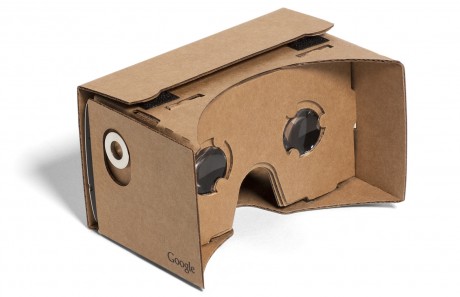
Google Cardboard had a similar concept, though its handheld design seem more cut out for occasional viewing versus full on escape. The upcoming Oculus Rift VR system will surely bring with it numerous possibilities in virtual space construction.
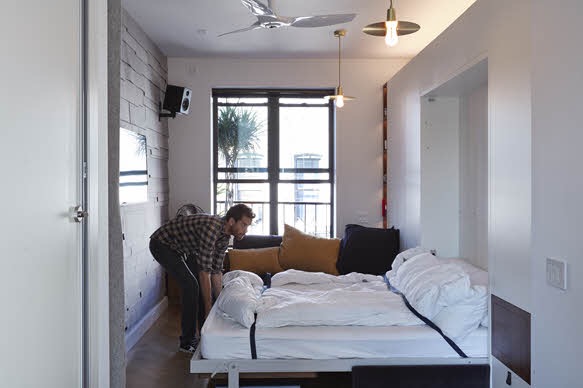
The promise–and maybe nightmare–of all these technologies is that we can create the perception of amazing realities without the resource intensive process of constructing them. We could have the perception of being in Versailles living in a tiny house (though we might bump into walls). In the more immediate future, something like the Solo Theatre, which creates an immersive VR room, without a single 2×4 or panel of sheetrock.