This Valentine’s Day, Become Smitten with Your Tiny Kitchen

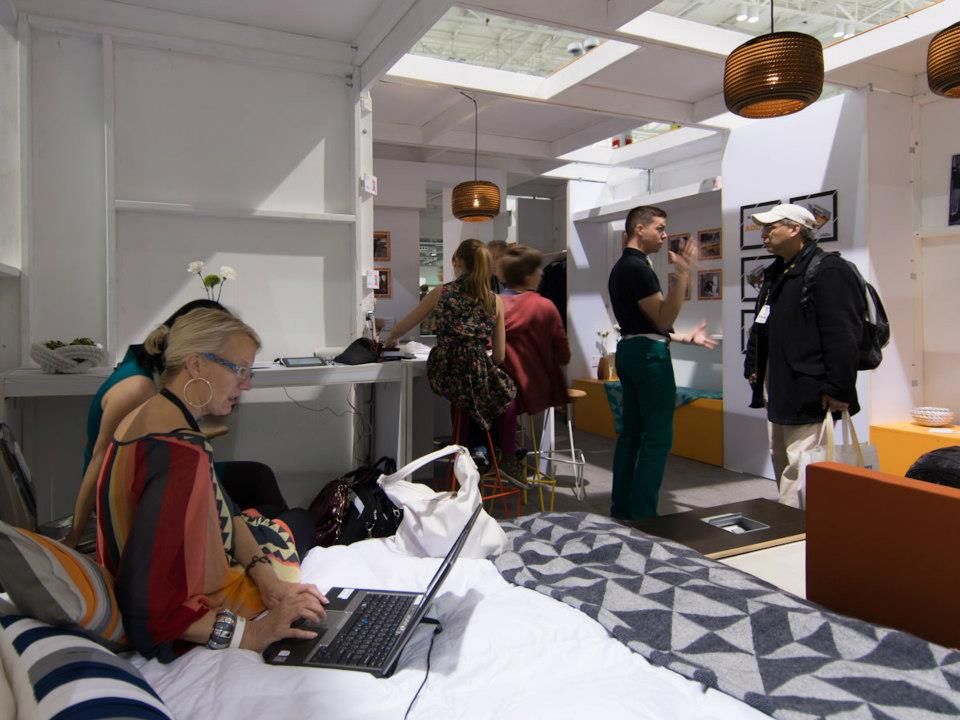
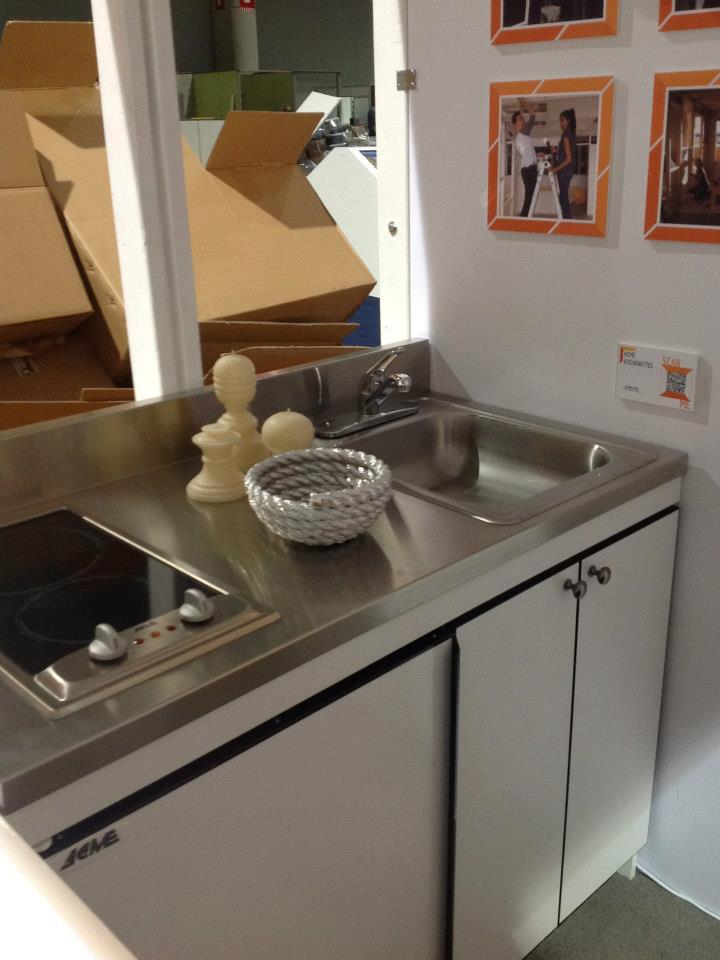
This week we’ve looked at a couple teeny-tiny kitchens: Kitchoo’s modular, plug-and-play kitchen as well as Boston’s micro-unit mockup with its wisp of a prep area. Many of us who cook regularly might see these micro-kitchens and think them suitable for removing takeout from plastic bags, but little else. Well, Deb Perelman might have something to say about that.

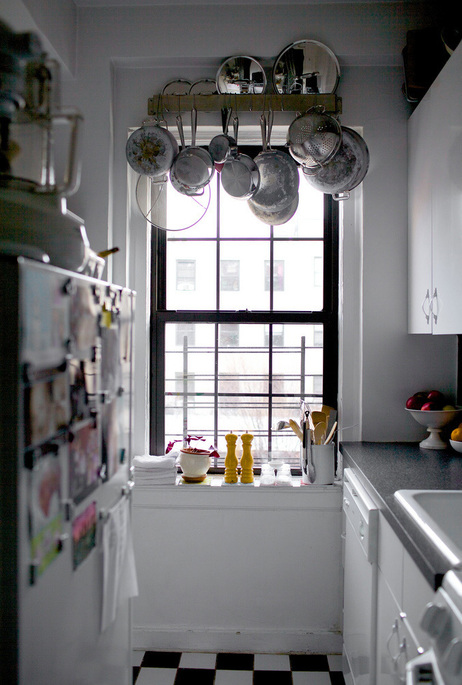
Perelman is the brains and brawn behind, Smitten Kitchen, who is, “Fearless[ly] cooking from a tiny kitchen in New York City.” From her 42 sq ft half-galley, single countered, tiny oven-ed, minimally-equipped kitchen, she whips out dishes like pancetta, white bean and chard pot pies and swiss chard and sweet potato gratin. She has hundreds of recipes spanning many different categories–from breakfast, dessert, veggie and meat. She also has a book.

Perelman is not a trained chef, but rather someone who loves to cook and creatively works within the contraints of her home’s kitchen.

We thought in honor of Valentine’s Day we’d offer Perelman’s “44-Clove Garlic Soup,” a simple soup recipe from her “budget” collection made of ingredients most cooks will have on hand. We thought it was a recipe that, after consumed, says to your beloved “I’ll love you no matter what.”

garlic-soup-deb-perelman

Serves 4

  • 26 garlic cloves (unpeeled)
  • 2 tablespoons olive oil
  • 2 tablespoons (1/4 stick) butter
  • 2 1/4 cups sliced onions
  • 1 1/2 teaspoons chopped fresh thyme
  • 18 garlic cloves, peeled
  • 3 1/2 cups chicken stock or canned low-salt chicken broth
  • 1/2 cup whipping cream
  • 1/2 cup finely grated Parmesan cheese (about 2 ounces)
  • 4 lemon wedges

Preheat oven to 350°F. Place 26 garlic cloves in small glass baking dish. Add 2 tablespoons olive oil and sprinkle with salt and pepper; toss to coat. Cover baking dish tightly with foil and bake until garlic is golden brown and tender, about 45 minutes. Cool. Squeeze garlic between fingertips to release cloves. Transfer cloves to small bowl.

Melt butter in heavy large saucepan over medium-high heat. Add onions and thyme and cook until onions are translucent, about 6 minutes. Add roasted garlic and 18 raw garlic cloves and cook 3 minutes. Add chicken stock; cover and simmer until garlic is very tender, about 20 minutes. Working in batches, puree soup in blender until smooth. Return soup to saucepan; add cream and bring to simmer. Season with salt and pepper.

Divide grated cheese among 4 bowls and ladle soup over. Squeeze juice of 1 lemon wedge into each bowl and serve.

Do ahead: Can be prepared 1 day ahead. Cover and refrigerate. Rewarm over medium heat, stirring occasionally.

Photo credit: Deb Perelman

The Yankees/Red Sox Rivalry of Micro Apartments

New York City isn’t the only American city turning to micro-apartments to accommodate its expanding population. Boston is well on its way to developing large buildings featuring micro-apartments, primarily in its Seaport–aka Innovation–District.

Like NYC Mayor Bloomberg who is encouraging micro-apartments as part of the city’s PlaNYC program, which is preparing the city for 2030, Boston Mayor Thomas Menino is encouraging micro-apartments as part of his “ONEin3’’ initiative, so named for the 30% of city residents who are between the ages of 20 and 34–a population who, according to one survey, was more interested in proximity to work, transportation, and good restaurants than square footage. In fact, that same survey found that only 30% of this demographic found a 300 sq ft apartment too small.

And like NYC who recently opened the “Making Room” exhibition to showcase small space living solutions, Boston’s Society of Architects is opening the “What’s In?” exhibition today showcasing, um, small space living solutions. And, like “Making Room,” who features a mockup micro-apartment, “What’s In?” features, you guessed it, a 300 sq ft micro-apartment by the ADD Inc design and architecture firm.

Truth be known, Boston has been thinking about this stuff for a while, and the ADD mockup was on display last fall–before “Making Room”. And Boston has at least two building underway with micro-units–more than NYC can claim. Maybe NYC is copying Boston. And heck, we’re all copying London and Tokyo and Hong Kong…

Anyway you shake it, it’s good news for smart and small living.

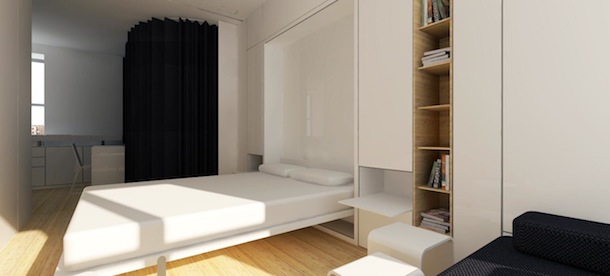
What’s interesting about the ADD mockup is that it lacks a Murphy bed, a staple in the micro-apartment diet. The apartment also forgoes a dining table for a long kitchen counter, which on a daily-use basis makes a lot of sense. Most of us are far more likely to eat a bite sitting at the kitchen counter than having a proper sit-down meal (this might not be a good thing, but there it is).

While some of these design features were probably motivated by reduced costs, they may also work well with the younger demographic the apartment is meant to appeal to, many of whom rarely eat at home and perhaps because of an increased likelihood of passing out at night, might find the Murphy bed a safety risk ;-).

What do you think of ADD’s design? Could you, would you, live there?

A Small Space Kitchen that is Not an Eyesore

Kitchens in small apartments can be pretty sucky. For one, because the apartments are often geared toward budget-minded buyers and renters, yellowing and delaminating formica tends to be the building material of choice. Then there are oversized appliances. Since smart, small American apartments are as common as plain-speaking architects, few companies make–or export–good small appliances. As a result, these small spaces are often outfitted with full sized ovens, ranges, sinks and dishwashers. You end up with an otherwise nice space marred by a blemish of a kitchen.

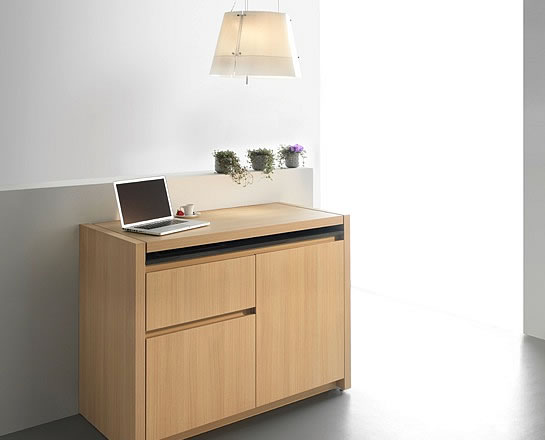
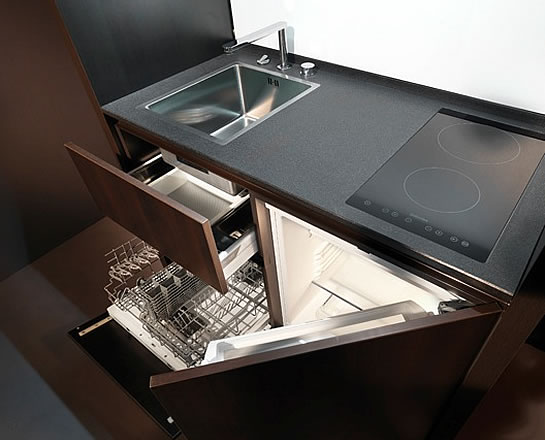
French firm Kitchoo might have an answer for this dilemma. They make elegant, high-quality, small-space-appropriate, all-in-one modular kitchens.

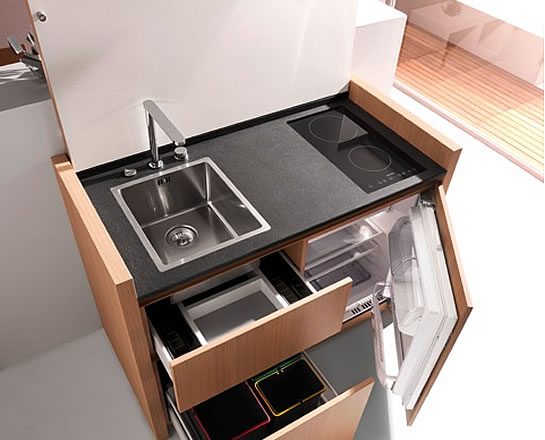
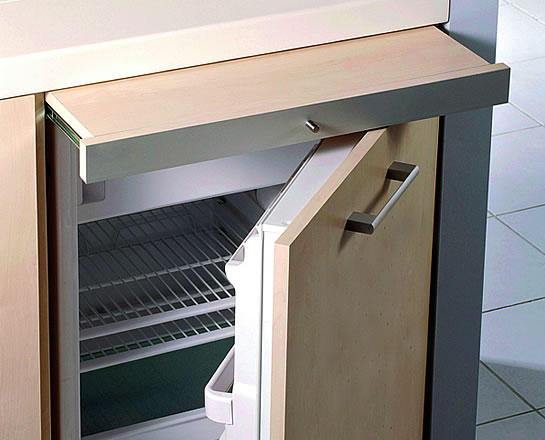
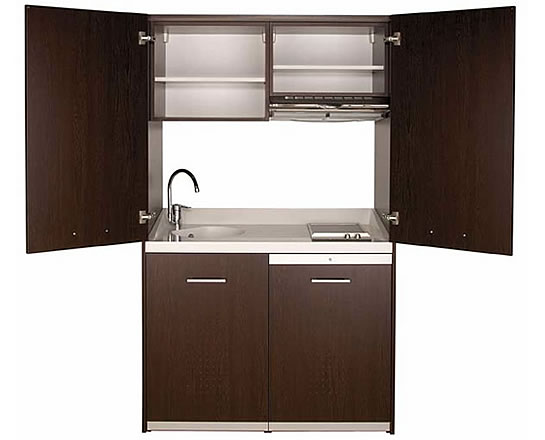
They make two series of kitchens: The K and M series. The K series is the sleeker and more expensive of the two. The K1 is 51″ w x 25″ d (the K1) include two induction burners, a fridge/freezer, a sink with telescoping faucet, a cutlery drawer and optional dishwasher. The K2 has a top shelf that holds an oven and additional storage. All construction materials and appliances are eco-friendly. Prices begin at 5,505 € ($7400).

What’s special about the K series is that when the sink is hidden, it does not look like a kitchen. This is actually quite important for a small space, where it’s valuable to have every piece of real estate able to double duty. The K kitchen could literally be a desk during the day.

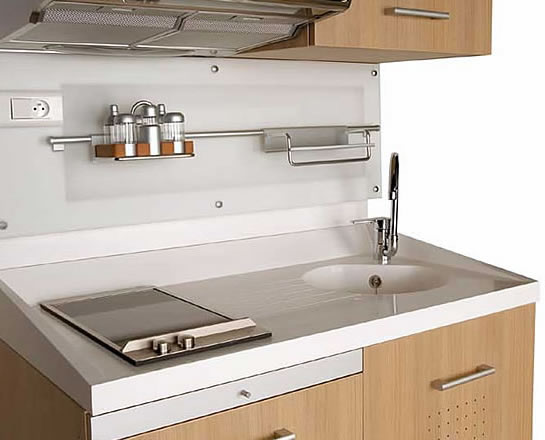
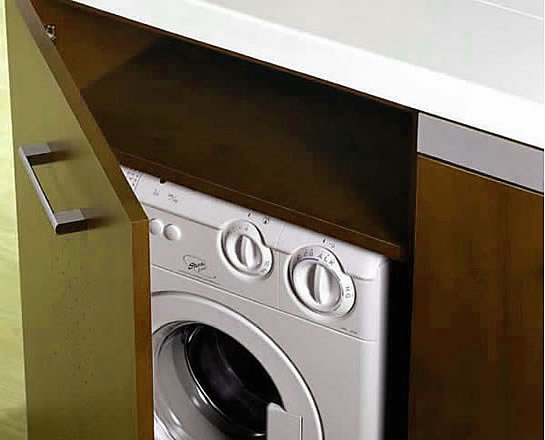
The M series is Kitchoo’s more pedestrian version. The sink faucets do not telescope and rather than the M’s flush induction burners, the M features slightly raised electric cooktops. Besides being less expensive (prices start at 3,833 €/$5143) the M series seems a bit more practical. It features pull out countertops that can double as a table, more storage and, coolest of all, an optional mini washing machine. The M3 (5,500 €/$7379) is the biggest M series and would really be suitable for someone who frequently cooks.

While these prices are a bit on the steep side, compared to the costs of custom kitchens, which easily exceed $10K, it’s not so bad. Granted, this will appeal to buyers more than renters.

Unfortunately (and we realize we’ve been saying this a lot lately), Kitchoo kitchens are only available in Europe. We reached out to them and they told us that they are planning on coming to the States in the near future. We will keep you posted.

We’re hoping with the growing popularity of the micro-apartments and tiny homes, products like Kitchoo and the smart, small appliances they feature, will become more available to American markets.

Fit Your Next Car into Your Phone

DriveNow is a car-sharing program launched by BMW and European car rental company Sixt that allows you to locate and rent the nearest car within a given city’s limits via its website or mobile app. What sets DriveNow apart from other car-share services is you don’t need a reservation and you can park and leave the car anywhere you want rather than returning it to a home garage. You could rent a car for 20 mins to drive to work, end your rental, stay at work for eight hours, and rent another DriveNow car to go home.

This flexibility contrasts to services like ZipCar, which require you to make a reservation for a set amount of time and return your car to a specific garage (penalties fees are applied if you don’t return the car by the end of your period).

The service is BMW’s attempt to future-proof itself from the changing nature of car usage and ownership. With car ownership decreasing and urban-living on the increase, having a car that does 150 mph on the autobahn and is parked in your suburban garage will become increasingly irrelevant. Tomorrow’s driver will need a car that can handle 25 mph around town and be easily parked.

bmw-i3

DriveNow is also connected with BMW’s upcoming i3 electric vehicle (pictured above), which is the company’s first EV geared specifically to city living. In the future, DriveNow will be connected to charging stations around a city for low-emission temporary urban transit.

Here’s the rub: DriveNow is almost exclusively in Germany, with locations in Munich, Berlin, Dusseldorf and Cologne. Currently, their fleets are internal combustion engines, which enables the flexibility of returns (i.e. you can park on the street rather than finding a charging station). Rates are €29 cents/minute for driving and €10 cents/min for parking. These rates include parking and gas; fuel levels are visible when you book your car. DriveNow also includes on their maps proximity to bike share stations.

They have one US location in the Bay Area, whose fleet is made up of BMW’s ActiveE, an all electric version of their 1 Series car. Because of the need to charge, you need to return the cars to one of the designated garages, though not necessarily the one where you picked the car up. All stations are located near BART stations. Rates are $12 for the first half hour then $.32 each additional minute and $90 for the day. There is a one time $39 registration fee.

Ideally, a service like DriveNow would be brand-agnostic–i.e. not attached to a particular carmaker. But we find the idea of on-demand, restriction-free car sharing pretty exciting. Imagine being able to rent any car parked on the street whenever you want. While the per drive expense is surely much greater than car ownership, the lack of overhead and flexibility seems well worth it. And with bigger fleets and costs spread out over more members, the per drive cost would likely go down while available cars increase.

via Metropolis Magazine

Optimize Your Emailing with Keyboard Shortcuts

Many of us spend a good portion of our days dealing with email. Whether we relish or loathe the task, we can all agree that it makes sense to figure out how to do go through your inbox as efficiently as possible. We’ve looked at ways of optimizing your Gmail account, but today we’re looking at something a bit more basic: The keyboard shortcut.

Every on and offline mail service (Gmail, Yahoo, Hotmail, Outlook, Apple Mail etc.) has them, but many of us don’t use them. Just like when you discovered ctrl/Apple + c, v and x (you have discovered those, right?), a little know how can result in a ton of time saved over the years.

Rather than cover every mail service, we’re going to give a few keyboard shortcuts for Gmail, which is still the mail service of choice for the majority of us. (We’ve put links to other mail services below).

  • Enable keyboard shortcuts on Gmail by going to settings (the little gear in upper right corner). On the “General” tab, scroll down to “Keyboard shortcuts”. Turn keyboard shortcuts on and save settings at bottom of screen.
  • Shift + c to compose message in new window.
  • / puts your cursor in search box. This is especially useful for those of us who keep documents in our inbox.
  • Shift + c to reply. Shift + a to reply all.
  • Shift + 3 to delete a message.
  • gi Takes you to your inbox.
  • ? shows a keyboard shortcut cheatsheet.
  • Yahoo, Hotmail, AOLOutlook, Apple Mail (may vary between OS versions).

We like to say that the hours of our days are often lost in teaspoons, not gallons. While not revolutionary for many of us, sometimes mini timesavers like these keyboard shortcuts help us do the things we’re doing faster so we can get on to more important things.

What simple but important email timesavers do you use? Let us know in our comments section.

image credit Shutterstock.com

Chair Marries High Design with Space Efficient Design

In the coming months, we will be highlighting products and services we use in the LifeEdited apartment. Today, we’re looking at the Eco chair by Voxia.

One of the main design criteria for the LifeEdited apartment was the capability to host dinner parties for ten. We chose the Resource Furniture Goliath Table as its ability to expand from 17″-115″ was hard to beat. Seating was more difficult. Though there are many great folding chair options, we wanted something that looked a bit more permanent, so we narrowed our search to stacking chairs. At the time, lifeedited.com wasn’t much to look at, so we had our friends at Treehugger do a roundup of stacking chairs.

While there were a number of great options, none were as aesthetically or functionally appealing as the Eco by Voxia. It matched the look of the apartment perfectly. Most important, the chairs stacked extremely tight. The surface is a mere 9mm thick; with protective pads 13mm. There is a negligible gap between chairs when stacked. This tight fit allowed us to fit all ten chairs in one cabinet.

bild6

LifeEdited-South-Wall-Storage

The chair is one piece of compression molded beech plywood, which the company claims uses 1/8 the amount of wood of most conventional chairs.

The chairs are quite comfortable. Though we must say that the seat portion, which is about 15″ wide, favors the slimmer set.

Unfortunately, the Swedish chairs do not have a US distributor just yet. Pricing ranges from about $350 for the beech finish version to $426 for painted versions (pricing is approximate as there is no official US price list). While this was actually middle-of-the-pack pricing for a number of the designer chairs we looked at, it’s admittedly a good chunk of change.

What is unique about the Eco chair is that it marries high design with space-saving features. The current paradigm suggests that if you want high design, you probably have a big home and don’t need to worry about space efficiency. We’d love to see more exquisite furniture like this for a new breed of home where efficiency and high design go hand in hand.

Park Your Life in These Repurposed Garages

A design by architectural firm Levitt Bernstein that converts unused garages on London housing developments into popup homes was the winner of the Building Trust International’s HOME competition, which sought to provide “residents most at risk in developed cities with a safe place to live.”

The Levitt Bernstein units are part of a larger project they call HAWSE (Homes through Apprenticeships With Skills for Employment). The homes provide shelter for their occupants as well as trade skills as they are involved with the assembly of the unit. The house provides low cost housing (£11/week) for a year or two before the occupant moves on to other developments and the structure is demolished. We’re not sure why they wouldn’t remain as ongoing housing, though it likely has to do the fact they’re using someone else’s property.

The units are a mere 118 sq ft and feature their own bedroom, bathroom and living/dining area. We particularly like the wall-through sink between the bathroom and kitchenette. Each fifth garage will have a communal laundry, additional kitchen equipment and a dining area.

HAWSE is meant to use under-used spaces in expensive, high density areas, in this case East London. We’ve seen other garage-cum-homes with the same mission intended for New York City, but this one seems much more thought out. The other designs, particularly the upLIFT design (below), proposed using highly used, revenue-generating parking spaces as housing for the homeless, which seems like a tough sell. Focusing on using under-used spaces like HAWSE makes a lot more sense.

Uplift-concept

There was some controversy (possibly manufactured) reported in the London Evening Standard. An architect called pop-up housing “morally bankrupt” and not addressing the causes of homelessness. We think it’s a pretty great idea and a creative way to make increasingly expensive cities accessible to diverse populations.

What do you think? Is this smart design or a bandaid on larger social and economic woes?

Clear Hurdles to Sharing with Yerdle

Yerdle is a new website and mobile platform that allows easy sharing and giving of common items. The idea is very simple: We want or need stuff, the people we know have the stuff we want or need, often unused. Yerdle enables you to get that stuff either to borrow or keep. That’s about it.

Yerdle is connected to your Facebook account. You and your friends post pics of the stuff you’re willing to give away or lend. You can post what you’re looking for and peruse offerings from other yerdle members on their site, Facebook timeline or iPhone.

Yerdle has an impressive team behind it and a lofty mission:

Co-founded by Adam Werbach, former President of the Sierra Club and Founder of Saatchi & Saatchi S, Andy Ruben, former Chief Sustainability Officer and head of Global Strategy at Walmart, and Carl Tashian from the founding team of Zipcar, yerdle was created to offer a sharing marketplace that provides an easy way to reduce consumer waste associated with buying items new. With Americans throwing away an astounding 31 million tons of plastic each year, packaging for new gifts over the holidays will clutter even the neatest home. yerdle’s mission is to reduce 20% of the things people buy through sharing, collectively protecting precious ecological resources.

We asked Adam Werbach a few questions about yerdle specifically and sharing systems in general–about how to get started and how sharing can compete with cheap consumer goods.

LE: What makes yerdle different from other sharing sites out there?

AW: Before supercenters and Amazon.com, the obvious place to get something you needed was from a friend or a neighbor. Need a shovel? Ask a neighbor. Kids need new shoes? Check with the cousins. In the last hundred years though, retail has become hyper-efficient, and it has become easier to buy something new than to borrow it or find it from a friend. Our goal with yerdle is to flip that on it’s head, and to make it easier and more fun to get things from your friends. Here’s how it works, you connect yerdle with your Facebook account and snap a few pictures with your iPhone of items you might be willing to share. Have a baby stroller you don’t need any more? Or an extra thermarest? Yerdle allows you to post items to either give or loan to your friends. The average person who logs on finds about 300 free items from their friends that are immediately available to them.

LE: How do you think technology is changing the face of sharing?

AW: Although sharing has been around forever, we’ve never really applied the advances of software to the sharing economy. The thing that you’re thinking of buying right now is probably sitting unused, and perhaps unwanted, in a friend’s closet or garage. The goal of yerdle is to float that information up to you when you’re considering a new purchase.

LE: How can yerdle compete with an abundance of cheap consumer goods–when it often seems easier to buy something from amazon that it does to browse through a site?

AW: The great thing about sharing is that it saves you money, it builds community and it saves natural resources. That’s a hard set of benefits to beat. Our challenge is to grow the community of folks who are willing to check in with their friends before they give something to Goodwill or buy something on Amazon. It’s not right for everything, but chances are you can save about 25% of the money you’re spending now on durable goods.

LE: What’s the best way to get started if you’re not actively sharing or if there is little sharing going on in your region?

AW: The best way to get started is to take a few photos of items that you are ready to part with. Put them up on yerdle and share them with your friends. You’ll be amazed at how quickly people start talking about what you’re doing. We’ve found that people are as interested in the social relationships as they are in getting something physical. It’s a good excuse to connect with old friends and to help folks.

See the Future in Ancient Japanese Architecture

While there’s a time and place for innovative space-saving solutions, sometimes the way forward requires a little looking back. A perfect example of this is the traditional Japanese home, a space-saving layout that works as well today as it did 400 years ago.

Unlike western homes, which typically have designated rooms for specific purposes (e.g. living, dining and family rooms), traditional Japanese homes center around a large living space called a washitsu that serves as any and all rooms (excepting the kitchen, toilet and genkan). Many modern Japanese homes still include a washitsu, though they are now accompanied by several western-style rooms as well.

Subdivision of the main room is achieved with shōji, translucent paper walls, or fusuma, thicker, impermeable walls, both of which move along wood rails on the floor and ceiling. Opening and closing these walls can dramatically alter the size and utility of the room.

This versatility of the room is made possible by lightweight portable furniture such as futon beds, zabuton seating cushions or tatami chairs for seating and low tables. All furniture can be stowed in a large closet area called an oshiire.

One of the most brilliant aspects of the traditional Japanese architecture is its standardization. Layouts are based on the tatami, an 18 sq ft mat, traditionally made of rice straw. The fusuma are the same size as the tatami. Imagine a home that required no custom pieces? Where everything was standardized and easily replaced?

There are definitely some downsides to the traditional Japanese home. Privacy probably being the first one. Fusuma and shōji are really glorified paper walls and provide little in the way of audio isolation. Historically, rooms were shared by the whole family, which might not suit everyone. Western knees and backs are not necessarily conditioned to sitting cross-legged or getting up and down from a 6″ high bed either.

All that said, it wouldn’t be hard to imagine adapting many of the traditional Japanese architectural elements to western preferences: More robust sliding walls, a platform for your futon, folding chairs rather than zabutons and so on.

Have you lived in a traditional Japanese home? What were the advantages/disadvantages? We’d love to hear your experiences in our comments section below.

8 Tips for Making Your Own Micro Apartment

With all the hoopla around the adAPT NYC competition and other micro-apartments around the country, it’s clear there’s a demand for smart, small apartments. In fact, people write us daily asking if we have apartments available to rent or buy.

While LifeEdited is working with development teams to get you your micro-apartments with the greatest haste (be sure to sign up for our list), many of the developments are years away. This leaves the question: What do I do now if I want a micro-apartment?

If you’re interested in living in a micro-apartment–either converting your existing place or starting fresh–here are some suggestions we think are critical to living a big life in a small apartment.

  1. Pick a good address. We think small spaces work best when you use your city or town as your living room. With amenities like restaurants, entertainment and parks at arm’s length, a good address will provide a living room you actually want to hang out in. Central locations are more walkable and have better public transport, allowing you to live car-free or get by with a car-share. Check out Walkscore.com to see how a neighborhood stacks up in terms of walkability and amenities. Yes, a good location will cost more, but you can save money by being car free and choosing a smaller apartment.
  2. Size matters. While there is no magic number for square footage, the micro-apartment designation is about 250-400 sq ft for singles; 300-600 for couples; 500 + for families (separate rooms are generally a good idea for a peaceable family). In most cities and towns, there are plenty of apartments these sizes.
  3. Get in good shape. In general, square and rectangular spaces are ideal. They feel bigger than odd-shaped spaces and are easier for fitting modular furniture.
  4. Get a Murphy Bed. It’s the single easiest way of creating space without sacrificing function. A queen size bed is about 35 sq ft.–i.e. 10% of a 350 sq ft space; a 10% used exclusively while unconscious. We use the Swing sofa/bed by Resource Furniture; the sofa on the frontside provides even more space-saving as most Murphy beds have unused front sides. Starting at over $10K, the Swing is not for everyone. Resource Furniture has many less expensive models and there are a number of decent Murphy beds that can be purchased for around $3K. We were recently turned onto Murphy Bed Center, who has models starting at $1699. If you’re a DIY type, build your own for $275.
  5. Get high…with storage. Almost all of the adAPT NYC submissions included floor-to-ceiling storage. Having high storage utilizes unused vertical space and frees up floor space, making an apartment seem larger. On the high end, Resource Furniture offers modular storage units to fit with their furniture. On the low-end, the IKEA Pax system can be had for less than $1K and is almost 8′ high.
  6. One table is enough. A while back we looked at tables that serve as both coffee and dining tables. While these table are a little on the pricey side, only needing one table frees up quite a bit of floor space and provides two important surfaces.
  7. Sit and stow. Having chairs available for guests is important, but when we’re home alone or with our partners, we only need one or two chairs out at a time. The rest of the time, extra chairs just take up space, which is not a luxury the micro-apartment dweller can afford. If you don’t know what chair to get, here are 10 folding chairs to fit almost any budget.
  8. Get a comfy couch. A micro-apartment requires that every object be highly useable. While that stiff, low profile couch might take up little space and look super cool, if it’s not comfy, you’re not going to want to sit in it. Get a comfortable couch you’ll want to sit in day-in-day-out. If it’s big enough to sleep guests, all the better.

Anything we missed? Let us know in our comments section.