Test Riding the New Schindelhauer ThinBike

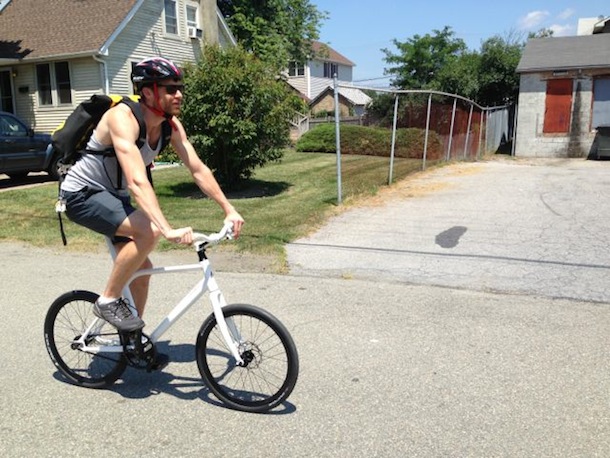
A couple months ago, we checked out the new ThinBike by Schindelhauer. Last week this author got to ride it. Here are my impressions:

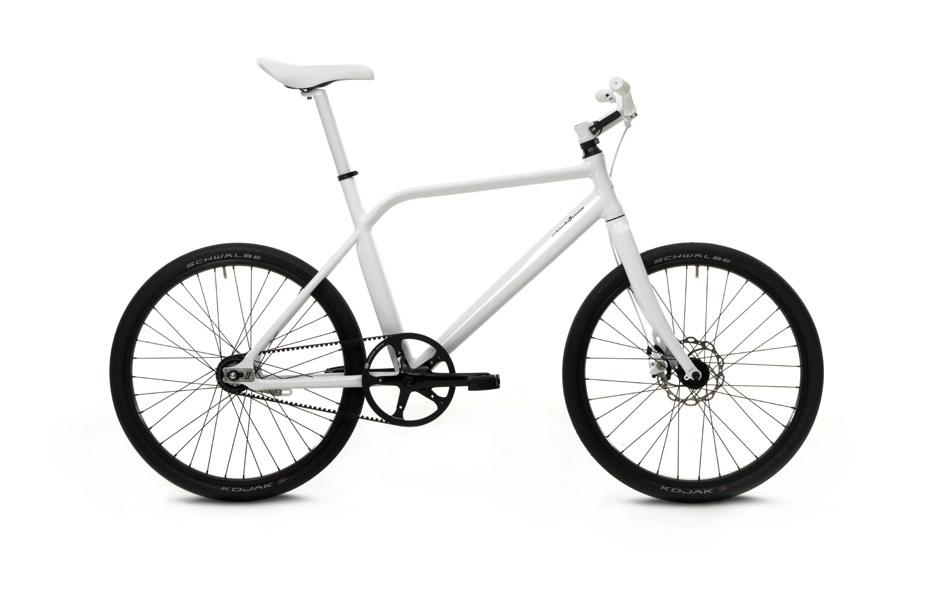
  • Good: The bike looks great. I brought it to my local bike shop and the guys were swooning over it. Every detail seemed considered: The proportions, the white powdercoat, the shape of the frame, etc. People on the street kept stopping me to find out what type of bike it was. It’s a great conversation piece.
  • Bad: The bike looks great. We wonder how much of a thief magnet this beauty queen would be.
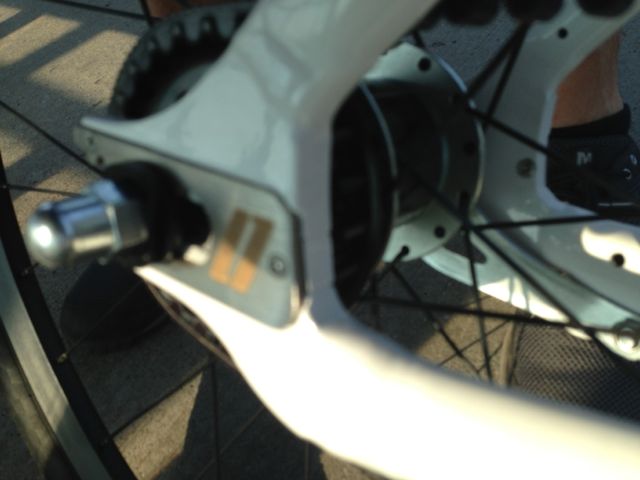
  • The Gates Carbon Drive chainless drivetrain rocks: Quiet, clean, pretty. It does require that the rear triangle has an entry point for the belt (i.e. you cannot loop it through the frame like a conventional chain). Schindelhauer did an amazing job of concealing the entry point.
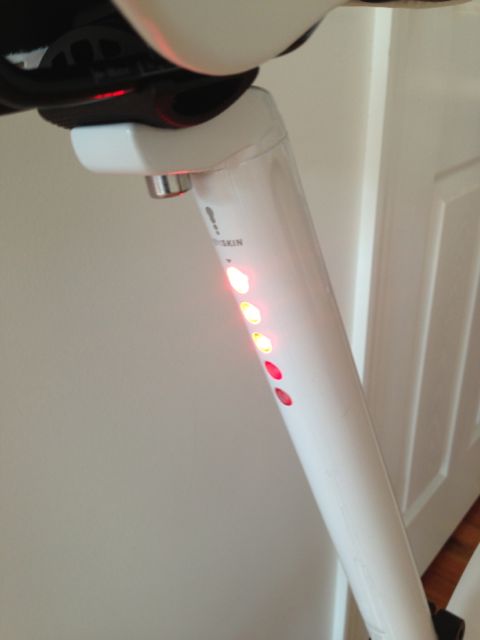
  • We really liked a number of details such as the integrated bell on the brake lever and LED light on the seatpost. Having both of these city-bike staples as integral parts of the bike creates a cleaner look and eliminates the need to remove them when leaving the bike.
  • There is a new, one-stage Speedlifter, the quick release on the steering tube that enables the bars to turn. It was simple to use and cleaner looking than the old version.
  • Unfortunately, the one-size-fits-all ThinBike does not fit all. I had to max out the seatpost to accommodate my 6’3″ body. The reach was fine and handling predictable. With its generous stand-over height, I would guess the bike would be ideal for anyone between 5’5″ and 6’1″, which ain’t a bad range.
  • The gearing was a bit steep for hillier places. I live a little bit outside NYC, where there are quite a few hills. The chainring and cog mated to the SRAM two-speed internal gear hub were a bit too high for my liking (and I’m relatively fit). These can be changed easily, though Changing the gear requires a new cog and/or chainring and a new belt if it’s a significant change in gearing. Also note that the low gear will always be 30% easier than the high. In other words, you can’t pick and choose your gearing–the high gear will always be proportional to the low.
  • The brakes work great. While I haven’t used a coaster brake since I was six, I quickly reacquainted myself. For the most part, I used the front disk brake, which stopped powerfully (70% of braking power comes from the front brake anyway).
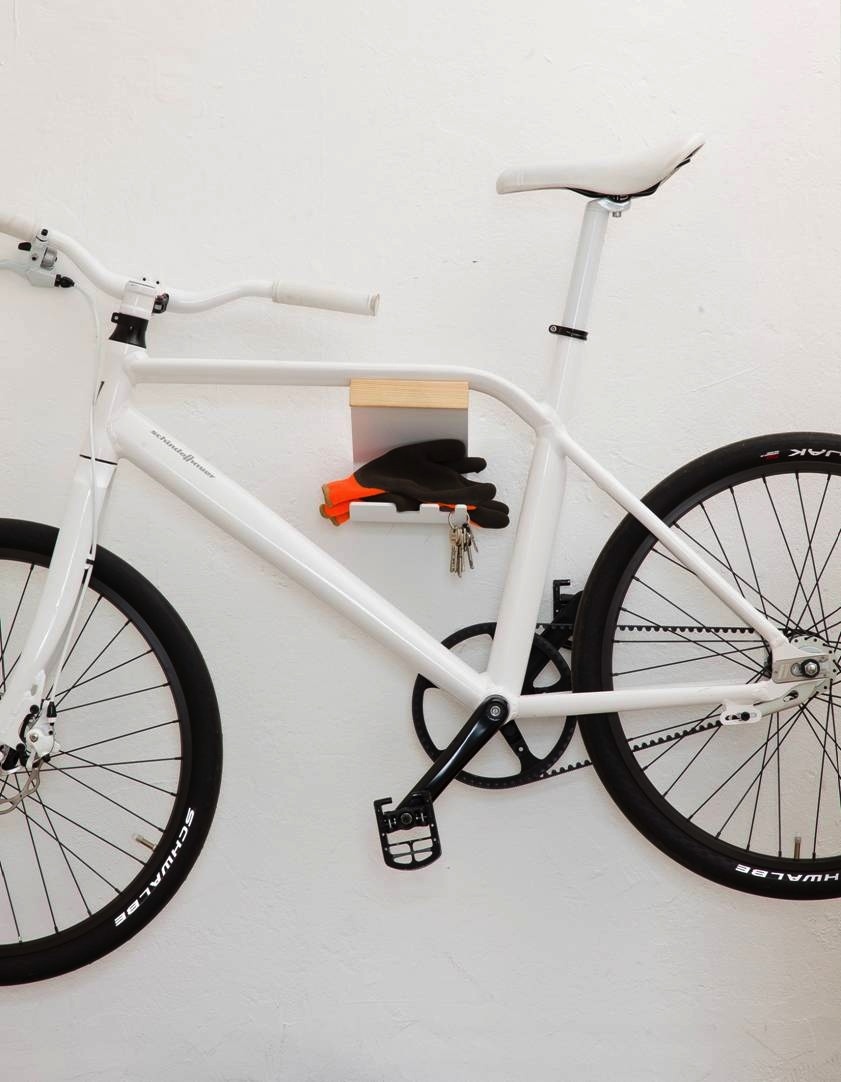
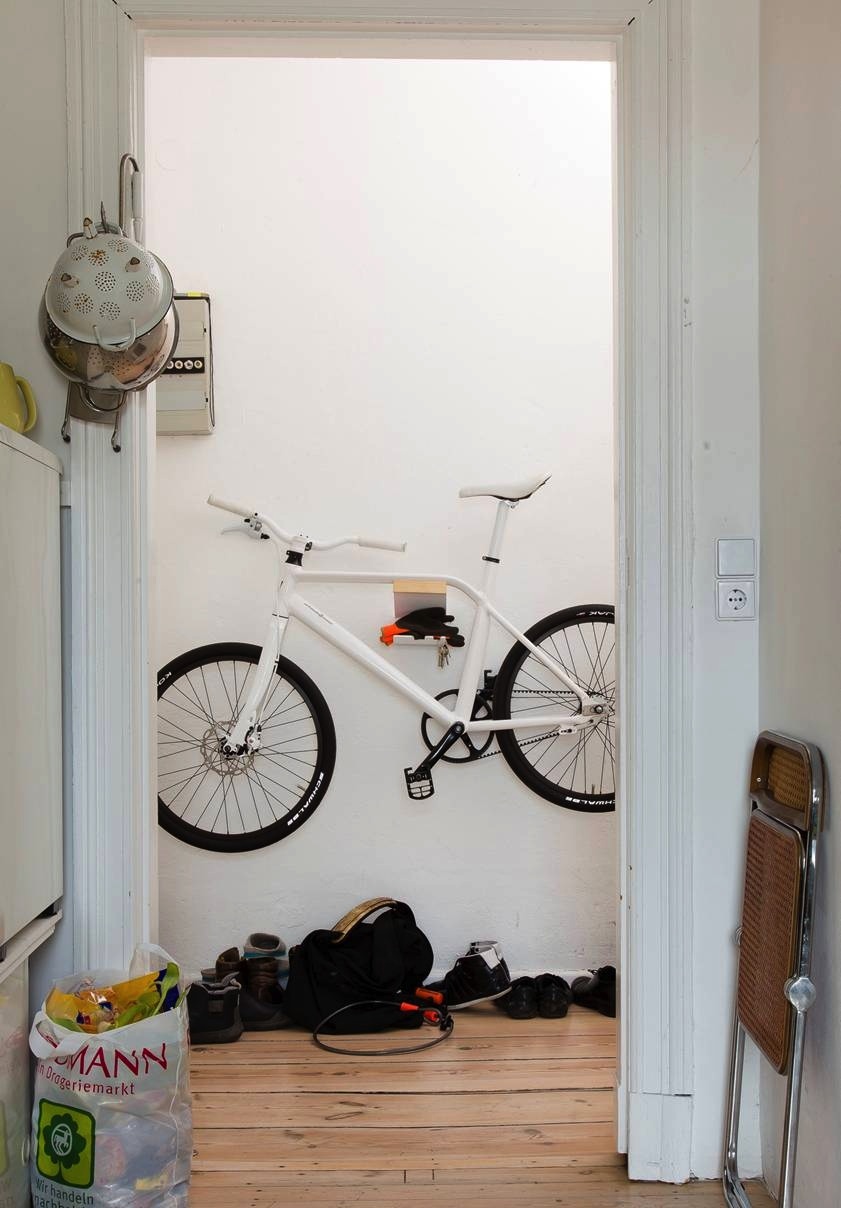
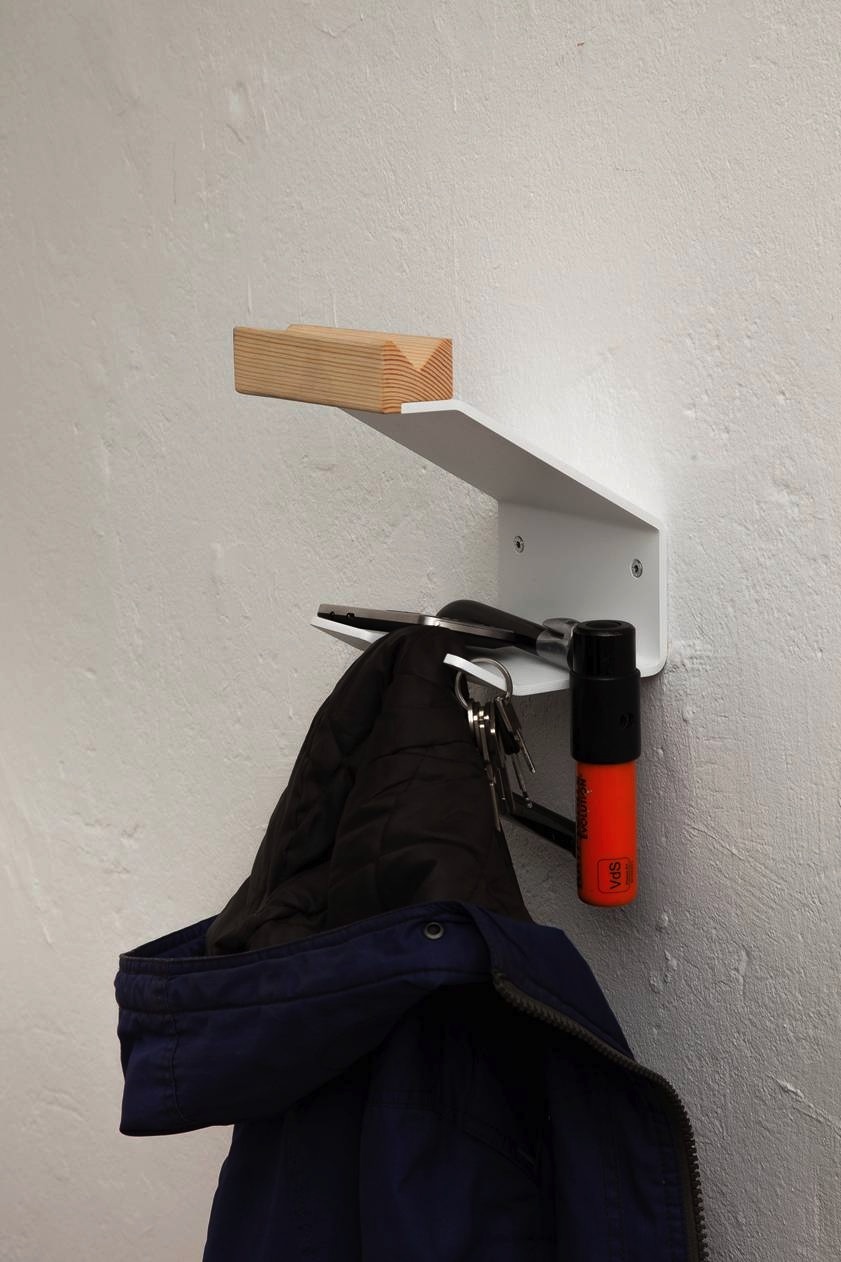
  • Though I didn’t install it, the proprietary rack that comes with the bike looks great. The wood wedge where the frame sits protects the frame from scratching.

Conclusion: The Schindelhauer is the perfect bike for average-height city dwellers who keep their bikes in their house or at work. Also, makes a solid piece of wall art.

If you’re interested in seeing the bike itself and you’re in New York City, check out PSFK’s Future of Home Living exhibit in Chelsea, where the bike is in display through August 15th.

CitiBike + ThinBike = Less Space for Same Bikes

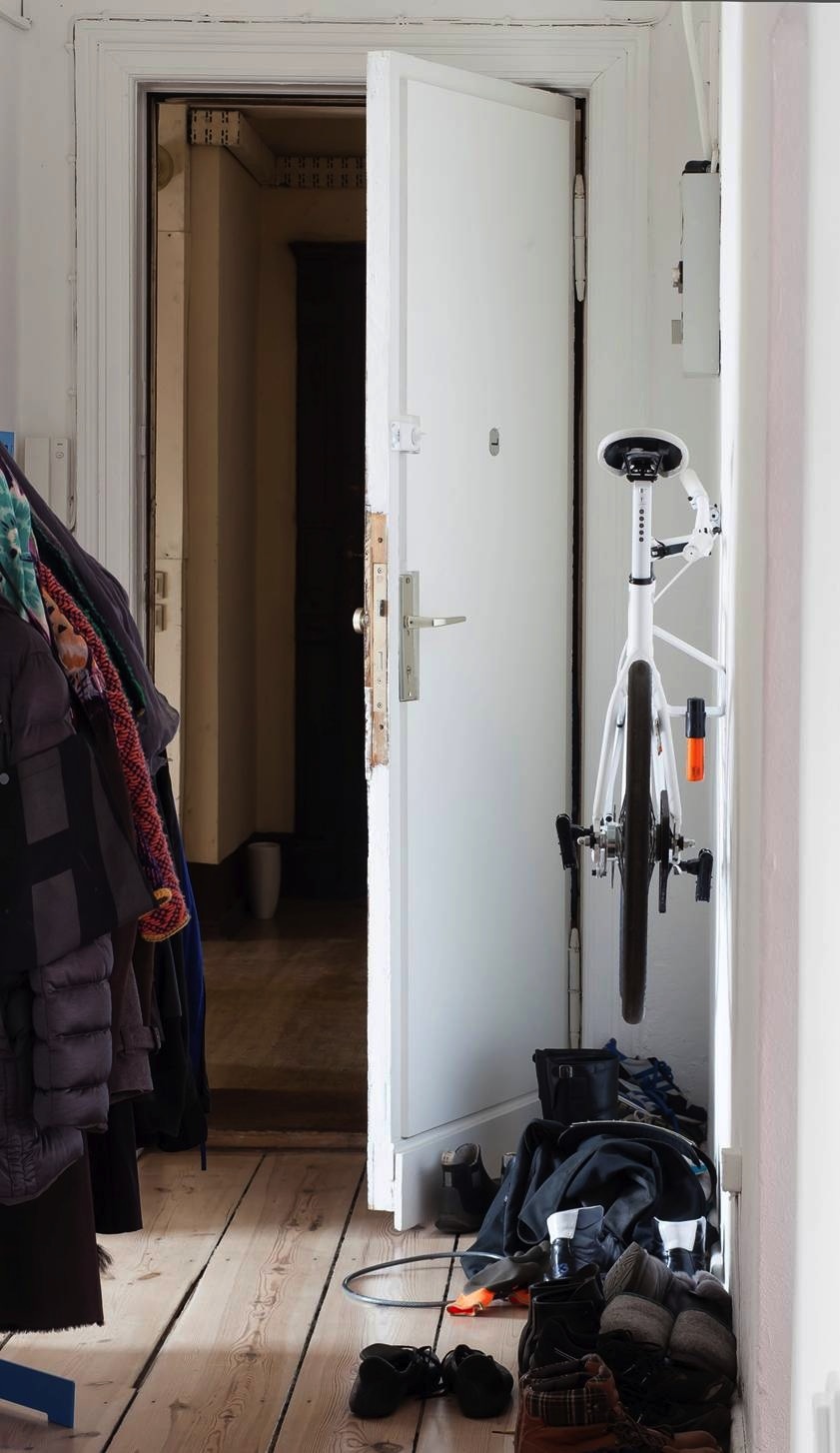
You might put this in the “who asked you” file, but we imagine some of the brouhaha that erupted over the recent release of the CitiBike bike share program might have been minimized had the bikes taken a cue from the ThinBike that founder Graham Hill designed with the help of Schindelhauer. The ThinBike has a quick release on its stem that easily allows its handlebar to turn and lock so it’s parallel with the rest of bike, rather than perpendicular. This set up cuts width in half or more, making storage far easier.

thinbike-specs-lifeedited

The CitiBike’s controversy stems (pun intended) from the girth of its docking stations, which people have complained are eyesores on New York’s historic streets. People have also complained that the stations hog up the city’s few parking spots (of course, some might consider this a bonus). If the overall width of a CitiBike could be cut in half or more, there would be a commensurate space savings in the overall docking station’s length. You could fit 60 bikes where 30 once were. More important, you could fit 30 in a space that might have only held 15. This smaller footprint on city streets might allay some of the complaints of CitiBike critics. If you think the extra step will invite the lawyers, know that when you straighten the bar on the ThinBike, there’s a bolt that makes a very positive engagement so you know the bar is locked.

Whether it’s fitting more bikes on a block or chairs in a closet, at LifeEdited, we’re always asking how can things be done smaller, better and using less space.

Put Your Bike on Diet with ThinBike

Way back in LifeEdited history (like a year ago), we told you about the super-rad ThinBike that LifeEdited founder Graham Hill helped design with German bike manufacturer Schindelhauer. The one-speed wonder went from a reasonable 21″ width with handlebars in normal position to a mere six with the help of special hardware. The ThinBike addresses one of the biggest bike storage issues, where width can be as problematic as length.

Now Schindelhauer has released a production version of the ThinBike. The bike has evolved quite a bit from Graham’s steed. There is now a front disk brake for superior stopping. It has 24″ inch wheels like those on a cruiser BMX that are stronger and quicker than the previous model’s 700c wheels. It has a two-speed SRAM Automatix shifting system in the event you encounter a hill or bridge. There is a LightSKIN seatpost with integrated LED lights. And it comes with its own proprietary bike rack. Carried over from the previous version are a lightweight aluminum frame (though in different geometry) and a Gates Carbon Drive drivetrain. With its smaller wheels, improved braking, greaseless drivetrain and ease of storage, the new ThinBike will undoubtably make an awesome urban bomber.

And more good news: You can get the bike in the US through Belt Drive Bikes for $1488.00. We look forward to riding ours in the near future. We’ll let you know how it goes.