CitiBike + ThinBike = Less Space for Same Bikes

You might put this in the “who asked you” file, but we imagine some of the brouhaha that erupted over the recent release of the CitiBike bike share program might have been minimized had the bikes taken a cue from the ThinBike that founder Graham Hill designed with the help of Schindelhauer. The ThinBike has a quick release on its stem that easily allows its handlebar to turn and lock so it’s parallel with the rest of bike, rather than perpendicular. This set up cuts width in half or more, making storage far easier.

thinbike-specs-lifeedited

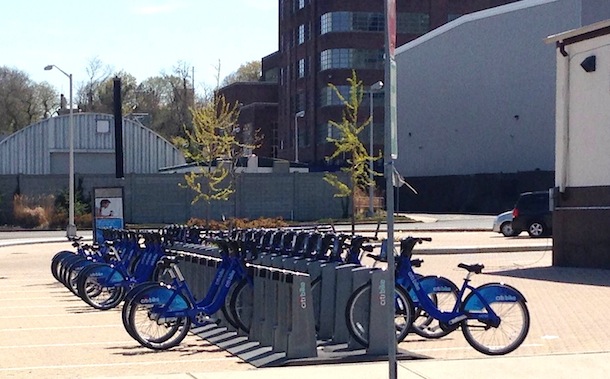
The CitiBike’s controversy stems (pun intended) from the girth of its docking stations, which people have complained are eyesores on New York’s historic streets. People have also complained that the stations hog up the city’s few parking spots (of course, some might consider this a bonus). If the overall width of a CitiBike could be cut in half or more, there would be a commensurate space savings in the overall docking station’s length. You could fit 60 bikes where 30 once were. More important, you could fit 30 in a space that might have only held 15. This smaller footprint on city streets might allay some of the complaints of CitiBike critics. If you think the extra step will invite the lawyers, know that when you straighten the bar on the ThinBike, there’s a bolt that makes a very positive engagement so you know the bar is locked.

Whether it’s fitting more bikes on a block or chairs in a closet, at LifeEdited, we’re always asking how can things be done smaller, better and using less space.

Citi Bikes Invade New York City

Last year we reported about the Citi Bike public bike program in New York City. We were excited for its unveiling in July…last July that is. Unfortunately, some technical issues (keeping track of the initial 6K bikes across their 300 stations can’t be an easy) and a little hurricane delayed the program. Well it’s finally here, and the distinctive blue bikes can now be seen throughout Manhattan and parts of Brooklyn.

citibike-map

We applaud Citi Bike for making a pricing scheme that is both New Yorker and tourist friendly. Locals can pay $95 for a yearly pass which permits unlimited <45 minute rides. Not-so-locals can pay either $9.95 for 24 hours or $25 for a seven day pass, which permit unlimited <30 minute rides for the length of the pass. Overage charges apply when those time limits are exceeded. This pricing scheme seems to denote that Citi Bikes are actually meant for transportation, not merely joyrides around Times Square–i.e. get on, get to your location, leave bike.

citibike-brooklyn

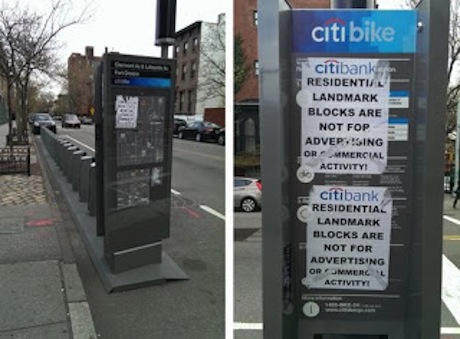
The introduction of the program is not without controversy. In particular, residents of the historic Fort Greene and Clinton Hill neighborhoods of Brooklyn have taken issue with the fact that Citi Bike stations act as big billboards for Citigroup, the chief sponsor of the program. Some critics have also warned of the potential for vandalism, similar to that Paris’ Vélib’ program initially received.

earth-policy-bike-sharing

That said, more than a few people–bicycle advocacy groups included–are expressing their approbation of the program, which plans to expand to 10K bikes across 600 stations. In fact, the first round of memberships, capped at 5K, sold out in 30 hours. And as a trend, public bike programs are only on the rise, as the above charge by Earth Policy Institute indicates.

While having your own bike is great, public bike shares provide something else. As Bikesnob NYC ever-so-succinctly put it: “I already own a toilet too, but it’s still more convenient for me to use a different one when I’m not at home.”

More info at Citi Bike’s website