Tiny House Conference Coming to Portland Later This Month

There’s little doubt that tiny houses have caught the public imagination, if not widespread municipal zoning board approval. One place where the approval–both in its citizenry and legislative bodies–is Portland, Oregon. So it’s only fitting that the city would be hosting this year’s Tiny House Conference April 18th and 19th.

Tiny-house-conference

Because tiny house construction, zoning and living is such a tricky proposition, it makes sense that those interested in taking the tiny plunge would want to share their collective wisdom. The two day conference has a program that covers the practical aspects of tiny house construction with sessions like “Designing Your Own House” and “Finding Land”. Also covered are more lifestyle-y topics like “Tiny Living” and “Small Space Organization.” I suspect that tiny house enthusiasts–i.e. those enamored with the lifestyle and are considering it for themselves–will far outnumber tiny house dwellers–i.e. those who are actually living in one of the little places. The program seems to be shaped accordingly. Of course there will be tiny houses on display as well, and you can get comped if you bring your tiny house.

The conference costs $300. If that’s too rich for your blood, there’s also an “Tiny House UNconference” on April 17 that only runs $12 for a whole day–because, well, the other conference was too big.

H/T to Gm.

via Bizjournals

Build A Micro Sized/Budgeted Backyard Retreat

This site tends to focus on tiny residential structures–microscopic pads that people are supposed to live in. But the charms of tiny aren’t limited to houses. Case in point is this tree, um, “structure” built by Derek “Deek” Diedricksen. As his Relaxshacks blog name implies, Deek is a master at building tiny structures, many of which are intentionally recreational: treehouses, off-grid cabins and the like. Almost everything he makes is tiny and most are done on microscopic budgets, making for affordable places to chill out, read, play or hide from screaming kids.

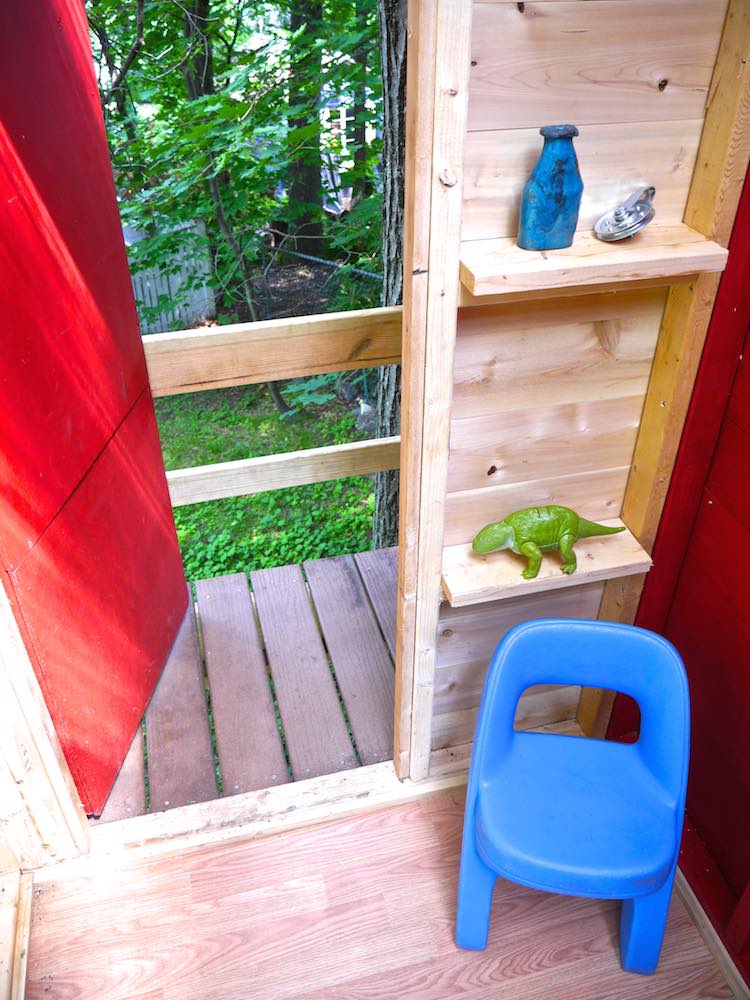
This particular structure was set up in a backyard in the outskirts of Boston. It’s only 32 sq ft and is connected to a pair of oaks. Deek calls it the “RF”, or Robot Face, treehouse for obvious reasons (the robot’s eyes are actually a pair of solar lawn lights). The structure has a removable desk and the blocking framework doubles as shelving. There’s an openable window for light and ventilation, and its position under the two trees keeps it from becoming a hot box in the summer, yet the big window lets in enough passive solar heat to make it feasible during colder months too.

Oftentimes, when people seek more space, they think about moving into a new home. What tiny structures like this show is that you can add a lot–privacy, quiet, fun–with just a little bit of knowhow and some lumber.

If you’re interested in building your own Relaxshack, Deek regularly holds workshops. His next is in Fargo ND. Stop by his site for more info.

Small Houses, Medium-Sized People, Big Ambitions

Project H Design is a Bay-Area nonprofit that empowers kids through design and building. For the last seven years, over 600 kids ages 9-17 have participated in their programs, which according to their website “teach rigorous design iteration, tinkering, applied arts and sciences, and vocational building skills to give young people the creative, technical, and leadership tools necessary to make positive, long-lasting change in their lives and their communities.” For the 2014-15 school year, their program is focused on tiny house design and construction.

A group of 70 high school and 150 middle school students have been looking at the tiny housing type with a number of inquiries in mind, namely: How is housing influenced by social and economic context? How does affordable access to housing empower communities or families? How does the design of a home uplift and inspire positive change in a person’s life?

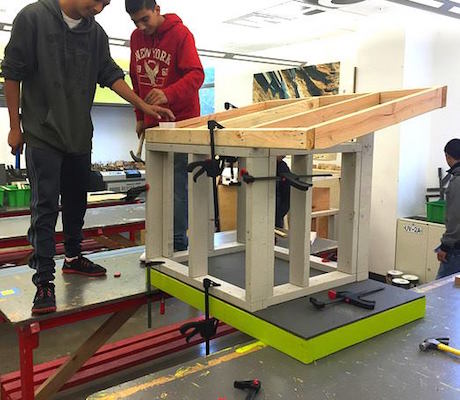
project-h-doghouse

In answering these questions and creating tangible, built answers, Project H created a program with different units. They start with the most basic aspects of designing and building like drawing and modeling skills. Each unit builds on the next, expanding the students’ skills; they look at tiny house precedents for design inspiration, draft and make cardboard models of different tiny house designs, conduct critiques of the students’ various designs and even build a mockup tiny dog house (pictured above) before they begin construction of two full-sized tiny houses.

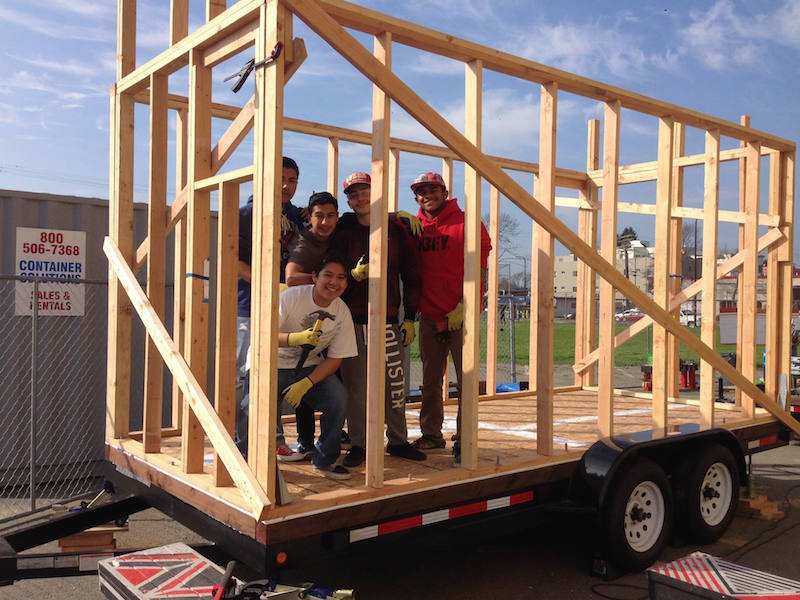
project-h-built

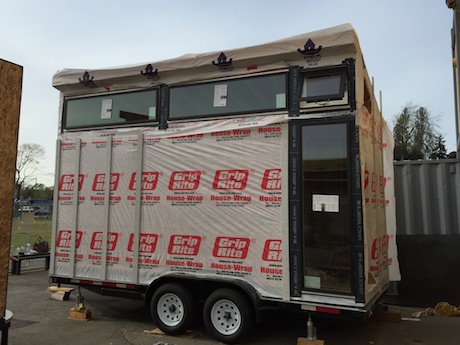
The two houses are identically designed, each measuring 7’ x 16’ and trailer mounted. Currently, the houses are pretty far along, having been framed and insulated in the last couple months. The students’ current unit is sourcing siding from used palettes. They expect the houses to be complete by June. Project H provides regular updates and images on their tiny house project page.

One of the houses is already set to be donated to Opportunity Village, a tiny house colony for would-be homeless populations in Eugene, OR (Bay Area code prohibits tiny house living) and the second will be auctioned off to raise money for Project H.

There’s something very heartening to see these kids developing a deeper connection with their built environments–that housing is not something that magically appears or comes about without consideration about how it fits into a greater scheme of things.

Snowboarder Living the Off-Grid Dream

A couple decades ago, snowboarder Mike Basich did what few are able to: he went pro, actually making a good living doing what he loved most. Pulling in around $170K year, he did what any protagonist in an American success story would do. He bought a big house (4K sq ft) and a fancy car. But as success mounted, as the purity of his sport became tainted by speciously-sourced money, Basich found that success wasn’t all it was cracked up to be. He quit the sport, became a photographer and started living his truth. The architectural manifestation of that latter pursuit is a 228 sq ft off-grid cabin in Soda Springs, CA.

The cabin, dubbed Area 241, took Basich five years to construct. He laid the 175 tons of stone for its walls himself and hand mixed cement with water ported from a nearby stream. All the timber is Douglas Fir he harvested from his 40 acre property.

Water comes from snowmelt and streams. Power is solar and cooking and heating are handled by a small wood-burning stove. Lest the place seem too spartan, Basich built a hot-tub and a private chairlift on the property.

The house is pentagon shaped and its proportions are based on the golden ratio, which he says is supposed to better make the space fit the body.

This author tends to be a little leery of off-grid spaces. Oftentimes, they can only be accessed and supported via long journeys in internal combustion vehicles (it looks like Basich gets to his via snowmobile in the winter and we’d guess an offroad vehicle in warmer days). A trip to the grocery store might be a three hour round trip. And how useful are places like this in the context of housing the world’s 7B people?

Those prejudices aside, this place is so badass and I want one like it so bad. It looks like an amazing place and an amazing way of life, rising and resting with the sun, living as one with nature. I’m totally jealous.

Poop and Make Dinner at the Same Time in Your Tiny House

Tiny houses are cool and all, but their proponents have a tendency to overstate their merits. Yes, they’re super efficient, allow you to live largely off-grid and has the ability to squeeze any extraneous element from a tiny house dweller’s life. But c’mon, the places are freaking tiny! There’s only so far you can spin having enough space for two pairs of socks. This propensity to exaggerate the merits of tiny house living is the target of a Portlandia skit. They tout that “micro-living..[is] adorable, convenient, and eco-conscious. In a tiny house multi-tasking becomes a lifestyle choice where you can simultaneously use the bathroom and make dinner.”

The episode will air Thursday night at 10pm (more details here), but check out this preview in the meantime.

Tiny Apartment Builds It Up, Pares it Down

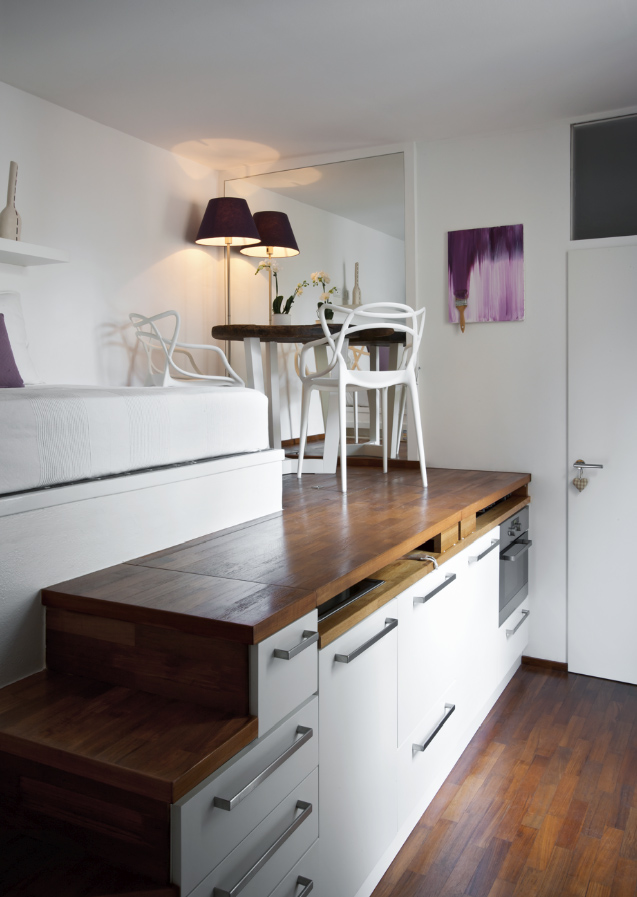
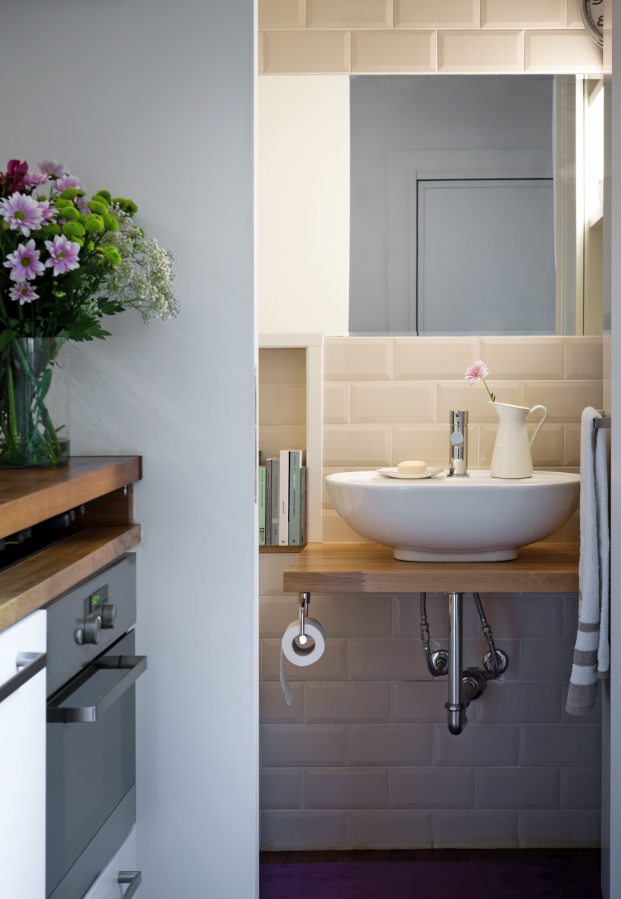
At just 160 sq ft (15 sq m) this is one of the smallest full-function apartments we’ve seen. Despite its tiny proportions, it’s hard to imagine a space getting too much more efficient in its use of space.

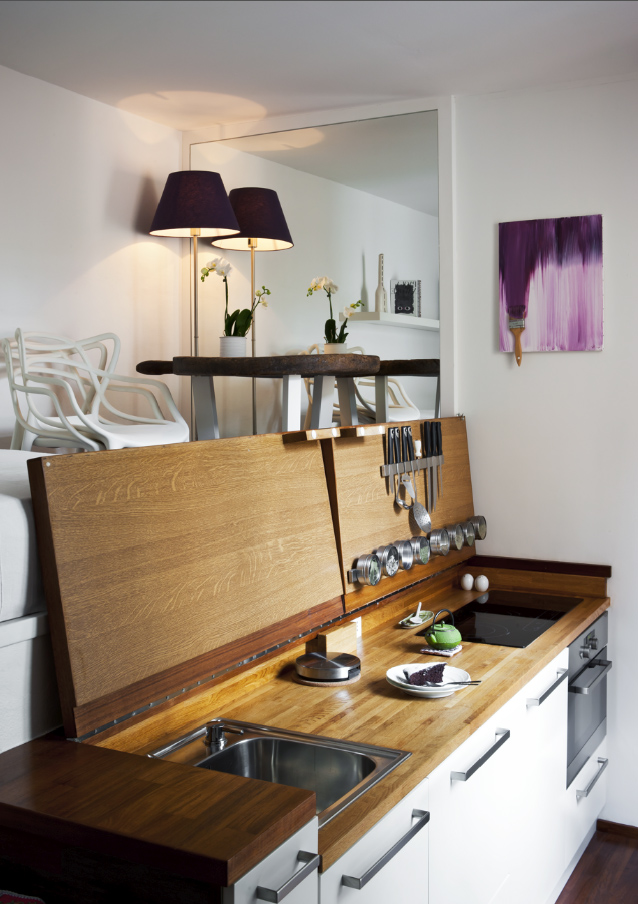
The centerpiece of the apartment is a one meter high wooden volume that contains, well, everything except the bathroom. On its top is a bed and dining area with round table and a couple chairs. There is a built-in (and usable looking) kitchen with doors that fold down when not in use, increasing surface space and reducing visual clutter.

Inside the volume is a closet of sorts accessed via a trap door. From the pictures, it’s not entirely clear how one would access the stuff inside closet, though we suspect it involves some sort of gymnastics. In fact, the whole apartment, with its short-roofed dining area, seems geared toward the young, limber and exceedingly neat.

via Boiserie & C.

Off-Grid, Tiny House Builders Take Over TV This Sunday

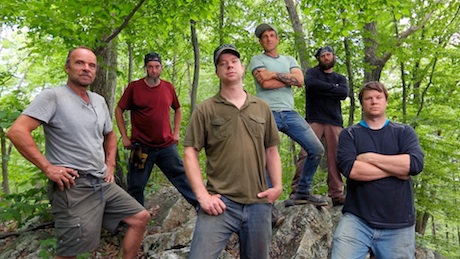
If you’re hot for tiny houses, but not familiar with Derek “Deek” Diedricksen, you just don’t know what’s up. Deek is one the movement’s/housing typology’s most prominent, interesting and likable characters. A recent Fair Companies video (below) of Deek showed that he wears many hats–drummer, painter, author, blogger, speaker, teacher–but more than anything, he is a builder. He has built countless tiny houses and shacks, many of which are on view at his blog Relax Shacks. And as if Deek weren’t prolific enough, he’s now got a TV show. “Tiny House Builders,” is airing this Sunday Dec 14 on HGTV at 1pm.

While the title kinda gives away the show’s theme, Deek has created an ambitious program for the premier show. “We’re doing things the hard way, and at break-neck speed, and all off-grid too, in just four days,” he told us. “It’s just absolutely grueling–but the end product in each episode is something I’m pretty proud of, and the builds and approaches are pretty darn unique.”

tiny house builders group

The show is actually in “sneak-peak” mode, meaning the network is seeing if the two episodes that are already produced land with audiences. Deek is a bit fatalistic about the shows future, mostly because he has so many other things going on. He told us, “If it doesn’t take off, I have so much going on with my next book (“Microshelters” via Storey Press- Sept ’15), custom tree house and backyard office builds, and my hands-on design workshops around the US, that I’ll just focus more on those instead. I also want to do more with my painting and art, in fact, I have a few long-brewing ideas for the ailing downtown center of my town and even started up a facebook page to try and spread some of these possible revitalization approaches.”

While he’s very cool about it, we are looking forward to checking the show out and wish for its success. The more tiny, sustainable, affordable housing solutions enters mainstream cultural conversation, the better. Check your cable listing for local details. We’ll also let you know if/when it’s available to stream online.

Revolutionary Architecture Arisen from the Ashes

In 2010 and 2011, Christchurch New Zealand experienced devastating earthquakes, killing hundreds of people and leveling large swaths of the city. Following the government’s withdrawal of housing allowances for post-graduate students, Geology grad student Stefan Cook decided to combine the abundant scrap material left over from the quakes and his housing pinch to make an affordable, trailer-mounted tiny house. The whole project has cost him a total of NZ$15K (US$11,500).

In the above video, Cook shows us around the house, which is still a bit of a work in progress. He plans to add solar panels to provide power and some of the interior details are still being worked out. But the interior is quite spacious and airy, helped greatly by the large and high quality salvaged windows Cook incorporated into the design.

cook-frame

The house’s frame is made of burly welded steel, which we imagine would hold up to future quakes. But beyond seismic resiliency, the house is a strategy for economic resiliency–providing a nice place to live that’s a fraction of the cost of most housing on the market. Follow Stefan on his Facebook page.

Via Collectively and Living Big in Tiny House

Only Thing Tiny Apartment Lacks is Clever Description

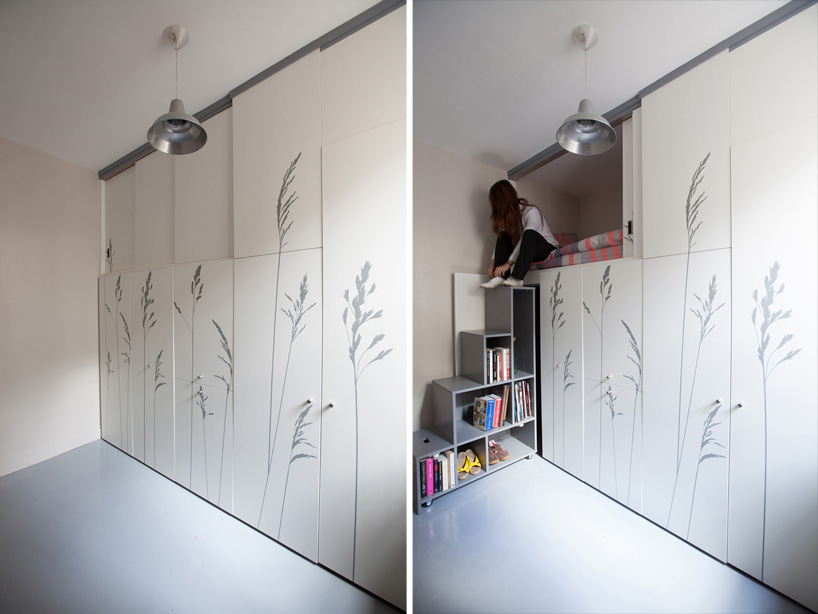
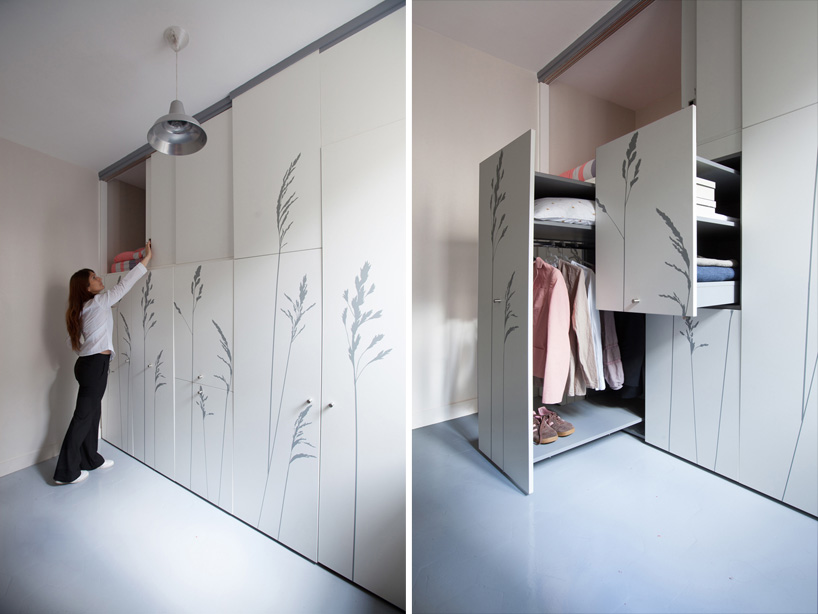
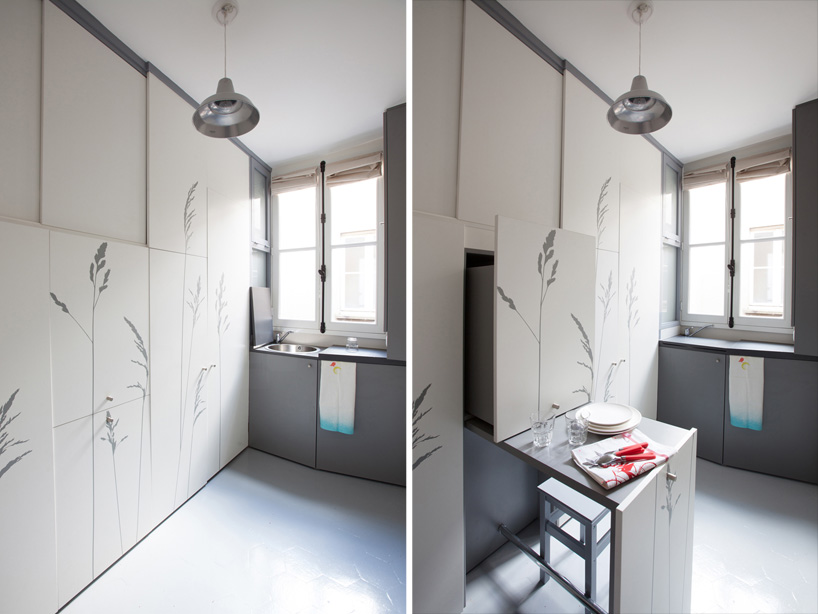
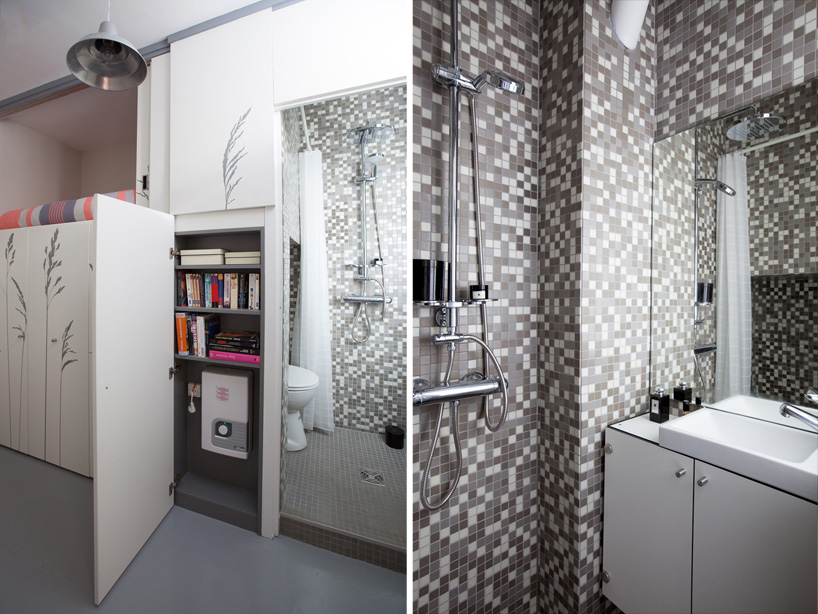
Okay, it might not be as small as last week’s 75 sq ft Roman sliver of an apartment, but at a mere 86 sq ft, this Parisian flat still qualifies as ultra-tiny. Amazingly, like its continental cousin, the place is full featured, including sleeping, cooking, bathing and storage capabilities.

The space is located in a classic Haussmann building and was originally used as a maid’s quarter–a type of flat known for its small, spartan qualities. The client wanted to ready the space for an au pair. Kitoko Studio designed the space so all of its functions stow away in a volume of floor-to-ceiling cabinetry. A single bed is hidden inside an upper cabinet and accessed via a stepped cabinet that slides out from underneath. A dining table/desk with stools hooked underneath pulls out of another cabinet. A wardrobe and storage shelves slides out from another. There is also a wet shower and small kitchen with pullout cooktop, microwave and sink.

kitoko-studio-tiny-apartment-paris-floorplan

The clever and clean approach to the apartment’d design give it way more utility and style than such a small space would normally possess. And while the skinny nature of the apartment has an overall claustrophobic feel in my opinion (hey, it is 86 sq ft), I could see this as a completely reasonable place to live for a while, especially if your life is not centered at home.

Via Designboom

Small, Stylish Home Takes Over Garage

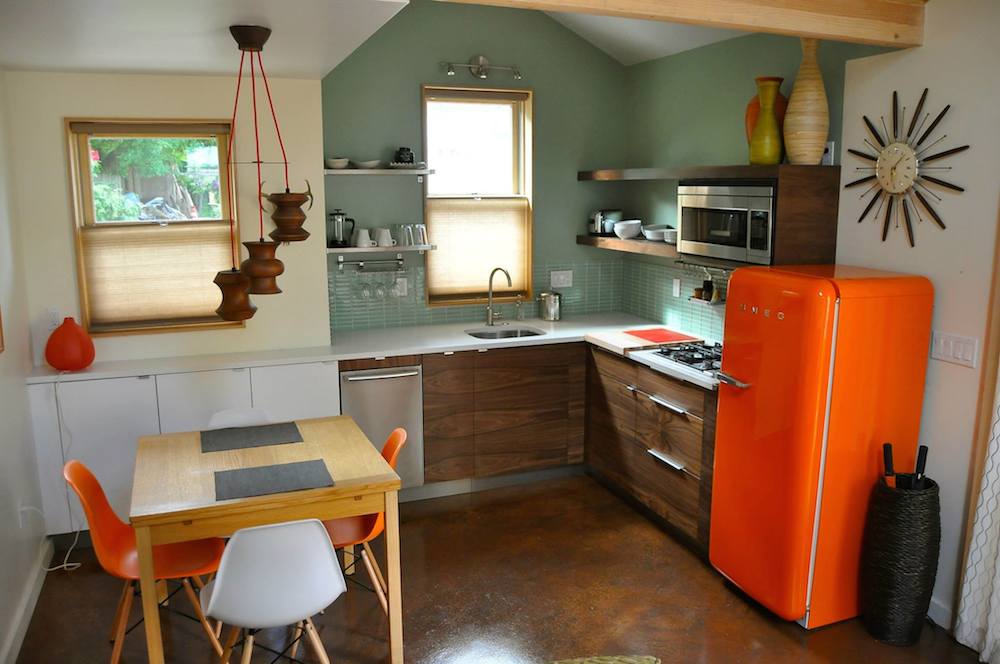
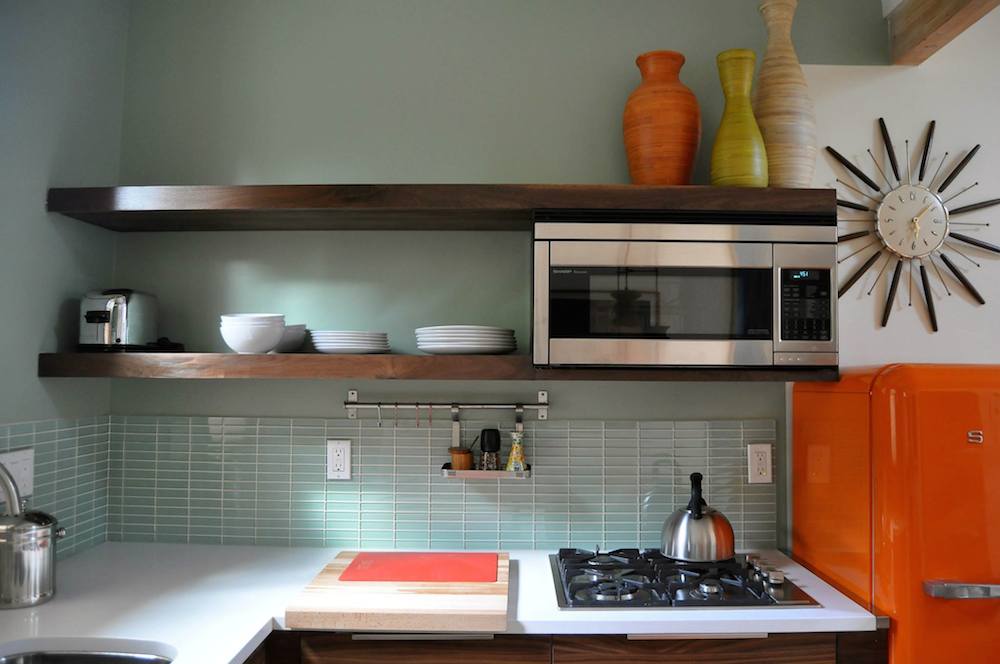
We’ve expressed our love of the accessory dwelling unit (ADU) in the past. To us, they represent a great solution for adding density to more spread-out, car-intensive, suburban areas–a vitally important conversation in the micro-housing world. We ran across this little Portland ADU on Tiny House Talk, which to us demonstrates how nice these little places can be. The 508 sq ft home, dubbed PDX Eco Cottage (not to be confused with the workout routine) began its life as a garage. With the help of Jack Barnes Architect, owner Susan Moray converted the space into a very stylish, usable, sustainable home.

The house features a full kitchen, bathroom and separate bedroom. It achieved an Earth Advantage Platinum certification, a point system that evaluates a home’s indoor air quality, responsible use of natural resources, land protection and low water usage. The whole project cost $110K plus quite a bit of Susan’s labor, according to Jack Barnes. While not necessarily cheap, it’s less expensive than comparable quality homes in the area (the cheapest thing we could find was $444K, though it was much larger).

Susan built the home using Portland’s new short term rental permit for ADUs and you can stay at the place as a vacation rental. She told us that she built the cottage with the idea of living there when she’s older, with her daughter living in the front house where she currently resides. The home seems more than adequate for full time residency and we hope places like this start punctuating suburban landscapes, providing sensible housing in otherwise underutilized spaces.

Via Tiny House Talk