Fix Your Stuff, Make Friends at Repair Cafe and Fixers Collective

Yesterday we talked about Maui Jim, an eyewear company that provides cheap and swift repairs for their products. While corporate fixery is great–and hopefully, one day, will be expected–many people are taking repair into their own hands.

The other day, the NY Times profiled some of those people–Dutch people to be precise–who hold informal gatherings a couple times a month to fix their broken stuff. According to the article, the “Repair Cafe” started  2 1/2 year ago as a way to reduce waste. In that time, it has grown considerably, having raised $525,000 from a state grant and other contributions; they bought a Repair Cafe bus and have started cafes across the country–sorta like Fight Club, but fixing stuff instead of fighting and not secret and…not similar at all.

All repairs are done by volunteers for free.

On this side of the pond, the Fixers Collective in Brooklyn, NY has been fixing stuff for a few years. They don’t have a foundation or a bus, but they do meet and fix stuff. What’s cool about FC is that they have a hierarchy of fixers, beginning with Master Fixers (your MacGyver types), apprentices and drop-in visitors–each teaching the other the fixing ropes.

Their site descibes their philosophy this way:

The Fixers’ Collective seeks to displace cultural patterns that alienate us from our things, by collectively learning the skills and patience necessary to care for them. Intentionally aligning itself with forces generated in reaction to the current economic crisis, the Fixers’ Collective promotes a counter-ethos that values functionality, simplicity, and ingenuity and that respects age, persistence and adequacy.

And you just wanted to sew a patch in your jeans.

Beyond fixing, waste reduction and connecting with the means-of-production, both groups emphasize the social aspect that comes about while learning how to fix stuff. People hang out, have a coffee or a beer and get to know one another while they repair. Conversely, throwing stuff away does little for one’s interpersonal skills.

While we know you like new stuff for making the ideal edited life, 9 times out of 10, your existing stuff is perfectly good. But that stuff will eventually break, and when it does, before you go out and buy a cheap replacement, consider fixing. Check to see if there’s a fixer group in your area or consider starting one. Your wallet, planet and emotional well-being will thank you.

Via NY Times. Image credit: Krrb Blog

Thanks for tip Karen

How to Sell Your Expensive Stuff on eBay

We come across many people who seriously want to get rid of their stuff and live simpler lives. But again and again, we hear the same refrain: “My stuff is too expensive to give away.”

It’s important to be honest about the value of your stuff. Often, giving stuff away for free–even expensive stuff–is a good idea. The loss of initial investment is usually offset by the hidden values of not living with clutter and not paying storage real estate.

But some of us have really expensive, valuable, high quality stuff–stuff we spent a lot of dough buying. Stuff we won’t give away for free. For that stuff, the question is, “How do I sell it?”

EBay is the resource most of us think of when selling our stuff. But if you’re like me, you don’t have the time or patience to navigate your way through the intricacies of establishing a seller profile, taking pics of your stuff, creating return policies and so forth.

For those of us with lots of valuable stuff and little patience, there is eBay’s Trading Assistant Program. Through the program, you can find individuals and storefronts who will take in–and even pick up–the stuff you want to sell. EBay provides a feedback profile so you know the TA is legit. TA’s offer insurance on your goods and many specialize in particular types of goods (which you specify in your search).

Of course none of this is free. Fees and commissions vary from seller to seller. Some charge standard commission rates ranging from 10-60% depending on the expense of the item–more expensive item = lower commission. Others charge flat fees. And read the fine print: you might have to incur PayPal fees, eBay fees, shipping, etc.

If this sounds steep, consider that we paid 100-200% above wholesale when we bought our stuff (didn’t seem to bother us then). Also, consider that our stuff isn’t very valuable sitting in our basement or storage unit, so getting a 30-40% return is 30-40% more than 0%. Lastly, because of the large volume of people who use eBay, you are much more likely to fetch a good price than you would selling the stuff yourself or at a local consignment store.

Have you used eBay’s Trading Assistant Program? Let us know if you have any tips or suggestions. If you have any other tips for easily getting rid of your valuable stuff, let us know that too.

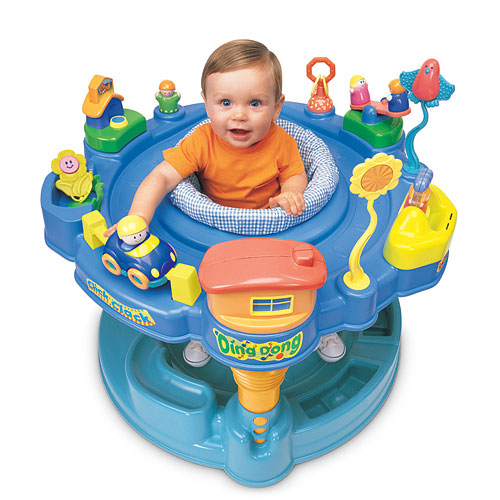
Edit Your Child’s Stuff with Toy Rental Services

Are you a parent who feels there just aren’t enough toys around your house? Does your child hate novelty, contenting his or herself with one or two simple toys? Do your child’s toys make your house into a model of order and harmony?

We didn’t think so.

Online toy rental companies like BabyPlays and Toyconomy have a solution. Here’s how they work:

  • Choose toys from their databases–kinda like adding movies to your Netflix queue.
  • Rent as you go. BabyPlays rents individual toys from $3 to $11/month. Toyconomy from $3 to $35/month–the latter price is for a LeapFrog LeapPad tablet computer (who knew?).
  • Or subscribe. Babyplays allows you to rent 4 toys for 60 days or longer for $25/month. Toyconomy’s $10/month subscription takes 50% off their toy rentals.
  • Hold onto toys for a month or for as long as you want.
  • Return toys and get a new shipment. Shipping costs are included.

Both companies take pains to let us know that their toys are rigorously cleaned and in good condition. Both offer a rent-to-own option; if your tyke doesn’t tire of a toy in a couple months, you can buy it at a discounted price.

Beside saving money, these services let kids enjoy their new toys without piling onto the mountain of old ones–a problem for almost every parent I know. What if your kid’s room could look like a haven of fun and order rather than a war-zone?

The one big challenge we see is getting grandparents and extended family on board. One Christmas-giving session can undermine months of editing.

Have you used these services? Would you? If not, why not? Let us know what you think.

Image via productreview.com.au

5 Shopping Tips for Buying Less Stuff

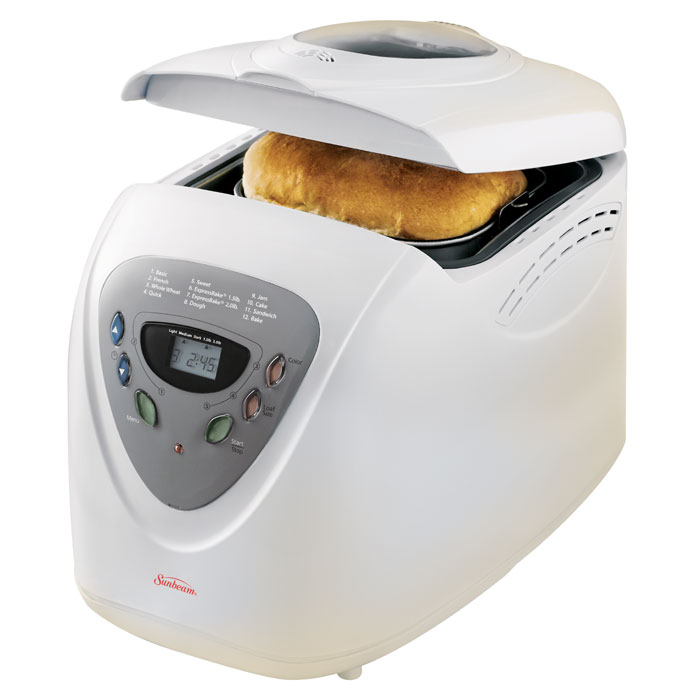
Bread Machine

The world seems determined to sell us more stuff. If buying were the end of the story, that would be OK. But it’s just the beginning. Besides buying stuff, you must store it, charge it, clean it and look at it before ultimately tossing it. We’ve come up with 5 simple actions for combating stuff-a-holism:

  1. Use what you got. Specialty items are the enemy of the edited life. Bread-makers, tie-racks, Snuggies–you probably can handle the task with something you already have.
  2. Take care of what you got. Most of us only get 1/3 of our stuff’s actual life-cycle because of neglect. Fix, mend, patch, oil, repair, clean and generally respect your stuff. The earth and your pocketbook will thank you.
  3. Don’t be lured by the latest model. Yes, the new version with the angular corners is much cooler than the older one with the rounded ones. But be honest: do you really need the utility of the new version? Probably not.
  4. THINK before you buy. Unless you are buying a tourniquet, it’s unlikely you need to buy stuff immediately. Waiting a day or two generally quells the urge to buy stuff you might not need.
  5. Buy better. If you must buy stuff, make your stuff great, well-designed and repairable. And don’t be penny wise and pound foolish. As LifeEdited founder Graham Hill put it, “Stuff that costs twice as much, but lasts 4 times longer, is half-priced.”