Pied-à-Terres and the Architectural Appetizer Theory

In most restaurants, it’s the appetizers, not the main courses, that feature the most innovative cuisine. Appetizers are not burdened with the responsibility of nourishing diners–they simply give them an interesting gastronomic pitstop before the main course; the former meal holds the promise of exciting, albeit somewhat ephemeral cuisine, the latter of predictable, lasting nourishment. If a diner doesn’t like the parmesan-cheese-infused broccoli rabe foam, it’s no big deal–the lasagna will surely satisfy. I used to look askance at the pied-à-terre–a variety of housing usually owned by rich folks whose actual homes are huge things in the burbs or Provence or Dubai or Shangri-La. While this assumption might be true in many instances, pied-à-terres serve a very important role: they are the appetizers of the architectural world. Architects take chances with pied-a-terres in ways they don’t with primary residences. And because rich folks usually own them, pied-à-terres get innovative (i.e. expensive) features and luxe finishes you don’t see in most plebeian homes. And like appetizers, pied-a-terres tend to be small portioned.
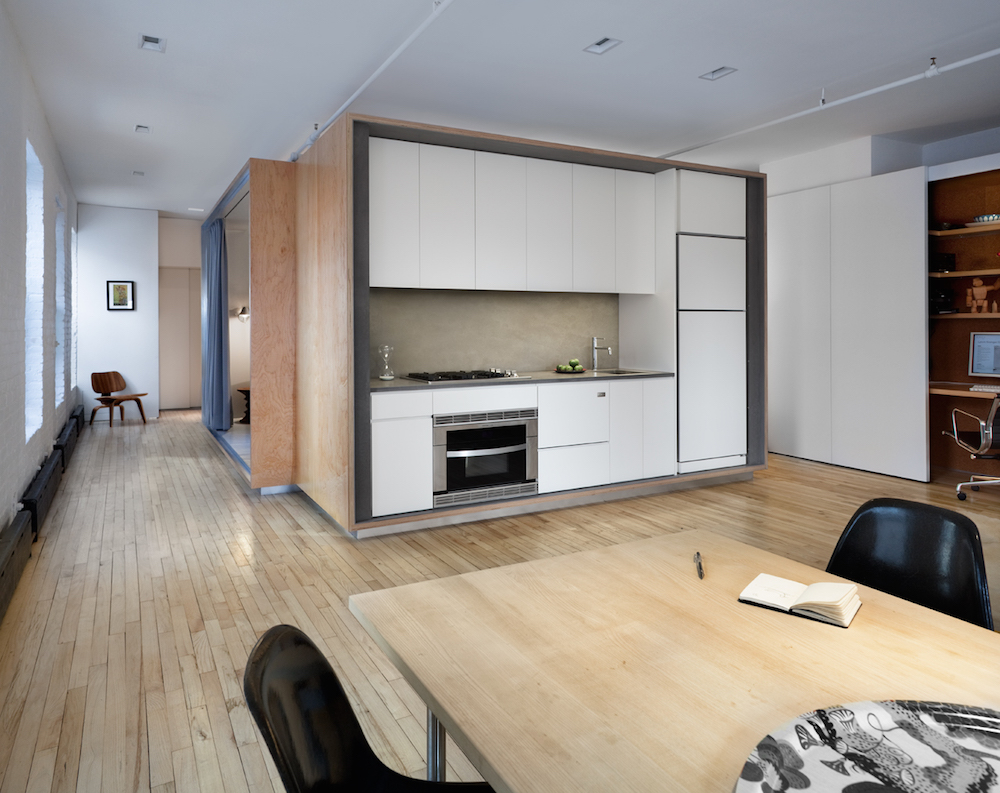
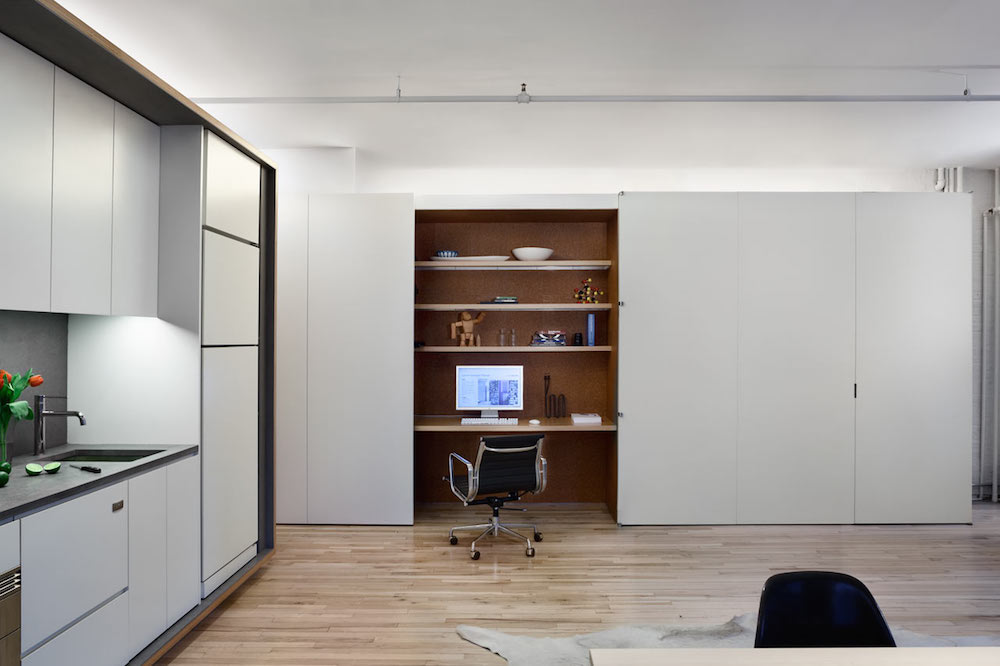
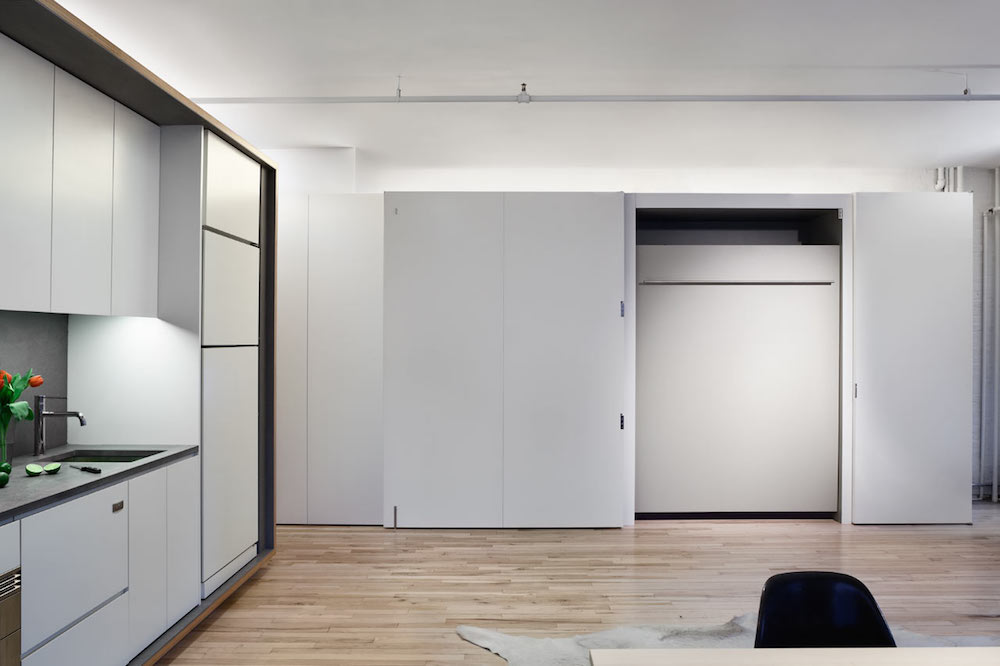
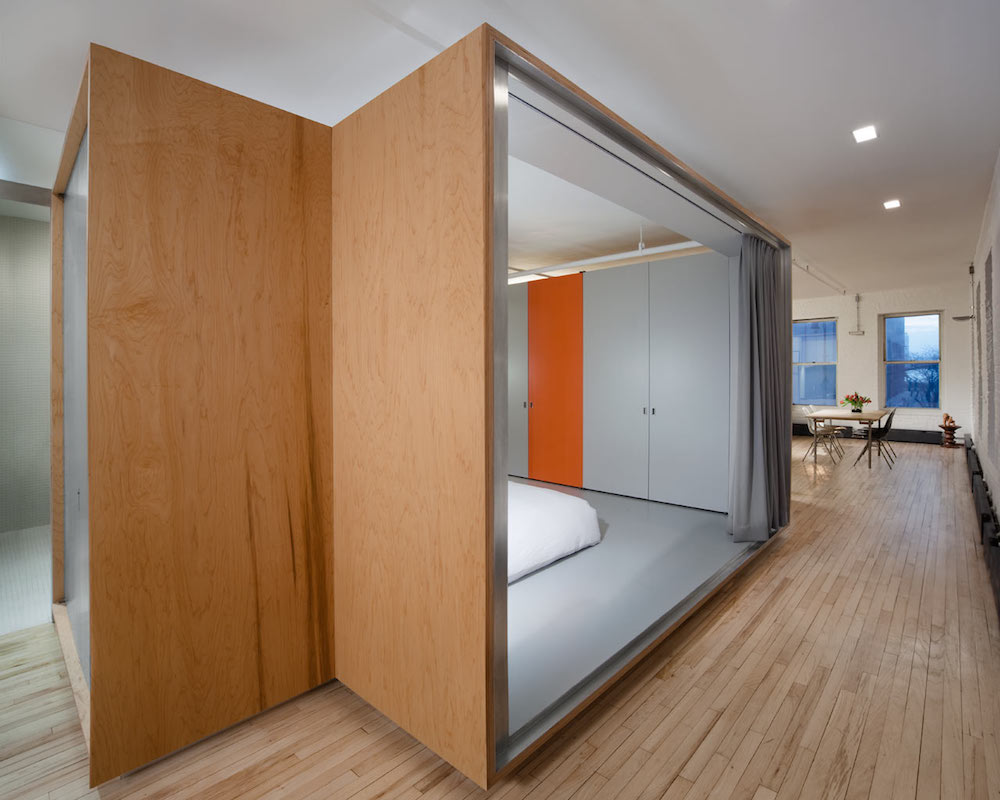
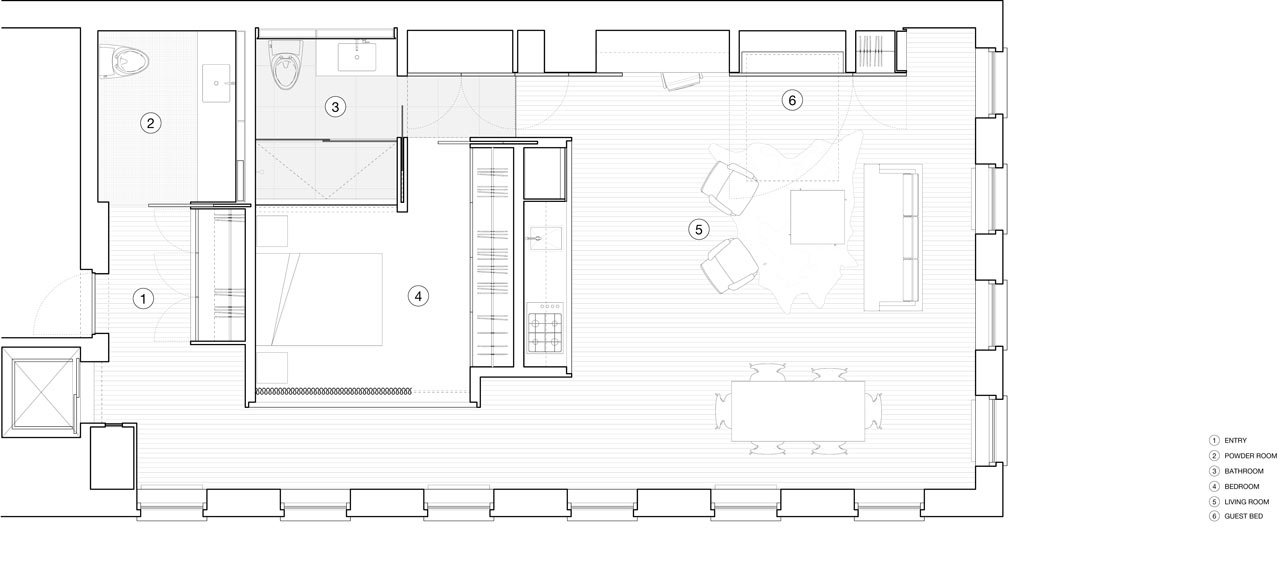
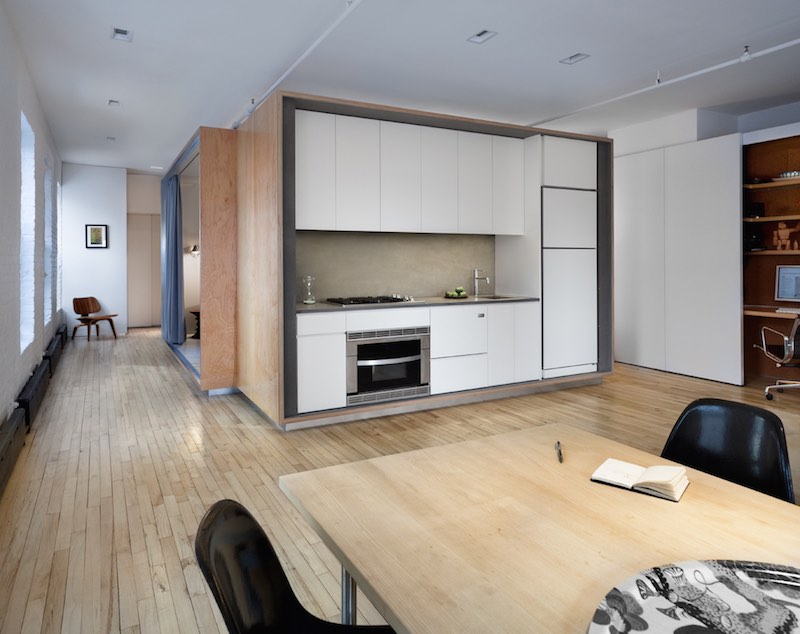
This pied-à-terre loft by LYNCH / EISINGER / DESIGN in Manhattan’s Tribeca neighborhood is a nice example of my theory (and it is just a theory). At 900 sq ft for one person (a student no less), it isn’t small, but we think it’s filled with some interesting ideas and it is certainly beautifully executed.

The space revolves around a large wood volume that houses the kitchen, one bathroom, a ton of storage and a sleeping area. Because the space is typically occupied by one person, the bed has a big opening to face the lofts ample bank of windows. But a large curtain allows the bedroom to be shut off from the rest of the space if there are guests or the owner needs some dark. In the living room is another bank of tall cabinetry that houses a desk, more storage and a wall bed for guests. The rest of the area is kept open for normal furniture and retains some of the loft’s industrial character.

All photos courtesy of Amy Barkow | Barkow Photo

Via Design Milk
Architizer A + Award Small Living Winners Announced

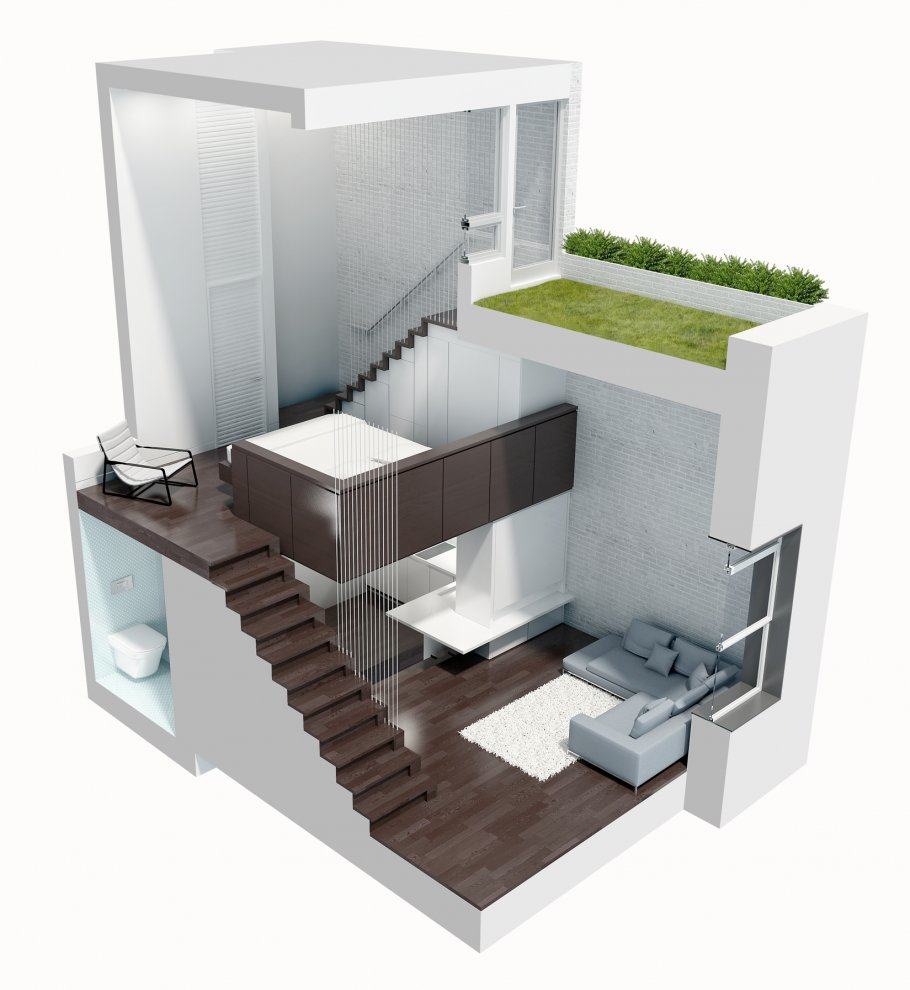
LifeEdited is proud to announce that we were given the Jury Award for the Architizer A + Award in the Small Living category. We are less proud–though hardly ashamed–that we were beat out for the Popular Award, i.e. the project that received the most public votes. That honor went to “Manhattan Micro Loft” by Specht Harpman Architects.

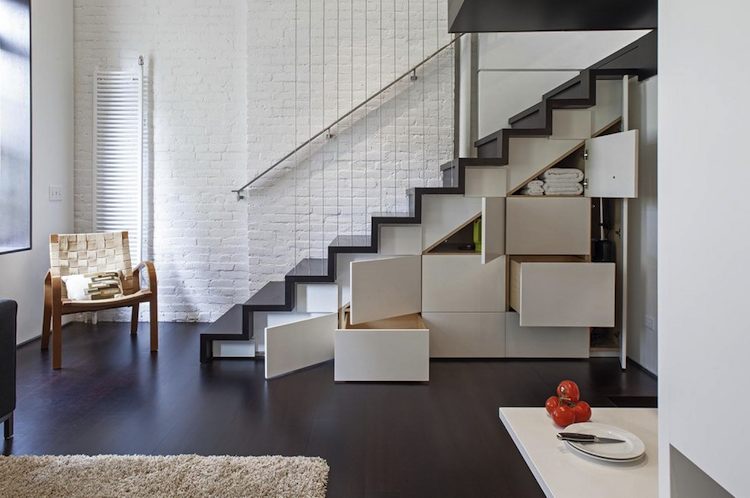
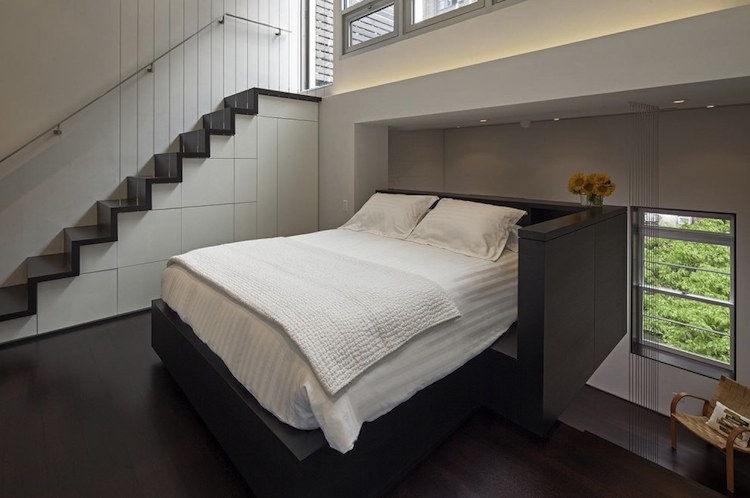
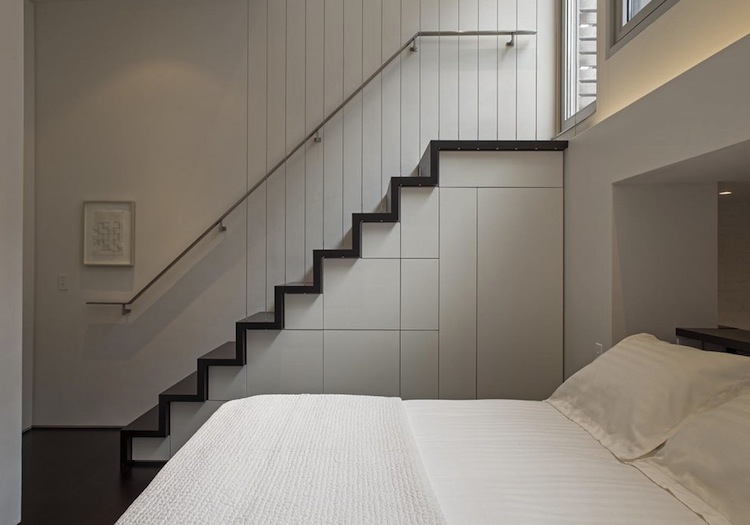
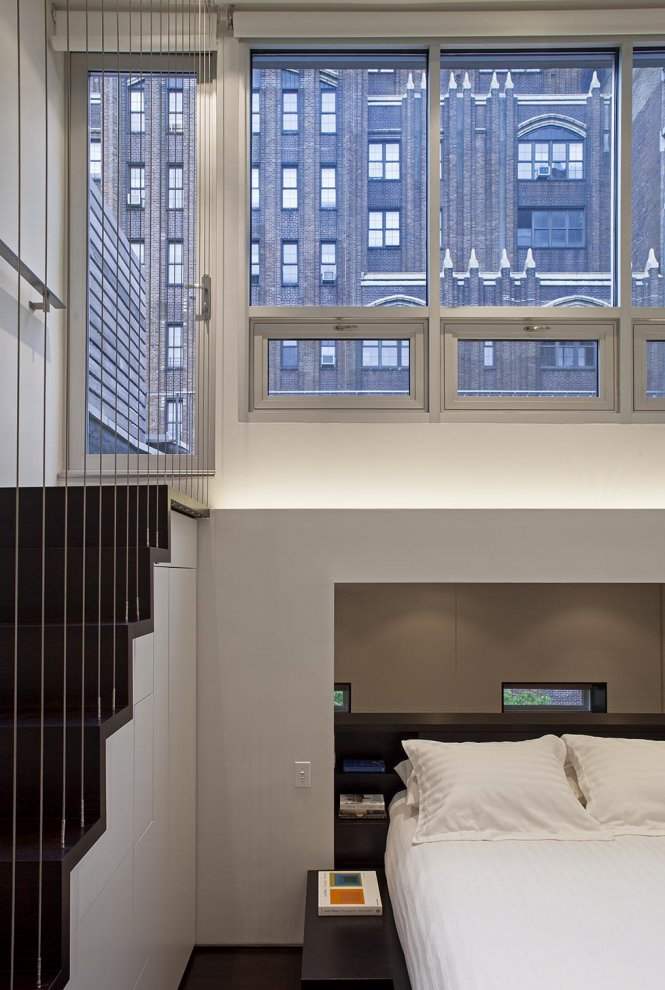
In truth, we were secretly lusting after the Manhattan Micro Loft. It’s beautiful interior with contrasting surfaces and textures exploited every inch of the space’s unique tall and small dimensions. Specth Harpman split the apartment’s 425 sq ft into four levels (the fourth being the green-roof patio). This vertical partitioning creates three spaces that are both discreet and flow together. The semi-open format also allows the whole apartment to share the window’s natural light.

The two main staircases feature unique “tansu” cabinetry, which is a variety traditional Japanese storage system (no SkyMall did not invent them).

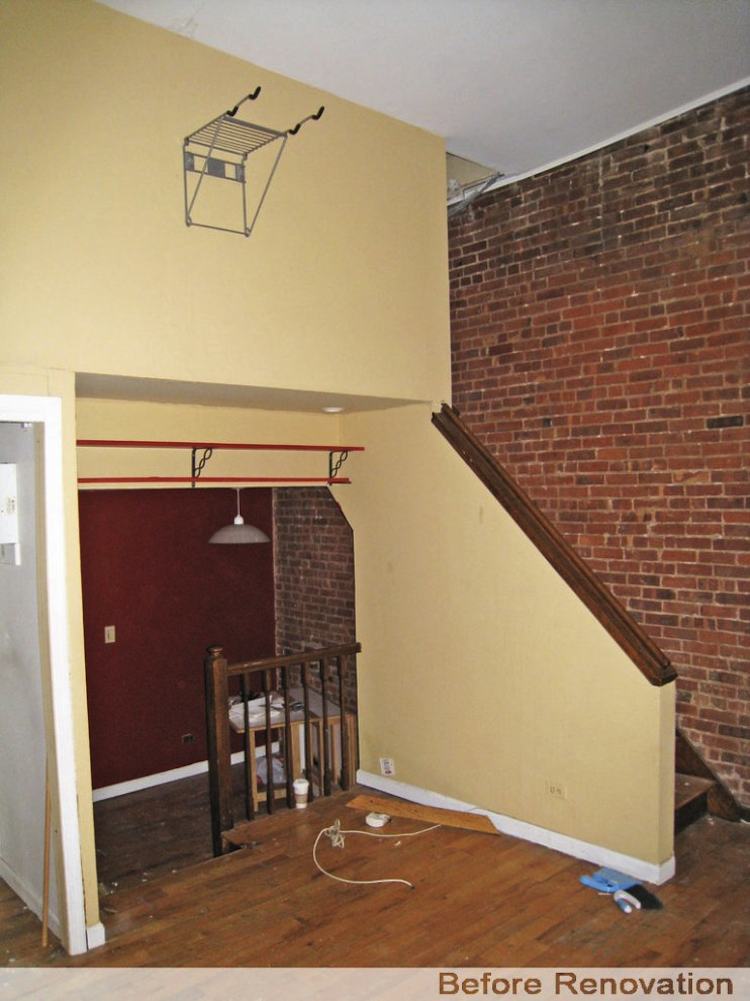
Like the LifeEdited apartment, the “before” pictures are almost as interesting as the completed ones. It shows that with a little creativity (and yes, money), you can turn an inefficient and dilapidated small space into an aesthetic and functional masterpiece. Big congrats to Specht Harpman for their award and great design!

Images via Architizer

Stick Your Kid in a Cubby Hole

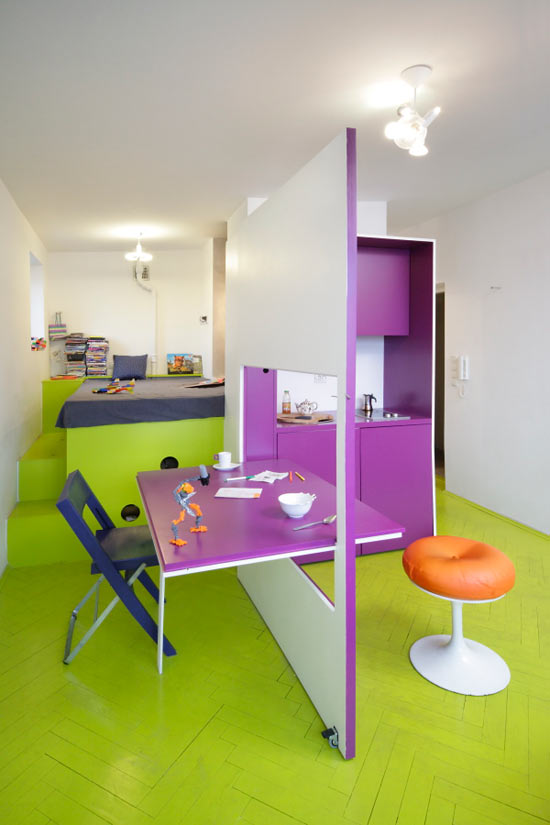
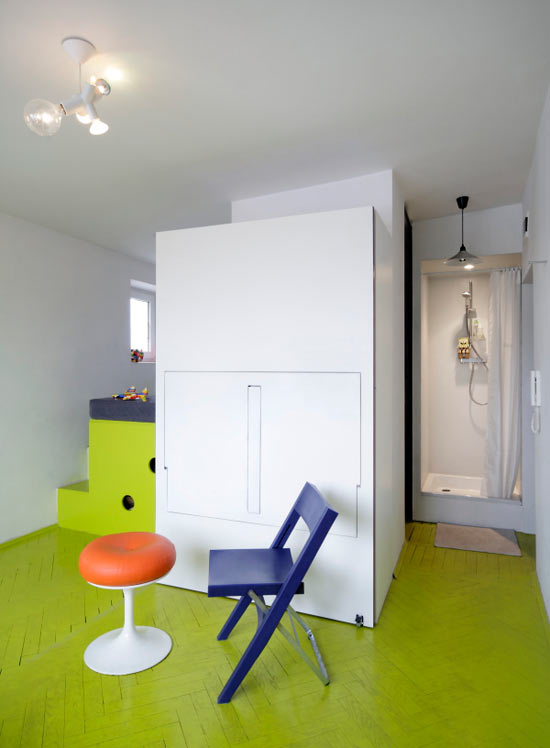
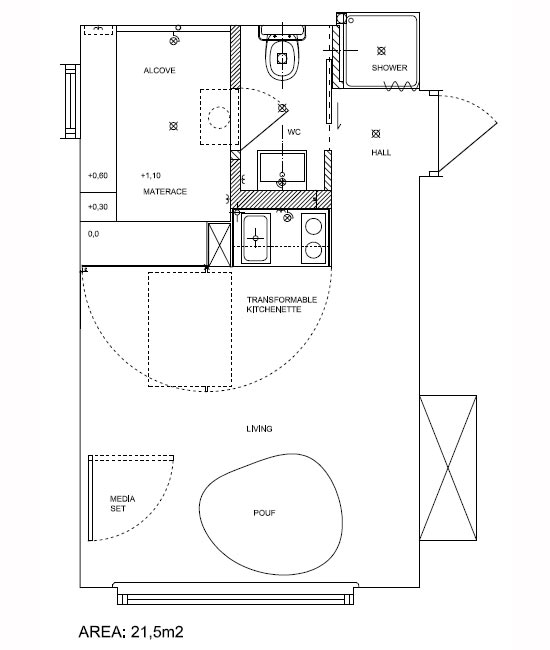
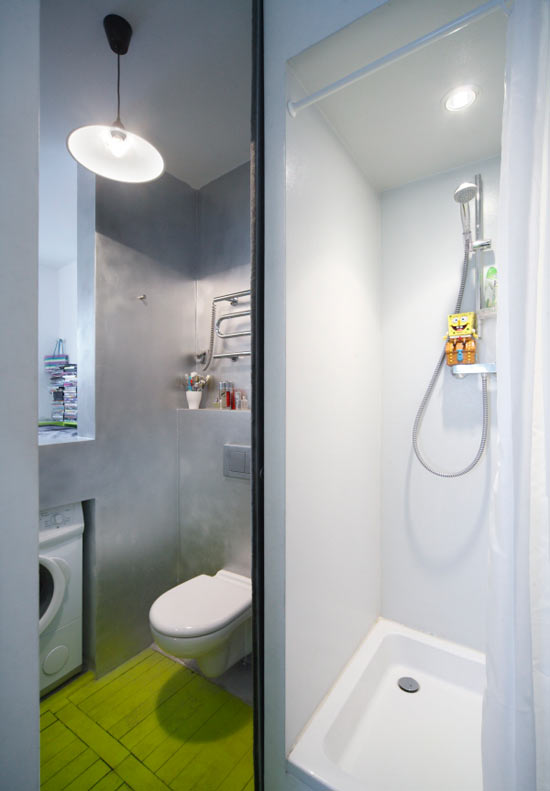
We’ve seen the work of Jakub Szczesny before, with Europe’s narrowest house. A couple years ago, the Polish architect designed the Tamka Apartment (aka Lucien’s Embassy), a 21.5 sq m (231 sq ft) Warsaw pied-a-terre. The man who commissioned the project was a divorced man looking for a weekend retreat where he can hang out with his son (named Lucien, we presume).

The apartment has a lot of great features, in particular, the kitchenette/table/room-divider unit and the bed cubby which has access to the bathroom. We also like that the apartment features a washing machine/dryer unit; although not a necessity, they’re pretty handy.

Though the apartment is for occasional use, we could see a single person, or perhaps even a couple, living there comfortably. We might do something about the Barney-the-Dinosaur paint-scheme though….

Pictures by Radek Wojnarvia for Design Boom