iOS Enabled Enlightenment

Many years ago, I spent a couple months hanging out in the Sinai Desert and scuba diving in the Red Sea. On my first dives, I would rapidly burn through all of my oxygen, often forcing my group to ascend prematurely. But eventually, by focusing on staying relaxed and taking long, slow, deep breaths, I started using a fraction of the oxygen I did on the initial dives, allowing me to stay down longer and enjoy the scenery better. What I learned is that conscious thoughts have a profound effect on unconscious behavior such as breathing. Beyond extending dives, maintaining steady, relaxed breathing is one of the cornerstones of being happy and healthy. Until now, having direct feedback to your respiratory behavior largely meant sitting still in meditation or carrying around scuba gear–both impractical for their own reasons. Now a wearable tech company called Spire is offering an iOS-enabled device that keeps track of your breath and reminds you to chill the heck out.

Spire is a little transmitter that clips to your waistband. It sends signals to your iOS device via a Bluetooth signal. Your breath is monitored and tracked on the device. Push notifications alert you if your breath is shallow or irregular, a good indicator that you’re tense and stressed out. That’s about it.

Spire has a great appeal for me. For years, I was a regular meditator, hitting my meditation mat like clockwork for 15 minutes every morning and evening. The motivation behind my practice was that when I brought consciousness to unconscious behavior through my breath, I could (and did) have a greater capacity to stay cool through life’s inevitable trials. You see, fear, anxiety and other unpleasant emotions are not conscious. No one chooses to be scared or anxious–these things are unconscious reactions to various stimuli, stimuli that is often rooted in some past trauma, not the present moment. These unpleasant reactions are almost invariably coupled with shallow breathing. Returning to regular, deep breathing helps bring both body and mind back to the present, not some incident that happened when you were a freshman in high school.

While it’d be nice if we could all just take the time to regularly meditate, many of our lives are not set up that way (my two young boys are super unsupportive of my mediation practice). Spire holds the promise of bringing a level of meditative practice to everything we do…assuming our phones are charged. A Spire puck costs $150. Visit their website for more info.

Don’t Just Do Something, Sit There

For all the wonders the Information Age has afforded us, it has also provided us with infinite possibilities for constant activity and distraction. Whatever gaps of inactivity that might have existed in days before pre-internet (and particularly pre mobile tech)–waiting in line, riding the train, even taking a poop–are, for many of us, now filled with web-surfing, Facebook/Twitter checking, game playing, etc. We will do anything but do nothing and be alone with ourselves. This condition of constant activity–as well as a possible remedy–is the theme of this TED talk by Nick Seaver.

Seaver explains how we’ve become a culture obsessed with distraction and doing, doing, doing–a culture so focused on changing the outside world that we’ve lost track on how to change ourselves. In the interest of the latter pursuit, Seaver and his wife spent 18 months of near-total silent retreat as part of the Samatha Project. As guinea pigs for studying the long term effects of meditation, they would spend 10-12 hours daily in silent meditation, letting, as Seaver said, the snow in the snow-globe in their minds settle down. The physiological effects of the silence were then monitored by scientists in order to get real data about how meditation affects the body and mind.

Seaver has many positive things to say about his experience in particular and meditation in general. I’d recommend watching the talk. But some of it can be summed up by a quote he gives by psychologist Victor Frankl, who said, “Between stimulus and response there is a space. In that space is our power to choose our response. In our response lies our growth and our freedom.” If we are to believe Frankl’s contention and yet continue to fill all of those spaces with flurries of distraction, forever reacting automatically rather than responding intentionally, our growth will be stunted, our freedom limited. On the other hand, if we give time to and permit those spaces, if we start to cultivate the art of doing nothing, we might be less likely of being enslaved by whatever random stimulus enters our mental newsfeed, we might start choosing how we want to live our lives. Seaver recommends ten minutes a day of silent meditation (1% of our waking hours) to regain those spaces, to start changing the world by changing ourselves.

4 Ways to Stop Reacting and Start Responding to Your Life

“Between stimulus and response is our greatest power—the freedom to choose.” –Stephen Covey

If you’re anything like me, Mondays tend to suck. Unlike other weekdays, which seem distinct and portioned out with manageable tasks and objectives, I look at Monday as a big glob, one that contains all the week’s tasks, objectives and expectations. Rather floating in a sea of opportunity, I feel like I’m paddling upstream in a river of unmet expectations. Monday mornings tend to be a frenzy of reactions. There is little time for reflection or creativity. I am not quite sure if my actions are the best use of my time. I flit about like an amped up gnat, trying to cross stuff off of my to-do list.

Essential to editing one’s life is time management. When we are in reaction mode, acting without evaluation, without taking the time to see if our actions are serving our greater objectives, we run the risk of wasting a good deal of time and therefore our lives.

What if we could step back and see our lives with calm and proper perspective? What if, rather than reacting to a bunch of little things, we could organize our tasks and make sure they were in alignment with our greater objectives in life? What if we could stop reacting and start responding to the various situations in our lives?

The word respond is derived from the Old French word respondre, which means ‘to answer.’ To answer denotes thought—something is asked of us, we consider it, then respond based on the present situation.

On the other hand, reactions tend to be vestiges of our pasts. We are repeating an action. The source of these actions–for many of us at least–has little to do with the present moment. It is most likely based on some previous reference point. I act this Monday much the way I did last Monday and the Monday before that (the breadcrumbs of my first action probably go back to kindergarten).

If you find yourself constantly reacting to life in ways that don’t serve your larger professional or personal goals, here are a few suggestions to get into response mode:

  1. Meditate. The most simple method is breathing meditation–either following or counting your breath for a set amount of time. What this does is make something unconscious (i.e. we breath whether we think about it or not) into something conscious. This simple act can pervade everything we do. When we are conscious of something, we can start seeing it for what it is, not just what we always thought it was, and start responding appropriately.
  2. Step away from your life. Take a walk. Exercise. Plan your day the day before. It’s really tough to see your day when you’re in the middle of it. Make time to think about how you want to live your life when you’re not being besieged by things you “have to” do.
  3. Look for different perspectives. As Einstein is quoted as saying, “Problems cannot be solved with the same mind set that created them.” Oftentimes, we react to life based on internal logic–a logic that was often formed at adolescence or earlier. We can get bogged down if we only depend on our own limited mental faculties to gain perspective. Talking to someone other than ourselves can do wonders for getting that perspective. We might start to realize that the way we see things is not necessarily the way things are, which will enable us to consider how we might respond to our present circumstances in more creative, useful ways.
  4. Put down the tech. If you’re someone (like me) who checks his or her email first thing in the morning, try something different. The problem with this behavior is that we start playing whack-a-mole with our days, thinking we’re getting necessary stuff done, when we might be giving ourselves more things to react to later, more ways in which we continue the cycle of reaction-action-reaction. Upon awakening, try to get centered, whether by meditating, drinking a cup of coffee or tea or reading something to set your day’s compass (i.e. that won’t piss you off). Don’t worry, the email will be there when you are through, but you will be better able to respond to it from a clearer place.

 Boy playing whack-a-mole image via Shutterstock

Do Nothing for Three Minutes

Follow these instructions: take the time you would have spent reading one of our thoughtful posts to do nothing. No checking your phone, web browsing, doodling or walking. The only exceptions to the activity moratorium are paying attention to your breath, mentally scanning your body for tightness and other sensations and listening to ambient noise. Stop everything else. You have nothing more important to do than sit still. Stop doing. Be. Enjoy.

Handheld, Mobile Enlightenment

Even the most edited lives can be packed with stress. Work, family, ubiquitous technology and all the other stressors of modern life can make us feel like we’re floating in a sea of anxiety. And while many of us have the best of intentions to remedy this feeling with regular meditation, the opportunity to put butt to mat or chair and get present often alludes us. Meanwhile, most of us are seldom without our smartphones. An app called Buddhify 2 does the unthinkable: marrying our desire to be more mindful with our constant clutching of cell phone.

The mobile app features a wheel with various categories of guided meditations, e.g. one for connecting after being online or one to use after waking up. Each category has various types and times for the meditation. There is a solo feature for a general, self-guided mediation. The app also allows users to track their state, time and various other metrics for tracking progression toward Buddhahood (watch video for more details).

We’re not sure if a Buddha would use a mobile app on the path to enlightenment, but we suspect he or she would not object to it–anything, app or otherwise, used with the right intention, can be the right tool for achieving bliss. Moreover, many of us need all the help we can get, battery-powered or otherwise.

The app is available for iOS for $1.99  on the iTunes Store (an older version is also available for Android).

Via Lifehacker

The Fun, Mobile Path to Enlightenment

For the stressed out Luddite, nothing beats meditation. Sit down, focus on your breath and let the peace ensue. No equipment or wires–just your thoughts, breath and butt. However, for the more technologically disposed, a new product called PIP might provide a great way to still your frazzled nerves.

PIP is a tiny Bluetooth enabled gaming device that allows you to manage stress. PIP achieves this through playing games on your iOS or Android mobile devices. The games reward the physiological state of relaxation as measured by the PIP device. These games can be played solo or against someone.

While stress might be induced by a psychological reaction, the manifestation of stress is quite physiological as the PIP creators describe:

When you are in a stressful situation your body’s flight or fight response is activated. As a result, blood is rushed to the periphery of the body which causes your sweat glands to activate. This activation changes the conductivity of your skin and is referred to as the Galvanic Skin Response (GSR).

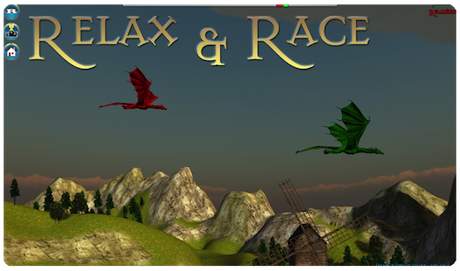
PIP measures your GSR and the games provide a fun way to bring your stress levels down. Games include “Relax and Race”–a game played with another person, where the person who “out-relaxes” the other wins the game.

relax-and-race

PIP is a Kickstarter project by a Dublin-based company called Galvanic. They have raised $33K of a $100K goal with 25 days left to go (in other words, if you like PIP, support them now!).

PIP might strike some as a bit overly complicated. Why not just sit and meditate to relieve stress? But for longtime and aspiring meditators alike, the act of quantifying relaxation is much easier said than done. An hour of meditation might leave us feeling more agitated then when we began.

We realize the Buddha was not staring at his Galaxy S4, playing a game with flying dragons on his way to becoming an enlightened being. That said, we suspect the state of enlightenment has a correlative physiological state that can be induced and monitored. For those of us lacking a Bodhi tree to hang out under for a few months, the PIP might be a good tool achieving that state sooner than later.

Edit Your Thoughts for More Energy

A recent study explains why you might be more physically exhausted coming home from an eight hour, sedentary day at work than an active day spent doing mindless tasks. The difference is your thoughts. The study, conducted by Samuele Marcora of the University of Kent, observed the behavior of two groups: One that played mentally challenging computer games for 90 minutes and the other that watched documentaries on trains and Ferraris for the same amount of time. When the groups were done, the researchers put the subjects on a bike for an endurance test. The documentary-watchers consistently performed better, staying on the bikes longer than the mentally taxed subjects. What’s most fascinating is that the heart rate, respiration and glucose levels were consistent across both groups. In other words, though the physical states of both groups were the same, the mentally depleted subjects lacked the will to continue.

The obvious recourse for all of us who want more physical energy is to quit our jobs and watch documentaries all day. Or maybe, just maybe we can curb the amount of thinking we do in the day.

We have looked at how meditation and doing nothing might actually increase our levels of productivity at work by training our minds to focus in the face of distracting thoughts. This ability to focus and pay attention is often called “mindfulness”–it’s not the elimination of thought so much as it’s the ability to be absorbed in what we’re doing and only what we’re doing. If we’re writing, write. If we’re designing, design. And so on. While this falls far outside the scope of the study, we could imagine that our physical capacities–even if it was only our perception of what our physical capacities were–would be greater if our thoughts were only concerned with the things we’re doing rather than the contents of the 20 open tabs in our browser or the texts on our phone or that fight we had with a friend. Whether through meditation or avoiding indulging in distraction, we might all feel more energetic and get more done by limiting our thoughts to the task at hand.

Via PopSci

Brain Melting image via Shutterstock

After You Vote, Take a Break

After a hurricane, a seemingly never-ending election campaign and the miscellaneous stressors that attack us daily, you deserve a break (same goes for our readers not ravaged by hurricanes or campaign promises).

Actually, there countless reasons to take regular breaks. This infographic from www.learnstuff.com lists many of them such as increased productivity, reduced odds of contracting certain types of cancer, better sleep and vision and a bunch of other stuff. Take a look, then take a break.

Thanks Kayla!

6 Simple Meditation Tips that Might Just Save Your Job

Many of us have many great intentions to meditate regularly, but we regularly find many great reasons why we cannot to do it–we’re tired, we haven’t had our coffee, we’re expecting a call. The biggest reason, of course, is there simply is not enough time. There are a million important things to do and sitting and doing nothing is not one of those things. We’ll intend to meditate tomorrow.

An article by Peter Bregman in the Harvard Business Review suggests that meditating and doing nothing might, paradoxically, be the best tool for getting stuff done.

Externally, meditation looks quite peaceful; we sit nice and still and quiet. Internally, however, meditation can be a mental war-zone: We are besieged by thoughts and impulses to do everything but sit still.

It is in the resistance to act on those thoughts and impulses where focus is forged. That focus can be applied throughout our day, whether that means resisting a trip to the kitchen, not checking your email every five seconds or foregoing that half-hour kitten video-watching spree.

Think about your day. How much would you get done without distraction? How much shorter could your day be if not protracted by distraction? If you believed you could get more done or that you could cut an hour or two off your day, wouldn’t you sit still for 20 minutes in the morning?

Editing your life is not just about editing possessions that don’t support your happiness, it’s about editing behavior that doesn’t support your happiness. And few things sharpen your behavior-editing skills as meditation.

Now that you know your livelihood depends on doing nothing, here are a few suggestions as to where to start:

  1. Meditate first thing in morning. Meditation is like airplane departures: The later the day gets, the less likely it is to happen. Do it first. Think of it as your mental shower.
  2. Don’t skip days. Excuses and reasons tend to have puppies when you skip days.
  3. Focus on your breath. While there are mantra-based meditations, counting meditations and Buddhist meditations on death and precious human life, paying attention to your breath is by far the easiest entry point for meditation (you can always make meditation more complicated later). If you find yourself lost in distraction, just return to your breath; it’s always there. If your breath is not there, do not continue to meditate. Call 911.
  4. Relax your body. Scan your body starting at the crown of your head, going through each and every part of your body down to the tips of your toenails. Bring attention to every inch of your body, breathe into them and let the breath open and relax them.
  5. Sit up straight. This author uses a zafu and zabuton and would highly recommend these meditation cushions, but not everyone has the back or knees to sit cross-legged. An upright chair works fine. Focus on your spine being straight. It makes a difference.
  6. Start where you’re at. Bregman sits for 20 minutes, but perhaps that’s too much. Oftentimes, I can only eek out 5 minutes. It’s at least 5 minutes better than nothing. I set a timer on my phone with a gentle ringtone to get me out of meditation.

Image Source-Getty Images