As I brought up a few weeks ago, there is a real need for more small, inexpensive vacation homes, ideally ones that are easily accessed by city-dwellers. City life can be a real grind. Without some sort of retreat, it can be unsustainable. Well the gods have heard my plea. Actually–as is more often the case–a group of Harvard grads heard my plea (but aren’t they the same thing anyway?). Headed by MBA student Jon Staff and Law School student Peter Davis, Getaway House provides an attractive, affordable, off grid tiny house for “folks looking to escape the digital grind and test-drive tiny house living.”
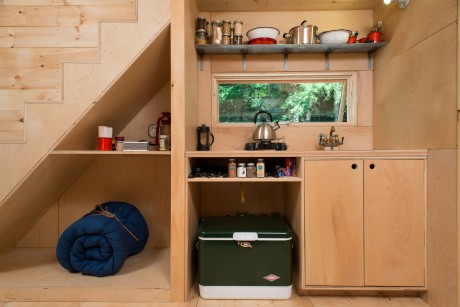
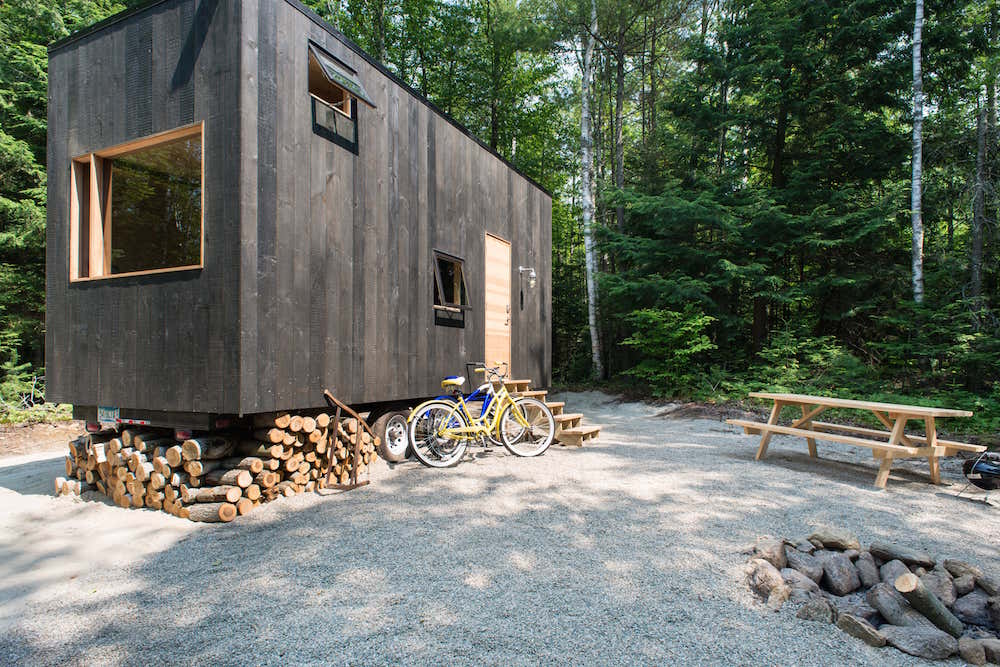
There is currently one completed Getaway House that is available to book by the night. It is dubbed “Ovida” and is located within two hour driving distance from Boston. The place was designed by a group of Harvard Design School grads. This elite-institution provenance shows through in its design. Both its modern interior and exterior are clad with attractive rough cut pine. The interior features built in furniture such as a table that doubles as a window cover and two built-in beds, giving the place capacity to sleep four. All electricity is solar, the toilet is composting and water is handled via a 110 gallon water tank that is refilled via the host house the tiny house shares its land with. Bookings also include fresh linens and available “provisions”–a sort of backwoods mini bar with things like coffee, trail mix, pasta, etc (these cost extra). Ovida is available for a reasonable $99/night for double occupancy.
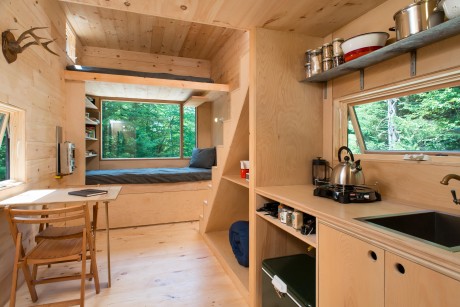
Another Getaway House, dubbed “Lorraine” will be available mid-August and they are already taking reservations. A third house is due out in early September. Staff and Davis raised a bunch of money to build the houses with the goal of making them into a replicable model, providing both affordable, sustainable urban retreats and income generator for property host.
Getaway House is actually the first initiative of a project called Millennial Housing Lab, which, somewhat along the lines of what I wrote about yesterday, is trying to develop and realize “fresh housing ideas for a new generation,” focusing “on all sides of the housing experience: architecture, neighborhood design, financing, regulation and community-building.” As I’ve mentioned time and again, for all the hype surrounding tiny houses, micro-apartments, micro-suites and other creative forms of housing, market and regulatory forces often stand at odds with bringing these things into being. While Getaway House is ultimately a tiny vacation cabin, it is also another small step in making tiny, low impact housing a viable housing option for more people.