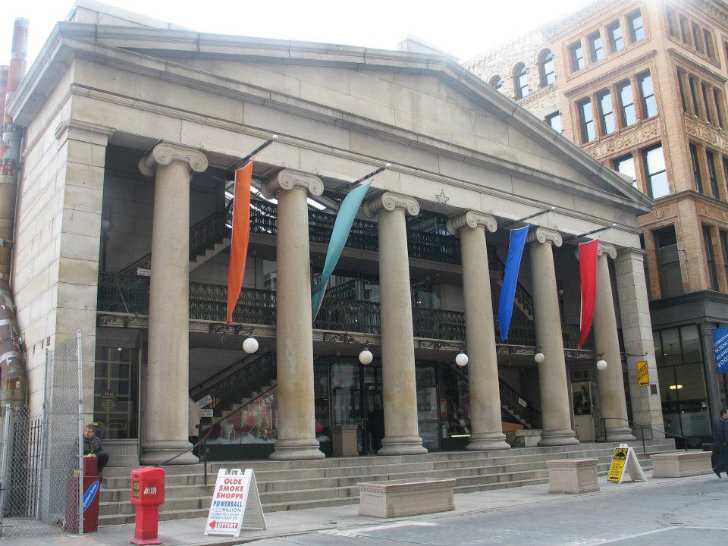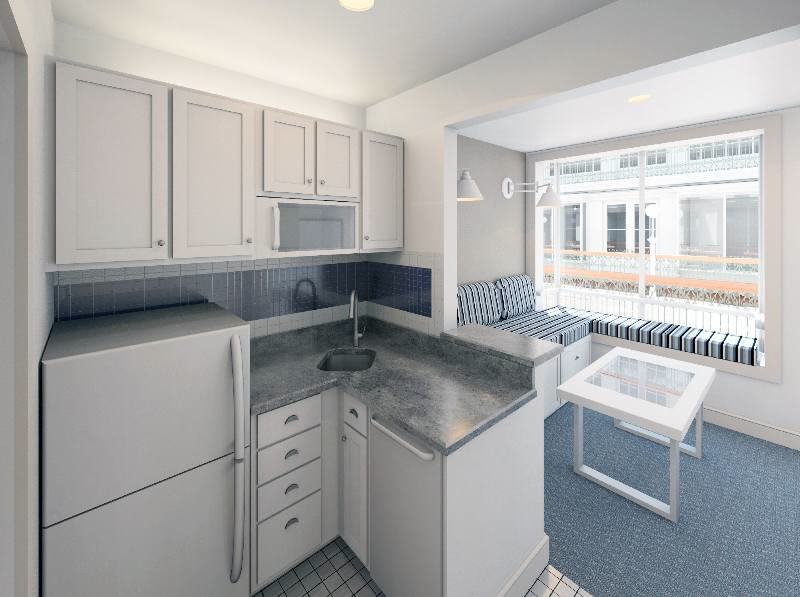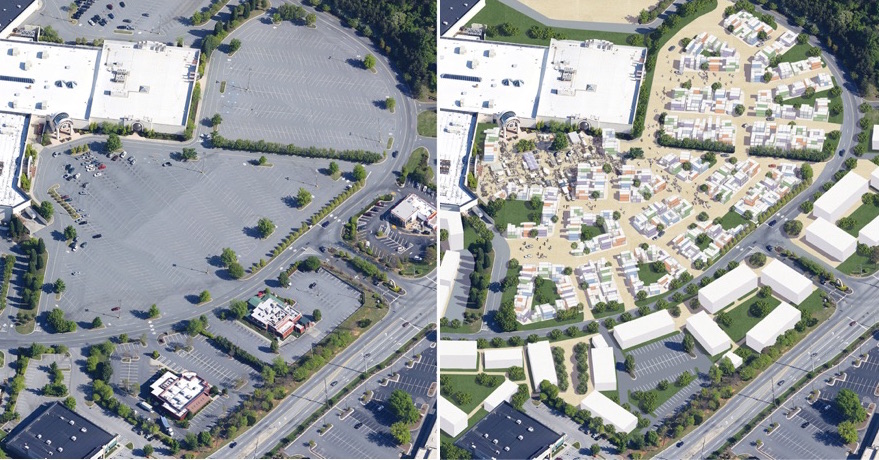
No structure better represents consumer culture like the shopping mall. For those who lived to shop, the mall was their home. But as online shopping became a mainstay, as teenagers started hanging out on Facebook instead of at the Orange Julius, the once-mighty mall came crashing down, literally and figuratively. And while it’s a nice idea to re appropriate these structures–turning them into something more useful than a place to buy Poison posters–doing so is not so easy. Most malls are not like the Providence Arcade, with skylights and external windows. They are like casinos, lightless labyrinths designed to keep you in a consumerism’s snare. As part of a design charette from a few years ago, urban planning firm Duany Plater-Zyberk came up with one of the more clever mall retrofits we’ve seen. Their plan was to turn High Point, North Carolina’s decaying Oak Hollow Mall into a mixed-use, small-business village to be known as “Inc.Pad.”
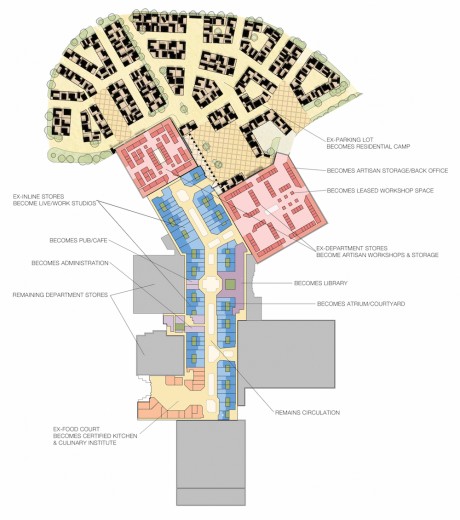
The plan has a number of components. From Lean Urbanism:
The redevelopment of the mall keeps the existing structure, as well as a substantial portion of the parking lots…The village consists of small urban blocks arranged in a picturesque fabric, creating generous civic space for socializing. The streets are narrow, accommodating pedestrians and bicyclists, but can also provide for small vehicles for deliveries…The new infill buildings are constructed with shipping containers, which will make the process easier, faster, and less expensive.
The mall itself would be turned into artisan workshops and storage. Some stores would be turned into residential and work studios, and the food court would be converted into a certified kitchen and culinary institute.
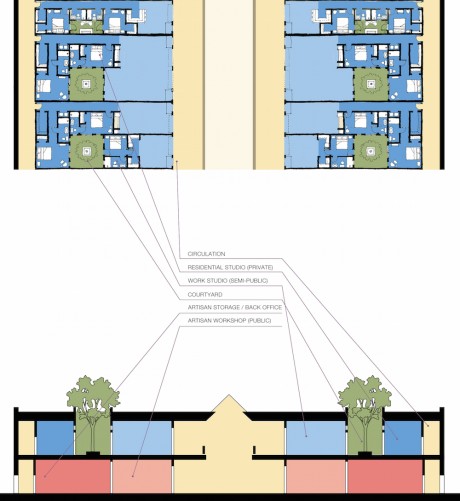
The retrofit would be designed to keep some of the 336,000 college students that live within a 75-minute drive of the mall in the area. Approximately 50K of these students graduate a year and tend to move away in pursuit of better professional opportunities.
So far as we can tell, the design never came to pass, but it does show some exciting possibilities for an otherwise anachronistic structure.
Via Lean Urbanism