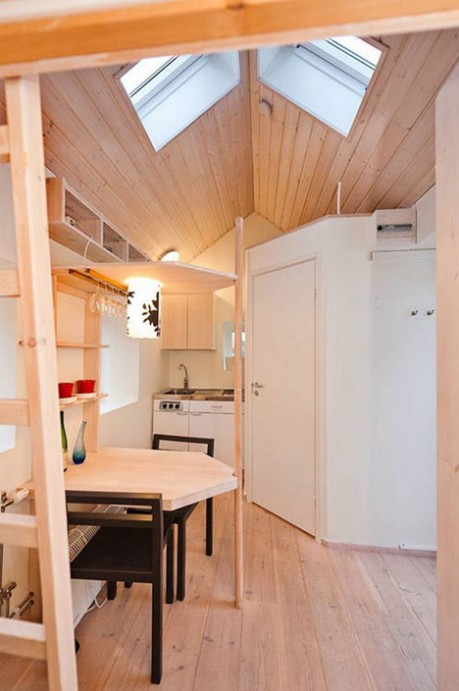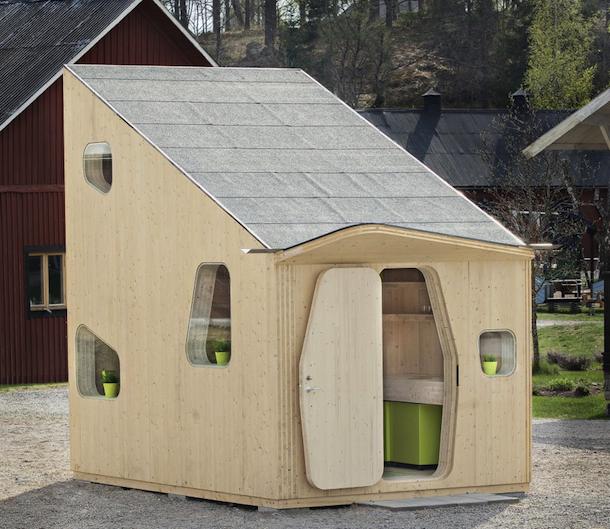
Next year at Lund University in Småland, Sweden, 22 students will get their own 10 sq meter micro-houses. The project, whose prototype is currently on display at Virserum Art Museum, was designed by Tengbom Architects in collaboration with wood manufacturer Martinsons and real estate company AF Bostäder.

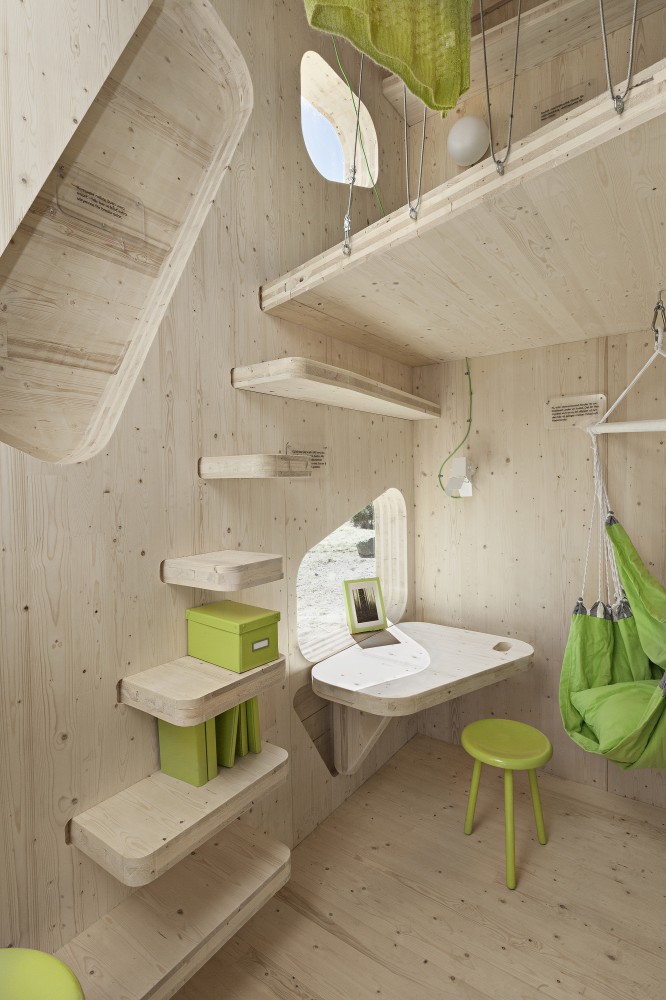
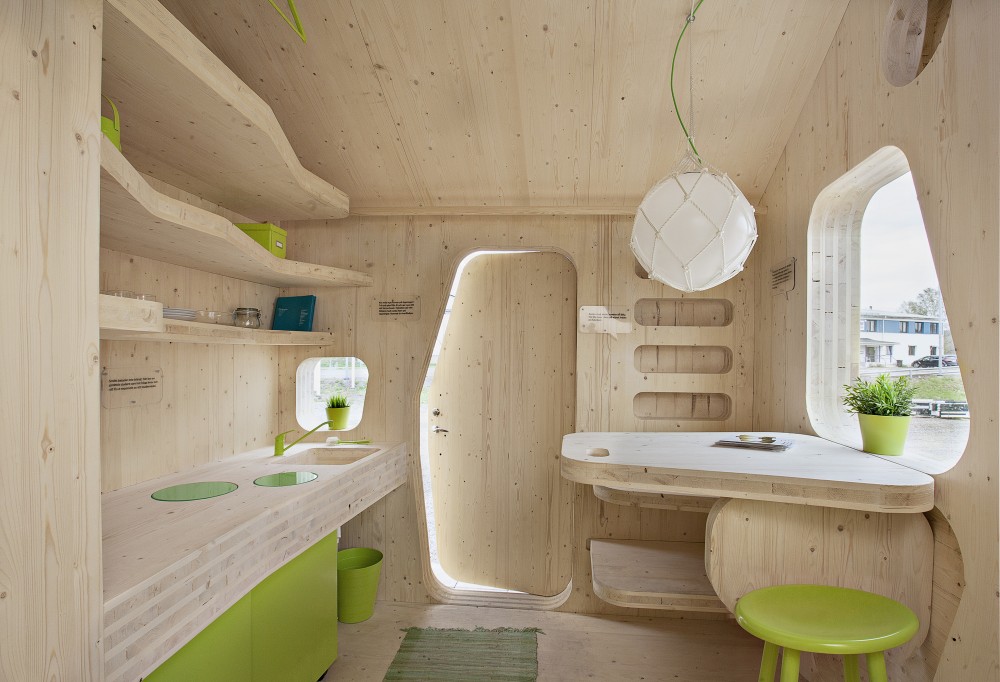
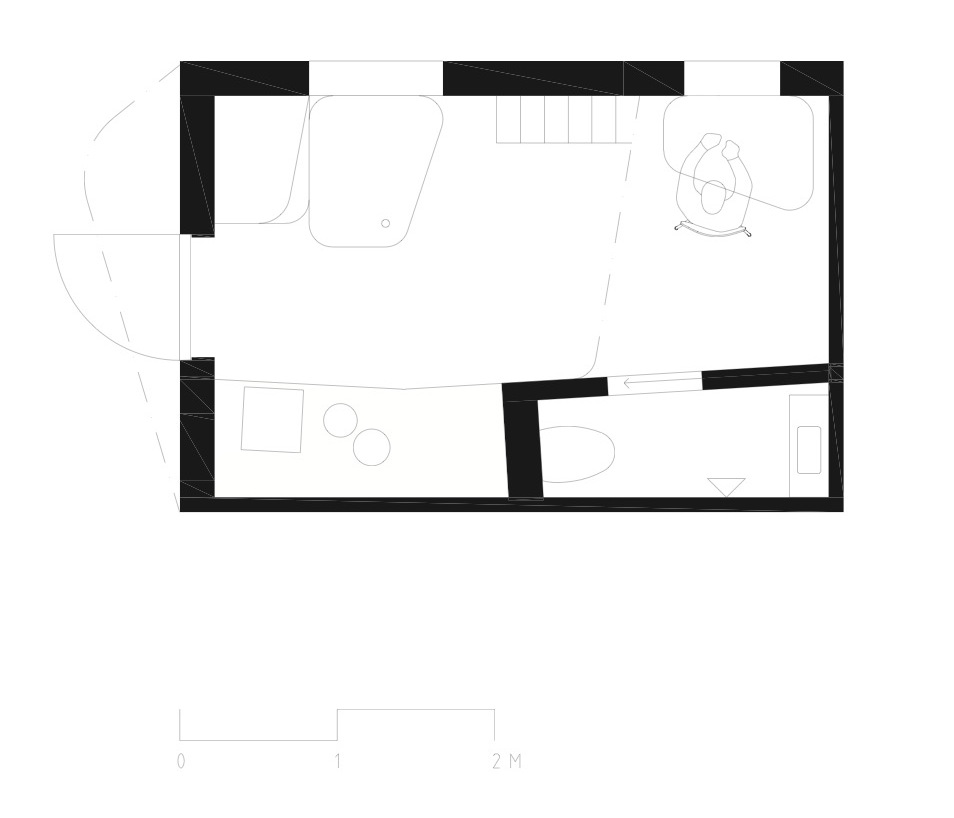
The intention of the project was to build something affordable, energy efficient and adaptable to the student body needs. Archdaily reports of its construction:
Through an efficient layout and the use of cross laminated wood as a construction material the rent is reduced by 50% and the ecological impact and carbon footprints is also significantly reduced.
The tiny units features sleeping lofts, kitchens, desks and bathrooms. We think the design looks phenomenal (no word as to whether the green accents will be part of the final product).
This is not the first time we looked at micro-housing at Lund University. Last year, we checked out their experimental 12 sq meter micro-student house. Like micro-houses in the US, the project sought to make housing without restrictive and expensive building regulations. This is a fair reason to conceive new housing structures.
But we will ask the same questions today as we did then. For many, college is one of the most important periods of socialization. Crucial to that is the shared, porous living experience. While undoubtably stylish, we wonder how these micro-houses will affect that? Will it lead to students isolating more? Of course, they could–and probably will–be located near each other, creating a sort of micro-commons, but knocking on a closed off house next door is very different than stepping through an open dorm room down the hall. With Sweden’s balmy climate, perhaps the designers thought the micro-house’s door might remain open most of the time.
Via Archdaily