Is LA the Next City to Go Micro?

In the US, high density cities like New York, San Francisco and Boston are the likely candidates for micro-apartment booms. Their steep property values, limited land and solid public transportation infrastructures make them ideal for small housing. But other large cities are increasingly entertaining compact living as a solution for growing their housing capacity in a cost effective and environmentally responsible manner. Two exhibitions that just opened in Los Angeles, a city that has become synonymous with car-fueled sprawl, are looking at how that city might include micro-apartments in its future.

An exhibition at the WUHO Gallery called “How Small Is Too Small?” is presenting Los Angelinos the opportunity to discuss and evaluate the viability of micro-living. The show is organized by the LA Forum and curated by architects Katrina Stoll Szabo and Takako Tajima. Like the Making Room exhibition in NYC and the What’s In? exhibition in Boston, How Small features a mockup 300 sq ft apartment where visitors can experience firsthand what micro living feels like. Unlike those two other shows, How Small’s mockup is a bit rough around the edges. An LA Times article describes the structure like this:

To create a feeling of transparency and an understanding of the structure, the micro-apartment has no drywall; instead, untreated dimensional lumber frames the elements, and fixtures such as toilets, sinks and counters have been made from fiberboard, helping to illustrate the flexible nature of the layout. Visitors can move about the floor plan, which feels spacious with sparse white Ikea furnishings.

It also seems like a much cheaper way of building a temporary exhibition (not that anyone asked us). In fact, the minimally furnished space was intentionally designed to be highly customizable. Szabo told Architizer “We’re trying to show an alternative, so that if someone has their grandmother’s chair and their cousin’s full-size bed, that’s something they can bring to the unit.”

This ability to bring existing furnishings to small spaces is something we’ve discussed before, and strong arguments can be made for a more open floorplan like How Small’s.

A concurrent exhibition at WUHO called BY-Right/BY-Design explores the relationship between built design and high design. From the LA Forum site:

Created by Liz Falletta, the exhibition pairs common, basic residential types by builders and real estate developers with examples of projects designed by noted architects working at similar scales, times, and locations. The pairings are then linked to contemporary examples that bridge lessons from the past with ideas for how L.A. can further densify and develop to meet new challenges.

The exhibition looks at examples of architecturally significant multifamily housing in the LA area that might point toward the future of smart, high-density growth.

The pairing of the two exhibitions creates an interesting conversation. On on hand, How Small looks at general trends in building, asking what constitutes an adequate home and how small housing might fit into the context of Los Angeles’ future. BY-Right/BY-Design looks at how the injection of high design might inform new building, as housing size is just one part of growing the city in a smart way. Design does matter.

The shows run through August 4th.

Photos by: Luke Gibson for Architizer

Sprawl, Huh! What is it Good For?

Last week we gave a micro view of the embiggened American home. Today, thanks to Google and the US Geological Survey’s Landsat images, we see the macro view. The GIF’s below, made by Texas architect Samuel Aston Williams, show the Houston, Dallas/Fort Worth, Chicago, NYC, San Francisco and Los Angeles metro areas as they grow from 1984-2012. The ever-sprawling burbs look like spilled milk over once-green hinterlands.

Of course the images don’t tell the full picture, e.g. how the increase in sprawl relates to overall US population or how these spread out cities might be the product of an increasingly urban country (in other words, the increased size of one area might translate to a major decrease in another, more remote locale). Nonetheless, these images, coupled with consistent data showing the ballooning American home size, paint a picture of a country that might need a serious edit.

click on image to enlarge

via The Atlantic Cities

AA: Helping Los Angeles with Its Big House Addiction

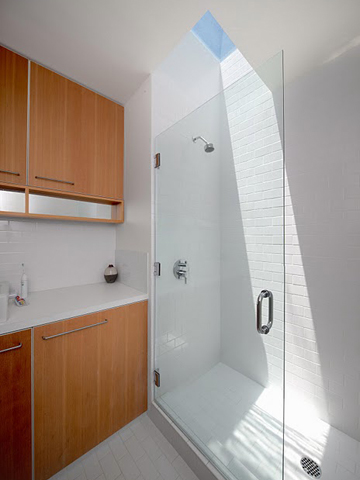
Los Angeles has a new ally in combatting sprawl. Anonymous Architecture is churning out spaces that are small, useful, affordable and might help reign in the rate of ceaseless residential land expansion.

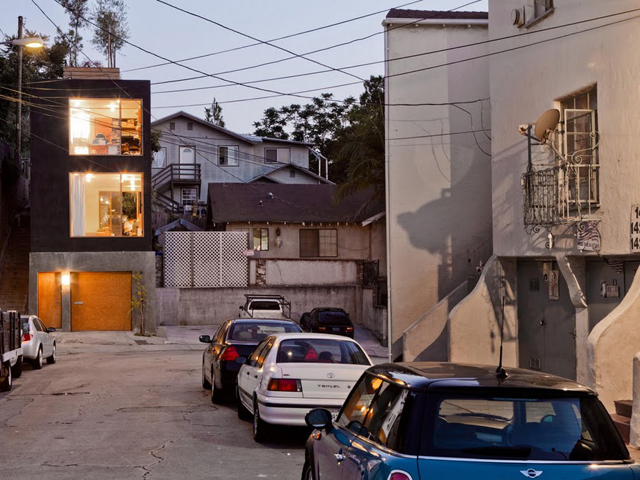
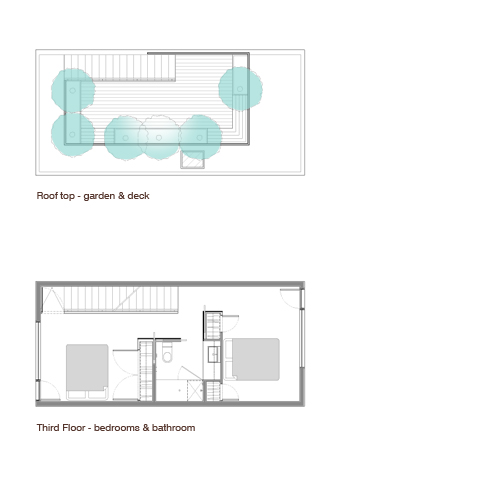
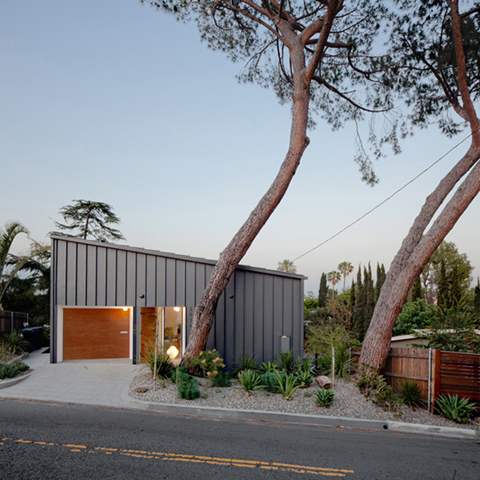
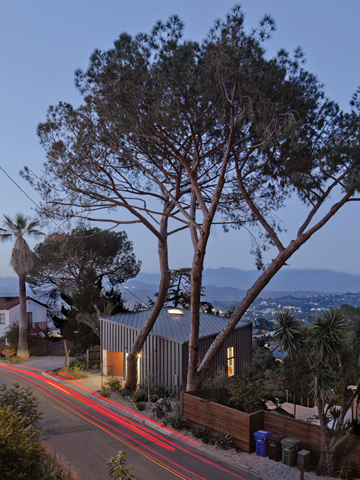
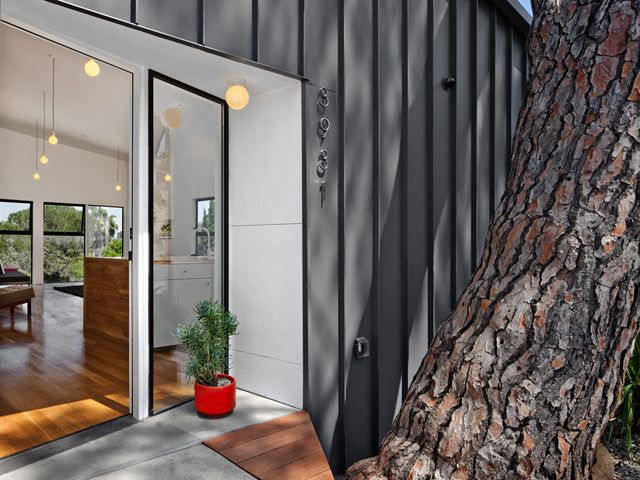
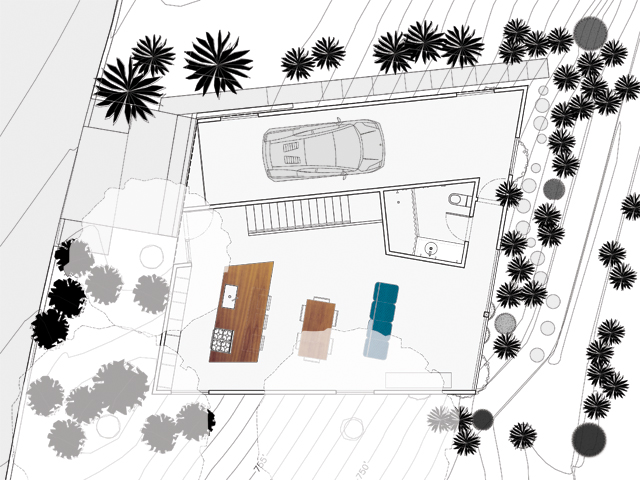
We came across AA’s “Eel’s Nest” home via Fair Companies; it is AA lead architect Simon Storey’s personal home. He said he was drawn to the land and its home because they were half to a third the price of anything else in the area. The tiny lot–780 sq ft–originally held an even tinier 350 sq ft home.

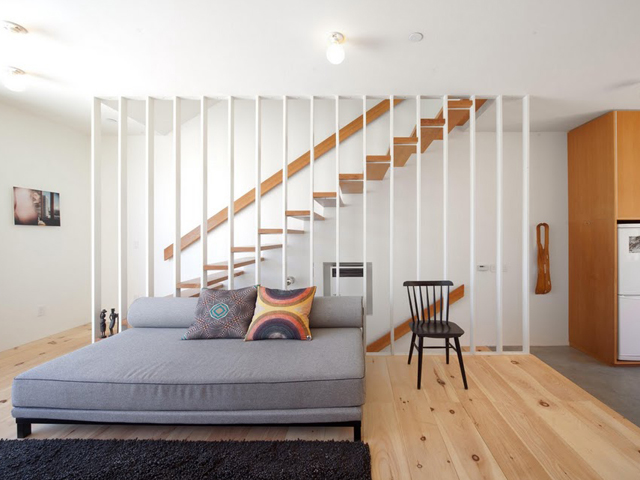
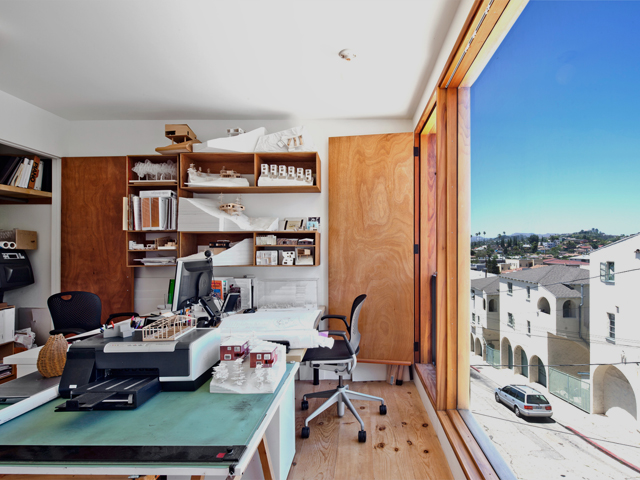
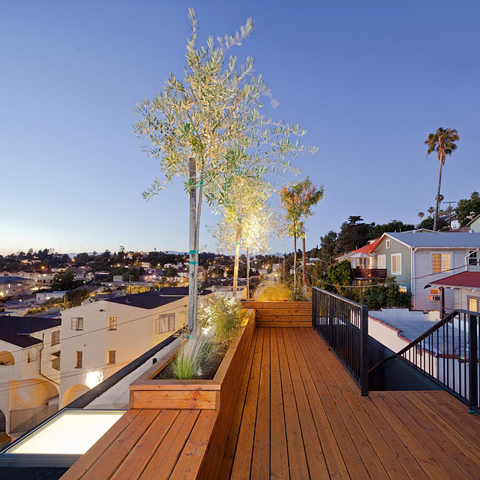
Storey tore down the old structure and replaced it with a box-shaped 960 sq ft home with two stories, two bedrooms, a garage and roofdeck. The whole project, according to Storey, had a modest budget of $120K. Even though he probably saved a little money on architect fees, this is an impressive sum for building a very attractive and livable house.

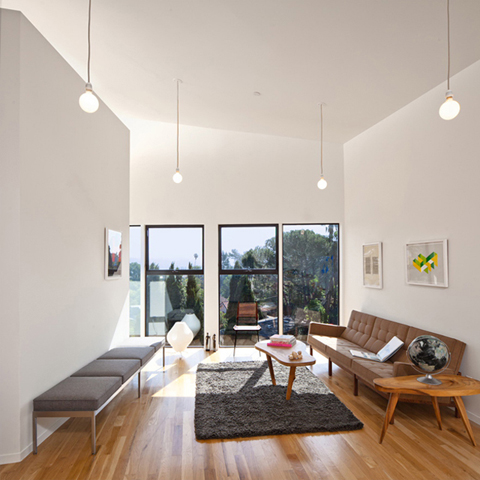
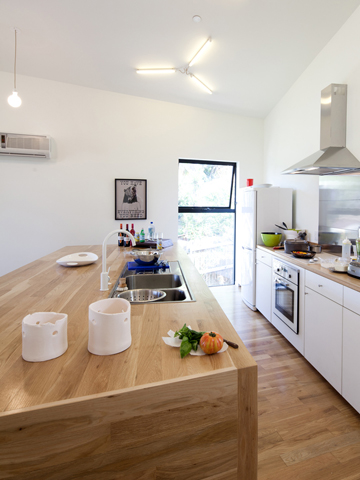
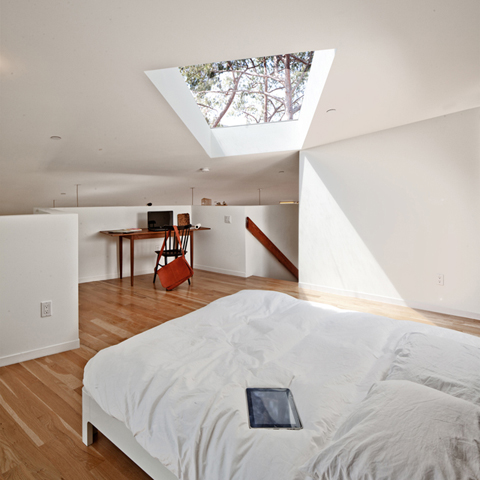
AA designed another interesting small space called the BIG and small House on LA’s Mt Washington. The home has a 2500 sq ft lot size, a 900 sq ft house footprint and 1200 sq ft of useable floor space. The idea behind the house was to maximize the feeling of spaciousness by incorporating high ceilings, lots of natural light and maintaining an open floor plan. The very luxe feeling space had a $200K budget. Not cheap–especially for what is essentially a one bedroom house–but far from outrageous considering the innovative design.

If you think these homes aren’t compact, consider these facts from the US Census:

The average new single-family home sold was built on a lot of 16,663 square feet. The average lot size for new homes sold inside metropolitan areas was 15,616 square feet. Outside metropolitan areas, it was 28,768 square feet.

We appreciate that AA’s designs provide interesting and cost-effective architectural solutions to combat urban sprawl, which is typically dominated by huge homes.

Image via Anonymous Architecture

Edited Housing Guide: A Look at 4 Compact Housing Developments in North America

While building small is big in many places around the world, it’s still pretty novel in North America. Our abundance of space and affection for cars have made our architectural disposition similar to a big yawn after Thanksgiving dinner.

New American home footprints have been north of 2K sq ft for a while, and have even spiked to 2550 sq ft in the last year because credit scarcity has limited new home ownership to the cash-flush.

But that’s not what we’re going to talk about today. We are going to talk about the little guys. These are developers at the vanguard, building small, efficient, awesome homes.

And if we missed anyone, please let us know in the comment section.

1. Cubix SF (née Cubix Yerba Buena)

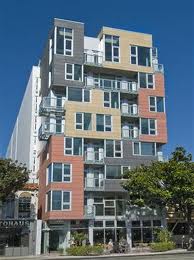
If you go to San Francisco’s SoMa district and see a Rubik’s-cubey-looking building, it’s probably the Cubix SF. The 98-unit building has floorplans ranging from 250-350 sq ft. Prices are in the low-to-mid $200’s, which is about a 1/3 of the area’s median price.

The building features nice finishes (see main image above for interior pic), modern appliances, a big roofdeck and groundfloor cafe. Their focus is on creating a low purchase price for people who still want a high quality, stylish apartment in a great neighborhood.

2. Vancouver Micro Lofts

Okay, so it’s not the US, but these micro units epitomize edited living. There are 30 units, which range from 226-291 sq ft and average $850CAD/month rent, which includes cable and internet.

The tasteful decors feature folding beds and tables, big windows and small, high quality appliances. With considerably lower rents than neighborhood average, the building proved very popular and rented out almost immediately.

via cbc

3. Apodments

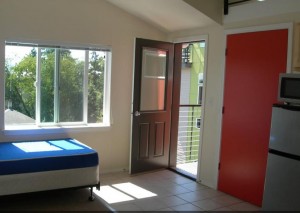
In Seattle, Calhoun Properties has developed 9 building featuring their Apodments™, which are more like boarding rooms than standard apartments. Buildings have shared kitchens and living rooms. Some rooms have shared bathrooms and can be as cheap as $350/month including utilities, while the majority have private bathrooms, kitchenettes and some furniture and are as cheap as $495/month including utilities.

The units themselves are as small as 90 sq ft with fairly spartan decors compared to the other developments in this profile. Calhoun seems to be focused on young people who make low, hourly wages and/or don’t spend much time at home.

image via Facebook

4. Olympic Studios and Studio Lofts

In posh Santa Monica, CA, NMS Properties offers compact living for moderate income households (<$60K/year for singles and <$68/year for couples).

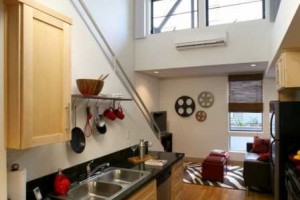
The units range anywhere from 360-448 sq ft. One of the cooler features is their furniture organizer, which allows you to drag and drop furniture pieces to pre-configure your furniture to the spaces somewhat tight quarters. We particularly like the loft layout, whose high ceilings give the small footprint a cavernous feel.

image via Olympic Lofts

graph via treehugger and Builder Online