Sharing Grows Up

If you thought the sharing economy was a passing fad or something exclusively for Ralph Nader voters*, think again. A new organization called Peers.org is trying to make sharing mainstream. It serves as both a member network for some of the leading players in the sharing economy as well as a public advocate for the institution.

Advocacy is going to play a larger role in the fuzzy, hard-to-regulate sharing marketplace. A recent lawsuit brought against a NYC man testifies to this. Nigel Warren has been accused of illegally running his own hotel via Airbnb. He faces up to $30K in fines if found guilty (Airbnb is helping out with his defence). We can’t help but think that other peer-to-peer services like Zimride and Lyft, which essentially provide unregulated taxi service, surely hold similar potential for litigation.

Beyond advocacy, Peers represents a maturation of the sharing economy. The site has a grownup, cohesive look with slick, professional graphics and videos.

Some folks such as Salon’s Andrew Leonard have accused Peers of being a little too slick. He wrote a couple articles about Peers; one entitled “The sharing economy gets greedy” accused Peers of being a front for sharing economy giants and the numerous venture capital firms that support them. A follow up article, based on new information that refuted some of his original contentions, still questioned how “grassroots” Peers is (they use that term to describe themselves on their website).

Peers director Natalie Foster said explicitly that the group wasn’t a lobbying organization, but our question for Leonard and other skeptics is so what? So what if Peers serves the interests of multimillion dollar VC firms supporting the sharing economy? So what if Peers were to morph into a lobby group? So what if Peers starts to work within the existing political system to give the sharing economy a fair shot at going mainstream? If the net result of these efforts is people sharing more and consuming less, so what?

And while the term “grassroots” might strike Leonard as disingenuous, we are intimate with a few of the 22 organizations that are members of the Peers network right now. These ostensible titans of the sharing economy–companies like Yerdle that facilitate the free-exchange of goods–aren’t exactly Walmart and Monsanto. With the exception of Airbnb and a couple others, most of these companies are scrappy little guys trying to make money while creating a new, responsible, people-centric form of capitalism. If they can strike it rich while reducing consumption and bringing people together, our hats are off to them.

*This author voted for Ralph Nader in at least one Presidential election.

Couchsurfing.org: Matching People, Couches Across the Globe

Are you someone who loves to travel? Do you love to meet new people? Does a comfy couch sound like a good place to crash? Then Couchsurfing.org is for you. The URL says it all: It allows people to offer and use each others couches, providing a low/no-cost alternative to hotels, hostels and Airbnb. Over its nine year history, the site has built a user base of 5M users across 97K cities.

Rather than mere cheap accommodations, their mission is, “Creating inspiring experiences.” The idea is that there’s a very different experience of a place when you’re crashed out on someone’s couch versus staying in a self-contained room for rent. Hosts often show guests around their cities, host meals and do other things that can give a very authentic sense of place.

What about safety you ask? They have three ways of dealing with safety. First, people can get personal references, sharing what it was like to host, or be hosted by a person. The site offers credit card verification, making sure that a person is who they say they are and lives where they say they live. Lastly, people can “vouch” for one another, whereby a person is recommended by someone who is “extremely trusted by someone who has been vouched for by three other members.” Below is a little video further explaining the process and motivation behind the service.

The site does not charge anything aside from the verification process. This might change soon following the company’s recent controversial move to become a for-profit B-Corporation. It’s not clear how this will affect costs, though it’s reasonable to say it will remain a very low-cost way of finding a place to crash.

Have you used Couchsurfing? What was your experience? Would you use it? Why or why not?

via Unstash.com

image credit: brianthacker.tv

Airbnb: Changing How and Where People Stay When Away

Several of the LifeEdited team are based in large cities like New York and Seattle, and unfortunately we are cursed with those great city’s myopic worldviews. There are certain things we deal with that we assume everyone deals with, like $2K/month studio apartments, locating reliable public restrooms and knowing cheap places to stay for guests when your place is too small.

For that latter topic, the last few years have seen a revolution in guest accommodation with Airbnb. The company calls itself a “community marketplace for people to list, discover, and book unique accommodations around the world.”

The company, founded in 2008 in San Francisco, lets you book rooms in peoples’ homes in 26K cities and 192 countries, often paying a fraction of what you would in a hotel. Conversely, you can rent out your space to earn some extra money.

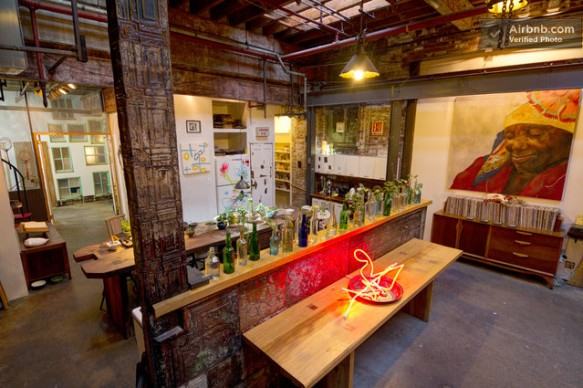
Beyond the savings, you can book spaces far more interesting that standard hotel fair–like a cave house in Granada Spain for $63/night (above) or a houseboat in Paris for $125/night. Funny enough, you can rent the 1 Sq Meter Home we covered the other day for $12/night in Berlin. On a more conventional note, you can rent rooms in places like New York City–where average hotel rooms are in excess of $300/night–for less than $100/night.

Airbnb makes money by charging hosts a 3% processing fee and guests a 6-12% service fee (more expensive stays have a lower fee)–nominal expenses compared to a hotel’s overhead charges. Their website provides reviews of hosts and their accommodations, as well as profiles of guests to protect hosts. There are numerous safety measures in place, such as $1M coverage for theft or vandalism for hosts. Their system also allows you to network with your friends, so you can exchange information about various stays from people you know.

Airbnb does require a couple extra hoops to jump through over a conventional hotel, like waiting 24 hours to confirm a reservation and you often have to coordinate a key exchange, so it might not put the hotel industry out of business just yet. That said, it creates a far more affordable, interesting and intimate way to house yourself when you’re away from home.