Don’t Call Me Murphy

The problem with most beds is that they do one thing: support your unconscious body for 6-13 hours a night depending on your employment situation. For the other 18-11 hours, mono-purpose beds just laze around the house, occupying a ton of space that could otherwise be used to good effect. And though we are unabashed fans of murphy beds, which can quickly transform a bed area into a something else area, they are not the only type of multipurpose bed. We ran across a couple different European bed manufacturers that pack a ton of utility in the same footprint that would otherwise be used for a bed alone.
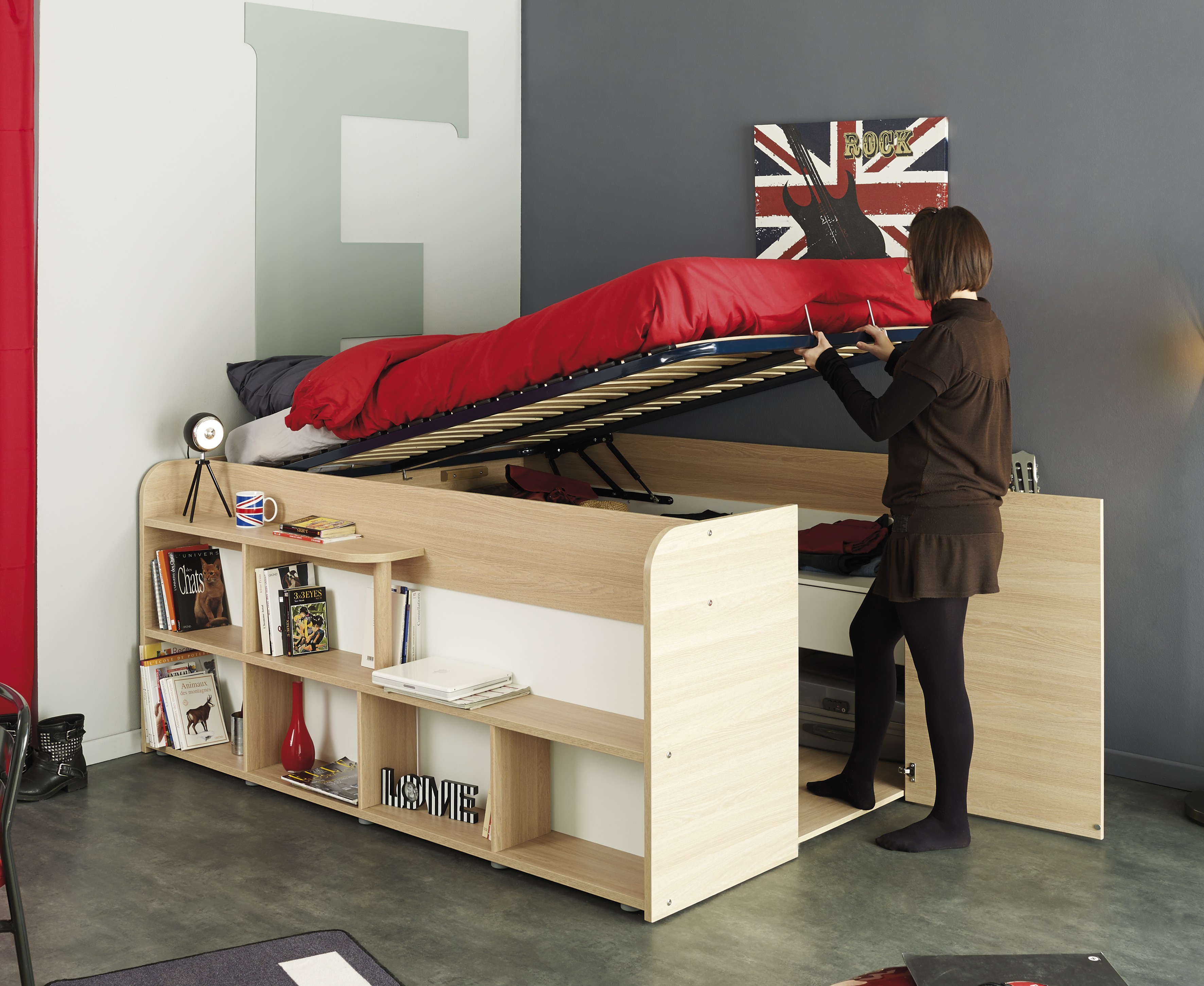
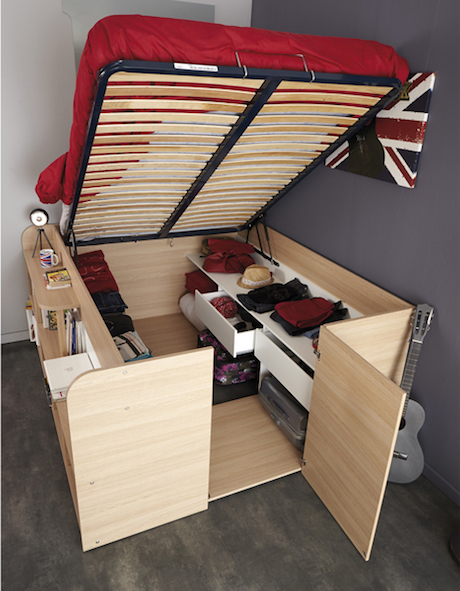
space-upThe Space Up bed (above) by France’s Parisot is a bed system with a closet’s worth of storage under its double-sized mattress. To access the storage, the mattress and its frame cantilever up, made possible by hydraulic pistons. The sides of the bed also features bookshelves, adding to its utility. With a low price point and no frills materials the Space Up seems mostly geared toward younger audiences.

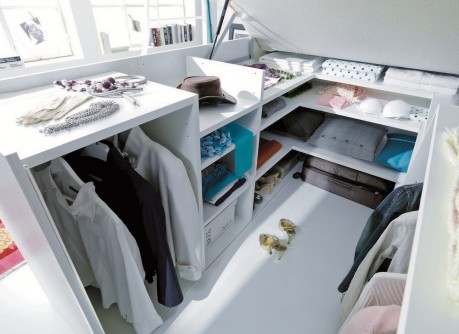
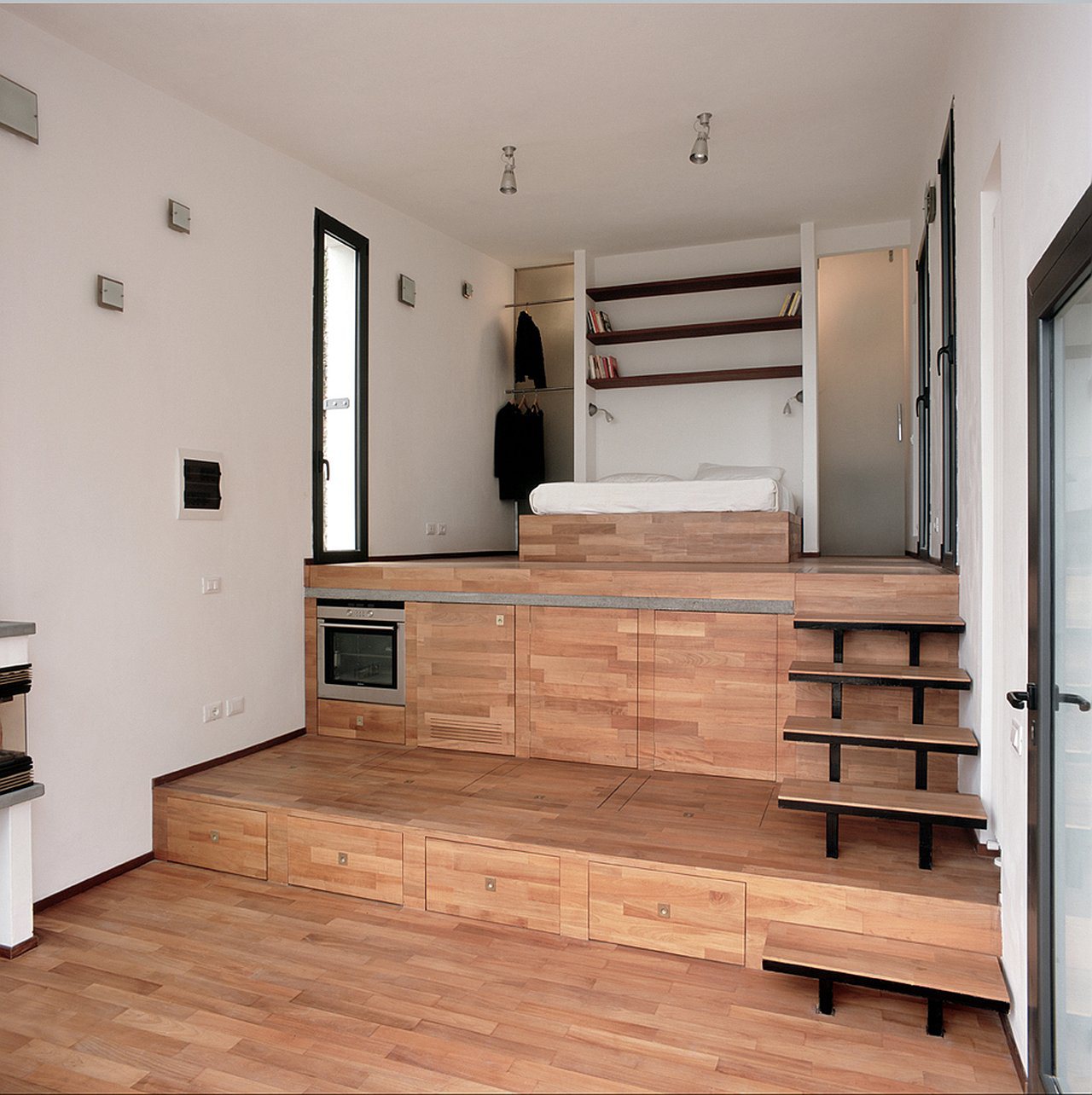
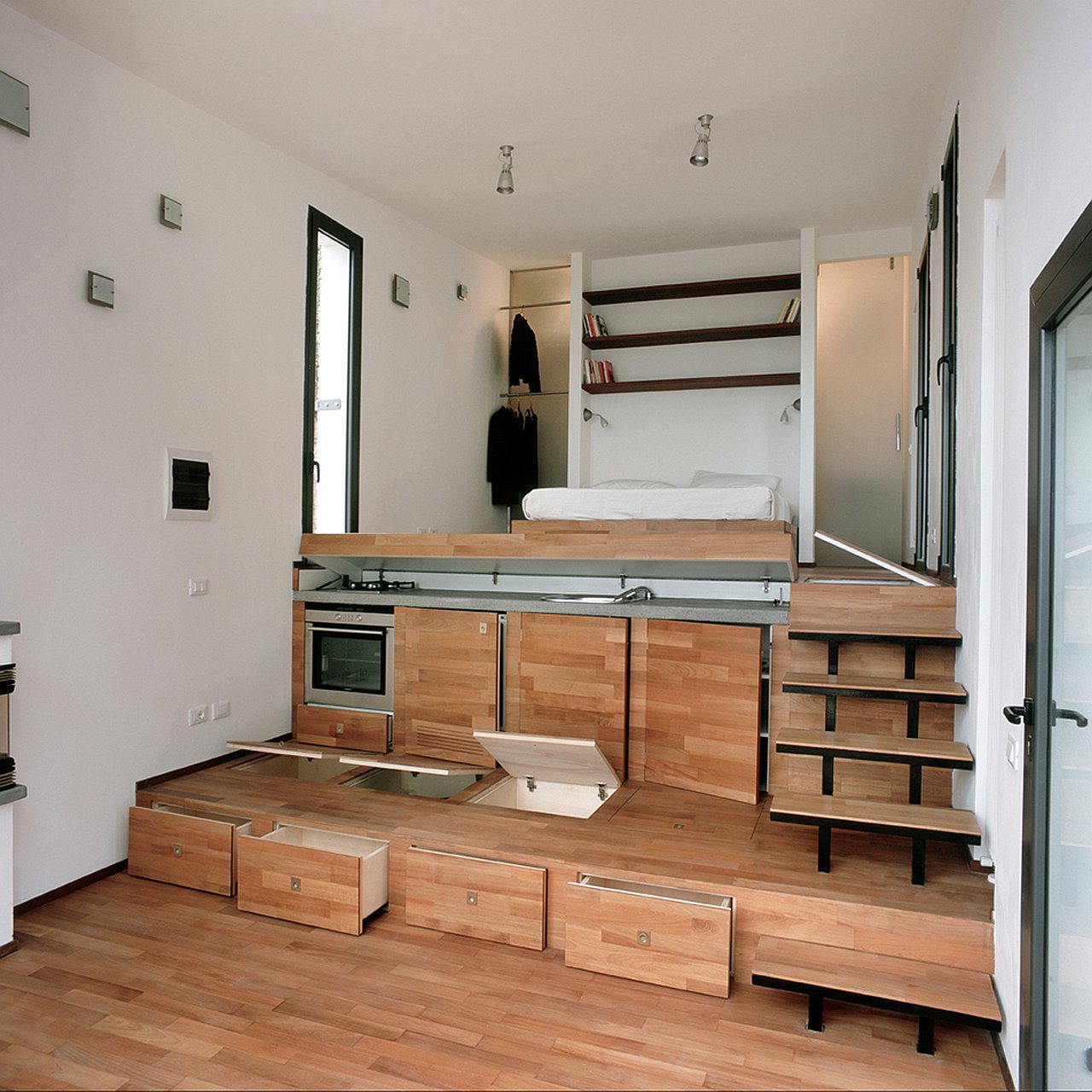
1347_z_Dielle Modus 0101350_z_Dielle Modus 012If you want something more high end, check out Italy’s Dielle Modus who takes the Space Up idea to 11. While they make a variety of bed and storage systems, the ones that caught our eye are their room systems featuring storage either under or above the bed. The storage volumes for both are considerably larger than Space Up. The below-bed systems work much like Space Up with a hydraulic lift for the mattress. The under-bed volume is big enough for a hanging rack storage; it’s also big enough to warrant stairs to access the bed. Those stairs double as drawers of course.

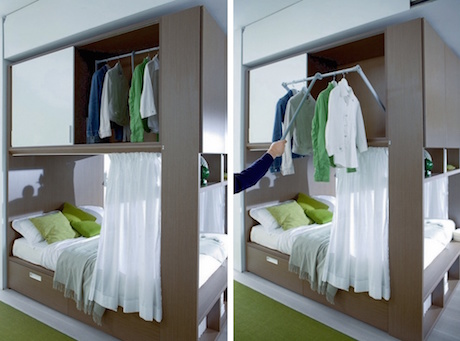
1252_z_Dielle Modus 002bdielleThe models featuring overhead storage are more practical than they might initially seem. The overhead cabinets have hanging racks that easily pivot down. There is captain bed type drawers underneath and tall cabinets at the head. The sleeping nook can also be closed off with curtains to fend off light and, we suppose, insects.

Check Out These High-Tech, Transforming, Carbon Fiber Shelves

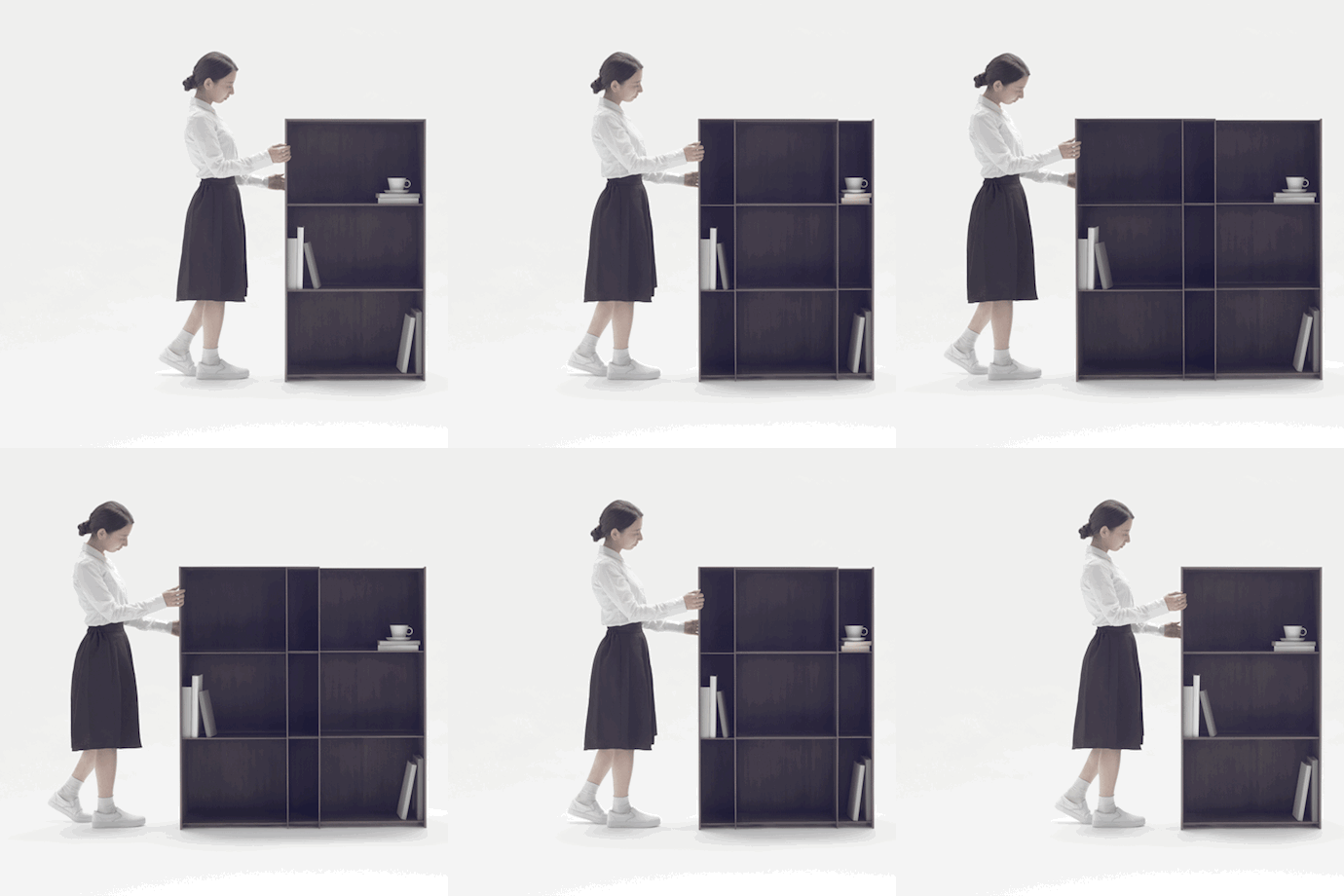
Carbon fiber is the material of choice when engineers and designers need high strength without added volume and weight–perfect for things like bikes, wheelchairs, high performance cars, aerospace parts, etc. But aside from a few novelty items, carbon fiber hasn’t been a mainstay in furniture design. The reason is simple: carbon fiber is pretty expensive, difficult to manufacture and most furniture doesn’t need to be particularly lightweight, so metal and lumber derived materials are the go-tos for furniture construction. But Japanese design house Nendo’s new Nest shelving unit is presenting a compelling reason why carbon fiber might be incorporated into modern furniture design.

nest

The Nest shelves expand from 25” to 51”. The vertical sheets are made of 3.7mm carbon fiber and the horizontal ones are made of a honeycomb material sandwiched by carbon fiber sheets. The whole assembly is clad with a thin larch veneer so it still has a somewhat traditional look. This construction allows Nendo to make their shelves super thin yet very strong. As such, when the shelves are nested on top of one another, it’s tough to tell there are additional panels under the top ones, thus maintaining a lithe, modern aesthetic. And because of carbon fiber’s rigidity, the shelves, when extended, make no compromise in strength.

While the combination of high strength and low weight and volume are not necessarily that important for things like sofas and built-in furniture–things that don’t move or do that much–items like the Nest shelves can benefit greatly from carbon fiber construction. You could make other items such as chairs that are super slim and strong and store compactly or an ultra thin large table that folds in on itself–furthering the argument for applying high technology to the sometimes technology-resistant world of furniture design. 

Via Dezeen

Turn Your Bike Into a Lean, Mean, Small-Home-Storage-Friendly Machine

The Schindelhauer ThinBike–a specially designed bike that goes from conventional width into a super-slim, small-space-storage-friendly ride–is pretty awesome. But after we reviewed the bike, many of you asked, “how do I do that to my bike?” That’s what the FlipCrown is about.

flipcrown-use

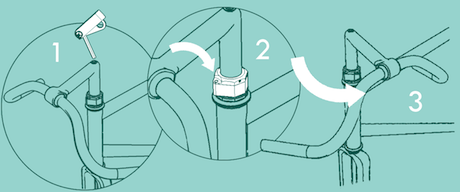
FlipCrown works by replacing the top locking nut of your headset. To turn the bars you do a half turn on your bike’s stem bolt with an included allen wrench; you then press a button on the FlipCrown and then turn the bars 90 degrees. Press the button again and twist the stem back to its initial position with handlebars centered and stem at proper height. Patrick Jacquet of Deltareference, the Ghent, Belgium-based design and development firm behind the product, said the whole operation takes about 10 seconds.

It’s not a revolutionary (or necessarily original) product, but it’s one that solves a vexing storage issue. One of the more useful places to use it is in crowded outdoor bike racks, where wedging your bike in is often impeded by handlebar width. Jacquet also notes that turning and locking the handlebars can be a theft deterrent.

The biggest drawback we see is that it’s only available for quill stems (both 1” and 1 ⅛”), which have fallen out of fashion in the last 20 years or so. Jacquet told us they have plans to make a threadless version that they hope to release later this year.

Deltareference is launching the product through the crowdfunding site Indiegogo. A $30 pledge will get you a FlipCrown. $60 will get you the FlipCrown plus some quick release pedals to make your bike super slim (we might opt for the MKS fold up pedals used on the Schindelhauer). And $450 will buy you their own SlimBike–a retro-styled fixie that should not be confused with the ThinBike. They also have a proprietary wallmount bike storage rack and deluxe, three-speed SlimBike by manufacturer Achielle in there as well.

Luggage that Works When You’re at Home

While useful when you need it, luggage can be a pain in the butt when not in use. A rolling bag’s typically-rigid rectangular volume requires a big hunk of closet space, often displacing stuff that’s in regular circulation. Luggage manufacturer Eagle Creek has come up with a very clever solution for this problem with their EC Lync system. The bag’s frame collapses and the whole thing can be put into a small stuff sack.

But wait, there’s more.

All of the four available sizes can be used as backpack as well as rolling bag–a big bonus for someone like me who often prefers carrying his luggage rather than wheeling. And the bags are light: the smallest one (2220 cubic inches) is 4 lbs 6 oz with frame and a mere 1 lb 12 oz without; the largest one (4525 cubic inces) is 5 lbs 5 oz and 2 lbs 5 oz, respectively.

The bags range from $255-300–more than a Samsonite, but less than something like a Tumi. The bags seem pretty bomber and Eagle Creek offers a lifetime “No Matter What” warranty, which is not totally no-matter-what, but should cover most reasonable and semi-unreasonable repairs. Overall, it’s not a ton of money if you’re a frequent traveler and storage space is short.

Hat tip to Bill Allen

Idyllic Italian Studio Stuffs Storage in the Floor

There’s a tendency for small-space designers to go high with storage. And while this is often the best solution, it’s not the only one. This 377 sq ft studio retreat by Italian firm Studioata is a nice example of how storage can be built underfoot as well as overhead.

The studio, which measures 377 sq ft, is built into a hillside in Alassio, Liguria in northern Italy. In fact, the studio’s stepped design follows the slope of the hill, with a bedroom sitting at top, a kitchen in the middle and a lounge area at the bottom. The two steps separating the bed from lounge are packed with function: the first with a hiding kitchen and the second with drawers and underfoot storage containers.

There are a few good reasons why architects don’t design storage under the floor: you must engineer doors that can support the weight of what’s going on above; some people might not like crouching down to get their stuff (though I’d argue it’s easier than getting stuff from up high); and in most situations, adding storage volume down low requires either elevating the whole floor to make a continuous plane or intruding into whatever’s happening below your unit (neighbors, a cellar, etc). But where it makes sense, like here, it makes a lot of sense.

Via Small House Bliss

Milk Crate Furniture for Grownups

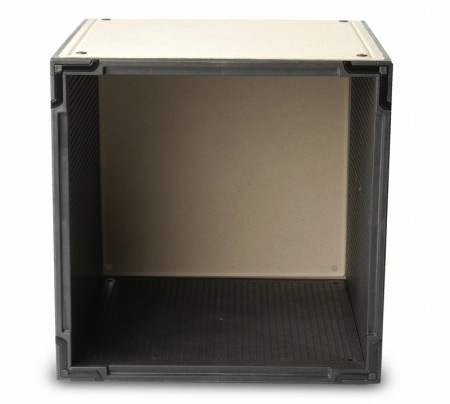
Chances are milk crates somehow made their way into many of our first forays into home decoration. The ubiquitous plastic crates stack great, provide lots of usable storage, and can be used as a stool or end table in a pinch. But they tend to warp, break down quickly and, frankly, look pretty rough. A company called Yube now provides an adult replacement to the milk crate. Their YubeCube is a 13″ cube that does all the duty (and a lot more) of the milk crate, without the fresh-out-of-high-school aesthetic.

yubecube-cube

The YubeCube is infinitely customizable and configurable to whatever situation you need it for. Unlike milk crates, they lock together and can be stacked up to 6′ 5″ high. They can handle 110 lbs internal weight and 55 lbs external load. You can leave them open or close them off with myriad door styles including polished aluminum, frosted glass, bamboo, white or several different patterns and colors. You can add feet, wheels, shelves and LED lights to the cubes. The YubeCubes also feature a very solid eco-cred, with panels made entirely made of sugarcane fiber, bamboo and recycled plastic.

yubecube-coffee

Yube offers the cubes individually or in various different sets such as a bathroom set, media storage, coffee table or desk. Individual cubes sell for $34.50 without accessories. Sets range from a $100 nightstand to a $1250 extra wide wall shelving unit.

If they asked us, we might suggest the YouCubes have a higher weigh load, as it’d enable them to be seating. And while they are certainly more polished than milk-crates, they still have a somewhat utilitarian look about them.

Our little gripes notwithstanding, we think the YouCube is a great idea. It’s a piece of storage that can be used as furniture and can be modified to meet a million different purposes, styles and room sizes.

Cloud Storage for Your Stuff

If you use cloud storage like Dropbox or Google Drive, you know how convenient it is to access your files from any computer or device. But what about non-data stuff? What if there was a way we could magically store our stuff offsite, accessing it whenever we needed it via pressing a button or two on our computers? That’s exactly the idea behind MakeSpace.

MakeSpace provides its users with standard-sized storage boxes, which you can either fill up while drivers wait, or they can pre-deliver them and you fill up at your leisure. The boxes are taken away to a secure storage unit. When you want them, go online to schedule a delivery, and your stuff will arrive within a day.

The service allows you to inventory your items and access that inventory online. They will also take items that don’t fit in their boxes; they say those items must be ones “that a single person can carry” (we’re not sure if that’s a large or small person).

We know what you’re thinking: “Great, a place to put all the stuff I don’t use and pay a monthly fee to keep it there.” To some extent, that is true, but there are a number of very practical applications for MakeSpace, such as storing winter clothes, storing while traveling or in-between homes, etc. But by far the most exciting application is if we could give access to our friends, or possibly rent out our stuff, and have MakeSpace deliver and pick it up when they’re done. This feature is not available yet, but it seems like a natural evolution of the idea.

MakeSpace charges $25 to store four of their boxes for a month (additional boxes are $6.25). First pickups are free, but subsequent pickups and deliveries are $30/each. They take pains to compare themselves to traditional storage facilities, which often include renting a truck, lengthy excursions to the middle of nowhere and other hidden costs. MakeSpace is currently only in New York City, but it seems like a sufficiently smart idea that it will catch on elsewhere in the near future.

via TechCrunch

Buying A Stairway to Storage

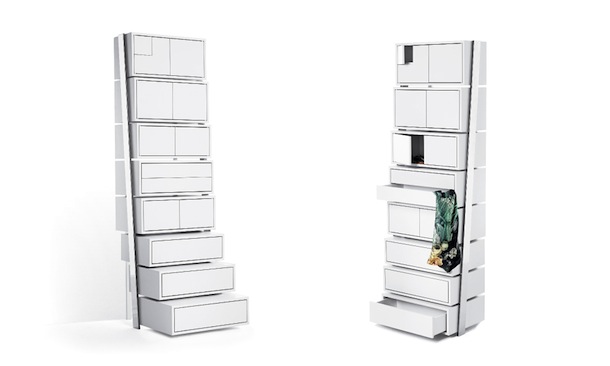
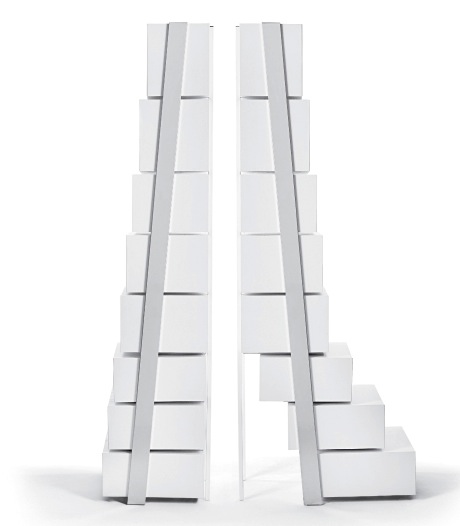
Building vertical storage makes buckets of sense in small spaces, but accessing it can be difficult. What’s the point of storing stuff if you can’t access it? Designer Danny Kuo has a brilliant solution for this conundrum: use the bottom storage to access the top. His “Staircase” storage unit’s lower three drawers pull out to act as steps to access the higher cabinets.

danny-kuo-side

The 7’2″ retail unit is made of MDF and stainless steel and is available for sale on Opinion Ciatti. No mention of price.

Update: White version above is $11,440.

Man Thinks Outside Box, but Lives Inside One

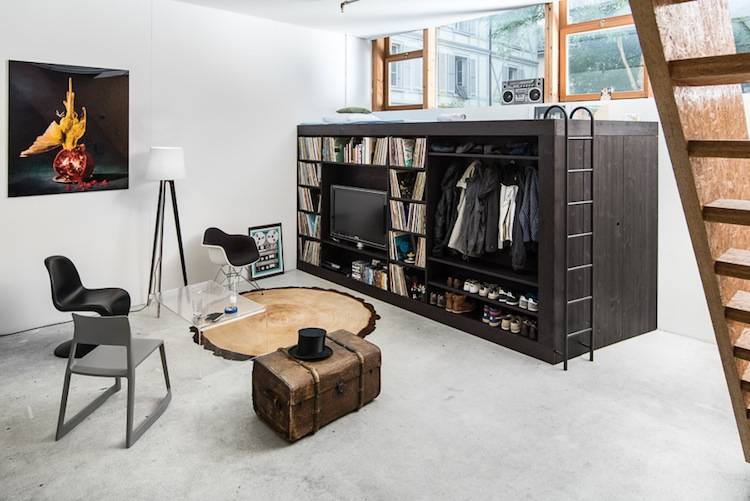
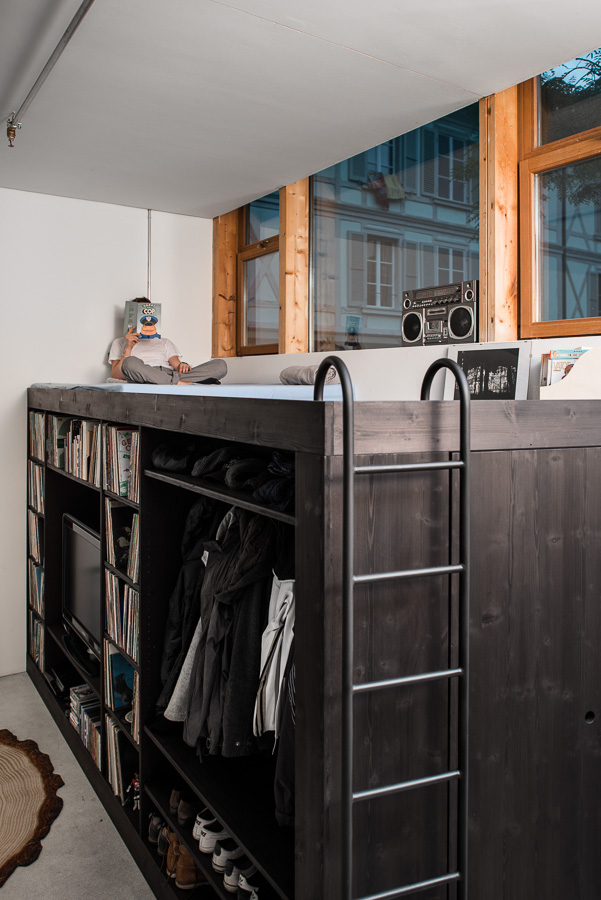
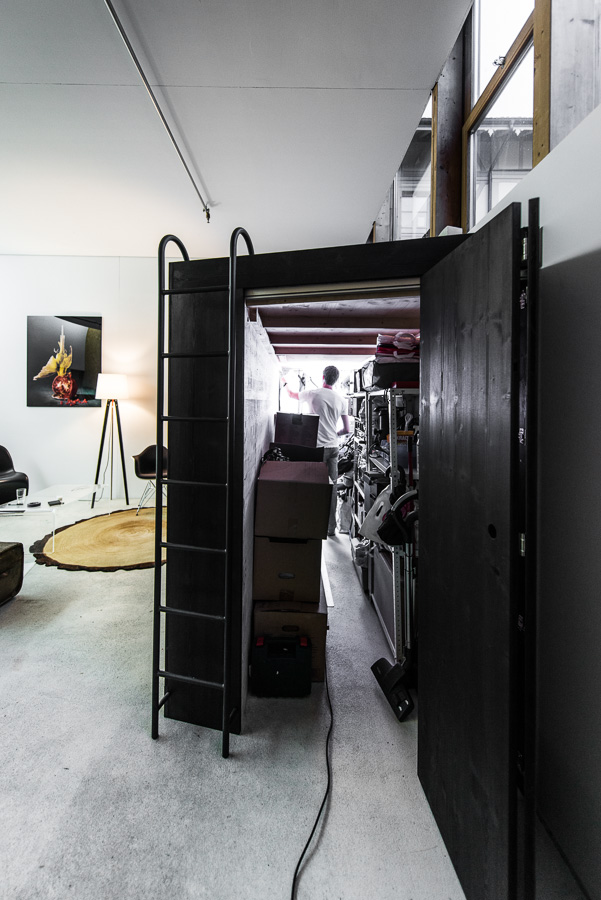
We really dig the “living cube” by Swiss designer Till Könneker. It handles two fairly common problems in one tidy package. One, it creates storage in an open loft space without adding closets. Two, it consolidates a great deal of worldly possessions in one place while serving a number of secondary functions like a sleeping and lounging area.

While the cube is pretty big, the fact that it houses so much stuff justifies its girth. And while Könneker’s place has high ceilings (a luxury many people don’t have), he is now making and selling custom units that would work with any variety of space. More information available on the Living Cube website.

Photos by Rob Lewis

Thanks for the tip Mark!

Drier Hair, Fresher Food

These plastic doohickies might look like shower caps, but they are actually designed to protect food. Just slip them over plates, platters or any other container, and you have a food-preserving cover. Many of the companies that make them use breathable plastic to maintain moisture without spoilage.

We like these simple and reusable covers for a number of reasons. First, the safety of most plastic leftover containers is suspect; these allow you to use your chemically stable ceramic and glass dishes and containers. Next, using plastic wrap is often as cumbersome as it is wasteful; how many times have you wrapped and re-wrapped a dish only to have a pretty crummy seal? Last, these covers turn the containers we already have into food storage. (As a bonus, they’d probably make adequate shower caps).

There are a number of manufactures offering these covers on Amazon. Most are under $15 and include several sizes for various containers.